

Sustainability Assessments in Building Surveys: Integrating Energy Efficiency and Carbon Footprint Analysis into Standard Survey Reports
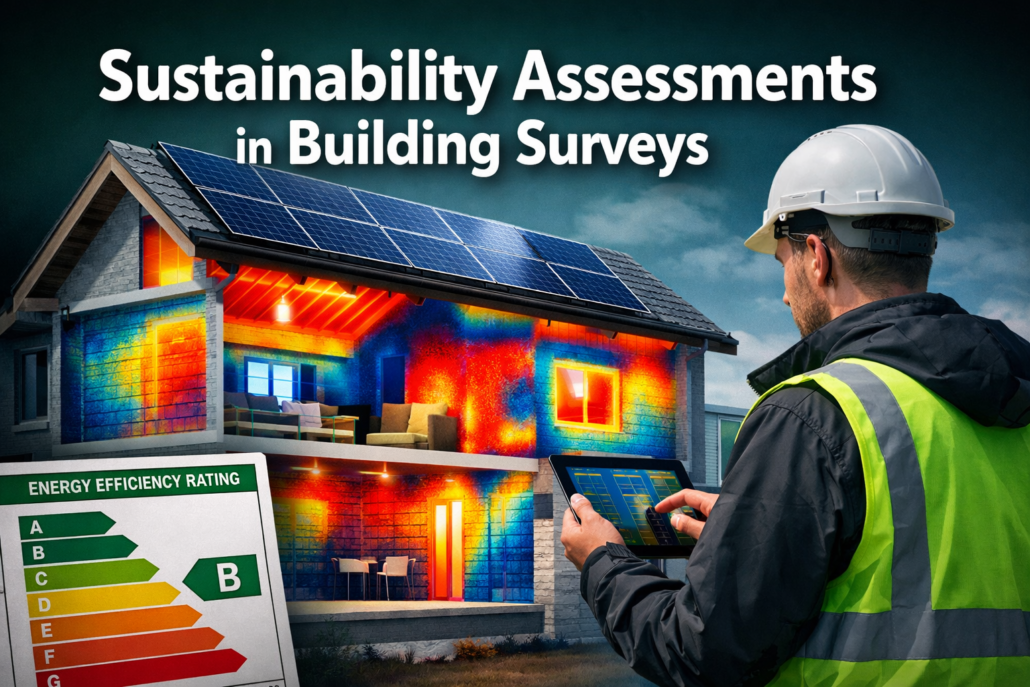
Buildings account for approximately 40% of global energy consumption and 33% of greenhouse gas emissions worldwide. As climate targets tighten and energy costs soar, property stakeholders can no longer afford to ignore the environmental performance of their assets. Sustainability Assessments in Building Surveys: Integrating Energy Efficiency and Carbon Footprint Analysis into Standard Survey Reports has […]
Building Surveyors and the 2026 Skills Shortage: Recruitment, Training, and Competitive Positioning in a Booming Market

More than 80% of construction firms report difficulty finding qualified workers—a crisis that threatens to derail project timelines and inflate costs across the industry[4]. As building surveyor positions are forecasted to rise by 11% through 2027, firms face an unprecedented challenge: how to attract, train, and retain skilled professionals in a market where demand dramatically […]
Regional Market Divergence in 2026: How Surveyors Should Adapt Valuation and Survey Strategies for North West Growth vs. South East Stagnation

The UK property market has entered an unprecedented phase of regional polarisation. RICS data from January 2026 reveals that while the North West and Northern England experience robust price growth and rising transaction volumes, London and the South East face persistent stagnation—a complete reversal of historical patterns that dominated for decades. This regional market divergence […]
Data Analytics and Predictive Building Performance: How Surveyors Are Using Big Data to Identify Issues Before They Become Costly Problems

Building failures cost the UK construction industry over £1 billion annually, yet most of these catastrophic issues begin as minor defects that go undetected for months or years. The big data analytics in construction market, valued at USD 10.3 billion in 2025, is projected to reach USD 29.4 billion by 2035—a clear signal that the […]
Mortgage Lender Valuation Requirements in Recovery Markets: How Surveyors Should Adapt as Lenders Loosen Criteria and Transaction Volumes Accelerate

Morgan Stanley expects 2026 to mark a critical inflection point, with recovery in property valuations and transaction activity driven by lower cost of capital and improved debt availability[1]. As this recovery unfolds, chartered surveyors face a unique challenge: adapting valuation practices to meet evolving mortgage lender valuation requirements in recovery markets while maintaining the accuracy […]
Valuation Adjustments for Pet Permissions in Periodic Tenancies: Surveyor Strategies Post-Renters’ Rights Act 2026

The Renters' Rights Act 2026 has fundamentally altered the landscape for buy-to-let property valuations, with landlords now legally required to consider pet requests unless they can demonstrate reasonable grounds for refusal. This legislative shift means that chartered surveyors must now integrate pet-related risk factors into their valuation methodologies, accounting for increased wear-and-tear, insurance premiums, and […]
Building Surveys for Fire Hazards Under Awaab’s Law 2026: Compliance Checklists for Private Rented Conversions

Fire-related incidents in UK rental properties have increased by 23% over the past three years, with converted buildings accounting for a disproportionate share of serious incidents. As of 2026, landlords and surveyors face unprecedented regulatory scrutiny under the expanded provisions of Awaab's Law Phase 2, which now mandates strict investigation and remediation timelines for fire […]
Defending Level 3 Building Surveys Against AVMs in Cautious Q2 2026 Markets: RICS Insights on Buyer Caution
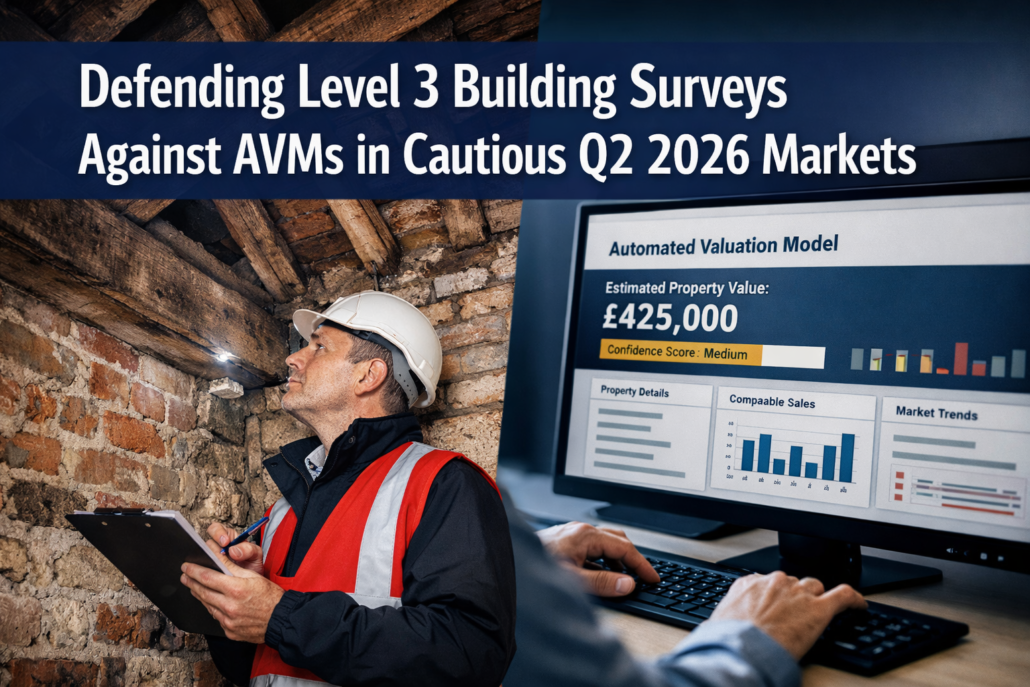
February 2026 RICS survey data reveals a stark reality: geopolitical uncertainty has frozen UK property prices while buyer caution reaches unprecedented levels[3]. In this climate where one in five construction firms never measure productivity and no single assessment method commands more than 30% adoption, the battle between human expertise and automated valuation models (AVMs) has […]
Chartered Surveyor Checklists for Whole Life Carbon in Valuations: Applying RICS 2nd Edition Standard 2026

The built environment accounts for nearly 40% of global carbon emissions, yet until recently, property valuations rarely factored carbon impact into financial assessments. Since July 1, 2024, the RICS Whole Life Carbon Assessment (WLCA) 2nd Edition standard has fundamentally changed this landscape, making it mandatory for all RICS members globally to integrate carbon metrics into […]
Expert Witness Roles in Awaab’s Law Electrical Hazard Disputes: 2026 Protocols for PRS Remediation Claims
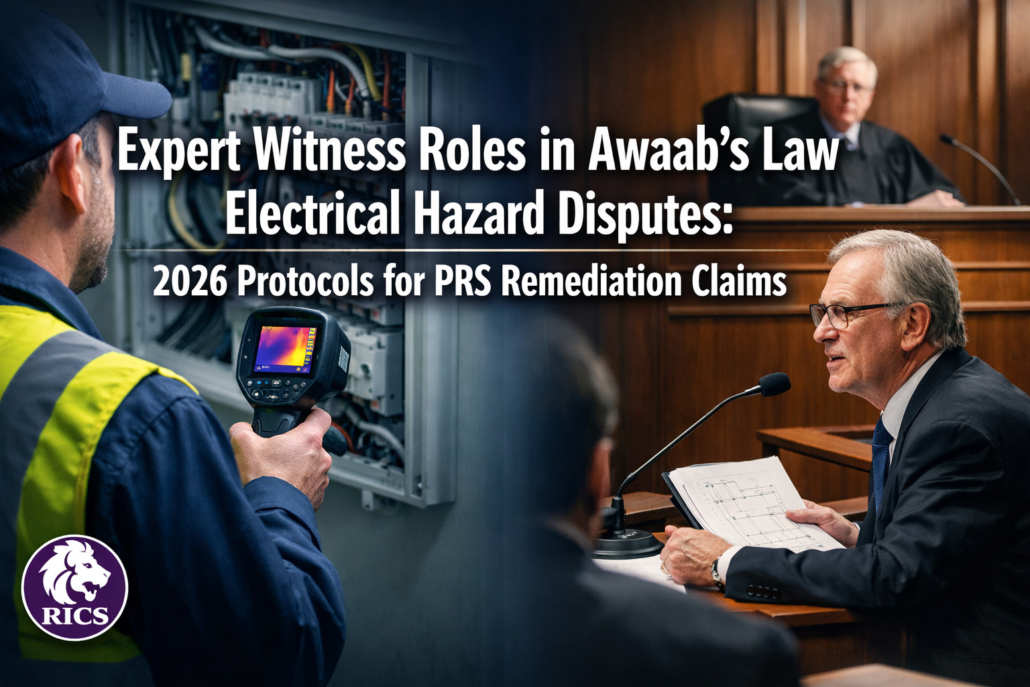
Social housing landlords face a stark reality: 94% of electrical fire deaths in rental properties involve inadequate safety inspections. As Awaab's Law expands to cover electrical hazards from October 2026, expert witnesses must adapt their protocols to defend surveyor reports in increasingly complex disrepair claims. The intersection of statutory timeframes, RICS frameworks, and Level 3 […]