

Building failures cost the UK construction industry over £1 billion annually, yet most of these catastrophic issues begin as minor defects that go undetected for months or years. The big data analytics in construction market, valued at USD 10.3 billion in 2025, is projected to reach USD 29.4 billion by 2035—a clear signal that the industry is embracing a fundamental shift from reactive inspections to predictive intelligence.[1] Data Analytics and Predictive Building Performance: How Surveyors Are Using Big Data to Identify Issues Before They Become Costly Problems represents more than technological advancement; it's a complete reimagining of how chartered surveyors protect property investments and safeguard building occupants.
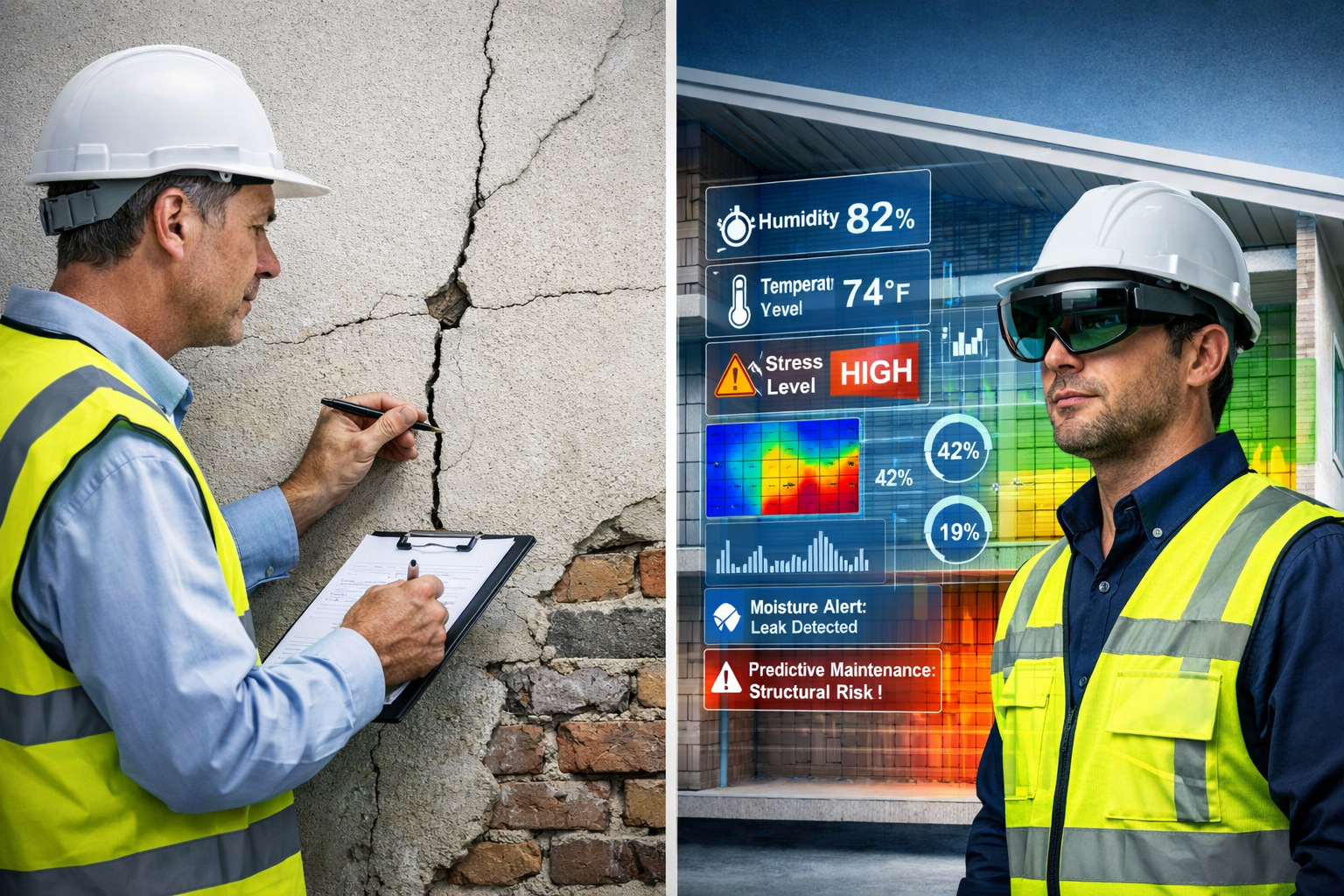
Forward-thinking surveyors in 2026 are no longer simply documenting visible defects during site visits. They're deploying sophisticated sensor networks, analyzing years of performance data, and using machine learning algorithms to predict structural failures, energy inefficiencies, and maintenance crises before they materialize. This data-driven methodology is transforming survey practices from periodic snapshots into continuous monitoring systems that deliver unprecedented value to property owners, investors, and facility managers.
Key Takeaways
- 📊 Big data analytics enables surveyors to predict building failures months or years in advance, reducing emergency repair costs by up to 40% through proactive maintenance scheduling
- 🤖 Machine learning algorithms analyze historical building performance data to identify patterns in structural degradation, moisture intrusion, and system failures that human inspectors might miss
- 💰 Predictive building performance monitoring delivers measurable ROI by extending asset lifecycles, optimizing energy consumption, and preventing costly emergency interventions
- 🔍 IoT sensors and drone technology provide continuous real-time data collection, transforming traditional periodic surveys into ongoing building health monitoring systems
- 🏗️ The construction analytics market is experiencing 11.4% annual growth, signaling widespread industry adoption of data-driven survey methodologies across commercial and residential sectors
The Evolution from Reactive to Predictive Survey Methodologies
Traditional building surveys have relied on periodic visual inspections, where chartered surveyors visit properties at specific intervals to document existing conditions. While comprehensive Level 3 building surveys remain essential for property transactions, this reactive approach has significant limitations. Defects are only identified after they become visible, often when remediation costs have already escalated dramatically.
Data Analytics and Predictive Building Performance: How Surveyors Are Using Big Data to Identify Issues Before They Become Costly Problems addresses these limitations by introducing continuous monitoring capabilities. Rather than waiting for the next scheduled inspection, surveyors can now track building performance indicators in real-time, receiving automated alerts when conditions deviate from established baselines.
The Technology Stack Powering Predictive Surveys
Modern predictive building performance relies on several interconnected technologies:
- IoT Sensors and Wireless Networks: Temperature, humidity, vibration, and structural movement sensors collect continuous data streams from critical building components
- Cloud Computing Platforms: Massive datasets from multiple properties are stored, processed, and analyzed using scalable cloud infrastructure
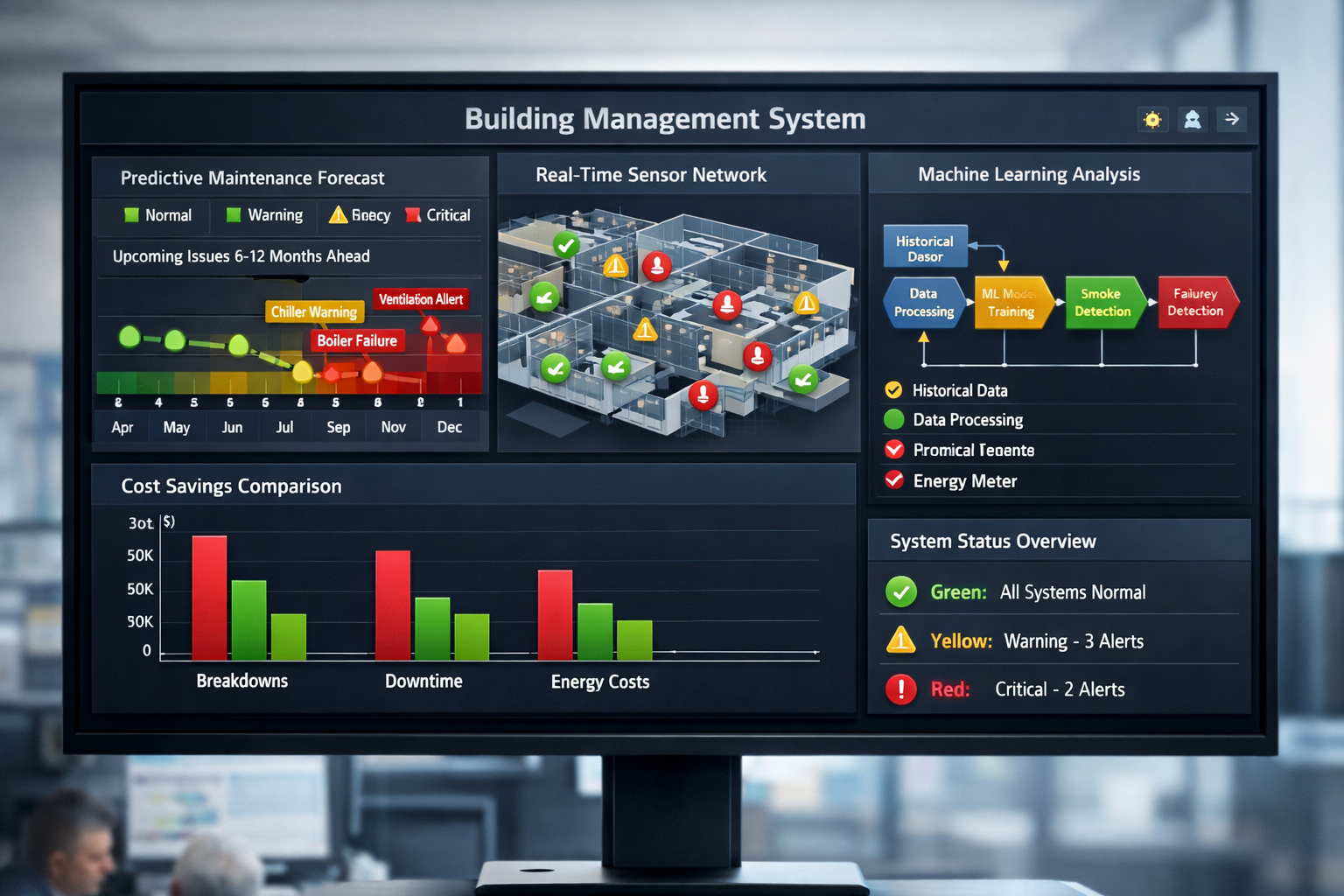
- Machine Learning Algorithms: AI systems identify patterns in historical data to predict future failures with increasing accuracy[2]
- Digital Twin Technology: Virtual building models are updated with real-time sensor data, enabling scenario testing and performance optimization
- Mobile Analytics Dashboards: Surveyors access predictive insights through intuitive interfaces during site visits
The integration of these technologies has created what industry experts call "intelligent buildings"—structures that communicate their condition continuously rather than remaining silent until catastrophic failure occurs.
Measurable Benefits for Property Stakeholders
The shift toward predictive analytics delivers concrete advantages across the property lifecycle. Risk assessment tools powered by AI identify potential safety hazards and cost overruns before they occur, enabling proactive problem-solving rather than reactive responses.[2]
For property owners, predictive maintenance scheduling reduces emergency repair costs by addressing issues during their early stages. A minor roof membrane degradation detected through thermal imaging costs thousands to repair; waiting until water damage appears can result in six-figure remediation projects.
Facility managers benefit from optimized maintenance scheduling that minimizes operational disruptions. Rather than conducting preventive maintenance on arbitrary timelines, interventions are scheduled based on actual equipment condition and predicted failure windows.
Investors and lenders gain enhanced risk assessment capabilities when evaluating acquisition opportunities. Building surveys enhanced with predictive analytics provide forward-looking insights into capital expenditure requirements, enabling more accurate financial modeling.
How Surveyors Are Implementing Big Data Analytics in Building Assessments
The practical application of Data Analytics and Predictive Building Performance: How Surveyors Are Using Big Data to Identify Issues Before They Become Costly Problems varies depending on building type, age, and complexity. However, several core methodologies have emerged as industry standards in 2026.
Sensor Network Deployment and Data Collection
The foundation of predictive building performance is comprehensive data collection. Progressive surveying firms are installing permanent sensor networks in buildings during construction or major refurbishment projects. These networks monitor:
- Structural integrity indicators: Crack width monitoring, settlement tracking, and load distribution measurements
- Environmental conditions: Temperature, humidity, air quality, and moisture levels in walls and building cavities
- Building systems performance: HVAC efficiency, electrical consumption patterns, plumbing pressure variations, and lift operation metrics
- External factors: Weather conditions, ground movement, and nearby construction activities
Drone surveys complement ground-based sensors by capturing high-resolution thermal imagery and photogrammetric data from building exteriors and roofs. Drones for surveying and data collection are gaining traction, providing more accurate site assessments and progress tracking capabilities.[1]
The frequency of data collection varies by application. Structural movement sensors might record measurements every hour, while energy consumption data flows continuously. This creates enormous datasets—a medium-sized commercial building can generate terabytes of performance data annually.
Machine Learning Applications in Defect Prediction
Raw sensor data becomes actionable intelligence through machine learning algorithms that identify patterns and predict future conditions. Machine learning algorithms identify trends in delays and workforce productivity, empowering managers to proactively adjust strategies before problems arise.[2]
In building surveying applications, ML algorithms are trained on historical datasets that correlate sensor readings with eventual defect manifestation. For example:
Moisture Intrusion Prediction: Algorithms analyze humidity patterns, temperature differentials, and external weather data to predict where water penetration is likely to occur before visible staining appears. This enables surveyors to recommend targeted interventions like resealing joints or improving drainage.
Structural Movement Forecasting: By tracking settlement patterns and correlating them with soil conditions, seasonal variations, and nearby construction activity, ML models can predict when differential movement will exceed acceptable thresholds.
System Failure Anticipation: HVAC equipment generates characteristic vibration and temperature patterns before failure. AI systems detect these signatures and alert facility managers to schedule replacement during planned downtime rather than experiencing emergency breakdowns.
The accuracy of these predictions improves continuously as algorithms process more data. Leading surveying firms report prediction accuracy rates exceeding 85% for common failure modes, with confidence levels increasing as sensor networks mature.[3]
Integration with Traditional Survey Methodologies
Predictive analytics doesn't replace traditional surveying expertise—it enhances it. Experienced chartered surveyors combine algorithmic insights with professional judgment during building survey inspections.
When predictive systems flag potential issues, surveyors conduct targeted physical inspections to validate findings and assess severity. This focused approach makes site visits more efficient while ensuring nothing is overlooked. Surveyors can also calibrate predictive models based on their observations, creating feedback loops that improve algorithmic accuracy.
For clients wondering which building survey they need, the answer increasingly includes both traditional visual inspection and ongoing predictive monitoring, particularly for high-value commercial properties or complex residential developments.
Real-World Applications: Data Analytics Solving Building Performance Challenges
The theoretical benefits of Data Analytics and Predictive Building Performance: How Surveyors Are Using Big Data to Identify Issues Before They Become Costly Problems are compelling, but practical case studies demonstrate the transformative impact on actual building management.

Commercial Property Portfolio Management
Large commercial property portfolios present significant maintenance challenges due to their scale and geographic distribution. A UK property management firm managing 200+ commercial buildings implemented comprehensive sensor networks across their portfolio in 2024.
Within 18 months, their predictive analytics platform identified:
- 47 HVAC systems approaching failure based on vibration and temperature anomalies, enabling scheduled replacement during off-hours rather than emergency interventions
- 23 roof sections with developing leaks detected through thermal imaging before water intrusion caused interior damage
- Energy consumption anomalies in 31 buildings that indicated equipment inefficiency, resulting in 18% average energy cost reduction after targeted upgrades
The firm calculated that predictive maintenance reduced their annual emergency repair expenditure by 42% while extending average equipment lifespan by 3.5 years. Their insurance reinstatement cost valuations also benefited from detailed building condition data that supported more accurate risk assessments.
Heritage Building Preservation
Historic structures require especially careful monitoring due to their age, unique construction methods, and cultural significance. Traditional inspection methods struggle to detect gradual deterioration in these complex buildings.
A Grade II listed building in London installed a discrete sensor network monitoring structural movement, moisture levels, and environmental conditions. The predictive system detected subtle settlement patterns that suggested foundation issues developing beneath the northeast corner.
Targeted investigation confirmed early-stage subsidence that would have remained undetected for years using conventional inspection schedules. Early intervention with underpinning cost £180,000; surveyors estimated that addressing the issue after structural cracking became visible would have exceeded £750,000 and required extensive interior restoration.
New Build Quality Assurance
Predictive analytics isn't limited to existing buildings. Progressive developers are embedding sensor networks in new construction projects to verify build quality and provide ongoing performance monitoring for purchasers.
For clients asking do you need a survey on a new build, the answer increasingly includes post-completion monitoring that validates construction quality and provides early warning of defects during the warranty period.
One London development incorporated building performance monitoring as a standard feature, with purchasers receiving access to real-time data on their property's structural integrity, energy efficiency, and environmental conditions. This transparency increased buyer confidence and commanded a 4% price premium compared to comparable developments without monitoring systems.
Energy Efficiency Optimization
AI-based big data analytics applications include load forecasting, water management, indoor environmental quality monitoring, and occupancy detection in building automation and management systems.[3]
A mixed-use development in Manchester implemented comprehensive energy monitoring integrated with occupancy sensors and weather forecasting. Machine learning algorithms optimized HVAC operation based on predicted occupancy patterns and external conditions, reducing energy consumption by 31% compared to conventional building management systems.
The system also identified equipment inefficiencies that weren't apparent through traditional energy audits, enabling targeted upgrades that delivered additional savings. This data-driven approach to energy performance certificates and building surveys helps properties meet increasingly stringent regulatory requirements.
Overcoming Implementation Challenges and Industry Barriers
Despite compelling benefits, widespread adoption of Data Analytics and Predictive Building Performance: How Surveyors Are Using Big Data to Identify Issues Before They Become Costly Problems faces several obstacles that the industry is actively addressing.
Initial Investment and ROI Concerns
Comprehensive sensor networks and analytics platforms require significant upfront investment. Costs vary widely depending on building size and complexity, but typical installations range from £15,000 for basic residential monitoring to £250,000+ for sophisticated commercial building systems.
Property owners understandably question whether these investments deliver adequate returns. The key to justifying expenditure lies in quantifying avoided costs:
- Emergency repair prevention: Each major system failure avoided typically saves 3-5x the cost of predictive maintenance
- Extended asset lifecycles: Optimized maintenance can extend equipment lifespan by 20-40%
- Energy cost reduction: Predictive optimization typically delivers 15-30% energy savings
- Insurance premium reductions: Comprehensive monitoring can qualify properties for reduced insurance rates
- Enhanced property values: Buildings with performance monitoring systems command premium valuations
Most commercial installations achieve payback periods of 3-5 years, with ongoing annual savings thereafter. For high-value properties or critical infrastructure, ROI calculations become even more favorable.
Data Privacy and Security Considerations
Building performance monitoring generates sensitive data about property conditions, occupancy patterns, and operational characteristics. Robust cybersecurity measures are essential to protect this information from unauthorized access.
Leading surveying firms implement:
- Encrypted data transmission from sensors to cloud platforms
- Role-based access controls ensuring stakeholders only access relevant information
- Compliance with data protection regulations including GDPR requirements
- Regular security audits of monitoring systems and platforms
- Clear data ownership agreements defining client rights and vendor responsibilities
Addressing these concerns proactively builds client confidence and facilitates adoption, particularly among institutional investors and public sector property owners.
Skills Gap and Professional Development
Implementing predictive analytics requires surveyors to develop new competencies beyond traditional building pathology expertise. The industry is responding through:
- Specialized training programs in data analytics, IoT technologies, and machine learning fundamentals
- Collaboration with data scientists who complement surveyors' building knowledge with analytical expertise
- Software platform development that makes complex analytics accessible through intuitive interfaces
- Professional qualification updates incorporating digital technologies into chartered surveyor certification requirements
The most successful firms adopt hybrid team models where traditional surveyors work alongside data specialists, combining building expertise with analytical capabilities.
Standardization and Interoperability Issues
The proliferation of proprietary sensor systems and analytics platforms creates integration challenges. Buildings may have multiple monitoring systems from different vendors that don't communicate effectively.
Industry bodies are developing standards for:
- Data formats and protocols enabling cross-platform integration
- Sensor specifications ensuring consistent measurement accuracy
- API requirements facilitating data exchange between systems
- Reporting frameworks standardizing how predictive insights are communicated
These standardization efforts will accelerate adoption by reducing implementation complexity and vendor lock-in concerns.
The Future of Data-Driven Building Surveying
The trajectory of Data Analytics and Predictive Building Performance: How Surveyors Are Using Big Data to Identify Issues Before They Become Costly Problems points toward even more sophisticated applications as technologies mature and adoption expands.
Emerging Technologies on the Horizon
Several technological developments will further enhance predictive capabilities:
Advanced Materials Sensors: Next-generation sensors embedded directly into building materials during manufacturing will provide unprecedented insight into material performance and degradation at the molecular level.
Augmented Reality Integration: Surveyors conducting site visits will use AR glasses overlaying real-time sensor data, predictive alerts, and historical performance information directly onto their field of view, enhancing inspection efficiency and accuracy.
Blockchain for Building Records: Distributed ledger technology will create immutable records of building performance data, maintenance history, and survey findings, increasing transparency and supporting property transactions.
Autonomous Inspection Robots: Mobile robots equipped with sensors and cameras will conduct routine interior inspections, identifying issues and collecting data without human intervention, with surveyors reviewing findings and conducting detailed investigations of flagged concerns.
Quantum Computing Applications: As quantum computing becomes commercially viable, it will enable analysis of exponentially larger datasets and more complex predictive models, potentially identifying subtle patterns that current systems cannot detect.
Regulatory and Market Drivers
Several factors will accelerate adoption of predictive building performance monitoring:
Building Safety Regulations: Following high-profile building failures, regulators are considering requirements for continuous monitoring of critical structural and fire safety systems in certain building types.
Net Zero Commitments: Achieving ambitious carbon reduction targets requires precise understanding of building energy performance, driving demand for comprehensive monitoring and optimization.
Insurance Industry Requirements: Insurers are beginning to offer premium reductions for properties with monitoring systems while potentially requiring them for high-value or high-risk buildings.
ESG Investment Criteria: Institutional investors increasingly evaluate properties based on environmental, social, and governance metrics, with building performance data providing objective evidence of sustainability credentials.
Occupier Expectations: Tenants increasingly expect smart building features and transparency regarding building performance, particularly in premium commercial and residential developments.
Democratization of Predictive Analytics
Currently, comprehensive predictive monitoring is primarily deployed in high-value commercial properties where investment costs are justified by asset values. However, technology costs are declining rapidly while capabilities expand.
Within five years, basic predictive monitoring will likely become standard in new residential construction, with retrofit solutions becoming economically viable for existing housing stock. This democratization will extend the benefits of Data Analytics and Predictive Building Performance: How Surveyors Are Using Big Data to Identify Issues Before They Become Costly Problems to a much broader property market.
Subscription-based monitoring services are emerging that eliminate upfront hardware costs, making predictive analytics accessible to smaller property owners and residential purchasers. These services install sensors at no initial cost, charging monthly fees that include hardware, connectivity, analytics, and surveyor access.
Conclusion: Embracing the Data-Driven Future of Building Surveying
The transformation from reactive inspection to predictive intelligence represents the most significant evolution in building surveying since the profession's formalization. Data Analytics and Predictive Building Performance: How Surveyors Are Using Big Data to Identify Issues Before They Become Costly Problems delivers measurable value through reduced maintenance costs, extended asset lifecycles, improved safety, and optimized building performance.
The big data analytics market's projected growth from USD 10.3 billion in 2025 to USD 29.4 billion by 2035 reflects industry-wide recognition that data-driven methodologies are not optional enhancements but essential capabilities for modern surveying practice.[1] Property stakeholders who embrace these technologies gain competitive advantages through superior risk management, enhanced asset values, and operational efficiencies that compound over time.
For property owners, investors, and facility managers, the actionable next steps are clear:
✅ Assess your portfolio's monitoring readiness: Identify high-value or high-risk properties where predictive analytics would deliver the greatest benefits
✅ Engage with forward-thinking surveyors: Select professionals who combine traditional expertise with data analytics capabilities, such as firms offering comprehensive building surveys enhanced with predictive technologies
✅ Start with pilot projects: Implement monitoring systems on representative properties to demonstrate ROI before portfolio-wide deployment
✅ Develop data governance frameworks: Establish clear policies regarding data ownership, access, security, and retention before implementation
✅ Plan for integration: Ensure new monitoring systems can interface with existing building management and property management platforms
✅ Invest in stakeholder education: Help property teams understand how to interpret predictive insights and translate them into maintenance decisions
The surveyors who thrive in 2026 and beyond will be those who successfully blend traditional building pathology expertise with data science capabilities, delivering insights that were simply impossible through conventional inspection methods. As sensor costs decline, algorithms improve, and industry standards mature, predictive building performance monitoring will transition from competitive advantage to baseline expectation.
The question facing property stakeholders is no longer whether to adopt data-driven surveying methodologies, but how quickly they can implement them to protect their investments and optimize building performance. The buildings that communicate their condition continuously will consistently outperform those that remain silent until problems become visible—and costly.
References
[1] Big Data Analytics In Construction Market – futuremarketinsights.com
[2] How Predictive Analytics Is Transforming Construction Project Management – hartmanadvisors.com
[3] Pmc9568938 – pmc.ncbi.nlm.nih.gov
[4] Predictive Analytics Tools – domo.com
[5] Big Data Analytics Construction Industry – simprogroup.com
[6] Watch – youtube.com
[7] Best Construction Data Analytics Software – vitruvisoftware.com