

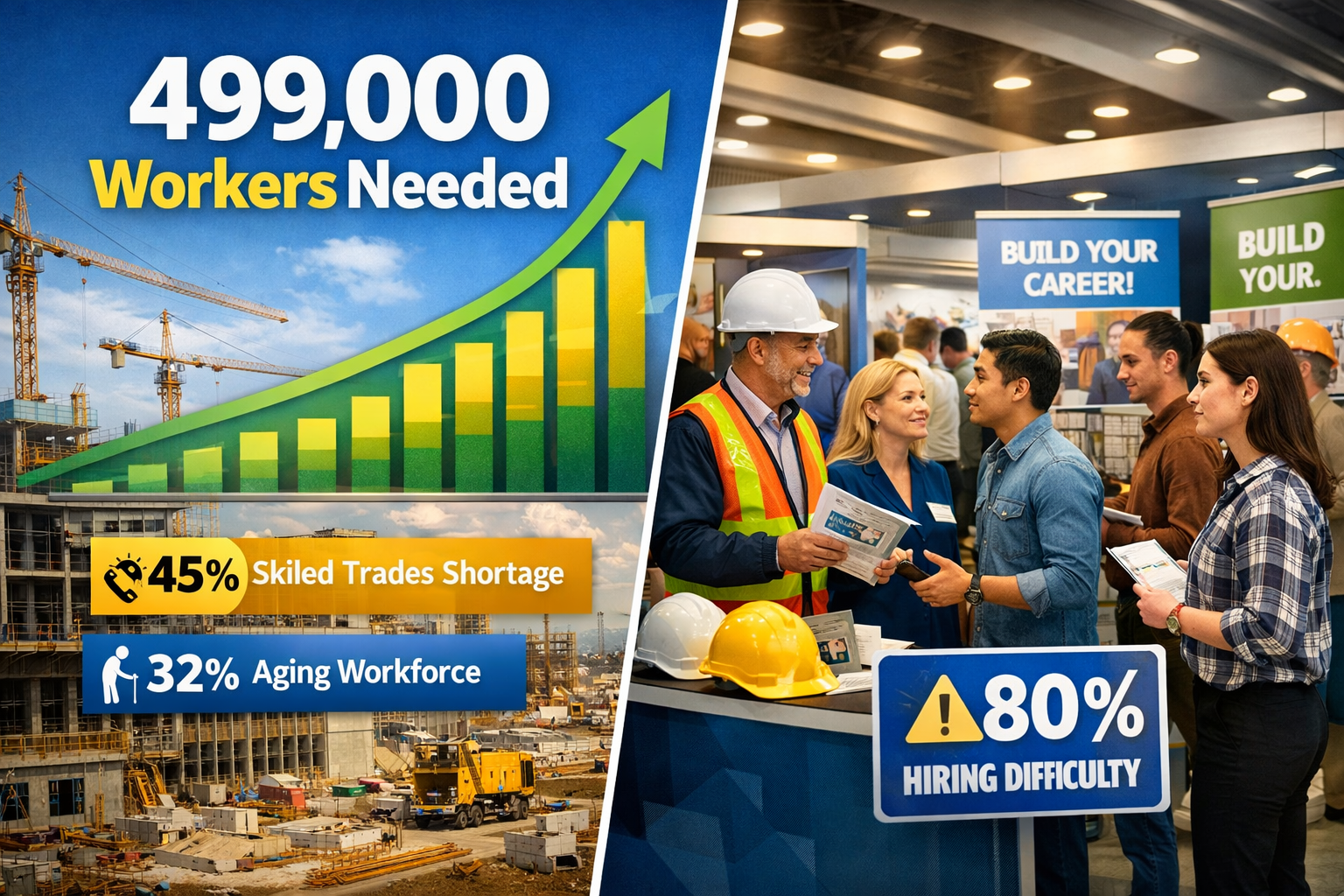
More than 80% of construction firms report difficulty finding qualified workers—a crisis that threatens to derail project timelines and inflate costs across the industry[4]. As building surveyor positions are forecasted to rise by 11% through 2027, firms face an unprecedented challenge: how to attract, train, and retain skilled professionals in a market where demand dramatically outpaces supply. The conversation around Building Surveyors and the 2026 Skills Shortage: Recruitment, Training, and Competitive Positioning in a Booming Market has never been more urgent for companies seeking to maintain quality standards while scaling operations.

The construction industry stands at a crossroads. With approximately 499,000 additional workers needed in 2026 and 41% of the current workforce projected to retire by 2031, the talent pipeline faces severe strain[3]. For building surveying firms, this shortage creates both challenges and opportunities—those who adapt their recruitment strategies and invest in training programs will gain significant competitive advantages.
Key Takeaways
✅ Critical shortage: The construction industry needs 499,000 additional workers in 2026, with building surveyors among the most in-demand roles due to new building safety legislation[3][5]
✅ Recruitment evolution: 63% of contractors plan to expand their workforce despite 80% reporting difficulty finding qualified candidates, requiring innovative hiring strategies[4]
✅ Training investment: Young adult interest in construction trades has doubled from 3% to 6%, presenting opportunities for firms that develop robust apprenticeship programs[2]
✅ Competitive positioning: Rising labor costs (cited by 56% of firms) and insufficient worker supply make retention strategies and employee value propositions critical for market success[4]
✅ Technology integration: BIM specialists and sustainable construction professionals represent rapidly growing specializations within building surveying careers[5]
Understanding Building Surveyors and the 2026 Skills Shortage: Market Dynamics and Root Causes
The skills shortage affecting building surveyors stems from multiple interconnected factors that have converged in 2026. Understanding these root causes helps firms develop targeted solutions.
The Demographic Challenge
The construction industry faces a retirement crisis of unprecedented scale. Approximately 41% of the current workforce will retire by 2031, taking decades of institutional knowledge and technical expertise with them[3]. This mass exodus creates a knowledge gap that cannot be filled quickly, particularly in specialized areas like building defect identification and structural assessment.
Regulatory Complexity Driving Demand
New building safety legislation has fundamentally changed the surveying landscape. Following high-profile building failures, governments have implemented stricter compliance requirements that demand specialized knowledge and certifications[6]. These regulations have created urgent hiring needs for professionals who understand:
- 🏗️ Building safety compliance frameworks
- 📋 Enhanced inspection protocols
- 🔍 Risk assessment methodologies
- 📊 Documentation and reporting standards
The complexity of modern Level 3 full building surveys requires surveyors with advanced technical knowledge and up-to-date regulatory understanding—skills that take years to develop.
Economic Impact of the Shortage
The construction worker shortage carries an estimated economic impact of $11 billion per year in higher costs and lost construction activity[2]. For individual firms, this translates to:
| Impact Area | Consequence |
|---|---|
| Project delays | 45% of contractors report delays due to labor shortages[3] |
| Cost overruns | Rising labor costs cited by 56% of firms[4] |
| Quality concerns | Pressure to hire less-qualified candidates |
| Client satisfaction | Longer building survey timeframes affecting service delivery |
Regional Variations in Shortage Severity
The skills shortage doesn't affect all markets equally. Australia faces a shortage of 83,000 skilled tradespeople specifically impacting housing construction[1]. In the United States, regional variations exist based on population growth, construction activity, and local training infrastructure. Firms operating across multiple markets must adapt their strategies accordingly.
The Perception Problem
Construction and surveying careers have historically suffered from perception issues among younger generations. Many young people view these professions as physically demanding, low-tech, and offering limited career progression. This perception persists despite the reality that modern building surveying involves:
- 💻 Advanced technology like drone surveys
- 🎓 Professional qualifications and continuous learning
- 💰 Competitive salaries and benefits
- 🚀 Clear career advancement pathways
Changing these perceptions requires sustained effort and strategic communication from industry leaders.
Recruitment Strategies for Building Surveyors and the 2026 Skills Shortage

Addressing the skills shortage requires firms to rethink traditional recruitment approaches. The most successful companies in 2026 are implementing multi-faceted strategies that cast wider nets while maintaining quality standards.
Targeting Emerging Talent Pools
Interest in construction careers among young adults aged 18-25 has doubled from 3% to 6%—a positive trend that forward-thinking firms are capitalizing on[2]. Effective recruitment strategies include:
Early education engagement: Partner with secondary schools and colleges to introduce surveying careers before students commit to other paths. Offer site visits, mentorship programs, and work experience opportunities.
Apprenticeship programs: Develop structured apprenticeships that combine on-the-job training with formal education. These programs address the experience gap while building loyalty among new recruits.
Career changers: Target professionals from adjacent fields (architecture, engineering, construction management) who possess transferable skills and can be upskilled more quickly than complete beginners.
Diversity initiatives: Actively recruit from underrepresented groups including women, ethnic minorities, and individuals from non-traditional backgrounds. Diverse teams bring fresh perspectives and expand the talent pool.
Competitive Compensation and Benefits
With 63% of contractors planning to add workers in 2026, competition for qualified surveyors has intensified[4]. Firms must offer compelling packages that include:
- 💷 Above-market salaries: Regular benchmarking against competitors
- 🏥 Comprehensive benefits: Health insurance, pension contributions, life insurance
- ⚖️ Work-life balance: Flexible working arrangements, generous leave policies
- 📈 Performance bonuses: Tied to individual and company success
- 🚗 Additional perks: Company vehicles, equipment allowances, professional subscriptions
Employer Branding and Value Proposition
In a candidate-driven market, firms must articulate why talented surveyors should choose them over competitors. Successful employer brands emphasize:
Professional development: Clear pathways to RICS chartership and specialized certifications. Investment in continuing education demonstrates commitment to employee growth.
Technology leadership: Showcase adoption of cutting-edge tools like Building Information Modeling (BIM), laser scanning, and drone survey technology. Tech-savvy candidates want to work with modern equipment.
Project diversity: Highlight interesting and challenging projects. Working on listed buildings or complex commercial developments attracts ambitious professionals.
Company culture: Promote collaborative environments, mentorship opportunities, and values-driven leadership. Culture fit increasingly influences candidate decisions.
Digital Recruitment Tactics
Modern recruitment requires sophisticated digital strategies:
- 🌐 Optimized career pages: Mobile-friendly, easy application processes
- 📱 Social media presence: LinkedIn, Instagram showcasing company culture
- 🎥 Video content: Day-in-the-life features, employee testimonials
- 🔍 SEO for recruitment: Ensuring job postings rank for relevant searches
- 💬 Candidate relationship management: Maintaining talent pipelines for future needs
Strategic Partnerships
Building relationships with educational institutions creates sustainable talent pipelines. Partner with universities offering surveying programs, sponsor student projects, and offer placement opportunities. These relationships provide early access to emerging talent while raising your firm's profile.
Training and Development: Building Surveyors and the 2026 Skills Shortage Solutions

Recruitment alone cannot solve the skills shortage. Firms must invest heavily in training and development to transform promising candidates into competent professionals and keep experienced surveyors at the cutting edge of their field.
Structured Onboarding Programs
Effective onboarding accelerates the journey from new hire to productive team member. Comprehensive programs should include:
Technical foundations: Systematic introduction to building survey methodologies, inspection techniques, and reporting standards. New surveyors need structured learning rather than ad-hoc exposure.
Mentorship pairing: Assign experienced professionals to guide newcomers through their first projects. This relationship transfers tacit knowledge that formal training cannot capture.
Gradual responsibility increase: Start with simpler residential surveys before progressing to complex commercial or budgeting for repairs and restoration projects.
Regular feedback loops: Weekly check-ins during the first six months ensure issues are identified and addressed quickly.
Professional Qualification Support
NVQ Level 6 certifications, CSCS management cards, and RICS chartership have become increasingly essential for career advancement[5]. Leading firms support qualification attainment through:
- 📚 Study leave: Paid time off for exam preparation
- 💰 Financial support: Covering course fees, exam costs, and membership dues
- 👥 Study groups: Facilitating peer learning among candidates
- 📝 APC counseling: Dedicated support for RICS Assessment of Professional Competence
This investment pays dividends through improved technical capabilities and enhanced firm credibility.
Technology Training
Modern building surveying increasingly relies on advanced technology. Training programs must cover:
Building Information Modeling (BIM): BIM specialists are among the fastest-growing in-demand positions[5]. Surveyors need proficiency in BIM software to collaborate effectively with architects and engineers.
Laser scanning and photogrammetry: Creating accurate measured building surveys requires expertise with modern measurement tools.
Drone operation: Drone surveys enable safe, efficient inspection of roofs and tall structures. Proper training ensures regulatory compliance and safety.
Report writing software: Efficient use of specialized software improves productivity and consistency.
Sustainable Construction Expertise
With growing emphasis on environmental performance, surveyors need knowledge of:
- 🌱 Energy efficiency assessment
- ♻️ Sustainable materials and construction methods
- 🏡 Retrofit and renovation strategies
- 📊 Environmental impact evaluation
Professionals with sustainable construction expertise command premium salaries and attract environmentally conscious clients.
Continuous Professional Development
Learning doesn't stop after initial qualification. Regular CPD ensures surveyors remain current with:
- 📋 Regulatory changes and building codes
- 🔬 New materials and construction techniques
- ⚖️ Legal developments affecting property and construction
- 🛠️ Emerging technologies and methodologies
Firms that embed CPD into their culture maintain competitive advantages through superior technical knowledge.
Knowledge Management Systems
As experienced surveyors retire, firms risk losing valuable institutional knowledge. Implement systems to capture and transfer expertise:
Documentation protocols: Require detailed notes on unusual conditions or solutions to complex problems.
Case study libraries: Build searchable databases of past projects with lessons learned.
Lunch-and-learn sessions: Regular presentations where team members share knowledge.
Exit interviews: Structured conversations with retiring surveyors to capture their insights.
Competitive Positioning in Building Surveyors and the 2026 Skills Shortage Market
The skills shortage creates strategic opportunities for firms that position themselves effectively. Success requires differentiation, operational excellence, and smart resource allocation.
Service Specialization
Rather than competing on all fronts, many successful firms are developing specialized expertise in high-demand niches:
Building safety and compliance: The surge in regulatory requirements creates demand for specialists who understand complex compliance frameworks[6]. Firms with deep expertise in building safety can command premium fees.
Heritage and conservation: Listed buildings and conservation areas require specialized knowledge. This niche offers less competition and higher margins.
Commercial and industrial: Large-scale commercial projects require different skills than residential work. Specialization enables more efficient service delivery.
Dilapidations: Expertise in commercial lease dilapidations provides steady work from property investors and management companies.
Technology Investment as Differentiator
Firms that invest in advanced technology gain multiple competitive advantages:
Efficiency gains: Modern tools enable surveyors to complete inspections faster without compromising quality. This increased productivity partially offsets labor shortages.
Quality improvements: Drone surveys and laser scanning provide more accurate data than traditional methods, reducing errors and liability.
Marketing advantages: Showcasing cutting-edge capabilities attracts both clients and talented surveyors who want to work with modern equipment.
Service expansion: Technology enables new service offerings like thermal imaging, 3D modeling, and virtual property tours.
Client Relationship Management
In a capacity-constrained market, retaining existing clients becomes more valuable than acquiring new ones. Effective strategies include:
- 🤝 Proactive communication: Regular updates throughout the survey process
- 📞 Post-survey follow-up: Checking client satisfaction and addressing questions
- 📧 Value-added content: Sharing relevant maintenance advice and property guidance
- 🎯 Tailored service: Understanding individual client needs and preferences
Strong relationships generate referrals and repeat business, reducing marketing costs.
Strategic Partnerships and Alliances
Collaboration can address capacity constraints while expanding service offerings:
Referral networks: Build relationships with complementary professionals (estate agents, solicitors, mortgage brokers) for mutual referrals.
Associate surveyors: Develop networks of qualified associates who can handle overflow work during busy periods.
Technology partnerships: Collaborate with tech providers for early access to new tools and co-marketing opportunities.
Training institutions: Partner with colleges and universities for talent pipeline development and research collaboration.
Pricing Strategy in a Tight Market
With 57% of firms citing insufficient worker supply as their top concern[4], capacity constraints enable strategic pricing:
Value-based pricing: Price based on client value rather than time spent. Complex projects with significant financial implications justify premium fees.
Tiered service offerings: Develop multiple service levels from basic to comprehensive, allowing clients to self-select based on needs and budget.
Rush fees: Charge premiums for expedited service to manage demand and compensate for schedule disruption.
Retainer agreements: Secure predictable revenue and client commitment through retainer arrangements with property investors and management companies.
Marketing and Thought Leadership
Establishing authority in the market attracts both clients and employees:
- ✍️ Content marketing: Regular blog posts addressing common questions during building surveys
- 🎤 Speaking engagements: Present at industry conferences and local business events
- 📰 Media relations: Provide expert commentary on property and construction issues
- 🏆 Awards and recognition: Pursue industry awards to validate expertise and quality
Thought leadership positions firms as trusted advisors rather than commodity service providers.
Retention Strategies
With recruitment challenges intensifying, retaining existing staff becomes critical:
Career development plans: Individual development plans with clear progression pathways keep ambitious professionals engaged.
Profit sharing: Align employee interests with firm success through bonus structures tied to profitability.
Work environment: Invest in comfortable offices, modern equipment, and collaborative spaces.
Recognition programs: Celebrate achievements, certifications, and project successes publicly.
Exit interviews: When staff do leave, conduct thorough exit interviews to identify improvement opportunities.
The consequences of failing to act on retention are severe—replacing an experienced surveyor costs significantly more than investing in their satisfaction.
Future Outlook: Navigating Building Surveyors and the 2026 Skills Shortage
The skills shortage affecting building surveyors will not resolve quickly. Nearly 40% of contractors report backlogs larger than the previous year, indicating sustained strong demand[4]. Firms must prepare for a prolonged period of talent scarcity.
Emerging Trends Shaping the Market
Automation and AI: While technology won't replace surveyors, it will change their roles. AI-assisted defect detection and automated report generation will handle routine tasks, allowing professionals to focus on complex analysis and client advisory.
Remote and hybrid work: The pandemic normalized flexible working arrangements. Firms that offer hybrid models attract wider talent pools, though site-based work remains essential.
Modular and off-site construction: Growth in modern construction methods requires surveyors with new skills in factory-built components and assembly-based construction.
Climate resilience: Increasing focus on climate adaptation requires expertise in flood risk, overheating, and weather resilience assessment.
Government and Industry Initiatives
Addressing the skills shortage requires coordinated action beyond individual firms. Australia's government faces pressure to invest in apprenticeship programs in the 2026-27 budget[1]. Similar initiatives in other markets could ease long-term shortages, though immediate relief remains unlikely.
Industry bodies like RICS are expanding training programs and modernizing qualification pathways to improve accessibility. Firms should engage with these initiatives and advocate for policies that support workforce development.
Building Resilient Organizations
The most successful firms will build resilience through:
- 📊 Workforce planning: Systematic analysis of future needs and proactive recruitment
- 🔄 Cross-training: Developing versatile professionals who can handle multiple survey types
- 🤖 Technology adoption: Continuous investment in productivity-enhancing tools
- 🌍 Geographic flexibility: Ability to deploy resources across multiple markets
- 💪 Financial strength: Maintaining reserves to weather market fluctuations and invest in opportunities
Conclusion
Building Surveyors and the 2026 Skills Shortage: Recruitment, Training, and Competitive Positioning in a Booming Market represents one of the defining challenges facing the construction industry. With 499,000 additional workers needed, 80% of firms struggling to find qualified candidates, and 41% of the current workforce approaching retirement, the talent crisis shows no signs of abating[3][4].
However, this challenge also presents significant opportunities. Firms that act decisively on recruitment innovation, training investment, and competitive positioning will gain substantial market advantages. The doubling of young adult interest in construction trades provides hope for the future pipeline, but converting that interest into qualified professionals requires sustained effort[2].
Actionable Next Steps
For building surveying firms looking to thrive despite the skills shortage:
-
Audit your current position: Assess your recruitment effectiveness, training programs, and competitive positioning against the strategies outlined in this article
-
Develop a comprehensive talent strategy: Create a written plan addressing recruitment, onboarding, training, and retention with specific goals and timelines
-
Invest in technology: Identify tools that improve productivity and attract tech-savvy candidates, starting with drone survey capabilities or BIM integration
-
Strengthen your employer brand: Document your value proposition and communicate it consistently across all candidate touchpoints
-
Build educational partnerships: Establish relationships with at least two training institutions to create sustainable talent pipelines
-
Implement knowledge management: Create systems to capture and transfer expertise before experienced surveyors retire
-
Review compensation and benefits: Benchmark against competitors and ensure your packages remain competitive in the current market
The firms that will succeed in the coming years are those that recognize the skills shortage not as a temporary disruption but as a fundamental market condition requiring strategic response. By focusing on people development, technological advancement, and operational excellence, building surveying firms can not only survive but thrive in this challenging environment.
The construction industry needs skilled building surveyors more than ever. Those who rise to meet this demand with innovative recruitment, comprehensive training, and strategic positioning will define the future of the profession.
References
[1] Watch – youtube.com
[2] Young Adults Report More Interest In The Construction Trades 2026 Survey – eyeonhousing.org
[3] Half A Million Short The Construction Workforce Crisis Reshaping Project Delivery – cicconstruction.com
[4] 2026 Construction Industry Outlook – sage.com
[5] Most In Demand Construction Roles For 2026 – thinkconstructionskills.com
[6] Surveying Recruitment Trends 2026 Skills Shortages In Building Safety And Housing Compliance Roles – nottinghillsurveyors.com