

One in ten private rented homes in England has a category 1 hazard serious enough to pose a real risk to health, according to figures released by the Ministry of Housing, Communities and Local Government (MHCLG) via Housing Digital on 12 October 2026. That single statistic explains why the government has now turned its attention from social housing to the 11 million private renters who, until now, have sat outside Awaab's Law entirely.
On 9 October 2026, MHCLG opened a formal consultation asking whether and how Awaab's Law should be extended into the private rented sector. For landlords, letting agents and tenants, the Awaab's Law private rented sector consultation landlords are being asked to respond to is not a minor technical exercise. It could reshape how hazard repairs are timed, documented and enforced across nine million homes.
Key Takeaways
- The consultation opened 9 October 2026 and closes 18 December 2026; no start date for private rented sector protections has been confirmed.
- Landlord Today reported it as a 64-question consultation (12 October 2026), covering standard private tenancies plus temporary accommodation, care leaver housing and supported housing.
- Coverage could rise from roughly four million to around nine million homes, protecting more than five million additional households (MHCLG via Housing Digital).
- Around one in ten private rented homes already has a category 1 hazard, and the Renters' Rights Act already allows fines of up to £7,000 for such hazards.
- Propertymark has urged members to respond; the Housing, Communities and Local Government Committee chair has urged a phased approach that gives smaller landlords time to adapt.
What Is Awaab's Law and What Does the Private Rented Sector Consultation Ask?
Awaab's Law came into force for social landlords in October 2025. In principle, it sets legally binding timescales within which a landlord must investigate a reported hazard, report back to the tenant, and then carry out the necessary repair, with faster action required for emergency hazards. Phase one focused on damp and mould and emergency hazards.
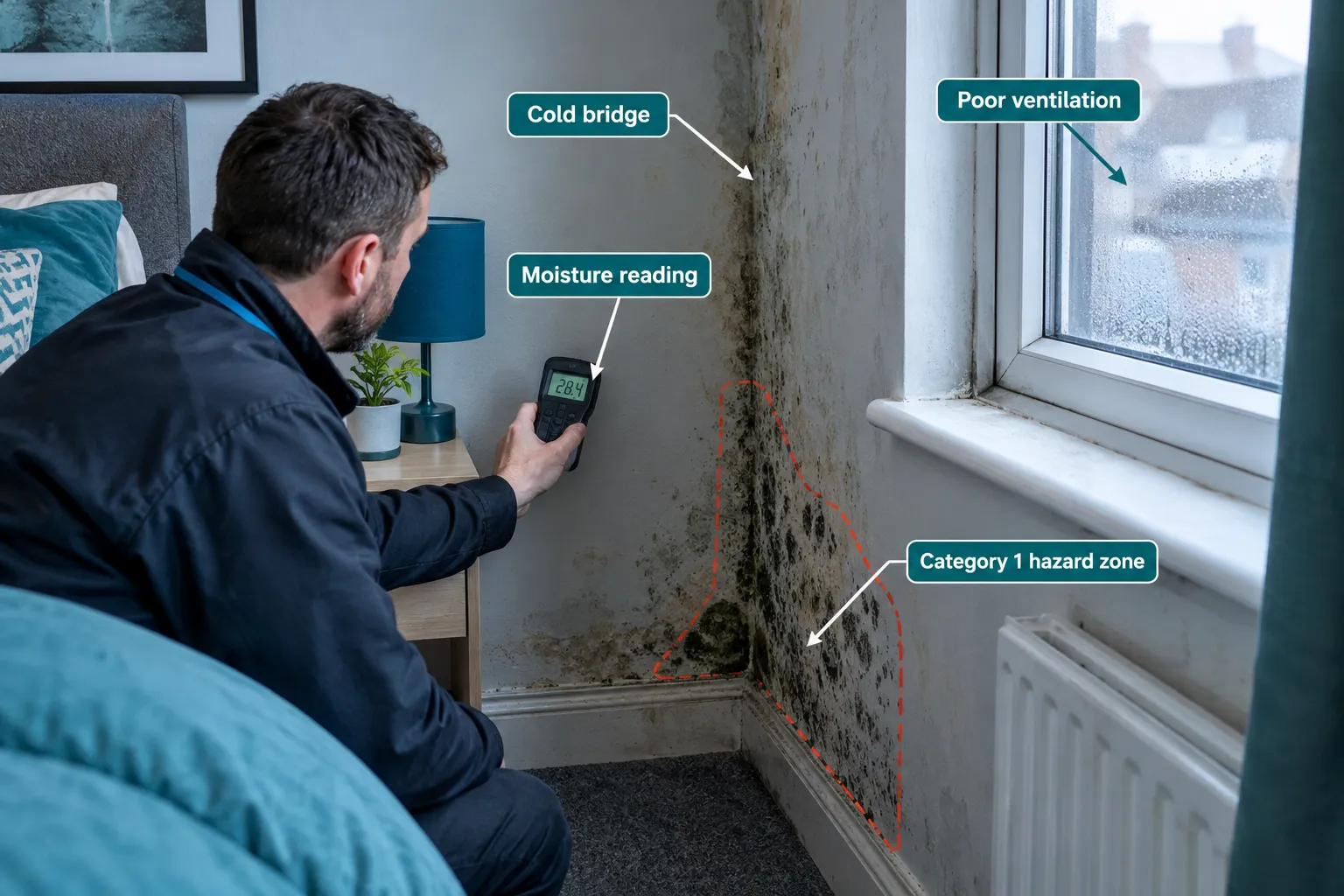
The new consultation, running from 9 October to 18 December 2026, asks a much broader question: how should these same binding duties apply to private landlords? Landlord Today's report of 12 October 2026 described it as a 64-question document, reflecting how many practical details still need to be settled, from how hazards should be reported, to how "investigate, report and fix" should work for landlords who may own a single flat rather than a housing association portfolio.
Crucially, the consultation also asks whether Awaab's Law should cover:
- Temporary accommodation
- Housing for care leavers
- Supported housing
No implementation date has been set. The government has been explicit that responses to the consultation will shape the timescale for bringing these protections into force, not just the detail of how they work.
Housing Minister Matthew Pennycook summed up the government's starting position: "Awaab's Law is already helping to drive up standards in the social housing sector." The consultation is effectively asking whether, and how fast, that same discipline can be exported to private renting.
Why the Awaab's Law Private Rented Sector Consultation Matters for Landlords Now
The scale involved is significant. MHCLG figures reported via Housing Digital on 12 October 2026 suggest homes covered by Awaab's Law could rise from around four million to around nine million, protecting more than five million additional households. Set against England's roughly 11 million private renters, this would bring binding hazard-response duties to the clear majority of the rental market.
Stakeholders have been quick to respond. Rachael Williamson of the Chartered Institute of Housing said success "depends on listening to residents and acting quickly when concerns are raised." Holly Williamson of Generation Rent pushed for speed, arguing protections "must be put in action as soon as possible to make sure every renter can live in a good quality home." By contrast, Abena Oppong-Asare MP, chair of the Housing, Communities and Local Government Committee, urged the government to "phase-in these new protections at pace" while recognising that landlords, especially smaller ones, will need time to adapt.
Propertymark urged its members on 12 October 2026 to respond to the consultation directly, a sign that the letting agency sector sees the detail of implementation, not just the principle, as something worth influencing. For background on the wider legal backdrop, see this guide to what landlords must do now under the Renters' Rights Act.
Damp, Mould and Condensation: The Likely First Battleground
Given that phase one of the social housing version of Awaab's Law prioritised damp and mould, and that MHCLG's own figures point to widespread category 1 hazards in private rentals, it is reasonable to expect damp, mould and condensation to be the first flashpoint if the law extends into the private rented sector. These issues are common, frequently disputed between landlord and tenant over cause (lifestyle condensation versus structural defects), and relatively quick to assess with the right equipment.
Landlords who have followed earlier coverage of this shift may already be familiar with the groundwork, see this detailed look at damp and mould surveys and protocols for private sector landlords ahead of May 2026 changes and the related guidance on damp and mould detection methods in building surveys.
How Landlords Can Prepare Now for the Awaab's Law Private Rented Sector Consultation Outcome
With no start date confirmed, there is no need for panic, but there is a strong argument for preparation. Several steps make sense regardless of the final timetable:
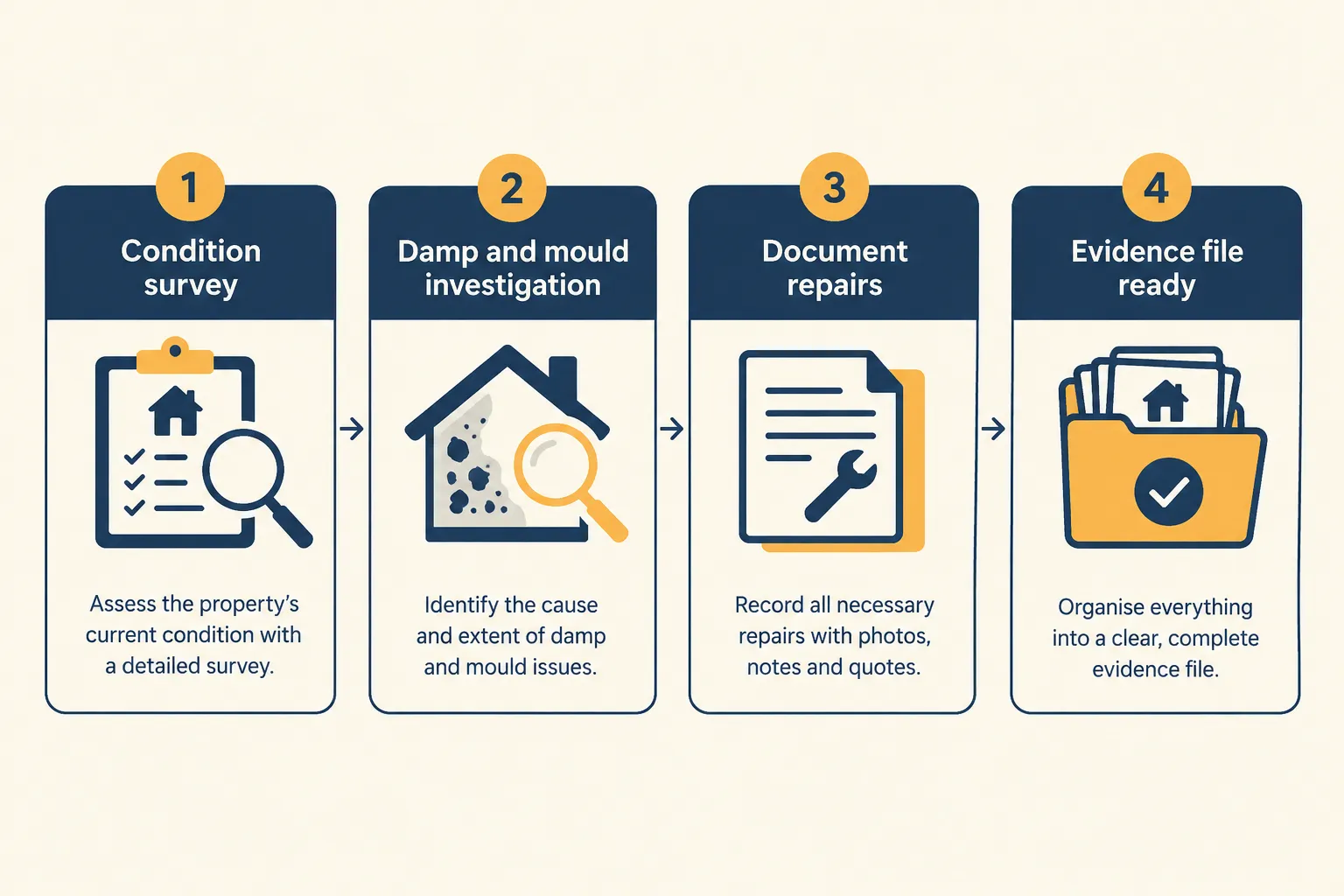
- Commission a condition survey. A pre-tenancy or periodic condition survey establishes a documented baseline for the property, which is invaluable if a dispute arises later.
- Investigate damp and mould properly. A surveyor can take moisture readings, assess ventilation performance and check for thermal bridging, the combination of factors that typically drives condensation-related mould.
- Document every repair. Dated records of when a hazard was reported, investigated and fixed will matter far more once binding timescales apply, as they do already in social housing.
- Build an evidence trail. Photographs, correspondence and surveyor reports all strengthen a landlord's position if a case reaches a tribunal or local authority enforcement.
Surveyors such as Prince Surveyors can carry out these damp and mould and condition assessments, giving landlords a professional, evidence-based starting point rather than relying on guesswork. Related reading on wider hazard categories includes this overview of expanded hazard categories and surveyor protocols under Awaab's Law and the decent homes standard protocols for private rental compliance.
Costs vs Fines: Framing the Business Case
The Renters' Rights Act already allows fines of up to £7,000 where a category 1 hazard is found in a private rented property. Against that backdrop, the cost of a professional survey and prompt repairs looks modest. Market conditions add further context: Rightmove reported on 15 October 2026 that asking rents outside London had reached a record £1,418, while Ringley estimated on 16 October 2026 that around 35% of private landlords had sold or tried to sell in the past twelve months, and roughly 13% of homes currently for sale were previously rentals. Fleet Mortgages recorded an average gross yield of 7.9% in Q3 2026. In a market where some landlords are exiting and others are seeking strong yields, maintaining compliant, well-documented properties is likely to matter more, not less, for those remaining in the sector.
Landlords weighing their wider legal exposure may also find it useful to review how expert witness protocols apply to private rented sector hazard disputes and how electrical hazard assessments fit into preparations for Awaab's Law extensions.
How to Respond to the Awaab's Law Private Rented Sector Consultation by 18 December
The consultation closes on 18 December 2026. Landlords, letting agents and representative bodies have until that date to submit views on how the 64 questions should be answered, including how timescales should work for private landlords, whether smaller landlords need different treatment, and whether temporary accommodation, care leaver housing and supported housing should be included. Propertymark has already encouraged its members to take part. Individual landlords and agents wanting a voice in the final shape of the law should treat the closing date as a firm deadline for making their views known through the official consultation process.
What Tenants Should Know
For tenants, the consultation signals intent rather than immediate change. Awaab's Law does not yet apply to private rentals, and no date has been set for when it will. In the meantime, the existing Renters' Rights Act framework, including fines of up to £7,000 for category 1 hazards, remains the primary lever for addressing serious disrepair. Tenants with concerns about damp, mould or other hazards should continue reporting issues in writing and keeping their own records, since this evidence trail will matter whatever timetable eventually emerges.
Frequently Asked Questions
Does Awaab's Law already apply to private rented homes?
No. It currently applies to social housing in England, in force since October 2025. The October 2026 consultation is examining whether and how to extend it to private renting.
When will Awaab's Law apply to private renters?
No start date has been set. The government says consultation responses will inform the timescale for implementation.
What does the consultation actually ask?
Landlord Today reported it as a 64-question consultation covering how timescales should work for private landlords, and whether temporary accommodation, care leaver housing and supported housing should be included.
What happens if a hazard is found now, before any extension takes effect?
Under the Renters' Rights Act, fines of up to £7,000 can already apply where category 1 hazards are identified in private rented homes.
How many homes could be affected?
MHCLG figures reported via Housing Digital suggest coverage could rise from around four million to around nine million homes, protecting over five million additional households.
Should landlords wait before acting?
Given the scale of category 1 hazards already found in private rentals and the existing £7,000 fine regime, many landlords are choosing to commission condition and damp surveys now rather than waiting for a final implementation date.
Conclusion
The Awaab's Law private rented sector consultation landlords are now being asked to engage with marks a significant moment for English renting, even though no implementation date exists yet. With around nine million homes potentially covered, a public spotlight on category 1 hazards, and existing £7,000 fines already in force under the Renters' Rights Act, the direction of travel is clear. Landlords and agents should consider responding to the consultation before it closes on 18 December 2026, and in parallel, commission condition and damp and mould surveys to build the kind of evidence trail that binding timescales will eventually demand. Acting early is cheaper than reacting late.
Awaab's Law, private rented sector consultation, landlord compliance, damp and mould surveys, Renters Rights Act, MHCLG consultation, category 1 hazards, housing standards, tenant protections, chartered surveyors, property compliance 2026, letting agents UK