Eight and a half billion pounds. That is what HMRC collected in inheritance tax during 2025-26, up from £8.3 billion the year before, and the figure keeps climbing even though no government has changed the headline rate. Against that backdrop, comments from a senior opposition politician at a party conference have put the tax back on the front pages. This article examines the inheritance tax reform Badenoch property valuation probate October 2026 story, separates political signalling from government policy, and sets out the practical valuation steps that matter for families with property in London and the South East right now.
Key Takeaways
- Conservative leader Kemi Badenoch signalled openness to inheritance tax reform on 5 October 2026, but this is opposition commentary, not government policy.
- HMRC inheritance tax receipts hit £8.5 billion in 2025-26, driven partly by frozen thresholds and rising property values.
- The nil-rate band (£325,000) is frozen until 2031; the residence nil-rate band (up to £175,000) tapers for estates over £2 million.
- From April 2027, unused pension pots will count towards estates for inheritance tax purposes.
- Regardless of future reform, HMRC requires probate valuations at "open market value" under section 160 of the Inheritance Tax Act 1984, and a RICS Red Book valuation is the most defensible way to meet that standard.
Why Inheritance Tax Is Back in the News in October 2026
On 5 October 2026, at the Conservative Party conference, Kemi Badenoch signalled openness to reforming inheritance tax. As reported by Property Industry Eye, she said: "It is morally right that people don't get taxed twice… if you work hard and want to give something to your children the Government doesn't take it away." She was careful to add a fiscal caveat: "I am not going to announce tax cuts unless we can show how we pay for them… tax cuts are a good thing but you've got to be fiscally responsible."
It is worth stating plainly: the Conservatives are currently in opposition, so this is not government policy. Any change to inheritance tax would need to come from the sitting Labour government, which delivers its Autumn Budget on 28 October 2026. There has been speculation about further wealth and property tax measures ahead of that Budget, and the government has publicly denied plans for a flat 10% "death tax" to help fund social care. Nothing is confirmed, but the political temperature around estate taxation is clearly rising.
For families in London and the South East, where property often makes up the largest share of a taxable estate, this uncertainty is a practical prompt to get valuations in order now, whatever happens in Parliament later this month.
The Current Rules: Thresholds, Rates and the Pension Change Coming in 2027
Inheritance tax is currently charged at 40% on the value of an estate above the nil-rate band of £325,000. That threshold has been frozen since 2009 and will now stay frozen until 2031. A residence nil-rate band of up to £175,000 can apply on top when a main home passes to children or grandchildren, though this tapers away for estates worth more than £2 million.
Because property prices in London and the South East have risen substantially since 2009 while the nil-rate band has stood still, more ordinary family homes are being pulled into the inheritance tax net each year. This is sometimes called fiscal drag, and it is a key reason behind the rising receipts figures.
A further change is already locked in: from April 2027, unused pension pots will be brought into estates for inheritance tax purposes. This will affect many families who had previously used pensions as a tax-efficient way to pass on wealth, and it adds another reason to review estate plans well before any Budget announcement.
| Threshold or rule | Detail |
|---|---|
| Nil-rate band | £325,000, frozen since 2009, frozen again until 2031 |
| Residence nil-rate band | Up to £175,000 for a main home passing to children or grandchildren, tapers above £2m estates |
| Standard IHT rate | 40% on value above available thresholds |
| Pension pots | Brought into estates for IHT from April 2027 |
| 2025-26 receipts | £8.5 billion, up from £8.3 billion |
Why Probate Valuation Matters More Than Ever
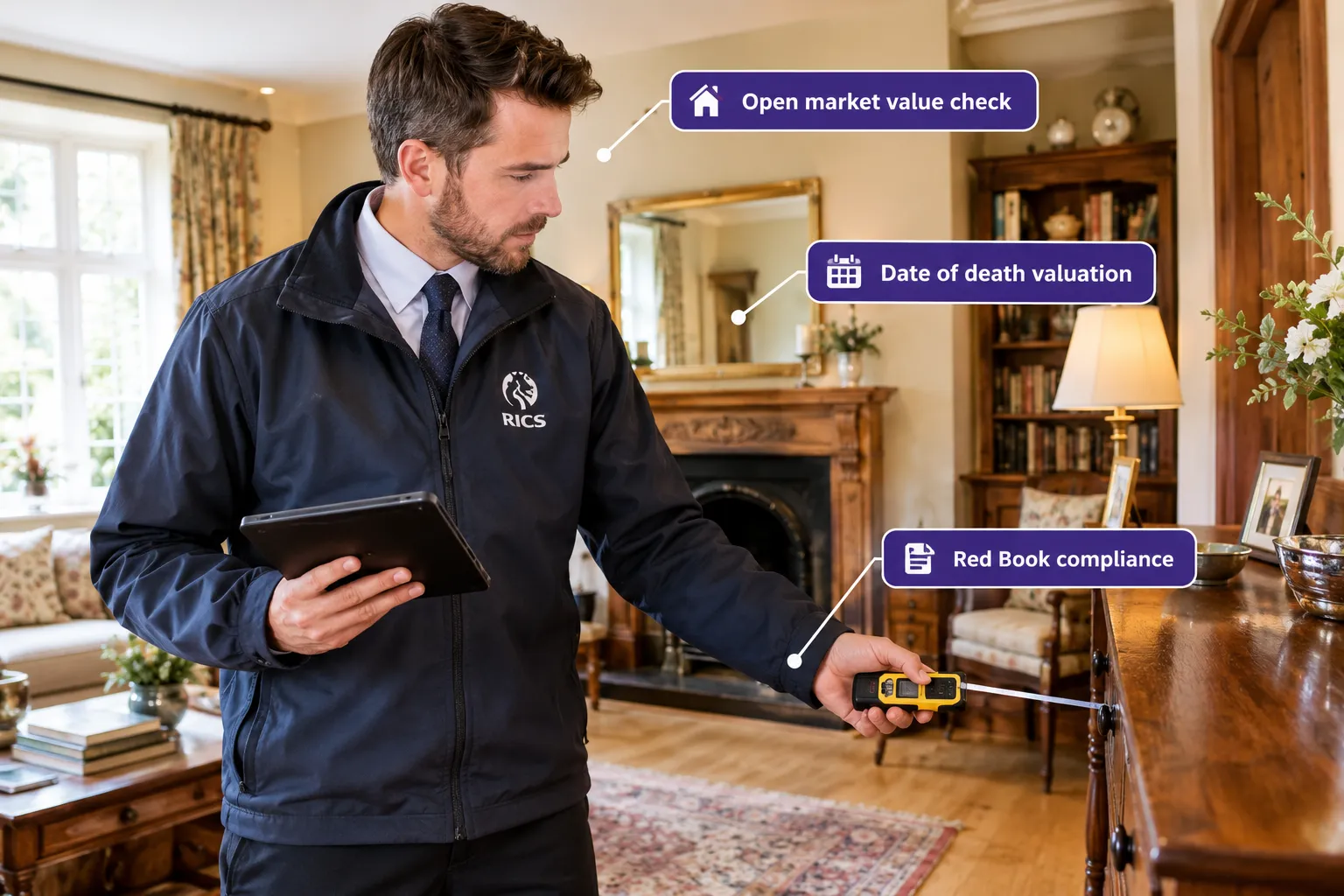
Whatever the outcome of the wider inheritance tax reform Badenoch property valuation probate October 2026 debate, one rule does not change: HMRC requires the value of a deceased person's property to be assessed at "open market value" at the date of death, under section 160 of the Inheritance Tax Act 1984. This is the figure a willing buyer would have paid a willing seller on the open market, not a guess, not a rough estimate, and not simply the figure used for a mortgage.
Many executors still rely on a free estate-agent appraisal to value a property for probate. This can be a costly mistake. Estate agents' appraisals are often optimistic, informal, and not prepared to the standard HMRC or the Valuation Office Agency's District Valuer expects. When the District Valuer disagrees with a submitted figure, they can challenge it, which can delay probate, trigger penalties for underpayment, or in some cases result in families overpaying tax on an inflated valuation that nobody checked.
A RICS Red Book valuation, carried out by a qualified chartered surveyor, is prepared to a defined professional standard with clear evidence, comparable sales analysis, and a documented methodology. It is far more robust if HMRC queries the figure, and it gives executors a defensible position they can point to if challenged. For a closer look at how these valuations stand up in formal disputes, see our guide to expert witness valuations in inheritance tax disputes and RICS standards for probate properties.
Beyond Probate: Gifts, Deeds of Variation and Capital Gains Tax
A professional valuation is not only relevant at the point of death. It also matters for:
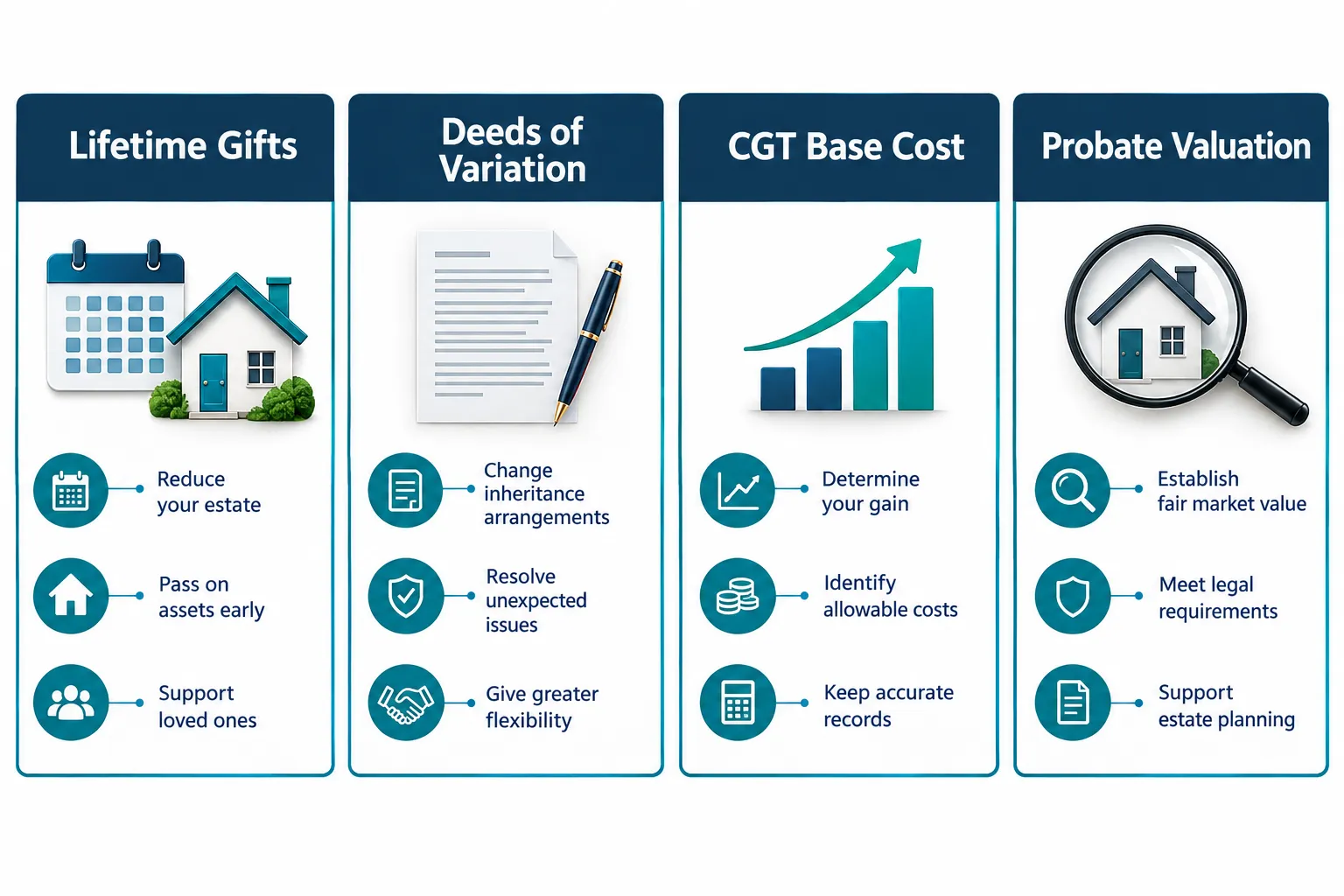
- Lifetime gifts and the seven-year rule. If a parent gifted a property or a share of one within seven years of death, HMRC needs an accurate value of that gift at the time it was made to calculate any tax due, with tapering relief depending on how many years have passed.
- Deeds of variation. When beneficiaries agree to redirect part of an inheritance, perhaps to reduce the overall tax bill or support another family member, an accurate valuation underpins the fairness and legality of the arrangement.
- Capital gains tax base cost. When a beneficiary later sells an inherited property, the value recorded at the date of death becomes the base cost for calculating any capital gain. Get this wrong, and the beneficiary could face an unexpected and avoidable capital gains tax bill years later.
Because high-value homes sit closest to the thresholds and tapering rules, precision matters even more. Our article on valuation precision for high-value homes and navigating tax thresholds explores this in more depth, as does our guide to post-Budget property tax changes affecting high-value estates.
The Risk of Getting It Wrong: Penalties and Overpayment
Undervaluing a property for probate is not a minor administrative slip. If HMRC or the District Valuer concludes that a figure was too low, they can demand the additional tax due, plus interest, and in cases of carelessness or deliberate underestimation, penalties on top. This risk has grown as London property values have risen and HMRC scrutiny has increased.
The opposite mistake, overvaluing, is less talked about but equally damaging. Families who submit an inflated figure, perhaps based on an optimistic estate-agent estimate aimed at winning an instruction, can end up paying more inheritance tax than was legally due. There is no automatic correction mechanism; it typically requires a formal challenge to put right.
A Red Book valuation reduces both risks because it is independent, evidenced, and prepared without any commercial incentive to inflate the figure.
Practical Steps for Families Before Any Rule Change
Regardless of what emerges from the 28 October 2026 Budget or any future Conservative policy platform, families with property in London and the South East can take sensible steps now:
- Commission a RICS Red Book probate valuation as early as possible in the estate administration process.
- Keep records of any lifetime gifts of property, including the value at the time of transfer.
- Review wills and consider whether a deed of variation might help the family's overall tax position, with professional advice.
- Revisit pension nominations ahead of the April 2027 change bringing pensions into estates.
- Monitor the Autumn Budget and any subsequent announcements, rather than acting on speculation alone.
For context on how wider market conditions are affecting valuations across the region, see our coverage of London price cooling and chartered surveyor valuation strategies and our evergreen guide to RICS valuation standards in volatile markets.
"A defensible, evidence-based valuation is the single most practical thing an executor can secure before probate, whatever direction tax policy takes next."
Prince Surveyors Provides Valuations, Not Tax Advice
Prince Surveyors is a RICS chartered surveying practice providing Red Book-compliant valuations for probate, lifetime gifts, and capital gains tax purposes. Surveyors do not provide tax or legal advice. Executors and families should consult a solicitor or qualified tax adviser for guidance on inheritance tax planning, deeds of variation, and the implications of any future legislative change. Our role is to ensure the property valuation underpinning those decisions is accurate, independent, and HMRC-ready. Readers interested in how disputed valuations are tested can also see our analysis of expert witness roles in high-value property valuation disputes following Budget changes and expert witness testimony in post-Budget property disputes.
FAQ
Is inheritance tax reform confirmed following Badenoch's comments?
No. Badenoch's remarks on 5 October 2026 were made in opposition, at the Conservative Party conference. They signal a direction of thinking, not confirmed government policy. Only the sitting government can change tax law, typically through a Budget.
What is the current inheritance tax threshold?
The nil-rate band is £325,000, frozen until 2031. A residence nil-rate band of up to £175,000 can apply when a main home passes to children or grandchildren, tapering away for estates over £2 million.
Why do I need a RICS Red Book valuation for probate rather than an estate agent's estimate?
HMRC requires open market value at the date of death under section 160 of the Inheritance Tax Act 1984. A Red Book valuation is independent, evidenced, and far more defensible if the District Valuer queries the figure, reducing the risk of penalties or overpayment.
How will the April 2027 pension change affect my estate?
From April 2027, unused pension pots will be included when calculating the value of an estate for inheritance tax. This may increase the tax due for estates that previously relied on pensions to pass on wealth efficiently.
Does Prince Surveyors give tax advice?
No. Prince Surveyors provides RICS Red Book property valuations for probate, gifts, and related purposes. For tax planning and legal matters, consult a solicitor or qualified tax adviser.
Conclusion
The inheritance tax reform Badenoch property valuation probate October 2026 story is, for now, a political signal rather than a settled change in the law. But the underlying pressures, frozen thresholds, rising property values, record receipts, and an upcoming Budget, mean families should not wait for certainty before acting. Executors still face a firm legal requirement to establish open market value at the date of death, and that obligation will not disappear whatever Westminster decides. Families with property in London and the South East should secure an independent RICS Red Book valuation early, keep thorough records of any gifts, and seek professional tax and legal advice alongside it. Contact Prince Surveyors to arrange a RICS Red Book probate valuation and put your estate on a solid, defensible footing ahead of whatever October 2026 and the months beyond bring.
inheritance tax reform, Badenoch inheritance tax, probate valuation, RICS Red Book valuation, Inheritance Tax Act 1984, nil-rate band, residence nil-rate band, HMRC probate, estate planning property, Autumn Budget 2026, capital gains tax base cost, deed of variation