

When property disputes escalate beyond negotiation, the courtroom becomes the final battleground. Standing in the witness box, a RICS Chartered Surveyor transforms from technical advisor to impartial expert, bound by strict legal duties that override client loyalty. When a RICS Chartered Surveyor Becomes an Expert Witness: Inside the Process for Boundary, Valuation and Defect Disputes, the stakes are high—careers, reputations, and substantial financial claims hang in the balance.
In 2026, the role of the expert witness has never been more scrutinized. With RICS launching its 5th edition of professional standards for expert witnesses and new legal frameworks like Awaab's Law reshaping housing disrepair claims, surveyors must navigate an increasingly complex landscape. From preparing CPR-compliant reports to withstanding aggressive cross-examination, the journey from surveyor to expert witness demands technical excellence, unwavering independence, and meticulous attention to legal procedure.
Key Takeaways
- Primary duty to the tribunal: Expert witnesses owe their primary obligation to the court or tribunal, not to the client instructing them, requiring complete independence and impartiality in all evidence [1]
- CPR Part 35 compliance is mandatory: All expert reports must comply with Civil Procedure Rules Part 35, including declarations of truth, conflict disclosures, and statements confirming understanding of expert duties
- RICS accreditation provides professional credibility: The RICS Expert Witness Accreditation service offers formal recognition, training, and assessment that strengthens professional standing in court proceedings [2]
- 2026 standards address modern challenges: The updated 5th edition expert witness standard covers AI use, digital evidence, conditional fees, and enhanced conflict of interest requirements [1]
- Specialist expertise determines case acceptance: Surveyors must only accept expert witness instructions within their genuine area of competence, with clear understanding of the specific dispute type—whether boundary, valuation, or defect-related
Understanding the Expert Witness Role in Property Disputes
The Legal Foundation of Expert Witness Duties
The role of an expert witness fundamentally differs from that of a standard professional advisor. Since the landmark Supreme Court decision in Jones v Kaney (2011), expert witnesses can be sued for negligence, establishing clear accountability for the quality and independence of their evidence [2]. This legal shift transformed expert witness work from a protected professional service to one carrying significant personal and professional liability.
The expert's primary duty is to the tribunal, not to the party paying their fees. This principle, enshrined in Civil Procedure Rules Part 35, requires surveyors to provide independent, unbiased opinions even when those opinions may harm their instructing client's case. The RICS professional standard reinforces this obligation, stating that all reports and evidence must be "independent, unbiased, and within the surveyor's true expertise" [1].
For property disputes, this means:
- 📋 Boundary disputes: Providing objective analysis of title deeds, historical plans, and physical evidence regardless of which neighbor is paying
- 💷 Valuation negligence claims: Assessing whether a previous surveyor's valuation was professionally competent, even if instructed by the surveyor's professional indemnity insurer
- 🏗️ Construction defect cases: Determining the true cause and extent of building failures based on evidence, not client preference
- 🏠 Landlord-tenant disputes: Evaluating property condition and disrepair objectively, particularly important under new housing standards
Types of Disputes Requiring RICS Expert Witnesses
RICS Chartered Surveyors serve as expert witnesses across a broad spectrum of property disputes. Understanding when a surveyor becomes an expert witness requires recognizing the distinct categories of cases:
| Dispute Type | Expert Focus | Typical Issues |
|---|---|---|
| Boundary Disputes | Land surveying, title interpretation | Fence lines, encroachment, adverse possession, registered vs. actual boundaries |
| Valuation Negligence | Property valuation standards | Alleged over-valuation, breach of RICS Red Book, lender claims, purchase price disputes |
| Construction Defects | Building pathology, structural integrity | Subsidence, damp, defective workmanship, building problems and solutions |
| Housing Disrepair | HHSRS assessment, Awaab's Law compliance | Landlord obligations, tenant health risks, statutory housing standards |
| Dilapidations | Commercial lease obligations | End-of-lease condition, dilapidations protocols, Schedule of Condition |
| Professional Negligence | Surveying standards and practice | Missed defects, inadequate reporting, breach of duty of care |
Each dispute type requires specialized knowledge. A surveyor expert in property development valuations may not be qualified to opine on boundary law, while a building surveyor skilled in identifying snagging issues may lack the expertise for complex structural failure analysis.
The Transition from Surveyor to Expert Witness
Making the transition from practicing surveyor to expert witness involves more than technical competence. The 2026 RICS standards emphasize several critical requirements:
Competence and Expertise: Surveyors must only accept instructions within their genuine area of expertise. The updated standard clarifies that experts should clearly state the limits of their knowledge and not stray beyond their competence [1].
Independence and Conflicts: Enhanced conflict of interest disclosure requirements now demand surveyors identify and disclose any relationship, financial interest, or prior involvement that could compromise objectivity. Legal consequences for non-compliance have become more severe [1].
Professional Indemnity Insurance: Adequate PII coverage is essential, as expert witnesses face potential negligence claims. The insurance must cover expert witness work specifically, as some policies exclude or limit this activity.
Training and Accreditation: While not mandatory, the RICS Expert Witness Accreditation service provides formal training on legal procedures, report writing, and courtroom conduct. The accreditation process includes assessment and demonstrates commitment to professional standards [2].
When a RICS Chartered Surveyor Becomes an Expert Witness: The Preparation Process
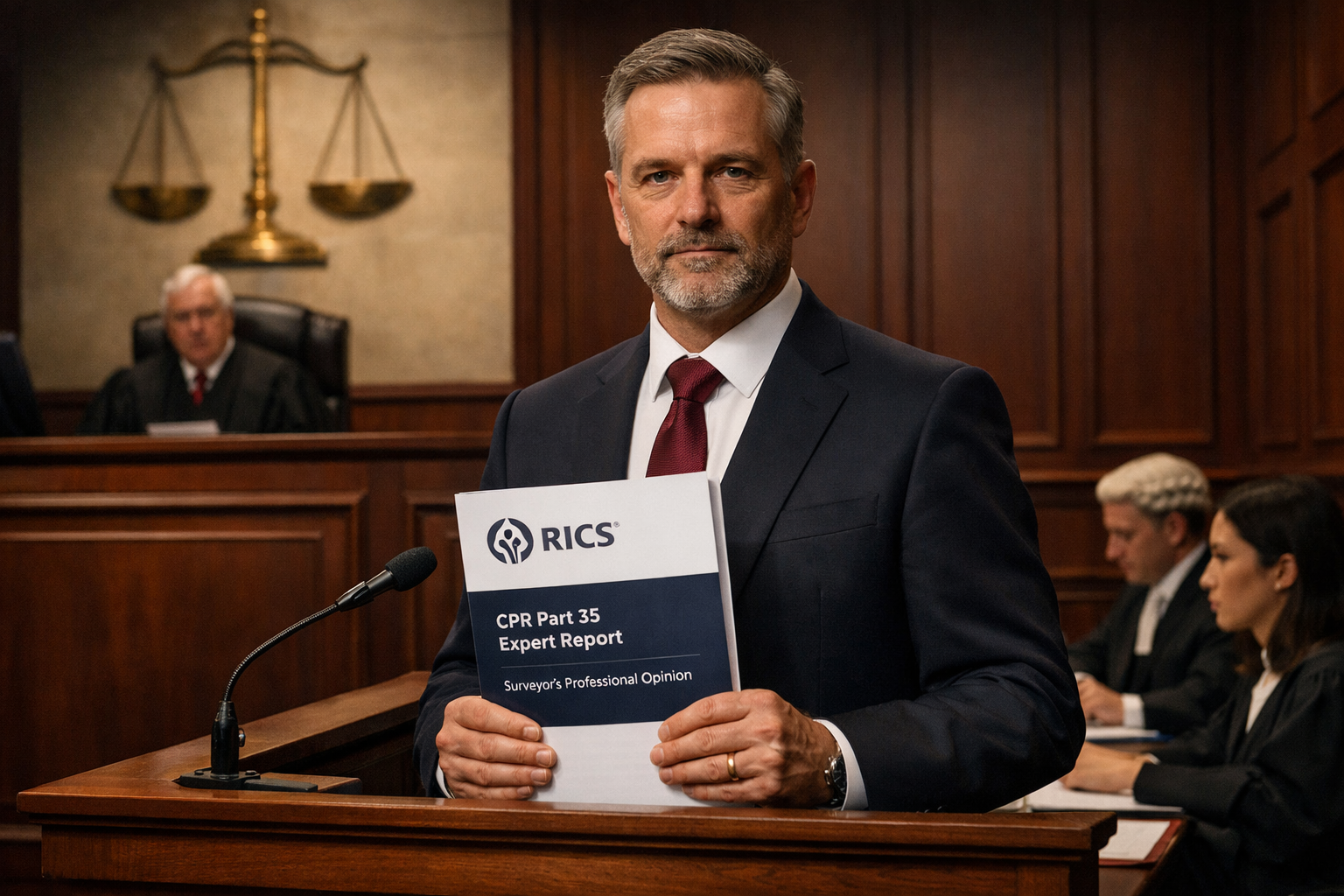
Accepting Instructions and Identifying Conflicts
The expert witness journey begins with the instruction letter. Before accepting any appointment, surveyors must conduct thorough due diligence:
Conflict Checks: Review all parties involved, property addresses, and related entities against the firm's client database. Even indirect conflicts—such as having previously surveyed the property for a different purpose—must be disclosed.
Competence Assessment: Honestly evaluate whether the specific dispute falls within genuine expertise. A surveyor experienced in residential building surveys may lack the specialist knowledge required for complex commercial dilapidations work.
Terms of Engagement: The 5th edition standard provides enhanced guidance on fees and financial arrangements. Conditional fees (where payment depends on case outcome) and deferred fee arrangements can compromise independence and must be carefully structured or avoided [1].
Capacity and Timing: Expert witness work is time-intensive. Surveyors must realistically assess whether they can dedicate sufficient time to site inspections, research, report preparation, and potential court attendance.
A properly drafted letter of instruction should specify:
- The nature of the dispute and parties involved
- The specific questions the expert must address
- Relevant documents and evidence available
- Timescales for report delivery
- Fee arrangements and payment terms
- Court or tribunal procedures applicable
Site Inspections and Evidence Gathering
Thorough site investigation forms the foundation of credible expert evidence. Unlike standard survey work, expert witness inspections must anticipate challenge and cross-examination.
Documentation Standards: Every observation, measurement, and photograph must be meticulously recorded. The 2026 standards address digital evidence handling and chain of custody requirements, ensuring evidence integrity [1].
For boundary disputes, this includes:
- Precise measurements using calibrated equipment
- Photographic evidence with scale references and GPS coordinates
- Analysis of physical boundary features (walls, fences, hedges)
- Comparison with title plans and historical ordnance survey maps
- Evidence of boundary maintenance and use patterns
For defect and disrepair cases, inspection protocols mirror those in comprehensive Level 3 building surveys but with enhanced documentation:
- Moisture meter readings with equipment calibration certificates
- Thermal imaging where appropriate
- Opening-up works (with permission) to investigate hidden defects
- Sampling for laboratory analysis (asbestos, timber decay, concrete testing)
- Detailed photographic schedules with annotations
For valuation disputes, evidence gathering extends beyond the subject property:
- Comprehensive comparable evidence with verification of transaction details
- Market analysis and trend data
- Review of original valuation methodology and assumptions
- Site inspection notes addressing specific valuation challenges
Preparing CPR Part 35 Compliant Expert Reports
The expert report is the cornerstone of the witness's contribution. Civil Procedure Rules Part 35 sets mandatory requirements that apply across England and Wales, with similar principles in other jurisdictions.
Essential Report Components:
-
Expert's Qualifications and Experience: Detailed CV demonstrating relevant expertise, RICS membership status, specialist qualifications, and previous expert witness experience
-
Instructions Received: Clear statement of the questions the expert has been asked to address and documents reviewed
-
Statement of Truth: Declaration that the expert understands their duty to the court overrides any obligation to the instructing party, and that they have complied with that duty
-
Conflicts Declaration: Disclosure of any conflicts of interest, prior involvement, or relationships that could affect independence
-
Factual Basis: Clear distinction between facts observed, facts assumed, and facts provided by others
-
Opinion and Reasoning: Detailed analysis, methodology, and reasoning supporting conclusions, with reference to relevant standards (RICS Red Book, Building Regulations, etc.)
-
Range of Opinion: Where appropriate, acknowledgment of alternative views or uncertainties, with explanation of why the expert's opinion is preferred
-
Summary of Conclusions: Clear, concise answers to the specific questions posed
-
Statement of Compliance: Confirmation that the report complies with CPR Part 35 and the expert's professional body requirements
The 2026 RICS standard provides updated guidance on template usage, particularly important for surveyors handling high-volume housing disrepair cases. While templates can ensure consistency and compliance, experts must ensure each report is genuinely tailored to the specific case and avoid "copy-paste" approaches that undermine credibility [1].
Addressing Modern Challenges: AI and Digital Evidence
A significant update in the 5th edition standard addresses artificial intelligence and digital evidence [1]. As surveyors increasingly use AI-powered tools for valuation analysis, defect detection, and data processing, the standard clarifies disclosure requirements:
- AI Tool Disclosure: Experts must identify any AI tools used in analysis and explain their role in forming opinions
- Data Quality: Responsibility remains with the expert to verify AI outputs and ensure accuracy
- Methodology Transparency: The expert must be able to explain and defend the methodology, even when AI-assisted
- Digital Evidence Integrity: Clear protocols for handling digital photographs, electronic documents, and data files to maintain evidential value
For surveyors working in areas like property valuation, this means ensuring that any automated valuation models or comparative analysis tools are properly documented and their limitations understood.
Courtroom Procedures and Cross-Examination: When a RICS Chartered Surveyor Becomes an Expert Witness in Action
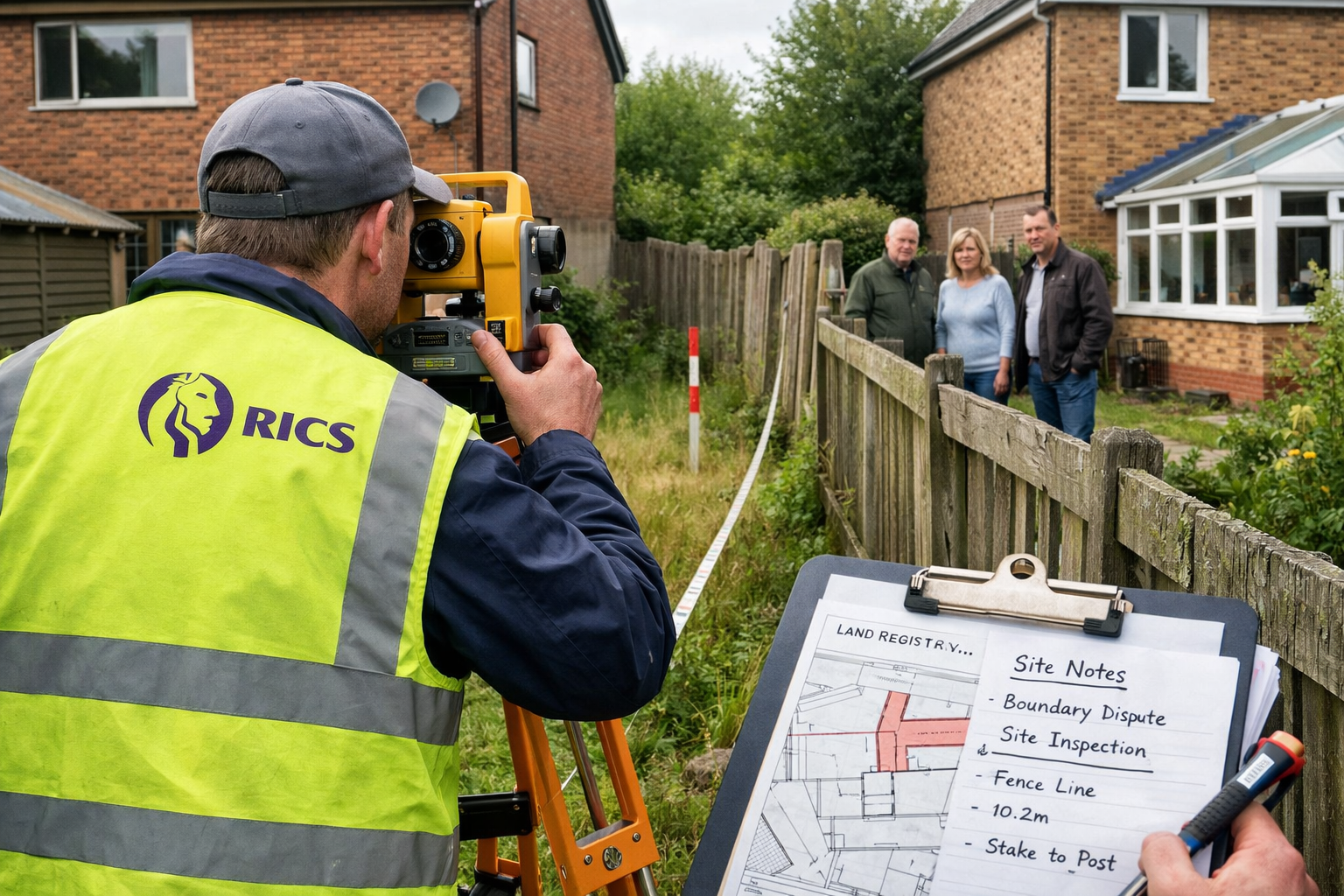
Pre-Trial Procedures and Expert Meetings
Before trial, several procedural steps shape the expert's role:
Experts' Joint Statement: In many cases, the court directs opposing experts to meet and produce a joint statement identifying:
- Points of agreement
- Points of disagreement with brief reasons
- Actions that could resolve disagreements
These "without prejudice" meetings test the expert's ability to maintain independence while engaging constructively with opposing views. The joint statement often narrows issues for trial and can lead to settlement.
Sequential Exchange of Reports: Typically, the claimant's expert serves their report first, followed by the defendant's expert. Reply reports may be permitted to address new points raised.
Court Directions: The judge may issue specific directions about the scope of expert evidence, page limits, or supplementary questions the expert must address.
Giving Evidence in Court or Tribunal
When a RICS Chartered Surveyor becomes an expert witness in the courtroom, preparation meets reality. The experience differs significantly from professional practice:
Evidence-in-Chief: The expert's own barrister leads them through their report, establishing credentials and key opinions. This is typically straightforward, as the report speaks for itself.
Cross-Examination: The opposing barrister's objective is to undermine the expert's credibility, methodology, or conclusions. Common challenges include:
- 🎯 Credential Challenges: "You've never actually testified in a boundary dispute before, have you?"
- 📊 Methodology Attacks: "Why didn't you use the comparable method rather than the residual method?"
- 🔍 Selective Evidence: "You chose to ignore this photograph showing the fence in a different position, didn't you?"
- 💼 Bias Allegations: "Your firm has been instructed by this solicitor on 15 previous occasions, correct?"
- 📋 Standard Compliance: "Can you point to the specific RICS guidance that supports your approach?"
Effective courtroom conduct requires:
- Calm, measured responses: Avoid defensiveness or argument with counsel
- Stick to expertise: Clearly state when questions fall outside competence
- Acknowledge limitations: Admitting uncertainty on specific points enhances overall credibility
- Reference the report: Ground answers in the written evidence already provided
- Explain technical terms: The judge or tribunal may not have surveying expertise
Re-Examination and Judge's Questions
After cross-examination, the expert's own barrister may ask clarifying questions to address points raised. The judge or tribunal may also pose questions directly, often focusing on practical implications or seeking clarification of technical matters.
This is where deep expertise proves invaluable. A surveyor who has conducted hundreds of building surveys can draw on practical experience to explain why certain defects manifest in particular ways, or why specific valuation approaches are appropriate in given circumstances.
Post-Trial Responsibilities and Lessons Learned
After giving evidence, the expert's formal duties may continue:
Supplementary Questions: The court may request written answers to additional questions arising from the hearing
Cost Consequences: In cases where expert evidence is found to be unreasonable or negligent, the expert may face wasted costs orders
Professional Development: Each case provides learning opportunities. Successful expert witnesses maintain detailed records of cases, outcomes, and cross-examination techniques encountered to continuously improve their practice.
Maintaining Independence and Professional Standards
Financial Independence and Fee Structures
The 5th edition standard's enhanced guidance on fees addresses a critical vulnerability: financial arrangements that compromise independence [1].
Prohibited or High-Risk Arrangements:
- Contingency fees based on case outcome
- Success fees that increase if the client wins
- Deferred payment contingent on favorable judgment
- Volume discounts from regular instructing parties that create financial dependency
Acceptable Fee Structures:
- Hourly rates with clear estimates and regular billing
- Fixed fees for defined work stages (report, court attendance)
- Retainer arrangements that don't depend on outcomes
- Payment in advance or staged payments tied to work completion
The standard emphasizes that experts must maintain financial independence to ensure their duty to the tribunal is not compromised by economic pressure.
Ongoing Compliance and CPD Requirements
Expert witness work requires continuous professional development:
Technical Competence: Staying current with relevant RICS standards, building regulations, case law, and industry practice. For example, understanding how Awaab's Law affects housing disrepair assessments is now essential for experts in that field [1].
Legal Procedure Updates: Civil Procedure Rules and tribunal procedures evolve. The 2026 standard updates reflect changes in legal practice and technology [1].
RICS Training: The dedicated Expert Witness Accreditation training course covers report writing, courtroom skills, and ethical obligations [2].
Peer Review: Many expert witnesses benefit from informal peer review of draft reports before service, ensuring technical accuracy and compliance with standards.
Common Pitfalls and How to Avoid Them
Even experienced surveyors can stumble when transitioning to expert witness roles:
❌ Advocacy Creep: Gradually adopting the client's position rather than maintaining objectivity
✅ Solution: Regular self-review asking "Would I reach the same conclusion if instructed by the other side?"
❌ Scope Creep: Opining beyond genuine expertise
✅ Solution: Clearly define and stick to competence boundaries; recommend additional experts when needed
❌ Inadequate Documentation: Poor site notes or missing photographic evidence
✅ Solution: Develop systematic inspection protocols assuming every observation will be challenged
❌ Template Over-Reliance: Generic reports lacking case-specific analysis
✅ Solution: Use templates for structure and compliance, but ensure substantive content is fully tailored [1]
❌ Conflict Blindness: Failing to identify indirect conflicts or relationships
✅ Solution: Comprehensive conflict checks including property addresses, related parties, and prior professional involvement
The RICS Expert Witness Accreditation Process
For surveyors serious about expert witness work, formal accreditation provides credibility and professional development. The RICS Expert Witness Accreditation service, established following the Jones v Kaney decision, offers structured recognition [2].
Accreditation Requirements
Eligibility: Open to all property professionals, not just RICS members, though RICS membership enhances credibility
Training Course: Comprehensive program covering:
- Legal framework and expert duties
- CPR Part 35 compliance
- Report writing skills
- Courtroom procedures and cross-examination techniques
- Ethical obligations and independence
- Practical case studies and exercises
Assessment Process: Candidates must demonstrate competence through:
- Written examination on legal and procedural knowledge
- Sample expert report submission and critique
- Understanding of professional standards and ethics
Continuing Requirements: Accreditation requires ongoing CPD and compliance with RICS standards to maintain status
Benefits of Accreditation
🏆 Enhanced Credibility: Formal recognition when presenting credentials in court
📚 Structured Training: Comprehensive preparation for the unique demands of expert witness work
🤝 Professional Network: Access to community of experienced expert witnesses
⚖️ Quality Assurance: Demonstrates commitment to professional standards and best practice
💼 Market Differentiation: Competitive advantage when solicitors select experts for instruction
Specialized Considerations for Different Dispute Types
Boundary Disputes: Technical Precision Meets Legal Interpretation
Boundary disputes demand unique expertise combining land surveying, legal interpretation of title documents, and understanding of property law principles like adverse possession.
Key Expert Responsibilities:
- Precise measurement and mapping using total stations or GPS equipment
- Analysis of title plans, conveyance documents, and historical ordnance survey maps
- Understanding of legal principles (general boundaries, determined boundaries, T-marks)
- Assessment of physical evidence (walls, fences, hedges, ditches)
- Evaluation of occupation and use patterns
Common Challenges:
- Discrepancies between title plans and physical features
- Historical changes to boundaries over decades
- Conflicting documentary evidence
- Overlay of legal boundaries on imprecise historical maps
Experts must clearly explain technical surveying concepts to legally-trained judges who may have limited understanding of cadastral surveying principles.
Valuation Disputes: Defending Professional Judgment
Valuation negligence claims often involve allegations that a surveyor's valuation was so far from market value that it constituted professional negligence.
Expert Analysis Focus:
- Review of original valuation methodology and comparables used
- Assessment against RICS Red Book standards current at valuation date
- Market analysis demonstrating range of reasonable opinion
- Evaluation of information available to original valuer
- Consideration of property development potential if relevant
The "Bracket of Opinion" Principle: Courts recognize that valuation involves professional judgment and a range of reasonable opinions exists. The expert must establish whether the challenged valuation fell within or outside this acceptable range.
Avoiding Hindsight Bias: Experts must assess the original valuation based on information and market conditions at the time, not with benefit of subsequent events.
Construction Defect Cases: Building Pathology Expertise
Defect disputes require detailed understanding of building construction, failure mechanisms, and remedial options.
Investigation Requirements:
- Comprehensive inspection following Level 3 building survey protocols
- Opening-up works to expose hidden defects
- Testing and analysis (moisture readings, concrete sampling, timber species identification)
- Assessment of causation (design defect, workmanship failure, maintenance neglect)
- Specification of appropriate remedial works and costings
Causation Challenges: Experts must clearly distinguish between:
- Original construction defects
- Subsequent damage or deterioration
- Maintenance failures
- Normal wear and tear
Understanding building materials and construction methods across different eras is essential, from Victorian terrace houses to modern timber-frame construction.
Housing Disrepair and Awaab's Law Compliance
The October 2025 implementation of Awaab's Law has significantly impacted housing disrepair expert witness work [1]. Named after two-year-old Awaab Ishak who died from mold exposure, the law imposes strict timescales on social landlords to address health hazards.
Expert Obligations:
- Assessment using Housing Health and Safety Rating System (HHSRS)
- Evaluation of Category 1 and Category 2 hazards
- Analysis of landlord response times against Awaab's Law requirements
- Expert opinion on causation of damp and mold
- Assessment of impact on tenant health and wellbeing
RICS Practice Alert (April 2025): The professional body specifically reminded members of obligations in housing disrepair cases, emphasizing the need for current knowledge of statutory requirements [1].
Experts in this field must balance technical building pathology with understanding of housing law, tenant rights, and public health principles.
The Future of Expert Witness Practice: 2026 and Beyond
Global Standards and Cross-Jurisdictional Practice
The 5th edition standard is designed for global application while recognizing local legal variations [1]. As property markets become increasingly international, RICS surveyors may be called upon to provide expert evidence in multiple jurisdictions.
Key Considerations:
- Understanding of local court procedures and evidence rules
- Recognition of different legal systems (common law vs. civil law)
- Cultural differences in expert witness roles and expectations
- Compliance with both RICS global standards and local professional requirements
For surveyors practicing across multiple regions—from chartered surveyors in Guildford to chartered surveyors in Oxfordshire—maintaining awareness of regional variations in property law and practice is essential.
Technology Integration and Digital Evidence
The 2026 standard's provisions on AI and digital evidence reflect the profession's technological evolution [1]:
Emerging Technologies:
- AI-powered valuation tools: Automated comparable analysis and market trend prediction
- 3D laser scanning: Precise spatial documentation for boundary and defect disputes
- Drone surveys: Aerial photography and thermal imaging for roof and facade inspections
- Digital twins: Virtual property models for demonstrating defects or alterations
- Blockchain documentation: Immutable records of site inspections and evidence gathering
Expert Responsibilities:
- Transparent disclosure of technology used
- Validation of AI outputs and algorithmic decisions
- Maintaining human expertise and professional judgment
- Ensuring digital evidence integrity and chain of custody
Enhanced Scrutiny and Professional Accountability
The trend toward greater accountability continues. Recent developments include:
Regulatory Oversight: RICS actively monitors expert witness standards through complaints procedures and disciplinary processes
Court Scrutiny: Judges increasingly challenge expert evidence quality, with wasted costs orders for inadequate or partisan expert work
Insurance Requirements: Professional indemnity insurers impose stricter requirements for expert witness work, including specialized training and peer review
Public Consultation: The August 2025 consultation on the 5th edition demonstrates RICS commitment to stakeholder engagement and continuous improvement [1]
Practical Guidance for Aspiring Expert Witnesses
For RICS Chartered Surveyors considering expert witness work, a structured approach maximizes success:
Building Expertise and Credentials
-
Develop Deep Specialist Knowledge: Focus on specific dispute types rather than attempting to cover all areas
-
Gain Practical Experience: Extensive hands-on surveying experience in the specialist area builds credibility
-
Pursue Accreditation: Complete the RICS Expert Witness Accreditation program [2]
-
Shadow Experienced Experts: Where possible, observe court proceedings and learn from established expert witnesses
-
Maintain CPD: Stay current with technical standards, legal developments, and industry practice
Establishing an Expert Witness Practice
Marketing and Visibility:
- Register with expert witness directories
- Develop relationships with specialist property litigation solicitors
- Publish technical articles and speak at professional conferences
- Maintain detailed CV highlighting relevant expertise and case experience
Infrastructure Requirements:
- Adequate professional indemnity insurance covering expert witness work
- Quality management systems for case documentation and file management
- Secure IT systems for handling confidential case materials
- Time management systems to balance expert witness and other professional work
Professional Development:
- Join expert witness professional associations
- Participate in mock cross-examination training
- Seek peer review of early reports
- Learn from each case to continuously improve practice
Ethical Foundations
Successful expert witness practice rests on unwavering commitment to core principles:
✅ Independence: Primary duty to the tribunal, not the paying client
✅ Competence: Only accept instructions within genuine expertise
✅ Objectivity: Form opinions based on evidence, not client preference
✅ Transparency: Disclose methodology, limitations, and conflicts
✅ Integrity: Maintain professional standards even under pressure
These principles, reinforced throughout the RICS standards and the Prince Chartered Surveyors way of professional practice, ensure that expert witnesses serve justice rather than partisan interests.
Conclusion
When a RICS Chartered Surveyor Becomes an Expert Witness: Inside the Process for Boundary, Valuation and Defect Disputes, the transformation demands far more than technical competence. It requires embracing a fundamentally different professional role—one where independence trumps client loyalty, where every opinion must withstand aggressive challenge, and where the duty to the court supersedes all other obligations.
The 2026 landscape for expert witnesses reflects evolving legal standards, technological advancement, and heightened professional accountability. The 5th edition RICS standard provides comprehensive guidance on modern challenges, from AI integration to conditional fee arrangements, ensuring surveyors can navigate complex disputes while maintaining professional integrity [1].
For surveyors across all specialties—whether conducting building surveys in Hammersmith, valuations in Esher, or party wall work in Camden—the potential to serve as an expert witness offers professional development, intellectual challenge, and the opportunity to contribute to the administration of justice.
Next Steps for RICS Chartered Surveyors
If you're considering expert witness work:
-
📚 Review the RICS Standards: Familiarize yourself with the updated professional standard "Surveyors acting as expert witnesses" [3]
-
🎓 Pursue Formal Training: Enroll in the RICS Expert Witness Accreditation program to gain structured preparation [2]
-
🔍 Assess Your Expertise: Honestly evaluate your specialist knowledge and identify areas for development
-
💼 Seek Mentorship: Connect with experienced expert witnesses in your field for guidance and insight
-
⚖️ Understand Legal Procedures: Study CPR Part 35 and relevant tribunal procedures for your jurisdiction
-
📝 Practice Report Writing: Develop skills in clear, objective technical writing that meets legal standards
-
🤝 Build Professional Networks: Establish relationships with solicitors specializing in property litigation
The journey from surveyor to expert witness is challenging but rewarding. It demands continuous learning, unwavering ethical standards, and the courage to maintain independence under pressure. For those who embrace these demands, expert witness work offers the opportunity to apply technical expertise at the highest level, contributing to the fair resolution of complex property disputes.
Whether you're dealing with a contentious boundary line, a disputed valuation, or a complex defect claim, the principles remain constant: independence, competence, objectivity, and service to justice. These principles, embedded in the RICS professional standards and reinforced through accreditation and training, ensure that when a RICS Chartered Surveyor becomes an expert witness, they bring not just technical knowledge but professional integrity to the courtroom.
References
[1] RICS Launches Global Consultation On Updated Expert Witness Standard – https://www.rics.org/news-insights/rics-launches-global-consultation-on-updated-expert-witness-standard
[2] Expert Witness Accreditation Service – https://www.rics.org/dispute-resolution-service/panel-of-experts/expert-witness-accreditation-service
[3] Surveyors Acting As Expert Witnesses – https://www.rics.org/profession-standards/rics-standards-and-guidance/sector-standards/dispute-resolution-standards/surveyors-acting-as-expert-witnesses