

Semi Detached Party Wall: The Complete Guide for UK Homeowners in 2025
Imagine planning your dream home extension, only to discover that a single shared wall could derail your entire project—or worse, spark a costly legal dispute with your neighbour. For millions of UK homeowners living in semi-detached properties, the party wall isn’t just a structural element; it’s a legal boundary that demands careful attention and proper understanding. Whether you’re planning renovations, experiencing disputes, or simply want to understand your rights, navigating the complexities of a Semi Detached Party Wall is essential for protecting your investment and maintaining good neighbour relations.
Key Takeaways
- A Semi Detached Party Wall is a shared structural wall between two properties that requires legal compliance under the Party Wall etc. Act 1996 before any building work can commence
- Proper notice and agreements are mandatory for most construction work affecting party walls, with 2-month notice periods required for structural work
- Party wall surveyors protect both parties’ interests by creating legally binding agreements that prevent disputes and document pre-existing conditions
- Understanding your rights and responsibilities can save thousands of pounds in legal fees and prevent permanent damage to neighbour relationships
- Common misconceptions about party wall agreements often lead to costly mistakes that could have been easily avoided with proper guidance
Understanding the Semi Detached Party Wall
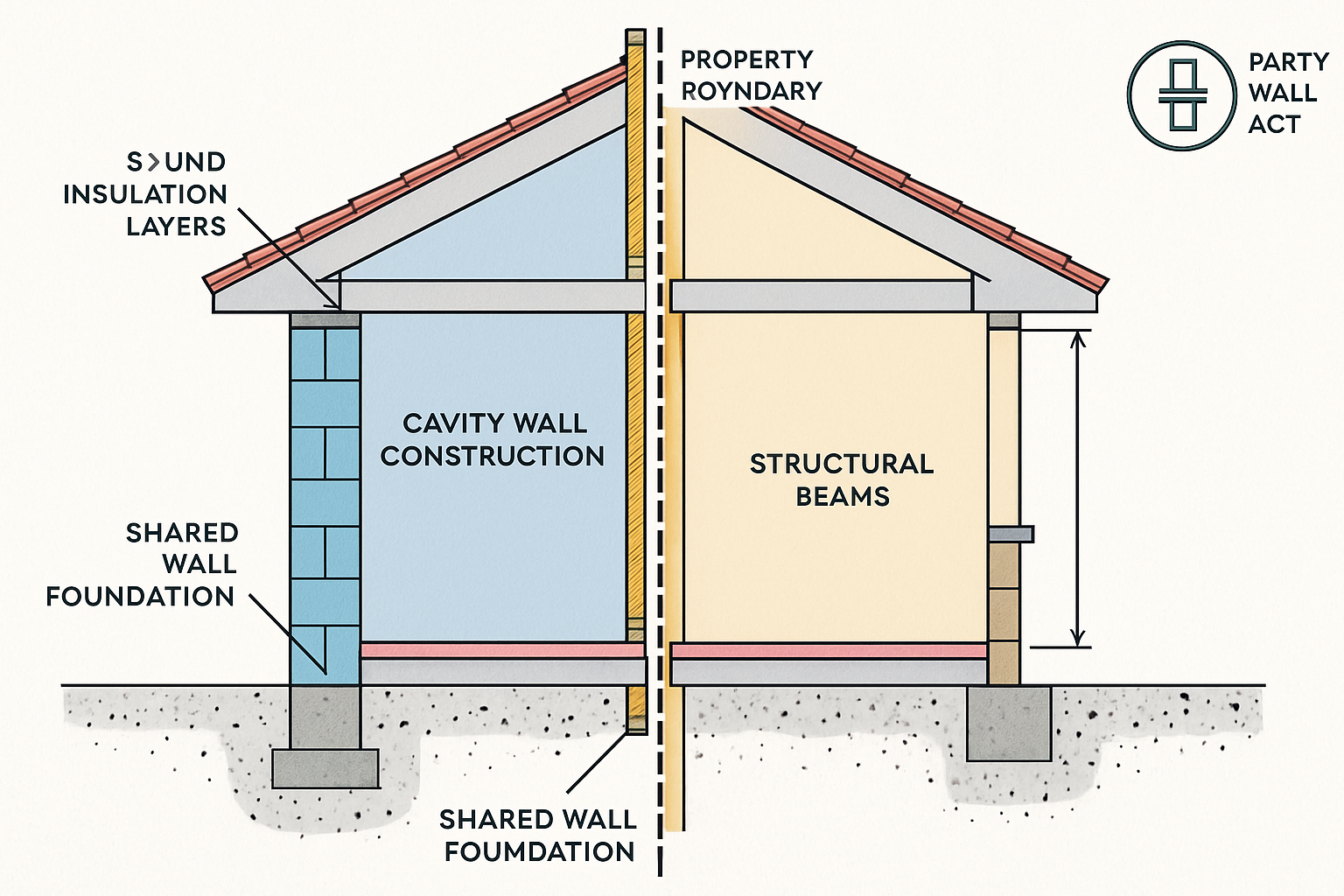
A Semi Detached Party Wall is fundamentally different from other property boundaries. Unlike fences or hedges that simply mark where one garden ends and another begins, a party wall is an integral structural component shared by two separate properties. This shared wall typically runs vertically from the foundation to the roof line, dividing two semi-detached homes that were originally constructed as a single building project.
What Defines a Party Wall in Semi-Detached Properties?
In legal and structural terms, a party wall in a semi-detached property serves multiple critical functions:
Structural Support 🏗️
- Bears the load of both properties’ roof structures
- Provides lateral stability to both buildings
- Contains shared foundations extending below ground level
- Distributes weight evenly across both properties
Legal Boundary
- Marks the exact division of ownership between properties
- Typically owned equally by both property owners (50/50 split down the centre)
- Subject to specific legal protections under the Party Wall etc. Act 1996
- Creates mutual rights and responsibilities for both neighbours
The Party Wall etc. Act 1996 specifically defines a party wall as a wall that stands on the lands of two different owners and forms part of a building, or a wall that separates buildings belonging to different owners[1]. This legal framework is crucial for anyone undertaking work on or near a Semi Detached Party Wall.
Types of Party Wall Structures
Not all party walls are created equal. Understanding the specific type of party wall structure in your semi-detached property helps determine what work requires formal agreements:
| Wall Type | Description | Common in | Special Considerations |
|---|---|---|---|
| Solid Brick Party Wall | Single thickness of brick shared between properties | Victorian and Edwardian homes | Limited sound insulation; structural changes require careful assessment |
| Cavity Party Wall | Two separate walls with cavity between | Modern builds (post-1920s) | Better sound insulation; each owner may own their respective wall |
| Party Fence Wall | Wall on boundary but not part of building structure | Garden boundaries | Different legal requirements than structural party walls |
| Separating Wall | Wall separating different parts of same building | Converted properties | May have different ownership arrangements |
For homeowners concerned about common defects in older homes, understanding your party wall type is particularly important, as older structures may have hidden issues that become apparent during renovation work.
Legal Framework Governing Semi Detached Party Walls
The Party Wall etc. Act 1996 provides the comprehensive legal framework that governs all work affecting party walls in England and Wales. This legislation was designed to prevent disputes between neighbours by establishing clear procedures, rights, and responsibilities when building work affects shared structures.
When Does the Party Wall Act Apply?
Many homeowners mistakenly believe they only need to worry about party wall matters when making major structural changes. However, the Act applies to a surprisingly wide range of common home improvements:
Notifiable Works Include:
- Building a new wall on or at the boundary line
- Cutting into a party wall to insert beams or damp-proof courses
- Removing chimney breasts from party walls
- Underpinning party walls or their foundations
- Raising party walls or adding additional storeys
- Demolishing and rebuilding party walls
- Excavating within 3-6 metres of neighbouring structures (depending on depth)
Understanding 5 common misconceptions about party wall agreements can help you avoid costly mistakes when planning your project.
The Notice Process: Step-by-Step
Compliance with the Party Wall Act isn’t optional—it’s a legal requirement that protects both you and your neighbour. Here’s how the formal process works:
Step 1: Serve Formal Notice 📋
You must serve written notice to your neighbour at least two months before starting structural work on a party wall (or one month for excavation work). This notice must include:
- Description of the proposed work
- Date when work will begin
- Drawings or plans showing the work
- Your contact details
Step 2: Neighbour’s Response
Your neighbour has 14 days to respond in one of two ways:
- Consent to the work (no party wall agreement needed)
- Dissent or fail to respond (triggers the formal dispute resolution process)
Step 3: Appoint Party Wall Surveyors
If your neighbour dissents or doesn’t respond, you must appoint surveyors:
- Each party can appoint their own surveyor, OR
- Both parties can agree to use a single “Agreed Surveyor”
- The building owner (you) pays all reasonable surveyor fees
Step 4: Party Wall Award
The surveyor(s) will create a legally binding document called a Party Wall Award that includes:
- Detailed description of permitted works
- Schedule of condition documenting pre-existing state
- Working hours and access arrangements
- Dispute resolution procedures
“The Party Wall Award is your insurance policy against future disputes. It provides legal protection and clear documentation that benefits both property owners, regardless of who initiates the work.”
Professional guidance is invaluable during this process. Many homeowners find it beneficial to understand why property owners hire surveyors before beginning major projects.
Common Works Affecting Semi Detached Party Walls
Understanding which home improvements trigger party wall requirements helps you plan projects effectively and budget for the necessary legal compliance costs.
Loft Conversions and Extensions
Loft conversions are among the most popular home improvements in the UK, but they frequently affect Semi Detached Party Walls in ways homeowners don’t anticipate.
Party Wall Implications:
- Raising the party wall to accommodate increased height requires formal notice
- Cutting into the party wall to insert steel beams triggers the Act
- Adding load to the party wall through new floor joists requires assessment
- Removing or altering chimney stacks on the party wall needs agreement
If you’re wondering whether you require party wall agreements for lofts, the answer is almost certainly yes if the work involves the shared wall in any way.
Basement Excavations and Extensions
Basement projects present unique challenges for semi-detached properties due to the depth of excavation and potential impact on neighbouring foundations.
Critical Considerations:
- Excavations within 3 metres of a neighbour’s structure and going deeper than their foundations require notice
- Excavations within 6 metres require notice if they’ll go deeper than a line drawn at 45 degrees from the bottom of the neighbour’s foundations
- Underpinning work always requires party wall agreements
- Temporary support systems must be documented and agreed upon
Removing Chimney Breasts
This seemingly straightforward project is one of the most common triggers for party wall disputes in semi-detached homes.
Why It Matters:
- Chimney breasts often form part of the party wall structure
- Removing your side affects the structural integrity of your neighbour’s side
- The remaining breast on the neighbour’s side may require additional support
- Both the structural and aesthetic impacts must be considered
For complex structural modifications, consulting with professionals who understand structural engineering requirements is essential for safety and compliance.
Rights and Responsibilities of Property Owners
The Party Wall Act creates a balanced framework of rights and responsibilities designed to protect both the building owner (the person undertaking work) and the adjoining owner (the neighbour).
Building Owner’s Rights
As the building owner planning work on a Semi Detached Party Wall, you have specific legal rights:
✅ Right to undertake necessary work once proper procedures are followed
✅ Right to access your neighbour’s property if reasonably required for the work (with proper notice)
✅ Right to appoint your own surveyor to represent your interests
✅ Right to make good any damage caused by the work rather than paying compensation
Building Owner’s Responsibilities
These rights come with corresponding obligations:
❗ Serve proper notice with adequate time frames (2 months for structural work)
❗ Pay all reasonable costs including your neighbour’s surveyor fees if they appoint one
❗ Minimize disruption and complete work within reasonable timeframes
❗ Make good any damage caused during the work
❗ Provide adequate insurance to cover potential damage
❗ Document the condition of the neighbour’s property before work begins
Adjoining Owner’s Rights
If you’re the neighbour receiving notice of party wall work, you have important protections:
✅ Right to consent or dissent to the proposed work
✅ Right to appoint your own surveyor at the building owner’s expense
✅ Right to a schedule of condition documenting your property’s state before work
✅ Right to compensation for any damage or loss of amenity
✅ Right to require specific working hours and methods to minimize disruption
Adjoining Owner’s Responsibilities
Neighbours also have obligations under the Act:
❗ Respond to notices within 14 days to avoid deemed dissent
❗ Allow reasonable access for condition surveys and necessary work
❗ Act reasonably and not obstruct legitimate work unnecessarily
❗ Cooperate with surveyors during the agreement process
Understanding these mutual rights and responsibilities is part of what every homeowner should know about their property, particularly when living in a semi-detached home.
The Role of Party Wall Surveyors
Party wall surveyors are specialist professionals who act as impartial experts to resolve party wall matters and create binding agreements that protect all parties involved.
What Does a Party Wall Surveyor Do?
A qualified party wall surveyor performs several critical functions:
Assessment and Documentation 📸
- Conducts detailed condition surveys of both properties
- Photographs and documents existing cracks, defects, and conditions
- Creates comprehensive schedules of condition
- Assesses the structural implications of proposed work
Agreement Preparation
- Drafts the Party Wall Award with precise terms and conditions
- Specifies permitted working methods and hours
- Establishes dispute resolution procedures
- Sets out insurance and security requirements
Ongoing Oversight
- Monitors work to ensure compliance with the Award
- Resolves disputes that arise during construction
- Assesses and documents any damage that occurs
- Determines appropriate remedies or compensation
Choosing Between Separate Surveyors and an Agreed Surveyor
Property owners face an important decision about surveyor appointments:
Option 1: Separate Surveyors (Two Surveyor Approach)
- Building owner appoints their surveyor
- Adjoining owner appoints their surveyor
- The two surveyors work together to create the Award
- If they disagree, they appoint a Third Surveyor to decide
Pros:
- Each party has dedicated representation
- May provide more thorough protection for complex projects
- Useful when relationships are already strained
Cons:
- More expensive (two surveyor fees)
- Potentially more time-consuming
- Can create adversarial atmosphere
Option 2: Agreed Surveyor (Single Surveyor Approach)
- Both parties agree to appoint the same surveyor
- The surveyor acts impartially for both parties
- More streamlined and cost-effective process
Pros:
- Lower costs (single surveyor fee)
- Faster resolution
- Encourages cooperative approach
Cons:
- No dedicated representation for either party
- Requires trust in the surveyor’s impartiality
- May not suit complex or contentious situations
For detailed guidance on this decision, read about the agreed surveyor party wall process and how it can benefit both parties.
Surveyor Qualifications and Selection
Not all surveyors are qualified to handle party wall matters. Look for professionals with:
- RICS accreditation (Royal Institution of Chartered Surveyors)
- Specific party wall experience with semi-detached properties
- Professional indemnity insurance adequate for the project value
- Local knowledge of building practices and common issues in your area
- Clear fee structure and transparent terms of engagement
Costs and Financial Considerations
Understanding the financial implications of party wall procedures helps you budget accurately for your project.
Typical Party Wall Surveyor Fees
Party wall surveyor costs vary based on project complexity, location, and the surveyor’s experience:
| Service Type | Typical Cost Range | Factors Affecting Price |
|---|---|---|
| Simple notice and Award | £700 – £1,200 | Single wall, straightforward work |
| Complex Award (loft/extension) | £1,200 – £2,500 | Multiple notices, detailed specifications |
| Basement excavation Award | £1,500 – £3,500 | Complex engineering, extensive documentation |
| Adjoining owner’s surveyor | £700 – £1,500 | Condition survey and Award review |
| Dispute resolution | £150 – £300/hour | Additional time for contentious matters |
Important: The building owner pays all reasonable surveyor fees for both parties. This includes:
- Your own surveyor’s fees
- Your neighbour’s surveyor’s fees (if they appoint one)
- Third surveyor’s fees (if required for dispute resolution)
Additional Costs to Consider
Beyond surveyor fees, budget for these party wall-related expenses:
Professional Fees:
- Structural engineer reports: £500 – £1,500
- Architect’s drawings and specifications: £800 – £2,000
- Legal advice (if disputes escalate): £200 – £400/hour
Insurance and Security:
- Additional project insurance coverage: £200 – £500
- Security deposit (if required): Varies by project value
- Public liability insurance enhancement: £100 – £300
Remediation Costs:
- Making good minor damage: £500 – £2,000
- Redecorating affected areas: £300 – £1,000
- Structural repairs (if issues occur): £1,000 – £10,000+
Cost-Saving Strategies
While you cannot avoid party wall requirements, you can manage costs effectively:
💡 Serve notice early to avoid rushed fees and premium charges
💡 Consider an Agreed Surveyor if relationships are good and work is straightforward
💡 Provide detailed plans upfront to minimize surveyor’s assessment time
💡 Communicate openly with neighbours to potentially gain consent without formal procedures
💡 Bundle multiple projects into a single Award if planning several phases of work
Common Disputes and How to Avoid Them
Despite the Party Wall Act’s protective framework, disputes still arise. Understanding common flashpoints helps you avoid costly conflicts.
Top Causes of Party Wall Disputes
1. Failure to Serve Proper Notice ⚠️
The most common mistake is starting work without serving notice or serving inadequate notice. This can result in:
- Court injunctions stopping your work
- Mandatory removal of completed work
- Legal costs for both parties
- Permanent damage to neighbour relations
2. Damage to Adjoining Property
Construction work inevitably carries risks of causing damage through:
- Vibration from excavation or demolition
- Structural movement or settlement
- Dust and debris infiltration
- Accidental direct damage during work
Prevention: A comprehensive schedule of condition protects both parties by documenting the pre-existing state.
3. Noise and Disruption
Even with proper agreements, excessive noise or prolonged disruption causes friction:
- Work outside agreed hours
- Weekend or holiday work without consent
- Blocking access or parking
- Failure to minimize dust and mess
Prevention: The Party Wall Award should specify working hours, access arrangements, and protective measures.
4. Inadequate Communication
Many disputes escalate due to poor communication:
- Not updating neighbours on project timelines
- Failing to notify of delays or changes
- Ignoring concerns or complaints
- Contractor behaviour or attitude issues
Prevention: Regular updates and responsive communication maintain goodwill throughout the project.
What to Do If Your Neighbour Refuses Party Wall Works
If your neighbour objects to your planned work, don’t panic. The Party Wall Act provides mechanisms to proceed:
Step 1: Understand Their Concerns
- Request a meeting to discuss specific objections
- Ask what modifications might address their concerns
- Consider reasonable compromises where possible
Step 2: Ensure Proper Notice
- Verify your notice was correctly served and detailed
- Provide additional information or clarification if needed
- Offer to arrange a pre-work meeting with your builder
Step 3: Follow the Formal Process
- Dissent (or no response) triggers the surveyor appointment process
- Appoint your surveyor and inform your neighbour of their right to appoint theirs
- The surveyors will create a binding Award regardless of consent
Step 4: Consider Mediation
- Before disputes escalate, suggest independent mediation
- Many party wall surveyors offer mediation services
- Early resolution saves money and preserves relationships
For more guidance on this challenging situation, read about what happens when a neighbour refuses party wall works.
Understanding Party Wall Disputes Resolution
If disputes arise during or after construction, the Party Wall Award provides resolution mechanisms:
Dispute Resolution Process:
- Raise concern with surveyors who created the Award
- Surveyors assess the situation and determine if Award terms were breached
- Surveyors issue determination which is legally binding
- Appeal to County Court only available within 14 days of determination
The Party Wall Act’s dispute resolution process is designed to be faster and less expensive than court proceedings, though legal advice may still be valuable for complex situations.
For comprehensive information about potential conflicts, explore this resource on party wall disputes and their resolution.
Special Considerations for Semi-Detached Properties
Semi-detached homes present unique party wall challenges that differ from terraced houses or detached properties.
Structural Interdependence
Unlike detached homes, semi-detached properties rely on the party wall for fundamental structural integrity:
Load Distribution
- Roof loads often bear partially on the party wall
- Floor joists may be built into the party wall
- Chimney stacks typically straddle the party wall
- Foundations are usually continuous under the party wall
This interdependence means that work on one side can have significant implications for the other property’s structural stability.
Sound Transmission Issues
One of the most common complaints in semi-detached properties relates to sound transmission through party walls:
Common Sound Issues:
- Normal conversation audible through walls
- Television and music disturbance
- Impact sounds from wall-mounted items
- Plumbing and mechanical noise
Party Wall Work Opportunities:
When undertaking party wall work, consider improvements to sound insulation:
- Adding acoustic insulation materials
- Installing independent stud walls
- Upgrading to higher-specification sound barriers
- Addressing gaps and weak points in the wall structure
While you cannot require your neighbour to contribute to sound insulation improvements, incorporating them into your party wall work can significantly enhance both properties’ value and livability.
Aesthetic Considerations
Semi-detached properties often share architectural features that create additional party wall considerations:
Matching Exteriors:
- Brickwork patterns and colours
- Roofline symmetry and materials
- Window and door alignments
- Decorative features and trim
Alterations to party walls that affect external appearance may require:
- Planning permission (separate from party wall matters)
- Listed building consent (for protected properties)
- Consideration of restrictive covenants
- Consultation on maintaining architectural harmony
Practical Tips for Homeowners
Successfully navigating Semi Detached Party Wall matters requires preparation, communication, and professional guidance.
Before Starting Any Project
Create a Comprehensive Plan 📝
- Obtain detailed architectural and structural drawings
- Identify all party wall elements affected by your work
- Calculate realistic timelines including party wall procedures
- Budget for all party wall-related costs upfront
Research and Prepare
- Understand your specific party wall type and construction
- Review your property deeds for any special restrictions
- Identify any previous party wall awards or agreements
- Gather historical information about the property’s structure
Engage Professionals Early
- Consult with a party wall surveyor before finalizing plans
- Engage a structural engineer for complex work
- Select experienced contractors familiar with party wall requirements
- Consider pre-appointment meetings with potential surveyors
Communicating with Your Neighbour
Good neighbour relations can make the difference between a smooth project and a nightmare:
Initial Conversation (Before Formal Notice):
- Discuss your plans informally before serving formal notice
- Explain the benefits and address potential concerns
- Show drawings and timeline information
- Ask about any particular sensitivities or concerns
During the Notice Period:
- Provide additional information promptly if requested
- Offer to arrange meetings with your surveyor or contractor
- Be responsive to questions and concerns
- Maintain a friendly, cooperative tone
Throughout Construction:
- Provide regular updates on progress
- Give advance warning of particularly disruptive phases
- Address complaints or concerns immediately
- Maintain site cleanliness and minimize impact
After Completion:
- Conduct final inspection with neighbour if appropriate
- Address any outstanding concerns promptly
- Thank them for their patience and cooperation
- Maintain the positive relationship you’ve built
Documentation Best Practices
Thorough documentation protects you throughout the process:
Essential Documents to Maintain:
- All party wall notices and responses
- Surveyor appointment letters and agreements
- Complete Party Wall Award with all schedules
- Schedule of condition with dated photographs
- Contractor agreements and insurance certificates
- Progress photographs throughout construction
- Records of all communications with neighbours
- Receipts for all party wall-related expenses
Photography Guidelines:
- Take comprehensive photos before work begins
- Include dated images of all potentially affected areas
- Photograph both properties’ interiors and exteriors
- Document existing cracks, defects, and conditions
- Take photos during work to show methods and progress
- Capture final state upon completion
This documentation proves invaluable if disputes arise or if you need to demonstrate compliance with the Award.
The Consequences of Ignoring Party Wall Requirements
Some homeowners consider skipping party wall procedures to save time and money. This is invariably a costly mistake with serious consequences.
Legal Ramifications
Proceeding without proper party wall compliance can result in:
Immediate Legal Action:
- Injunctions forcing immediate work stoppage
- Court orders requiring removal of completed work
- Mandatory compliance with party wall procedures retroactively
- Legal costs for both parties (which you’ll likely pay)
Financial Penalties:
- Compensation to your neighbour for breach
- Costs of making good any damage (often higher than if properly managed)
- Professional fees for retrospective surveys and agreements
- Potential reduction in your property’s value
Criminal Implications:
While party wall breaches are typically civil matters, in extreme cases involving:
- Deliberate damage to neighbouring property
- Ignoring court orders or injunctions
- Fraudulent misrepresentation
Criminal charges may apply, though this is rare.
For detailed information about potential outcomes, read about the consequences of ignoring the Party Wall Act.
Impact on Property Value and Sales
Party wall non-compliance creates lasting problems:
During Property Sales:
- Solicitors will investigate party wall compliance during conveyancing
- Missing party wall agreements can delay or derail sales
- Buyers may reduce offers or withdraw entirely
- You may be required to obtain retrospective agreements
- Indemnity insurance may be required (and expensive)
Long-Term Value Impact:
- Undocumented structural work reduces buyer confidence
- Neighbour disputes become disclosed issues affecting value
- Future owners inherit unresolved party wall problems
- Property may be considered unmortgageable in extreme cases
Relationship Damage
Beyond legal and financial consequences, ignoring party wall requirements damages the relationship with your neighbour:
- Loss of trust that may never be fully repaired
- Ongoing tension affecting daily life quality
- Difficulty cooperating on future property matters
- Potential for retaliatory actions or complaints
- Uncomfortable living situation for years to come
The relatively modest cost of proper party wall compliance is insignificant compared to these potential consequences.
Buying a House with Party Wall Considerations
If you’re purchasing a semi-detached property, party wall matters should be part of your due diligence process.
Questions to Ask During Purchase
About Previous Work:
- Has any work been done affecting the party wall?
- Are there party wall awards or agreements in place?
- Were proper procedures followed for past renovations?
- Has the neighbour undertaken any party wall work?
About Current Conditions:
- Are there any existing party wall disputes?
- What is the relationship with the neighbours?
- Are there any planned works by either party?
- What is the structural condition of the party wall?
About Future Plans:
- Are there any restrictions on party wall work?
- What are the neighbours’ future plans?
- Are there any shared maintenance agreements?
- What party wall type and construction exists?
For comprehensive guidance on property purchases, review this article about buying a house and the Party Wall Act.
Survey Considerations
When commissioning a property survey before purchase, ensure it addresses party wall matters:
Survey Should Include:
- Identification of party wall type and construction
- Assessment of party wall structural condition
- Evidence of previous party wall work
- Signs of movement, cracking, or structural issues
- Sound insulation quality assessment
- Recommendations for future party wall considerations
A Level 3 Building Survey provides the most comprehensive assessment for older or complex semi-detached properties, while a Level 2 Survey may suffice for newer builds in good condition.
Negotiating Based on Party Wall Issues
If surveys reveal party wall concerns, use them in purchase negotiations:
Potential Negotiation Points:
- Price reduction for missing party wall documentation
- Retention pending resolution of party wall disputes
- Vendor obtaining retrospective agreements before completion
- Indemnity insurance for undocumented work
- Contribution toward future party wall remediation costs
Your solicitor should advise on the most appropriate approach based on the specific issues identified.
Future-Proofing Your Semi-Detached Property
Smart homeowners think ahead about party wall matters, even when not planning immediate work.
Maintaining Good Neighbour Relations
The best party wall strategy begins with positive neighbour relationships:
Regular Communication:
- Discuss property maintenance and improvement plans
- Share information about contractors and recommendations
- Coordinate on shared concerns like boundary maintenance
- Build mutual trust and goodwill over time
Cooperative Approach:
- Consider joint projects where beneficial (roof repairs, boundary walls)
- Share costs for mutual improvements where appropriate
- Be flexible and accommodating when neighbours need to undertake work
- Treat their property with the same care as your own
Proactive Problem-Solving:
- Address small issues before they become major problems
- Discuss concerns directly rather than letting them fester
- Seek win-win solutions to disagreements
- Maintain perspective and reasonableness
Planning for Future Work
Even if you’re not planning immediate renovations, prepare for future possibilities:
Document Current Conditions:
- Take comprehensive photographs of your property and the party wall
- Note any existing defects, cracks, or issues
- Keep records of all maintenance and repairs
- Create a property file with all relevant documentation
Understand Your Options:
- Research what work would require party wall procedures
- Identify potential challenges or limitations
- Budget for party wall costs in renovation planning
- Build relationships with qualified professionals
Stay Informed:
- Keep up with changes to party wall legislation
- Join homeowner groups or forums for advice and experiences
- Attend local property seminars or workshops
- Bookmark reliable resources for future reference
When to Seek Professional Advice
Don’t wait until you’re in the middle of a project to seek expert guidance. Consult professionals when:
- Planning any work that might affect the party wall
- Receiving notice of your neighbour’s party wall work
- Discovering structural issues with the party wall
- Experiencing disputes or communication breakdown
- Buying or selling a semi-detached property
- Concerned about compliance with previous work
Early professional advice is almost always more cost-effective than reactive crisis management.
Professional surveyors and specialists can provide invaluable guidance—explore professional surveying services to find qualified experts in your area.
Conclusion
Understanding and properly managing Semi Detached Party Wall matters is essential for every homeowner in a semi-detached property. While the legal requirements may seem complex and the procedures time-consuming, they exist to protect your investment, preserve your neighbour relationships, and ensure safe, compliant construction work.
The key principles to remember are straightforward:
Always comply with the Party Wall etc. Act 1996 when undertaking work that affects shared walls or nearby structures. The modest cost and time investment in proper procedures is insignificant compared to the potential consequences of non-compliance.
Engage qualified professionals early in your planning process. Party wall surveyors, structural engineers, and experienced contractors provide expertise that protects your interests and ensures smooth project execution.
Communicate openly and respectfully with your neighbours throughout the process. Good relationships and transparent communication prevent most disputes and create positive outcomes for everyone involved.
Document everything thoroughly from initial planning through project completion. Comprehensive records protect you legally, facilitate smooth property transactions, and provide valuable information for future owners.
Your Next Steps
If you’re planning work affecting a Semi Detached Party Wall:
- Assess your project to determine what party wall procedures are required
- Consult with professionals including party wall surveyors and structural engineers
- Budget appropriately for all party wall-related costs and timelines
- Communicate with your neighbour before serving formal notices
- Follow procedures precisely to ensure legal compliance and protection
If you’re receiving notice of your neighbour’s work:
- Review the notice carefully and seek clarification on anything unclear
- Consider appointing your own surveyor to protect your interests
- Respond within 14 days to preserve your rights under the Act
- Cooperate reasonably while ensuring your property is protected
- Document conditions before work begins
For expert guidance on party wall matters, building surveys, and property-related concerns, explore the comprehensive resources available through Prince Surveyors and consult with qualified professionals who can provide personalized advice for your specific situation.
Your semi-detached property represents a significant investment and your home. Taking party wall matters seriously protects that investment, maintains your quality of life, and ensures positive relationships with those who share your walls. With proper knowledge, professional support, and respectful communication, navigating party wall requirements becomes a manageable part of responsible homeownership rather than a source of stress and conflict.
References
[1] Party Wall etc. Act 1996, UK Parliament, Chapter 40, Section 20 – Interpretation