

Nearly one in five UK homebuyers who commission a property survey later discover defects their report failed to flag, defects that cost thousands of pounds to repair. In most of those cases, the root cause is not bad luck. It is the choice of inspector. Understanding the difference between Professional vs Non-Qualified Property Inspectors: How to Avoid Bad UK Building Surveys is one of the most financially consequential decisions a buyer can make, yet it receives a fraction of the attention devoted to mortgage rates or asking prices.
With the RICS Home Survey Standard 2nd edition in late-stage review, a proposed RICS Home Survey Regulatory Scheme expected to come into force by the end of 2027, and the Government's Built Environment Professions call for evidence running from May to August 2026, the regulatory landscape is shifting fast [1][2][5]. Buyers who understand these changes, and who know how to vet credentials today, are far better protected than those who simply accept the cheapest quote.
Key Takeaways
- Chartered surveyors regulated by RICS or RPSA must meet minimum competence standards and carry professional indemnity (PI) insurance; unqualified inspectors face no such obligations.
- The RICS Home Survey Standard 2nd edition will tighten minimum expectations for residential surveys, raising the bar further for regulated professionals [2][3].
- A proposed RICS Home Survey Regulatory Scheme would create a formal register to help consumers distinguish qualified surveyors from rogue operators, with implementation targeted for late 2027 [4][5].
- Red flags for non-qualified inspectors include the absence of RICS or RPSA membership, no PI insurance, non-standard report formats, and no formal complaints route.
- Verifying credentials before commissioning a survey is the single most effective way to avoid a bad UK building survey.
Why Credentials Matter: The Regulatory Divide
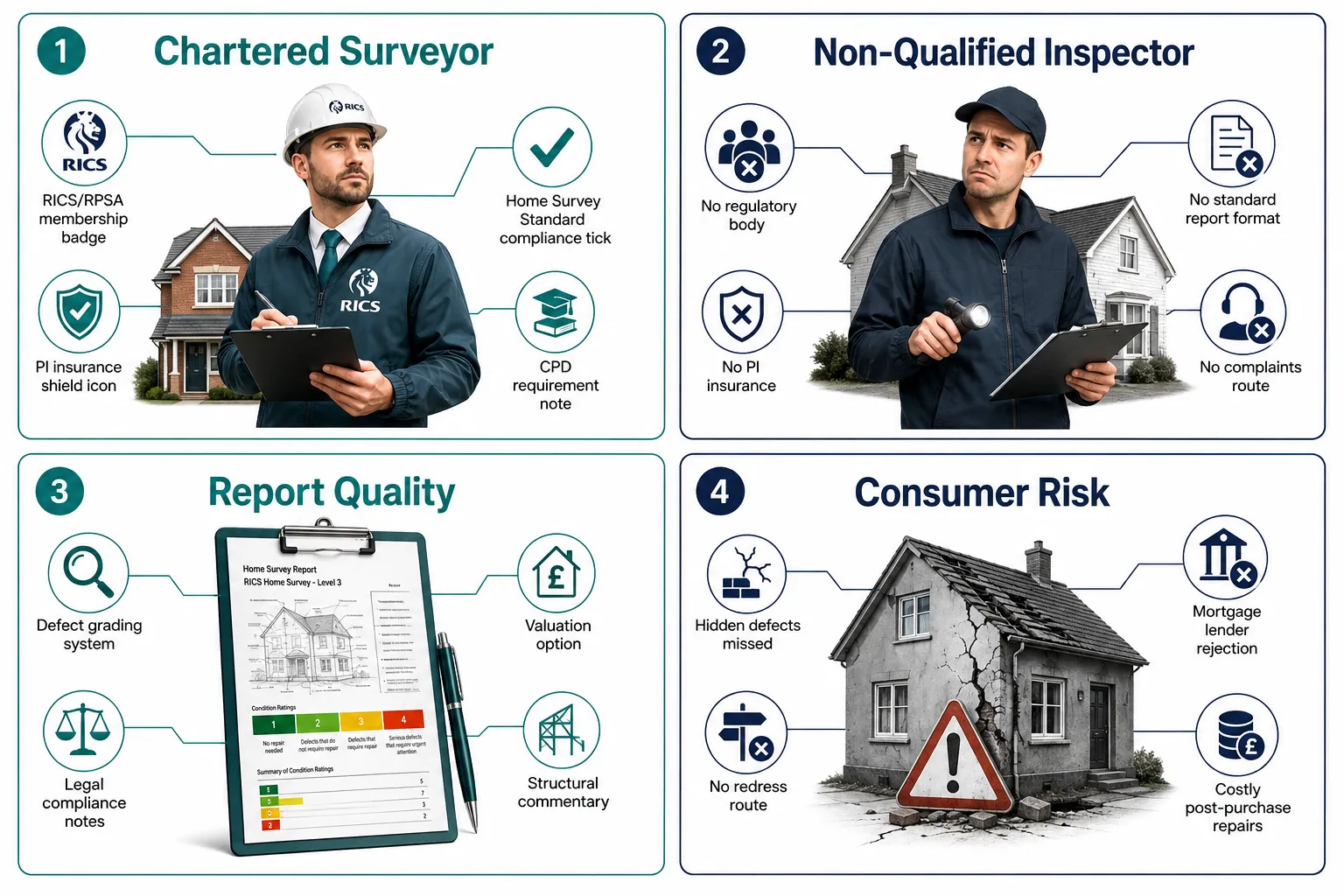
The UK property inspection market is not fully closed to unqualified operators. Unlike solicitors or architects, anyone can legally describe themselves as a "property inspector" or "home surveyor" without holding a professional qualification. This creates a two-tier market that is invisible to most buyers.
Qualified professionals, typically Chartered Surveyors holding MRICS or FRICS designations, or members of the Residential Property Surveyors Association (RPSA), operate under binding professional standards. The existing RICS Building Surveying Standards mandate minimum competence, reporting quality, and ethical conduct. Crucially, they require members to hold PI insurance, which means a buyer has a route to financial redress if a survey misses a material defect [1].
Non-qualified inspectors, by contrast, are not obliged to meet any of these standards. Their reports may look professional on the surface, formatted PDFs, branded letterheads, online delivery, but they carry no regulatory weight. A mortgage lender will almost certainly reject them, and if something goes wrong, the buyer has no formal complaints mechanism to pursue.
The distinction matters even more in 2026 because the regulatory environment is accelerating. The Building Regulations (Amendment) (England) Regulations 2026 raise the compliance bar for professionals involved in inspection and reporting [6][10]. The Government's Built Environment Professions call for evidence explicitly covers inspection and surveying competencies, including damp and timber surveyors, a sector historically populated by unregulated operators [8]. Buyers who understand this landscape can make far better-informed choices.
What the RICS Home Survey Standard Actually Requires
The RICS Home Survey Standard, now in its second edition review, is the benchmark document that governs how qualified surveyors conduct and report residential surveys [3][4]. Key requirements include:
- Defined survey levels (Level 1, 2, and 3) with clear scope boundaries for each
- Condition ratings using a standardised 1-2-3 system so buyers can compare reports
- Legal compliance commentary, including flagging potential issues with building regulations
- Options to include a valuation, providing an integrated picture of condition and market value
- Minimum inspection methodology, covering accessible areas, key structural elements, and services
Non-qualified inspectors are not bound by any of this. Their reports may omit condition ratings entirely, provide no structural commentary, and include disclaimers so broad they effectively disclaim responsibility for everything.
For a detailed look at how the 2nd edition standard will affect professional practice, see the RICS 2nd Edition Home Survey Standard 2025 key updates and implementation roadmap for building surveyors in 2026.
How to Spot a Non-Qualified Inspector: Red Flags and Vetting Steps
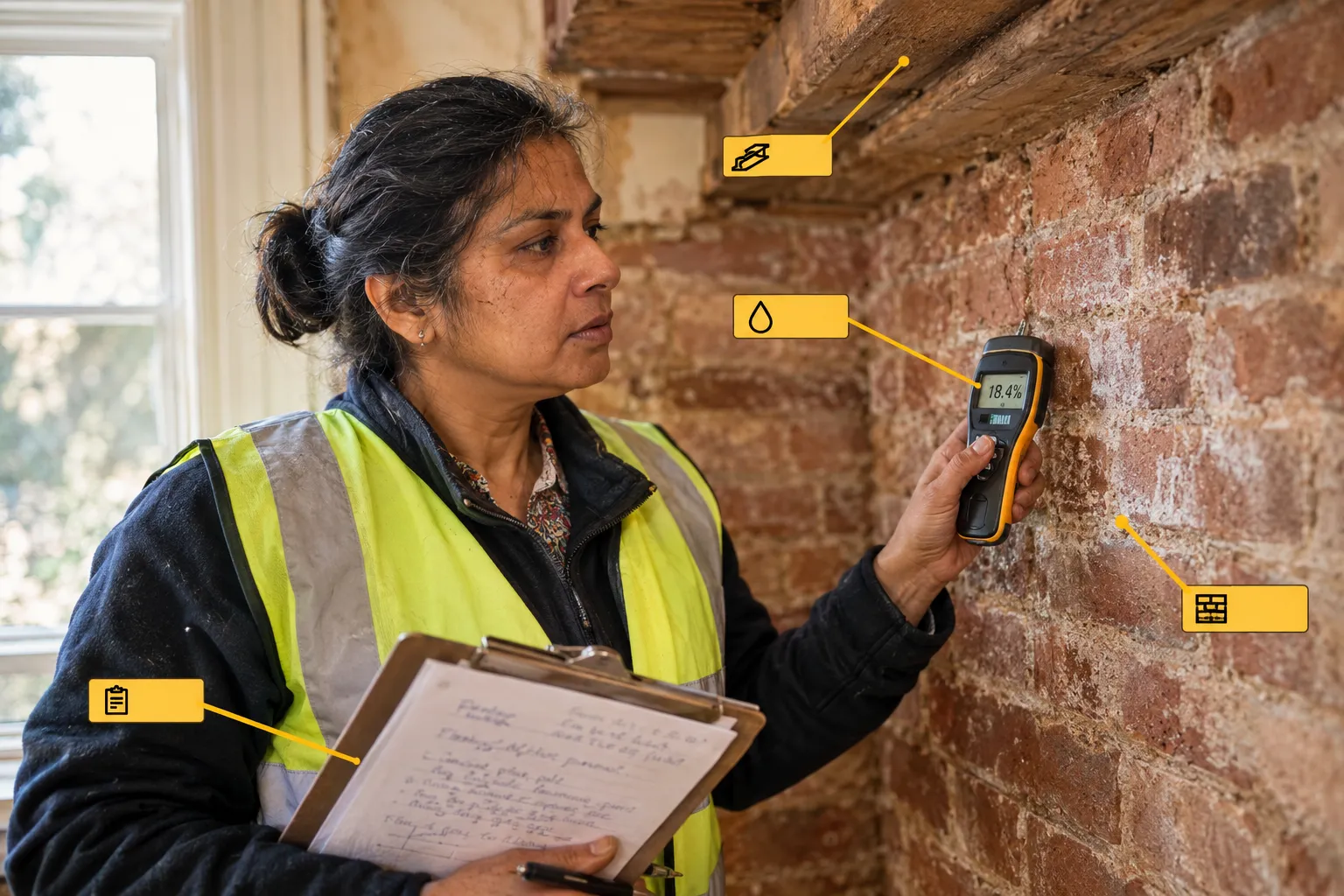
The challenge for buyers is that non-qualified operators often present themselves convincingly. Online booking platforms, slick websites, and low prices can make a non-qualified inspector appear indistinguishable from a chartered surveyor. The following checklist cuts through the presentation to the substance.
Credential Verification Checklist
| Check | What to Look For | Red Flag |
|---|---|---|
| RICS membership | MRICS or FRICS designation; verify at rics.org/find-a-member | No listing or unverifiable claim |
| RPSA membership | Active membership; verify at rpsa.org.uk | Claim without verifiable listing |
| PI insurance | Written confirmation of current cover | Refusal to confirm or vague assurances |
| Report standard | Explicit reference to RICS Home Survey Standard | Generic "property inspection" language |
| Complaints route | RICS or RPSA complaints procedure referenced | No formal complaints process stated |
| Survey level | Level 1, 2, or 3 clearly stated | Undefined scope or "basic inspection" |
Always ask for written confirmation of PI insurance before commissioning. A professional surveyor will provide this without hesitation. An unqualified operator may deflect, offer vague reassurances, or simply not have cover.
Online Agencies and "Instant Survey" Platforms
A growing category of concern in 2026 is the online agency model, where a platform takes a booking and assigns the work to a subcontracted inspector whose qualifications the platform does not always verify. The buyer sees the platform's brand; the actual inspection may be conducted by someone with minimal credentials.
The proposed RICS Home Survey Regulatory Scheme is specifically designed to address this problem by creating a formal register and oversight mechanism [4][5]. Until it comes into force, expected by late 2027, buyers must do their own due diligence. The key question to ask any platform is: "Can you confirm the name and RICS or RPSA membership number of the individual who will conduct my survey?"
If the answer is evasive, that is a significant warning sign.
Questions Worth Asking Before You Book
Knowing what questions you should be asking during a building survey can make the difference between a useful report and a costly disappointment. Before booking, ask:
- What is your RICS or RPSA membership number?
- Which survey level do you recommend for this property, and why?
- Will the report follow the RICS Home Survey Standard?
- Do you carry PI insurance, and can you provide written confirmation?
- How long will the inspection take, and will you be on site personally?
- What is your complaints procedure if I am dissatisfied?
A qualified professional will answer all of these questions clearly and in writing.
The Regulatory Horizon: What Is Changing and Why It Matters
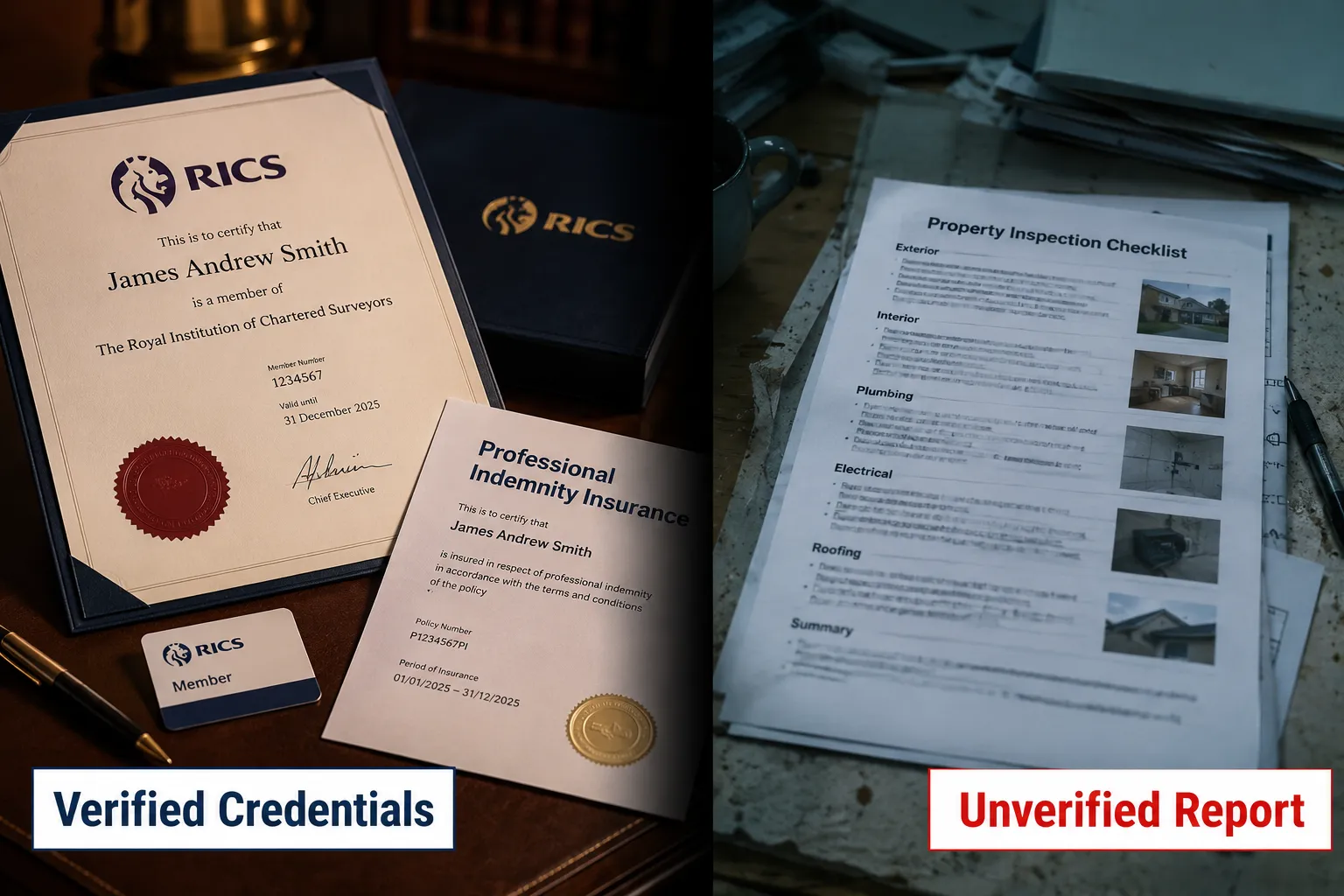
The regulatory changes gathering pace in 2026 will eventually make it harder for non-qualified operators to compete, but the transition period creates its own risks. Buyers who act before the new framework is fully in place need to apply current best practice.
The RICS Home Survey Regulatory Scheme
RICS has proposed a formal Home Survey Regulatory Scheme that would create a register of qualified residential surveyors and establish an oversight mechanism targeting rogue operators [4][5]. The RPSA is actively lobbying to ensure residential surveyors are properly recognised within this framework. If approved, the scheme is expected to come into force by the end of 2027.
"The proposed regulatory scheme represents the most significant structural change to residential survey oversight in a generation. Until it is in place, consumer vigilance remains the primary safeguard."
For buyers transacting in 2026, this means the formal register does not yet exist. The practical implication is straightforward: verify RICS or RPSA membership directly with the relevant body, not just from the inspector's website.
Home Buying Reforms and Upfront Condition Reports
Proposed home buying reforms would make seller-commissioned upfront condition reports standard practice in England [9]. This would substantially increase demand for qualified surveyors and, crucially, expose poor-quality operators who cannot meet the minimum standards that lenders and conveyancers will require.
For buyers navigating the current market, understanding building surveys under RICS home buying reforms 2026 and what surveyors need to know for mandatory upfront assessments provides important context on how the transaction process is evolving.
The Built Environment Professions Call for Evidence
Running from May to August 2026, the Government's Built Environment Professions call for evidence covers inspection and surveying competencies, including the historically unregulated damp and timber surveying sector [8]. This is significant because damp surveyors, who often recommend expensive remediation work, have operated without professional oversight, creating well-documented consumer harm.
The call for evidence signals that the Government intends to pull a broader range of inspection professionals into a stronger regulatory regime, aligned with the Single Construction Regulator proposals and the wider Professions Strategy.
Implications for Specific Property Types
The choice between qualified and non-qualified inspectors carries different weight depending on property type. For older or non-standard properties, the stakes are highest. A Level 3 RICS building survey, the most comprehensive residential survey type, is typically recommended for:
- Pre-1900 properties with original fabric
- Properties with suspected structural movement
- Buildings with non-standard construction (timber frame, thatched roof, concrete panel)
- Properties that have been significantly altered or extended
A non-qualified inspector is unlikely to have the structural knowledge to assess these properties adequately. For buyers of Victorian or Edwardian terraces, understanding kerb appeal and building surveys integrating exterior trends into 2026 Level 3 property assessments illustrates how professional surveyors approach the full scope of an older property assessment.
For first-time buyers in particular, the financial consequences of a missed defect can be severe. The guidance on building surveys for first-time buyers in a recovering market addressing affordability pressures and hidden costs in 2026 sets out why professional survey quality is especially critical when budgets are stretched.
Fire Safety and Compliance Checks
In 2026, professional surveyors are also expected to flag fire safety and cladding compliance issues that non-qualified inspectors may lack the expertise to identify. For buyers of flats or converted buildings, the fire safety and cladding compliance essential checks in 2026 property surveys resource explains what a qualified surveyor should be examining, and what a non-qualified report is likely to miss entirely.
Conclusion
The core lesson of Professional vs Non-Qualified Property Inspectors: How to Avoid Bad UK Building Surveys is simple: the quality of a building survey is inseparable from the qualifications of the person who conducts it. A low-cost inspection from an unregulated operator is not a cheaper version of a professional survey, it is a fundamentally different and far riskier product.
Actionable next steps for buyers in 2026:
- Verify credentials independently. Check RICS membership at rics.org/find-a-member and RPSA membership at rpsa.org.uk. Do not rely solely on the inspector's own claims.
- Request written PI insurance confirmation before signing any contract.
- Specify the survey level. Ask for a Level 2 or Level 3 survey conducted under the RICS Home Survey Standard [1][2].
- Ask the six pre-booking questions listed in this article and require written answers.
- Be wary of online platforms that cannot confirm the individual surveyor's membership number.
- Match survey level to property type. Older, larger, or structurally complex properties require a Level 3 survey from a chartered building surveyor.
- Monitor the regulatory changes. The RICS Home Survey Regulatory Scheme and proposed home buying reforms will reshape the market by 2027-2028. Stay informed.
The regulatory framework is improving, but the protections it will eventually provide are not yet fully in place. In the meantime, due diligence on surveyor credentials remains the buyer's most reliable defence against a bad UK building survey.
References
[1] Home Survey Standards – rics.org
[2] Home Survey Standard 2nd Edition April 2026 Update – rics.org
[3] Rics Launches Consultation Updated Home Survey Standard – rics.org
[4] Home Survey Standard 2nd Edition A Progress Update – rics.org
[5] Reform On Every Front Rpsa Representing Residential Surveyors As Major Changes Gather Pace – rpsa.org.uk
[6] Made – legislation.gov.uk
[7] Rics 2nd Edition Home Survey Standard 2025 Key Updates And Implementation Roadmap For Building Surveyors In 2026 – Rics 2nd edition home survey standard 2025 key updates and implementation roadmap for building surveyors in 2026
[8] Built Environment Professions Call For Evidence 2026 – survey-mate.co.uk
[9] Building Surveys Under Rics Home Buying Reforms 2026 What Surveyors Need To Know For Mandatory Upfront Assessments – Building surveys under rics home buying reforms 2026 what surveyors need to know for mandatory upfront assessments
[10] Made – legislation.gov.uk