

Over 1.2 million residential property transactions take place in England and Wales each year — yet the professional standard governing how those homes are inspected had not been updated since March 2021. That gap matters enormously. The RICS 2nd Edition Home Survey Standard 2025: Key Updates and Implementation Roadmap for Building Surveyors in 2026 closes it, bringing surveying practice in line with new technology, updated legislation, shifting homebuyer priorities, and hard-won feedback from practitioners on the ground. [1]
This article unpacks what changed during the October 2025 consultation, what the revised standard means for Level 2 and Level 3 survey delivery, and how building surveyors can prepare for full implementation by the end of 2027.
Key Takeaways 📋
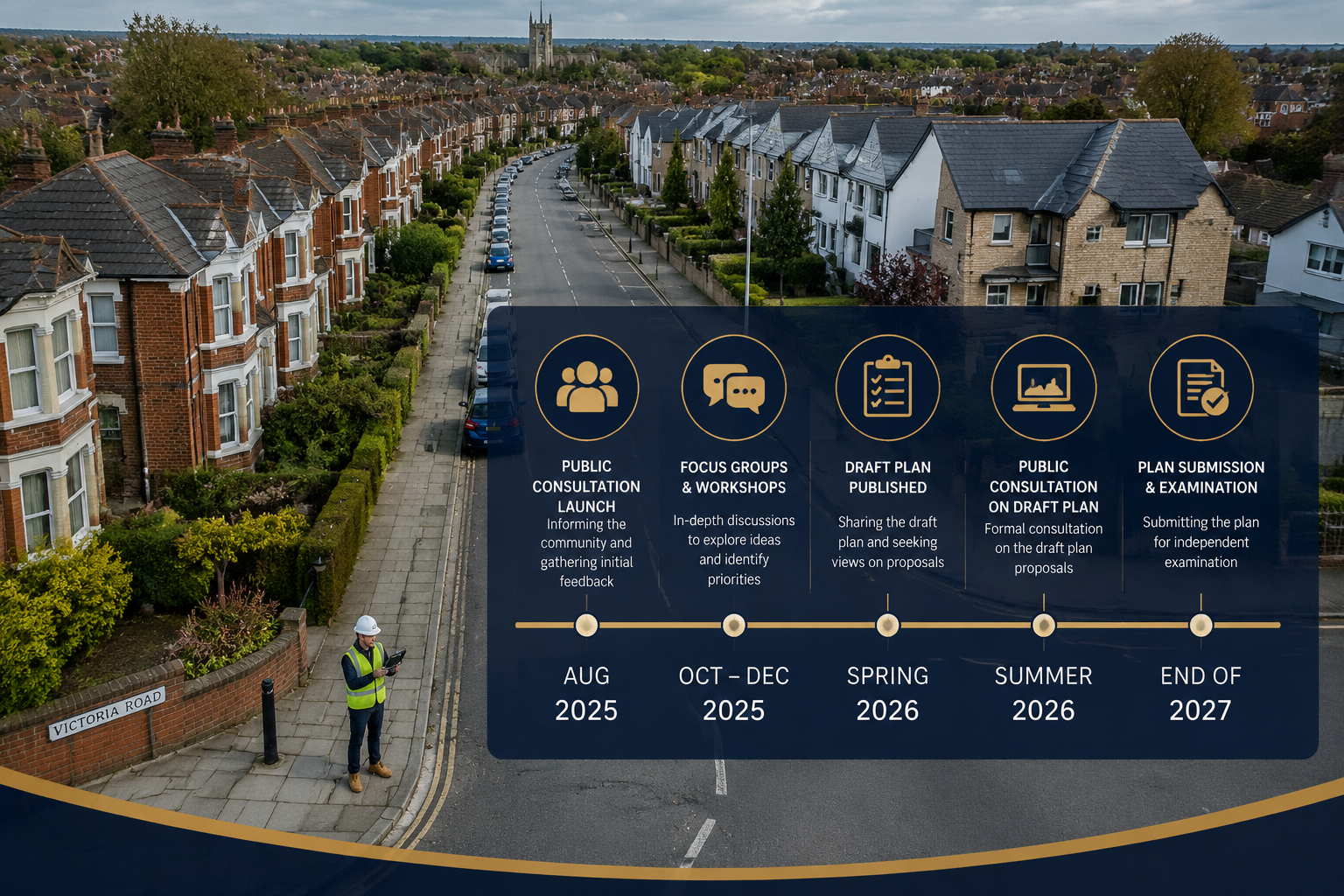
- The public consultation on the 2nd Edition ran 19 August – 14 October 2025, and RICS expert groups are still reviewing detailed responses as of April 2026. [1]
- Publication of the final standard was targeted for around March 2026, with implementation expected by the end of 2027. [4]
- Major changes include technology integration (AI, drones, camera poles), optional valuation across all survey levels, and new frameworks for historic, new-build, and retrofit properties. [2]
- The standard strengthens benchmarking of inspection and reporting requirements across Levels 1–3, directly addressing consistency concerns raised by RICS Regulation. [1]
- Surveyors should begin CPD and workflow reviews now — the implementation window is shorter than it appears.
Background: Why a 2nd Edition Was Necessary
The first edition of the RICS Home Survey Standard launched in March 2021 during an extraordinary period of market disruption. Since then, the residential property landscape has shifted on multiple fronts simultaneously.
Three forces drove the revision:
- Regulatory change — Legislation around energy performance, building safety, and leasehold reform has moved quickly since 2021, leaving parts of the first edition out of date. [4]
- Technology acceleration — AI-assisted defect recognition, drone roof inspections, and camera pole surveys have moved from novelty to mainstream, yet the existing standard offered no formal guidance on their use. [2]
- Consumer expectation — Homebuyers increasingly expect surveyors to address climate resilience, energy efficiency, and retrofit potential. These priorities simply did not feature prominently in the 2021 standard. [2]
RICS Regulation also flagged concerns about inconsistency across firms — specifically, that the benchmarking of what constitutes adequate inspection and reporting at each survey level was insufficiently clear. [1] The 2nd Edition directly addresses all of these pressure points.
💬 "Feedback from RICS members and RICS Regulation has highlighted the need to strengthen areas of home surveys and provide further clarification to reflect both consumer insight and technological changes." — RICS, April 2026 [1]
The Consultation Process: What Happened Between August and October 2025
The formal public consultation ran from 19 August to 14 October 2025, inviting input from RICS members, surveying firms, lenders, conveyancers, estate agents, and consumer groups. [2] The breadth of that stakeholder list was deliberate — RICS wanted to capture the full transaction chain, not just the surveying profession.
The volume of responses was substantial. As of April 2026, RICS expert groups are still working through detailed consultation comments section by section, with early parts of the draft standard already under review by specialist panels. [1]
The multi-stage approval process before final publication includes: [3]
| Stage | Body Responsible |
|---|---|
| Editorial review | RICS Standards Team |
| Residential Professional Group Panel review | Specialist surveying panel |
| Knowledge and Practice Committee approval | RICS governance committee |
| Final approval | Standards and Regulation Board |
This structured process explains why — despite the original target of March 2026 publication — surveyors should treat the timeline as indicative rather than fixed. The depth of consultation feedback requires careful consideration at each stage.
RICS 2nd Edition Home Survey Standard 2025: Key Updates Explained
1. 🤖 Technology Integration: AI, Drones, and Camera Poles
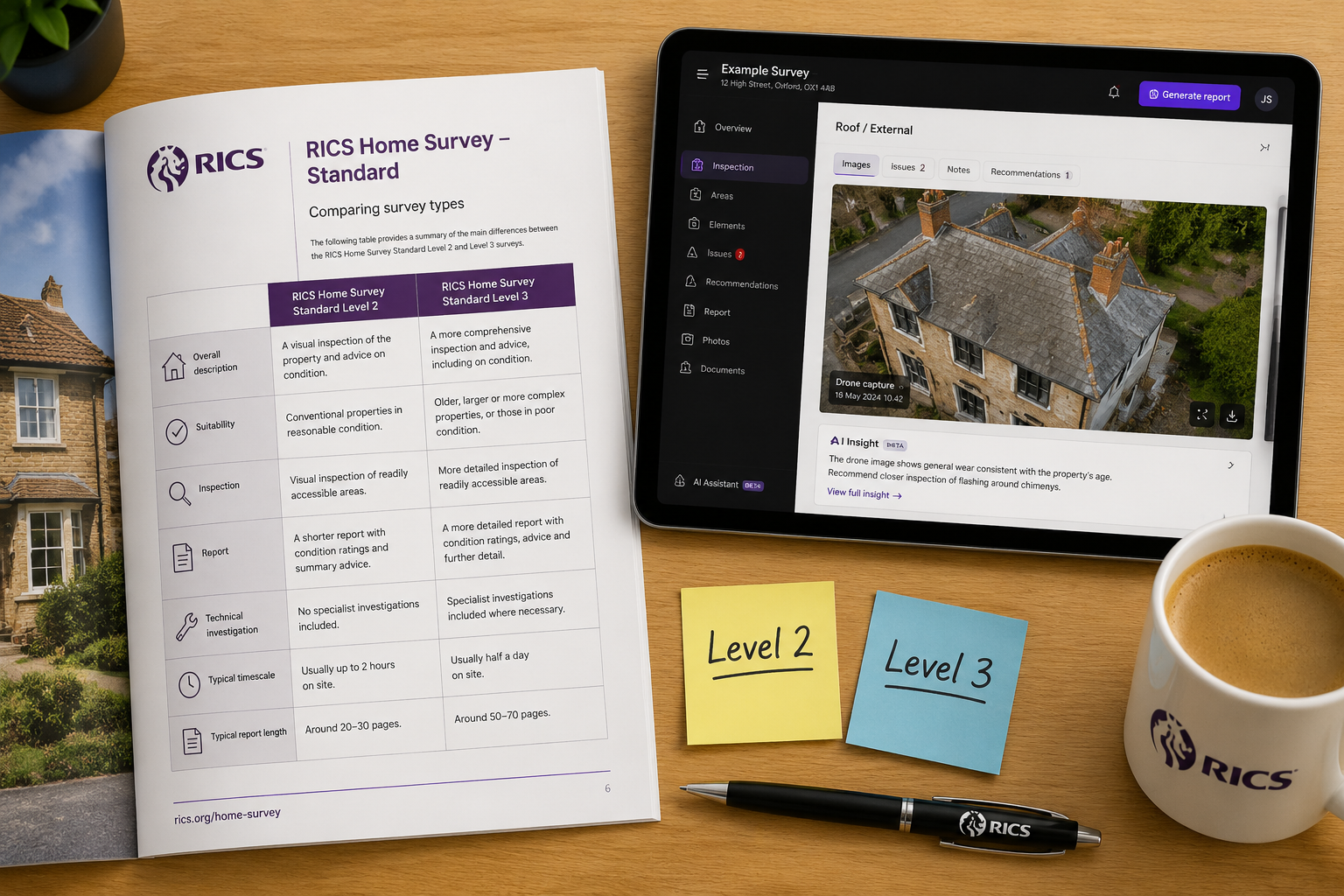
Perhaps the most visible change in the 2nd Edition is the formal recognition of emerging inspection technology. The standard now provides guidance on:
- AI-assisted analysis for defect identification and report generation
- Drone inspections for roofs and elevated elements, including protocols for when drone use is appropriate
- Camera poles as an alternative to ladder access for certain roof inspections [2]
This matters for two reasons. First, it gives surveyors professional cover to use these tools without operating in a regulatory grey area. Second, it creates a minimum expectation — clients and courts will increasingly reference the standard when assessing whether an inspection was adequate.
For Level 3 surveys in particular, understanding building pathology remains the foundation of good practice, but technology now augments rather than replaces that expertise.
2. 🏠 Greater Clarity on Survey Levels 1, 2, and 3
One of the most practical improvements is expanded benchmarking of what each survey level actually requires. The 2nd Edition provides clearer definitions of:
- The scope of inspection at each level
- Reporting requirements — what must be reported, how, and to what depth
- Minimum standards for documentation and client communication [4]
This directly addresses the inconsistency problem identified by RICS Regulation. Surveyors who have wondered whether they are over-delivering at Level 2 or under-delivering at Level 3 will find clearer guidance. Clients choosing between survey types will also benefit — understanding which building survey is right for your property becomes easier when the distinctions are formally defined.
For a detailed breakdown of what each level covers in practice, the guides to what's in a Level 2 survey and what's in a Level 3 survey remain useful reference points alongside the updated standard.
3. 💰 Optional Valuation Across All Survey Levels
The 2nd Edition proposes making valuation optional at all survey levels — a significant departure from the previous framework. [2]
Why this matters:
- Surveyors without Red Book valuation competency are no longer excluded from delivering Level 2 products that previously bundled inspection with valuation
- Clients gain flexibility to commission inspection and valuation separately
- It reduces the risk of surveyors feeling pressured to provide valuations outside their competency
This change reflects market reality. Many clients — particularly those using mortgage lenders who commission their own valuations — do not need a surveyor-provided valuation alongside their condition report.
4. 🌿 Energy Efficiency, Retrofit, and Climate Change
The 2nd Edition formally embeds energy performance and retrofit assessment into the surveying framework. [2] This reflects the growing importance of EPC ratings, the Minimum Energy Efficiency Standards (MEES), and the government's net-zero trajectory.
Surveyors are now expected to consider:
- The property's current energy performance and likely EPC rating
- Retrofit potential and associated risks (e.g., moisture, ventilation)
- Climate-related risks such as flood exposure and overheating
For surveyors who want to understand how energy performance intersects with building survey findings, the relationship between EPC ratings, MEES, and building surveys is increasingly central to client advice.
5. 🏛️ New Frameworks for 'Additional Risk' Dwellings
The 2nd Edition introduces specific guidance for three property categories that carry elevated risk and require tailored approaches: [4]
| Property Type | Key Considerations |
|---|---|
| Historic buildings | Fabric-first approach, traditional materials, conservation constraints |
| New-build properties | Snagging, building regulation compliance, warranty limitations |
| Retrofit homes | Moisture risk, thermal bridging, ventilation adequacy |
For new-build properties specifically, surveyors and clients should understand whether a survey on a new build is necessary — the 2nd Edition's guidance on this category makes the case clearly.
Implementation Roadmap for Building Surveyors in 2026
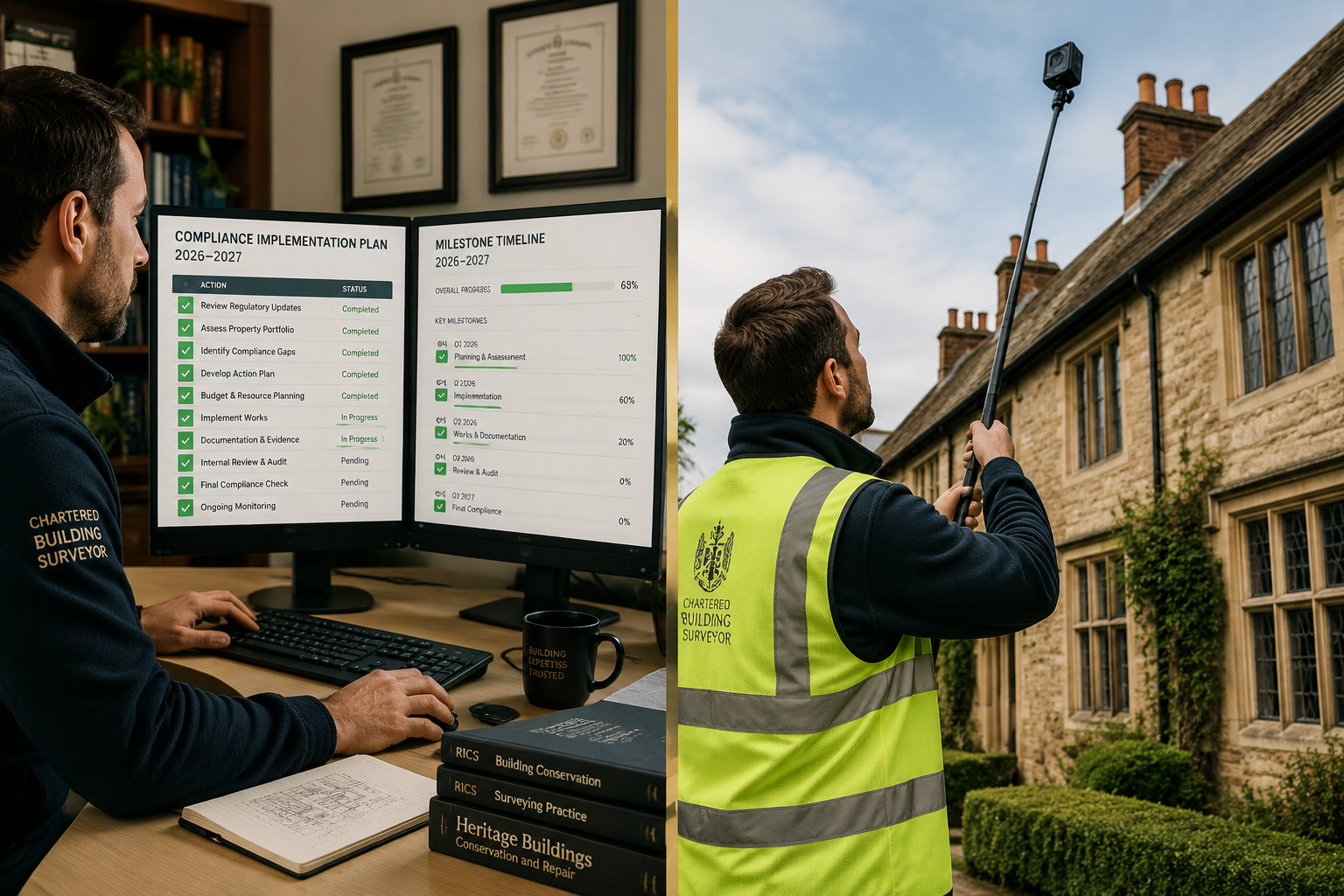
The RICS 2nd Edition Home Survey Standard 2025: Key Updates and Implementation Roadmap for Building Surveyors in 2026 demands proactive preparation. With implementation targeted for the end of 2027, the window for comfortable adaptation is narrower than many firms assume.
Phase 1: Awareness and Gap Analysis (Now – Q3 2026)
✅ Practical checklist for this phase:
- Download and read the draft consultation document in full
- Map current Level 2 and Level 3 report templates against the new benchmarking requirements
- Identify gaps in technology competency (drone, AI tools, camera poles)
- Review current valuation delivery model in light of the optional valuation proposal
- Flag historic building, new-build, and retrofit instructions for protocol review
- Begin CPD planning around energy efficiency and retrofit assessment
Phase 2: Training and Process Development (Q3 2026 – Q1 2027)
✅ Practical checklist for this phase:
- Enrol in relevant CPD covering drone inspection protocols and AI-assisted surveying
- Update report templates to reflect new Level 1/2/3 benchmarking requirements
- Develop internal guidance notes for 'additional risk' property categories
- Review client-facing documentation — terms of engagement, scope of service letters
- Consider areas of further investigation protocols for Level 3 surveys under the new framework
- Assess building regulation compliance testing requirements under updated guidance
Phase 3: Full Implementation (Q2 2027 – End of 2027)
✅ Practical checklist for this phase:
- Roll out updated survey templates and processes firm-wide
- Conduct internal audits of first surveys delivered under the new standard
- Ensure PI insurance covers any new technology-assisted inspection methods
- Communicate changes to regular clients and referral partners
- Monitor RICS guidance updates as the standard beds in
💡 Pro tip: Firms that wait for the final published standard before beginning preparation will face a compressed implementation timeline. Starting gap analysis now — based on the consultation draft — is the lower-risk approach.
How the Updates Address Surveyor Productivity Challenges
Demand for residential surveys has risen sharply in recent years, placing pressure on surveyor capacity and turnaround times. The 2nd Edition's changes, while adding new requirements, also create productivity opportunities.
Technology as a productivity enabler:
- Drone and camera pole inspections reduce the time and physical risk associated with ladder access
- AI-assisted report drafting — when used within the standard's guidance — can accelerate documentation without compromising quality
- Clearer benchmarking reduces the time surveyors spend second-guessing scope, particularly at Level 2
Reduced friction in service design:
- Optional valuation removes the need to either turn away instructions or refer to a valuer, streamlining workflow for condition-only commissions
- Standardised frameworks for historic and new-build properties reduce the research burden on individual surveyors
Understanding what questions clients should be asking during a building survey also helps surveyors manage expectations more efficiently — a factor that directly affects productivity and client satisfaction.
What This Means for Clients in 2026
While this article focuses primarily on surveyor implementation, it is worth noting the client-side implications. Homebuyers commissioning surveys in 2026 should be aware that:
- Survey reports will evolve as firms begin aligning with the new standard
- Energy and retrofit commentary will become a standard feature of reports, not an optional add-on
- Technology-assisted inspections (drone roof surveys, for example) may become more common and should be understood as an enhancement, not a shortcut
- Valuation may be offered separately from the condition report — clients should check what is included in their commission
For homebuyers trying to understand the difference between survey types, a complete guide to choosing between Level 2 and Level 3 surveys remains a valuable starting point.
Conclusion: Act Now, Implement Confidently
The RICS 2nd Edition Home Survey Standard 2025: Key Updates and Implementation Roadmap for Building Surveyors in 2026 represents the most significant update to residential surveying practice in five years. The consultation process has been thorough and the changes are substantive — covering technology, energy performance, survey level benchmarking, valuation flexibility, and specialist property frameworks.
For building surveyors, the message is clear: the end-of-2027 implementation deadline is not a reason to wait. It is a reason to start now.
Actionable next steps:
- Review the consultation draft and map it against your current practice
- Identify CPD priorities — particularly around technology and energy/retrofit assessment
- Update templates and terms of engagement to reflect the new benchmarking requirements
- Engage with RICS through professional networks to stay current as the final standard progresses through approval stages
- Communicate proactively with clients about how your survey offering is evolving
The firms that treat the 2nd Edition as an opportunity — rather than a compliance burden — will be best placed to meet rising demand with confidence, consistency, and competitive differentiation.
References
[1] Home Survey Standard 2nd Edition April 2026 Update – rics.org
[2] Home Survey Standards – rics.org
[3] Home Survey Standard 2nd Edition A Progress Update – rics.org
[4] The Home Survey Standard and Regulatory Scheme: A Guide to the RICS Consultations – hqnetwork.co.uk