

Fewer than one in three UK homebuyers commission a full building survey before exchanging contracts, yet the average cost of post-purchase structural repairs discovered later runs into thousands of pounds. Understanding professional building survey fees explained: how chartered surveyors structure costs across the UK is not just a matter of budgeting; it is a question of managing risk at one of the most significant financial moments of most people's lives.
This guide cuts through the confusion around surveyor pricing. It explains exactly how chartered surveyors build their fee structures, what drives costs up or down, how regional markets affect what you pay, and what a transparent, professional fee breakdown should look like in 2026.
Key Takeaways
- RICS survey fees in 2026 range from approximately £300 for a Level 1 Condition Report to £1,500 or more for a Level 3 Building Survey on a complex property.
- Property size, age, construction type, and location are the four main variables that push fees above or below headline ranges.
- London and the South East consistently attract higher professional fees than most other UK regions.
- Quoted fees almost always exclude VAT; specialist add-ons such as damp reports and measured surveys carry separate charges.
- Obtaining at least two or three comparable quotes from RICS-regulated surveyors remains the single most effective way to ensure fair pricing.
The Three RICS Survey Levels and Their Fee Ranges
The Royal Institution of Chartered Surveyors (RICS) standardised residential property surveys into three levels, and professional building survey fees are almost universally structured around this framework. Understanding what each level delivers is the starting point for understanding why fees differ so significantly.
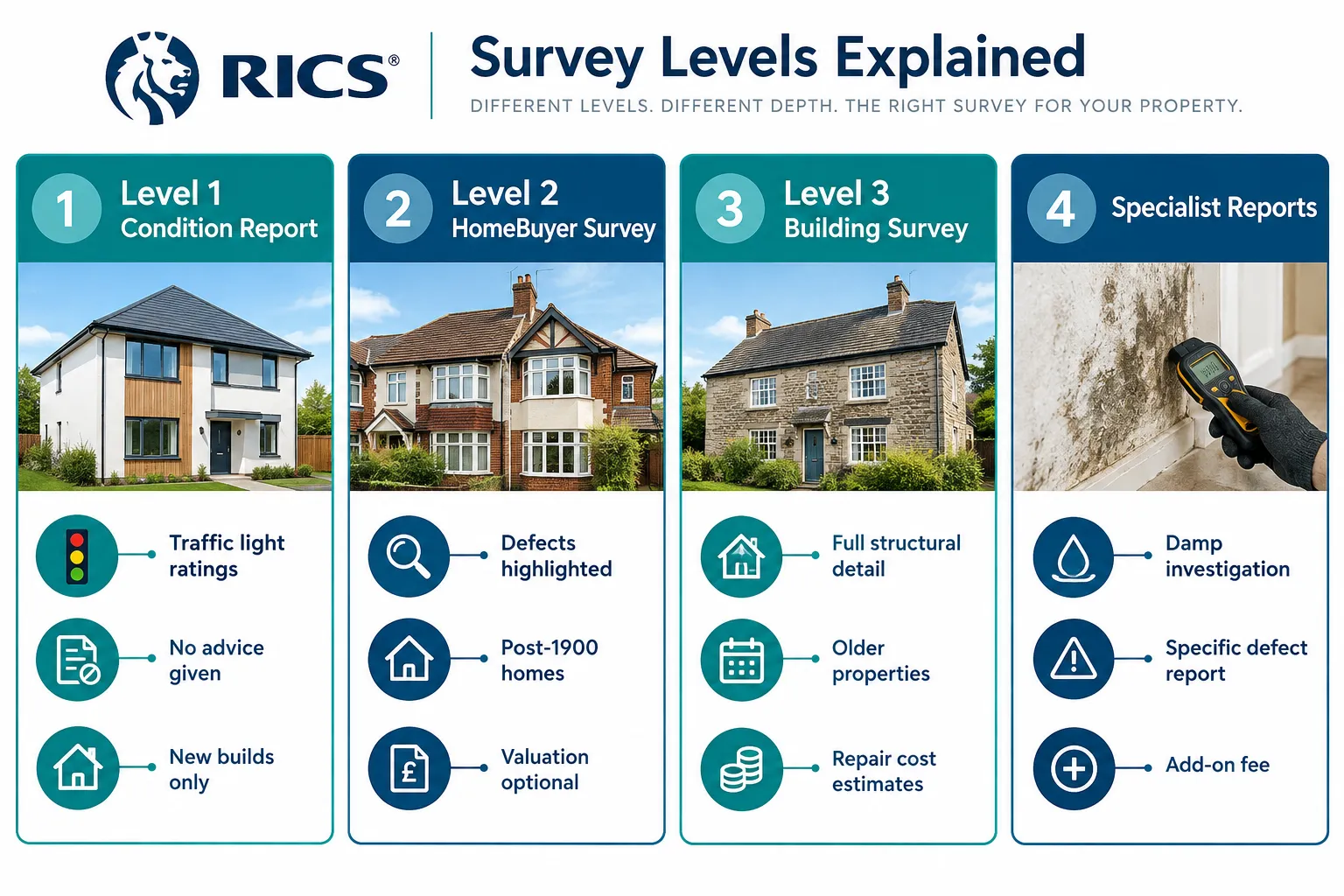
Level 1, Condition Report
This is the most basic option, using a traffic-light rating system to flag obvious defects. It provides no advice on repairs and is generally suitable only for newer, conventionally built properties. In 2026, consumer guides consistently quote fees of approximately £300,£900, with the lower end applying to straightforward modern homes [1][4].
Level 2, HomeBuyer Survey
The Level 2 survey identifies significant defects, highlights urgent issues, and can include an optional market valuation. It is widely regarded as appropriate for standard post-1900 homes in reasonable condition. Typical fees nationally sit around £400,£1,000, rising toward the top of that band for larger or older properties [6][10]. In London and the South East, Level 2 fees for a three-to-four bedroom house frequently exceed £800 [2].
Level 3, Building Survey (Full Structural Survey)
This is the most comprehensive residential option. A Level 3 survey inspects all accessible parts of the building, describes defects in detail, explains their likely causes, and typically provides indicative repair costs. It is strongly recommended for older properties, those with extensions or alterations, listed buildings, and any home where the buyer suspects structural issues.
Fee ranges for Level 3 surveys are wider than for the other levels, reflecting the greater scope and professional liability involved:
| Property Profile | Typical Level 3 Fee Range (2026) |
|---|---|
| Standard 3-4 bed house, post-1900 | £600,£1,000 |
| Older or extended home, 3-4 beds | £750,£1,500 |
| High-value property (£300k,£600k) | £1,000,£1,800 |
| High-value property (above £600k) | £1,500,£3,000+ |
| Complex, listed or unusual building | £2,000+ (bespoke quote) |
Sources: [1][4][7][8]
Several 2026 pricing guides show that Level 3 surveys for properties valued above £600,000 can exceed £3,000, particularly where the surveyor's professional indemnity exposure is high [4][14]. For buyers exploring the scope of what a modern survey must cover, the article on cladding, RAAC, and hidden defects in 2026 building surveys provides useful context on why thoroughness commands a premium.
"There is no single fixed national tariff. Costs vary widely by location, property and provider, buyers should obtain more than one quote.", RICS Consumer Guide, 2026 [10]
How Chartered Surveyors Structure Their Fees: The Key Variables
Professional building survey fees explained across the UK reveal a consistent set of pricing drivers. Surveyors do not price arbitrarily; each variable reflects genuine differences in time, expertise, and professional risk.
Property Size and Complexity
Survey time is the most direct cost driver. A compact two-bedroom flat may take two to three hours to inspect; a large Victorian detached house with cellars, outbuildings, and multiple extensions can require a full day. Larger floor areas, unusual construction methods (timber frame, cob, steel frame), and significant alterations all increase the time needed and therefore the fee.
Property Age and Condition
Older buildings carry greater defect risk and require more detailed investigation. A Georgian townhouse presents far more potential issues, damp, rot, settlement, lead pipes, lime mortar failure, than a 1990s semi-detached. Surveyors price this risk explicitly. One 2026 industry rate-setting guide shows graduated bands for a full Building Survey: entry-level practitioners charging around £700,£1,000, experienced surveyors £1,000,£1,600, and specialist or senior surveyors £1,400,£2,200, with older or complex properties typically attracting the higher bands [12].
Property Value and Professional Liability
As property values rise, so does the surveyor's professional indemnity exposure. A missed structural defect on a £1.5 million property carries a far greater potential liability than the same error on a £200,000 home. This is why fee tiers based on property value are increasingly common, particularly for Level 3 surveys [4][14].
Location and Regional Market Rates
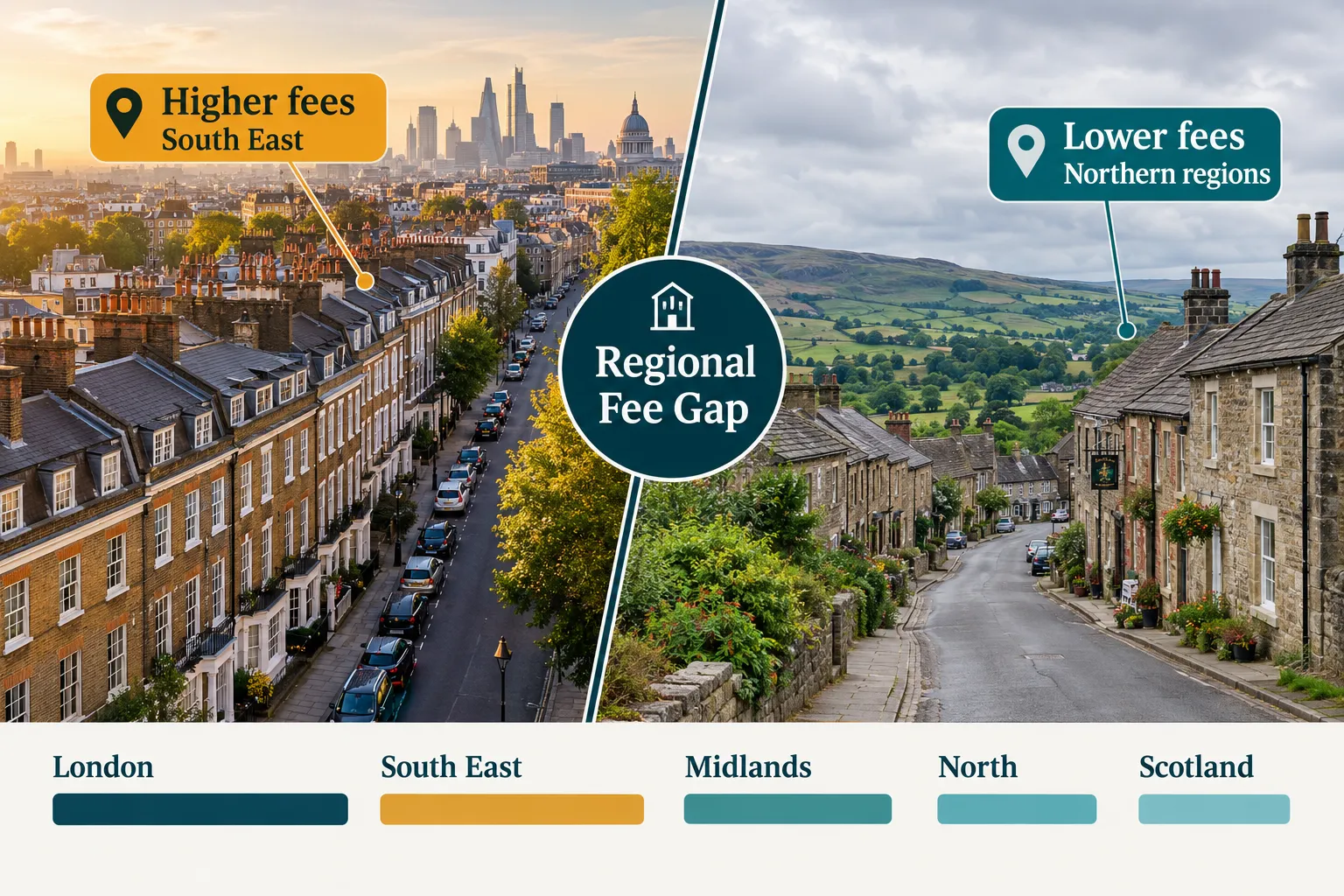
Regional pricing differences are pronounced and well-documented. A June 2026 national pricing guide reports Level 3 building surveys for a three-to-four bedroom house in London at £850,£1,200, compared with £600,£900 in many other regions [2]. A London and Surrey specialist firm lists typical Level 3 prices at £650,£1,500+, noting that £650,£800 is common for standard homes but that larger or more complex properties regularly exceed this [8].
The North, South divide in professional fees reflects differences in local market rates, overhead costs, and surveyor availability. Buyers in the North of England, the Midlands, Wales, and Scotland will generally find lower headline fees, though the same property-specific variables still apply.
Surveyor Experience and Firm Reputation
Experienced chartered surveyors and specialist firms command higher fees. This is not simply a matter of prestige; a surveyor with deep expertise in a specific property type, Victorian terraces, listed buildings, or unusual construction, is more likely to identify latent defects that a generalist might miss. The cost of that expertise is a worthwhile investment relative to potential repair bills. For context on how the profession is evolving, the chartered surveyor career trends and UK real estate workforce survey offers insight into how skills and specialisation are being valued.
Specialist Services, Add-Ons, and Commercial Surveys
Standard residential RICS surveys represent only part of the professional building survey fee landscape. Several additional services carry distinct pricing structures.
Specialist Defect and Damp Reports
Buyers who want a focused investigation of a specific issue, rising damp, structural cracking, subsidence, or roof condition, can commission standalone specialist reports. In 2026, these are typically priced as follows [1][9]:
- Standalone damp report: from approximately £250
- Specific defect report (cracking, movement, individual element): £300,£700
- These are usually charged in addition to any main Level 2 or Level 3 survey fee
For landlords and investors, the building survey checklists for landlord compliance and risk mitigation covers how specialist reports fit into broader compliance frameworks.
Measured Building Surveys
Measured surveys produce accurate as-built drawings, floor plans, elevations, and sections, typically required for refurbishment design or extension planning. These are a distinct professional cost stream, priced on deliverables and level of detail rather than property value alone [3][13].
- Standard residential measured survey: £800,£2,000+
- Complex period homes or larger properties: £2,000,£5,000+
- Large commercial buildings: up to £20,000+ plus VAT
Guides aimed at architects and developers confirm that intensive site time and drafting work justify these higher fees, particularly for historic or large-footprint properties [3].
Commercial Building Surveys
Commercial surveys are almost always priced on a bespoke, quote-only basis. Fee ranges are wide, reflecting the enormous variation in building type, size, and intended use:
- Entry-level commercial survey: from approximately £500
- Typical range for standard commercial premises: £2,000,£20,000+ plus VAT [9]
Factors affecting commercial fees include gross internal area, building age, structural complexity, intended use change, and the level of due diligence required by lenders or investors.
Party Wall and Expert Witness Services
Party wall surveyor fees are similarly variable and depend on the complexity of the works and whether a single agreed surveyor or two separate surveyors are appointed. Expert witness work for property litigation is typically charged at an hourly or daily rate, reflecting the surveyor's professional standing and the demands of court-ready reporting. For those navigating these areas, the evergreen guide to Party Wall Act notices and RICS templates provides a practical framework.
VAT, Extras, and the True Cost of a Building Survey
One of the most common sources of confusion in professional building survey fees is the treatment of VAT and additional charges. Multiple 2026 resources are explicit on this point: quoted fees almost universally exclude VAT, which is then added at the prevailing standard rate of 20% [3][11].
Common extras that can increase the total bill include:
- Travel charges for properties outside the surveyor's standard operating area
- Urgent turnaround fees when a report is needed within 24-48 hours
- Expanded reporting for outbuildings, annexes, or additional structures not included in the standard scope
- Reinspection fees if the property requires a follow-up visit
- VAT on all professional fees at 20%
A buyer quoted £900 for a Level 3 survey, for example, should budget approximately £1,080 once VAT is applied. If travel charges of £50 and an urgent fee of £75 are added, the actual invoice could reach £1,260 or more.
Best practice for comparing quotes:
- Always ask for fees to be quoted inclusive and exclusive of VAT
- Confirm exactly what is included in the scope (main house only, or outbuildings too?)
- Ask whether the quoted fee covers a full written report or a summary
- Check the expected turnaround time and whether urgent fees apply
- Verify the surveyor's RICS membership and professional indemnity cover
The trend toward transparent banded fee tables and online calculators is making this easier for buyers. Several 2026 pricing tools publish standard ranges and then adjust upward for older, extended, or high-value properties [2][11]. For those interested in how digital tools are changing the sector, the article on building surveying digital tools, energy retrofits, and enhanced risk assessments is worth reading.
Getting the Best Value From a Professional Building Survey
Understanding professional building survey fees explained across the UK is only useful if that knowledge translates into better commissioning decisions. Here is what the evidence from 2026 pricing guides and consumer organisations consistently recommends.
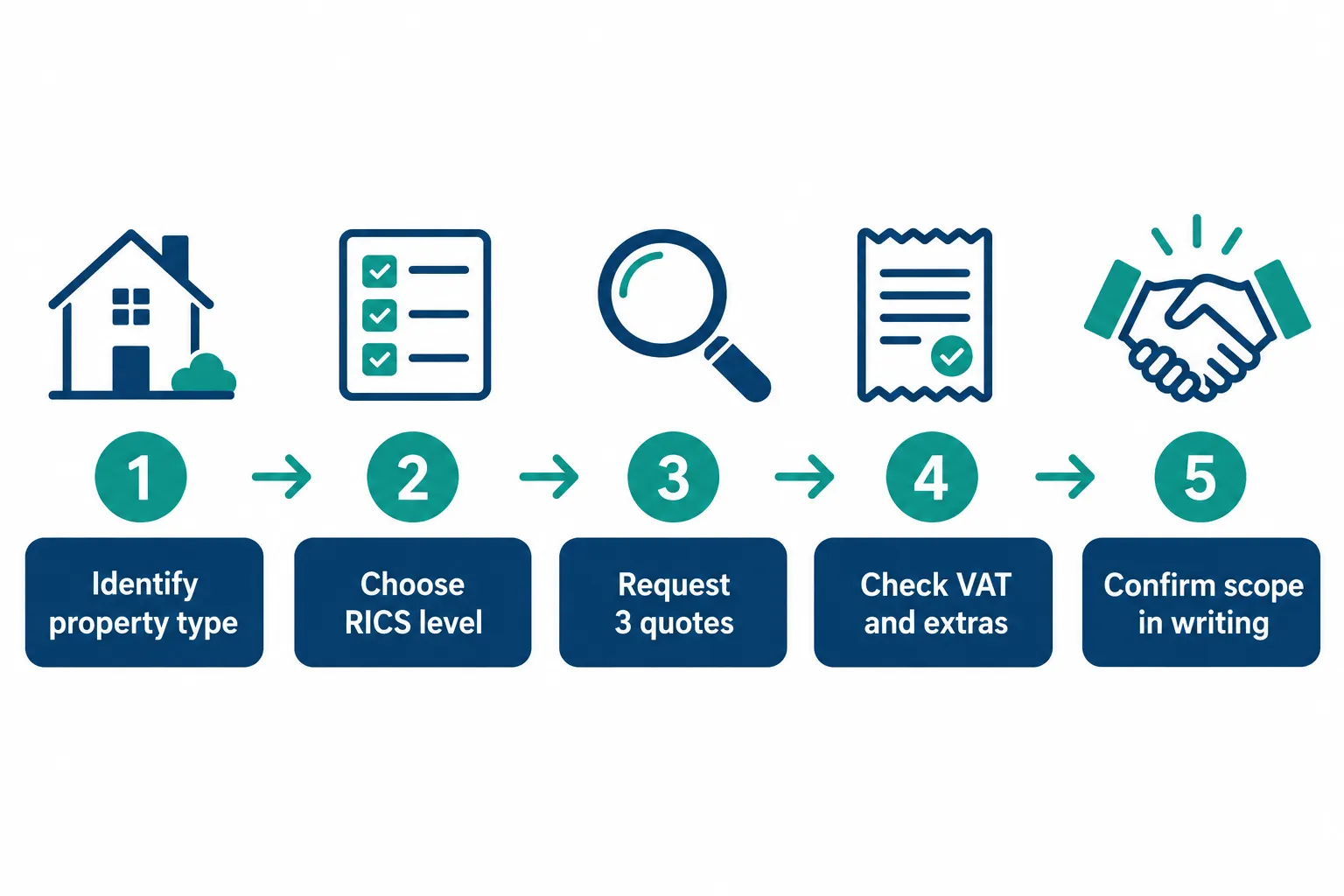
Match the survey level to the property. A Level 2 HomeBuyer Survey is generally sufficient for a conventional post-1900 home in reasonable condition. A Level 3 Building Survey is the appropriate choice for any property built before 1900, any home with significant alterations, unusual construction, or visible defects, and any property where the buyer has concerns [6][8]. Paying for a Level 3 survey on a 2015 new-build is rarely cost-effective; paying for a Level 2 on a 1780s farmhouse is a false economy.
Obtain at least two or three quotes. RICS and consumer organisations consistently advise against accepting the first quote received [6][10]. Fee variation between firms for the same property can be substantial, sometimes several hundred pounds. However, the cheapest quote is not always the best value; the surveyor's experience with the specific property type matters enormously.
Check what is included before signing. A lower headline fee that excludes outbuildings, drainage inspection, or a valuation may end up costing more in add-ons than a slightly higher all-inclusive quote.
Consider the cost in context. A Level 3 survey costing £1,200 on a £350,000 property represents 0.34% of the purchase price. If it identifies £15,000 of structural repairs, it has paid for itself many times over, and may provide grounds for renegotiating the purchase price. For buyers thinking about long-term costs, the guide on how building surveys guide homebuyers through energy efficiency retrofits and long-term cost planning demonstrates how survey findings translate into financial planning.
Understand the regulatory context. Proposed homebuying reforms in 2026 may make upfront property condition assessments more common, potentially changing how and when surveys are commissioned. Staying informed about these changes helps buyers and sellers plan ahead. The article on homebuying process reforms and how building surveys may become mandatory for UK buyers covers this evolving landscape in detail.
Conclusion
Professional building survey fees in the UK are not arbitrary. They reflect a structured set of variables, RICS survey level, property size and age, construction type, location, and the surveyor's experience and professional liability exposure. In 2026, buyers can expect to pay roughly £300,£900 for a Level 1 report, £400,£1,000 for a Level 2 HomeBuyer Survey, and £600,£3,000+ for a Level 3 Building Survey, with the upper ranges applying to complex, high-value, or older properties. London and the South East consistently sit at the top of regional fee bands, while the rest of the UK offers more competitive pricing.
Actionable next steps for anyone commissioning a survey:
- Identify the correct RICS level for the specific property before approaching any firm
- Request itemised, VAT-exclusive and VAT-inclusive quotes from at least two RICS-regulated surveyors
- Confirm the full scope in writing, including any specialist add-ons required
- Budget for VAT at 20% on top of all quoted professional fees
- Treat the survey fee as risk management, not an optional extra, the cost of not knowing is almost always higher
A well-scoped, professionally executed building survey remains one of the most cost-effective purchases a buyer can make. The key is knowing how fees are structured, what drives them, and how to compare like with like.
References
[1] Building Survey Cost What To Expect 2026 – Building survey cost what to expect 2026
[2] Pricing Guide – surveysnearme.co.uk
[3] Measured Building Survey Cost – blackacresurveyors.com
[4] How Much Does A Surveyor Cost Uk Fees By Service 2026 – How much does a surveyor cost uk fees by service 2026
[6] How Much Does A House Survey Cost – hoa.org.uk
[7] Survey Costs 2026 – housesurveys.co.uk
[8] Building Survey Costs – westvilleassociates.com
[9] What Is A Building Surveyor – surveymerchant.com
[10] House Surveys Uk The Costs Types And Benefits Of An Rics Home Survey – rics.org