

Rising energy costs have transformed the homebuying landscape in 2026. What once seemed like a distant concern—monthly utility bills—now ranks among the top three financial considerations for property purchasers across the UK. As heating and electricity expenses continue to climb, prospective homeowners are demanding far more than generic "poor insulation" warnings from their building surveys. They need detailed thermal performance assessments, realistic retrofit budgets, and actionable energy upgrade strategies that turn energy-draining properties into efficient, cost-effective homes.
Energy Efficiency Retrofits: How Building Surveys Guide Homebuyers Through Long-Term Cost Planning in 2026 represents a fundamental shift in how property professionals approach residential assessments. Modern building surveys now serve as comprehensive energy roadmaps, combining traditional structural analysis with cutting-edge thermal imaging, performance modeling, and long-term financial projections. This evolution empowers buyers to make informed decisions about not just the purchase price, but the total cost of ownership over decades.
Key Takeaways
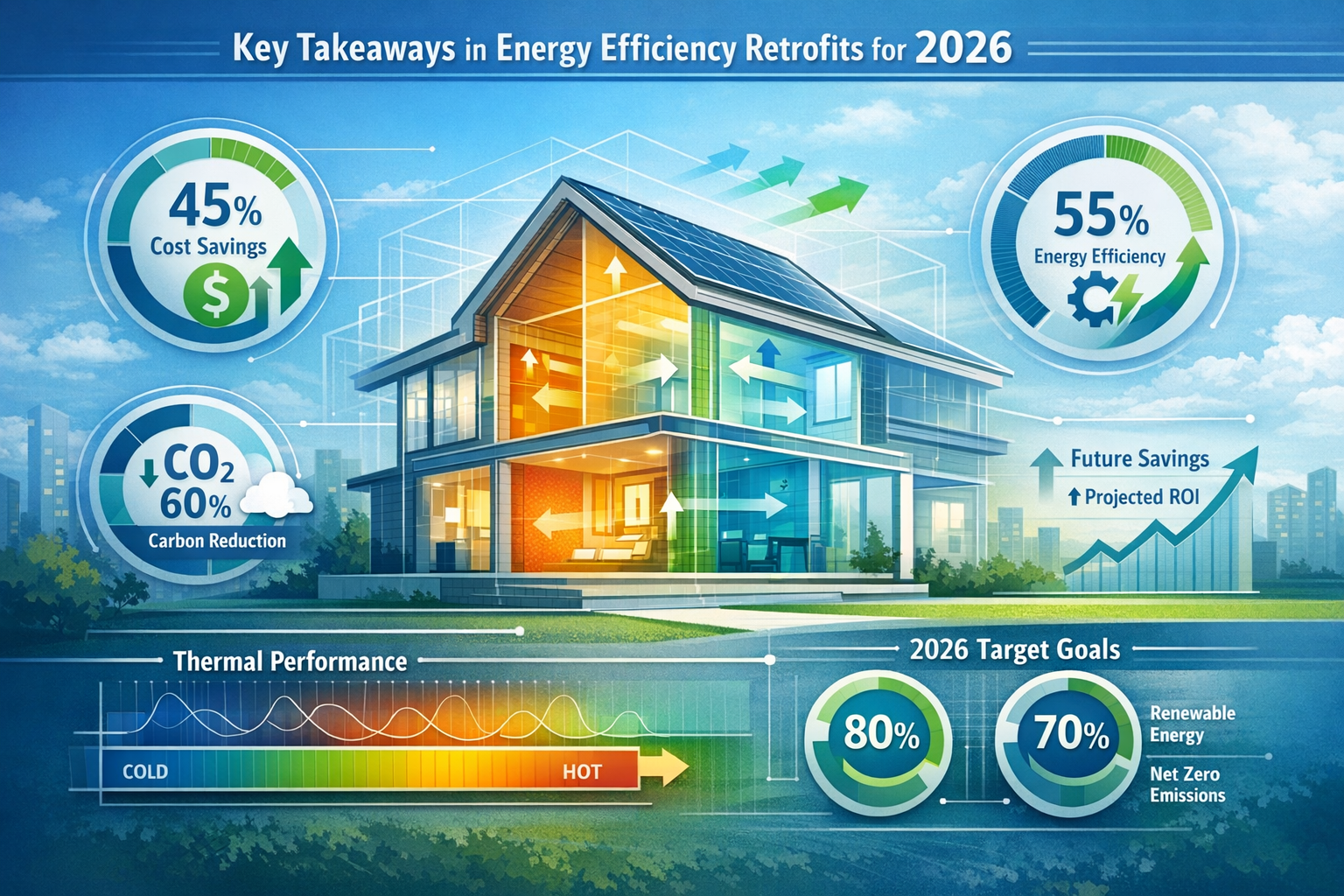
- 🏠 Deep energy retrofits can reduce energy bills by 50% or more, with standard retrofits achieving approximately 40% reductions in energy intensity[1][7]
- 💰 Building surveys in 2026 provide detailed retrofit cost breakdowns and payback period calculations, replacing vague efficiency warnings with actionable financial planning tools
- 📊 Federal funding through the Inflation Reduction Act offers $8.8 billion in home energy rebate programs—the largest residential efficiency funding package ever[2]
- 🔍 Thermal imaging and performance data have become standard components of comprehensive building surveys, revealing hidden energy waste invisible to visual inspection
- ⚡ Energy efficiency improvements increase property values by approximately 15% while reducing occupant sickness by 20% and improving overall comfort[1]
Understanding the 2026 Energy Efficiency Landscape for Homebuyers
The residential property market in 2026 operates within a dramatically different regulatory and economic environment than just five years ago. Energy performance is no longer a "nice-to-have" feature—it directly impacts mortgage eligibility, resale value, and monthly living costs.
The Regulatory Push Toward Building Performance
While commercial properties face immediate compliance deadlines—Washington State's Clean Buildings Performance Standard requires all Tier One buildings over 50,000 square feet to meet performance standards by June 2026[1]—residential properties aren't far behind. New benchmarking requirements for smaller buildings and multifamily structures signal an expanding regulatory framework that will eventually encompass single-family homes.
This policy momentum creates a critical window of opportunity for homebuyers. Properties purchased and retrofitted in 2026 will be well-positioned for future compliance requirements, while neglected homes may face mandatory upgrades, reduced valuations, or restricted marketability.
Economic Drivers Behind Retrofit Demand
Energy costs represent a growing percentage of household budgets. The compound effect of inflation, grid infrastructure upgrades, and carbon pricing mechanisms has fundamentally altered the economics of home ownership. A property with poor thermal performance that seemed affordable in 2020 may now carry unsustainable operating costs.
Professional building surveys address this reality by quantifying energy performance in financial terms. Instead of noting "single-glazed windows throughout," modern RICS building surveys calculate the annual heat loss through those windows in kilowatt-hours and translate it into pounds sterling of wasted energy.
Federal Funding Opportunities Transform Retrofit Economics
The Department of Energy's Home Energy Rebate Programs, enacted through the Inflation Reduction Act of 2022, provides $8.8 billion for home energy efficiency and electrification rebates—described as "the largest pot of money ever" for residential energy upgrades[2]. This unprecedented funding fundamentally changes retrofit payback calculations.
Building surveys in 2026 incorporate available rebates and incentives into their cost projections, showing homebuyers the true out-of-pocket expense rather than gross retrofit costs. A £15,000 heat pump installation might require only £7,500 in actual homeowner investment after rebates, dramatically improving the financial case for immediate upgrades.
How Building Surveys Assess Energy Performance in 2026
Modern building surveys employ a multi-layered approach to energy assessment that combines traditional inspection techniques with advanced diagnostic technology and performance modeling.
Thermal Imaging and Heat Loss Analysis
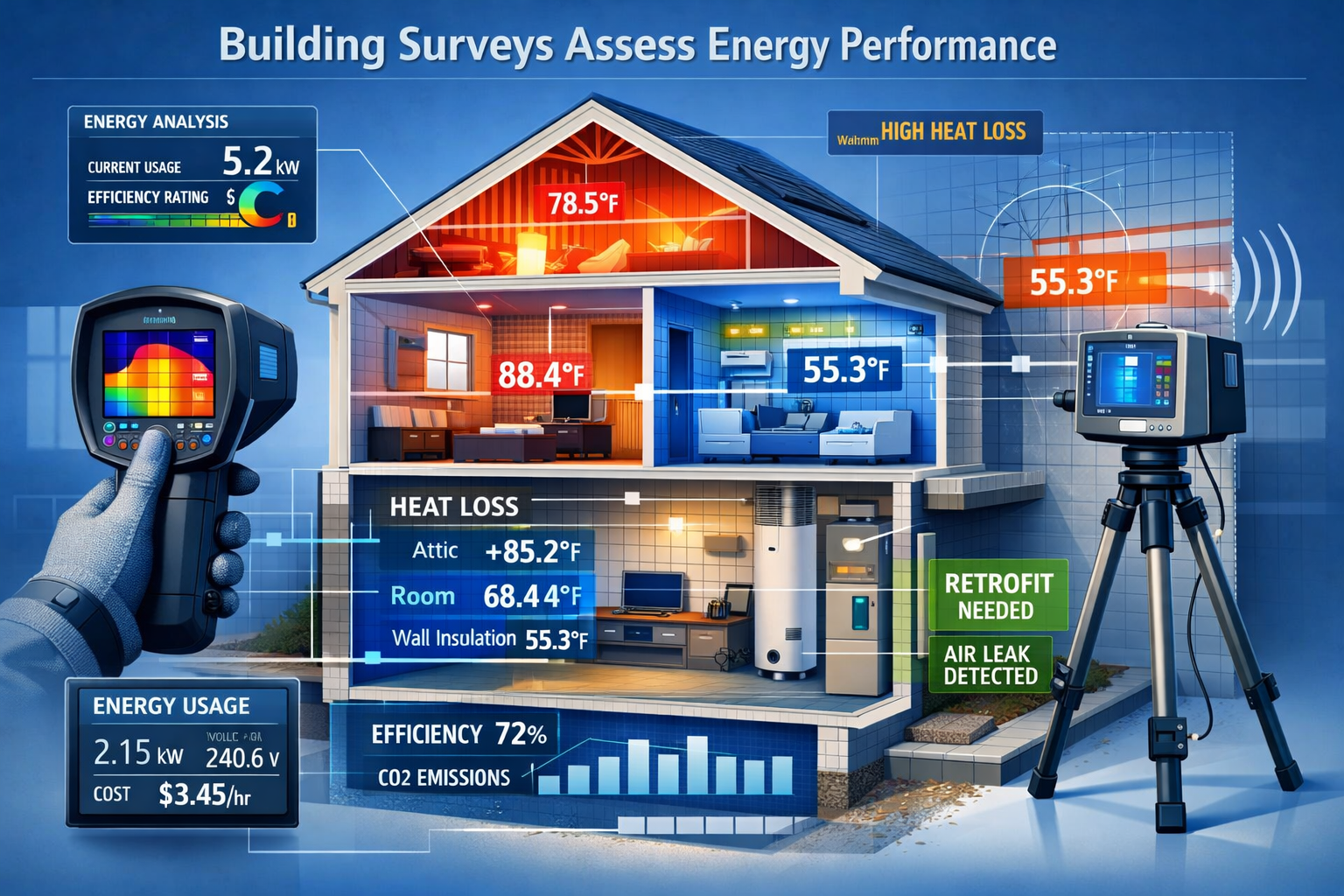
Thermal imaging cameras have transitioned from specialist tools to standard survey equipment. These devices reveal temperature differentials across building surfaces, identifying:
- Cold spots indicating missing or inadequate insulation
- Thermal bridging where heat escapes through structural elements
- Air infiltration points around windows, doors, and service penetrations
- Hidden defects like moisture intrusion that compromises insulation performance
A comprehensive Level 3 full building survey includes thermal imaging of the entire building envelope, conducted during appropriate weather conditions to maximize temperature differentials. The resulting heat maps provide visual evidence of energy waste that photographs and written descriptions cannot convey.
EPC Ratings and MEES Compliance Assessment
Energy Performance Certificates (EPCs) provide standardized efficiency ratings, but experienced surveyors look beyond the headline letter grade. Detailed EPC and MEES analysis examines:
- Current rating vs. potential rating after recommended improvements
- Specific improvement measures and their individual impact on performance
- MEES compliance status for rental properties (minimum E rating required)
- Cost-effectiveness ratings for each suggested upgrade
- Environmental impact measured in CO2 emissions reduction
Surveyors cross-reference EPC recommendations with their own findings, identifying discrepancies and providing more accurate upgrade priorities based on actual building condition rather than theoretical models.
Ventilation and Moisture Risk Evaluation
Energy efficiency improvements must balance heat retention with adequate ventilation. Poorly planned retrofits can create moisture problems, condensation, and indoor air quality issues. Building surveys assess:
- Current ventilation adequacy and compliance with building regulations
- Moisture risk areas where improved insulation might trap humidity
- Mechanical ventilation requirements for airtightness improvements
- Condensation patterns indicating existing ventilation deficiencies
This holistic approach prevents the common mistake of improving insulation without addressing ventilation, which can lead to expensive building problems like mold growth and structural decay.
Building Fabric Assessment for Retrofit Suitability
Not all properties are equally suitable for every retrofit technology. Surveyors evaluate structural and material characteristics that affect upgrade options:
| Building Element | Assessment Criteria | Retrofit Implications |
|---|---|---|
| Walls | Construction type, cavity presence, material condition | Determines insulation method (cavity fill, external, internal) |
| Roof | Structure type, access, load capacity | Affects insulation thickness, solar panel feasibility |
| Windows | Frame material, condition, heritage status | Influences replacement vs. secondary glazing decisions |
| Floors | Construction method, underfloor access, moisture | Impacts insulation installation approach |
| Services | Heating system age, electrical capacity, plumbing layout | Determines heat pump compatibility, upgrade requirements |
This detailed fabric analysis prevents costly mistakes where homebuyers invest in retrofits incompatible with their property's construction or condition.
Energy Efficiency Retrofits: How Building Surveys Guide Homebuyers Through Long-Term Cost Planning in 2026
The true value of modern building surveys lies in their ability to transform technical assessments into actionable financial planning tools. Homebuyers receive not just a list of problems, but a strategic roadmap for optimizing their property investment over time.
Detailed Retrofit Cost Projections
Professional surveys provide itemized cost estimates for each recommended energy improvement, including:
- Material costs based on current market prices and property-specific quantities
- Labor expenses reflecting local contractor rates and installation complexity
- Associated works like scaffolding, decorating, or temporary heating
- Professional fees for design, certification, and building control
- Contingency allowances for unforeseen complications
These estimates enable buyers to budget accurately and negotiate purchase prices based on genuine retrofit requirements rather than guesswork.
Payback Period Calculations and ROI Analysis
Each recommended upgrade includes financial performance metrics:
- Simple payback period: Years to recover investment through energy savings
- Net present value: Total financial benefit over the improvement's lifespan
- Internal rate of return: Annual return on the retrofit investment
- Energy cost savings: Annual reduction in utility bills (in pounds)
- Property value increase: Estimated market value improvement
For example, a survey might show that £8,000 invested in loft and cavity wall insulation would save £850 annually on heating bills, providing a 9.4-year payback and £21,000 in total savings over a 25-year period—plus an estimated £12,000 increase in property value.
Phased Implementation Strategies
Recognizing that most buyers cannot afford all retrofits immediately, surveys present prioritized implementation plans:
Phase 1 (Year 1): High-Impact, Low-Cost Improvements
- Loft insulation upgrade (£1,200 – £2,500)
- Draught-proofing (£300 – £800)
- Heating controls optimization (£400 – £1,200)
- Total: £1,900 – £4,500
- Annual savings: £350 – £550
Phase 2 (Years 2-3): Medium-Cost Fabric Improvements
- Cavity wall insulation (£2,500 – £4,000)
- Window upgrades or secondary glazing (£5,000 – £12,000)
- Total: £7,500 – £16,000
- Additional annual savings: £400 – £650
Phase 3 (Years 4-7): Major System Upgrades
- Heat pump installation (£8,000 – £15,000 after rebates)
- Solar PV system (£5,000 – £9,000 after incentives)
- Total: £13,000 – £24,000
- Additional annual savings: £800 – £1,400
This phased approach allows homebuyers to plan long-term improvements within realistic budget constraints while capturing quick wins that improve comfort and reduce bills immediately.
Integration with Purchase Negotiations
Armed with detailed retrofit cost data, buyers can negotiate more effectively. A property listed at £450,000 but requiring £25,000 in energy improvements to reach modern performance standards presents a compelling case for a reduced offer or seller contributions toward upgrade costs.
Surveys quantify this negotiating position with evidence-based cost projections that mortgage lenders and sellers cannot easily dispute. Understanding what to do if your home valuation differs from the offer becomes particularly relevant when energy performance issues affect property value.
Mortgage and Insurance Considerations
Building surveys help buyers understand how energy performance affects financing:
- Green mortgages offering preferential rates for efficient properties
- Retrofit financing products allowing improvement costs to be included in the mortgage
- Insurance implications of energy upgrades, particularly for home insurance coverage
- Lender requirements for minimum energy performance standards
Some lenders in 2026 require properties to meet minimum EPC ratings or provide retrofit plans as a condition of mortgage approval, making survey energy assessments critical to transaction completion.
Specific Retrofit Technologies and Survey Recommendations
Building surveys evaluate the suitability and cost-effectiveness of various retrofit technologies based on property-specific characteristics.
Insulation Upgrades: The Foundation of Efficiency
Loft Insulation remains the most cost-effective retrofit for most properties. Surveys assess:
- Current insulation depth and type
- Recommended upgrade to 270-300mm depth
- Access challenges and installation costs
- Ventilation requirements to prevent condensation
Cavity Wall Insulation offers excellent returns in suitable properties. Surveys determine:
- Cavity presence and width (minimum 50mm required)
- Wall construction and suitability for fill
- Existing insulation status
- Moisture risk factors
Solid Wall Insulation (external or internal) suits properties without cavities. Surveys evaluate:
- External insulation feasibility (planning permission, aesthetics)
- Internal insulation impacts (room size reduction, fixture relocation)
- Cost-benefit analysis (typically £8,000-£15,000)
- Heritage considerations for period properties
Glazing Improvements: Balancing Cost and Performance
Window upgrades represent significant investments requiring careful analysis:
- Double glazing replacement: £400-£1,200 per window
- Secondary glazing: £200-£600 per window (heritage-friendly option)
- Triple glazing: Premium option for maximum performance
Surveys assess whether window replacement is justified or if other retrofits offer better returns. For older homes with common defects, window condition may necessitate replacement regardless of energy considerations.
Heating System Upgrades: The Electrification Transition
Heat Pumps dominate 2026 retrofit recommendations, but require careful evaluation:
- Air source heat pumps: £8,000-£18,000 installed (before rebates)
- Ground source heat pumps: £20,000-£35,000 (suitable for larger properties)
- Hybrid systems: Combining heat pumps with existing boilers
Surveys assess heat pump suitability by examining:
- Property insulation levels (must be adequate for efficient operation)
- Radiator sizing and distribution system compatibility
- Electrical supply capacity (may require upgrade)
- External space for outdoor units
- Noise considerations for neighbors
The federal rebate programs can reduce heat pump costs by 30-50%, dramatically improving payback periods[2].
Renewable Energy Integration
Solar PV systems receive detailed feasibility analysis:
- Roof orientation and pitch (south-facing, 30-40° optimal)
- Shading analysis from trees and adjacent buildings
- Structural capacity for panel weight
- Electrical system integration requirements
- Generation potential and financial returns
Surveys calculate expected generation in kilowatt-hours, financial savings from reduced grid consumption, and potential export income under current tariff schemes.
Ventilation and Air Quality Systems
As properties become more airtight through retrofits, mechanical ventilation becomes essential:
- Mechanical Ventilation with Heat Recovery (MVHR): £4,000-£8,000
- Continuous mechanical extract ventilation: £1,500-£3,500
- Positive input ventilation: £800-£1,500
Surveys recommend appropriate ventilation solutions based on retrofit scope, occupancy patterns, and moisture risk.
The Role of Professional Expertise in Energy Retrofit Planning
The complexity of modern energy retrofits demands professional guidance that extends beyond basic property inspection.
RICS Chartered Surveyors and Energy Assessment Qualifications
Qualified building surveyors in 2026 typically hold additional certifications in energy assessment, thermal imaging, and retrofit coordination. This expertise enables them to:
- Interpret thermal imaging data accurately
- Understand building physics and moisture dynamics
- Evaluate retrofit technology compatibility
- Calculate realistic energy savings projections
- Identify potential unintended consequences of improvements
Choosing a RICS-qualified surveyor ensures energy assessments meet professional standards and provide reliable planning information.
Coordination with Specialist Assessments
Comprehensive retrofit planning often requires input from multiple specialists:
- Energy assessors for detailed EPC calculations and modeling
- Structural engineers for evaluating load capacity for insulation or solar panels
- Heating engineers for heat pump system design
- Electrical contractors for supply upgrade requirements
- Planning consultants for listed buildings or conservation areas
Building surveyors coordinate these specialist inputs, integrating them into cohesive retrofit strategies that address all technical and regulatory requirements.
Understanding Property-Specific Constraints
Generic energy advice fails to account for property-specific factors that dramatically affect retrofit feasibility and cost:
Period Properties: Edwardian cottages and Victorian terraces require sympathetic approaches that preserve character while improving performance. Breathable insulation materials, secondary glazing, and careful moisture management become critical.
Listed Buildings: Heritage designations restrict external alterations, requiring internal insulation solutions or exemptions from standard efficiency requirements.
Leasehold Properties: Leaseholder rights and restrictions may limit retrofit options, particularly for external works requiring freeholder consent.
Properties with Existing Defects: Building defects like damp, subsidence, or structural movement must be addressed before energy retrofits to avoid trapping moisture or wasting investment on buildings requiring major repairs.
Long-Term Maintenance Planning
Energy efficiency improvements require ongoing maintenance to sustain performance. Surveys include maintenance recommendations for:
- Heat pump servicing schedules and costs
- Ventilation system filter replacement
- Solar panel cleaning and inspection
- Insulation condition monitoring
- Heating controls optimization
Understanding these ongoing costs prevents unexpected expenses and ensures retrofits deliver projected savings over their full lifespan.
Emerging Trends in Building Performance and Retrofit Planning
The retrofit landscape continues to evolve rapidly, with 2026 marking several significant transitions.
From Net-Zero Commitments to Performance Verification
The industry is shifting from aspirational net-zero targets to actual performance verification and data-driven optimization[5][8]. Building surveys increasingly incorporate:
- Post-occupancy evaluation recommendations
- Energy monitoring system specifications
- Performance verification protocols to confirm retrofit effectiveness
- Retro-commissioning plans for optimizing existing systems
This emphasis on measured outcomes ensures retrofits deliver promised savings rather than theoretical projections.
Data Transparency and Public Disclosure Requirements
Energy consumption data disclosure for buildings is becoming mandatory in many jurisdictions, promoting efficiency accountability[6]. This transparency affects property values, with poor performers facing market penalties and efficient properties commanding premiums.
Building surveys help buyers understand how disclosure requirements will affect future resale value and whether current efficiency levels meet emerging standards.
Workforce Development and Quality Assurance
The rapid scaling of retrofit activity has created workforce challenges. The industry emphasizes building skilled residential energy efficiency workforces through registered apprenticeships and community-based programs[2].
For homebuyers, this means:
- Verifying contractor qualifications for specialized retrofit work
- Understanding quality assurance schemes like TrustMark and PAS 2035
- Requiring proper certification for insulation, heat pumps, and ventilation systems
- Building warranties into contractor agreements
Surveys recommend qualified contractors and highlight quality assurance requirements for each retrofit technology.
Integration of Resilience and Climate Adaptation
Energy efficiency retrofits in 2026 increasingly incorporate climate resilience measures:
- Overheating prevention through shading, ventilation, and reflective materials
- Flood resilience for properties in risk areas
- Extreme weather protection for building fabric and services
- Water efficiency measures complementing energy improvements
This holistic approach addresses both energy costs and climate change adaptation, protecting property value against emerging environmental risks. Understanding environmental issues becomes integral to comprehensive property assessment.
Technology Integration and Smart Home Systems
Modern retrofits incorporate smart technology for optimization:
- Smart thermostats with learning algorithms and remote control
- Energy monitoring systems providing real-time consumption data
- Automated ventilation controls responding to humidity and occupancy
- Battery storage systems for solar PV optimization
- Home energy management systems coordinating multiple technologies
Building surveys assess existing smart home infrastructure and recommend integration strategies for new retrofit technologies.
Financial Planning Tools and Resources for Retrofit Projects
Successful retrofit implementation requires access to appropriate financing and support programs.
Government Rebate and Incentive Programs
The $8.8 billion Home Energy Rebate Programs provide unprecedented support[2], but navigating eligibility requirements and application processes requires careful planning. Building surveys help by:
- Identifying qualifying improvements for current incentive programs
- Calculating rebate amounts for specific retrofit measures
- Providing documentation required for rebate applications
- Timing retrofit phases to maximize available funding
Rebate programs typically cover:
- 30-50% of heat pump installation costs
- Up to £5,000 for comprehensive whole-house retrofits
- Enhanced rebates for low-income households
- Additional support for electrical service upgrades
Green Mortgage Products
Financial institutions offer preferential mortgage terms for energy-efficient properties:
- Reduced interest rates (typically 0.1-0.5% below standard rates)
- Increased borrowing capacity based on reduced energy costs
- Cashback incentives for achieving specific EPC ratings
- Retrofit financing allowing improvement costs within the mortgage
Building surveys provide the EPC ratings and retrofit cost projections required for green mortgage applications.
Retrofit Financing Options
Beyond traditional mortgages, specialized financing products support energy improvements:
- Energy efficiency loans with extended repayment terms
- On-bill financing where repayments align with energy savings
- Property-assessed financing tied to the property rather than the owner
- Community retrofit programs offering group purchasing discounts
Surveys help buyers understand which financing options suit their specific retrofit requirements and financial circumstances.
Cost-Benefit Analysis Over Property Ownership Period
Long-term financial planning requires considering the full ownership period. Surveys provide analysis showing:
10-Year Ownership Scenario:
- Total retrofit investment: £35,000
- Cumulative energy savings: £18,500
- Property value increase: £25,000
- Net financial benefit: £8,500
- Annual effective return: 2.4%
25-Year Ownership Scenario:
- Total retrofit investment: £35,000
- Cumulative energy savings: £52,000
- Property value increase: £25,000
- Net financial benefit: £42,000
- Annual effective return: 12.0%
These projections demonstrate how longer ownership periods dramatically improve retrofit returns, influencing buyer decisions about immediate improvements versus deferred upgrades.
Practical Steps for Homebuyers: Leveraging Building Surveys for Energy Planning
Homebuyers can maximize the value of building surveys by taking specific actions throughout the purchase process.
Pre-Purchase Survey Commissioning
Specify energy assessment requirements when commissioning surveys:
- Request thermal imaging as part of the inspection
- Ask for detailed retrofit cost projections and payback analysis
- Require EPC review and improvement recommendations
- Request phased implementation plans with budget options
Choosing between Level 2 and Level 3 surveys affects the depth of energy analysis, with Level 3 surveys providing more comprehensive retrofit planning information.
Survey Timing and Seasonal Considerations
Thermal imaging effectiveness depends on temperature differentials between inside and outside:
- Optimal conditions: 10°C+ temperature difference
- Best seasons: Late autumn, winter, early spring
- Avoid: Summer months with minimal heating use
Plan survey timing to capture meaningful thermal data, or request follow-up thermal imaging during appropriate weather conditions.
Post-Survey Action Planning
Use survey findings to create a comprehensive action plan:
- Immediate priorities: Address any urgent defects affecting energy performance
- Quick wins: Implement low-cost, high-impact improvements before moving in
- Medium-term projects: Plan significant retrofits for years 2-5
- Long-term strategy: Schedule major system upgrades for years 5-10
This structured approach prevents overwhelm while ensuring continuous improvement toward energy efficiency goals.
Contractor Selection and Project Management
Survey recommendations should inform contractor selection:
- Verify qualifications for specialized retrofit technologies
- Request references for similar projects
- Compare quotes against survey cost projections
- Require warranties covering workmanship and performance
- Consider project management for complex multi-trade retrofits
For significant renovations, professional project management services ensure retrofits are completed on budget, on schedule, and to required standards.
Performance Monitoring and Verification
After retrofit completion, verify that improvements deliver projected savings:
- Compare energy bills before and after improvements
- Monitor indoor comfort and temperature consistency
- Check for unintended consequences like condensation or drafts
- Adjust systems for optimal performance
- Document improvements for future sale or refinancing
This verification process confirms the value of survey-guided retrofit planning and identifies any corrective actions needed.
Case Studies: Survey-Guided Retrofits in Action
Real-world examples illustrate how building surveys transform energy efficiency planning.
Case Study 1: Victorian Terrace Transformation
Property: 3-bedroom Victorian terrace, 1890s construction
Purchase Price: £425,000
Initial EPC Rating: E (42)
Survey Findings:
- Solid brick walls with no insulation
- Single-glazed sash windows throughout
- Suspended timber floors with no insulation
- Gas boiler (15 years old, inefficient)
- Loft insulation only 100mm depth
- Annual energy costs: £2,400
Recommended Retrofit Strategy:
Phase 1 (Year 1): £4,200
- Loft insulation upgrade to 270mm
- Draught-proofing
- Heating controls upgrade
- Savings: £450/year
Phase 2 (Years 2-3): £14,500
- Internal wall insulation to rear rooms
- Secondary glazing to front windows (conservation area)
- Floor insulation
- Additional savings: £650/year
Phase 3 (Years 4-5): £11,000 (after rebates)
- Air source heat pump installation
- Radiator upgrades
- Additional savings: £700/year
Total Investment: £29,700
Total Annual Savings: £1,800
New EPC Rating: B (82)
Payback Period: 16.5 years
Property Value Increase: £35,000+
Case Study 2: 1970s Semi-Detached Retrofit
Property: 4-bedroom semi-detached, 1975 construction
Purchase Price: £380,000
Initial EPC Rating: D (58)
Survey Findings:
- Cavity walls (partially filled, incomplete coverage)
- Double glazing (original, poor condition)
- Loft insulation adequate (250mm)
- Combination boiler (8 years old, reasonable efficiency)
- No renewable energy systems
- Annual energy costs: £1,950
Recommended Retrofit Strategy:
Phase 1 (Year 1): £6,800
- Complete cavity wall insulation (filling gaps)
- Window replacement (failed seals)
- Smart heating controls
- Savings: £550/year
Phase 2 (Years 2-4): £8,500 (after rebates)
- Solar PV system (4kW)
- Battery storage (5kWh)
- Savings: £850/year (including export income)
Total Investment: £15,300
Total Annual Savings: £1,400
New EPC Rating: B (85)
Payback Period: 10.9 years
Property Value Increase: £22,000+
These cases demonstrate how survey-guided retrofit planning delivers measurable financial and environmental benefits while improving property value and comfort.
Common Pitfalls and How Building Surveys Help Avoid Them
Energy retrofits carry risks that professional surveys help buyers avoid.
Pitfall 1: Inadequate Ventilation After Airtightness Improvements
Problem: Improving insulation and draught-proofing without adequate ventilation creates condensation, mold, and poor air quality.
Survey Solution: Assessments include ventilation requirements for each retrofit phase, specifying mechanical ventilation systems where needed and calculating installation costs.
Pitfall 2: Heat Pumps in Poorly Insulated Properties
Problem: Installing heat pumps before improving insulation results in high running costs, inadequate heating, and poor system performance.
Survey Solution: Recommendations sequence retrofits correctly—fabric improvements first, then heating system upgrades—ensuring heat pumps operate efficiently.
Pitfall 3: Incompatible Retrofit Technologies
Problem: Choosing retrofit measures unsuited to property construction (e.g., cavity wall insulation in properties without cavities, or inappropriate insulation materials for solid walls).
Survey Solution: Detailed fabric analysis identifies suitable retrofit technologies for specific construction types, preventing wasted investment in incompatible solutions.
Pitfall 4: Underestimating Total Project Costs
Problem: Focusing on headline retrofit costs while ignoring associated works like electrical upgrades, decorating, or temporary heating during installation.
Survey Solution: Comprehensive cost projections include all associated works, professional fees, and contingencies, providing realistic total investment figures.
Pitfall 5: Ignoring Planning and Building Regulations
Problem: Proceeding with retrofits without required permissions or compliance with building regulations, leading to enforcement action or complications at resale.
Survey Solution: Surveys identify planning permission requirements (particularly for listed buildings or conservation areas) and building regulation compliance needs, preventing costly legal complications.
The Future of Energy Efficiency in Residential Property
Looking beyond 2026, several trends will shape the retrofit landscape.
Mandatory Efficiency Standards for All Residential Properties
Current MEES requirements apply only to rental properties, but expansion to owner-occupied homes appears inevitable. Building surveys help buyers prepare for future regulations by identifying properties at risk of falling below minimum standards.
Performance-Based Property Taxation
Some jurisdictions are exploring property tax structures that reward efficiency and penalize poor performance. Survey-documented retrofit potential may affect long-term tax liabilities and property values.
Embodied Carbon Considerations
The focus is expanding from operational energy to embodied carbon in building materials and retrofit measures. Future surveys will assess whole-life carbon impacts, influencing material selection and retrofit approaches.
Community-Scale Retrofit Programs
Neighborhood-level retrofit initiatives offer economies of scale and coordinated approaches. Surveys may increasingly consider community program participation as part of retrofit planning.
Integration with Electric Vehicle Infrastructure
As EV adoption accelerates, home charging infrastructure becomes integral to property energy systems. Surveys assess electrical capacity for EV chargers alongside heat pump and other electrification requirements.
Conclusion: Empowering Homebuyers Through Informed Energy Planning
Energy Efficiency Retrofits: How Building Surveys Guide Homebuyers Through Long-Term Cost Planning in 2026 represents a fundamental evolution in residential property assessment. No longer limited to structural condition and immediate defects, modern building surveys provide comprehensive energy roadmaps that transform properties from financial liabilities into efficient, comfortable, and valuable assets.
The convergence of rising energy costs, unprecedented government funding, and advancing retrofit technologies creates a unique opportunity for homebuyers in 2026. Those who leverage professional building surveys to understand energy performance, plan strategic improvements, and access available incentives will realize substantial financial benefits over their ownership period.
Deep energy retrofits can reduce energy bills by 50% or more[1][7], while improving comfort, health, and property values by approximately 15%[1]. With $8.8 billion in federal rebate programs[2] available to offset costs, the financial case for survey-guided retrofit planning has never been stronger.
Next Steps for Homebuyers
- Commission a comprehensive building survey that includes thermal imaging and detailed energy assessment when purchasing property
- Review EPC ratings and improvement recommendations with your surveyor, discussing realistic costs and payback periods
- Develop a phased retrofit plan aligned with your budget and ownership timeline
- Research available rebates and incentives for your specific retrofit measures and location
- Obtain quotes from qualified contractors for priority improvements, verifying credentials and warranties
- Consider green mortgage products that offer preferential terms for efficient properties
- Monitor performance after retrofits to verify projected savings and identify optimization opportunities
The transition to energy-efficient housing is not optional—it's an economic and environmental imperative. Building surveys provide the knowledge, planning tools, and financial projections needed to navigate this transition successfully, turning energy efficiency from a daunting challenge into a strategic advantage.
By investing in professional survey expertise today, homebuyers secure lower operating costs, enhanced comfort, improved property values, and protection against future regulatory requirements—benefits that compound over decades of ownership. In the evolving property market of 2026 and beyond, energy efficiency is not just about environmental responsibility; it's sound financial planning guided by professional expertise.
References
[1] Building Electrification Efficiency And Decarbonization – solarwa.org
[2] Research And Reports – building-performance.org
[3] 2026 Summer Study Energy Efficiency Buildings – aceee.org
[4] 4 Sustainable Construction Trends 2026 – trellis.net
[5] 2026 Energy Trends For Buildings Efficiency Data Control – measurable.energy
[6] State Of The Industry 2026 Point Of Convergence – greenbuildermedia.com
[7] Home Retrofits – homes.lbl.gov
[8] 165810 Six Trends Reshaping Building Performance In 2026 – achrnews.com
[9] Building Energy Security And Efficiency – gsa.gov