

Awaab's Law, extended in 2026 to formally encompass structural collapse hazards alongside damp and mould, has fundamentally shifted what a robust party wall award must contain when a high-risk retrofit takes place next door to an occupied home. For the first time, surveyors operating under the Party Wall etc. Act 1996 must treat vibration monitoring, condition schedules, and structural risk registers not as optional extras but as baseline requirements — particularly in dense urban settings where one building's retrofit is another household's existential risk. This article examines how Party Wall Awards for Structural Collapse Risks: RICS Safeguards in 2026 High-Risk Retrofit Projects are being shaped by new RICS guidance, evolving building safety legislation, and the growing complexity of the UK's retrofit pipeline.
Key Takeaways
- The 2026 extensions to Awaab's Law now explicitly include structural collapse as a category of hazard, raising the stakes for party wall awards in retrofit projects.
- RICS released its 8th Edition Party Wall Guidance in May 2026, placing greater responsibility on surveyors to act within jurisdiction and produce legally sound awards [1].
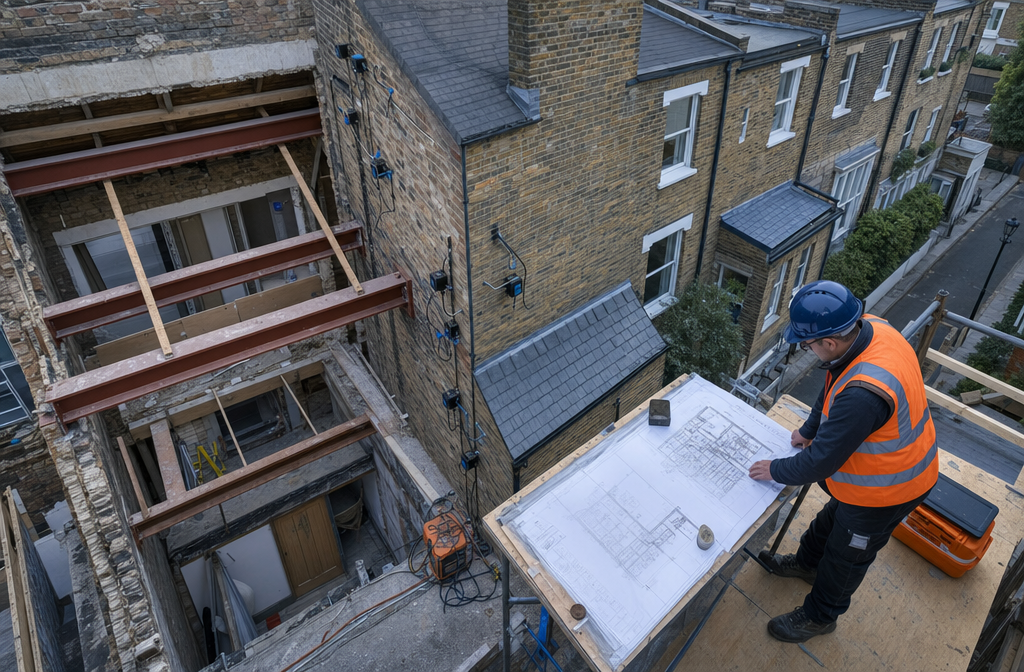
- High-risk retrofit works — including those involving RAAC panels, reinforced concrete transfer slabs, and deep basement excavations — demand enhanced condition schedules and continuous vibration monitoring as part of any valid party wall award.
- The RICS Residential Retrofit Standard (effective October 2024) mandates that retrofit advice comes from skilled, regulated professionals, directly affecting how party wall surveyors must coordinate with retrofit assessors [2].
- Failing to secure a properly scoped party wall award in a high-risk retrofit project can expose building owners and surveyors to significant legal and financial liability.
Why 2026 Is a Turning Point for Party Wall Practice
The UK's national retrofit ambition is enormous. Millions of homes require deep energy upgrades — insulation, heat pump installations, structural alterations — to meet net-zero targets. Many of these homes share walls with neighbours. That physical intimacy between properties is precisely why the party wall framework exists, and precisely why its adequacy is being tested like never before.
The 2026 extensions to Awaab's Law are the most significant catalyst. Originally focused on damp and mould following the tragic death of Awaab Ishak, the law's expanded scope now requires landlords and responsible parties to address structural collapse hazards within defined timeframes. For surveyors, this means that a party wall award issued for a retrofit project in 2026 cannot simply document existing cracks and move on. It must establish a live monitoring regime that can detect deterioration in real time [7].
Simultaneously, the RICS 8th Edition Party Wall Guidance — released in May 2026 — addresses a pattern of professional failures that had been accumulating: improperly served notices, awards issued outside surveyor jurisdiction, and condition schedules that failed to capture pre-existing structural vulnerabilities [1]. The new guidance makes clear that surveyors who do not act within their jurisdiction face not just regulatory sanction but personal legal exposure.
"A party wall award is only as strong as the condition schedule that underpins it. In 2026, that schedule must be a living document, not a snapshot."
For property owners and developers planning retrofit works, understanding what a party wall award actually covers has become more urgent than ever.
Understanding the Structural Collapse Risks in Modern Retrofit Projects
The Materials Problem: RAAC and Reinforced Concrete Transfer Slabs
Two structural materials are at the centre of the 2026 risk conversation. The first is Reinforced Autoclaved Aerated Concrete (RAAC), a lightweight panel material used extensively in UK construction between the 1950s and 1990s. Following partial collapses in 2019, RAAC has been confirmed as susceptible to sudden shear failure with little visible warning [4]. When a retrofit project disturbs a building containing RAAC — through vibration, added load, or moisture changes — the risk to adjacent properties sharing a party wall is immediate and serious.
The second material concern involves reinforced concrete transfer slabs, highlighted by the Building Safety Regulator in December 2025. These slabs, which carry loads from upper floors across open ground-floor spaces, are vulnerable to punching shear failure — a sudden, catastrophic collapse mode [3]. The Institution of Structural Engineers issued guidance in November 2024 specifically addressing this risk, and RICS has incorporated it into the Building Safety Act FAQ framework [5].
| Material | Primary Risk | Trigger in Retrofit Context |
|---|---|---|
| RAAC panels | Sudden shear failure | Vibration, added thermal mass, moisture ingress |
| RC transfer slabs | Punching shear collapse | Additional floor loading, basement excavation |
| Victorian brick party walls | Differential settlement | Underpinning, deep excavation, dewatering |
| Timber joist floors | Progressive collapse | Removal of load-bearing walls, insulation weight |
How Retrofit Works Amplify Structural Risk
Deep retrofit projects — those targeting EPC Band C or above — typically involve multiple simultaneous interventions: external wall insulation adding dead load, internal wall removal to install heat pump pipework, and sometimes basement conversions to house plant rooms. Each of these activities generates vibration, alters load paths, and changes the moisture equilibrium of a shared wall.
The RICS Residential Retrofit Standard, effective from October 31, 2024, was designed precisely to ensure that retrofit advice comes from regulated professionals who understand these systemic effects [2]. However, the standard also creates a coordination challenge: a retrofit assessor may identify structural risks that fall squarely within the party wall surveyor's jurisdiction, and vice versa. Without a clear protocol for information sharing between these two professional roles, critical warnings can fall through the gap.
For loft conversions — one of the most common high-risk retrofit typologies — the question of whether a party wall agreement is required is frequently misunderstood. The guidance on party wall agreements for loft conversions makes clear that any work affecting a shared wall or within three metres of an adjoining owner's foundations triggers the Act's requirements.
RICS Safeguards: What a 2026-Compliant Party Wall Award Must Contain
The Enhanced Condition Schedule
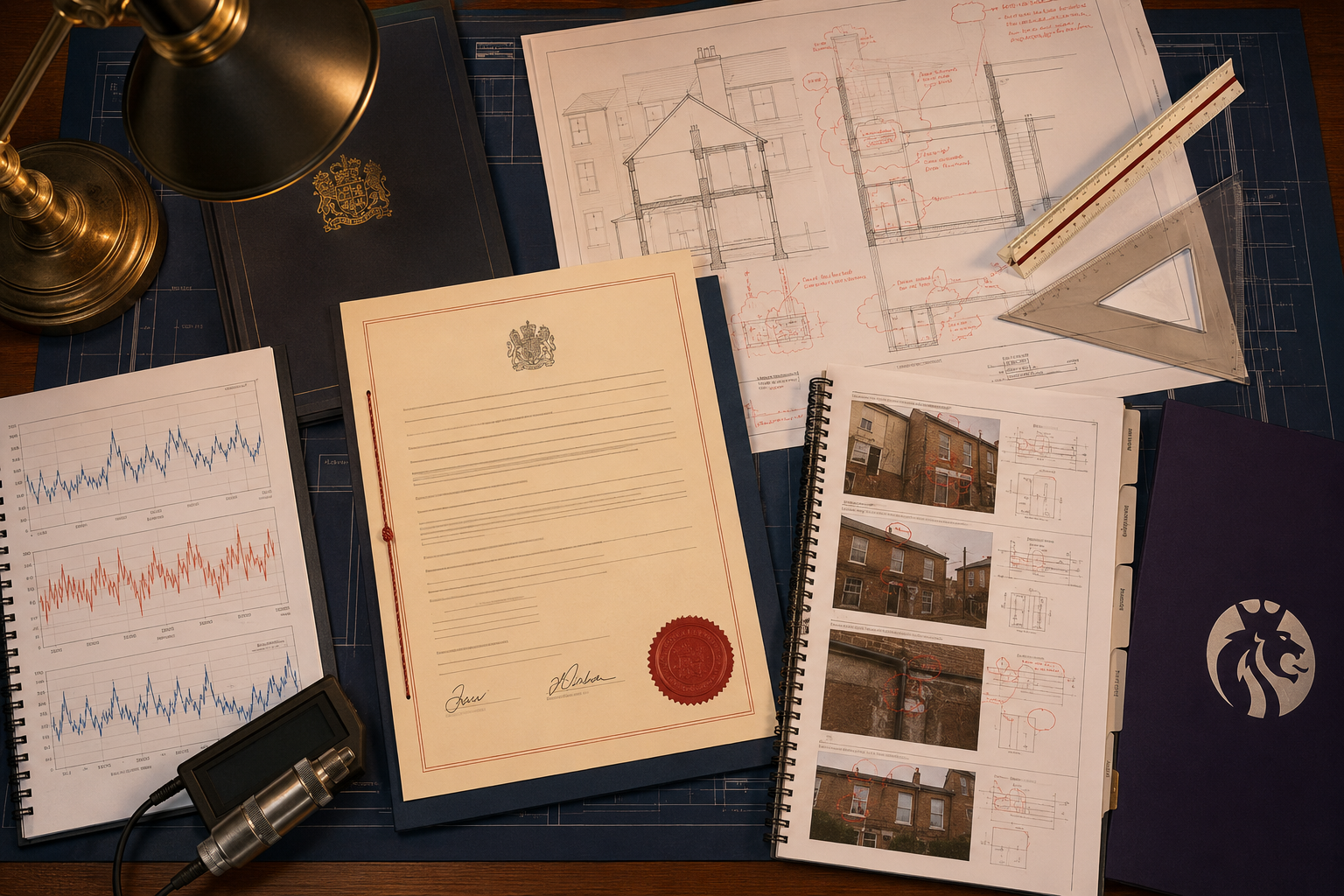
The condition schedule — a photographic and written record of an adjoining property's state before works begin — has always been the foundation of a party wall award. In 2026, however, the standard for what constitutes an adequate condition schedule has risen sharply, driven by both the 8th Edition guidance and Awaab's Law obligations [1][7].
A 2026-compliant condition schedule for a high-risk retrofit project should include:
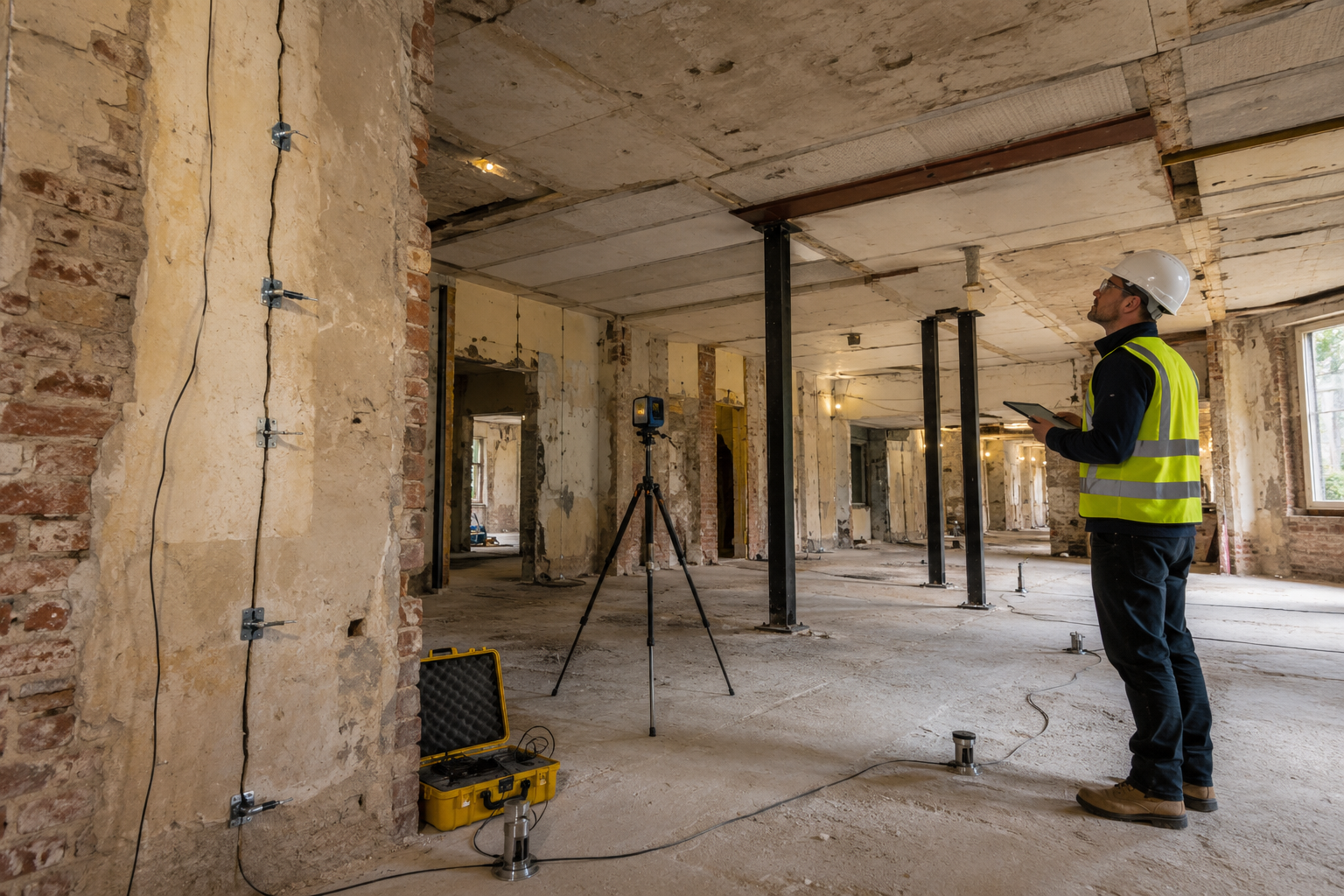
- Photographic documentation of all internal and external walls, floors, and ceilings in adjacent properties, with particular attention to existing cracks, their width, length, and orientation
- Crack monitoring reference points — physical tell-tales or digital markers that allow any new movement to be measured against a known baseline
- Structural material identification — explicit notation of any RAAC, pre-cast concrete, or other at-risk materials observed or suspected
- Moisture readings at party wall surfaces, establishing a baseline against which post-works readings can be compared
- Vibration sensitivity assessment — a professional judgement on how sensitive the adjoining structure is to the vibration levels likely to be generated by the proposed works
The party wall drawings that accompany an award must now reflect the full scope of structural interventions, not merely the notifiable works at the boundary itself.
Vibration Monitoring Provisions
Vibration monitoring has moved from best practice to near-mandatory in high-risk retrofit contexts. The award itself should specify:
- Peak Particle Velocity (PPV) thresholds — typically referenced against BS 7385-2, with lower thresholds applied where RAAC or other vulnerable materials are identified
- Continuous monitoring requirements during specific high-vibration activities such as breaking out concrete, pile driving, or mechanical demolition
- Reporting obligations — the frequency and format in which monitoring data must be shared with the adjoining owner's surveyor
- Trigger action levels — the PPV reading at which works must pause and a structural engineer must be consulted before resuming
These provisions are not merely protective for the adjoining owner. They also protect the building owner and their contractor from allegations of damage that pre-dated the works.
Structural Risk Registers and Third-Party Oversight
For projects classified as higher-risk under the Building Safety Act — generally those involving buildings of 18 metres or more, or those with known structural vulnerabilities — the party wall award should reference the project's formal structural risk register [5]. This creates a documented link between the party wall process and the broader Building Safety Act compliance framework.
In practice, this means the party wall surveyor needs to communicate with the principal designer and principal contractor as defined under the Construction (Design and Management) Regulations 2015. The top five party wall agreement considerations for renovation projects consistently highlight professional coordination as the factor most likely to prevent disputes escalating into legal proceedings.
The Role of Agreed Surveyors and Third Surveyors in High-Risk Awards
Agreed Surveyor Appointments
Where both the building owner and the adjoining owner consent, a single agreed surveyor can be appointed to act for both parties. This arrangement can accelerate the award process significantly — a real advantage when retrofit programmes are under time pressure. However, in high-risk structural collapse scenarios, the agreed surveyor carries a heightened duty of care to both parties simultaneously [1].
The complete guide to agreed surveyor roles and appointment explains how this appointment works in practice and when it is — and is not — appropriate. For projects where structural collapse risk is elevated, many surveyors now recommend that each party appoints their own surveyor, preserving independent scrutiny of the award's protective provisions.
When the Third Surveyor Is Needed
Where the two appointed surveyors cannot agree on the terms of an award — for example, on the appropriate PPV threshold or the scope of the condition schedule — either surveyor can refer the matter to the third surveyor, selected at the outset of the process. In 2026, disputes about the adequacy of structural risk provisions in party wall awards have become one of the most common categories of third surveyor referral.
The 8th Edition guidance is explicit: surveyors must act within their jurisdiction and must not allow commercial pressure from building owners to dilute the protective scope of an award [1]. A surveyor who issues a deficient award in a high-risk retrofit context faces not just a third surveyor referral but potential RICS disciplinary action.
Integrating Party Wall Awards with the Wider 2026 Retrofit Compliance Framework
RICS Retrofit Standards and Carbon Assessment
The RICS Whole Life Carbon Assessment standard requires that retrofit projects account for embodied carbon in materials and processes, not just operational energy savings [8]. This has a direct bearing on party wall practice: the materials chosen for insulation, structural repair, and waterproofing all affect the load profile and moisture behaviour of the party wall itself.
The RICS Residential Retrofit Standard further requires that retrofit assessors treat the building as a system [10]. A party wall surveyor working on a retrofit project in 2026 should expect to receive — and should request — the retrofit assessor's whole-building assessment before finalising the award's condition schedule and monitoring provisions [2].
For heritage properties, the challenge is compounded. Retrofitting historic buildings requires a pragmatic, whole-building approach that avoids unintended consequences such as moisture trapping behind impermeable insulation [9]. Party wall awards for historic terrace properties must reflect these material sensitivities in their monitoring and reporting requirements.
Level 3 Building Surveys as a Prerequisite
The 2026 extensions to Awaab's Law have elevated Level 3 building surveys (formerly Full Structural Surveys) to the baseline standard for identifying structural collapse risks in high-risk properties [7]. A party wall surveyor undertaking a condition schedule for a high-risk retrofit project should, where possible, have access to a Level 3 survey of the adjoining property. Where no such survey exists, the condition schedule itself must be sufficiently detailed to serve a comparable function.
The top frequently asked questions about structural engineering provide useful context for non-specialists on what structural surveys examine and why their findings are relevant to party wall practice.
Fire Risk and Combined Hazard Assessments
Retrofit projects that involve changes to compartmentation, insulation materials, or mechanical ventilation systems can alter a building's fire risk profile as well as its structural risk profile. For blocks of flats and mixed-use buildings, fire risk assessments should be updated in parallel with the party wall process to ensure that the award does not inadvertently approve works that create new fire hazards in shared structural elements.
Practical Steps for Building Owners and Adjoining Owners in 2026
For Building Owners Planning Retrofit Works
- Serve notice early. The statutory notice periods under the Party Wall etc. Act — one month for party structure notices, two months for line of junction notices — do not pause for project programmes. Serving notice at the earliest possible stage avoids programme delays.
- Commission a structural engineer's report on the proposed works before serving notice. This report should identify any RAAC, transfer slabs, or other at-risk elements and should inform the scope of the party wall award.
- Appoint a RICS-accredited party wall surveyor with demonstrable experience in retrofit projects. The 8th Edition guidance makes clear that surveyors must have the competence to deal with the specific risks their instructions involve [1].
- Budget for vibration monitoring. Continuous monitoring during high-risk activities is not a luxury. Its cost is modest compared to the liability exposure of an unmonitored collapse event.
- Coordinate with the retrofit assessor to ensure that the party wall surveyor receives the whole-building assessment and any structural risk findings before the award is finalised [2].
For Adjoining Owners
- Do not ignore a party wall notice. Dissenting and appointing your own surveyor is the most effective way to ensure the award contains adequate protective provisions for your property.
- Request a copy of the structural engineer's report and the retrofit assessor's whole-building assessment as part of the award process.
- Insist on a thorough condition schedule that includes crack monitoring reference points and moisture baseline readings.
- Ask about vibration monitoring — specifically, what the PPV thresholds will be and how you will be notified if they are exceeded.
- Keep records. Photograph your own property before works begin, noting dates and times. This creates an independent baseline that supplements the formal condition schedule.
Common Misconceptions That Increase Structural Risk
Several persistent misunderstandings about party wall practice continue to create unnecessary risk in retrofit projects. The five most common misconceptions about party wall agreements address many of these, but three are particularly relevant to structural collapse risk in 2026:
- Misconception 1: A party wall agreement is just a formality. In high-risk retrofit contexts, the award is a legally binding document that can determine liability for structural damage worth hundreds of thousands of pounds.
- Misconception 2: The condition schedule only matters if something goes wrong. In fact, a well-drafted condition schedule is the primary tool for preventing disputes by establishing an unambiguous pre-works baseline.
- Misconception 3: The party wall surveyor and the structural engineer are doing the same job. They are not. The structural engineer assesses load paths and material integrity; the party wall surveyor translates those findings into legally enforceable award provisions. Both are necessary.
Conclusion
Party Wall Awards for Structural Collapse Risks: RICS Safeguards in 2026 High-Risk Retrofit Projects represent a convergence of three powerful forces: the expanded scope of Awaab's Law, the RICS 8th Edition Party Wall Guidance, and the structural complexity of the UK's accelerating retrofit programme. The result is a significantly higher standard of care required from every professional involved in a party wall process where structural collapse risk is present.
For building owners, the actionable priority is to engage a RICS-accredited party wall surveyor with retrofit experience at the earliest stage of project planning — not as an afterthought once planning permission is secured. For adjoining owners, the priority is to dissent from any party wall notice that involves structural alteration and to insist on an award that includes continuous vibration monitoring, a detailed condition schedule, and clear trigger action levels.
For surveyors, the 2026 landscape demands ongoing professional development in structural risk assessment, retrofit building science, and the coordination protocols required by the Building Safety Act. The 8th Edition guidance is not a ceiling — it is a floor. In a year when the consequences of structural failure are being measured in lives as well as legal costs, the quality of a party wall award has never mattered more.
References
[1] Rics 8th Edition Party Wall Guidance 2026 Implementation Challenges And Surveyor Compliance Strategies – wimbledonsurveyors.com
[2] Retrofit – rics.org
[3] Reinforced Concrete Transfer Slabs Risk – ww3.rics.org
[4] Locating Raac Reinforced Autoclaved Aerated Concrete – ww3.rics.org
[5] Building Safety Act Faqs – rics.org
[6] Global Retrofitting Commercial Properties Avoiding Common Pitfalls And Ensuring Compliance – rics.org
[7] Building Survey Protocols For Structural Collapse Risks Awaabs Law 2026 Extensions And High Risk Property Assessments – nottinghillsurveyors.com
[8] Viewcompounddoc – consultations.rics.org
[9] Retrofitting Historic Buildings Sustainably – ww3.rics.org
[10] Retrofit Assessment Surveyors Upskilling – ww3.rics.org