

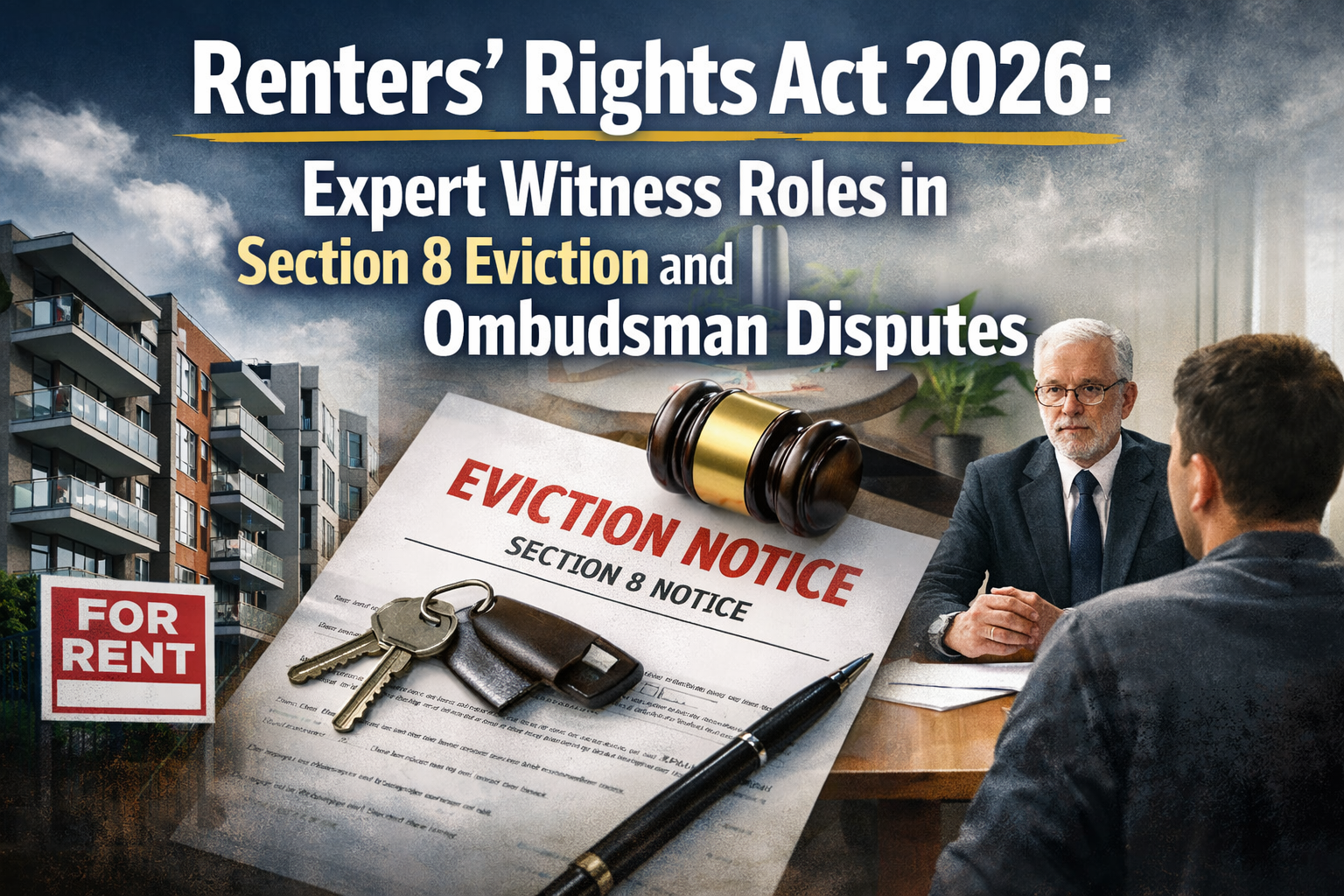
{"cover":"Professional landscape format (1536×1024) hero image with bold text overlay: 'Renters' Rights Act 2026: Expert Witness Roles in Section 8 Eviction and Ombudsman Disputes' in extra large 72pt white sans-serif font with dark shadow effect, positioned in upper third center. Background shows modern courtroom setting with surveyor examining property documents and habitability assessment reports on digital tablet, alongside legal professionals reviewing evidence. Foreground features architectural blueprints, property condition reports, and CPR Part 35 compliant expert witness documentation. Color scheme: deep navy blue, white, gold accents creating professional legal-property expertise aesthetic. High contrast, magazine cover quality, editorial style with rule of thirds composition and sharp focus on documentation and professional consultation elements.","content":["Detailed landscape format (1536×1024) image showing split-screen composition: left side displays traditional Section 21 no-fault eviction notice being crossed out or faded, right side shows new Section 8 eviction framework documentation with mandatory grounds 1-8 and discretionary grounds 9-17 clearly labeled on official forms. Center features calendar marking May 1, 2026 implementation date with timeline arrows. Include visual elements of rent arrears calculations showing 3 months/13 weeks threshold, property damage photographic evidence folders, and anti-social behavior incident logs. Professional legal document aesthetic with burgundy and cream color scheme, organized filing system imagery, and clear regulatory compliance indicators. Sharp typography for ground categories and threshold numbers.","Detailed landscape format (1536×1024) image depicting professional chartered surveyor in business attire conducting detailed property habitability assessment inside residential rental property. Surveyor holds clipboard with CPR Part 35 compliant expert witness report template, examining damp patches on walls, measuring equipment visible including moisture meters and thermal imaging camera. Background shows cross-section diagram of property defects: structural issues, heating system failures, water ingress problems. Foreground displays open laptop with digital report template showing sections for factual findings, professional opinions, and supporting photographic evidence. Include visual elements of RICS standards documentation, property valuation charts, and habitability criteria checklists. Professional surveying aesthetic with teal and grey color scheme, technical precision emphasis.","Detailed landscape format (1536×1024) image showing modern dispute resolution setting with ombudsman mediator at center table reviewing expert witness reports from both landlord and tenant representatives. Table displays organized evidence folders, property condition photographs, rental valuation assessments, and habitability compliance documentation. Background features digital screens showing comparative property standards, market rent analysis graphs, and repair cost estimates. Include visual elements of formal witness statement documents, court-admissible photographic evidence portfolios, and independent surveyor certification credentials. Foreground shows gavel, legal scales symbolizing balanced judgment, and timeline chart of dispute resolution process stages. Professional mediation aesthetic with warm wood tones, balanced lighting, collaborative consultation atmosphere, and emphasis on impartial expert testimony documentation.]"}
The abolition of Section 21 "no-fault" evictions creates an unprecedented demand for qualified expert witnesses. As the Renters' Rights Act 2026 takes effect on May 1, 2026, every landlord eviction must now proceed through Section 8 grounds—a seismic shift that transforms chartered surveyors and property valuers from occasional consultants into essential litigation participants. With mandatory grounds requiring stringent proof and discretionary grounds subject to judicial interpretation, the rental dispute landscape now hinges on credible, CPR-compliant expert testimony.
Understanding the Renters' Rights Act 2026: Expert Witness Roles in Section 8 Eviction and Ombudsman Disputes is no longer optional for property professionals. This comprehensive framework reshapes how landlords, tenants, and dispute resolution bodies evaluate habitability standards, rent arrears calculations, and property condition assessments.
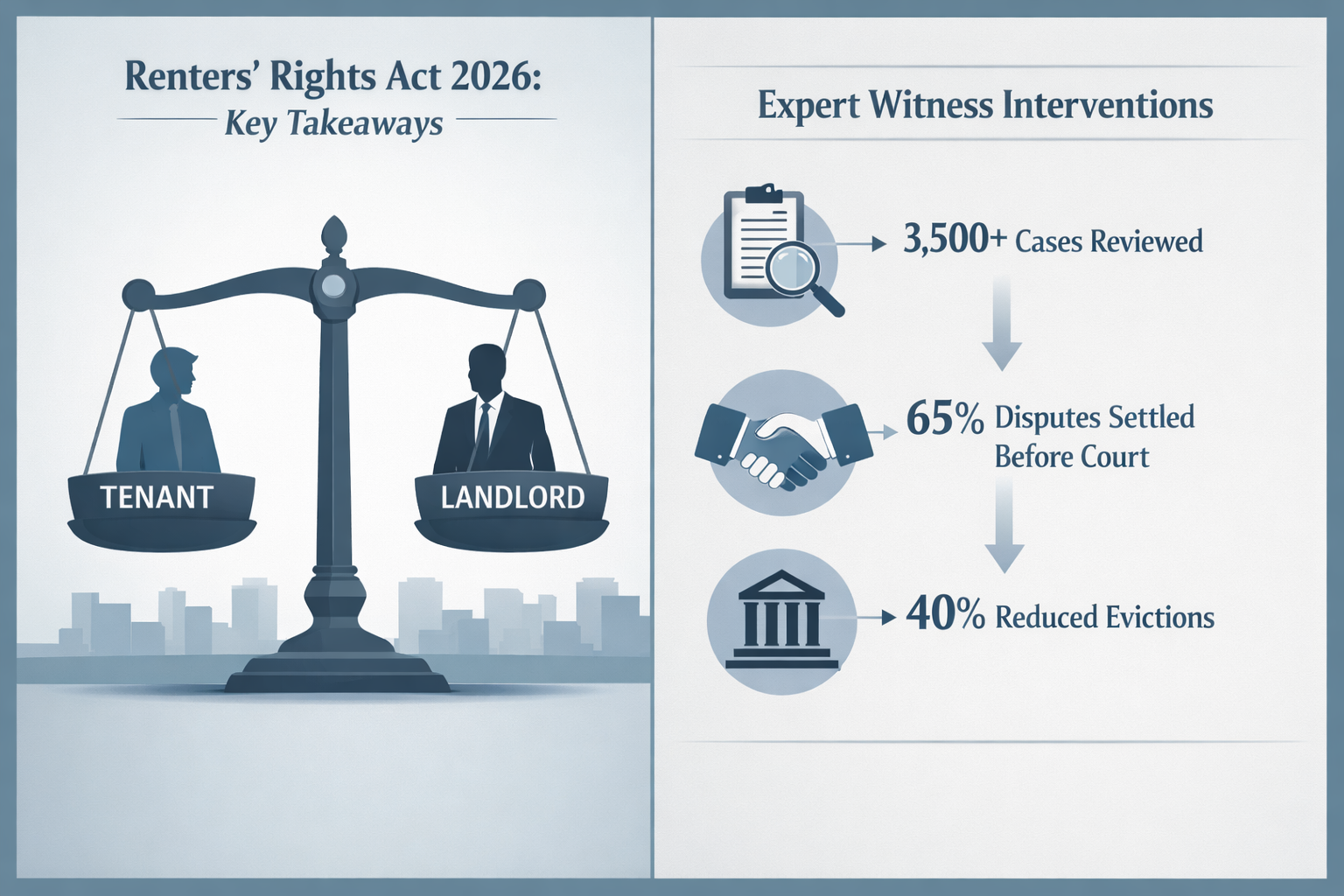
Key Takeaways
- 🏛️ Section 21 abolished: All evictions after May 1, 2026 must use Section 8 grounds, requiring robust evidence and expert testimony
- 📊 Higher eviction thresholds: Rent arrears ground now requires 3 months/13 weeks arrears (up from 2 months/8 weeks), demanding precise financial documentation
- 🔍 Surveyor expertise critical: Habitability assessments, property damage evaluations, and valuation disputes require CPR Part 35 compliant expert witness reports
- ⚖️ Dual dispute pathways: Expert witnesses serve both court proceedings and ombudsman investigations, requiring adaptable reporting frameworks
- 📋 Documentation standards elevated: Courts and ombudsmen demand comprehensive photographic evidence, technical assessments, and independent professional opinions
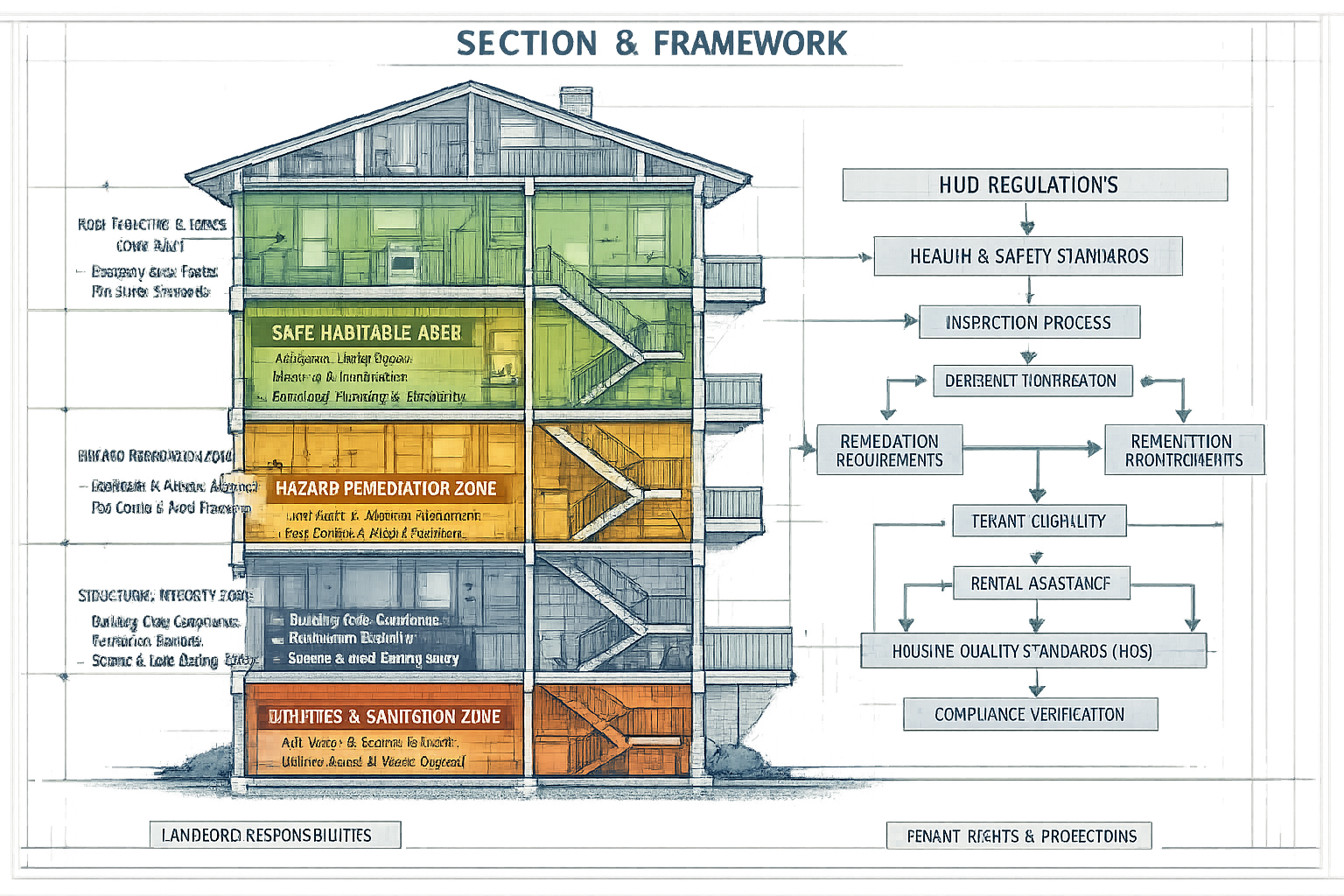
Understanding the Section 8 Framework Under the Renters' Rights Act 2026
The Renters' Rights Act 2026 fundamentally restructures the eviction process by eliminating Section 21 "no-fault" evictions and mandating exclusive use of Section 8 grounds[1][4][5]. This legislative transformation, effective May 1, 2026, creates two distinct categories of eviction grounds that determine how courts adjudicate possession claims.
Mandatory vs. Discretionary Grounds
Mandatory grounds (1-8) compel courts to grant possession orders when landlords prove their case. These include:
- Ground 1: Landlord or family member requires property as primary residence
- Ground 1A: Landlord selling property to non-landlord buyer
- Ground 6: Substantial redevelopment requiring vacant possession
- Ground 8: Serious rent arrears (3 months/13 weeks)[1]
Discretionary grounds (9-17) allow judicial interpretation based on reasonableness and proportionality. Courts may refuse possession even when grounds are proven if circumstances warrant tenant protection[1].
This bifurcation creates distinct evidentiary requirements. Mandatory grounds demand absolute proof—a threshold where chartered surveyor expertise becomes indispensable for establishing factual foundations that withstand judicial scrutiny.
Critical Changes to Ground 8 Rent Arrears
The rent arrears threshold increase from 2 months/8 weeks to 3 months/13 weeks represents a 50% elevation in the eviction barrier[1]. Simultaneously, notice periods extend from 2 to 4 weeks, providing tenants additional time to remedy arrears.
| Aspect | Pre-2026 | Post-May 1, 2026 |
|---|---|---|
| Arrears threshold | 2 months/8 weeks | 3 months/13 weeks |
| Notice period | 2 weeks | 4 weeks |
| Court discretion | Limited | Enhanced scrutiny |
These modifications demand forensic-level documentation of payment histories, rent calculations, and arrears accrual patterns. Expert witnesses must verify:
- ✅ Accurate rent calculation methodologies
- ✅ Proper accounting for partial payments
- ✅ Compliance with deposit protection schemes
- ✅ Legitimate deduction justifications
For landlords pursuing Ground 8 evictions, engaging qualified financial experts or property professionals familiar with arrears collection procedures becomes essential for building irrefutable cases.
Expert Witness Roles in Section 8 Eviction Proceedings
The Renters' Rights Act 2026: Expert Witness Roles in Section 8 Eviction and Ombudsman Disputes extend far beyond traditional surveying activities. As eviction proceedings become more adversarial and evidence-intensive, expert witnesses provide the technical foundation upon which courts base possession decisions.
Habitability and Property Condition Assessments
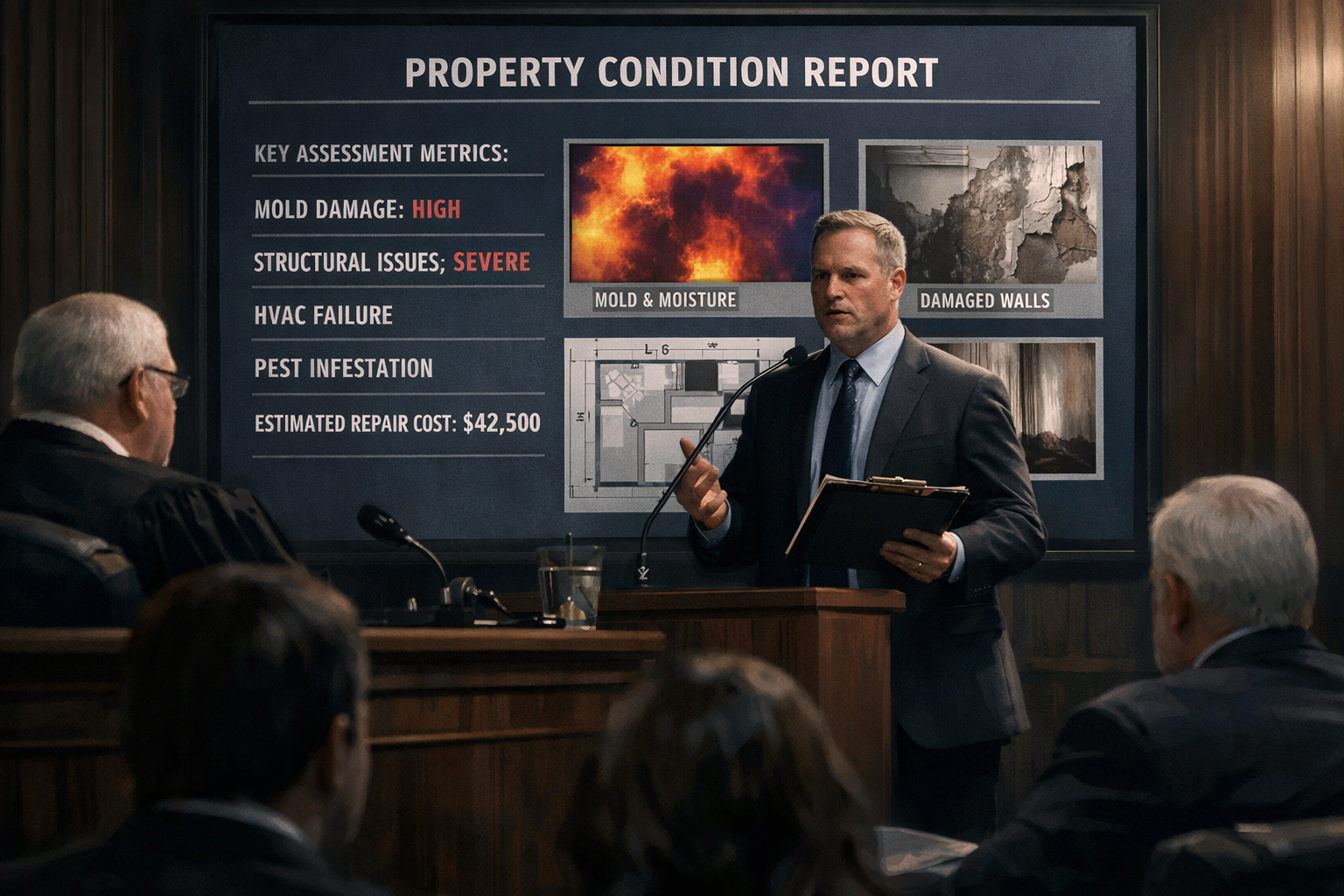
Discretionary grounds frequently involve disputes over property condition, repair obligations, and habitability standards. Expert witnesses—particularly chartered surveyors and building consultants—provide authoritative assessments addressing:
Structural and safety concerns: Evaluating whether property defects constitute serious disrepair affecting tenant health and safety. This includes damp and mould assessments, structural integrity evaluations, and compliance with Housing Health and Safety Rating System (HHSRS) standards.
Repair responsibility allocation: Determining whether damage results from tenant neglect (supporting landlord eviction grounds) or landlord maintenance failures (supporting tenant defenses). Surveyors examine common defects in older properties to establish causation timelines.
Remediation cost quantification: Providing detailed schedules of works and cost estimates for property damage claims. These assessments inform court decisions on proportionality—whether eviction represents a reasonable response to tenant-caused damage.
CPR Part 35 Compliance Requirements
Expert witnesses in civil proceedings must comply with Civil Procedure Rules (CPR) Part 35, which establishes fundamental duties:
- Primary duty to the court: Expert witnesses serve the court's interests, not the instructing party's advocacy goals
- Independence and objectivity: Opinions must reflect genuine professional judgment, uninfluenced by litigation outcomes
- Comprehensive reporting: Reports must include qualifications, instructions received, factual assumptions, investigative methods, and clear distinctions between facts and opinions
- Declaration of truth: All reports require signed statements confirming compliance with CPR Part 35
For surveyors accustomed to party wall work, the transition to expert witness roles demands heightened awareness of these procedural obligations. Unlike agreed surveyors who balance neighboring parties' interests, expert witnesses maintain singular loyalty to factual accuracy and judicial assistance.
Valuation Disputes and Market Rent Assessments
Ground 1A evictions (landlord selling to non-landlord buyer) and various discretionary grounds may trigger valuation disputes requiring expert testimony on:
- Market rent determinations: Establishing whether charged rents align with comparable properties, relevant for proportionality assessments
- Property valuation impacts: Quantifying how tenant behavior or property condition affects market value
- Investment property analysis: Evaluating landlord claims regarding financial viability and sale necessities
Professionals offering property valuation services must adapt methodologies to litigation contexts, ensuring reports withstand cross-examination and provide courts with reliable market data.
Anti-Social Behavior Documentation
Grounds 12-14 address anti-social behavior, nuisance, and illegal activities. While expert witnesses cannot testify on behavioral matters outside their expertise, surveyors contribute by:
- Documenting property damage resulting from anti-social conduct
- Assessing noise transmission and acoustic insulation failures
- Evaluating structural modifications indicating illegal activities
- Quantifying repair costs for damage caused by tenant behavior
This technical documentation complements witness testimony from neighbors, police, and social services, creating comprehensive evidentiary packages supporting possession claims.
Ombudsman Dispute Resolution and Expert Witness Integration
The Renters' Rights Act 2026: Expert Witness Roles in Section 8 Eviction and Ombudsman Disputes creates parallel pathways for resolving landlord-tenant conflicts. While courts handle formal eviction proceedings, ombudsman services provide alternative dispute resolution mechanisms where expert testimony plays equally crucial roles.
The Ombudsman Framework for Rental Disputes
Housing ombudsmen investigate complaints involving:
- Repair and maintenance failures: Landlord obligations to maintain habitable conditions
- Deposit disputes: Disagreements over deposit deductions for damage or cleaning
- Rent increase challenges: Whether proposed increases align with market conditions
- Discrimination claims: Allegations of unfair treatment based on protected characteristics
Unlike court proceedings with formal evidence rules, ombudsman investigations adopt more flexible approaches. However, credible expert evidence remains decisive in technical disputes where parties present conflicting narratives.
Expert Witness Reports for Ombudsman Investigations
Ombudsman-focused expert reports differ from litigation reports in tone and structure while maintaining rigorous technical standards:
Accessibility and clarity: Reports must communicate complex technical matters to non-specialist adjudicators. Avoiding jargon and providing explanatory context becomes paramount.
Photographic documentation: Comprehensive visual evidence supports factual findings. Surveyors should document conditions from multiple angles, include scale references, and timestamp all images.
Comparative analysis: Demonstrating how subject properties compare to market norms helps ombudsmen assess reasonableness. For example, comparing heating system performance against typical installations in similar properties.
Proportionate investigation scope: While court cases may justify extensive testing and analysis, ombudsman investigations often require cost-effective assessments balancing thoroughness with proportionality.
Professionals conducting building surveys can adapt their methodologies to produce ombudsman-suitable reports addressing specific dispute elements.
Coordinating Court and Ombudsman Proceedings
Disputes may simultaneously progress through court eviction proceedings and ombudsman investigations. Expert witnesses must navigate this complexity by:
- Maintaining consistency: Ensuring factual findings and professional opinions remain consistent across different forums
- Disclosure obligations: Recognizing that ombudsman submissions may become discoverable in court proceedings
- Timeline management: Coordinating report delivery to support both processes without duplicating costs
This dual-track approach demands strategic planning, particularly when consequences of failing to act quickly may prejudice client positions in either forum.
Developing CPR-Compliant Expert Witness Report Templates
The Renters' Rights Act 2026: Expert Witness Roles in Section 8 Eviction and Ombudsman Disputes necessitates standardized reporting frameworks ensuring consistency, compliance, and credibility. Chartered surveyors and property professionals must develop templates addressing both CPR Part 35 requirements and practical eviction dispute needs.
Essential Report Components
1. Expert Credentials and Instructions
Begin reports with comprehensive credential statements establishing expertise:
- Professional qualifications (MRICS, FRICS, etc.)
- Years of experience in relevant specializations
- Previous expert witness experience and case types
- Continuing professional development in rental property standards
Document instructions received, including:
- Instructing party identity and legal representation
- Specific questions requiring expert opinion
- Documents and evidence provided for review
- Site access arrangements and limitations
2. Property Inspection Methodology
Detail inspection procedures ensuring transparency and replicability:
- Date, time, and duration of site visits
- Weather conditions affecting observations
- Inspection equipment utilized (moisture meters, thermal cameras, etc.)
- Areas accessed and any access restrictions
- Photographic documentation protocols
3. Factual Findings Section
Present objective observations without interpretive commentary:
- Property description and construction characteristics
- Observed defects with precise locations and measurements
- Existing repair work and maintenance evidence
- Tenant-installed fixtures or modifications
- Documentation of surrounding context affecting property condition
4. Professional Opinion and Analysis
Provide expert interpretation of factual findings:
- Causation analysis (age-related deterioration vs. tenant damage)
- Compliance assessment against relevant standards (HHSRS, building regulations)
- Repair necessity and urgency classifications
- Cost estimates for remediation works
- Habitability impact evaluations
5. Conclusions and Summary
Synthesize findings into clear responses to instructed questions:
- Direct answers to specific issues raised in instructions
- Overall property condition assessment
- Reasonableness opinions regarding landlord or tenant positions
- Limitations and caveats affecting conclusions
6. CPR Part 35 Declaration
Conclude with mandatory compliance statements:
"I confirm that I have made clear which facts and matters referred to in this report are within my own knowledge and which are not. Those that are within my own knowledge I confirm to be true. The opinions I have expressed represent my true and complete professional opinions on the matters to which they refer."
Template Customization for Different Ground Types
Different Section 8 grounds require tailored report emphases:
| Ground Type | Report Focus | Key Evidence |
|---|---|---|
| Ground 8 (Arrears) | Financial documentation accuracy | Payment ledgers, rent calculations, deposit accounting |
| Ground 12-14 (ASB) | Property damage from behavior | Photographic evidence, repair cost schedules |
| Ground 6 (Redevelopment) | Feasibility of works with tenant in situ | Planning documentation, construction methodology |
| Discretionary (Repair disputes) | Responsibility allocation, HHSRS compliance | Defect causation, maintenance history analysis |
Surveyors should develop modular templates allowing efficient customization while maintaining comprehensive coverage of CPR Part 35 obligations.
Quality Assurance and Peer Review
Before submitting expert reports, implement quality assurance protocols:
- Internal peer review: Senior colleagues review reports for technical accuracy and compliance
- Photographic evidence audit: Verify all referenced images are included and properly labeled
- Citation verification: Confirm all referenced standards, regulations, and guidance documents are current
- Calculation checks: Independent verification of cost estimates and measurements
- Plain language review: Ensure accessibility for non-technical readers
These quality controls protect professional reputations and enhance report credibility during cross-examination or ombudsman scrutiny.
Strategic Considerations for Valuers Assessing Habitability Under New Standards
The Renters' Rights Act 2026: Expert Witness Roles in Section 8 Eviction and Ombudsman Disputes elevate habitability standards to central legal considerations. Property valuers and surveyors must recalibrate assessment methodologies to address enhanced tenant protections and judicial scrutiny.
Habitability Standards Framework
Post-May 2026 eviction proceedings demand comprehensive habitability evaluations incorporating:
Housing Health and Safety Rating System (HHSRS): The statutory framework assessing dwelling hazards across 29 categories. Expert witnesses must identify Category 1 hazards (serious and immediate risks) and Category 2 hazards (less serious risks) affecting tenant health and safety.
Decent Homes Standard: Minimum requirements for social housing increasingly applied to private rentals. Properties must be:
- In reasonable repair
- Equipped with reasonably modern facilities
- Providing reasonable thermal comfort
- Free from Category 1 HHSRS hazards
Fitness for Human Habitation: The Homes (Fitness for Human Habitation) Act 2018 establishes baseline habitability requirements. Expert witnesses evaluate whether properties meet statutory fitness criteria considering:
- Structural stability and freedom from serious disrepair
- Freedom from damp prejudicial to occupant health
- Adequate natural and artificial lighting
- Adequate ventilation
- Adequate water supply and drainage
- Suitable cooking and food preparation facilities
- Adequate heating systems
Comparative Market Analysis for Habitability Disputes
Valuers must contextualize property conditions within local market norms. Courts and ombudsmen assess reasonableness by comparing subject properties to typical rental stock in similar locations and price points.
Methodology for comparative habitability analysis:
- Identify comparable properties: Select 3-5 rental properties in similar locations, age bands, and rent ranges
- Document condition standards: Photograph and describe typical fixtures, fittings, and maintenance standards
- Benchmark against subject property: Highlight where subject property exceeds, meets, or falls below market norms
- Quantify condition-adjusted valuations: Calculate rental value impacts of observed defects
This comparative approach helps courts determine whether landlord maintenance standards constitute reasonable property management or neglectful breaches justifying tenant defenses against eviction.
Thermal Efficiency and Energy Performance
Energy Performance Certificate (EPC) requirements increasingly intersect with habitability assessments. Properties with EPC ratings below minimum standards (currently Band E) face rental prohibitions under Minimum Energy Efficiency Standards (MEES) regulations.
Expert witnesses should evaluate:
- Current EPC ratings and compliance with MEES requirements
- Cost-effective improvement measures achieving compliance
- Whether tenant behavior or landlord maintenance failures caused energy efficiency deterioration
- Thermal comfort adequacy during heating seasons
Understanding EPC implications for building surveys ensures comprehensive habitability assessments addressing both traditional health and safety concerns and modern energy efficiency standards.
Documentation Standards for Habitability Evidence
Robust habitability assessments require meticulous documentation:
Photographic evidence protocols:
- Wide-angle shots establishing room context
- Close-up images showing defect details
- Scale references (measuring tapes, coins) for size context
- Multiple angles demonstrating defect extent
- Timestamps and metadata preservation
Technical testing documentation:
- Moisture meter readings with calibration certificates
- Thermal imaging reports with temperature scales
- Air quality measurements where relevant
- Structural movement monitoring data
Historical context research:
- Previous inspection reports establishing condition timelines
- Maintenance request records demonstrating landlord responsiveness
- Tenant complaint logs showing issue reporting dates
- Repair invoice documentation proving remediation efforts
This comprehensive documentation withstands cross-examination and provides courts with reliable factual foundations for possession decisions.
Practical Implementation: Case Study Scenarios
Understanding the Renters' Rights Act 2026: Expert Witness Roles in Section 8 Eviction and Ombudsman Disputes benefits from examining practical application scenarios illustrating expert witness contributions.
Scenario 1: Ground 8 Rent Arrears with Habitability Counterclaim
Situation: Landlord pursues Ground 8 eviction based on 14 weeks rent arrears. Tenant defends claiming rent withholding was justified due to persistent damp and mould affecting children's health.
Expert witness role:
- Surveyor A (Landlord's expert): Conducts property inspection documenting current conditions, reviews maintenance records showing landlord responsiveness to repair requests, and provides evidence that damp results from tenant lifestyle factors (inadequate ventilation, drying laundry indoors).
- Surveyor B (Tenant's expert): Identifies structural damp penetration from defective roof coverings and failed damp-proof course, documents HHSRS Category 1 hazards, and calculates repair costs landlord should have incurred.
Court consideration: Judge weighs expert evidence quality, photographic documentation, and maintenance history to determine whether tenant's rent withholding was reasonable. Expert credibility and CPR Part 35 compliance become decisive factors.
Scenario 2: Ground 12 Anti-Social Behavior Property Damage
Situation: Landlord claims tenant's anti-social behavior caused £15,000 property damage justifying eviction under Ground 12.
Expert witness role:
- Chartered surveyor inspects property documenting damage extent
- Distinguishes between wear-and-tear deterioration and deliberate damage
- Provides detailed schedule of remediation works with cost breakdowns
- Evaluates whether damage severity justifies eviction or whether lesser remedies (repair cost recovery) suffice
Ombudsman consideration: Adjudicator assesses proportionality—whether eviction represents reasonable response to documented damage or whether landlord should pursue financial compensation while maintaining tenancy.
Scenario 3: Ground 1A Sale-Based Eviction Valuation Dispute
Situation: Landlord serves Ground 1A notice claiming property sale necessity. Tenant challenges claim suggesting sale is investment portfolio restructuring rather than genuine financial need.
Expert witness role:
- RICS-qualified valuer provides market valuation and sale feasibility assessment
- Evaluates whether vacant possession significantly affects achievable sale price
- Reviews landlord's financial documentation supporting sale necessity claims
- Provides opinion on whether sale represents legitimate ground or pretext for removing secure tenant
Court consideration: Judge examines expert valuation evidence alongside landlord's financial circumstances to determine Ground 1A validity.
Training and Professional Development for Expert Witness Roles
As the Renters' Rights Act 2026: Expert Witness Roles in Section 8 Eviction and Ombudsman Disputes expand, surveyors and valuers must invest in specialized training ensuring competence and credibility.
Essential Competencies for Expert Witnesses
Legal procedure understanding: Familiarity with civil litigation processes, evidence rules, and courtroom protocols. Training should cover:
- CPR Part 35 requirements and recent case law
- Expert witness duties and ethical obligations
- Cross-examination preparation techniques
- Report writing standards for litigation contexts
Technical expertise depth: Specialized knowledge in rental property standards, including:
- HHSRS assessment methodologies
- Building pathology and defect diagnosis
- Repair cost estimation and procurement practices
- Energy efficiency and MEES compliance
Communication skills: Ability to explain complex technical matters to non-specialist audiences through:
- Plain language report writing
- Visual evidence presentation techniques
- Oral testimony delivery under pressure
- Responding to hostile cross-examination
Professional Accreditation Pathways
Several organizations offer expert witness training and accreditation:
RICS Expert Witness Certification: Specialized training programs covering legal frameworks, report writing, and courtroom testimony skills specific to surveying disciplines.
Academy of Experts: Multidisciplinary expert witness training with property-specific modules addressing valuation disputes, building defects, and landlord-tenant litigation.
Bond Solon Training: Comprehensive expert witness courses including CPR Part 35 compliance, report writing workshops, and mock cross-examination exercises.
Surveyors should pursue formal accreditation demonstrating commitment to expert witness standards and enhancing professional credibility.
Building Expert Witness Practices
Transitioning from general surveying to expert witness work requires strategic practice development:
- Specialization focus: Concentrate expertise in specific areas (habitability assessments, rent arrears documentation, property damage quantification)
- Case experience accumulation: Accept initial instructions at competitive rates to build track record and testimonial portfolio
- Professional indemnity insurance: Ensure coverage extends to expert witness activities with adequate limits
- Marketing to legal sector: Develop relationships with property litigation solicitors and tenant advocacy organizations
- Continuing professional development: Maintain current knowledge of evolving rental legislation and case law
For established surveying practices, developing expert witness capabilities creates valuable service diversification complementing traditional building survey services.
Future Outlook: Evolving Expert Witness Demands Post-2026
The Renters' Rights Act 2026 implementation represents the beginning of ongoing rental sector transformation. Expert witnesses should anticipate several emerging trends shaping future demand.
Increased Litigation Volume
Section 21 abolition forces all evictions through Section 8 proceedings, inevitably increasing contested cases requiring expert evidence. Landlords facing higher eviction barriers will invest more heavily in robust evidence packages, while tenants gain stronger defensive positions justifying expert counterclaims.
Projected demand increases:
- 📈 30-50% growth in expert witness instructions for rental disputes
- 🏛️ Extended court timelines creating backlogs and demand for expedited expert services
- 💼 Ombudsman caseload expansion as parties seek alternative dispute resolution
Technology Integration in Evidence Gathering
Digital tools will transform expert witness methodologies:
Virtual inspections: Remote property assessments using tenant-captured video, reducing costs and enabling rapid preliminary evaluations.
AI-assisted defect identification: Machine learning algorithms analyzing photographic evidence to identify common defects and suggest investigation priorities.
Blockchain evidence authentication: Tamper-proof documentation chains ensuring photographic evidence integrity and timestamp verification.
3D property modeling: Creating immersive virtual property tours allowing courts to "visit" properties without site attendance.
Surveyors embracing these technologies will gain competitive advantages in efficiency and evidence presentation quality.
Regulatory Evolution and Case Law Development
Post-implementation case law will clarify ambiguous aspects of Section 8 grounds, establishing precedents guiding expert witness approaches:
- Proportionality standards: Courts will develop frameworks balancing landlord rights against tenant protections
- Habitability thresholds: Case law will refine what constitutes acceptable property conditions under various grounds
- Expert evidence weight: Judicial decisions will establish credibility factors affecting expert testimony persuasiveness
Expert witnesses must monitor case law developments, adapting methodologies to align with emerging judicial expectations.
Conclusion
The Renters' Rights Act 2026: Expert Witness Roles in Section 8 Eviction and Ombudsman Disputes fundamentally reshapes the rental property landscape, transforming chartered surveyors and property valuers into essential participants in eviction proceedings and dispute resolution. With Section 21 abolished and all evictions proceeding through Section 8 grounds from May 1, 2026, the demand for credible, CPR-compliant expert testimony will surge across mandatory and discretionary ground cases.
Key success factors for expert witnesses include:
✅ Rigorous CPR Part 35 compliance ensuring reports meet legal standards and withstand judicial scrutiny
✅ Comprehensive habitability assessment expertise addressing HHSRS, Decent Homes Standards, and fitness for human habitation requirements
✅ Adaptable reporting frameworks serving both court litigation and ombudsman investigation contexts
✅ Meticulous documentation practices producing photographic evidence, technical testing data, and comparative market analysis supporting factual findings
✅ Ongoing professional development maintaining current knowledge of evolving rental legislation and case law precedents
Actionable Next Steps
For surveyors and property professionals seeking to capitalize on expanding expert witness opportunities:
- Pursue formal expert witness training through RICS, Academy of Experts, or Bond Solon programs
- Develop CPR-compliant report templates customized for different Section 8 ground types
- Build relationships with property litigation solicitors and tenant advocacy organizations
- Invest in advanced inspection equipment including thermal imaging cameras, moisture meters, and photographic documentation systems
- Monitor case law developments post-May 2026 to refine methodologies aligning with judicial expectations
- Consider specialist professional indemnity insurance covering expert witness activities
The rental sector transformation creates unprecedented opportunities for qualified professionals providing authoritative, independent expertise. By embracing expert witness roles with professionalism, technical rigor, and ethical commitment to court service, chartered surveyors will become indispensable contributors to fair, evidence-based dispute resolution under the new legislative framework.
For guidance on developing expert witness capabilities or discussing specific case requirements, contact experienced chartered surveyors familiar with litigation support and rental property standards.
References
[1] Section 8 Evictions The New Process Under The Renters Rights Bill – lendlord.io
[2] Public Housing – expertinstitute.com
[3] Landlord Tenant S 526 – jurispro.com
[4] Renters Reform Bill – osborneslaw.com
[5] The Renters%e2%80%99 Rights Bill What Landlords Need To Know In 2026 – lette.ai
[6] Evictions Up Representation Down – comptroller.nyc.gov
[7] Rrb Grounds Table – theindependentlandlord.com
[8] Disrupting The Eviction System – evictionlab.org