

Party Wall Agreed Surveyor: The Complete 2025 Guide to Saving Time and Money
When neighbouring property owners face building work that affects a shared wall, the decision to appoint a party wall agreed surveyor can mean the difference between a smooth, cost-effective process and a lengthy, expensive dispute. In 2025, more UK homeowners are discovering that this collaborative approach not only saves thousands of pounds but also preserves valuable neighbourly relationships during what can otherwise be a stressful construction period.
A party wall agreed surveyor serves both property owners impartially, streamlining the entire party wall process while ensuring full compliance with the Party Wall etc. Act 1996. This comprehensive guide explores everything property owners need to know about this efficient alternative to appointing separate surveyors.
Key Takeaways
- 🏠 A party wall agreed surveyor acts impartially for both property owners, reducing costs by 40-60% compared to appointing two separate surveyors
- ⚖️ Legal compliance is maintained while simplifying communication and speeding up the party wall award process
- 💰 Total costs typically range from £400-£800 for an agreed surveyor versus £800-£1,500 when each owner appoints their own surveyor
- 📋 The building owner pays all reasonable surveyor fees, making this approach financially beneficial for both parties
- ✅ Both owners must consent to the agreed surveyor appointment, and either party can withdraw consent at any time
What Is a Party Wall Agreed Surveyor?
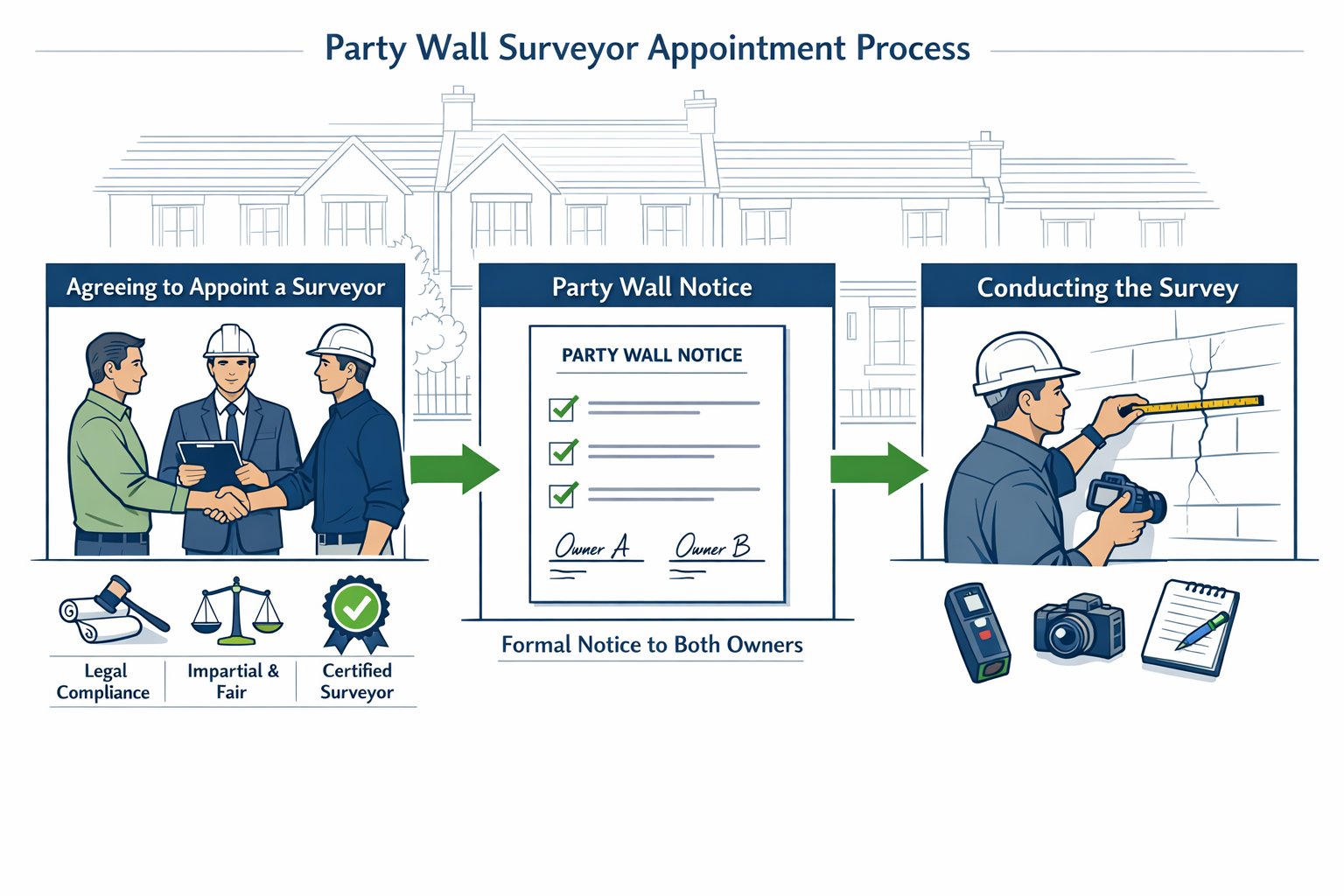
A party wall agreed surveyor is a qualified professional appointed by mutual agreement between the building owner (the person planning construction work) and the adjoining owner (the neighbour whose property shares the party wall). This single surveyor takes on the responsibility of representing both parties’ interests fairly and impartially throughout the party wall process.
Under the Party Wall etc. Act 1996, when notifiable building work is planned, property owners have three options:
- Agree to the work without appointing surveyors
- Each appoint their own surveyor (two surveyors who then select a third surveyor)
- Jointly appoint one agreed surveyor to act for both parties
The agreed surveyor option represents a middle ground that maintains professional oversight while avoiding the complexity and expense of multiple surveyor appointments.
The Legal Framework
The Party Wall etc. Act 1996 specifically provides for the appointment of an agreed surveyor in Section 10. This legislation ensures that:
- The agreed surveyor has the same legal authority as two separate surveyors
- All awards and decisions carry full legal weight
- Both parties receive equal protection under the Act
- Professional standards and impartiality are maintained
Understanding common misconceptions about party wall agreements helps property owners make informed decisions about the surveyor appointment process.
How a Party Wall Agreed Surveyor Works
The appointment and operation of an agreed surveyor for party wall matters follows a structured process designed to protect both property owners while facilitating necessary construction work.
The Appointment Process
Step 1: Party Wall Notice Served
The building owner serves a formal Party Wall Notice to the adjoining owner, detailing the proposed works. This notice must be served at least two months before work begins for new construction or one month for most other works.
Step 2: Adjoining Owner’s Response
The adjoining owner has 14 days to respond. If they consent to the proposed works, no surveyors are needed. If they dissent or fail to respond, the dispute resolution process begins.
Step 3: Surveyor Selection
Both parties discuss and agree upon a single qualified surveyor to act for both of them. This agreement must be documented in writing.
Step 4: Formal Appointment
The agreed surveyor accepts the appointment in writing and begins the assessment process.
Duties and Responsibilities
An agreed surveyor must:
✅ Remain completely impartial between both parties
✅ Conduct thorough inspections of both properties
✅ Prepare detailed schedules of condition documenting pre-work property status
✅ Draft a comprehensive Party Wall Award setting out rights, responsibilities, and protective measures
✅ Specify working hours and methods to minimize disruption
✅ Resolve disputes that arise during construction
✅ Monitor compliance with the award terms
The surveyor cannot favour one party over the other and must act in accordance with professional standards and the Act’s requirements.
Key Differences from Two-Surveyor Approach
| Aspect | Agreed Surveyor | Two Surveyors |
|---|---|---|
| Number of professionals | One surveyor | Two surveyors (plus potential third surveyor) |
| Cost | £400-£800 typically | £800-£1,500+ typically |
| Timeline | Faster (2-4 weeks average) | Slower (4-8 weeks average) |
| Communication | Direct with both parties | Through separate representatives |
| Decision-making | Single professional judgment | Collaborative agreement required |
| Complexity | Streamlined process | More administrative steps |
Property owners seeking professional guidance can explore surveyor services to find qualified agreed surveyors in their area.
Benefits of Using a Party Wall Agreed Surveyor
Choosing an agreed surveyor for party wall matters offers substantial advantages for both building and adjoining owners in 2025.
💰 Significant Cost Savings
The most immediate benefit is financial. Since the building owner is legally responsible for all reasonable surveyor fees, appointing a single agreed surveyor dramatically reduces their costs:
- Single fee structure: One surveyor charges one fee instead of two separate fees
- No third surveyor needed: When two surveyors disagree, they must appoint a third surveyor at additional cost—this scenario is eliminated with an agreed surveyor
- Reduced administrative costs: Less paperwork and coordination means lower overall expenses
For a typical residential party wall matter, the savings range from £400-£700 compared to the two-surveyor approach.
⏱️ Faster Resolution Times
Time is money in construction projects. An agreed surveyor expedites the entire process:
- Streamlined communication: No back-and-forth between multiple surveyors
- Quicker inspections: One professional conducts all necessary assessments
- Faster award preparation: Single surveyor drafts and issues the award
- Immediate dispute resolution: No need to coordinate between professionals
This efficiency means construction work can commence sooner, reducing holding costs and contractor delays.
🤝 Preserved Neighbourly Relations
Construction disputes can permanently damage relationships between neighbours. The agreed surveyor approach promotes cooperation:
- Collaborative spirit: Both parties work together from the outset
- Reduced adversarial tension: Single neutral professional rather than opposing representatives
- Shared understanding: Both owners receive the same information simultaneously
- Mutual trust building: Demonstrates good faith and willingness to cooperate
Maintaining positive relationships is particularly valuable in terraced housing and semi-detached properties where neighbours will continue living side-by-side for years.
📊 Simplified Administration
The administrative burden of party wall matters can be overwhelming. An agreed surveyor simplifies everything:
- Single point of contact for all questions and concerns
- Unified documentation accessible to both parties
- Coordinated inspections scheduled efficiently
- Clear communication channels without intermediaries
This simplification is especially beneficial for homeowners unfamiliar with construction processes or legal procedures.
⚖️ Maintained Legal Protection
Despite the collaborative approach, both parties retain full legal protection:
- The agreed surveyor has the same legal authority as two separate surveyors
- All awards are legally binding and enforceable
- Both owners can challenge the award through the appeals process
- Professional indemnity insurance protects against surveyor errors
Understanding why property owners hire surveyors helps contextualize the value of professional oversight even in collaborative arrangements.
When to Choose a Party Wall Agreed Surveyor
While an agreed surveyor party wall appointment offers many benefits, it’s not suitable for every situation. Understanding when this approach works best helps property owners make informed decisions.
✅ Ideal Scenarios for Agreed Surveyors
Straightforward Building Projects
When the proposed work is relatively standard—such as loft conversions, single-story extensions, or routine repairs—an agreed surveyor efficiently handles the process without unnecessary complexity.
Cooperative Neighbours
If both property owners maintain a good relationship and trust each other’s intentions, the agreed surveyor approach builds on this foundation of mutual respect.
Cost-Conscious Projects
For building owners working within tight budgets, the cost savings of a single surveyor can be substantial. This is particularly relevant for smaller projects where surveyor fees represent a significant percentage of total costs.
Time-Sensitive Construction
When construction timelines are critical—such as coordinating with booked contractors or seasonal weather considerations—the faster resolution offered by an agreed surveyor proves invaluable.
Standard Residential Work
Typical residential projects in terraced or semi-detached properties often benefit from the agreed surveyor approach, especially when similar work has been completed successfully on neighbouring properties.
⚠️ When Separate Surveyors May Be Preferable
Complex or Extensive Works
Large-scale projects involving significant structural changes, basement excavations, or multiple party walls may warrant the additional scrutiny of separate surveyors.
Pre-existing Disputes
If neighbours already have contentious relationships or ongoing disagreements, separate representation ensures each party’s interests are independently protected.
Valuable or Historic Properties
When properties have exceptional value or historic significance, adjoining owners may prefer independent professional representation to ensure adequate protection.
Previous Damage Claims
If there’s a history of construction damage or unresolved claims between neighbours, separate surveyors provide additional safeguards and documentation.
Asymmetric Impacts
When proposed work significantly affects one property more than the other, the adjoining owner may prefer independent representation to ensure their specific concerns are adequately addressed.
🔍 Questions to Consider
Before agreeing to an agreed surveyor appointment, both parties should consider:
- Do both parties trust the proposed surveyor’s impartiality?
- Is the scope of work clearly defined and understood?
- Are there any pre-existing concerns about property condition?
- Do both owners understand their rights to withdraw consent?
- Has the surveyor explained their duties and limitations?
For complex situations, consulting resources about party wall surveyor needs can clarify whether the agreed surveyor route is appropriate.
Finding and Appointing the Right Party Wall Agreed Surveyor
Selecting a qualified and trustworthy party wall agreed surveyor is crucial for a successful outcome. The appointment process requires careful consideration and mutual agreement.
Essential Qualifications and Credentials
A competent agreed surveyor should possess:
🎓 Professional Membership
- Member of the Royal Institution of Chartered Surveyors (RICS)
- Member of the Faculty of Party Wall Surveyors (FPWS)
- Member of the Pyramus & Thisbe Club (specialist party wall organization)
📜 Relevant Experience
- Minimum 5+ years handling party wall matters
- Demonstrated experience with similar property types and work scopes
- Track record of successful awards and dispute resolutions
💼 Professional Indemnity Insurance
- Adequate coverage for the property values involved
- Current and verifiable insurance documentation
🏆 Local Knowledge
- Familiarity with local building practices and property types
- Understanding of regional construction methods and common issues
The Selection Process
Step 1: Research Potential Surveyors
Both parties should independently research qualified surveyors. Sources include:
- Professional body directories (RICS, FPWS)
- Local recommendations from builders or architects
- Online reviews and testimonials
- Professional surveyor listings
Step 2: Initial Consultations
Contact 2-3 potential surveyors to discuss:
- Their experience with similar projects
- Their approach to agreed surveyor appointments
- Fee structures and payment terms
- Availability and timeline expectations
- References from previous clients
Step 3: Compare and Discuss
Both property owners should share their findings and preferences. Consider:
- Professional qualifications and experience
- Communication style and responsiveness
- Fee reasonableness and transparency
- Geographic proximity to the properties
- Availability to commence work promptly
Step 4: Mutual Agreement
Both parties must formally agree on the selected surveyor. This agreement should be documented in writing before the surveyor begins work.
Step 5: Formal Appointment
The agreed surveyor provides a formal appointment letter or agreement outlining:
- Scope of services to be provided
- Fee structure and payment terms
- Timeline for completing the award
- Duties and responsibilities
- Complaints procedure
Red Flags to Avoid
❌ Lack of proper credentials or professional membership
❌ Unwillingness to provide references or previous work examples
❌ Vague or unclear fee structures without itemized breakdowns
❌ Pressure to make quick decisions without proper consideration
❌ Conflicts of interest such as previous work for one party
❌ Poor communication or delayed responses during initial contact
❌ No professional indemnity insurance or inadequate coverage
Questions to Ask Potential Surveyors
Before appointing an agreed surveyor, ask:
- How many party wall awards have you prepared in the past year?
- What is your experience with this type of building work?
- How do you ensure impartiality between both parties?
- What is your typical timeline from appointment to award?
- How do you handle disagreements or concerns from either party?
- What are your fees, and what do they include?
- Can you provide references from recent agreed surveyor appointments?
- How will you communicate with both parties throughout the process?
- What happens if one party becomes dissatisfied with your services?
- Do you have experience with properties similar to ours?
Professional resources about building surveyors in London can help property owners understand what to expect from qualified professionals.
The Party Wall Award Process with an Agreed Surveyor
Understanding how an agreed surveyor party wall professional prepares and issues an award helps both property owners know what to expect throughout the process.
Pre-Award Activities
Initial Property Inspections
The agreed surveyor schedules comprehensive inspections of both properties, typically including:
- External examination: Assessing the party wall’s condition, adjacent structures, and surrounding areas
- Internal inspection: Documenting rooms adjacent to the party wall, existing cracks, finishes, and structural elements
- Photographic documentation: Creating a detailed visual record of current conditions
- Measurements: Recording relevant dimensions and structural details
Both property owners should be present during their respective inspections to point out any concerns and ask questions.
Schedule of Condition Preparation
The surveyor prepares a detailed Schedule of Condition documenting:
- Existing defects, cracks, or damage
- Current decorative condition
- Structural observations
- Photographic evidence
- Baseline measurements
This schedule becomes crucial if damage claims arise later, as it establishes the pre-work condition of both properties.
The Party Wall Award Document
The agreed surveyor drafts a comprehensive Party Wall Award that typically includes:
📋 Parties and Properties
- Full names and addresses of building and adjoining owners
- Property descriptions and legal details
- Surveyor’s name and professional credentials
🏗️ Description of Works
- Detailed specification of proposed building work
- Drawings and technical plans
- Construction methods and materials
- Timeline and phasing
🛡️ Protective Measures
- Requirements for protecting the adjoining property
- Shoring, scaffolding, or temporary support specifications
- Dust and noise control measures
- Working hours restrictions
💼 Rights and Responsibilities
- Building owner’s rights to execute the work
- Adjoining owner’s rights to protection and compensation
- Access requirements and notice periods
- Insurance and liability provisions
⏰ Timeline and Conditions
- Commencement date
- Expected completion timeline
- Notice requirements for key stages
- Inspection schedules
💰 Fees and Costs
- Agreed surveyor’s fees
- Payment terms and schedule
- Responsibility for costs
Award Issuance and Acceptance
Once the award is prepared, the agreed surveyor:
- Serves the award on both parties simultaneously
- Explains key provisions and answers questions
- Obtains acknowledgment of receipt from both parties
- Retains original documentation for the statutory period
The award becomes legally binding 14 days after service unless either party appeals to the County Court.
During Construction Monitoring
The agreed surveyor’s role continues throughout construction:
Regular Site Visits
- Monitoring compliance with award terms
- Inspecting work quality and methods
- Addressing concerns from either party
- Documenting progress
Dispute Resolution
- Mediating disagreements about work execution
- Clarifying award provisions
- Making determinations on unforeseen issues
- Issuing additional awards if necessary
Communication Management
- Providing updates to both parties
- Responding to questions and concerns
- Coordinating access and inspections
- Maintaining professional records
Post-Construction Activities
After work completion, the agreed surveyor:
Final Inspection
Conducts a comprehensive inspection comparing current condition to the original Schedule of Condition, identifying any damage or changes.
Damage Assessment
If damage occurred, the surveyor:
- Documents the extent and nature of damage
- Determines whether it resulted from the building work
- Specifies appropriate remediation or compensation
- Issues additional awards if necessary
Final Documentation
Provides both parties with:
- Completion confirmation
- Final inspection report
- Photographic documentation
- Recommendations for any remedial work
Understanding the broader context of party wall procedures helps property owners navigate the entire process confidently.
Costs and Fees for Party Wall Agreed Surveyors
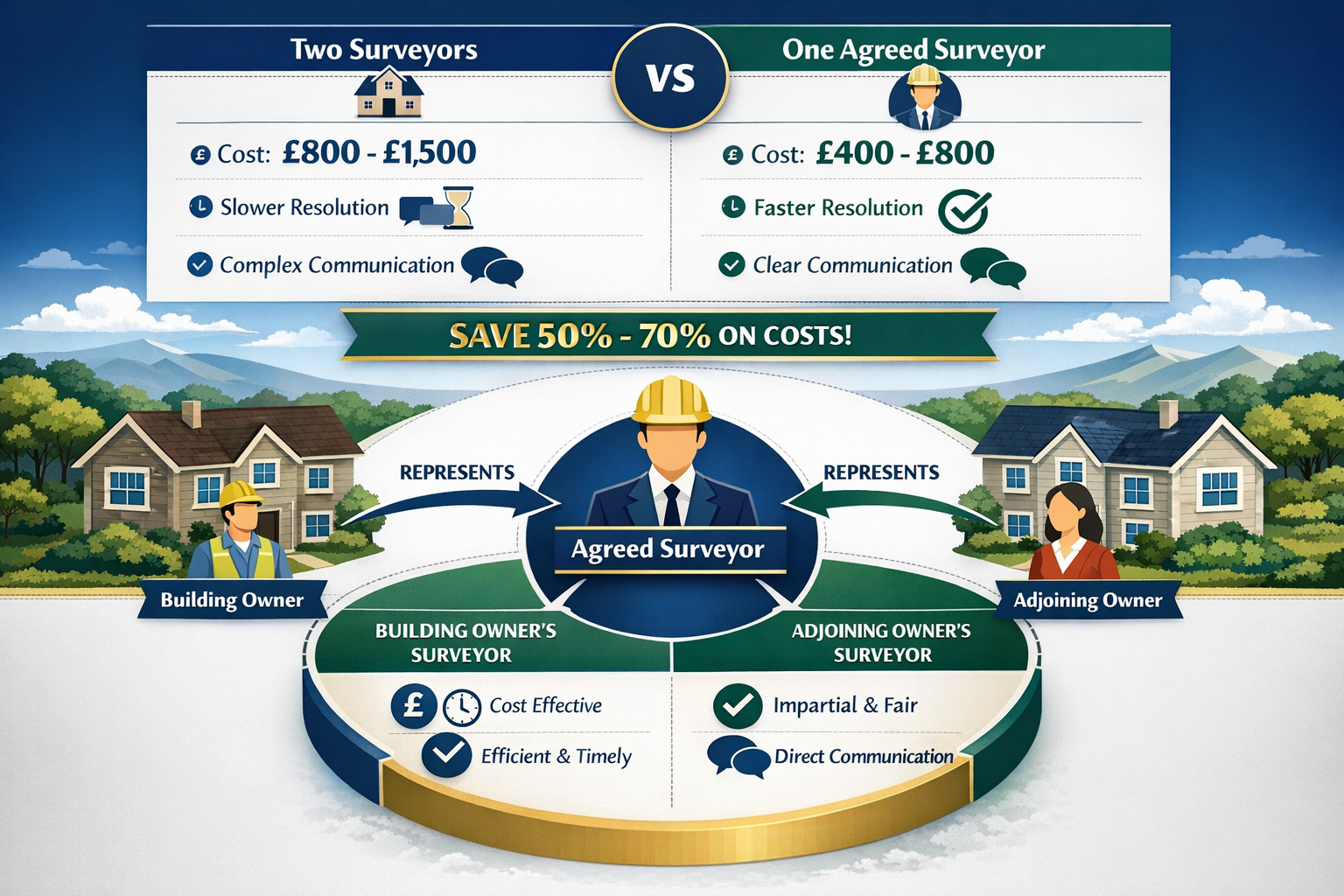
Understanding the financial aspects of appointing a party wall agreed surveyor helps property owners budget appropriately and appreciate the cost savings this approach offers.
Typical Fee Structures in 2025
Party wall agreed surveyor fees vary based on several factors, but typical ranges include:
Straightforward Residential Projects
- Single party wall, simple works: £400-£600
- Multiple party walls or moderate complexity: £600-£900
- Complex works or multiple properties: £900-£1,500
Factors Affecting Fees
- Geographic location (London and Southeast typically higher)
- Property type and value
- Complexity and scope of proposed works
- Number of party walls affected
- Urgency or timeline constraints
- Surveyor’s experience and credentials
What’s Included in Agreed Surveyor Fees
A comprehensive agreed surveyor service typically includes:
✅ Initial consultations with both parties
✅ Property inspections of both building and adjoining properties
✅ Schedule of Condition preparation with photographic documentation
✅ Party Wall Award drafting and issuance
✅ Reasonable correspondence and communication
✅ Site monitoring visits during construction (typically 2-3 visits)
✅ Dispute resolution related to the works
✅ Final inspection and completion documentation
Additional Costs to Consider
Beyond the agreed surveyor’s fees, property owners should budget for:
Building Owner’s Costs
- Adjoining owner’s surveyor fees if they later appoint one
- Structural engineer fees if required for design
- Legal fees if disputes escalate
- Insurance excess if damage occurs
- Remediation costs for any damage caused
Potential Additional Surveyor Charges
- Extensive additional site visits beyond standard monitoring
- Complex dispute resolution requiring significant time
- Expert consultations (structural engineers, etc.)
- Court attendance if appeals occur
- Extended project timelines requiring ongoing oversight
Cost Comparison: Agreed vs. Separate Surveyors
| Cost Element | Agreed Surveyor | Two Surveyors |
|---|---|---|
| Building owner’s surveyor | £400-£800 (total) | £400-£750 |
| Adjoining owner’s surveyor | Included above | £400-£750 |
| Third surveyor (if needed) | Not applicable | £500-£1,000 |
| Total typical cost | £400-£800 | £800-£2,500 |
| Potential savings | Baseline | £400-£1,700 more |
Who Pays the Fees?
Under the Party Wall etc. Act 1996:
🏗️ The building owner pays all reasonable surveyor fees, including:
- The agreed surveyor’s fees
- Any additional professional fees reasonably incurred
- Costs of preparing and serving the award
This legal requirement makes the agreed surveyor approach particularly beneficial for building owners, as they save substantially compared to funding two separate surveyors.
Getting Fee Quotes
When requesting quotes from potential agreed surveyors:
📝 Provide comprehensive information:
- Detailed description of proposed works
- Property addresses and types
- Drawings or plans if available
- Expected timeline
- Any known complications
📞 Ask for itemized quotes including:
- Base fee for standard services
- Hourly rates for additional work
- Payment schedule and terms
- What’s included and excluded
- Estimated total cost range
💡 Compare like-for-like:
Ensure quotes cover the same scope of services before comparing prices.
Value for Money Considerations
The lowest fee isn’t always the best value. Consider:
- Experience and qualifications justify premium fees
- Comprehensive services prevent costly surprises later
- Professional reputation reduces dispute risks
- Clear communication saves time and stress
- Local knowledge improves efficiency
For context on related professional costs, reviewing information about party wall surveyor costs provides helpful benchmarks.
Common Challenges and How Agreed Surveyors Address Them
Even with an agreed surveyor for party wall matters, challenges can arise. Understanding common issues and their solutions helps property owners navigate the process smoothly.
Challenge 1: Perceived Bias or Favoritism
The Issue:
One party may feel the agreed surveyor favours the other owner, especially if disagreements arise about award terms or work methods.
How Agreed Surveyors Address It:
- Documented impartiality: Professional codes of conduct require strict neutrality
- Transparent communication: All significant communications copied to both parties
- Evidence-based decisions: Determinations based on technical facts, not preferences
- Right to withdraw: Either party can withdraw consent and appoint their own surveyor if genuinely concerned
- Professional accountability: Surveyors risk professional sanctions for bias
Best Practice:
Both parties should voice concerns immediately rather than letting them fester. The agreed surveyor can explain their reasoning and ensure both owners understand the basis for decisions.
Challenge 2: Scope Creep and Additional Works
The Issue:
Building owners sometimes expand project scope after the award is issued, requiring additional party wall procedures.
How Agreed Surveyors Address It:
- Clear scope definition: Original award precisely specifies approved works
- Change notification requirements: Building owners must notify the surveyor of any variations
- Supplementary awards: Additional awards issued for significant scope changes
- Cost transparency: Additional surveyor fees clearly communicated
- Adjoining owner protection: No unauthorized work affecting the party wall permitted
Best Practice:
Building owners should finalize all design decisions before serving party wall notices to avoid delays and additional costs.
Challenge 3: Construction Damage Disputes
The Issue:
Disagreements about whether damage existed before work began or resulted from construction activities.
How Agreed Surveyors Address It:
- Comprehensive Schedule of Condition: Detailed pre-work documentation with photographs
- Regular monitoring: Site visits during construction to identify issues early
- Technical assessment: Professional determination of damage causation
- Remediation specifications: Clear requirements for repairs if damage occurred
- Independent evidence: Structural engineers or other experts consulted if needed
Best Practice:
Both owners should thoroughly review the Schedule of Condition before work commences and immediately report any concerns during construction.
Challenge 4: Communication Breakdowns
The Issue:
Misunderstandings or lack of information flow between parties and the surveyor.
How Agreed Surveyors Address It:
- Established communication protocols: Clear procedures for questions and concerns
- Regular updates: Proactive communication about project progress
- Accessible contact methods: Multiple ways to reach the surveyor
- Written confirmations: Important decisions documented in writing
- Scheduled meetings: Face-to-face discussions for complex issues
Best Practice:
Both parties should communicate concerns directly to the agreed surveyor rather than through intermediaries or social media.
Challenge 5: Timeline Delays
The Issue:
Construction delays affecting award timelines or surveyor availability for inspections.
How Agreed Surveyors Address It:
- Flexible scheduling: Reasonable accommodation of timing changes
- Clear notice requirements: Advance warning needed for inspections
- Timeline extensions: Award amendments if necessary
- Prioritization: Urgent matters addressed promptly
- Contingency planning: Alternative arrangements for unavoidable delays
Best Practice:
Building owners should provide the agreed surveyor with realistic construction schedules and prompt updates about any changes.
Challenge 6: One Party Becomes Uncooperative
The Issue:
After appointing an agreed surveyor, one owner becomes difficult to contact or refuses to cooperate.
How Agreed Surveyors Address It:
- Statutory authority: The surveyor has legal power to proceed despite non-cooperation
- Documented attempts: All communication efforts recorded
- Reasonable assumptions: Surveyor makes determinations based on available information
- Legal remedies: Court enforcement available for serious non-compliance
- Professional judgment: Surveyor continues to act impartially despite one party’s absence
Best Practice:
Both parties should maintain open communication channels and respond promptly to surveyor requests.
Understanding the consequences of ignoring the Party Wall Act emphasizes why cooperation throughout the process benefits everyone involved.
Rights and Protections for Both Property Owners
Working with a party wall agreed surveyor doesn’t diminish either party’s legal rights. Understanding these protections ensures both owners feel confident in the process.
Building Owner’s Rights
🏗️ Right to Execute Necessary Works
The building owner has the legal right to carry out works permitted under the Party Wall Act, including:
- Building on or astride the party wall
- Cutting into the party wall
- Demolishing and rebuilding the party wall
- Underpinning the party wall
- Excavating near neighbouring foundations
These rights exist regardless of the adjoining owner’s preferences, provided proper procedures are followed.
📋 Right to Appoint Surveyors
The building owner can:
- Propose an agreed surveyor
- Appoint their own surveyor if agreement isn’t reached
- Change surveyors if the agreed surveyor becomes unsuitable
- Challenge unreasonable surveyor fees
💼 Right to Reasonable Costs
While the building owner pays surveyor fees, they have the right to:
- Question excessive or unreasonable charges
- Receive itemized fee breakdowns
- Dispute fees through the County Court if necessary
- Expect efficient and professional service
Adjoining Owner’s Rights
🛡️ Right to Protection
The adjoining owner is entitled to:
- Comprehensive property inspection before work begins
- Detailed Schedule of Condition documenting existing condition
- Party Wall Award specifying protective measures
- Regular monitoring during construction
- Full compensation for any damage caused
- Professional oversight of all party wall works
⚖️ Right to Independent Representation
Even after agreeing to an agreed surveyor, the adjoining owner can:
- Withdraw consent at any time (with reasonable notice)
- Appoint their own surveyor if concerns arise
- Seek independent advice about the award
- Challenge award terms through appeals
🔍 Right to Information
The adjoining owner has the right to:
- Receive copies of all relevant documentation
- Understand the proposed works fully
- Ask questions and receive clear answers
- Access the agreed surveyor for concerns
- Review all inspection findings and reports
Mutual Rights and Protections
Both property owners share certain fundamental rights:
Professional Standards
- Service from qualified, insured professionals
- Impartial treatment and fair consideration
- Competent technical assessments
- Compliance with professional codes of conduct
Legal Compliance
- Full adherence to the Party Wall Act 1996
- Legally binding and enforceable awards
- Proper notice periods and procedures
- Access to appeals processes
Communication
- Clear, timely information about all developments
- Responses to reasonable questions and concerns
- Written documentation of important decisions
- Access to the agreed surveyor
The Right to Withdraw Consent
A critical protection is that either party can withdraw consent to the agreed surveyor appointment:
When Withdrawal Is Appropriate:
- Genuine concerns about surveyor impartiality
- Significant disagreements about technical matters
- Loss of confidence in the surveyor’s competence
- Changed circumstances making separate representation preferable
Withdrawal Process:
- Notify the agreed surveyor in writing
- Notify the other property owner
- Appoint your own surveyor
- The agreed surveyor’s appointment terminates
- The process continues with separate surveyors
Financial Implications:
- The withdrawing party may be responsible for the agreed surveyor’s fees to date
- Additional costs arise from appointing separate surveyors
- The building owner ultimately pays all reasonable fees
Appeal Rights
If either party disagrees with the Party Wall Award:
📅 14-Day Appeal Window
Appeals must be filed with the County Court within 14 days of award service.
⚖️ Grounds for Appeal
- Technical errors in the award
- Procedural irregularities
- Unreasonable terms or conditions
- Inadequate protective measures
- Excessive or insufficient provisions
🏛️ Court Process
The County Court reviews the award and can:
- Uphold the award as issued
- Modify specific terms
- Set aside the award entirely
- Order a new award be prepared
Understanding these rights helps both parties feel secure in choosing the agreed surveyor approach. Additional information about party wall agreements when buying a house provides broader context for property transactions.
Frequently Asked Questions About Party Wall Agreed Surveyors
Can the building owner’s architect or builder act as the agreed surveyor?
No. The agreed surveyor must be independent and impartial. Anyone with a financial interest in the project or prior relationship with one party cannot serve as an agreed surveyor, as this creates a conflict of interest that compromises impartiality.
What happens if the agreed surveyor makes a mistake?
Agreed surveyors carry professional indemnity insurance to cover errors and omissions. If a mistake occurs, affected parties can:
- Request the surveyor correct the error
- File a complaint with the surveyor’s professional body
- Pursue compensation through the surveyor’s insurance
- Appeal the award to the County Court if the error is significant
How long does the agreed surveyor process typically take?
From appointment to award issuance typically takes 3-6 weeks for straightforward residential projects, depending on:
- Property inspection scheduling
- Complexity of proposed works
- Responsiveness of both parties
- Surveyor’s current workload
- Any complications discovered during inspections
Can I use my mortgage lender’s surveyor as the agreed surveyor?
Generally no. Mortgage valuation surveyors perform different functions and typically lack party wall expertise. Additionally, they have a relationship with the lender that could compromise impartiality. Choose a specialist party wall surveyor instead.
What if my neighbour refuses to agree to any surveyor?
If the adjoining owner refuses to agree to an agreed surveyor or appoint their own surveyor within 10 days of being requested, they are deemed to have appointed the building owner’s surveyor to act for them. This ensures the process can proceed even without active cooperation.
Do I need an agreed surveyor for minor works?
Not all works require party wall procedures. Minor works that don’t involve cutting into the party wall, building on it, or excavating near foundations may not be notifiable. However, if you’re unsure, consulting a party wall surveyor for advice is worthwhile—initial consultations are often free or low-cost.
Can the agreed surveyor favor one party over the other?
No. Professional codes of conduct and the Party Wall Act require strict impartiality. Surveyors who show bias risk:
- Professional disciplinary action
- Loss of professional memberships
- Legal liability for improper conduct
- Damage to professional reputation
- Invalid awards that can be set aside
What qualifications should an agreed surveyor have?
Look for:
- RICS (Royal Institution of Chartered Surveyors) membership
- FPWS (Faculty of Party Wall Surveyors) membership
- Minimum 5 years party wall experience
- Professional indemnity insurance
- Local knowledge of property types
- Track record of successful awards
How much does an agreed surveyor cost compared to two surveyors?
An agreed surveyor typically costs £400-£800 total, while appointing two separate surveyors costs £800-£1,500+ (and potentially up to £2,500 if a third surveyor is needed). The agreed surveyor approach saves 40-60% on average.
Can I change from an agreed surveyor to separate surveyors mid-process?
Yes. Either party can withdraw consent to the agreed surveyor appointment at any time by providing written notice. However, this:
- Increases costs significantly
- Delays the project timeline
- May require starting the process over
- Creates potential for increased conflict
Only withdraw consent if there are genuine concerns about impartiality or competence.
Conclusion: Making the Right Choice for Your Party Wall Matter
Choosing a party wall agreed surveyor represents a practical, cost-effective approach to managing party wall procedures in 2025. This collaborative option delivers substantial benefits—saving both time and money while maintaining full legal protection for all parties involved.
The key advantages are clear: agreed surveyors reduce costs by 40-60%, streamline communication, accelerate the award process, and preserve valuable neighbourly relationships. For straightforward residential projects where both property owners can cooperate reasonably, this approach offers an optimal balance of professional oversight and efficiency.
However, success depends on selecting the right professional. Property owners should prioritize qualified, experienced surveyors with proper credentials, professional insurance, and demonstrated impartiality. Taking time to research candidates, check references, and ensure mutual agreement on the appointment prevents problems later.
Next Steps for Property Owners
If You’re Planning Building Work:
- Determine if your project requires party wall procedures by consulting the Party Wall Act 1996 or a qualified surveyor
- Discuss the agreed surveyor option with your neighbour early in the planning process
- Research qualified surveyors through professional directories and local recommendations
- Request quotes from 2-3 candidates and compare qualifications, experience, and fees
- Reach mutual agreement with your neighbour on the surveyor selection
- Formalize the appointment with written documentation before work begins
- Maintain open communication throughout the construction process
If You’ve Received a Party Wall Notice:
- Understand your rights and options under the Party Wall Act
- Consider the agreed surveyor option if you have a reasonable relationship with your neighbour
- Review the building owner’s proposed surveyor or suggest alternatives
- Ask questions about the proposed works and protective measures
- Respond within 14 days to avoid being deemed to have appointed the building owner’s surveyor
- Remember you can withdraw consent if concerns arise later
Resources for Further Information
Property owners seeking additional guidance can explore:
- Professional surveyor services and listings
- Comprehensive party wall resources and articles
- Professional body websites (RICS, FPWS)
- Local authority planning departments
- Citizens Advice Bureau for consumer rights
The agreed surveyor approach works best when both parties approach it with good faith, clear communication, and realistic expectations. By understanding the process, rights, and responsibilities involved, property owners can navigate party wall matters confidently and efficiently.
Whether you’re planning a loft conversion, basement excavation, or extension project, the decision about surveyor appointment significantly impacts your experience, costs, and timeline. Taking time to make an informed choice about a party wall agreed surveyor sets the foundation for a smooth, successful building project that protects everyone’s interests while maintaining positive neighbourhood relationships.
How Prince Surveyors can help: explore our party wall surveyors or learn about our party wall surveyor costs.