

Semi Detached Party Wall: The Complete 2025 Guide for Homeowners
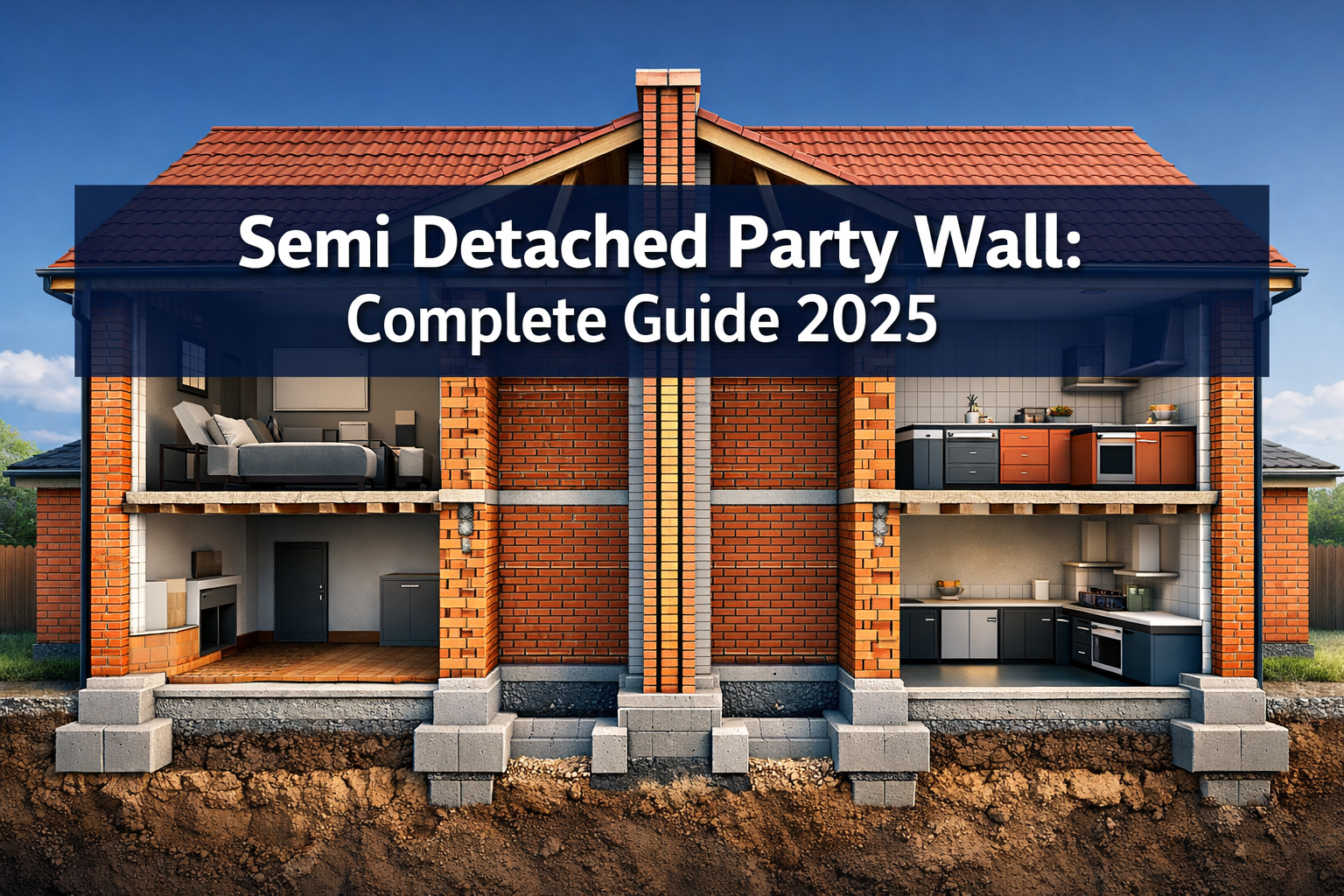
Imagine discovering that the wall you share with your neighbour isn’t just a simple divider—it’s a complex legal structure with specific rights, responsibilities, and regulations that could affect your next home improvement project. For millions of homeowners living in semi-detached properties across the UK, understanding the semi detached party wall is not just helpful—it’s essential. Whether planning an extension, loft conversion, or even minor alterations, knowing how party wall legislation applies to your property can save thousands of pounds and prevent neighbourly disputes that could last for years.
Key Takeaways
- 🏠 A semi detached party wall is a shared structural wall between two properties that both homeowners have legal rights to, governed by the Party Wall etc. Act 1996
- 📋 Party wall notices are legally required for most building work affecting the shared wall, typically served 2 months before construction begins
- 💰 The building owner pays all reasonable costs associated with party wall procedures, including appointing surveyors and creating party wall awards
- ⚖️ Both neighbours have equal rights to the party wall structure, and neither can make changes without following proper legal procedures
- 🔧 Common works requiring party wall agreements include extensions, loft conversions, structural alterations, and even cutting into the wall for shelving or services
What Is a Semi Detached Party Wall?
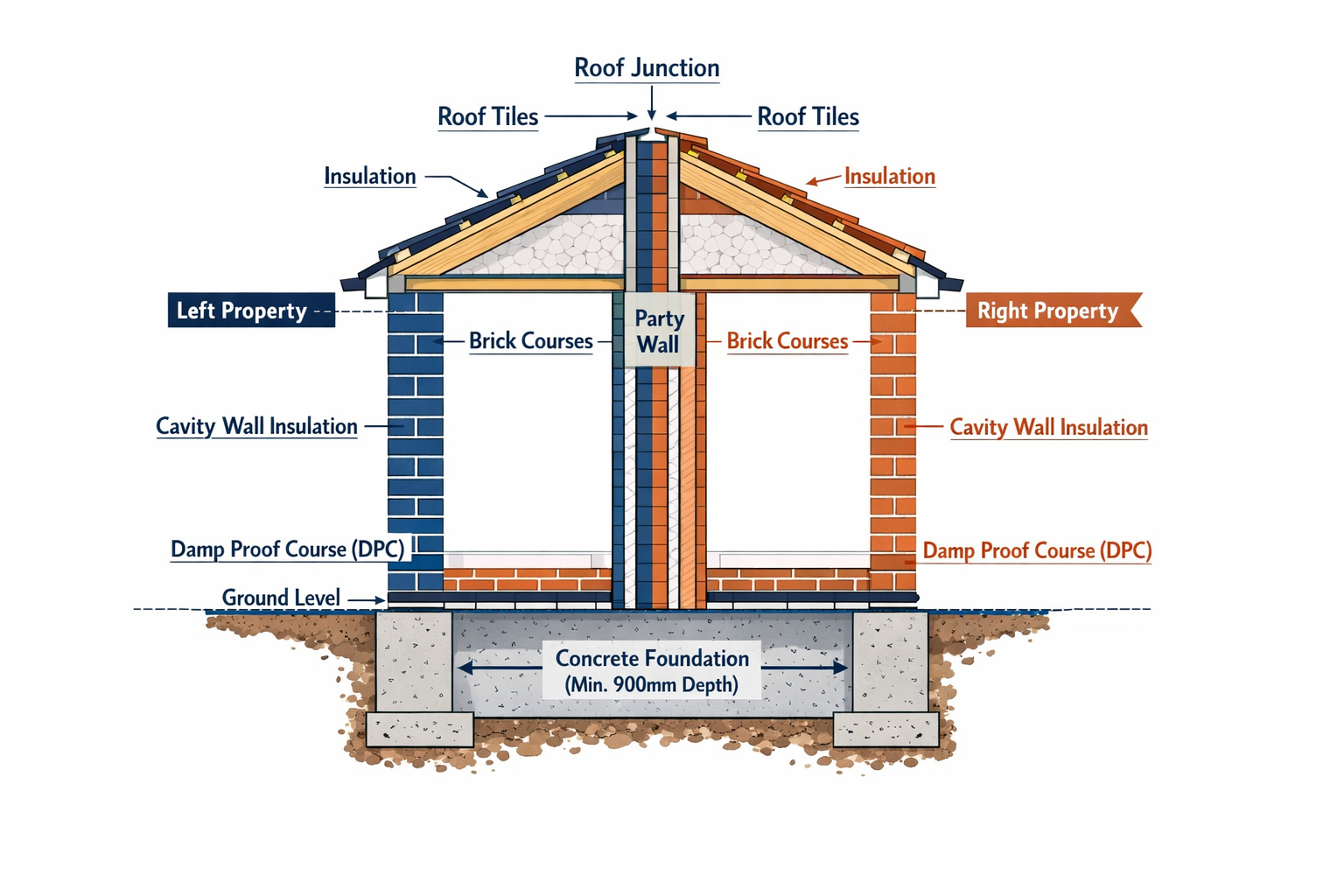
A semi detached party wall is the shared vertical wall that separates two semi-detached houses, forming the boundary between the two properties. Unlike detached homes that stand completely alone, or terraced houses that share walls on both sides, semi-detached properties share just one common wall with their immediate neighbour.
This shared wall serves multiple critical functions:
- Structural support for both properties
- Fire separation between the two dwellings
- Sound insulation to maintain privacy
- Weather protection as part of the building envelope
- Legal boundary defining property ownership
Legal Definition Under the Party Wall Act
The Party Wall etc. Act 1996 provides the legal framework governing semi detached party walls in England and Wales. According to this legislation, a party wall is defined as:
“A wall which forms part of a building and stands on lands of different owners to a greater extent than the projection of any artificially formed support on which the wall rests; and so much of a wall not being a wall referred to above as separates buildings belonging to different owners.”
In simpler terms, the semi detached party wall belongs to both property owners equally, typically with each owner owning the half of the wall on their side of the boundary line. This shared ownership creates unique rights and responsibilities that differ significantly from walls that belong entirely to one property.
Understanding common misconceptions about party wall agreements can help homeowners navigate this complex area more effectively.
Types of Party Structures
While discussing semi detached party walls, it’s important to understand the three main types of party structures recognized by law:
| Type | Description | Common in Semi-Detached |
|---|---|---|
| Party Wall | Wall standing on two properties, forming part of a building | ✅ Yes – the main shared wall |
| Party Fence Wall | Wall standing on boundary but not part of a building (garden wall) | ⚠️ Sometimes – rear garden walls |
| Party Structure | Floor or other structure separating buildings vertically | ❌ Rare – more common in flats |
For semi-detached properties, the primary concern is the party wall that runs from the foundations through to the roof space, separating the two homes.
Understanding Your Rights and Responsibilities
Owning a property with a semi detached party wall comes with specific legal rights and corresponding responsibilities that every homeowner should understand before undertaking any building work.
Ownership Rights
Both property owners have equal rights to the party wall, which means:
- Neither owner can claim exclusive ownership of the entire wall
- Both parties can rely on the wall for structural support
- Each owner is responsible for maintaining their side of the wall
- No owner can remove or significantly alter the wall without consent
- Both have the right to protect the wall from damage
This shared ownership model ensures fairness but also creates complexity when one owner wishes to make changes that affect the structure.
When Party Wall Notices Are Required
The Party Wall Act requires that you serve formal notice to your neighbour before carrying out specific types of work on or near a semi detached party wall. These include:
Building Work Requiring Notice:
- Cutting into the party wall to insert beams or supports
- Removing chimney breasts that form part of the party wall
- Raising the party wall height for an extension or loft conversion
- Underpinning or strengthening the foundations of the party wall
- Demolishing and rebuilding the party wall
- Cutting into the wall to install damp-proof courses
- Exposing the party wall during demolition of adjoining structures
- Building new walls on or at the boundary line
Work NOT Requiring Notice:
- Drilling small holes for picture hooks or shelving
- Replastering your side of the wall
- Decorating or painting
- Minor electrical work contained within your property
- Installing wall-mounted fixtures that don’t penetrate deeply
Professional guidance from qualified surveyors can help determine whether your specific project requires formal party wall procedures.
Notice Periods and Timelines
The Party Wall Act specifies strict timelines for serving notices:
- Two months’ notice for most party wall works
- One month’s notice for excavation work within 3-6 meters of neighbouring structures
- Immediate notice for emergency repairs (though formal procedures should follow)
These timelines are mandatory, and starting work without proper notice can result in legal action, injunctions to stop work, and liability for any damage caused.
The Party Wall Notice Process for Semi Detached Properties
Navigating the party wall notice process might seem daunting, but understanding each step makes it manageable. Here’s exactly what happens when you need to serve a party wall notice for work on your semi detached party wall.
Step 1: Determine If Notice Is Required
Before anything else, establish whether your planned work actually requires a party wall notice. Consult with a building surveyor or party wall surveyor who can assess your plans and advise on legal requirements.
Step 2: Prepare the Party Wall Notice
The notice must include specific information:
- Your details (name and address)
- Neighbour’s details (name and address)
- Description of proposed works with sufficient detail
- Date when work will commence (respecting minimum notice periods)
- Drawings or plans showing the work
- Your surveyor’s details (if already appointed)
The notice must be in writing and can be delivered by hand, posted, or sent via recorded delivery.
Step 3: Neighbour’s Response Options
Your neighbour has 14 days to respond in one of three ways:
Option 1: Consent ✅
- Neighbour agrees to the work in writing
- No party wall award needed
- Work can proceed after notice period expires
- Still advisable to document pre-work condition
Option 2: Dissent ⚠️
- Neighbour objects or doesn’t respond within 14 days
- Triggers the formal party wall award process
- Surveyors must be appointed
- Party wall award must be prepared
Option 3: Counter-Notice 📋
- Neighbour requests additional protective works
- May ask for improvements to the wall
- Costs typically fall on the neighbour for their requests
Step 4: Appointing Party Wall Surveyors
When a dispute arises (or neighbours cannot agree), surveyors must be appointed:
Three Surveyor Approach:
- Building owner appoints one surveyor
- Adjoining owner appoints another surveyor
- Both surveyors select a third “agreed surveyor”
- Most formal and expensive option
Agreed Surveyor Approach:
- Both parties agree to use a single impartial surveyor
- More cost-effective
- Faster resolution
- Requires mutual trust
The role of an agreed surveyor is to act impartially and protect both parties’ interests equally.
Step 5: The Party Wall Award
The surveyor(s) will prepare a party wall award, which is a legal document that:
- Describes the proposed work in detail
- Sets out the condition of the semi detached party wall before work begins
- Specifies how and when work will be carried out
- Establishes working hours and access arrangements
- Determines who pays for what
- Provides dispute resolution mechanisms
This document is legally binding on both parties and provides protection for everyone involved.
Step 6: Undertaking the Work
Once the award is in place:
- Work must be carried out exactly as described in the award
- Regular inspections may be required
- Photographic evidence should document progress
- Any variations require agreement and potentially a new award
- Completion should be documented and shared with neighbours
Common Building Projects Affecting Semi Detached Party Walls
Understanding which home improvement projects trigger party wall requirements helps homeowners plan properly and budget for associated costs. Here are the most common scenarios involving semi detached party wall considerations.
Loft Conversions
Loft conversions frequently affect party walls, especially when:
- Raising the roof height above the existing party wall
- Installing steel beams that rest on or penetrate the party wall
- Creating dormer windows that connect to the party wall structure
- Removing chimney breasts that form part of the shared wall
- Strengthening floor joists that connect to the party wall
Many homeowners don’t realize that loft conversions require party wall agreements, leading to delays and complications mid-project.
Single and Double-Storey Extensions
Extensions are perhaps the most common reason for party wall procedures:
Ground Floor Extensions:
- Building new walls at the boundary
- Connecting to the existing party wall
- Excavating near the neighbour’s foundations
- Installing new damp-proof courses
Two-Storey Extensions:
- All ground floor considerations
- Plus raising the party wall height
- Installing beams into the party wall
- Creating new structural connections
Basement Excavations and Conversions
Basement projects are particularly complex because they involve:
- Deep excavation within 3-6 meters of the neighbour’s property
- Underpinning the party wall foundations
- Structural alterations below ground level
- Potential subsidence risks to neighbouring properties
These projects require careful planning and often need structural engineering input alongside party wall procedures.
Chimney Breast Removal
Removing a chimney breast from a semi detached party wall is deceptively complex:
- The chimney often serves both properties
- Removal affects the structural integrity of the wall
- Neighbouring chimney may lose support
- Requires careful calculation of loads and stresses
- Must include proper support for remaining structure
Even if the chimney appears to be entirely on your side, if it forms part of the party wall structure, formal procedures apply.
Kitchen and Bathroom Renovations
Sometimes even modest renovations trigger party wall requirements:
- Installing new soil pipes through the party wall
- Cutting chases for electrical or plumbing services
- Removing supporting walls that connect to the party wall
- Installing extractor fans that penetrate the structure
The key question is always: does the work affect the semi detached party wall structurally or require cutting into it?
Costs Associated with Semi Detached Party Wall Procedures
One of the most common questions homeowners ask is: “How much will this cost?” Understanding the financial implications of party wall procedures helps with budgeting and decision-making.
Who Pays for What?
The fundamental principle is simple: the building owner (the person undertaking the work) pays all reasonable costs associated with the party wall process. This includes:
Building Owner’s Costs:
- Appointing their own surveyor
- Appointing the agreed surveyor (if used)
- Preparing the party wall award
- Conducting condition surveys
- Reasonable costs of the neighbour’s surveyor
- Any protective works required
- Remedying damage caused by the works
Neighbour’s Costs:
- Nothing, unless they request additional works beyond what’s necessary
- Their own legal advice (optional)
- Improvements they request to the party wall
This cost structure can be surprising for homeowners who assume neighbours should contribute to surveyor fees.
Typical Party Wall Surveyor Fees
Costs vary significantly based on project complexity and location, but here are 2025 estimates:
| Project Type | Surveyor Fees (Agreed Surveyor) | Surveyor Fees (Two Surveyors) |
|---|---|---|
| Simple loft conversion | £700 – £1,200 | £1,400 – £2,500 |
| Single-storey extension | £800 – £1,500 | £1,600 – £3,000 |
| Two-storey extension | £1,200 – £2,000 | £2,400 – £4,500 |
| Basement excavation | £1,500 – £3,000 | £3,000 – £6,000+ |
| Chimney breast removal | £600 – £1,000 | £1,200 – £2,000 |
These fees typically cover:
- Initial consultation and advice
- Preparing and serving notices
- Condition surveys (photographic and written)
- Preparing the party wall award
- Site visits during construction
- Final inspection and sign-off
For more detailed information, explore the cost of party wall surveyors and party wall agreement costs.
Hidden Costs to Consider
Beyond surveyor fees, budget for these potential expenses:
Pre-Construction Costs:
- Architectural drawings (£500-£2,000)
- Structural calculations (£400-£1,500)
- Building regulations applications (£200-£1,000)
During Construction:
- Protective works required by the award (variable)
- Additional inspections if problems arise (£150-£300 per visit)
- Temporary works or scaffolding (£500-£3,000)
Post-Construction:
- Remedial works if damage occurs (highly variable)
- Redecoration of neighbour’s property (£500-£3,000)
- Dispute resolution if disagreements arise (£1,000-£10,000+)
Cost-Saving Strategies
While you cannot avoid legitimate party wall costs, you can minimize them:
- Use an agreed surveyor rather than appointing separate surveyors
- Communicate openly with neighbours before formal procedures
- Provide complete information upfront to avoid delays
- Follow the award precisely to prevent additional inspections
- Document everything to protect against unfounded claims
- Complete work promptly to minimize disruption and supervision time
Preventing and Resolving Party Wall Disputes
Even with the best intentions, disputes can arise over semi detached party wall matters. Understanding how to prevent problems and resolve them when they occur protects your project timeline and relationship with neighbours.
Common Causes of Disputes
Communication Failures:
- Not informing neighbours early enough
- Providing insufficient detail about planned work
- Failing to respond to concerns promptly
- Making assumptions about consent
Construction Issues:
- Starting work before proper notices served
- Exceeding the scope described in the award
- Causing excessive noise or disruption
- Damaging the neighbour’s property
- Working outside agreed hours
Financial Disagreements:
- Disputes over surveyor fees
- Disagreement about who pays for what
- Claims for damage or diminution in value
- Costs of protective or remedial works
Structural Concerns:
- Fears about subsidence or settlement
- Worries about reduced structural integrity
- Concerns about fire safety or sound insulation
- Disputes over the condition of the wall
Prevention Strategies
Before Serving Notice:
- Have informal conversations with neighbours about your plans
- Show them preliminary drawings to address concerns early
- Explain the party wall process so they understand their rights
- Recommend they seek independent advice if they wish
- Be transparent about timelines and potential disruption
During the Process:
- Appoint experienced professionals who communicate well
- Keep neighbours informed of progress and any changes
- Respect agreed working hours and access arrangements
- Maintain the property to minimize dust, noise, and mess
- Address concerns immediately rather than letting them fester
After Completion:
- Conduct a final inspection with the surveyor
- Remedy any damage promptly as required by the award
- Provide documentation showing work completion
- Thank your neighbours for their patience and cooperation
Resolution Mechanisms
If disputes arise despite best efforts:
Informal Resolution:
- Direct discussion between neighbours
- Mediation through the party wall surveyor
- Negotiated settlements on disputed points
Formal Resolution:
- Appeals to the Third Surveyor: If using three surveyors, the third surveyor can resolve disagreements between the other two
- Appeals Process: Either party can appeal an award to the County Court within 14 days
- Court Proceedings: As a last resort, disputes can be resolved through litigation
The consequences of ignoring the Party Wall Act can be severe, including injunctions, damage claims, and costly legal battles.
When to Seek Legal Advice
Consider consulting a solicitor specializing in property law when:
- Neighbours threaten legal action
- The party wall award seems unreasonable
- Significant financial disputes arise
- Structural damage claims are made
- Neighbours refuse to engage with the process
- Complex ownership or boundary issues exist
Early legal advice often costs less than resolving problems after they escalate.
Special Considerations for Semi Detached Properties
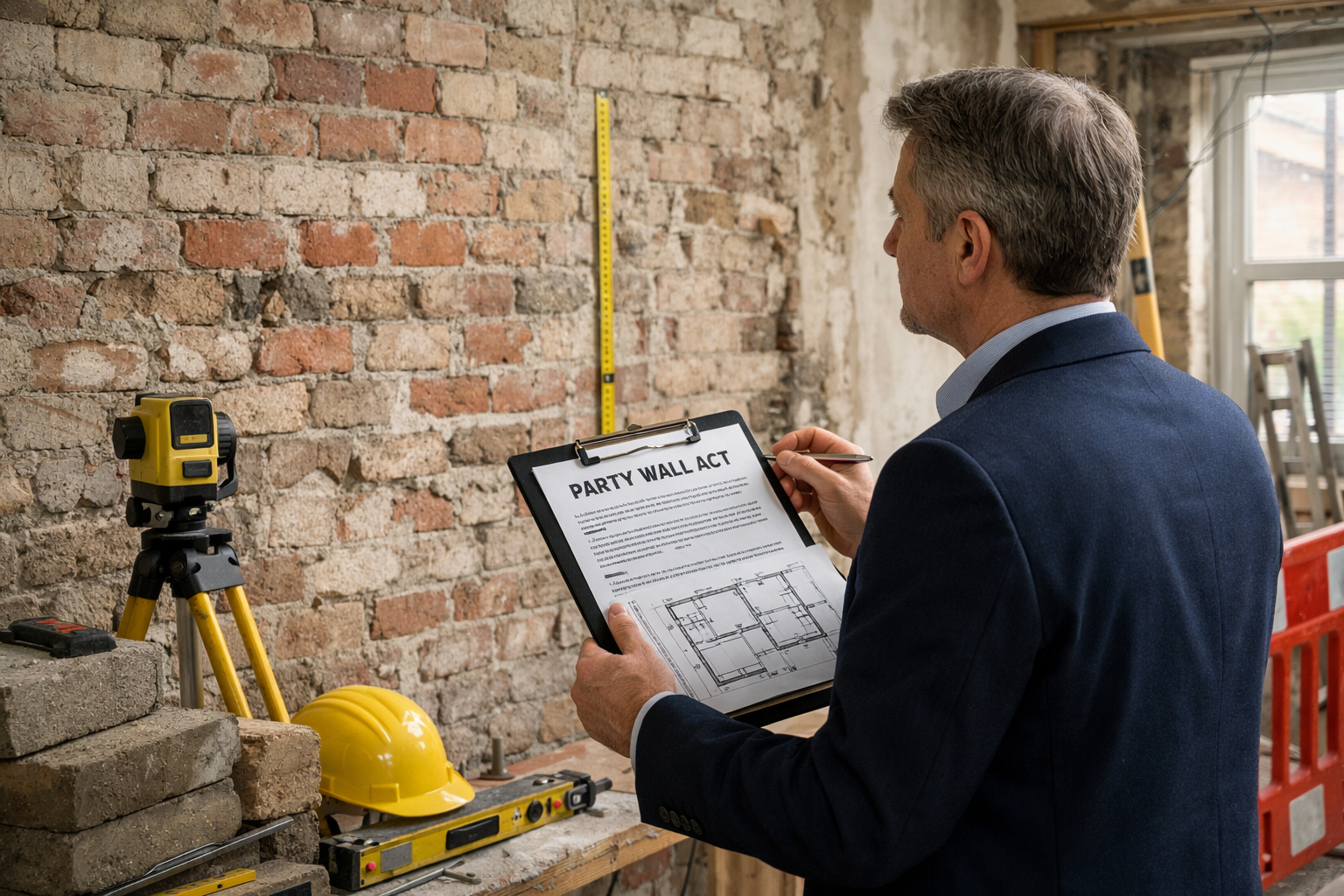
Semi detached party walls present unique challenges that differ from terraced properties or flats. Understanding these special considerations helps homeowners navigate the process more effectively.
Structural Independence vs. Dependence
Unlike terraced houses where the party wall supports a continuous row of properties, semi-detached homes have:
- Greater structural independence with only one shared wall
- Different foundation depths potentially on each side
- Asymmetric loading if one property has been extended
- Varied construction methods if built at different times
This means work on one side can have less predictable effects than in terraced properties, requiring more careful assessment.
Boundary and Ownership Issues
Semi-detached properties often have:
Unclear Boundaries:
- Original deeds may lack precision
- Walls may not sit exactly on the boundary line
- Garden walls may or may not be party structures
- Fence ownership may be disputed
Solutions:
- Review title deeds and Land Registry documents
- Commission a measured survey if boundaries unclear
- Agree boundaries in writing before major works
- Consider boundary dispute resolution if necessary
Understanding common defects in older homes can help identify issues that might affect party wall procedures.
Age and Construction Method Variations
Victorian and Edwardian Semi-Detached Properties:
- Solid brick party walls (9-13 inches thick)
- Lime mortar rather than cement
- Potential lack of damp-proof courses
- Chimney breasts integral to structure
- Settlement and movement over decades
Modern Semi-Detached Properties:
- Cavity wall construction
- Concrete block inner leaf
- Better damp-proofing and insulation
- Lighter roof structures
- More standardized construction
The construction method affects:
- How work can be carried out
- Structural implications of alterations
- Appropriate repair and protection methods
- Surveyor’s assessment approach
Sound Insulation and Building Regulations
While party wall legislation focuses on structural matters, Building Regulations address sound insulation:
Current Requirements (2025):
- Party walls must meet minimum sound insulation standards
- Alterations cannot worsen acoustic performance
- New work must achieve specified decibel reductions
- Testing may be required for major alterations
Practical Implications:
- Removing plaster may require upgraded insulation
- Acoustic barriers may be needed
- Construction details must preserve sound performance
- Costs may increase to meet both party wall and building regulations
Fire Safety Considerations
Semi detached party walls serve as critical fire barriers:
- Must maintain 30-60 minute fire resistance
- Penetrations for services must be properly sealed
- Removing chimney breasts can affect fire compartmentation
- Loft conversions must not compromise fire separation
Any work affecting the party wall must maintain or improve fire safety standards, which may require:
- Fire-resistant materials
- Cavity barriers
- Intumescent seals around penetrations
- Fire-stopping measures
Maintaining Your Semi Detached Party Wall
Proper maintenance of your semi detached party wall protects your investment, prevents disputes, and ensures the structure remains safe and sound for decades to come.
Regular Inspection Schedule
Annual Checks:
- Visual inspection for cracks or movement
- Check for damp patches or staining
- Examine external pointing and render
- Look for signs of settlement
- Inspect roof junction where wall meets roofline
Five-Year Checks:
- More detailed inspection of both sides
- Check cavity wall ties (if accessible)
- Inspect foundations for signs of movement
- Review condition of damp-proof course
- Assess overall structural condition
After Significant Events:
- Following nearby construction work
- After severe weather or flooding
- Following earthquakes or ground movement (rare in UK)
- After any building work on either property
Common Maintenance Issues
Damp and Water Penetration:
- Failed damp-proof courses
- Damaged or missing pointing
- Roof leaks at the party wall junction
- Condensation within cavity walls
- Rising damp from ground level
Structural Movement:
- Hairline cracks (usually cosmetic)
- Stepped cracks following mortar joints (more serious)
- Diagonal cracks (potential structural concern)
- Bulging or bowing of the wall
- Separation at the junction with external walls
Surface Deterioration:
- Flaking or blown plaster
- Damaged render or external finish
- Spalling bricks (surface breaking away)
- Deteriorating mortar joints
- Paint or wallpaper damage indicating underlying issues
Shared Maintenance Responsibilities
Who Pays for Repairs?
The general principle: each owner maintains their side of the party wall, but:
- Structural repairs benefiting both properties may be shared
- Damage caused by one owner’s works is their responsibility
- Emergency repairs to prevent collapse may require cost-sharing
- Preventative maintenance is typically individual responsibility
Best Practice:
- Discuss significant repairs with your neighbour
- Consider joint inspections for major issues
- Share professional reports and advice
- Document agreements about cost-sharing
- Keep records of all maintenance work
When to Call a Professional
Seek professional assessment from qualified surveyors when you notice:
- Cracks wider than 5mm or that are growing
- Bulging or leaning of the wall
- Significant damp problems that don’t respond to simple treatment
- Structural alterations planned by you or your neighbour
- Settlement or subsidence indicators
- Damage following building work on either property
Early professional intervention prevents minor issues from becoming major problems and provides documentation that protects both parties.
Preventative Maintenance Tips
Exterior Maintenance:
- Repoint brickwork every 20-30 years
- Maintain gutters and downpipes to prevent water damage
- Check roof flashing at the party wall junction annually
- Apply breathable masonry paint if rendering is deteriorating
- Ensure ground levels don’t bridge the damp-proof course
Interior Maintenance:
- Ventilate rooms adequately to prevent condensation
- Repair plaster damage promptly to prevent water ingress
- Don’t drill deeply without checking for services or structure
- Monitor heating to prevent freeze-thaw damage
- Address leaks immediately to prevent wall saturation
Buying a Semi Detached Property: Party Wall Considerations
If you’re purchasing a semi-detached home, understanding semi detached party wall implications before completion can prevent expensive surprises and legal complications.
Pre-Purchase Surveys and Inspections
Standard Homebuyer Survey:
- Identifies obvious defects in the party wall
- Notes cracks, damp, or structural concerns
- May recommend further investigation
- Provides general condition assessment
Full Building Survey:
- More detailed examination of the party wall
- Assesses construction method and materials
- Identifies potential future issues
- Provides repair cost estimates
- Essential for older properties
Understanding the difference between Level 2 and Level 3 surveys helps you choose the right inspection for your needs.
Questions to Ask Before Buying
About Previous Work:
- Has any work been done to the party wall?
- Were party wall procedures followed?
- Are party wall awards available for review?
- Has the neighbour done any recent building work?
- Are there any ongoing disputes?
About Current Condition:
- What is the age and construction of the party wall?
- Are there any known defects or issues?
- When was the wall last inspected or maintained?
- Have there been any subsidence or movement issues?
- What is the condition of shared structures (roof, foundations)?
About Future Plans:
- Does the neighbour have planning permission for extensions?
- Are there any proposed developments nearby?
- What restrictions apply to alterations?
- Are there conservation area or listed building constraints?
Legal Searches and Documentation
Essential Searches:
- Local Authority Search: Reveals planning applications and building control approvals
- Chancel Repair Search: Identifies unusual liabilities (rare but important)
- Environmental Search: Shows ground stability and flooding risks
- Water and Drainage Search: Identifies shared services
Documents to Review:
- Title Deeds: Confirm ownership and boundaries
- Planning Permissions: Check for approved extensions or alterations
- Building Regulations Certificates: Verify compliance for previous work
- Party Wall Awards: Review any existing awards affecting the property
- Guarantees and Warranties: Check for structural warranties
Negotiating Based on Party Wall Issues
If surveys reveal party wall problems:
Minor Issues (£1,000-£5,000 to remedy):
- Request price reduction
- Ask seller to complete repairs before completion
- Obtain retention from purchase price until work done
- Negotiate contribution to repair costs
Major Issues (£5,000-£20,000+):
- Significant price renegotiation
- Consider walking away if too severe
- Require structural engineer’s report
- Obtain multiple repair quotations
- Factor into mortgage valuation
Ongoing Disputes:
- Seek legal advice before proceeding
- Understand your potential liability
- Review any court proceedings or awards
- Consider impact on insurance and future saleability
Understanding how to negotiate house price down after survey provides valuable strategies for these discussions.
Insurance Considerations
Buildings Insurance:
- Ensure party wall is adequately covered
- Check for subsidence and settlement coverage
- Verify policy covers party wall disputes
- Understand excess and exclusions
Legal Expenses Insurance:
- Consider coverage for party wall disputes
- Check if existing policy includes property disputes
- Understand coverage limits and conditions
Indemnity Insurance:
- May be needed if previous work lacked party wall procedures
- Protects against future claims from neighbours
- Typically costs £100-£500 for lifetime cover
- Required by some mortgage lenders
Future-Proofing: Planning Ahead for Party Wall Matters
Smart homeowners think ahead about semi detached party wall implications, even before specific building projects are planned. This forward-thinking approach saves time, money, and stress.
Building Positive Neighbour Relations
The Foundation of Success:
Good neighbour relationships are your best insurance against party wall complications:
- Introduce yourself when moving in
- Maintain open communication about property matters
- Be considerate about noise, parking, and boundaries
- Address minor issues before they become major problems
- Show respect for their property and privacy
When building work becomes necessary, these established relationships make the party wall process smoother and more collaborative.
Documenting Your Property’s Condition
Create a Baseline Record:
Before any work (yours or your neighbour’s):
- Photograph the party wall from multiple angles
- Document existing cracks with measurements and photos
- Record the condition of plaster, decorations, and finishes
- Note any existing issues with damp, settlement, or damage
- Store documentation safely with property deeds
This evidence protects you from unfair claims and provides clear before/after comparisons.
Planning for Future Renovations
Long-Term Thinking:
Even if you’re not planning work immediately:
- Understand what’s possible under planning and party wall rules
- Budget for party wall costs when estimating renovation expenses
- Consider timing to minimize disruption and costs
- Research professional surveyors before you need them urgently
- Learn from neighbours’ experiences with building work
Staying Informed About Legal Changes
Party wall legislation evolves, so stay current:
- Subscribe to property law updates from professional bodies
- Follow reputable surveying firms on social media
- Read professional blogs about party wall matters
- Attend homeowner seminars or webinars
- Join local property owner associations
Being informed helps you make better decisions and avoid costly mistakes.
Digital Tools and Resources
Modern Technology Helps:
- Party wall notice templates available online
- Cost calculators for estimating surveyor fees
- Digital documentation systems for storing records
- Video inspection tools for remote assessments
- Online dispute resolution platforms
However, always verify information with qualified professionals rather than relying solely on online resources.
Conclusion: Mastering Semi Detached Party Wall Matters
Understanding your semi detached party wall is not just about legal compliance—it’s about protecting your property investment, maintaining good neighbour relations, and ensuring your home improvement projects proceed smoothly and successfully.
Key Points to Remember
Legal Framework:
- The Party Wall etc. Act 1996 governs all work affecting semi detached party walls
- Formal notices are required for most structural work
- Both owners have equal rights to the shared wall
- Procedures exist to protect everyone’s interests
Financial Implications:
- Building owners pay all reasonable party wall costs
- Surveyor fees typically range from £600 to £3,000+
- Budget for these costs early in project planning
- Costs are worthwhile insurance against disputes and damage
Professional Support:
- Qualified party wall surveyors provide essential expertise
- Early professional involvement prevents problems
- Agreed surveyors offer cost-effective solutions
- Don’t attempt complex procedures without professional help
Relationship Management:
- Good neighbour relations smooth the entire process
- Early communication prevents misunderstandings
- Transparency builds trust and cooperation
- Respect and consideration go a long way
Actionable Next Steps
If You’re Planning Building Work:
- Consult a party wall surveyor at the earliest planning stage
- Review your plans to identify party wall implications
- Budget appropriately for surveyor fees and procedures
- Talk to your neighbour informally before serving formal notices
- Allow adequate time for the full process before construction begins
If You’ve Received a Party Wall Notice:
- Don’t ignore it or delay responding
- Seek independent advice from your own surveyor
- Respond within 14 days to protect your rights
- Ask questions about anything you don’t understand
- Consider appointing an agreed surveyor to reduce costs
If You’re Buying a Semi-Detached Property:
- Commission an appropriate survey that examines the party wall
- Ask specific questions about previous and planned work
- Review all available documentation about the party wall
- Factor party wall considerations into your purchase decision
- Obtain adequate insurance covering party wall matters
For Long-Term Property Ownership:
- Maintain your side of the party wall properly
- Document the condition regularly with photos and notes
- Build positive relationships with neighbours
- Stay informed about party wall legislation and best practices
- Keep professional contacts for when you need expert advice
The Bottom Line
Your semi detached party wall is a shared asset that requires respect, maintenance, and proper legal procedures when changes are planned. While the Party Wall Act might seem complex, it exists to protect both you and your neighbour, ensuring that building work can proceed safely while safeguarding everyone’s property rights.
By understanding your rights and responsibilities, following proper procedures, appointing qualified professionals, and maintaining good neighbour relations, you can navigate party wall matters with confidence. Whether you’re planning a loft conversion, building an extension, or simply maintaining your property, this knowledge empowers you to make informed decisions that protect your investment and preserve harmonious neighbourhood relationships.
The small investment of time and money in proper party wall procedures pays dividends through avoided disputes, protected property values, and successful building projects that enhance your home for years to come. Don’t view party wall requirements as obstacles—see them as the framework that enables safe, legal, and neighbourly home improvements in our closely-built communities.
For expert guidance on all party wall matters, professional surveyors provide the knowledge and experience to guide you through every step of the process, ensuring your project succeeds while protecting all parties’ interests.
How Prince Surveyors can help: explore our party wall surveyors or learn about our party wall surveyor costs.