

Last updated: July 24, 2026
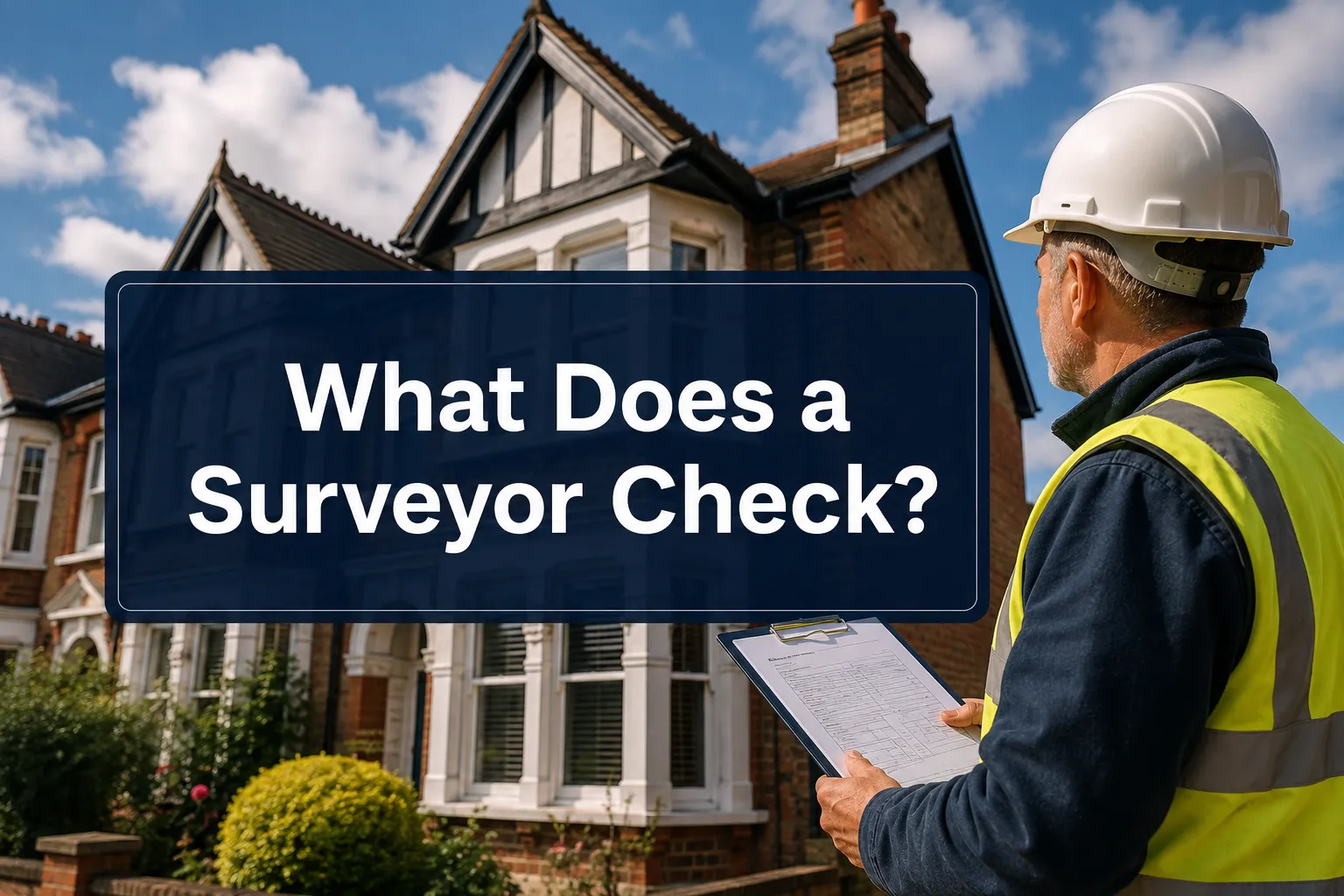
Quick Answer: A surveyor checks the structural condition, fabric, and key elements of a property, including the roof, walls, foundations, damp levels, drainage, and internal rooms. The exact scope depends on the survey level chosen. A Level 2 Homebuyer Survey covers visible defects, while a Level 3 Full Building Survey goes deeper into construction and hidden issues. Both are designed to give buyers a clear picture of a property's condition before exchange.
Key Takeaways
- A surveyor inspects the roof, walls, floors, foundations, windows, drainage, and internal rooms as standard
- Survey findings are rated by condition, helping buyers prioritise repairs and negotiate on price
- Level 2 surveys suit conventional properties in reasonable condition; Level 3 suits older, larger, or unusual homes
- Surveyors work visually and non-invasively, so they cannot check behind walls, under floors, or inside sealed voids
- Damp, structural movement, and roof defects are among the most common issues flagged
- A survey is not a legal requirement, but it is strongly recommended before any property purchase
- If a surveyor finds problems, buyers can renegotiate, request repairs, or withdraw
- Surveyors carry professional indemnity insurance, but complaints must be raised promptly if something is missed
What Is Included in a Home Survey Inspection
A home survey inspection covers all accessible and visible parts of a property, assessed against its age, type, and construction. The surveyor produces a written report rating each element by condition, typically using a traffic-light or numbered scale.
Standard elements inspected include:
- Roof structure and covering (tiles, slates, flat roof membranes, chimneys, flashings)
- External walls (brickwork, render, cladding, pointing, movement cracks)
- Foundations and ground floor (signs of subsidence, settlement, or heave)
- Internal walls and ceilings (cracks, staining, bulging)
- Floors (bounce, slope, rot in timber, cracking in solid floors)
- Windows and doors (condition, draught sealing, rot, double-glazing failure)
- Damp and moisture (rising damp, penetrating damp, condensation)
- Drainage (gutters, downpipes, gullies, visible drainage runs)
- Services overview (gas, electricity, water, heating, visual check only)
- Outbuildings and boundaries (garages, garden walls, paths)
The report also includes advice on urgent repairs, maintenance recommendations, and items needing further specialist investigation.
What Does a Surveyor Check Room by Room
Room by room, a surveyor assesses condition, defects, and potential risks in every accessible space. This systematic approach ensures nothing is overlooked.
Ground floor: The surveyor checks floor levels and bounce (indicating rot or movement), wall cracks, damp at skirting level, and the condition of fireplaces and chimney breasts.
Upper floors and bedrooms: Ceiling staining from roof leaks, window condition, floor bounce, and any signs of structural movement in walls.
Kitchen and bathroom: These rooms get extra attention for damp, condensation, and signs of water damage around plumbing fittings. The surveyor notes whether ventilation is adequate.
Loft space: If accessible, the loft is one of the most revealing areas. The surveyor checks rafter condition, signs of water ingress, insulation depth, and any structural alterations.
Cellar or basement: Checked for water ingress, damp, structural condition, and any evidence of tanking failure.
Exterior: A full walk-around covers roof covering, chimney stacks, gutters, walls, windows, doors, paths, and drainage.
What Are Surveyors Looking For in a Property
Surveyors are looking for defects, deterioration, and risks that could affect the property's value, safety, or future maintenance costs. They prioritise issues that are costly to fix or that could worsen if left unaddressed.
The most common concerns include:
- Structural movement (cracking patterns that suggest subsidence or settlement)
- Damp (rising, penetrating, or condensation-related)
- Roof defects (missing tiles, failing flashings, rot in timbers)
- Timber decay (wet rot, dry rot, woodworm)
- Drainage problems (blocked or damaged gutters, failed underground drains)
- Poor workmanship from past DIY or unregulated building work
- Non-standard construction (concrete panels, timber frame, thatched roofs)
A surveyor also flags items that fall outside their scope and need a specialist, such as a structural engineer, electrician, or gas-safe engineer.
Do Surveyors Check the Roof and Foundation
Yes, surveyors check both the roof and the foundations as core parts of any inspection. These are two of the most structurally significant elements of a building.
Roof: The surveyor inspects the roof covering from ground level using binoculars, and from inside the loft if access is available. They look for missing, slipped, or cracked tiles; failed flashings around chimneys and dormers; sagging ridge lines; and signs of water ingress on the underside of the roof deck.
Foundations: Surveyors cannot excavate to inspect foundations directly, but they assess the evidence above ground. Diagonal cracking in brickwork, sticking doors, sloping floors, and gaps around window frames can all indicate foundation movement. If signs are present, the surveyor will recommend a structural engineer's report.
Can a Surveyor Find Structural Problems
Yes, a surveyor can identify signs of structural problems, though the depth of investigation depends on the survey level. A Level 3 Full Building Survey provides the most thorough structural assessment available without intrusive investigation.
Structural issues a surveyor can identify include:
- Subsidence or heave (differential movement in foundations)
- Lintel failure above windows and doors
- Roof spread (rafters pushing out external walls)
- Wall tie failure in cavity walls
- Inadequate support for internal alterations (removed walls without proper beams)
Where structural movement is active or complex, the surveyor will recommend a specialist structural engineer. The survey report is the starting point, not the final word.
Can Surveyors Check for Damp and Mould
Yes, checking for damp is one of the most important parts of what a surveyor does. Surveyors use a calibrated damp meter to take moisture readings in walls, floors, and around windows.
They distinguish between three types:
- Rising damp: Moisture drawn up through walls from the ground, usually indicating a failed or absent damp-proof course
- Penetrating damp: Water entering through defective roofing, gutters, or external walls
- Condensation: Moisture from internal humidity settling on cold surfaces, often mistaken for rising damp
Mould growth is noted and linked to its likely cause. Where readings are high or the source is unclear, a specialist damp survey may be recommended.
Do Surveyors Check Electrics and Plumbing
Surveyors carry out a visual check of electrics and plumbing but do not test them. They are not qualified electricians or plumbers, and their inspection is limited to what is visible.
For electrics, they note the age and type of consumer unit, visible wiring condition, and whether the installation appears to have been updated. For plumbing, they check visible pipework, boiler age, and signs of leaks or corrosion.
If the electrics appear outdated (older fuse boards, aluminium wiring, or no RCD protection), the surveyor will recommend a full electrical installation condition report (EICR) from a qualified electrician. Similarly, an older boiler or signs of poor plumbing will prompt a recommendation for a gas-safe or plumbing inspection.
What's the Difference Between a Survey and a Home Inspection
In the UK, the term "home inspection" is often used interchangeably with "survey," but the formal product is a RICS-regulated survey. There is no separate "home inspection" profession in England and Wales as there is in the United States.
The main survey types available to UK buyers are:
| Survey Level | Best For | Depth |
|---|---|---|
| Level 1 Condition Report | New builds, very modern homes | Basic traffic-light rating only |
| Level 2 Homebuyer Survey | Conventional homes in reasonable condition | Visible defects, condition ratings, market valuation option |
| Level 3 Full Building Survey | Older, larger, or unusual properties | Detailed structural assessment, construction analysis |
A Level 2 Homebuyer Survey suits most standard purchases. A Level 3 Full Building Survey is the right choice for properties built before 1900, those with unusual construction, or any home where significant works are planned. For a detailed breakdown, see this Level 2 vs Level 3 comparison.
How Do Level 2 and Level 3 Inspections Differ
The core difference is depth and scope. A Level 2 survey covers visible and accessible elements and flags defects using a condition rating system. A Level 3 survey goes further, describing the construction in detail, analysing the cause of defects, and providing more specific repair advice.
Choose a Level 2 if: The property is a standard brick-built house or flat built after 1930, in reasonable condition, with no obvious structural concerns.
Choose a Level 3 if: The property is pre-1900, has been significantly extended or altered, uses non-standard construction (timber frame, stone, concrete), or you need detailed repair cost guidance.
What Does a Surveyor Check That They Cannot See
Surveyors work non-invasively, which means there are genuine limits to what they can inspect. They cannot lift floorboards, open up walls, move furniture, or access areas that are sealed, locked, or unsafe.
Common areas that may be missed due to access limitations:
- Beneath floor coverings and under-floor voids
- Inside wall cavities
- Behind fitted furniture, kitchen units, or storage
- Sealed loft hatches or locked outbuildings
- Underground drainage (a separate CCTV drain survey is needed)
- Inside the boiler or electrical consumer unit
This is why surveyors use phrases like "as far as could be reasonably inspected" in their reports. The limitation is not negligence; it is the nature of a non-destructive visual survey.
How Long Does a Surveyor Take to Check a House
A typical Level 2 survey takes between two and four hours on site for an average three-bedroom house. A Level 3 Full Building Survey on a larger or older property can take four to eight hours or more.
The written report is usually delivered within three to five working days of the inspection. Turnaround times vary by firm and complexity of the property.
How Much Does a Home Survey Cost
Survey costs in the UK vary by property size, location, and survey level. As a general guide (2026 estimates, based on typical market rates):
- Level 2 Homebuyer Survey: Approximately £400 to £900 for a standard three-bedroom house
- Level 3 Full Building Survey: Approximately £600 to £1,500 or more for larger or complex properties
Costs are higher in London and the South East. Some firms include a market valuation in the Level 2 fee; others charge separately. Always confirm what is included before booking.
What Happens If a Surveyor Finds Issues
If a surveyor finds issues, the buyer has several options. The report does not mean the sale must fall through; it is information to act on.
Common responses to survey findings:
- Renegotiate the price based on the estimated cost of repairs
- Request the seller completes repairs before exchange
- Commission specialist reports (structural engineer, damp specialist, electrician) to get firm repair costs
- Proceed as planned if defects are minor and already priced in
- Withdraw from the purchase if defects are serious and the seller will not negotiate
Most buyers use the survey as a negotiating tool rather than a reason to pull out. A clear repair estimate from a contractor strengthens any price reduction request.
Do I Need a Survey Before Buying a House
A survey is not legally required in England and Wales, but it is strongly advisable for any buyer. A mortgage lender's valuation is not a survey; it only confirms the property is worth the loan amount and does not assess condition.
Skipping a survey to save money is a false economy. Undiscovered defects can cost tens of thousands of pounds to fix. The survey fee is a small fraction of the purchase price and provides documented protection.
The only situation where a survey may be unnecessary is a new-build property covered by an NHBC Buildmark or equivalent warranty, though even then a snagging inspection is recommended.
What Can Fail a Property Survey
No property technically "fails" a survey in the way a car fails an MOT. Instead, the surveyor rates each element by condition, and serious issues receive the highest risk rating.
Elements most likely to receive a serious condition rating include:
- Active structural movement or subsidence
- Severe damp penetration or rising damp throughout
- Roof in need of full replacement
- Significant dry rot in floor or roof timbers
- Unsafe electrical installation
- Asbestos-containing materials in poor condition
A high number of serious ratings does not make a property unsellable. It does mean the buyer needs accurate repair costs before proceeding.
What Should You Not Do Before a Surveyor Visits
Sellers should not attempt to conceal defects before a surveyor visits. Covering cracks with fresh filler, painting over damp stains, or blocking loft access can all be identified by an experienced surveyor and may raise more concern than the original defect.
Practical steps sellers can take that are entirely appropriate:
- Ensure all areas are accessible (loft hatch, meter cupboard, cellar)
- Move items that block access to walls, floors, or windows
- Leave keys for outbuildings and garages
Buyers should not be present during the survey if it makes the surveyor feel rushed. Most surveyors prefer to work without distraction and will discuss findings afterwards.
What If the Surveyor Misses Something
If a surveyor misses something that was reasonably visible and inspectable at the time of the survey, the buyer may have grounds for a professional negligence claim. All RICS-regulated surveyors carry professional indemnity insurance for this purpose.
To pursue a complaint:
- Contact the surveying firm directly and set out the issue in writing
- If unresolved, escalate to the RICS Dispute Resolution Service
- Seek independent legal advice if the financial loss is significant
The key test is whether the defect was visible and accessible at the time of inspection. Defects hidden behind walls or under floors do not constitute negligence if the surveyor noted the limitation in their report.
Frequently Asked Questions
How is a survey different from a mortgage valuation?
A mortgage valuation is carried out for the lender, not the buyer. It confirms the property is worth the loan amount but does not assess its condition in any detail. A survey is commissioned by and for the buyer.
Can I use the survey to negotiate the purchase price?
Yes. Survey findings are commonly used to negotiate a price reduction, especially where repair costs can be evidenced by contractor quotes. The seller is not obliged to reduce the price, but many do to keep the sale moving.
Does a surveyor check for Japanese knotweed?
A surveyor will note visible Japanese knotweed if it is present on or near the property. If suspected, they will recommend a specialist invasive plant survey. Knotweed can affect mortgage lending and property value significantly.
Is a survey valid for a set period?
There is no formal expiry date, but a survey reflects the property's condition on the day of inspection. If several months pass before exchange, or if the property has been empty, a re-inspection may be advisable.
What is a snagging survey?
A snagging survey is carried out on new-build properties to identify defects and incomplete work before legal completion. It is not the same as a Level 2 or Level 3 survey and is typically carried out by a specialist snagging inspector.
Can a survey be carried out on a flat?
Yes. Surveyors can inspect flats, though the scope is limited to the individual unit and any areas within the buyer's ownership. Communal areas, the roof, and the structure of the building fall under the freeholder's responsibility and may require a separate inspection.
Conclusion
Understanding what a surveyor checks gives buyers the confidence to act on their report rather than be alarmed by it. A professional survey covers the roof, structure, damp, drainage, and every accessible room, providing a condition-rated picture of the property before money changes hands. The level of survey chosen matters: a Level 2 Homebuyer Survey works well for most standard homes, while a Level 3 Full Building Survey is the right call for older, larger, or non-standard properties. If you are unsure which to choose, the Level 2 vs Level 3 comparison guide sets out the differences clearly.
Book your survey – 0204 579 8270
References
- Royal Institution of Chartered Surveyors (RICS). RICS Home Survey Standard. 2021. rics.org
- RICS. Surveying Safely. 2020. rics.org
- NHS / Public Health England. Damp and Mould Guidance for Housing. 2023. gov.uk
.cg-survey-tool { font-family: Arial, sans-serif; max-width: 560px; margin: 24px auto; border: 1px solid #dde3ec; border-radius: 8px; padding: 20px; background: #f8fafc; }
.cg-survey-tool h3 { margin: 0 0 14px; font-size: 1.05rem; color: #1a2a4a; }
.cg-question { margin-bottom: 12px; }
.cg-question label { display: block; font-size: 0.88rem; color: #333; margin-bottom: 4px; font-weight: 600; }
.cg-question select { width: 100%; padding: 7px 10px; border: 1px solid #bcc6d6; border-radius: 5px; font-size: 0.88rem; background: #fff; }
.cg-btn { display: block; width: 100%; padding: 10px; background: #1a2a4a; color: #fff; border: none; border-radius: 5px; font-size: 0.92rem; cursor: pointer; margin-top: 14px; }
.cg-result { margin-top: 14px; padding: 12px 14px; border-radius: 6px; font-size: 0.88rem; display: none; }
.cg-l2 { background: #e8f4e8; border-left: 4px solid #3a8a3a; color: #1e4a1e; }
.cg-l3 { background: #fff3e0; border-left: 4px solid #e07b00; color: #5a3200; }
.cg-result strong { display: block; font-size: 0.95rem; margin-bottom: 4px; }
Which Survey Level Do You Need?
function cgRecommend() {
var age = document.getElementById(‘cg-age’).value;
var build = document.getElementById(‘cg-build’).value;
var concern = document.getElementById(‘cg-concern’).value;
var el = document.getElementById(‘cg-result’);
if (!age || !build || !concern) { el.style.display = ‘block’; el.className = ‘cg-result cg-l2’; el.innerHTML = ‘Please answer all questions.‘; return; }
var l3 = (age === ‘old’ || build === ‘nonstandard’ || concern === ‘some’);
el.style.display = ‘block’;
if (l3) {
el.className = ‘cg-result cg-l3’;
el.innerHTML = ‘Level 3 Full Building Survey recommendedYour property’s age, construction, or visible concerns warrant a detailed structural assessment. Call 0204 579 8270 to book.’;
} else {
el.className = ‘cg-result cg-l2’;
el.innerHTML = ‘Level 2 Homebuyer Survey recommendedA standard survey suits this property type. It covers all visible defects and condition ratings. Call 0204 579 8270 to book.’;
}
}
Tags: home survey, what does a surveyor check, building survey, Level 2 homebuyer survey, Level 3 full building survey, property inspection, RICS survey, damp survey, structural survey, surveyor inspection, UK property buying, survey types