

Wales delivered its most significant political shift in a generation when Plaid Cymru, under First Minister Rhun ap Iorwerth, won the May 2026 Senedd election on a platform built squarely around housing. With a commitment to 20,000 new social homes by 2030 and sweeping changes to property taxation and energy standards, the question now facing every RICS-qualified surveyor operating in Wales is direct: how do you accurately value properties in a market being reshaped by legislation in real time? Valuing Welsh Properties in 2026's Affordable Housing Push: RICS Strategies Amid Senedd Election Reforms is not merely a professional challenge — it is the defining issue for property professionals across the nation this year.
Key Takeaways
- Plaid Cymru's 2026 Senedd election victory has placed housing delivery, retrofit investment, and rent reform at the centre of Welsh property policy [1].
- RICS launched its own Wales Manifesto in January 2026, calling for cross-tenure housing targets, large-scale retrofit programs, and modernised building standards [2].
- Wales is on track to deliver 20,000 low-carbon social homes by end of 2026, the highest output since at least 2007, but sustainability concerns remain [3].
- RICS surveyors must adapt valuation methodologies to account for new-build incentives, energy efficiency premiums, and shifting buyer dynamics driven by declining mortgage rates [9].
- Cross-border comparisons with England's north-south divide offer practical benchmarks for Welsh surveyors calibrating regional value differentials.
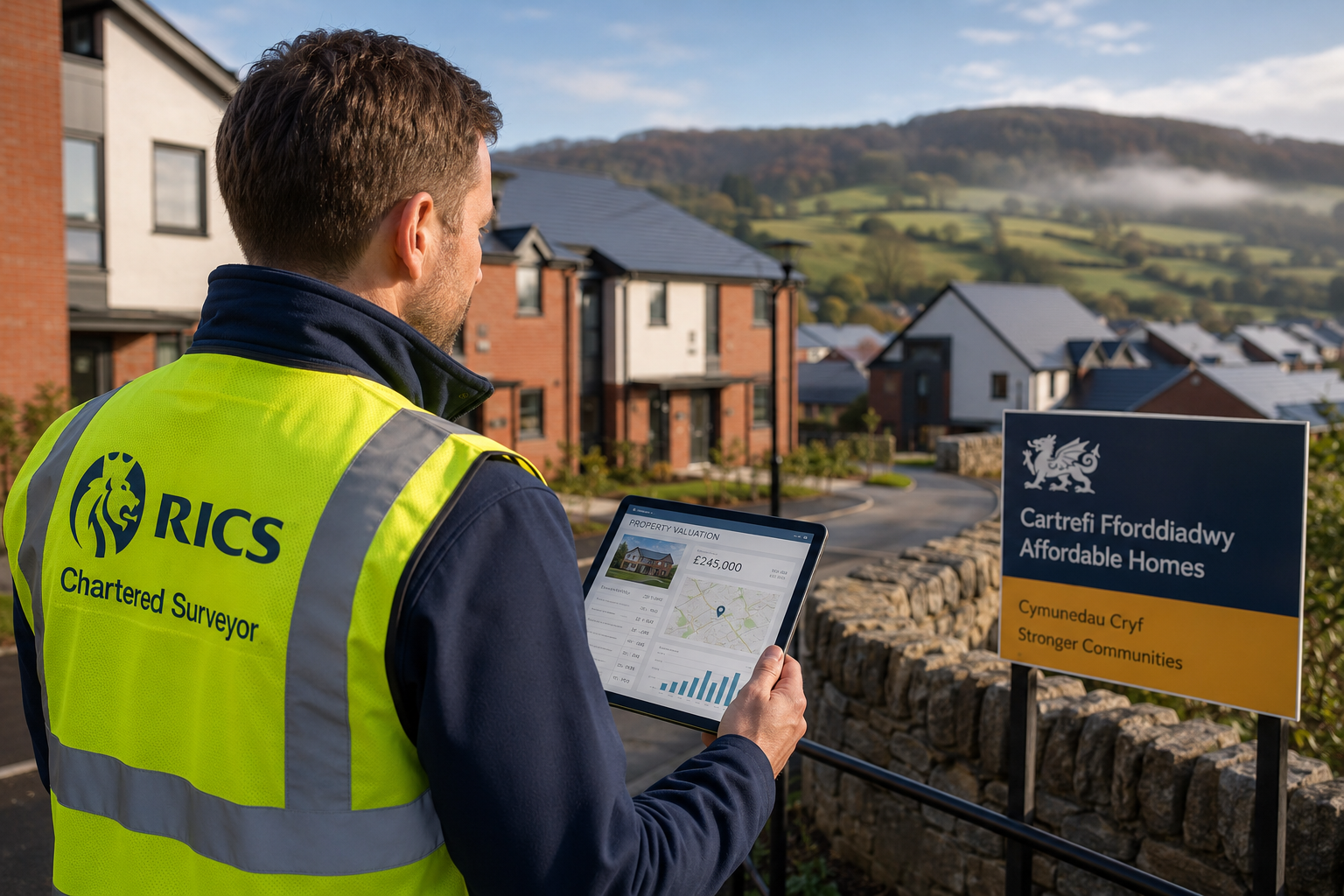
The Political Landscape Reshaping Welsh Property Values
The May 2026 Senedd election was not a quiet affair for the property sector. Plaid Cymru's manifesto made housing one of its three headline pledges, promising not only volume — 20,000 social homes — but also quality, through mandatory low-carbon construction standards and an overhaul of the Land Transaction Tax framework [1]. For RICS professionals, this political shift carries direct valuation consequences.
When a government commits to large-scale social housing delivery, comparable evidence shifts. New-build affordable units entering the market in volume can compress values in lower-demand areas while simultaneously creating premium uplift for well-located, energy-efficient stock. Surveyors who fail to track these dynamics risk producing valuations that are either over-cautious or dangerously optimistic.
RICS responded proactively. In January 2026, it published its Wales Manifesto, urging the incoming government to develop a housing delivery strategy with cross-tenure targets, invest in large-scale retrofit programs, and modernise building standards to protect residential leaseholders [2]. The manifesto was a signal to both policymakers and property professionals: the valuation profession intends to be a central participant in shaping, not merely reacting to, Welsh housing reform.
Key political drivers affecting valuations in 2026:
- Mandatory low-carbon construction standards for new social housing
- Proposed reform of Land Transaction Tax to incentivise affordable tenure
- Increased Welsh Government capital investment in housing associations
- White Paper proposals on rent data collection and habitability standards [4]
The Welsh Government's White Paper, "Securing a path towards Adequate Housing, including Fair Rents and Affordability," published in early 2026, adds further complexity. Its proposals to improve rent data collection and establish clearer habitability benchmarks will directly affect how surveyors assess rental investment properties and social housing stock [4]. For those conducting RICS property valuations, understanding these legislative signals is now as important as reading comparable sales data.
RICS Valuation Strategies for Wales's New-Build and Retrofit Push
Valuing Welsh Properties in 2026's Affordable Housing Push: RICS Strategies Amid Senedd Election Reforms demands a dual focus: new-build delivery and existing stock retrofit. These are not parallel tracks — they interact, and surveyors must understand both.
Valuing New-Build Affordable Housing
Wales is on track to meet its target of 20,000 new low-carbon social homes by the end of 2026, representing the highest delivery level since at least 2007 [3]. This surge in supply has practical valuation implications:
| Factor | Valuation Impact |
|---|---|
| High new-build volume in a region | Downward pressure on older comparable stock |
| Low-carbon construction premium | EPC A/B ratings add measurable value uplift |
| Affordable tenure restrictions | Restricts open-market comparables; requires specialist methodology |
| Government subsidy involvement | Affects true market value versus subsidised cost |
For new-build affordable units, RICS guidance requires surveyors to distinguish between market value, existing use value for social housing (EUV-SH), and depreciated replacement cost where applicable. In Wales's current environment, where housing associations are delivering at scale with significant public subsidy, conflating these bases can produce materially incorrect figures.
"The highest delivery of social housing since at least 2007 is a headline achievement, but the sustainability of current resource inputs and the pace of systemic reforms remain open questions." — Senedd Research, March 2026 [3]
Retrofit Valuation: The Energy Efficiency Premium
RICS's Wales Manifesto specifically calls for investment in large-scale housing retrofit programs [2]. This is directly relevant to valuation. Properties with higher EPC ratings are commanding measurable premiums in Welsh markets, particularly in urban centres like Cardiff, Swansea, and Newport where buyer competition remains active.
Surveyors should now routinely factor in:
- EPC rating differentials between subject property and comparables
- Estimated retrofit costs for properties below EPC C, which affect mortgage lender appetite
- Green mortgage availability, which can influence effective buyer purchasing power
- Planning policy alignment with Welsh Government energy targets
For older Welsh stock — terraced valley housing, rural stone cottages, pre-1919 urban properties — the retrofit cost burden can be substantial. Knowing home maintenance costs associated with energy upgrades is essential context for any valuation report touching older Welsh housing stock.
Applying Quantitative Analysis to Regional Differentials
Wales is not a uniform market. North Wales, with its tourism economy and cross-border demand from England's northwest, behaves differently from the Valleys, which face structural affordability challenges, or from Cardiff, which functions almost as a separate micro-market with its own supply-demand dynamics.
Industry analysis from March 2026 notes that declining mortgage rates — now approximately 4.5-5% — and a 15-20% increase in housing stock in key regions have shifted conditions in favour of buyers [9]. In Welsh terms, this means surveyors must apply granular regional adjustments rather than relying on national Welsh averages. A building condition assessment that works well as a comparable in Pontypridd may be entirely misleading when applied to a property in Llandudno or Monmouth.
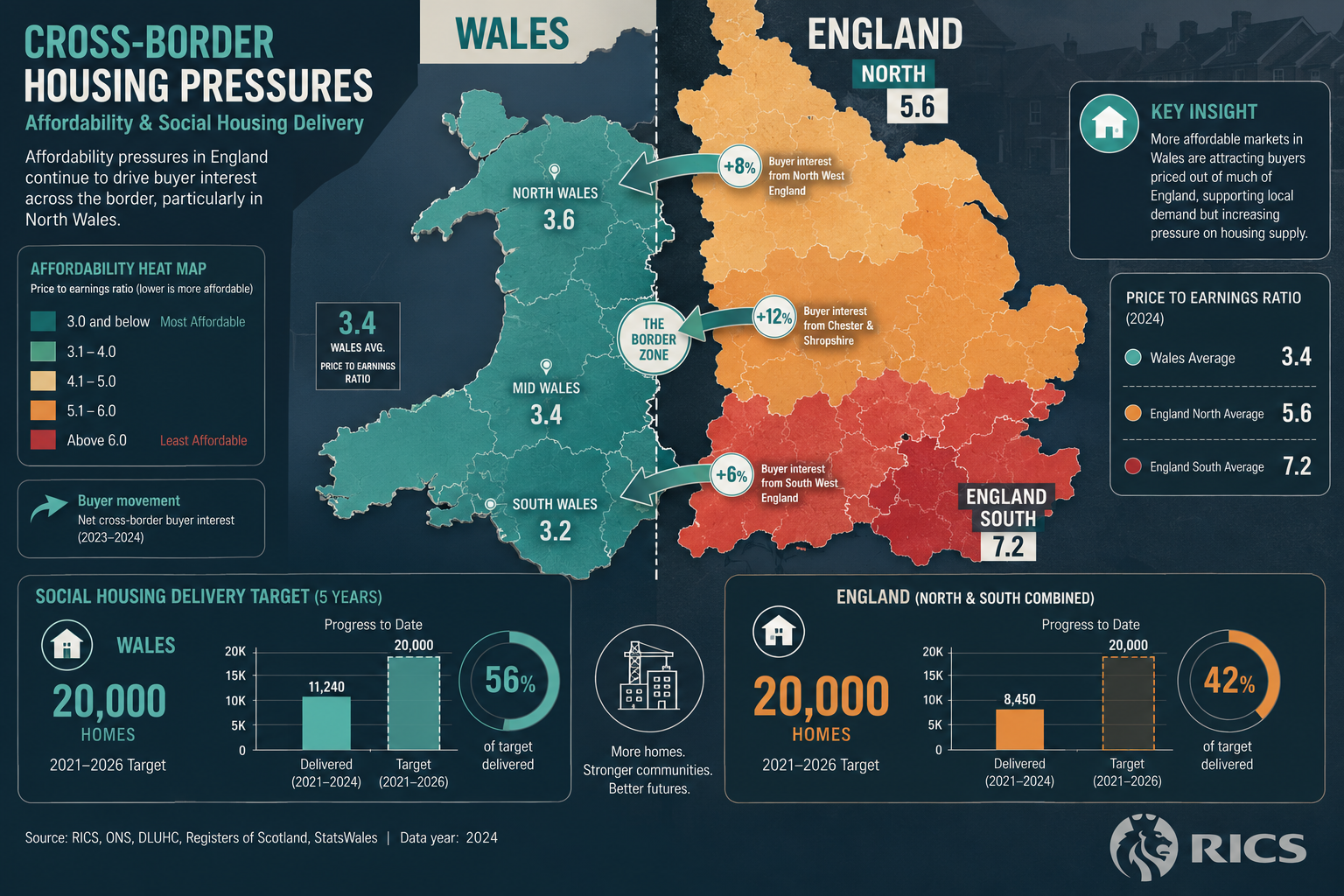
Cross-Border Insights: Wales Compared to England's North-South Divide
One of the most useful analytical frameworks for valuing Welsh properties in 2026 is comparison with England's persistent north-south value divide. This cross-border perspective offers both cautionary lessons and actionable benchmarks.
What England's Regional Dynamics Teach Welsh Surveyors
England's north-south divide has been studied extensively. Northern English cities — Manchester, Leeds, Sheffield — have seen significant affordable housing investment drive value uplift in previously depressed areas, while simultaneously creating valuation complexity around new-build incentives and Help to Buy legacy effects. Welsh surveyors face a structurally similar challenge.
Parallels between Wales and northern England:
- Both regions have significant proportions of pre-1919 housing stock requiring energy retrofit
- Both have experienced government-backed affordable housing programs that complicate comparable evidence
- Both face the challenge of valuing properties where subsidised tenure restrictions affect open-market comparability
- Both are seeing increased buyer activity from higher-cost regions (London and southeast for Wales; London and Midlands for the north)
The key difference is governance. Wales has devolved housing policy, meaning the Welsh Government can move faster and more specifically than Westminster. Plaid Cymru's 2026 mandate gives Welsh housing policy a coherence and urgency that English regional housing strategies often lack [1].
Cross-Border Buyer Dynamics and Value Uplift
Cross-border buyers — primarily from Bristol, Birmingham, and London — continue to influence Welsh border counties. Monmouthshire, Powys, and parts of Flintshire see sustained demand from English buyers seeking lower entry prices, larger properties, and rural lifestyles. This demand creates upward pressure that can distort local affordability metrics.
For RICS surveyors, this means:
- Comparable selection must account for buyer origin and motivation
- Cross-border demand can inflate values in border areas relative to genuine local purchasing power
- Lenders financing Welsh properties for English buyers may apply different risk criteria
Propertymark's March 2026 manifesto for Wales emphasises the need for a consistent and responsive planning system to manage this dynamic equitably, ensuring that housing supply keeps pace with demand across all tenure types [5].
The Private Rented Sector: A Valuation Complication
The National Residential Landlords Association's January 2026 Wales Manifesto highlights the need for stability in tenure legislation and targeted investment in standards [6]. For surveyors, the private rented sector adds a layer of valuation complexity, particularly where Welsh Government rent reform proposals may affect yields and therefore investment value.
When valuing buy-to-let properties in Wales, surveyors should now explicitly consider:
- Potential rent cap or stabilisation measures proposed in the White Paper [4]
- Minimum energy efficiency standards that may require capital expenditure
- Tenant protection measures that affect void periods and management costs
Understanding legal liabilities for tenants and landlords under evolving Welsh legislation is essential context for any investment property valuation.
Practical RICS Methodologies for 2026's Welsh Market
Valuing Welsh Properties in 2026's Affordable Housing Push: RICS Strategies Amid Senedd Election Reforms requires surveyors to be methodologically rigorous and practically adaptive. The following approaches reflect current best practice.
Comparable Evidence Selection in a Disrupted Market
The surge in new-build social housing completions means that comparable evidence pools are expanding rapidly, but not all comparables are equal. RICS Red Book guidance requires surveyors to adjust comparables for material differences. In 2026's Welsh market, material differences include:
- Tenure type (open market, affordable, shared ownership, social rent)
- Energy performance (EPC rating differentials)
- Construction date (pre-2020 stock versus new-build to current standards)
- Subsidy involvement (housing association grant funding affects true cost)
Surveyors should document their comparable selection rationale explicitly, particularly where the available evidence pool is thin — a common issue in rural Welsh markets.
Stock Condition Surveys and Social Housing
For housing associations and local authorities delivering at scale, stock condition surveys are an essential valuation tool. These surveys assess the physical condition of housing stock across a portfolio, informing both asset valuation and planned maintenance budgets. In 2026's Welsh context, with the Social Housing Bill introduced in May placing increased responsibility on property professionals for compliance [8], stock condition data is now a regulatory as well as a commercial requirement.
Home Buying and Selling Reform: Digital Tools
The UK Government's June 2026 response to its home buying and selling consultation commits to faster transactions, higher professional standards, and better-informed consumers through digital tools [7]. For Welsh surveyors, this means:
- Increased use of digital valuation platforms and data integration
- Greater transparency requirements in valuation reports
- Faster turnaround expectations from lenders and conveyancers
Buyers and sellers who understand what to do before an RICS home survey will be better prepared for the more streamlined, digitally integrated process that 2026's reforms are delivering.
Choosing the Right Survey Type
Not every Welsh property transaction requires the same level of survey. The choice between a Level 2 and Level 3 survey has real consequences for buyers, particularly in a market where older stock may carry significant hidden defects. Understanding the key difference between Level 2 and Level 3 surveys helps buyers commission the right product and helps surveyors deliver proportionate, useful reports.
For new-build affordable housing, a Level 2 survey may suffice. For pre-1919 Welsh stone or brick terraced properties — common across the Valleys and market towns — a full Level 3 building survey is almost always warranted.

The Compliance Landscape: What Surveyors Must Track
Welsh property leaders published a "Manifesto for Change" in February 2026, warning of a "compliance cliff-edge" and chronic supply failure [10]. This language reflects genuine professional anxiety about the pace of regulatory change. For RICS surveyors, staying ahead of compliance requirements is not optional — it is a professional obligation.
Key compliance areas for Welsh property valuers in 2026:
- Social Housing Bill obligations: Increased accountability for property professionals on compliance and tenant protection [8]
- Welsh Government habitability standards: New minimum standards proposed in the White Paper [4]
- Energy efficiency requirements: EPC minimum standards affecting mortgage lending and rental legality
- Land Transaction Tax changes: Proposed reforms affecting transaction costs and therefore net values
The NRLA's Wales Manifesto also flags the risk of incoherent policy layering — where multiple simultaneous reforms create unintended interactions that make compliance genuinely difficult [6]. Surveyors who advise clients on property transactions must be able to navigate this complexity clearly.
For those dealing with shared or boundary issues arising from new-build developments, understanding building regulations and their application in Wales is increasingly important as development density increases.
Conclusion: Actionable Steps for Welsh Property Professionals in 2026
The convergence of Plaid Cymru's ambitious housing agenda, RICS's proactive Wales Manifesto, and the UK Government's home buying and selling reforms makes 2026 a genuinely transformative year for property valuation in Wales. The opportunities are real — a growing market, significant public investment, and a government committed to housing delivery. So are the risks — rapid regulatory change, complex comparable evidence, and a compliance landscape that is still being defined.
Actionable next steps for RICS surveyors and property professionals:
- Update comparable databases to reflect the new-build social housing completions entering Welsh markets, with explicit adjustments for tenure, energy performance, and subsidy involvement.
- Engage with the Welsh Government's White Paper consultation on adequate housing and fair rents to ensure professional input shapes the final policy [4].
- Commission or review stock condition surveys for any housing association or local authority client portfolio, ahead of Social Housing Bill compliance deadlines [8].
- Develop EPC adjustment methodologies that can be consistently applied across valuation reports, reflecting the growing energy efficiency premium in Welsh markets.
- Monitor cross-border buyer data for border counties, ensuring that comparables reflect genuine local market conditions rather than inflated cross-border demand.
- Stay current with RICS Wales guidance as it evolves in response to Plaid Cymru's legislative program, and engage with CPD opportunities focused on affordable housing valuation.
For buyers, sellers, and investors navigating this landscape, commissioning a qualified RICS surveyor who understands the specific dynamics of valuing Welsh properties in 2026's affordable housing push is not a luxury — it is the most important single step in any property transaction. Those who understand what to do when a property offer has been accepted and move quickly to commission the right professional advice will be best positioned to transact with confidence in this rapidly evolving market.
References
[1] Rics Welcomes New Welsh Government And First Minister Rhun Ap Iorwerth – rics.org
[2] Wales Manifesto 2026 Launch – rics.org
[3] Building On The 2024 Inquiry On Social Housing Supply – research.senedd.wales
[4] Adequate Housing Fair Rents And Affordability In Wales – rics.org
[5] Senedd 2026 Our Priorities For Wales Housing Future – propertymark.co.uk
[6] Nrla Launches Wales Manifesto Ahead Of May Senedd Elections – nrla.org.uk
[7] Home Buying And Selling Reform Hub – rics.org
[8] Social Housing Bill Reform Legislation – ww3.rics.org
[9] Valuing First Time Buyer Properties In 2026 Rics Tactics Amid Improving Affordability And Supply – nottinghillsurveyors.com
[10] Welsh Property Leaders Demand Housing Reform Ahead Of Senedd Elections – wales247.co.uk
How Prince Surveyors can help: explore our Level 3 building surveys or learn about our Level 2 vs Level 3 guide.