

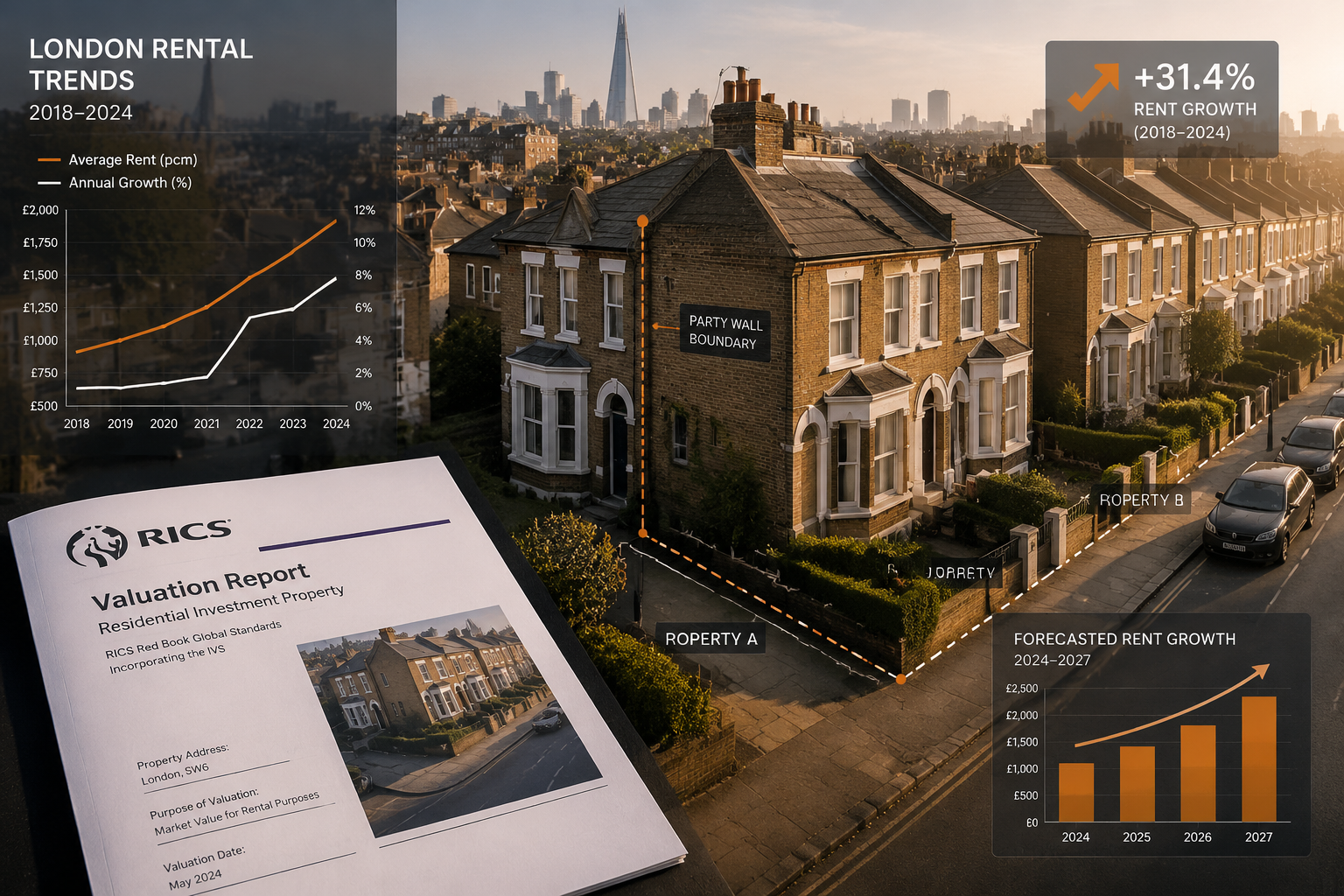
UK private rents climbed by more than 20% in some regions over the past three years, yet RICS data for early 2026 shows landlord instructions sitting near historic lows. That gap between surging rental values and shrinking supply is not a coincidence — it is a valuation problem. For buy-to-let landlords planning extensions or structural alterations, understanding the intersection of party wall law and evidence-based rent appraisal has become a commercial necessity. Valuation Techniques for Stabilising Rents: Party Wall Insights for Landlord Extensions in 2026 sits at the heart of that challenge, offering a structured pathway for landlords who want to protect income, manage risk, and add defensible value to their portfolios.
Key Takeaways
- Evidence-based rent setting is now the recognised professional standard for 2026 rent reviews, replacing informal market guesswork [8]
- Party wall procedures directly affect rental income timelines, reinstatement costs, and comparable evidence used in valuations
- A properly executed schedule of condition protects landlords from dilapidations claims that can erode rental yield
- Lease extension and freehold valuation decisions are inseparable from party wall compliance when planning structural works
- Institutional investment recovery in 2026 is raising the bar for documentation quality, making professional appraisal essential for landlords seeking finance
Why Party Wall Compliance Is a Valuation Issue in 2026
Many landlords treat party wall procedures as a legal formality rather than a financial one. That framing is costly. When a landlord undertakes a rear extension, loft conversion, or basement dig, the Party Wall etc. Act 1996 imposes obligations that directly shape the timeline, cost, and lettable condition of the property. Each of those factors feeds into the rental valuation.
The professional appraisal community in 2026 has sharpened its focus on "smarter rent control" valuation approaches, recognising that income stability depends on more than market comparables. It depends on the physical and legal condition of the asset. A property encumbered by an unresolved party wall dispute, or one where no proper schedule of condition was recorded before works began, carries a measurable risk premium that suppresses achievable rent and reduces capital value.
The Cost of Getting It Wrong
Consider a landlord who begins a single-storey rear extension without serving the correct notices. The adjoining owner raises a dispute. Works halt. The void period extends by three to six months. At current London rental levels, that represents a direct income loss of between £6,000 and £15,000 depending on the property type — before legal costs are counted. Understanding what happens when no party wall agreement is in place is not merely a legal question; it is a cash flow question.
Upward-only rent review clauses in commercial leases are also under renewed scrutiny in 2026, with legislative pressure building to reform provisions that lock tenants into escalating rents regardless of market conditions [10]. Residential landlords face parallel pressure through the Renters' Rights Act framework. In both sectors, the ability to demonstrate that a rent is evidence-based and proportionate to the improved condition of the property has become a critical negotiating tool.
Core Valuation Techniques for Stabilising Rents: Party Wall Insights for Landlord Extensions in 2026
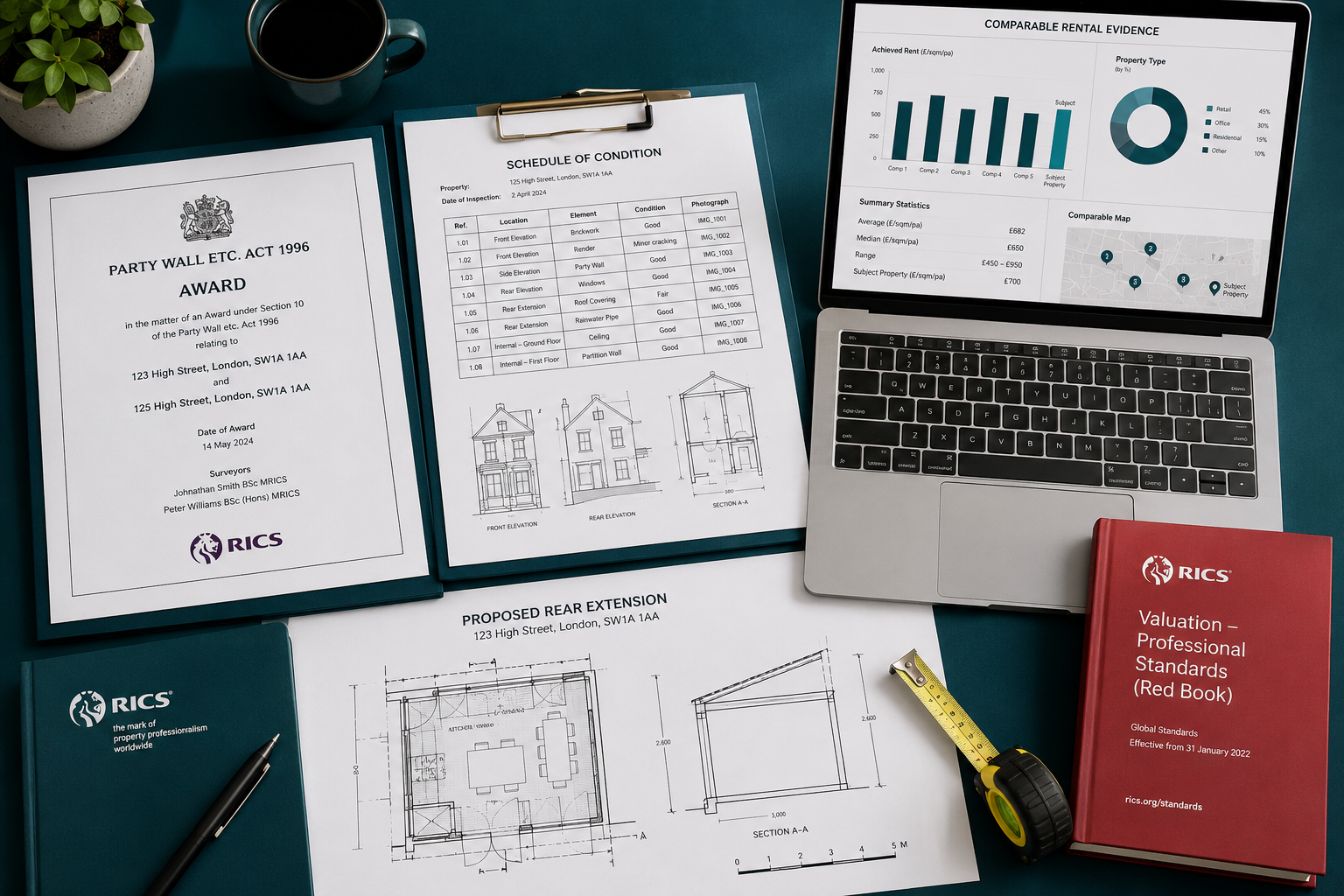
Stabilising rental income through an extension project requires applying the right valuation method at each stage of the process. There is no single technique that covers every scenario. Instead, landlords and their advisers need to layer approaches depending on the type of works, the tenure structure, and the local market conditions.
The Comparable Evidence Method
The comparable evidence method remains the foundation of residential rental valuation in England and Wales [4]. It involves identifying recently let properties of similar size, condition, and specification within the same micro-market, then adjusting for material differences. When a landlord completes an extension, the comparable pool changes. A two-bedroom property extended to three bedrooms does not simply inherit the three-bedroom average rent — the quality of the extension, the party wall condition, and the specification of finishes all affect where within the range the new rent should sit.
Evidence-based pricing has been formalised as the 2026 landlord standard, with professional bodies and letting agents alike moving away from percentage-uplift assumptions toward documented comparable analysis [8]. Landlords who commission a formal Canterbury property valuation before and after extension works are better positioned to justify rent increases to tenants and, where relevant, to mortgage lenders.
The Investment Method and Yield Stabilisation
For landlords managing portfolios rather than single assets, the investment method translates net rental income into a capital value using a yield multiplier. The formula is straightforward:
Capital Value = Net Annual Rent / Yield
What makes this technique powerful in 2026 is the yield compression occurring in markets where institutional investors are returning to the private rented sector. Growing activity in rent-stabilisation schemes — particularly in the US multifamily market — has influenced how international capital prices UK residential assets [1]. Domestic landlords who can demonstrate stable, evidence-based rents with low void risk attract lower yield requirements from valuers, which directly increases asset value.
Party wall compliance feeds into this calculation in a specific way. A property with a clean party wall award and a recorded schedule of condition has a lower risk profile than one with outstanding disputes or undocumented works. Valuers applying the investment method will reflect that difference in their yield selection.
The Profits Method and HMO Extensions
For houses in multiple occupation (HMOs), the profits method becomes relevant when the property is run as a quasi-commercial enterprise. This approach assesses the gross income the property is capable of generating, deducts operating costs and a fair return on tenant furniture and fittings, and capitalises the result. Extensions that add lettable rooms must be assessed against this framework rather than simple comparable evidence.
A party wall loft conversion that adds one or two rooms to an HMO can materially shift the profits method output. However, the valuer must also account for the cost of compliance — structural surveys, party wall awards, and any remediation required by the adjoining owner's surveyor. For a detailed breakdown of methods of valuation applicable to different property types, professional guidance is essential.
Reinstatement Cost and Insurance Alignment
One valuation technique that landlords frequently overlook is the reinstatement cost assessment. This is not a market value exercise — it establishes the cost of rebuilding the property to its current specification following total loss. After an extension, the reinstatement cost increases, and insurance policies must be updated accordingly.
Underinsurance is a common problem following landlord extensions. A reinstatement cost valuation carried out by a RICS-registered valuer ensures that the sum insured reflects the true rebuild cost, including party wall structures. This matters for rent stabilisation because a landlord who suffers an uninsured loss — or who is underinsured — faces a void period that no rental income strategy can offset.
Practical Party Wall Steps That Protect Rental Income
The following table summarises the key party wall obligations for common landlord extension types and their valuation implications:
| Extension Type | Party Wall Notice Required | Key Valuation Risk if Omitted | Recommended Protection |
|---|---|---|---|
| Single-storey rear extension | Yes — Line of Junction Notice | Void period from dispute; cost overrun | Serve notice 2 months before works |
| Loft conversion with shared wall | Yes — Party Structure Notice | Structural damage claim reduces yield | Commission schedule of condition |
| Basement excavation | Yes — Three-metre Notice | Subsidence risk; dilapidations liability | Full structural survey pre-works |
| Internal wall removal (shared) | Yes — Party Structure Notice | Reinstatement cost underestimation | Update insurance valuation post-works |
The Schedule of Condition: A Landlord's Risk Management Tool
A schedule of condition is a detailed photographic and written record of the adjoining property's condition before works begin. It is the single most effective document a landlord can commission to protect against spurious dilapidations claims during or after an extension project [5].
In the context of rent stabilisation, its value is twofold. First, it limits the financial exposure to third-party claims that could divert capital from the rental portfolio. Second, it provides a baseline against which the improved condition of the landlord's own property can be measured — supporting a higher comparable rent post-completion.
For landlords who have not yet served notices, understanding the consequences of a party wall notice not being served is a critical first step before any works begin.
Dilapidations and End-of-Tenancy Valuations
When a tenancy ends in a property that has recently been extended, dilapidations assessments become more complex. The standard of repair obligation must be assessed against the improved specification of the extended property, not the pre-works baseline. Landlords who have not documented the condition of the property at each stage — including party wall works — face difficulty in establishing what deterioration occurred during the tenancy versus what pre-existed it.
A schedule of dilapidations prepared by a chartered surveyor provides the evidential foundation for any claim or negotiation at lease end. This is particularly important for landlords who let to corporate tenants or who manage properties under assured shorthold tenancies with formal inventories.
Applying Valuation Techniques for Stabilising Rents: Party Wall Insights for Landlord Extensions in 2026 in a Slower Growth Market
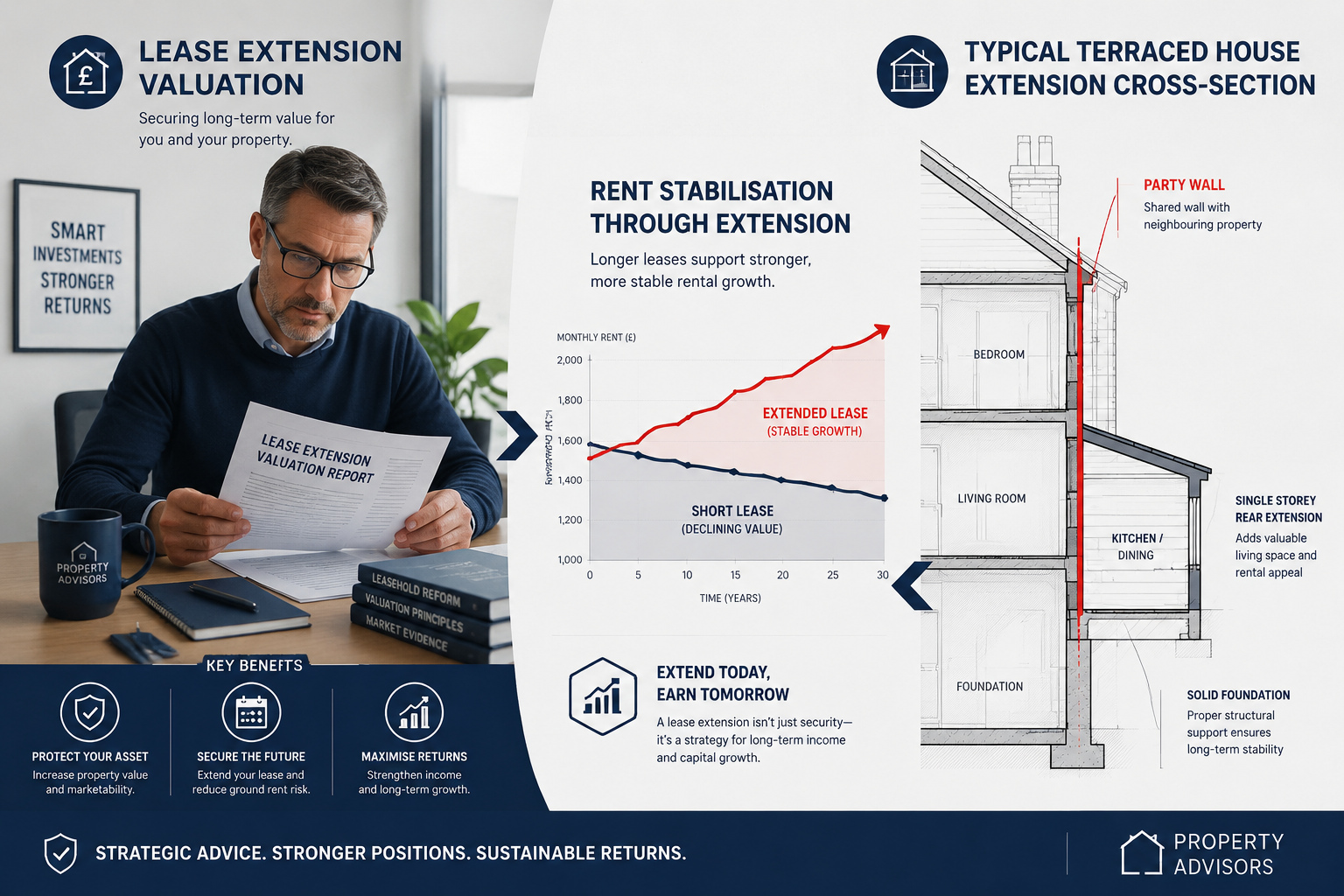
The rental market in early 2026 is showing signs of moderation after the sharp growth of 2022 to 2024. Annual rental growth in England has slowed from double-digit peaks to a more measured 4% to 6% in most regions [7]. In this environment, landlords cannot rely on market momentum to absorb the costs of poorly planned extensions. Every pound spent on works must translate into a defensible increase in rental value.
Evidence-based rent setting in a slower growth market means being precise about what an extension actually adds. A rear extension that increases floor area by 15% does not automatically justify a 15% rent increase. The valuer must assess:
- The quality and specification of the new space
- Whether the extension creates a genuinely new use (e.g., an additional bedroom versus a larger kitchen)
- The comparable evidence for extended properties in the same street or postcode
- The condition of the party wall structure and any ongoing obligations
"In a market where rents are stabilising, the landlords who protect their income are those who can demonstrate that their property's value is grounded in evidence, not assumption." [8]
Lease Extensions and Freehold Valuation Interactions
For landlords who own leasehold investment properties, party wall works can interact with lease extension valuations in unexpected ways. A loft conversion carried out under a lease may require freeholder consent, and the cost of that consent — or the premium paid for a lease extension valuation — must be factored into the overall return on investment calculation.
Similarly, landlords considering whether to buy their freehold before undertaking extension works should obtain a freehold valuation that reflects the development potential of the property post-extension. The interaction between party wall obligations, lease terms, and freehold value is complex, and the sequencing of professional advice matters enormously.
The Role of RICS-Registered Valuers
The Scottish Assessors Association published new guidance ahead of the 2026 revaluation cycle, reinforcing the principle that rental evidence must be contemporaneous, comparable, and properly adjusted for physical differences between properties [6]. While that guidance is primarily directed at non-domestic rating, its methodology mirrors best practice for residential investment valuations.
RICS Red Book standards require that registered RICS valuers apply consistent, documented methodology when assessing rental value. For landlords seeking mortgage finance on extended properties, a Red Book valuation that incorporates party wall compliance evidence will carry more weight with lenders than an informal desktop estimate.
The advanced valuation techniques now available — including discounted cash flow analysis for multi-let properties and automated valuation model benchmarking — are most reliable when the underlying property data is clean [5]. That means clear title, documented works, valid party wall awards, and up-to-date schedules of condition.
Conclusion
Valuation Techniques for Stabilising Rents: Party Wall Insights for Landlord Extensions in 2026 is not a niche technical topic — it is a practical framework for protecting rental income in a market that rewards precision and penalises shortcuts. The convergence of slower rental growth, tighter landlord regulation, and rising institutional standards means that the quality of documentation and professional advice around extension projects has never mattered more.
Actionable next steps for landlords in 2026:
- Before any extension works begin, serve the correct party wall notices and commission a schedule of condition from a qualified surveyor.
- After works complete, obtain a formal comparable evidence valuation to establish the new market rent — do not rely on percentage uplift assumptions.
- Update reinstatement cost assessments and insurance policies to reflect the extended property specification.
- If the property is leasehold, obtain a lease extension or freehold valuation before committing to structural works that may require freeholder consent.
- Engage a RICS-registered valuer for any mortgage or refinance application following an extension, ensuring the valuation report references party wall compliance documentation.
- In slower growth markets, focus on yield stabilisation through risk reduction — clean party wall records, low void risk, and evidence-based rents are more valuable than speculative capital growth assumptions.
The landlords who will perform best in 2026 are those who treat party wall compliance not as a legal hurdle but as a valuation asset — one that supports stable rents, reduces disputes, and builds the evidential foundation for long-term portfolio growth.
References
[1] 20260106 Appraisal Insights – appraisalinstitute.org
[2] Property Valuation Rent Pricing Strategies – rentrovio.com
[3] Db80acf4 96da 4d7a 87f0176d7b0782ad – ipf.org.uk
[4] Part 1 Practice Note 2023 Rental Adjustment – gov.uk
[5] Advanced Valuation Techniques – buildsandbuys.com
[6] Revaluation 2026 New Documents Published – saa.gov.uk
[7] Private Rent And House Prices January 2026 – coppingjoyce.co.uk
[8] Rent Reviews In 2026 How To Set The Right Rent In A Slower Growth Market – martinco.com
[9] 9781405130455 4 005 – blackwellpublishing.com
[10] Upwards Only Rent Reviews 2026 Changes And What To Do Now – higgsllp.co.uk
How Prince Surveyors can help: explore our party wall surveyors or learn about our party wall surveyor costs.