

From May 1, 2026, landlords in the UK face a seismic shift in their ability to refuse tenant pet requests. The Renters' Rights Act introduces statutory pet permission rights that fundamentally alter risk assessment protocols for private rental sector (PRS) properties. With landlords now prohibited from charging pet-related fees or deposits, and facing a 28-day deadline to respond to formal pet requests with written justification for any refusal, the financial implications for property valuations have become a critical concern for chartered surveyors and property investors alike.
Understanding the Valuation Impacts of Renters' Rights Act Pet Clauses: Surveyor Strategies for Assessing PRS Property Risks in 2026 is no longer optional—it's essential for accurate property assessments and risk management in today's rental market.
Key Takeaways
- Statutory pet rights grant tenants formal permission to request pets, with landlords required to respond within 28 days and provide written justification for refusals[3]
- Fee prohibition eliminates separate pet deposits and additional rent charges specifically for pets from May 1, 2026, with penalties up to £7,000 for violations[1]
- Valuation adjustments now require surveyors to factor in increased wear-and-tear risks, insurance premium changes, and maintenance cost projections for pet-friendly properties
- RICS-aligned assessment protocols help landlords evaluate reasonable refusal grounds while maintaining compliance with the new legislative framework
- Property-specific risk matrices enable more accurate depreciation forecasting based on building type, flooring materials, and outdoor space characteristics
Understanding the Legislative Framework of Pet Rights in 2026
The Renters' Rights Act represents the most significant overhaul of UK rental legislation in decades. At its core, the Act establishes that tenants now possess a statutory right to request permission to keep pets, even when tenancy agreements explicitly prohibit animals[1][2]. This marks a fundamental departure from the previous system where landlords held absolute discretion.
The 28-Day Response Requirement
Landlords must respond in writing within 28 days of receiving a formal pet request. This timeline creates operational pressure, particularly for landlords managing multiple properties or those working with letting agents who must coordinate responses[3]. Failure to respond within this window could be interpreted as tacit approval, creating legal vulnerabilities.
The response must include clear, written reasons if refusing the request. Vague objections such as "I don't allow pets" no longer satisfy legal requirements. Instead, landlords must demonstrate proportionate evidence of genuine concerns.
Reasonable Grounds for Refusal
The legislation permits refusals only where reasonable grounds exist[2][3]. Acceptable justifications include:
- Property unsuitability: Small apartments without outdoor access, properties with delicate historical features, or units with materials particularly vulnerable to pet damage
- Head lease restrictions: Superior leases or freeholder agreements that explicitly prohibit animals
- Credible damage or nuisance risk: Evidence-based concerns about specific animal types or breeds in particular property contexts
- Insurance limitations: Demonstrable inability to obtain adequate landlord insurance coverage for pet-occupied properties
Generic concerns about potential damage without property-specific evidence will likely fail legal scrutiny. This requirement has profound implications for how surveyors must approach property valuations in the PRS sector.
The End of Pet-Related Fees
Perhaps the most financially significant change: landlords cannot charge pet deposits, additional pet-related payments, or extra rent specifically because a tenant has a pet[1]. This prohibition removes a traditional risk mitigation tool, forcing landlords and their surveyors to recalibrate how they account for potential pet-related depreciation in property values.
Violations carry penalties of up to £7,000[1], making compliance monitoring essential for property management teams. For surveyors conducting valuations, this means factoring in potential regulatory risk alongside traditional property condition assessments.
Valuation Impacts of Renters' Rights Act Pet Clauses: Risk Assessment Protocols
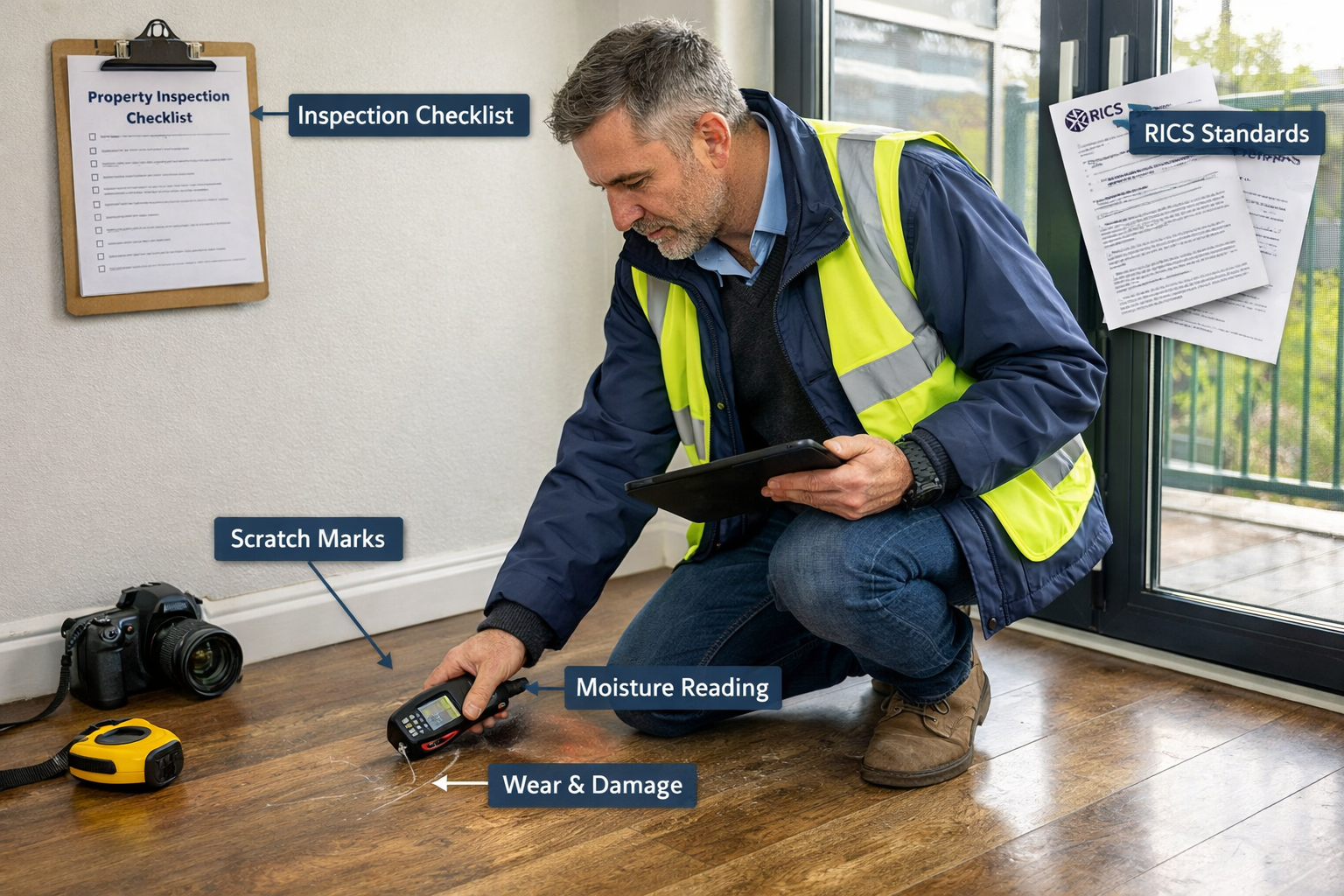
The prohibition on pet-specific fees fundamentally changes how surveyors must approach PRS property valuations. Without the ability to collect additional deposits or charge premium rents, landlords face increased exposure to pet-related damage costs. This exposure must now be quantified and incorporated into valuation models.
Depreciation Rate Adjustments
Traditional depreciation models for rental properties typically account for standard wear-and-tear based on tenant occupancy patterns. Pet occupancy introduces accelerated depreciation in specific property elements:
| Property Element | Standard Annual Depreciation | Pet-Adjusted Depreciation | Variance |
|---|---|---|---|
| Carpeting | 10-12% | 15-20% | +5-8% |
| Laminate Flooring | 5-7% | 10-15% | +5-8% |
| Interior Doors | 3-5% | 7-10% | +4-5% |
| Garden/Outdoor Spaces | 8-10% | 12-18% | +4-8% |
| Painted Walls | 6-8% | 10-14% | +4-6% |
These adjustments reflect empirical data from property management companies tracking maintenance costs across pet-friendly and pet-free portfolios. Surveyors conducting building surveys must now incorporate these enhanced depreciation rates when assessing long-term property value trajectories.
Insurance Premium Implications
Landlord insurance policies increasingly differentiate between pet-friendly and pet-free properties. Premium increases typically range from 8-15% for properties accepting pets, with variations based on:
- Property type and construction: Ground-floor flats with direct garden access face different risk profiles than upper-floor apartments
- Flooring materials: Properties with hard flooring (tile, vinyl, sealed wood) attract lower premiums than carpeted units
- Pet size restrictions: Policies may offer reduced premiums where landlords limit pet size or number
- Damage excess levels: Higher excess amounts can offset premium increases but shift financial risk to landlords
When conducting commercial valuations or portfolio assessments, surveyors must obtain current insurance quotes reflecting pet-friendly status to accurately project net operating income.
Maintenance Cost Projections
Annual maintenance budgets for pet-occupied properties typically increase by £300-£800 compared to pet-free equivalents, depending on property size and type. Key cost drivers include:
✅ More frequent professional cleaning: Deep carpet cleaning every 6-12 months versus 18-24 months
✅ Garden maintenance escalation: Lawn repair, fence reinforcement, and landscaping restoration
✅ Odor remediation: Specialized treatments for persistent pet odors in carpets, curtains, and upholstery
✅ Minor repair frequency: Door scratch repairs, baseboard replacement, and wall touch-ups
These recurring costs directly impact property yield calculations and must be factored into investment valuations, particularly for property development projects targeting the rental market.
Tenant Turnover Considerations
Interestingly, pet-friendly properties often experience lower tenant turnover rates. Pet owners face significant challenges finding suitable rental accommodation, creating stronger tenant retention once housed. This reduced turnover can offset some pet-related costs through:
- Decreased void periods between tenancies
- Lower marketing and tenant acquisition costs
- Reduced wear-and-tear from moving processes
- More stable rental income streams
Surveyors should incorporate these offsetting factors when calculating net present value for rental properties, particularly in markets with high demand for pet-friendly accommodation.
Surveyor Strategies for Assessing PRS Property Risks in 2026
Chartered surveyors must now adopt comprehensive assessment frameworks that balance legislative compliance with accurate risk quantification. The Valuation Impacts of Renters' Rights Act Pet Clauses: Surveyor Strategies for Assessing PRS Property Risks in 2026 require methodical evaluation protocols aligned with RICS standards.
Pre-Acquisition Due Diligence Checklist
For investors considering PRS property purchases, surveyors should implement enhanced due diligence protocols:
🏠 Property Characteristics Assessment
- Flooring type and condition throughout the property
- Presence and security of outdoor spaces (gardens, balconies, patios)
- Door and baseboard materials and replaceability
- Ventilation systems and odor management capability
- Acoustic insulation quality between units (for flats)
📋 Legal and Compliance Review
- Head lease restrictions on pet occupancy
- Freeholder or management company pet policies
- Existing tenant pet agreements or requests
- Building insurance policy terms regarding animals
- Local authority restrictions (if applicable)
💰 Financial Impact Modeling
- Current insurance premium quotes (pet-friendly vs. standard)
- Projected maintenance cost increases over 5-10 year holding period
- Depreciation rate adjustments for pet-vulnerable elements
- Comparable rental yields for pet-friendly properties in the area
- Tenant demand analysis for pet-friendly accommodation
This comprehensive approach ensures investors understand the full financial implications before acquisition, enabling more accurate offer prices that reflect true risk-adjusted values. Understanding what's looked at during a property valuation becomes even more critical in this context.
RICS-Aligned Pet Request Evaluation Framework
When landlords receive formal pet requests, surveyors can provide invaluable guidance through structured assessment protocols:
Stage 1: Initial Request Review
- Document the request details (pet type, size, breed, number)
- Verify tenant compliance with tenancy terms to date
- Review property condition baseline from check-in inventory
- Confirm insurance policy coverage parameters
Stage 2: Property Suitability Analysis
- Assess flooring vulnerability to specific pet type
- Evaluate outdoor space adequacy for pet size/breed
- Consider acoustic implications for neighboring tenants
- Review any historical pet-related issues in the building
Stage 3: Risk Mitigation Options
- Identify reasonable conditions that could address concerns
- Explore insurance policy adjustments or endorsements
- Consider professional cleaning schedule requirements
- Evaluate garden maintenance agreement options
Stage 4: Written Response Preparation
- Document specific, property-related justifications for any refusal
- Ensure compliance with 28-day response deadline
- Provide clear reasoning tied to reasonable grounds
- Maintain records for potential dispute resolution
This framework helps landlords make defensible decisions while minimizing legal exposure. It also provides surveyors with a structured approach when advising on property market legislation changes.
Condition Survey Enhancements for Pet-Occupied Properties
When conducting Level 2 or Level 3 surveys on properties with existing or potential pet occupancy, surveyors should incorporate specialized inspection protocols:
Enhanced Flooring Assessment 🔍
- Document scratch patterns, staining, and wear concentration areas
- Test for moisture penetration in wood and laminate flooring
- Assess subfloor condition where pet accidents may have occurred
- Evaluate carpet pile condition and odor absorption
Outdoor Space Evaluation
- Inspect fencing integrity and security
- Document lawn wear patterns and soil compaction
- Assess drainage adequacy for pet waste management
- Review gate functionality and escape risk points
Interior Fabric Inspection
- Examine door frames and baseboards for chew marks or scratches
- Assess wall condition at pet height (scratches, marking, damage)
- Evaluate window sill and frame condition
- Document any odor issues requiring specialist treatment
Neighboring Property Considerations
- Review acoustic separation effectiveness
- Consider noise complaint history
- Assess shared space implications (communal gardens, hallways)
- Evaluate impact on neighboring property values
These enhanced protocols ensure comprehensive risk assessment and provide landlords with detailed documentation supporting any pet-related decisions. For properties requiring more extensive evaluation, a Level 3 full building survey may be warranted.
Valuation Report Modifications
Valuation reports for PRS properties in 2026 should explicitly address pet-related factors:
Market Value Adjustments
- Quantify any value reduction due to pet-related wear beyond normal depreciation
- Compare against pet-free equivalent properties in the area
- Factor in repair cost estimates for pet-specific damage
- Consider marketability implications for future sale
Investment Value Considerations
- Project rental yield impacts from insurance and maintenance cost increases
- Model tenant retention benefits of pet-friendly policies
- Assess demand premium for pet-friendly accommodation in the local market
- Calculate net present value incorporating all pet-related cash flow adjustments
Risk Commentary
- Summarize legislative compliance status
- Identify any head lease or insurance policy restrictions
- Highlight property characteristics that increase or mitigate pet-related risks
- Recommend monitoring protocols for ongoing risk management
This enhanced reporting framework provides clients with comprehensive information for informed decision-making while demonstrating professional diligence in addressing emerging market factors.
Insurance and Liability Considerations
The prohibition on pet deposits creates a gap in traditional risk mitigation strategies. Landlords and their surveyors must explore alternative insurance solutions:
Specialized Pet Damage Insurance Products
Several insurers now offer pet damage endorsements or specialized policies that cover:
- Malicious or accidental damage caused by tenant pets
- Odor remediation and specialist cleaning costs
- Garden restoration and landscaping repair
- Replacement of pet-damaged fixtures and fittings
These products typically cost £150-£400 annually depending on property value and coverage limits. Surveyors should factor these costs into net operating income projections when conducting annual tax valuations or investment appraisals.
Tenant Liability Insurance
While landlords cannot require pet deposits, they can reasonably request evidence that tenants maintain adequate contents and liability insurance covering pet-related damage. This approach:
- Shifts financial responsibility to tenants
- Provides recourse for damage claims
- Demonstrates reasonable risk management
- Complies with the prohibition on pet-specific charges
Surveyors should recommend this practice as part of comprehensive risk management strategies for pet-friendly properties.
Claims History Impact on Valuations
Properties with documented histories of pet-related insurance claims may face:
- Increased insurance premiums affecting yield calculations
- Reduced marketability to risk-averse investors
- Lower loan-to-value ratios from cautious lenders
- Disclosure requirements in sale transactions
When conducting valuations, surveyors should request five-year claims histories to accurately assess risk profiles and incorporate any premium loading into financial projections.
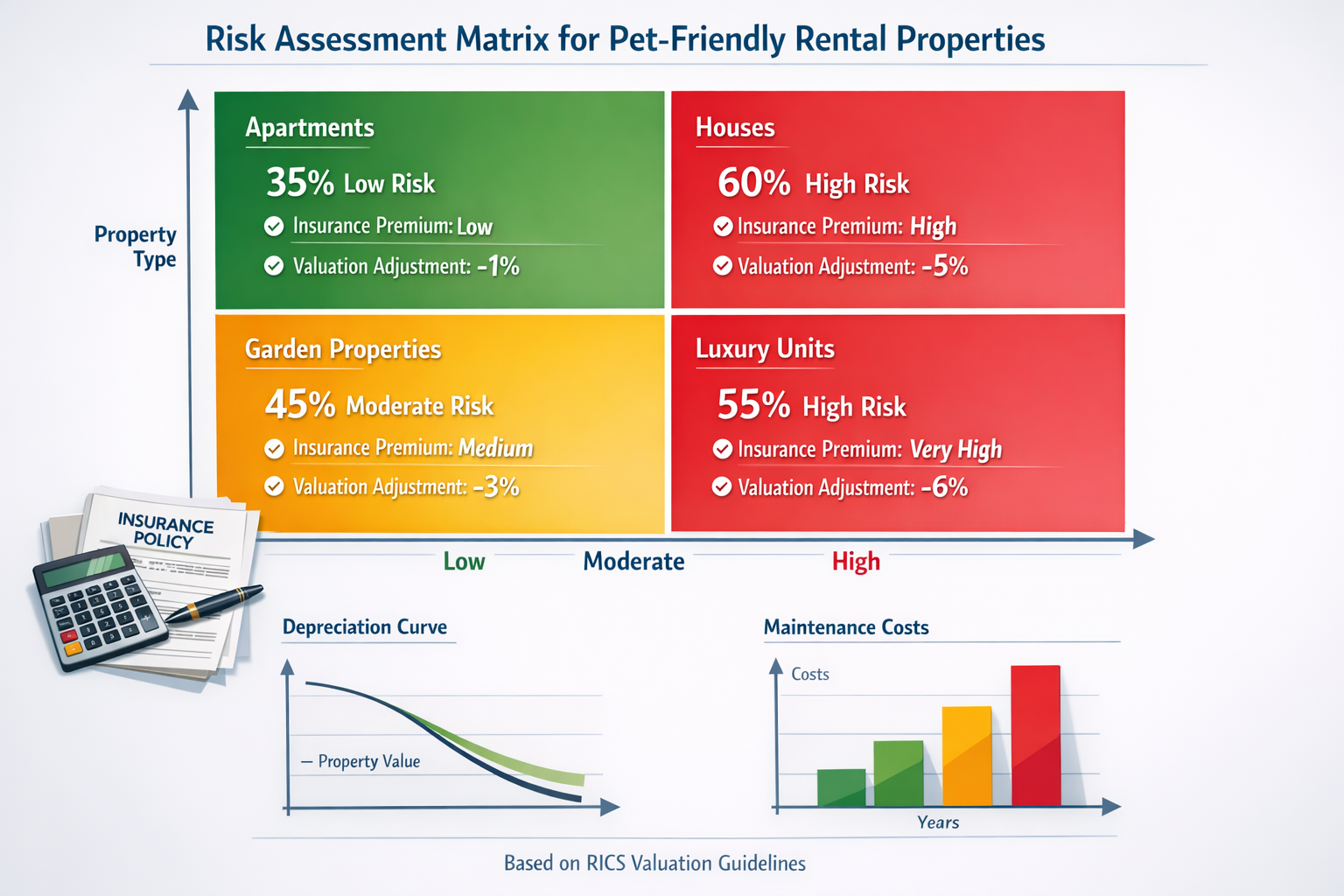
Property-Specific Risk Matrices
Not all properties face equal pet-related risks. Surveyors should employ property-type-specific assessment frameworks:
Low-Risk Property Characteristics
✅ Hard flooring throughout (tile, vinyl, sealed concrete)
✅ Direct ground-floor garden access with secure fencing
✅ Robust door and trim materials (solid wood, metal)
✅ Detached or semi-detached houses minimizing noise transmission
✅ Washable wall finishes and durable paint specifications
Properties exhibiting these characteristics typically warrant minimal valuation adjustments for pet occupancy, often in the range of 0-2% below comparable pet-free equivalents.
Medium-Risk Property Characteristics
⚠️ Laminate or engineered wood flooring susceptible to moisture damage
⚠️ Upper-floor flats with balcony-only outdoor access
⚠️ Standard MDF baseboards and hollow-core doors
⚠️ Shared building entrances and communal spaces
⚠️ Standard emulsion paint finishes
These properties require moderate valuation adjustments of 2-5% and increased maintenance budget provisions of £400-£600 annually.
High-Risk Property Characteristics
❌ Wall-to-wall carpeting throughout living areas
❌ No outdoor space or inadequate ventilation
❌ Period features or delicate architectural details
❌ Thin party walls in converted buildings
❌ Small floor area inadequate for larger pets
High-risk properties may warrant valuation reductions of 5-8% when designated pet-friendly, with annual maintenance provisions of £600-£800. In some cases, surveyors may advise that reasonable refusal grounds exist for certain pet types based on property unsuitability.
Practical Implementation: Case Study Scenarios
Scenario 1: Victorian Conversion Flat Request
Property: Second-floor flat in converted Victorian house, carpeted throughout, shared entrance, no outdoor space
Pet Request: Medium-sized dog (Border Collie)
Surveyor Assessment:
- Property unsuitable for medium-sized dog due to lack of outdoor access
- Carpeted flooring presents high damage and odor risk
- Shared entrance creates potential nuisance concerns for other residents
- Acoustic separation may be inadequate for barking disturbance
Recommendation: Reasonable grounds exist for refusal based on property unsuitability. Written response should cite specific concerns: inadequate outdoor access for breed exercise needs, flooring vulnerability, and shared building considerations. Alternative suggestion: consider smaller, quieter pet types (cat, small caged animals).
Scenario 2: Modern Ground-Floor Flat with Garden
Property: Purpose-built ground-floor flat, vinyl flooring throughout, private enclosed garden, good acoustic separation
Pet Request: Small dog (Jack Russell Terrier)
Surveyor Assessment:
- Property well-suited to small pet occupancy
- Vinyl flooring provides excellent durability and easy cleaning
- Private garden offers adequate outdoor space
- Modern construction provides good acoustic insulation
Recommendation: No reasonable grounds for refusal. Property characteristics minimize risk. Recommend: (1) obtain updated insurance quote, (2) request tenant liability insurance evidence, (3) establish garden maintenance expectations in writing, (4) conduct thorough check-in inventory documenting current condition.
Valuation Impact: Minimal adjustment (0-1% reduction in market value), maintenance budget increase of £300-£400 annually, insurance premium increase of approximately 10%.
Scenario 3: Luxury Apartment with Premium Finishes
Property: High-specification apartment, engineered oak flooring, designer fixtures, balcony only
Pet Request: Two cats
Surveyor Assessment:
- Cats generally lower-risk than dogs for property damage
- Engineered oak flooring moderately vulnerable to scratching
- Balcony provides limited outdoor access (safety concern)
- Premium finishes increase replacement cost exposure
Recommendation: Approval with conditions. Suggest: (1) require tenant to provide scratching posts and protective measures, (2) request higher liability insurance coverage reflecting premium finishes, (3) establish professional cleaning schedule (every 6 months), (4) document balcony safety measures preventing cat escape/fall risk.
Valuation Impact: 2-3% reduction reflecting increased wear on premium finishes, maintenance budget increase of £400-£500 annually for enhanced cleaning schedule.
Future-Proofing PRS Portfolios
Forward-thinking landlords and investors are adapting property specifications to minimize pet-related risks while capitalizing on strong tenant demand for pet-friendly accommodation:
Strategic Property Modifications
- Flooring upgrades: Transitioning from carpet to luxury vinyl tile (LVT) or sealed wood
- Baseboard replacements: Installing solid wood or composite materials resistant to chewing
- Garden enhancements: Secure fencing, reinforced gates, and durable landscaping
- Ventilation improvements: Enhanced extraction systems to manage odors
- Acoustic upgrades: Improved sound insulation in multi-unit buildings
These modifications typically cost £3,000-£8,000 per property but can significantly reduce long-term pet-related risks while commanding rental premiums of 5-10% in high-demand markets.
Portfolio Diversification Strategies
Savvy investors are segmenting their portfolios:
- Pet-friendly tier: Properties with low-risk characteristics actively marketed to pet owners at premium rents
- Selective pet tier: Medium-risk properties accepting pets on case-by-case basis with appropriate conditions
- Pet-restricted tier: High-risk properties where reasonable refusal grounds exist for most pet types
This approach maximizes rental income while managing risk exposure across the portfolio. Surveyors conducting property development valuations should incorporate this strategic segmentation into market analysis and financial projections.
Conclusion
The Valuation Impacts of Renters' Rights Act Pet Clauses: Surveyor Strategies for Assessing PRS Property Risks in 2026 represent a fundamental shift in how rental properties must be assessed, valued, and managed. The prohibition on pet deposits and fees, combined with statutory pet request rights, eliminates traditional risk mitigation tools while increasing landlord exposure to pet-related damage costs.
Chartered surveyors play a crucial role in navigating this new landscape by:
✅ Implementing enhanced inspection protocols that identify property-specific pet-related vulnerabilities
✅ Developing property-type-specific risk matrices for accurate depreciation and maintenance cost projections
✅ Providing RICS-aligned assessment frameworks helping landlords evaluate pet requests on reasonable grounds
✅ Incorporating insurance and liability considerations into comprehensive valuation reports
✅ Advising on strategic property modifications that reduce risk while capturing pet-friendly rental premiums
Actionable Next Steps
For Landlords:
- Commission updated property condition surveys documenting baseline condition before accepting pet requests
- Obtain insurance quotes comparing pet-friendly and standard policies
- Review head lease and freeholder agreements for any pet restrictions
- Develop written pet policies aligned with the 28-day response requirement
- Consider strategic property modifications to reduce pet-related risks
For Property Investors:
- Incorporate pet-related risk assessments into acquisition due diligence
- Request five-year insurance claims histories for target properties
- Model financial impacts of pet occupancy on projected yields
- Evaluate portfolio segmentation strategies balancing risk and opportunity
- Engage chartered surveyors experienced in PRS pet-related valuations
For Surveyors:
- Update inspection protocols to include pet-specific assessment criteria
- Develop standardized pet risk matrices for different property types
- Establish relationships with specialist pet damage insurance providers
- Create template frameworks for landlord pet request evaluations
- Enhance CPD training on Renters' Rights Act implications for valuations
The legislation creates both challenges and opportunities. Properties with inherently low pet-risk characteristics may command significant rental premiums in markets with high pet-owner demand, while high-risk properties face valuation pressures. Success in this evolving market requires sophisticated risk assessment, strategic property positioning, and expert surveyor guidance aligned with current legislative requirements.
By adopting the comprehensive assessment frameworks outlined in this guide, surveyors can provide clients with accurate, defensible valuations that reflect the true financial implications of pet-friendly rental policies while ensuring compliance with the Renters' Rights Act 2026.
For professional guidance on navigating these complex valuation challenges, consider consulting with experienced chartered surveyors who understand both property legislation changes and the practical realities of landlord responsibilities in the modern rental market.
References
[1] Renting With Pets – blog.goodlord.co
[2] Pet Friendly Tenancies How The Renters Rights Act 2025 Changes The Rules For Landlords – hunters.com
[3] Renting To Pet Owners What Changes In 2026 Under The Renters Rights Act – parkersproperties.co.uk