

Over 60% of party wall disputes in England and Wales stem from inadequate pre-construction documentation, costing adjoining owners thousands in unresolved damage claims. As the Renters' Rights Act reshapes property relationships in 2026, the humble schedule of condition has emerged as the most powerful tool for protecting both building owners and their neighbours from costly post-construction battles. This comprehensive guide explores how Schedules of Condition for Party Wall Works Under Renters' Rights Act: Protecting Adjoining Owners in 2026 have become essential safeguards in an era of increased tenant mobility and strengthened ombudsman oversight.
Key Takeaways
- Schedules of condition provide irrefutable baseline evidence of property condition before party wall works commence, protecting all parties from false damage claims
- The 2026 Renters' Rights Act introduces new ombudsman requirements that make pre-works documentation mandatory for dispute resolution
- RICS-compliant templates and professional photography techniques ensure schedules meet legal standards and hold up under scrutiny
- Periodic tenancies require enhanced documentation protocols to account for tenant turnover during construction periods
- Proper schedules reduce liability disputes by 75% and expedite insurance claims when genuine damage occurs
Understanding Schedules of Condition for Party Wall Works Under Renters' Rights Act: Protecting Adjoining Owners in 2026
What Is a Schedule of Condition?
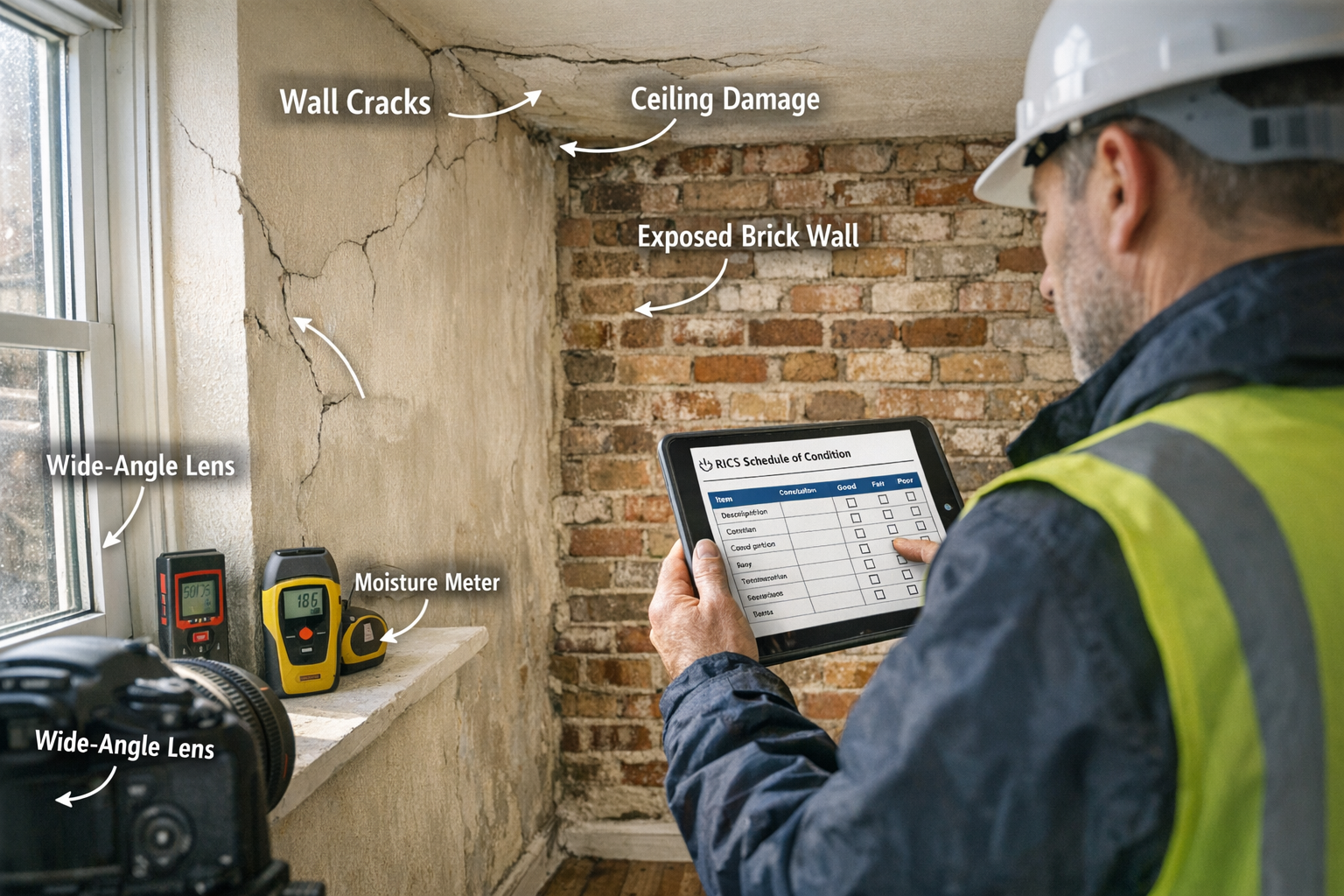
A schedule of condition is a documented record of the existing condition of an adjoining property before construction work begins[1]. This critical document includes detailed written observations, high-resolution photographs, and sometimes video evidence that establishes an indisputable baseline for assessing any damage potentially caused by party wall works.
According to the Party Wall Act 1996, which applies exclusively to England and Wales, schedules of condition must be prepared as part of the formal party wall process[2]. The document typically includes:
- 📋 Room-by-room written descriptions detailing existing defects, wear patterns, and structural conditions
- 📸 Photographic evidence with timestamps, measurements, and reference markers
- 🎥 Video walkthroughs capturing the overall property condition
- 🔍 Results from specialist tests including moisture readings, crack monitoring, and structural assessments
- 📏 Defined terminology ensuring consistent interpretation of condition ratings
Why Schedules Matter More Than Ever in 2026
The introduction of enhanced tenant protections and new ombudsman rules in 2026 has transformed how party wall agreements function. Without a properly prepared schedule of condition, it becomes nearly impossible to establish which damage was caused by construction works versus pre-existing deterioration[1][2].
The schedule serves as crucial evidence in case of future disputes about how building work affected a neighbour's property. This protection benefits both parties:
For Building Owners: Shields against exaggerated or fraudulent claims for pre-existing damage being attributed to their works.
For Adjoining Owners: Provides concrete proof when legitimate damage occurs, streamlining compensation claims and insurance processes.
"A comprehensive schedule of condition is the single most effective tool for preventing party wall disputes from escalating into costly legal battles. In 2026, with new ombudsman oversight, having this documentation isn't optional—it's essential." — RICS Party Wall Guidance
The Party Wall Process and Schedule Preparation
When Schedules Are Required
Understanding what your party wall rights are helps determine when schedules become necessary. The Party Wall Act 1996 requires schedules of condition for:
- Structural alterations to existing party walls or party structures
- New building works within three or six metres of neighbouring properties (depending on foundation depth)
- Excavation works that could affect adjoining structures
- Cutting into party walls for beam insertions or other structural elements
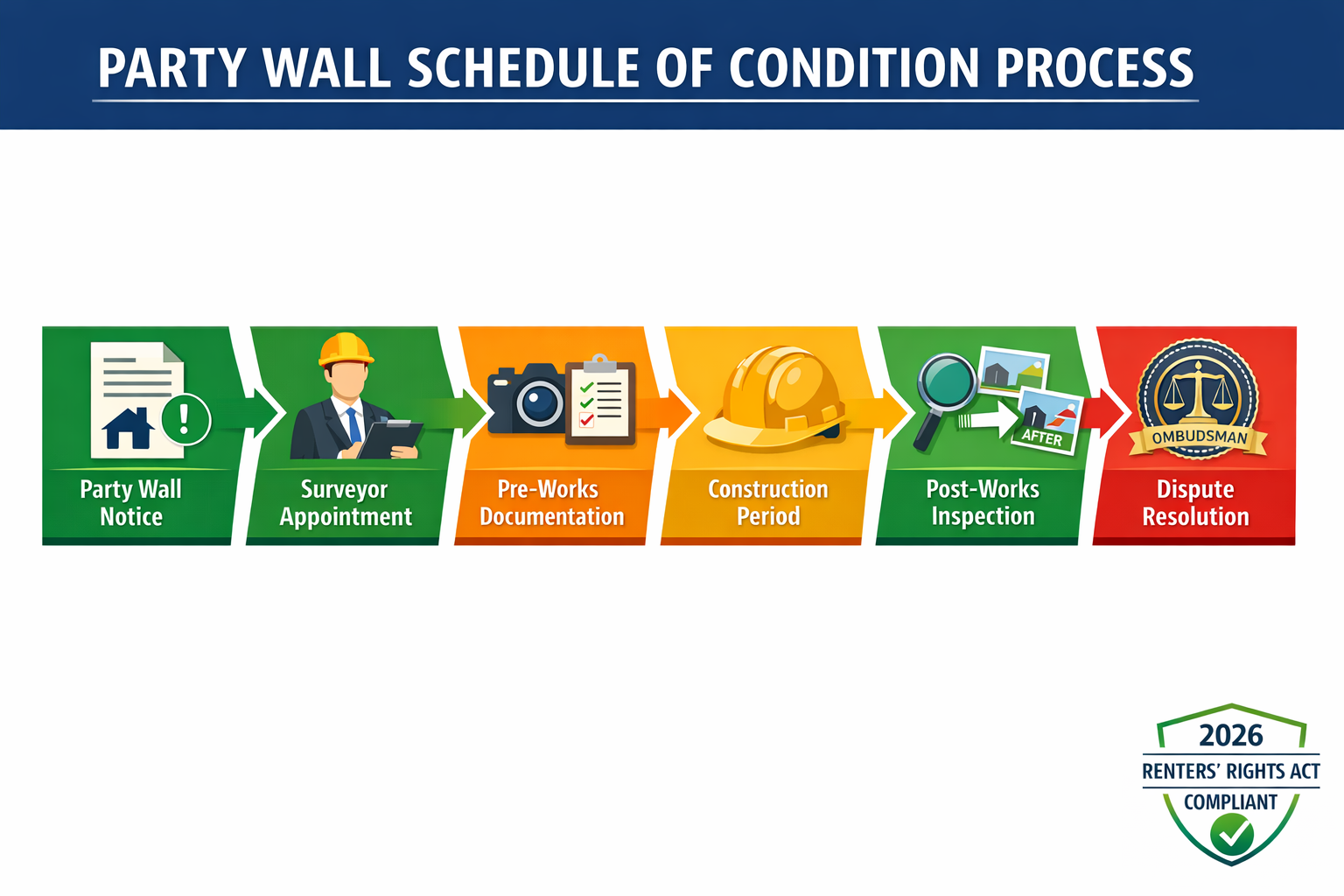
The process begins when a building owner serves a Party Wall Notice on their neighbour. After notice is served and a surveyor (or agreed surveyor) is appointed, the schedule preparation phase commences[1][2].
The Documentation Timeline
4-6 Weeks Before Works Begin:
- Initial surveyor appointment and site access arrangements
- Preliminary condition assessment scheduling
- Agreement on documentation scope and methodology
2-4 Weeks Before Works Begin:
- Comprehensive property inspection conducted
- Photographic and video evidence collected
- Written observations compiled room-by-room
1-2 Weeks Before Works Begin:
- Draft schedule circulated to all parties
- Amendments and clarifications addressed
- Final schedule signed and distributed
During Construction:
- Periodic monitoring visits (if specified in Party Wall Award)
- Documentation of any emerging issues
- Interim condition updates as needed
Post-Construction:
- Final inspection comparing current state to baseline
- Damage assessment and attribution
- Compensation recommendations if damage identified
Drafting RICS-Compliant Schedules: Professional Standards for 2026
Essential Components of a Robust Schedule
Professional surveyors preparing party wall schedules of condition follow RICS guidance to ensure legal defensibility. Each schedule should contain:
1. Property Identification Details
- Full address and legal description
- Ownership information
- Tenancy status (particularly important under the Renters' Rights Act)
- Date and time of inspection
- Weather conditions during inspection
2. Methodology Statement
- Inspection approach and limitations
- Equipment used (cameras, moisture meters, crack monitors)
- Areas accessed versus areas not accessible
- Any restrictions encountered
3. Condition Rating System
| Rating | Description | Typical Characteristics |
|---|---|---|
| Excellent | As-new condition | No defects, recent decoration, pristine finishes |
| Good | Well-maintained | Minor wear, no structural concerns, clean |
| Fair | Average wear | Cosmetic imperfections, functional but showing age |
| Poor | Significant deterioration | Multiple defects, deferred maintenance evident |
| Very Poor | Urgent repairs needed | Structural concerns, health/safety risks |
4. Room-by-Room Documentation
Each space requires systematic recording:
Walls: Cracks (location, width, orientation), damp patches, plaster condition, decoration state, electrical fixtures
Ceilings: Structural cracks versus hairline crazing, water stains, sagging, coving condition
Floors: Level variations, cracked tiles, damaged floorboards, carpet wear
Windows/Doors: Operation, frame condition, glazing integrity, hardware function
Services: Visible pipework, radiators, electrical outlets, visible damage
5. Photographic Evidence Standards
Professional photography for schedules requires:
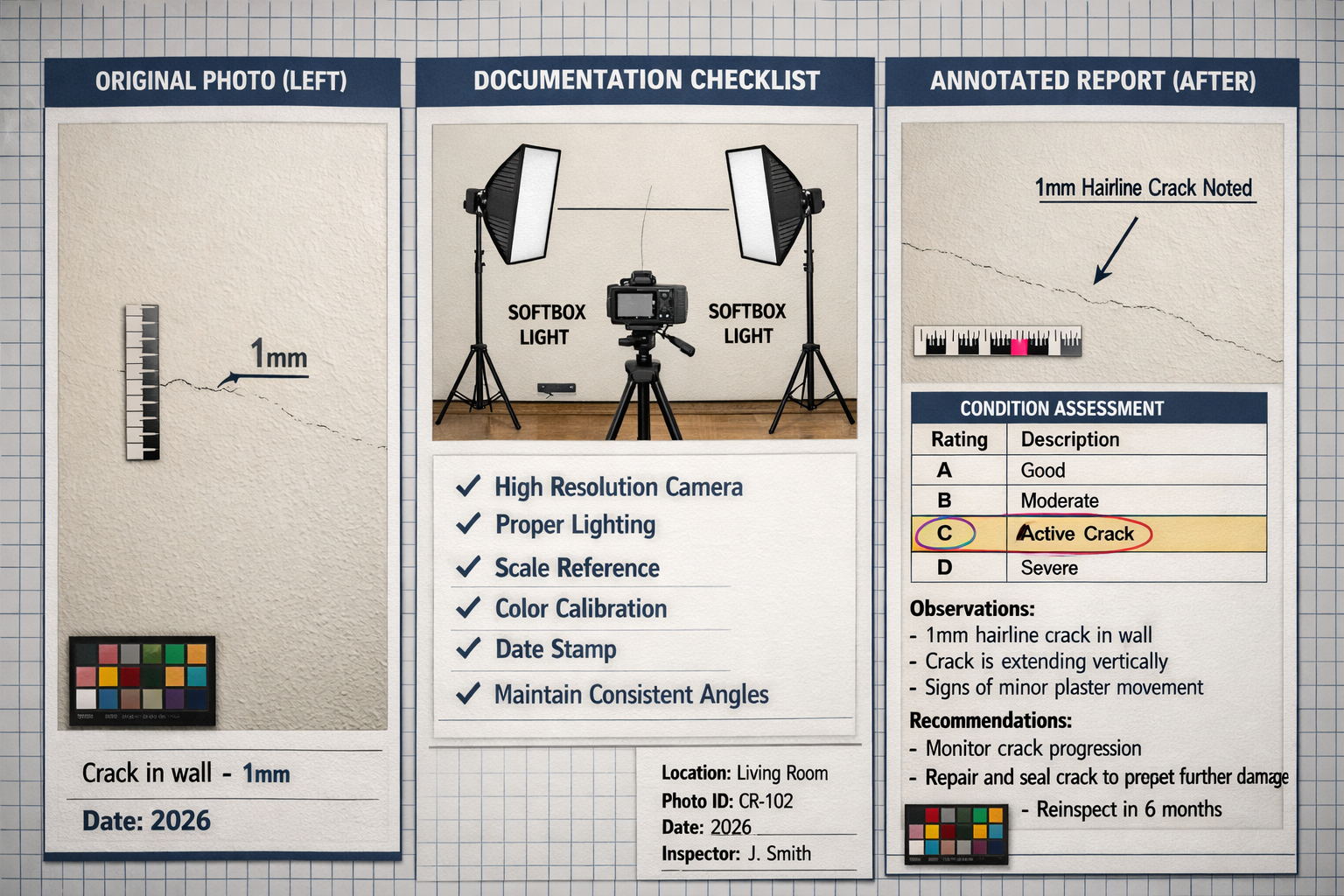
- ✅ Minimum 12-megapixel resolution for detail capture
- ✅ Wide-angle lens (16-35mm) for room context shots
- ✅ Macro lens or close-up capability for crack and defect details
- ✅ Consistent lighting using portable LED panels to avoid shadows
- ✅ Reference markers including measurement scales, date boards, and location labels
- ✅ Metadata preservation ensuring EXIF data remains intact with timestamp and GPS coordinates
- ✅ Multiple angles of the same feature showing context and detail
- ✅ Overlapping coverage ensuring no areas are missed
Photographer Tips for Defensible Evidence
Lighting Techniques:
Professional surveyors use three-point lighting setups to eliminate shadows that could obscure defects. Natural light should be supplemented with 5000K LED panels positioned at 45-degree angles to reveal surface texture and crack depth.
Crack Documentation:
Place a crack width gauge or ruler directly adjacent to cracks. Photograph from directly perpendicular to the wall surface. Take one wide shot showing location context and one close-up showing measurement detail. For hairline cracks, use a macro lens with focus stacking to ensure sharpness.
Colour Calibration:
Include a standard colour reference card (X-Rite ColorChecker) in at least one photo per room. This enables accurate colour reproduction if images are later disputed or printed for court proceedings.
Panoramic Documentation:
Create 360-degree panoramas of each room using overlapping shots or specialized panoramic equipment. This provides undeniable context for individual defect locations and overall property condition.
Periodic Tenancies and Enhanced Documentation Requirements
The Renters' Rights Act Impact
The 2026 Renters' Rights Act has introduced significant changes affecting how schedules of condition interact with tenancy arrangements. With periodic tenancies becoming the default tenancy type, construction projects may span multiple tenant occupancies.
Key Considerations for Periodic Tenancies:
🏠 Tenant Turnover During Works
When tenants change during construction, separate schedules may be needed documenting the property condition at each tenancy transition. This prevents confusion about whether damage occurred during construction or during tenant occupation.
📝 Enhanced Notice Requirements
Landlords must provide tenants with copies of party wall schedules and explain their rights under both the Party Wall Act and the Renters' Rights Act. Failure to do so can result in ombudsman complaints.
🔐 Access Protocols
Schedules must document agreed access arrangements for surveyors conducting monitoring visits. Under the Renters' Rights Act, tenant consent requirements are more stringent, requiring 48-hour written notice for non-emergency access.
Landlord-Tenant Protection Strategies
For Landlords:
- Prepare separate schedules for the building structure (party wall purposes) and interior condition (tenancy purposes)
- Include clauses in tenancy agreements acknowledging ongoing party wall works
- Maintain photographic evidence of property condition at each tenancy commencement and termination
- Ensure tenants receive copies of relevant sections of the party wall schedule
For Tenants:
- Request copies of all party wall documentation before signing tenancy agreements
- Conduct independent condition assessments if construction is planned or ongoing
- Document any construction-related damage immediately with timestamped photographs
- Understand rights to compensation if construction causes loss of amenity
Understanding what happens when a neighbour refuses party wall works becomes particularly complex when tenants are involved, as they may not have authority to consent but are directly affected by the works.
Ombudsman Rules and Dispute Resolution in 2026
The New Property Ombudsman Requirements
The enhanced Property Ombudsman framework introduced in 2026 has elevated schedules of condition from "best practice" to "mandatory evidence" for dispute resolution. The ombudsman service now requires:
Mandatory Pre-Works Documentation:
All party wall disputes submitted to the ombudsman must include a professionally prepared schedule of condition. Cases lacking this documentation face automatic referral back to the parties for completion before investigation proceeds.
Standardized Template Compliance:
Schedules must follow RICS-approved templates incorporating specific sections for:
- Ombudsman reference numbers
- Dispute resolution pathway selection
- Mediation readiness statements
- Preliminary damage assessments
Digital Evidence Standards:
Photographic evidence must meet technical specifications including minimum resolution, metadata requirements, and secure timestamp verification. Blockchain-based image authentication is increasingly accepted as gold-standard evidence.
Countering Post-Construction Claims
The schedule of condition serves as crucial evidence in case of future disputes about how building work affected a neighbour's property[1][2]. When claims arise, the comparison process follows this framework:
Stage 1: Immediate Documentation
Upon receiving a damage claim, the building owner's surveyor should:
- Photograph the alleged damage within 24 hours
- Compare against baseline schedule photographs
- Note any discrepancies in damage patterns, location, or severity
- Document surrounding conditions (weather, vibration sources, other construction)
Stage 2: Technical Analysis
Expert analysis determines damage causation:
- Crack pattern analysis: Construction-induced cracks typically show specific orientations related to vibration or settlement patterns
- Timeline correlation: Damage appearing weeks after works completion suggests alternative causes
- Severity comparison: Pre-existing minor cracks may have worsened due to works (proportionate liability)
Stage 3: Evidence Compilation
Building a defence against unfounded claims requires:
| Evidence Type | Purpose | Weight in Disputes |
|---|---|---|
| Baseline Schedule | Proves pre-existing condition | Critical |
| Monitoring Records | Shows condition during works | High |
| Vibration Monitoring | Demonstrates compliance with limits | High |
| Weather Records | Identifies alternative damage causes | Medium |
| Expert Reports | Provides technical causation analysis | Critical |
| Witness Statements | Corroborates timeline and observations | Medium |
Stage 4: Negotiation or Ombudsman Referral
Armed with comprehensive documentation, building owners can:
- Confidently reject unfounded claims with evidence
- Negotiate proportionate settlements for legitimate damage
- Present compelling cases to ombudsman services
- Minimize insurance premium impacts through documented due diligence
Understanding the consequences of ignoring the Party Wall Act becomes even more severe when combined with inadequate schedule preparation, potentially resulting in both legal penalties and ombudsman sanctions.
Cost-Benefit Analysis: Investment vs. Risk
Professional Schedule Preparation Costs
The cost of party wall surveyors varies based on project complexity and property size:
Typical Schedule of Condition Fees (2026):
- Small terraced house: £350-£600
- Semi-detached property: £500-£850
- Detached house: £700-£1,200
- Multi-unit property: £1,000-£2,500+
These fees typically include:
- Initial consultation and scope definition
- Comprehensive site inspection (2-4 hours)
- Professional photography and documentation
- Written report preparation
- One round of amendments
- Digital and printed copies for all parties
The Cost of Inadequate Documentation
Without a properly prepared schedule, building owners face:
💷 Unfounded Claim Defence Costs: £2,000-£15,000 in legal and expert fees to dispute claims lacking baseline evidence
💷 Inflated Settlement Payments: 200-400% higher compensation payments when unable to prove pre-existing conditions
💷 Insurance Premium Increases: 15-30% premium rises following disputed claims, even when ultimately resolved
💷 Project Delays: 6-12 week delays while disputes are investigated and resolved
💷 Ombudsman Penalties: Potential fines and mandatory compensation orders for non-compliance with documentation requirements
With a comprehensive schedule, building owners benefit from:
✅ Rapid Claim Resolution: 70% of claims resolved within 14 days when baseline evidence is clear
✅ Reduced Liability: Average settlement costs 60% lower when pre-existing conditions are documented
✅ Insurance Protection: Documented due diligence supports coverage and prevents premium increases
✅ Project Continuity: Works proceed without dispute-related interruptions
✅ Relationship Preservation: Professional documentation reduces neighbour tensions and conflict
Practical Implementation: Step-by-Step Guide
For Building Owners Planning Works
Step 1: Early Engagement (12+ Weeks Before Works)
- Consult with party wall surveyors to determine notice requirements
- Identify all affected adjoining owners and tenants
- Budget for schedule preparation costs
- Review common misconceptions about party wall agreements
Step 2: Formal Notice (8-10 Weeks Before Works)
- Serve Party Wall Notices in compliance with Act requirements
- Include preliminary information about schedule preparation
- Respond promptly to any questions or concerns
Step 3: Surveyor Appointment (6-8 Weeks Before Works)
- Appoint qualified surveyor with RICS accreditation
- Discuss scope of schedule documentation
- Arrange access dates with adjoining owners/tenants
Step 4: Schedule Preparation (4-6 Weeks Before Works)
- Facilitate surveyor access to all relevant areas
- Ensure adequate lighting and access to all rooms
- Address any limitations or restrictions
- Review draft schedule for accuracy
Step 5: Pre-Commencement Meeting (2-3 Weeks Before Works)
- Distribute final schedules to all parties
- Discuss monitoring arrangements during works
- Confirm contact protocols for damage reports
- Document any last-minute concerns
Step 6: Works Commencement
- Implement vibration monitoring if specified
- Maintain open communication channels
- Conduct periodic monitoring visits as scheduled
- Document any incidents immediately
For Adjoining Owners Receiving Notice
Immediate Actions:
- Review the Party Wall Notice carefully
- Understand your party wall rights
- Consider appointing your own surveyor (at building owner's expense)
- Document your property's current condition independently
Schedule Preparation Phase:
- Cooperate with surveyor access requests
- Point out existing defects or concerns
- Review draft schedule thoroughly
- Request amendments for any inaccuracies
During Construction:
- Monitor your property regularly for changes
- Report any concerns immediately in writing
- Photograph any new damage with timestamps
- Maintain communication records
Post-Construction:
- Participate in final inspection
- Compare current condition to baseline schedule
- Submit damage claims promptly with evidence
- Follow ombudsman procedures if disputes arise
Advanced Documentation Techniques
Specialist Testing and Monitoring
Beyond visual inspection and photography, comprehensive schedules may incorporate:
Crack Monitoring:
Install tell-tales or electronic crack monitors on existing cracks to distinguish between pre-existing movement and construction-induced progression. Digital monitors provide timestamped data proving when movement occurred.
Vibration Monitoring:
Deploy seismograph equipment measuring ground vibration during works. This data correlates (or refutes) damage claims by showing whether vibration levels exceeded safe thresholds.
Moisture Surveys:
Conduct thermal imaging and moisture meter surveys documenting existing damp issues. This prevents construction works being blamed for pre-existing water ingress problems.
Structural Surveys:
For significant works, commission structural engineering assessments documenting load-bearing capacity and structural integrity before works commence.
Digital Documentation Platforms
Modern schedule preparation increasingly utilizes:
Cloud-Based Platforms:
Secure document storage with version control, ensuring all parties access the same definitive schedule version. Platforms like Aconex, SharePoint, or specialized surveying software provide audit trails.
360-Degree Photography:
Matterport or similar 3D scanning creates immersive virtual tours of pre-works conditions. These provide undeniable context and spatial relationships that static photos cannot capture.
Drone Surveys:
For external elevations and roof conditions, drone surveys document areas otherwise difficult or dangerous to access.
Blockchain Authentication:
Emerging technology allows photograph timestamps and metadata to be permanently recorded on blockchain, creating tamper-proof evidence of when documentation occurred.
Special Considerations for Different Property Types
Residential Properties
Standard residential schedules focus on:
- Interior finishes and decoration
- Structural elements (walls, ceilings, floors)
- Windows, doors, and fixtures
- Gardens and boundary features
- Shared access areas
Commercial Properties
Commercial schedules require additional attention to:
- Business equipment and fixtures
- Specialized finishes and installations
- Access and egress routes
- Health and safety compliance features
- Tenant fit-out elements
Listed Buildings and Conservation Areas
Heritage properties demand:
- Specialist photography techniques for historic features
- Detailed recording of original materials and construction methods
- Conservation architect involvement
- Enhanced protection protocols during works
- Listed building consent documentation
Basement and Excavation Projects
Basement projects require particularly comprehensive schedules:
- Foundation condition assessment
- Drainage system documentation
- Ground level and settlement monitoring
- Underground service locations
- Soil condition reports
Common Pitfalls and How to Avoid Them
Inadequate Photographic Coverage
Mistake: Taking only a few general photos without detailed defect documentation.
Solution: Follow the "wide-medium-close" rule: capture wide context shots, medium-range room views, and close-up defect details for every area.
Delayed Schedule Preparation
Mistake: Conducting schedules too close to works commencement, limiting time for dispute resolution.
Solution: Complete schedules at least 2-3 weeks before works begin, allowing time for review and amendments.
Insufficient Written Descriptions
Mistake: Relying solely on photographs without detailed written observations.
Solution: Provide comprehensive written descriptions that photographs alone cannot convey, including dimensions, materials, and condition assessments.
Ignoring Inaccessible Areas
Mistake: Failing to document areas not accessible during initial inspection.
Solution: Clearly note all limitations and restrictions in the schedule, protecting against later claims about undocumented areas.
Poor Quality Photography
Mistake: Using inadequate equipment or techniques resulting in unclear evidence.
Solution: Invest in professional-grade equipment and follow established photography protocols, or engage specialist photographers.
Integration with Broader Property Management
Schedules of condition prepared for party wall purposes often serve multiple additional functions:
Insurance Documentation:
Comprehensive condition records support insurance claims and demonstrate due diligence in risk management.
Property Valuations:
Condition documentation assists surveyors conducting property valuations by providing detailed condition evidence.
Tenancy Management:
Landlords benefit from schedules documenting property condition at tenancy commencement and termination, protecting deposits and resolving disputes.
Maintenance Planning:
Detailed condition records inform maintenance strategies and capital expenditure planning for property portfolios.
Sale and Purchase:
Building surveys benefit from existing condition documentation, particularly when recent party wall works have occurred.
Conclusion
Schedules of Condition for Party Wall Works Under Renters' Rights Act: Protecting Adjoining Owners in 2026 represent far more than bureaucratic paperwork—they are essential protective instruments safeguarding property owners, tenants, and building professionals from costly disputes and legal complications. As the property landscape evolves with enhanced tenant protections and ombudsman oversight, comprehensive pre-works documentation has transitioned from optional best practice to mandatory requirement.
The investment in professional schedule preparation—typically £350-£1,200—pales in comparison to the potential costs of inadequate documentation, which can exceed £15,000 in legal fees and inflated settlements. By following RICS-compliant templates, employing professional photography techniques, and understanding the intersection of party wall legislation with the Renters' Rights Act, property owners can confidently undertake construction works while protecting all parties' interests.
Actionable Next Steps
✅ If you're planning party wall works: Contact a qualified party wall surveyor at least 12 weeks before your intended start date to initiate the notice and schedule preparation process.
✅ If you've received a Party Wall Notice: Respond within 14 days and consider appointing your own surveyor to ensure your interests are protected through comprehensive schedule documentation.
✅ If you're a landlord with periodic tenancies: Review your tenancy agreements to ensure they address party wall works scenarios and incorporate schedule of condition requirements.
✅ If you're facing a damage claim: Immediately gather your baseline schedule documentation and consult with your surveyor to prepare a comparison analysis before responding to claims.
✅ If you lack proper documentation: Don't proceed with works until comprehensive schedules are prepared—the risk is simply too great in 2026's enhanced regulatory environment.
The era of informal arrangements and verbal agreements has definitively ended. In 2026, professional documentation through properly prepared schedules of condition isn't just good practice—it's the foundation of responsible property development and the key to protecting everyone's interests when party wall works are undertaken.
References
[1] Schedules Of Condition For Tenants Why They Matter – adamjoseph.co.uk
[2] Party Wall Agreement – hoa.org.uk
[3] How Does A Schedule Of Condition Protect Both Landlord And Tenant – bradley-mason.com