

The property surveying landscape is undergoing a significant transformation in 2026, driven by evolving consumer expectations and rapid technological advancement. The RICS Home Survey Standards Updates 2026: Enhancements for Consumer Insights and Tech Integration represent a pivotal moment for the industry, as the Royal Institution of Chartered Surveyors responds to feedback from over 1,000 stakeholders to refine how home surveys serve modern homebuyers. This comprehensive update addresses critical gaps in consumer understanding, clarifies service levels, and embraces innovative inspection technologies that are reshaping property assessment practices across the United Kingdom.
Following an extensive consultation period launched in August 2025, RICS has entered a crucial analysis phase that will determine how chartered surveyors deliver home inspection services for years to come[1]. With input from 325 RICS professionals and approximately 1,400 homeowners, the updated standards reflect a collaborative effort to balance professional rigor with consumer accessibility[1][2]. As retrofit summits highlight the growing importance of energy efficiency and sustainability in property assessment, these updates arrive at a critical juncture for the surveying profession.
Key Takeaways
- 🔍 Three-Level Clarity: The updated standards redefine survey levels as 'basic,' 'intermediate,' and 'advanced' to help consumers better understand which service matches their property needs and budget
- 📊 Consumer-Driven Changes: Feedback from 1,400 homeowners directly influenced enhanced reporting frameworks, particularly the distinction between "checking" and "testing" services
- 💻 Technology Integration: New standards accommodate modern inspection tools including thermal imaging, drone surveys, and digital reporting platforms while maintaining professional quality benchmarks
- 📅 Implementation Timeline: Following the August 2025 consultation and current analysis phase, RICS committed to sharing final updates by March 2026, with full implementation expected throughout the year
- ✅ Quality Focus: Over 1,000 detailed stakeholder comments emphasized the need for clearer, more concise requirements that strengthen survey quality while improving accessibility
Understanding the Evolution of RICS Home Survey Standards
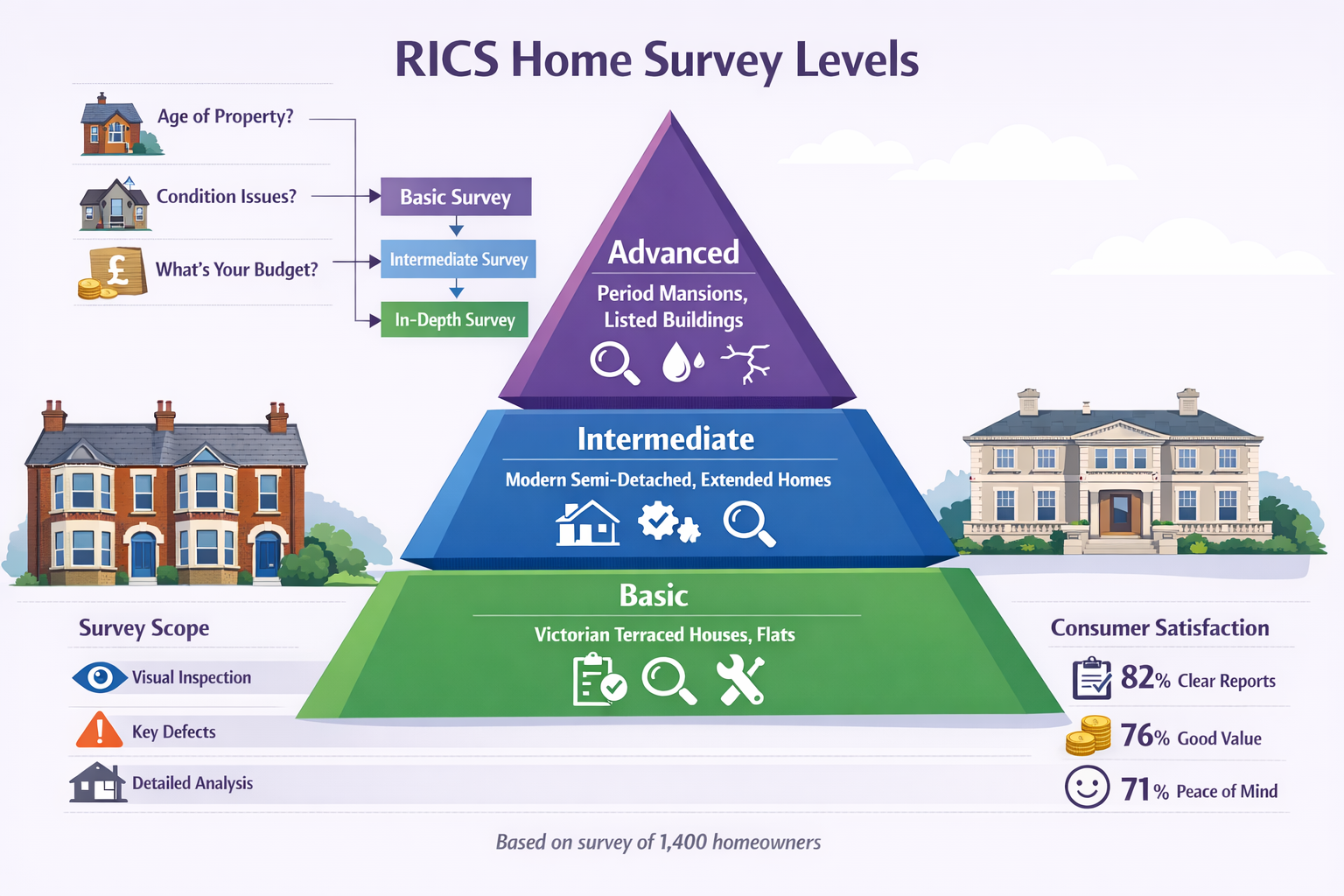
The journey toward the RICS Home Survey Standards Updates 2026: Enhancements for Consumer Insights and Tech Integration began with the original standard published in 2019 and implemented in 2021[1]. This foundational framework established a three-tier system designed to provide homebuyers with appropriate levels of property inspection based on their specific circumstances.
The Original 2019 Standard: Foundation and Limitations
When RICS first introduced the standardized home survey framework, it aimed to create consistency across the profession and help consumers navigate the often-confusing landscape of property inspections. The three levels—Level 1 (Condition Report), Level 2 (HomeBuyer Report), and Level 3 (Building Survey)—provided a structured approach to property assessment.
However, as the standard matured through practical application, several challenges emerged:
- Consumer confusion about which level suited their property type
- Unclear boundaries between what different survey levels included
- Limited guidance on emerging inspection technologies
- Insufficient distinction between basic checks and comprehensive testing
- Variable reporting quality across different surveyors
These limitations became increasingly apparent as homebuyer expectations evolved and technology advanced. The property market's transformation, particularly accelerated by the pandemic-era housing boom and subsequent market adjustments, highlighted the need for standards that could adapt to changing consumer needs.
The Consultation Process: Listening to Stakeholders
On August 19, 2025, RICS launched a comprehensive six-week consultation period to gather feedback on proposed updates to the home survey standard[1]. This consultation represented a significant commitment to collaborative standard-setting, engaging multiple stakeholder groups:
RICS Member Survey: Over 325 chartered surveyors provided detailed input through a dedicated member survey focused on the standard's effectiveness and areas for improvement[1]. These professionals brought frontline experience, highlighting practical challenges in applying the existing framework and suggesting enhancements based on real-world property inspections.
Consumer Research: Savanta, a nationally recognized market research company, conducted a UK-wide survey of approximately 1,400 homeowners who had purchased a property or commissioned a home survey within the past five years[2]. This research provided invaluable insights into consumer understanding, expectations, and pain points when engaging with survey services.
Industry Stakeholders: The consultation also gathered input from mortgage lenders, estate agents, legal professionals, and other parties involved in property transactions. Their perspectives helped ensure the updated standards would function effectively within the broader property ecosystem.
The response exceeded expectations, with over 1,000 detailed comments received during the consultation period[3]. This unprecedented level of engagement demonstrated the surveying community's commitment to improving standards and the importance stakeholders placed on getting these updates right.
Current Analysis Phase and Timeline
As of February 2026, RICS has entered a critical analysis stage, carefully reviewing the extensive feedback received[3]. A new project lead was appointed in December 2025 to guide the standard through this next phase, bringing fresh perspective and dedicated focus to the complex task of synthesizing diverse stakeholder input[3].
The analysis process involves:
- Categorizing feedback into thematic areas (clarity, technical requirements, consumer understanding, reporting frameworks)
- Identifying consensus points where stakeholder views align
- Resolving conflicting recommendations through expert panel review
- Drafting revised standard language that addresses key concerns
- Ensuring practical applicability across diverse property types and regional contexts
RICS has committed to sharing progress and next steps by the end of March 2026[3], providing transparency about how stakeholder feedback has shaped the final standards. This timeline positions the surveying profession for implementation of the updated standards throughout 2026, allowing chartered surveyors adequate time to adapt their practices and training.
For those considering a property survey, understanding what types of building surveys are there remains essential even as standards evolve, as the fundamental three-level structure continues to provide the framework for property assessment.
Key Enhancements in the 2026 RICS Home Survey Standards Updates
The RICS Home Survey Standards Updates 2026: Enhancements for Consumer Insights and Tech Integration introduce several transformative changes designed to address the limitations identified through consultation and research. These enhancements focus on three primary areas: consumer clarity, service differentiation, and reporting quality.
Simplified Service Level Descriptions: Basic, Intermediate, and Advanced
One of the most significant changes in the updated standards is the reframing of survey levels using more intuitive terminology. The three levels are now described as 'basic,' 'intermediate,' or 'advanced' to provide consumers with clearer choice and understanding of appropriate service levels for different property types and client needs[2].
This terminology shift addresses a fundamental consumer comprehension challenge. Research revealed that many homebuyers struggled to understand the difference between "Level 1," "Level 2," and "Level 3" surveys, often making decisions based on price rather than property suitability. The new descriptors create immediate associations:
Basic Survey (formerly Level 1 – Condition Report):
- Suitable for newer properties in good condition
- Provides straightforward condition assessment
- Identifies obvious defects and urgent issues
- Cost-effective option for lower-risk purchases
Intermediate Survey (formerly Level 2 – HomeBuyer Report):
- Appropriate for conventional properties in reasonable condition
- Includes more detailed inspection and advice
- Provides guidance on defects, repairs, and maintenance
- The most commonly selected survey type
Advanced Survey (formerly Level 3 – Building Survey):
- Essential for older, altered, or complex properties
- Comprehensive inspection of all accessible areas
- Detailed analysis of construction, condition, and defects
- Tailored reporting addressing specific client concerns
Understanding what's in a Level 2 survey and what's in a Level 3 survey helps contextualize how these enhanced descriptions translate to practical inspection scope.
Enhanced Reporting Framework: Building from Level to Level
Section 4 of the updated standard has been significantly expanded to demonstrate how reporting builds progressively from one level to the next[2]. This enhancement addresses surveyor confusion about appropriate reporting depth and helps consumers understand what additional value higher-level surveys provide.
The enhanced framework clarifies:
- Baseline requirements that all surveys must meet regardless of level
- Incremental additions at each subsequent level
- Reporting structure that maintains consistency while allowing appropriate detail
- Visual presentation standards for defect identification and risk communication
Appendix A has been particularly strengthened, detailing how inspections differ between the three levels with specific examples[2]. This granular guidance helps surveyors understand exactly what each level requires and enables quality assurance processes to verify compliance.
For instance, the updated standard now provides clear specifications for common building elements:
| Building Element | Basic Survey | Intermediate Survey | Advanced Survey |
|---|---|---|---|
| Roof | Visual inspection from ground level | Inspection using binoculars from ground; access to roof space if available | Close inspection of roof covering; detailed roof space examination; identification of construction type |
| Walls | Visual check for obvious defects | Inspection for cracks, dampness, and structural movement | Detailed analysis of construction, condition assessment, investigation of defects |
| Services | Confirmation of presence | Basic operational checks | Detailed inspection with recommendations for specialist testing |
This structured approach ensures consumers receive appropriate value at each level while preventing scope creep that could undermine the distinct purpose of each survey type.
Checking vs. Testing: Critical Service Distinctions
Perhaps the most consumer-focused enhancement in the RICS Home Survey Standards Updates 2026: Enhancements for Consumer Insights and Tech Integration is the clear distinction between "checking" and "testing" services[2]. Homeowner research revealed significant confusion about what surveyors actually do during inspections, particularly regarding building services and installations.
The updated standard now explicitly differentiates:
Checking: Visual inspection and basic operational verification without specialist equipment or invasive investigation. For example, the revised standard specifies that for gas appliances, the gas hob should be operated to check that gas is connected[2]. This demonstrates functionality without requiring Gas Safe certification or specialist testing equipment.
Testing: Comprehensive assessment using specialist equipment, qualifications, or invasive techniques. Examples include electrical installation testing, gas safety certification, drainage CCTV surveys, or structural load calculations.
This distinction appears throughout the updated standard, providing clarity on what each survey level includes:
- Basic surveys primarily involve checking, with limited testing
- Intermediate surveys include checking with recommendations for specialist testing where concerns arise
- Advanced surveys incorporate more extensive checking and may include some basic testing, with detailed recommendations for specialist investigations
This clarification protects both consumers and surveyors. Homebuyers understand what they're purchasing, while surveyors have clear boundaries preventing liability for specialist testing outside their scope of competence. The distinction also creates natural referral pathways to specialist consultants when deeper investigation is warranted.
For properties requiring specialized assessment, services like premium drone surveys represent the type of enhanced inspection technology that complements traditional survey methods without replacing fundamental checking protocols.
Clarity and Conciseness: Responding to Professional Feedback
A consistent theme throughout the 1,000+ consultation comments was the need for the draft standard to be clearer and more concise in its requirements[3]. RICS professionals emphasized that overly complex or ambiguous language created compliance challenges and increased the risk of inconsistent application across the profession.
The 2026 updates address this concern through:
- Plain language replacing technical jargon where possible
- Specific examples illustrating abstract requirements
- Structured formatting using tables, lists, and visual hierarchies
- Reduced redundancy eliminating repetitive provisions
- Clear definitions for technical terms that must be used
This focus on clarity serves multiple purposes. For surveyors, it reduces interpretation uncertainty and supports consistent quality across the profession. For consumers, it makes the standard more accessible when they research what to expect from their survey. For regulators and quality assurance bodies, it provides clearer benchmarks for compliance assessment.
The emphasis on conciseness also reflects practical realities of professional practice. Surveyors need standards they can readily reference during inspections and report preparation. Overly lengthy or complex standards risk becoming reference documents consulted only during disputes rather than practical guides shaping daily work.
Technology Integration in Modern Home Surveys
The RICS Home Survey Standards Updates 2026: Enhancements for Consumer Insights and Tech Integration represent a significant step forward in acknowledging and accommodating technological advancement in property inspection. While maintaining the fundamental principles of professional surveying, the updated standards create space for innovative tools that enhance inspection quality and consumer understanding.
Thermal Imaging and Moisture Detection
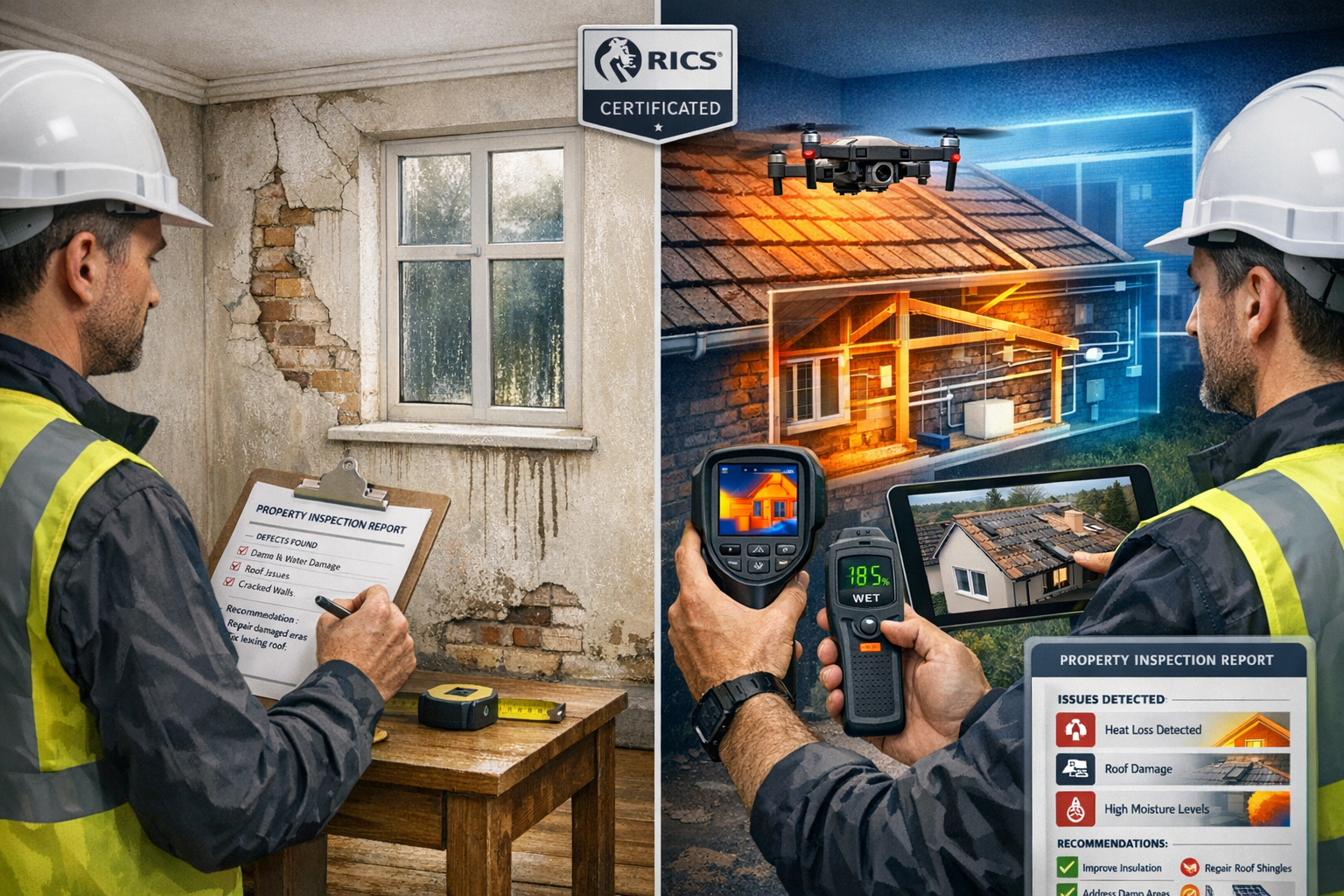
Modern surveyors increasingly employ thermal imaging cameras to identify issues invisible to the naked eye. These devices detect temperature variations that may indicate:
- Heat loss through inadequate insulation
- Hidden moisture penetration
- Air leakage around windows and doors
- Underfloor heating malfunctions
- Electrical hotspots indicating potential fire risks
The updated standards acknowledge thermal imaging as a valuable supplementary tool, particularly for intermediate and advanced surveys. However, they maintain important distinctions: thermal imaging constitutes "checking" when used to identify potential issues requiring further investigation, but comprehensive thermal surveys with detailed heat loss calculations represent specialist "testing" beyond standard survey scope.
Similarly, electronic moisture meters have become standard equipment for most surveyors, providing objective measurements to supplement visual assessment of dampness. The 2026 standards recognize these tools while emphasizing that technology enhances rather than replaces professional judgment and experience.
Drone Technology for Roof and High-Level Inspections
Unmanned aerial vehicles (UAVs), commonly known as drones, have revolutionized access to roof areas and other high-level building elements that traditionally required expensive scaffolding or cherry pickers. The updated standards explicitly accommodate drone technology while establishing appropriate safeguards:
- Surveyors using drones must hold appropriate CAA certifications
- Drone inspections supplement rather than replace traditional methods where safe access is possible
- Image quality must meet minimum resolution standards for defect identification
- Limitations of drone inspection (inability to test materials, assess structural integrity through touch) must be clearly stated in reports
For properties with complex roof structures or safety concerns regarding physical access, drone surveys provide valuable inspection capabilities that enhance survey quality while reducing risk to surveyors.
The standards also address emerging applications such as photogrammetry—using drone imagery to create 3D models of buildings—while maintaining that such advanced techniques remain supplementary to core survey requirements rather than substitutes.
Digital Reporting and Enhanced Visualization
Consumer research highlighted strong demand for more accessible, visually engaging survey reports[2]. Traditional text-heavy documents often overwhelmed homebuyers, particularly first-time purchasers unfamiliar with construction terminology.
The updated standards encourage digital reporting innovations including:
- Annotated photographs with arrows, circles, and labels highlighting specific defects
- Condition rating systems using color coding (red/amber/green) for quick comprehension
- Interactive digital reports allowing readers to navigate by room or defect type
- Video walkthroughs supplementing written reports for complex issues
- Embedded links to guidance documents explaining common defects and remediation options
These enhancements align with broader consumer expectations shaped by digital experiences in other sectors. However, the standards maintain that visual enhancements must complement rather than replace clear written explanations, ensuring reports remain accessible to all consumers regardless of digital literacy.
The framework also addresses data security and longevity concerns, requiring that digital reports remain accessible for reasonable periods and that critical information isn't dependent on proprietary platforms that may become obsolete.
Building Information Modeling (BIM) and Data Integration
Looking toward future developments, the updated standards acknowledge the growing role of Building Information Modeling (BIM) in property management and maintenance. While full BIM integration remains beyond current home survey scope, the standards encourage data structuring that facilitates future integration:
- Standardized defect categorization enabling database compilation
- Consistent location referencing allowing mapping to building plans
- Structured condition data supporting predictive maintenance algorithms
- Export formats compatible with property management platforms
This forward-looking approach positions home surveys as potential data sources for broader property lifecycle management, particularly relevant as retrofit and sustainability considerations increase property assessment complexity.
For properties undergoing significant alterations or requiring detailed documentation, understanding how long a building survey takes helps set realistic expectations for comprehensive technology-enhanced inspections.
Consumer Insights Driving Standards Evolution
The RICS Home Survey Standards Updates 2026: Enhancements for Consumer Insights and Tech Integration represent a fundamental shift toward consumer-centric standard setting. The extensive research involving 1,400 homeowners provided unprecedented insight into how property buyers experience and understand survey services[2].
Key Consumer Pain Points Identified
The Savanta research revealed several critical gaps between professional understanding and consumer expectations:
Service Level Confusion: Many homebuyers struggled to determine which survey level suited their property. The research found that consumers often defaulted to the cheapest option or relied heavily on estate agent recommendations rather than making informed decisions based on property characteristics.
Scope Uncertainty: Significant numbers of homeowners expressed surprise at what their survey didn't include, particularly regarding:
- Electrical and gas safety testing
- Drainage investigation
- Boundary and title issues
- Future maintenance cost projections
- Energy efficiency assessment
Report Accessibility: While surveyors viewed comprehensive technical documentation as quality indicators, consumers often found lengthy reports overwhelming. Many homebuyers admitted to reading only the summary sections, potentially missing important information buried in detailed technical descriptions.
Value Perception: A concerning proportion of respondents questioned whether their survey provided value for money, particularly when reports identified issues as "requiring specialist investigation" without providing actionable guidance on next steps or cost implications.
How the Updated Standards Address Consumer Needs
The 2026 standards directly respond to these insights through multiple enhancements:
Decision Support: The basic/intermediate/advanced terminology helps consumers match survey levels to property types. The updated standards also encourage surveyors to provide pre-instruction guidance helping clients understand which level suits their circumstances.
Scope Transparency: Enhanced reporting requirements ensure surveys clearly state what they include and exclude. The checking vs. testing distinction helps consumers understand when specialist investigations are appropriate and why they fall outside standard survey scope.
Structured Reporting: The expanded Section 4 framework promotes report structures that present critical information prominently while maintaining comprehensive documentation for those who want deeper detail. Executive summaries, condition ratings, and visual enhancements improve accessibility without sacrificing technical rigor.
Actionable Recommendations: The standards encourage surveyors to provide practical next steps when issues are identified, including typical cost ranges for common repairs and clear guidance on urgency. This helps consumers prioritize actions and budget appropriately.
For those weighing survey options, comparing Level 2 vs Level 3 surveys with the enhanced clarity of the 2026 standards makes informed decision-making significantly more accessible.
Balancing Professional Standards with Consumer Understanding
One of the most challenging aspects of the standards update has been maintaining professional rigor while improving consumer accessibility. The consultation revealed some tension between these objectives:
Professional Perspective: Surveyors emphasized the importance of technical accuracy, appropriate caveats, and clear limitation statements to manage liability and maintain professional standards.
Consumer Perspective: Homebuyers wanted straightforward answers, clear condition assessments, and practical guidance without extensive technical qualifications.
The updated standards navigate this tension through:
- Layered reporting that provides clear summaries supported by technical detail
- Plain language requirements for consumer-facing sections while maintaining technical precision in detailed analysis
- Risk-based communication that clearly differentiates urgent issues from routine maintenance
- Standardized terminology that consumers can research and understand across different surveyors' reports
This balanced approach recognizes that home surveys serve dual purposes: providing professional documentation for property transactions while empowering consumers to make informed decisions about potentially the largest purchase of their lives.
Quality Improvements and Professional Development
Beyond consumer-facing enhancements, the RICS Home Survey Standards Updates 2026: Enhancements for Consumer Insights and Tech Integration include significant provisions strengthening quality assurance and professional competence across the surveying profession.
Strengthened Competence Requirements
The updated standards place greater emphasis on surveyor competence, particularly regarding:
Technology Proficiency: As thermal imaging, drones, and digital reporting become standard tools, surveyors must demonstrate appropriate training and certification. The standards establish minimum competence requirements for technology use, ensuring that innovative tools enhance rather than compromise inspection quality.
Continuing Professional Development (CPD): Enhanced CPD requirements ensure surveyors remain current with evolving construction techniques, defect identification methods, and reporting best practices. Specific CPD modules addressing the updated standards will be required for all surveyors conducting home surveys.
Specialist Knowledge: The standards more clearly delineate when specialist expertise is required, encouraging surveyors to recognize the limits of their competence and engage appropriate specialists rather than attempting to address issues beyond their expertise.
Quality Assurance and Compliance Monitoring
RICS has strengthened quality assurance mechanisms accompanying the updated standards:
Report Reviews: Enhanced random report review processes will verify compliance with the new standards, focusing particularly on:
- Appropriate service level delivery
- Clear distinction between checking and testing
- Adequate defect identification and description
- Consumer-accessible reporting
Consumer Feedback: Systematic collection of consumer feedback on survey quality will inform ongoing standard refinement and identify surveyors requiring additional support or intervention.
Peer Review Programs: Encouragement of voluntary peer review arrangements where surveyors review colleagues' reports to share best practices and identify improvement opportunities.
These quality mechanisms aim to raise baseline standards across the profession while identifying and addressing outliers who may not meet minimum requirements.
Addressing Retrofit and Sustainability Considerations
The updated standards arrive amid growing focus on property retrofit and energy efficiency, driven by net-zero commitments and rising energy costs. While home surveys have traditionally focused on structural condition and defect identification, the 2026 standards acknowledge the increasing importance of sustainability considerations:
Energy Efficiency Observation: While detailed energy assessments remain the domain of specialist Energy Performance Certificate (EPC) assessors, the updated standards encourage surveyors to note obvious energy efficiency issues such as:
- Inadequate insulation
- Single-glazed windows
- Inefficient heating systems
- Poor ventilation leading to condensation
Retrofit Potential: For advanced surveys particularly, the standards encourage commentary on retrofit potential, helping homebuyers understand opportunities for property improvement alongside defect identification.
Sustainable Materials: Recognition of sustainable and traditional construction materials that may require specialized maintenance approaches, helping consumers understand the implications of owning properties built with lime mortar, breathable walls, or other traditional techniques.
This sustainability integration reflects discussions at recent retrofit summits highlighting the surveying profession's role in supporting the UK's building stock transition toward greater energy efficiency.
For properties requiring specialized assessment of structural issues or building defects, understanding services like building defects surveys helps contextualize the comprehensive approach advanced surveys provide.
Practical Implications for Homebuyers and Property Professionals
The RICS Home Survey Standards Updates 2026: Enhancements for Consumer Insights and Tech Integration will have far-reaching effects across the property sector, influencing how homebuyers, surveyors, mortgage lenders, and other professionals approach property assessment.
What Homebuyers Should Expect
As the updated standards are implemented throughout 2026, homebuyers can anticipate several improvements in their survey experience:
Clearer Service Descriptions: When requesting quotes, surveyors should provide plain-language explanations of what basic, intermediate, and advanced surveys include, helping buyers make informed choices based on property characteristics rather than price alone.
Enhanced Reports: Survey reports should become more accessible, with clear visual presentation, structured condition ratings, and prominent presentation of critical issues alongside comprehensive technical documentation.
Better Value Perception: The checking vs. testing distinction should reduce surprises about survey scope, while enhanced recommendations should provide clearer guidance on next steps and cost implications.
Technology Benefits: Depending on property characteristics and survey level, buyers may benefit from thermal imaging insights, drone roof inspections, and digital report formats that enhance understanding.
Homebuyers should also understand that these improvements may influence survey pricing. Enhanced reporting, technology integration, and strengthened quality requirements may increase costs for some survey types, though competitive market forces will moderate these effects.
Understanding potential average price reductions after survey helps contextualize survey costs against the potential savings from identified defects.
Implications for Chartered Surveyors
Surveyors must prepare for several practical changes as the updated standards are implemented:
Training Requirements: Familiarization with the updated standards will be essential, likely through mandatory CPD modules covering key changes, enhanced reporting requirements, and technology integration expectations.
Report Template Updates: Most surveyors will need to revise report templates to align with enhanced reporting frameworks, incorporate checking vs. testing distinctions, and improve visual presentation.
Technology Investment: Surveyors not already using thermal imaging, drones, or digital reporting platforms may need to invest in these tools or risk competitive disadvantage as consumer expectations evolve.
Quality Assurance: Enhanced compliance monitoring means surveyors must ensure consistent adherence to updated standards, potentially requiring internal quality review processes before report issuance.
Client Communication: The emphasis on consumer understanding requires surveyors to enhance pre-instruction consultations, helping clients select appropriate survey levels and understand what their chosen survey will and won't include.
For surveying firms, understanding the Prince Chartered Surveyors way provides insight into how leading practices are already implementing many of these enhanced approaches.
Impact on Mortgage Lenders and Conveyancers
The updated standards also affect other property transaction professionals:
Mortgage Lenders: Enhanced survey quality and clearer reporting should improve risk assessment accuracy, potentially influencing lending decisions. Lenders may need to update guidance to borrowers about survey selection, emphasizing property-appropriate choices over cost minimization.
Conveyancing Solicitors: Better survey reports with clearer defect identification and risk communication should facilitate more informed legal advice and negotiation. Solicitors may find it easier to advise clients on whether identified issues warrant price renegotiation or transaction withdrawal.
Estate Agents: Agents should prepare for more informed buyers who better understand survey options and may request property-specific survey recommendations. Enhanced survey quality may also influence price negotiations when significant defects are identified.
Regional Considerations and Market Variations
The updated standards apply across the United Kingdom, but practical implementation will vary by region based on:
Property Characteristics: Areas with predominantly newer housing stock may see greater uptake of basic surveys, while regions with older, more complex properties will continue to demand advanced surveys.
Market Conditions: In competitive markets, buyers may face pressure to minimize survey scope to expedite transactions, while slower markets allow more comprehensive assessment.
Local Building Traditions: Regions with distinctive construction methods (stone cottages in the Cotswolds, timber-framed buildings in the Southeast, tenements in Scotland) require surveyors with specialized local knowledge that the updated standards increasingly recognize.
For buyers in specific areas, accessing chartered surveyors in London or other regions ensures local expertise aligned with updated national standards.
Looking Ahead: Future Developments and Industry Trends

As the RICS Home Survey Standards Updates 2026: Enhancements for Consumer Insights and Tech Integration move toward full implementation, several emerging trends will likely influence future standard evolution.
Artificial Intelligence and Automated Analysis
Machine learning algorithms are increasingly capable of analyzing property images to identify potential defects, comparing properties against vast databases of similar buildings to predict maintenance issues and estimate repair costs. While current standards focus on human professional judgment, future iterations may need to address:
- Appropriate use of AI-assisted defect identification
- Quality standards for automated analysis tools
- Professional responsibility when using AI recommendations
- Consumer disclosure about AI involvement in survey processes
Climate Change Adaptation
Extreme weather events and changing climate patterns are creating new property risks that traditional surveys may not adequately address:
- Flood risk assessment beyond simple location checking
- Overheating potential in increasingly hot summers
- Storm resilience of roof coverings and building envelopes
- Subsidence risk from changing soil moisture patterns
Future standards may incorporate climate adaptation considerations more explicitly, helping homebuyers understand not just current condition but future resilience.
Integrated Property Passports
The concept of digital property passports—comprehensive records following properties throughout their lifecycle—is gaining traction across Europe. Home surveys could become foundational documents in these passports, requiring:
- Standardized data formats enabling digital integration
- Longitudinal tracking of property condition over time
- Integration with energy performance, planning permissions, and maintenance records
- Blockchain or similar technologies ensuring data integrity
Enhanced Consumer Protection
Consumer advocacy groups continue pressing for stronger homebuyer protections, potentially influencing future standards through:
- Mandatory survey requirements for certain property types or transaction values
- Standardized pricing frameworks improving market transparency
- Enhanced redress mechanisms when surveys fail to identify significant defects
- Clearer professional indemnity insurance requirements
Evolving Professional Roles
The surveying profession itself is evolving, with implications for future standards:
- Specialization: Growing complexity may drive increased specialization, with surveyors focusing on specific property types, periods, or defect categories
- Multidisciplinary Teams: Complex properties may increasingly require coordinated assessments from multiple specialists rather than generalist surveyors
- Technology Specialists: Emergence of surveyors specializing in technology-enhanced inspection methods
- Consumer Advisors: Evolution toward advisory roles helping clients interpret and act on survey findings
Conclusion: Embracing Enhanced Standards for Better Property Outcomes
The RICS Home Survey Standards Updates 2026: Enhancements for Consumer Insights and Tech Integration represent a significant milestone in the evolution of professional property surveying. By responding to extensive stakeholder feedback—including input from over 325 RICS professionals and 1,400 homeowners—these updates address critical gaps in consumer understanding while embracing technological innovation and strengthening quality standards[1][2].
The shift to basic, intermediate, and advanced terminology provides clearer guidance for homebuyers navigating survey options, while the enhanced distinction between checking and testing sets realistic expectations about survey scope[2]. Expanded reporting frameworks ensure consistent quality across the profession, and technology integration provisions position surveyors to leverage modern tools while maintaining professional judgment and expertise.
As RICS completes its analysis of the 1,000+ consultation comments and prepares to release final standards by March 2026[3], the surveying profession stands at a pivotal moment. These updates offer an opportunity to strengthen public trust, improve service quality, and demonstrate the enduring value of professional property assessment in an increasingly complex property market.
Actionable Next Steps
For Homebuyers:
- ✅ Research survey options using the enhanced basic/intermediate/advanced framework to match survey level to your property type
- ✅ Ask surveyors about their technology capabilities and how thermal imaging or drone inspections might benefit your specific property
- ✅ Review sample reports before commissioning surveys to ensure reporting style meets your accessibility needs
- ✅ Budget appropriately for the survey level your property requires rather than defaulting to the cheapest option
For Chartered Surveyors:
- ✅ Complete CPD training on the updated standards as soon as available
- ✅ Review and update report templates to align with enhanced reporting frameworks
- ✅ Invest in technology that improves inspection quality and consumer understanding
- ✅ Enhance client consultations to help buyers select appropriate survey levels
- ✅ Participate in peer review programs to share best practices and maintain quality
For Property Professionals:
- ✅ Update client guidance to reflect enhanced survey standards and clearer service descriptions
- ✅ Recommend property-appropriate survey levels rather than generic advice
- ✅ Collaborate with surveyors to ensure smooth transaction processes
- ✅ Stay informed about ongoing standards implementation and industry developments
The RICS Home Survey Standards Updates 2026: Enhancements for Consumer Insights and Tech Integration demonstrate the surveying profession's commitment to continuous improvement and consumer-focused service delivery. By embracing these enhanced standards, the industry can ensure that professional property surveys remain an essential, valued component of informed property transactions well into the future.
For those seeking professional survey services aligned with the latest standards and best practices, exploring comprehensive building survey services provides access to chartered surveyors committed to quality, transparency, and consumer understanding.
References
[1] Rics Launches Consultation Updated Home Survey Standard – https://www.rics.org/news-insights/rics-launches-consultation-updated-home-survey-standard
[2] Understanding The Rics Home Survey Standard Proposal – https://www.rics.org/news-insights/understanding-the-rics-home-survey-standard-proposal
[3] Home Survey Standard 2nd Edition A Progress Update – https://www.rics.org/news-insights/home-survey-standard-2nd-edition-a-progress-update
[4] Building Survey Quality Standards 2026 Navigating Rics Updates And Enhanced Home Inspection Requirements – https://nottinghillsurveyors.com/blog/building-survey-quality-standards-2026-navigating-rics-updates-and-enhanced-home-inspection-requirements
[5] Home Survey Standards – https://www.rics.org/profession-standards/rics-standards-and-guidance/sector-standards/building-surveying-standards/home-surveys/home-survey-standards