

Last updated: October 20, 2026
Quick Answer
Renters' Rights Act rents in October 2026 are climbing because landlords are pricing in higher legal and compliance risk, while new lettings supply has fallen sharply. Knight Frank data shows prime outer London rents up 3% year on year, and Pegasus Insight research finds the typical UK renter now pays £917 a month, 11% more than last year. With 88% of landlords worried about a possible income tax rise in the 28 October Budget, further rent increases look likely into 2027.
Key Takeaways
- Prime outer London rents rose 3% in the year to September 2026 and 2.3% over the last six months, the fastest half-year pace since January 2024 (Knight Frank, via Landlord Today).
- New lettings listings in prime outer London fell 6.4% in the year to August 2026, tightening supply.
- Tenant-to-property demand ratios of 8.9 (outer London) and 5.6 (central London) are higher than at any point since before the pandemic in some segments.
- 88% of landlords fear a 2% income tax rise on personally held rental income, up 3 points on last quarter (Pegasus Insight).
- 64% of landlords say they would pass higher taxes on to tenants through rent rises.
- The typical renter pays £917 a month, up 11% year on year; 46% of tenants in place over a year had a rent increase.
- The Autumn Budget lands on 28 October 2026; any new tax rate would take effect from April 2027, but landlords are repricing now.
What Is the Renters' Rights Act and Why Does It Matter in October 2026
The Renters' Rights Act is the legislation that took effect in May 2026, overhauling tenancy rules across England, and by October 2026 its effects are showing up directly in rent data. It restricts how and when landlords can end tenancies, changes possession procedures, and increases the compliance burden on anyone letting a property.
For landlords, the Act means:
- Fewer routes to quickly end a tenancy, even where there are genuine grounds.
- Greater reliance on court processes to regain possession.
- More documentation and procedural steps before and during a tenancy.
Knight Frank, cited by Landlord Today in early October 2026, describes the resulting rent increases as "an unintended but predictable consequence" of the Act. The logic is straightforward: when it becomes harder and slower to remove a problem tenant, landlords treat every new letting as higher risk and price accordingly.
Why Are Rents Increasing Because of the Renters' Rights Act
Rents are rising mainly because landlords are reducing stock and raising asking prices to cover added legal risk, not because demand has suddenly exploded. The supply side has tightened faster than the demand side has grown, and that combination pushes prices up.
Knight Frank's figures make the mechanism visible:
- New lettings listings in prime outer London down 6.4% in the year to August 2026.
- Tenant-to-property ratio of 8.9 in the three months to September, above pandemic-era peaks.
- Prime central London tenant-to-property ratio of 5.6, the highest in four years.
Fewer landlords are willing to bring new properties to the rental market while possession rules are unsettled, and some existing landlords are exiting altogether. That shrinks choice for tenants just as rents are already elevated.
How Much Will My Rent Go Up With the Renters' Rights Act
There is no single fixed figure, but recent data gives a useful range. Prime outer London rents are up 3% over the past year and 2.3% in just the last six months. Pegasus Insight puts the average UK renter's monthly bill at £917, up 11% year on year, and finds 46% of tenants who have been in their home over a year saw an increase in the past 12 months.
More than a quarter of tenants surveyed by Pegasus Insight expect rents to rise specifically because of Renters' Rights Act compliance costs, against only 9% who expect falls. That split suggests most tenants anticipate further increases rather than relief.
Decision rule for tenants: if a rent review notice cites "compliance costs" or "regulatory changes" as the reason, expect further rises to follow at each renewal, not a one-off adjustment.
What Tax Increases Do Landlords Face in 2026
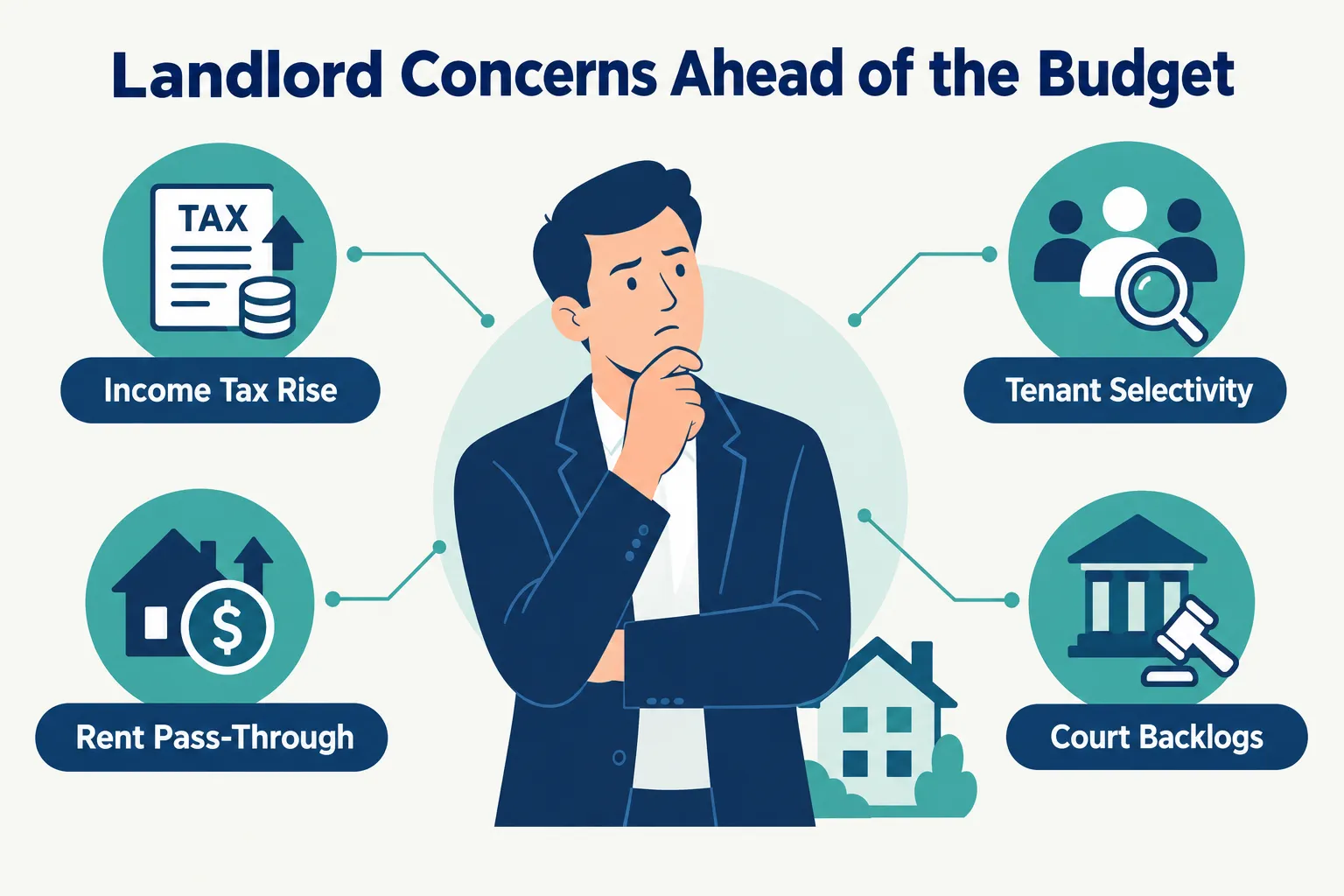
Landlords face the prospect of a 2% rise in income tax rates on rental income held in personal names, a change under discussion ahead of the 28 October 2026 Budget, with any new rate due to apply from April 2027. Pegasus Insight research, reported 1 October 2026, found 88% of landlords are concerned about this, up 3 percentage points on the previous quarter.
Mark Long, founder and director of Pegasus Insight, said the private rented sector needs "a period of stability" and that "The Budget should not add to those pressures." His comment reflects a sector already absorbing the Renters' Rights Act while bracing for a tax decision.
Key figures from the same research:
| Measure | Share of landlords |
|---|---|
| Concerned about 2% income tax rise | 88% |
| Would recoup losses via higher rents | 64% |
| More selective about tenants | 83% |
| Very concerned about court backlogs for possession | 91% |
Can Landlords Raise Rent Under the Renters' Rights Act
Yes, landlords can still increase rent under the Act, but the process is more structured than before, and rent rises must follow the Act's formal review mechanism rather than being imposed informally mid-tenancy. This is one reason landlords are setting higher asking rents at the point of a new letting, since adjusting rent later is more constrained.
Practical implications:
- Rent increases generally need proper notice and must reflect a fair market rate.
- Tenants can challenge rises they believe are unreasonable.
- Landlords who want flexibility are front-loading that flexibility into the initial asking rent.
Common mistake: assuming the Act stops rent rises entirely. It does not; it changes the process and timing, which is part of why asking rents on new lets have moved up.
Which Areas Does the Renters' Rights Act Apply To
The Renters' Rights Act applies across England's private rented sector; it is not limited to London or any single region, though the data most readily available in October 2026 focuses on prime London markets tracked by Knight Frank. Landlords and tenants outside London operate under the same national framework, even where local rent growth figures differ.
Does the Renters' Rights Act apply to all rental properties? In broad terms, yes, it covers assured tenancies in the private rented sector in England. Specific exemptions exist for certain tenancy types, so landlords should check their own agreements against current guidance rather than assume blanket coverage.
Does the Renters' Rights Act Help or Hurt Tenants, and Is It Working to Control Rents
The evidence so far suggests the Act is not controlling rents and may be adding upward pressure instead. Tenant protections around eviction and tenancy security have strengthened, but affordability has worsened for many renters in the areas where data exists.
- Benefit to tenants: stronger protection against short-notice eviction and clearer procedural rights.
- Cost to tenants: higher asking rents, tighter choice (listings down 6.4% in a year), and 83% of landlords now say they will be more selective about who they let to.
So the Act is helping on security of tenure while, on current evidence, making the market tighter and pricier. Whether it is "working" depends on which goal is being measured.
Are Landlords Selling Rental Properties Because of This
Some landlords are reducing exposure to the rental market rather than continuing to let, reflected in the 6.4% fall in new lettings listings over the year to August 2026. The 91% of landlords "very concerned" about court backlogs when regaining possession is a strong signal that exit or reduction, not expansion, is the more common response among anxious landlords right now.
For landlords weighing whether to hold, sell, or improve a property, an independent condition survey and up-to-date portfolio valuation give a far clearer basis for that decision than general market sentiment.
What Should I Do if My Landlord Raises My Rent, and How to Fight Unfair Increases
Tenants facing a rent increase should first check that the landlord has followed the correct notice process under the Renters' Rights Act, then compare the new figure against local market rents before deciding whether to challenge it. Acting quickly matters because formal challenge routes usually have time limits.
Steps to take:
- Request the increase in writing if not already provided, with the effective date.
- Compare the proposed rent against similar local properties currently advertised.
- Check whether the increase follows the Act's required review process.
- Seek advice from a tenants' advice service or solicitor if the rise looks disproportionate to local market rates.
- Keep records of all correspondence in case of a formal dispute.
Edge case: if a landlord tries to increase rent informally outside the proper review mechanism, that increase may not be enforceable, and tenants should query it before agreeing.
What Policies Would Work Better Than the Renters' Rights Act Alone
Pegasus Insight's Mark Long argues the sector needs "a period of stability," implying that further rapid policy or tax change, layered on top of a six-month-old Act, risks compounding the supply squeeze rather than fixing it. A pause on additional landlord tax rises alongside the existing Act, giving the market time to adjust, is the clearest alternative implied by current industry commentary.
Measures suggested by the data itself rather than any named manifesto:
- Avoiding a tax increase that 64% of landlords say they would simply pass to tenants.
- Addressing court backlogs directly, since 91% of landlords cite this as a core source of anxiety.
- Giving the Act time to bed in before adding further regulatory or fiscal change.
What This Means for You
For landlords across England weighing decisions before and after the 28 October Budget, a clear-eyed view of a property's condition and value matters more than headlines. Prince Surveyors, RICS chartered surveyors working with landlords, investors and homeowners, recommends the following before any rent review, sale decision, or refinancing conversation:
- Get a current market valuation. Asking rents have moved quickly in some areas; a dated valuation can mislead both landlords and lenders.
- Commission a condition survey. Decisions to hold, sell, or improve a property should rest on evidence, not guesswork, especially with tighter margins ahead.
- Review compliance documentation. With landlords becoming more selective about tenants (83%, per Pegasus Insight), paperwork gaps are a growing source of dispute.
- Model the tax scenario. Even though any new rate would not apply until April 2027, cash flow planning should start now.
- Tenants should keep a paper trail. Any rent review notice should be checked against the correct process before acceptance.
FAQ
What is the Renters' Rights Act in October 2026?
It is legislation that took effect in May 2026, changing possession rules and tenancy protections in England's private rented sector, and it is now linked by Knight Frank to rising rents due to landlords pricing in added risk.
Why are rents rising under the Renters' Rights Act?
Landlords are asking more for new lettings to offset increased legal risk and reduced flexibility, while new lettings supply has fallen 6.4% over the year to August 2026 (Knight Frank), pushing demand ratios higher.
Will my landlord definitely raise my rent?
Not automatically, but 46% of tenants in place over a year saw a rise in the past 12 months, and over a quarter of tenants expect further rises tied to compliance costs (Pegasus Insight).
Are landlord taxes actually going up in 2026?
No decision has been confirmed; the Autumn Budget is on 28 October 2026, and any new 2% income tax rate on personally held rental income would start from April 2027, but 88% of landlords are already concerned.
Can I challenge a rent increase under the Act?
Yes, tenants can challenge rent increases that do not follow the correct process or appear above local market rates, ideally with advice from a tenants' advice service.
Should landlords sell now because of the Act?
Not necessarily. A condition survey and current valuation from a RICS chartered surveyor give a much firmer basis for a hold, sell, or improve decision than reacting to headlines alone.
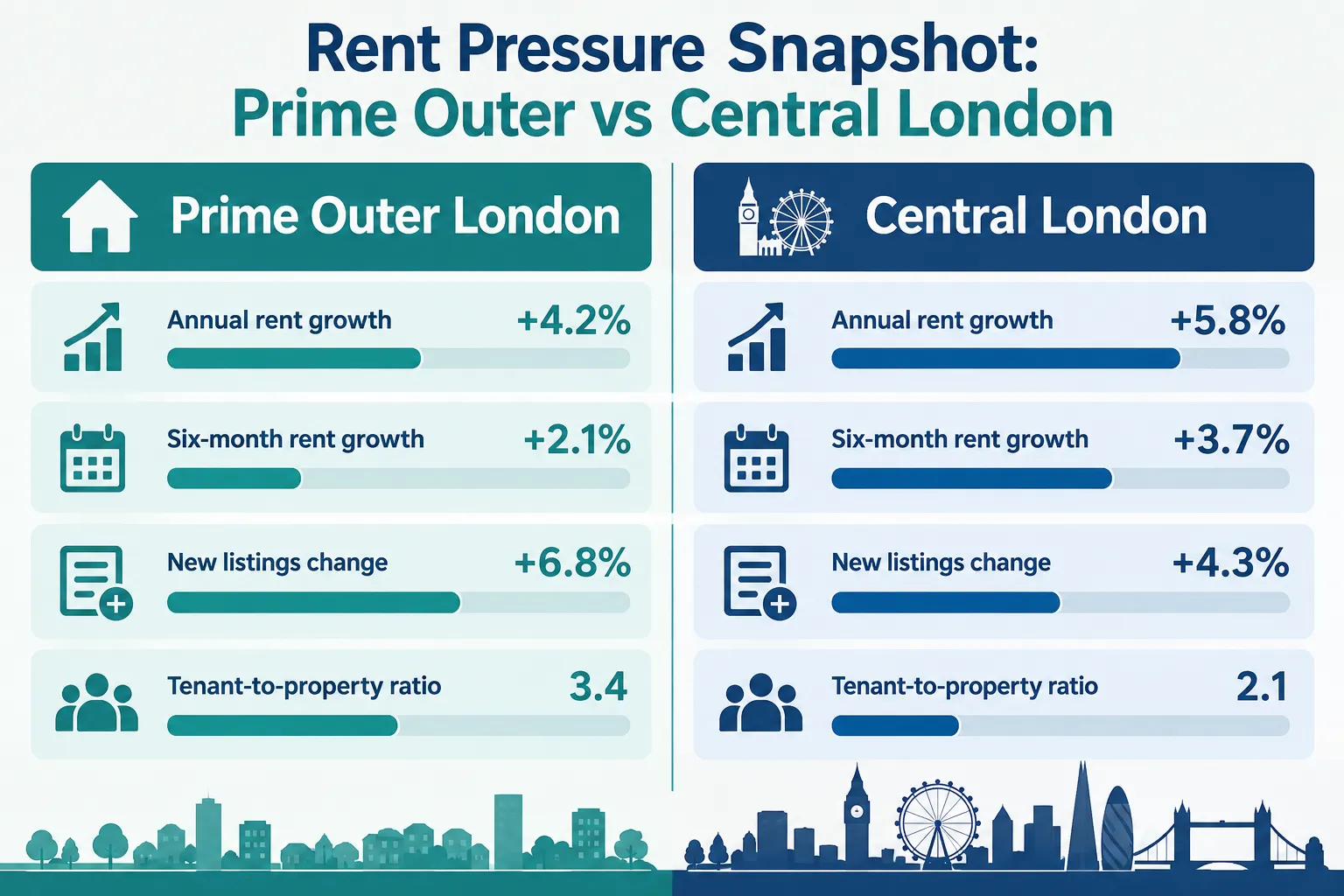
Rent pressure snapshot, October 2026 (Knight Frank data via Landlord Today)
| Measure | Prime outer London | Prime central London |
|---|---|---|
| Annual rent growth | 3.0% | 1.3% |
| Six-month rent growth | 2.3% | 1.8% |
| New listings change, year to August | -6.4% | n/a |
| Tenant-to-property ratio | 8.9 | 5.6 |
Conclusion
Renters' Rights Act rents in October 2026 are telling a consistent story: stronger tenant protections have arrived alongside tighter supply and higher prices. Knight Frank's figures show rent growth accelerating in prime London markets, and Pegasus Insight's research shows landlords bracing for a possible tax change that most say they would pass straight on to tenants.
Landlords should use the weeks around the 28 October Budget to get an independent valuation and condition survey before making hold, sell, or improve decisions, rather than reacting to speculation. Tenants facing a rent increase should check the notice is procedurally correct and benchmark it against local market rates before accepting it. Prince Surveyors, as RICS chartered surveyors working across England, can provide the valuation and condition evidence landlords need to plan with confidence through this period of regulatory and fiscal uncertainty.
Renters Rights Act, rental market England, rent increases 2026, landlord taxes, Autumn Budget 2026, prime London rents, Knight Frank rental data, Pegasus Insight, tenant rights, property valuation, buy to let, RICS chartered surveyors
LANGUAGE: en