

A tenant in Dagenham challenged a rent rise and the tribunal approved an 88% increase, from £1,200 to £2,250 a month. Another tenant who challenged a tiny £17 increase walked away paying £200 less. Both outcomes came from the same tribunal system, under the same law, within months of each other. That contradiction is exactly why rent tribunal increases under the Renters' Rights Act in London are now the single most important thing landlords and tenants need to understand before signing, serving, or contesting a new rent notice in 2026.
Since 1 May 2026, every rent increase in England has had to go through a statutory notice process, with tenants able to challenge at the First-tier Tribunal. Two independent analyses published in early November 2026 show a system that is unpredictable, fast-growing in caseload, and increasingly shaped by hard market evidence rather than guesswork.
Key Takeaways
- Two separate November 2026 analyses found tribunals cut a majority of challenged rent rises, but outcomes vary widely case by case.
- London Renters Union found 80% of tenants who challenged still saw rent rise, by an average £1,200 a year; one Dagenham case saw an 88% increase approved.
- Landlord Sums found tribunals reduced 70% of challenged increases nationally, with London landlords typically seeking 16.7% and getting 9.5%.
- Tribunal volumes have surged from 48 decisions a month to 194 in September 2026, straining a system with roughly 30 full-time judges nationwide.
- Both analyses only cover challenged increases, a small share of all rent rises, so their figures are not directly comparable.
What the Two Rent Tribunal Increases Renters' Rights Act London Analyses Actually Found
The London Renters Union analysis looked at First-tier Tribunal cases from May to October 2026 and reported its findings on 3 November 2026. It found that 80% of tenants who challenged a rent increase still saw their rent go up, by an average of £1,200 a year. Landlords' proposed increases were approved in full in 36% of cases, reduced in 42%, cancelled entirely in 16%, and in 6% of cases the tribunal actually lowered the rent below what the tenant was already paying.
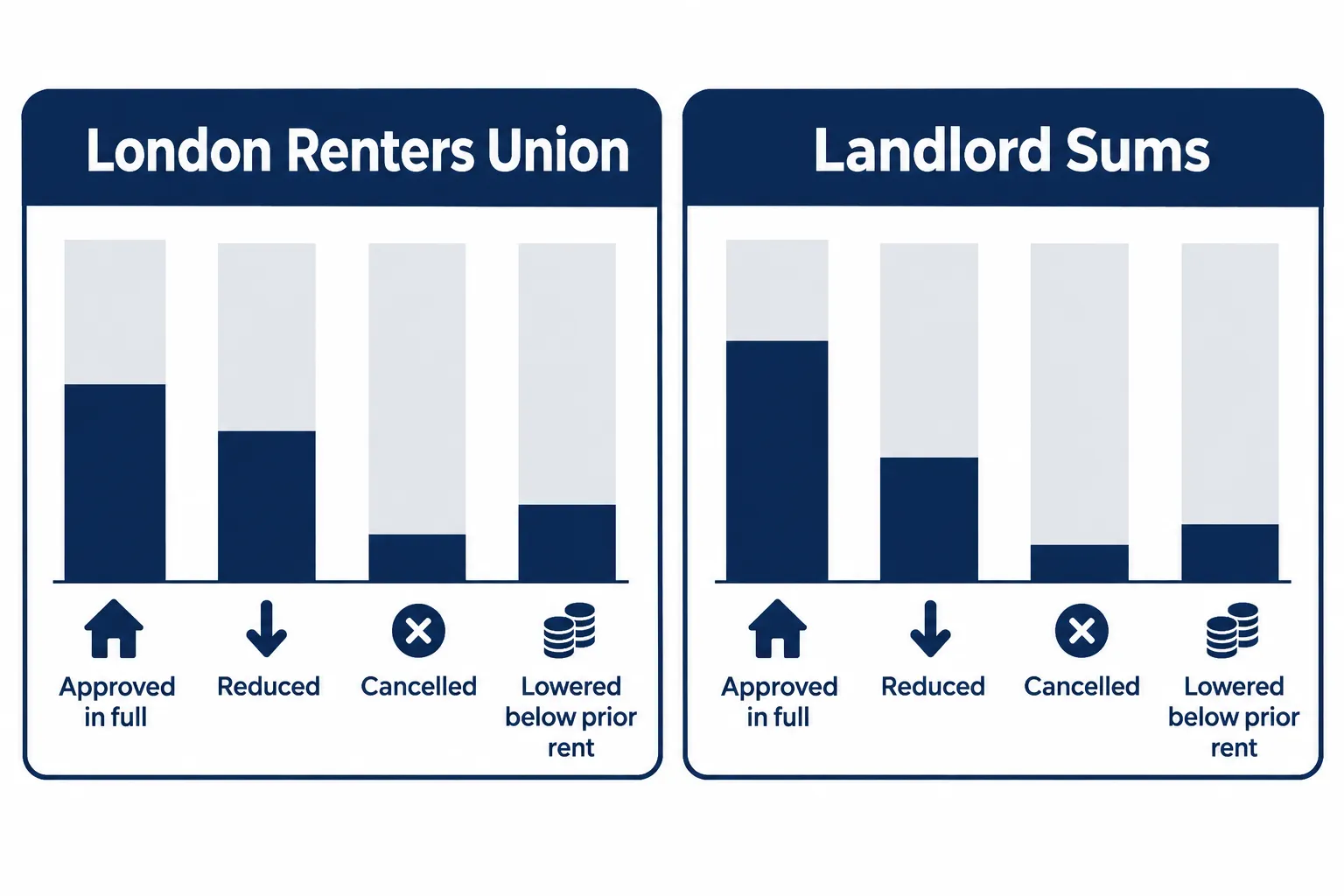
The most striking example came from Dagenham, where a tribunal approved an 88% rent increase, taking rent from £1,200 to £2,250 a month. In sharp contrast, another tenant who challenged a proposed £17-a-month increase secured a £200 reduction, because the tribunal found the existing rent was already above market level.
The second analysis, from Landlord Sums and reported by Property Industry Eye on 2 November 2026, examined 667 market rent decisions made on or after 1 May 2026. It found tribunals reduced 70% of challenged increases nationally. Landlords typically sought a 14% rise but were typically allowed just 7.7%. Only 26% of proposals were approved in full, 10% saw no increase allowed, and 4% resulted in rent being set below what the tenant already paid. Notably, proposals above 50% were cut in 88% of cases.
London-specific figures from Landlord Sums covered 208 decisions. Landlords in the capital typically sought a 16.7% rise but were typically allowed only 9.5%, with 66% of proposals cut.
Caseload Pressure on Rent Tribunal Increases Renters' Rights Act London Decisions
Tribunal volumes have surged. Landlord Sums recorded an average of 48 market rent decisions a month between January 2025 and April 2026, which jumped to 165 a month from May to September 2026, peaking at 194 in September alone. Chris Norris, chief policy officer of the National Residential Landlords Association, said the system is "not working for anyone," noting that just over 30 full-time judges are handling cases nationwide. The Ministry of Housing, Communities and Local Government maintains that the Act gives tenants more power to challenge above-market rises.
| Metric | London Renters Union (May-Oct 2026) | Landlord Sums (National, post 1 May 2026) |
|---|---|---|
| Approved in full | 36% | 26% (national) |
| Reduced | 42% | 70% (national); 66% in London |
| Cancelled / no rise allowed | 16% | 10% (national) |
| Rent lowered below prior level | 6% | 4% (national) |
| Typical rise sought vs allowed | Not stated | London: 16.7% sought, 9.5% allowed |
Important caveat: both analyses only cover increases that were actually challenged at tribunal. Most rent increases in London are never contested, and the two studies use different samples and time periods, so their percentages should not be read as directly comparable.
How Landlords and Tenants Should Respond to Rent Tribunal Increases Renters' Rights Act London Rules
Under the Renters' Rights Act, landlords in England can raise rent only once a year using the statutory notice procedure. Tenants can challenge at the First-tier Tribunal, which decides the open-market rent for the property. Critically, the tribunal cannot set a rent higher than what the landlord originally proposed, and the new rent applies only from the date of the tribunal's decision, not backdated to the notice date.
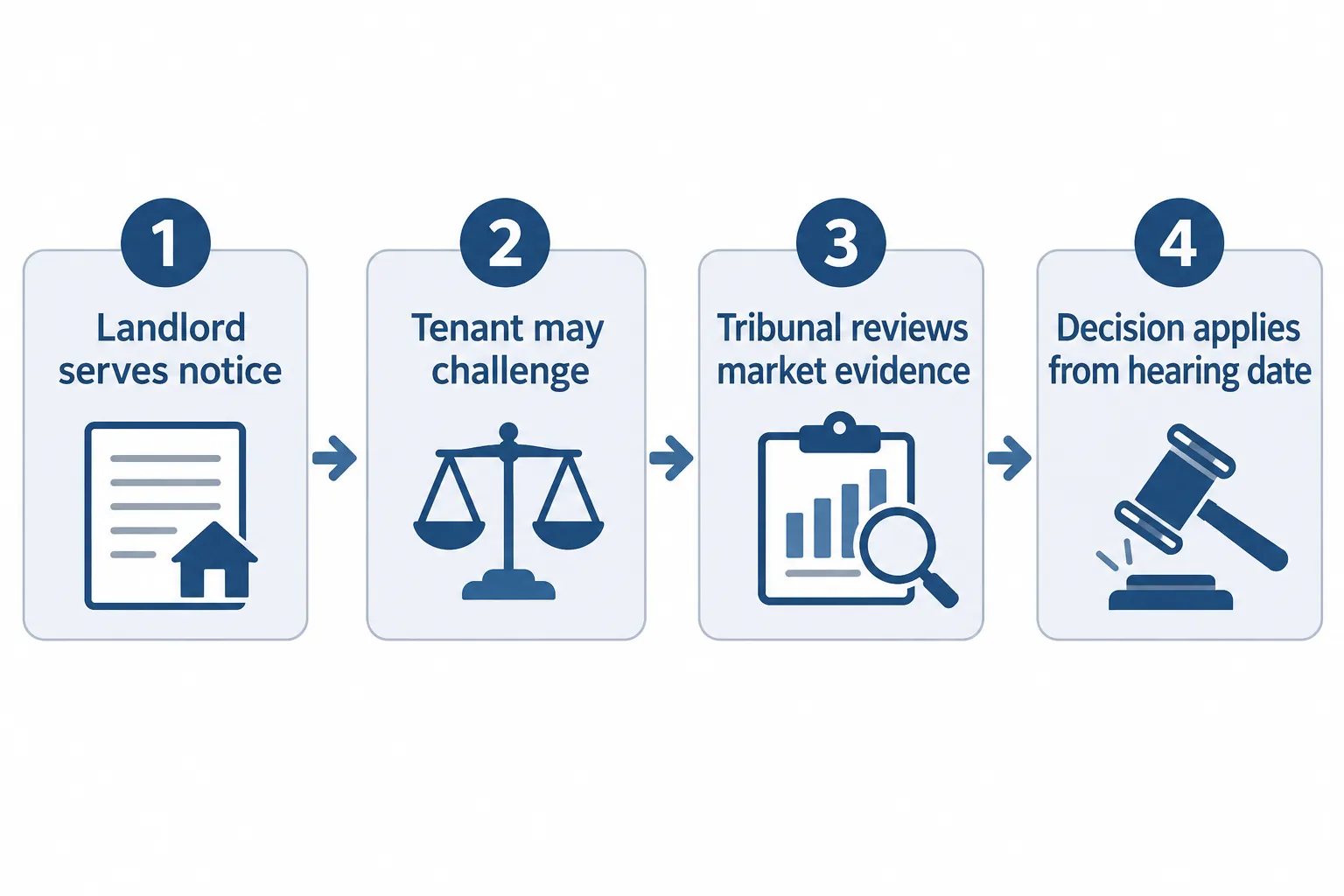
This structure means outcomes hinge almost entirely on evidence of comparable market rents. A Pegasus Insight survey found 64% of landlords would raise rents further if their taxes increased, and the Autumn Budget confirmed income tax on rental income will rise to 24%, 44% and 49% from April 2027. That financial pressure makes it likely more landlords will test higher increases, and more tenants will challenge them, pushing tribunal volumes higher still.
As a Landlord Sums spokesperson put it: "The safest rise is one you can back up with local rents."
Why Market Evidence Decides Rent Tribunal Increases Renters' Rights Act London Cases
Because tribunals decide purely on open-market rent evidence, the single biggest factor in any case is the quality of comparable evidence presented. An independent rental valuation from a RICS Registered Valuer gives landlords a defensible, evidence-based figure before they serve notice, reducing the risk of a costly cut like those seen in 70% of Landlord Sums cases. For tenants, an independent valuation helps judge realistically whether a challenge is likely to reduce the rent, hold it steady, or risk the kind of outcome seen in Dagenham, where the increase was approved in full.
Conclusion
The data is clear on one point: rent tribunal increases under the Renters' Rights Act in London are far from guaranteed for either side. Landlords proposing steep rises face a high chance of reduction, especially above 50%, while tenants challenging modest or fair increases may still see rent rise regardless. Before serving a notice or lodging a challenge, both landlords and tenants should seek an independent market rent valuation from a RICS Registered Valuer. Grounding any decision in solid comparable evidence, rather than guesswork, is now the clearest way to avoid an unwanted tribunal surprise.
FAQ: Rent Tribunal Increases Renters' Rights Act London
Can a tribunal set a rent higher than what the landlord asked for?
No. The tribunal cannot set a rent above the amount the landlord originally proposed in the notice.
When does a new tribunal-decided rent take effect?
From the date of the tribunal's decision, not backdated to when the original notice was served.
How often can landlords raise rent under the Renters' Rights Act?
Only once a year, using the statutory notice procedure.
Is challenging a rent increase guaranteed to reduce it?
No. London Renters Union found 80% of tenants who challenged still saw rent rise, sometimes by large amounts.
Do these statistics cover all rent increases in London?
No. Both analyses only cover increases that were formally challenged at tribunal, a small fraction of all rent rises.
Why would an independent valuation help before going to tribunal?
Tribunals decide cases on market-rent evidence, so a RICS Registered Valuer's assessment helps set a defensible increase or judge whether a challenge is worthwhile.