

Last updated: July 24, 2026
Quick Answer: The expert witness services market is growing steadily in 2026, driven by litigation reform, post-pandemic economic recovery, and rising complexity in property and business valuation disputes. UK property professionals, homeowners, and landlords facing valuation challenges need qualified chartered surveyors who meet stricter evidentiary standards and can deliver court-ready opinions. Demand is highest in leasehold, commercial, and matrimonial valuation cases.
Key Takeaways
- The global expert witness services market is projected to reach approximately USD 705.68 million in 2026, growing at a CAGR of around 5.79% through 2032, reflecting sustained demand across valuation-heavy litigation.
- Litigation reform in the UK and internationally has raised the evidentiary bar: expert witnesses must now demonstrate robust methodology, sufficient data, and reliable application to case facts.
- Valuation disputes in 2026 span residential, commercial, leasehold, matrimonial, and inheritance tax cases, each requiring a specialist with the right credentials.
- Virtual expert witness testimony is now widely accepted in UK tribunals and courts, provided the expert's credentials and methodology meet the same standards as in-person appearances.
- Alternative dispute resolution (ADR) methods such as mediation and expert determination are reducing the volume of cases that reach full litigation, but they still require qualified valuation experts.
- Common mistakes when hiring expert witnesses include choosing a generalist over a specialist, failing to check RICS membership, and not confirming the expert's experience with the specific dispute type.
- Generative AI use in expert report preparation is under increasing judicial scrutiny in 2026, with courts in some jurisdictions ordering disclosure of AI prompts used in report drafting.
What Is an Expert Witness in Valuation Disputes?
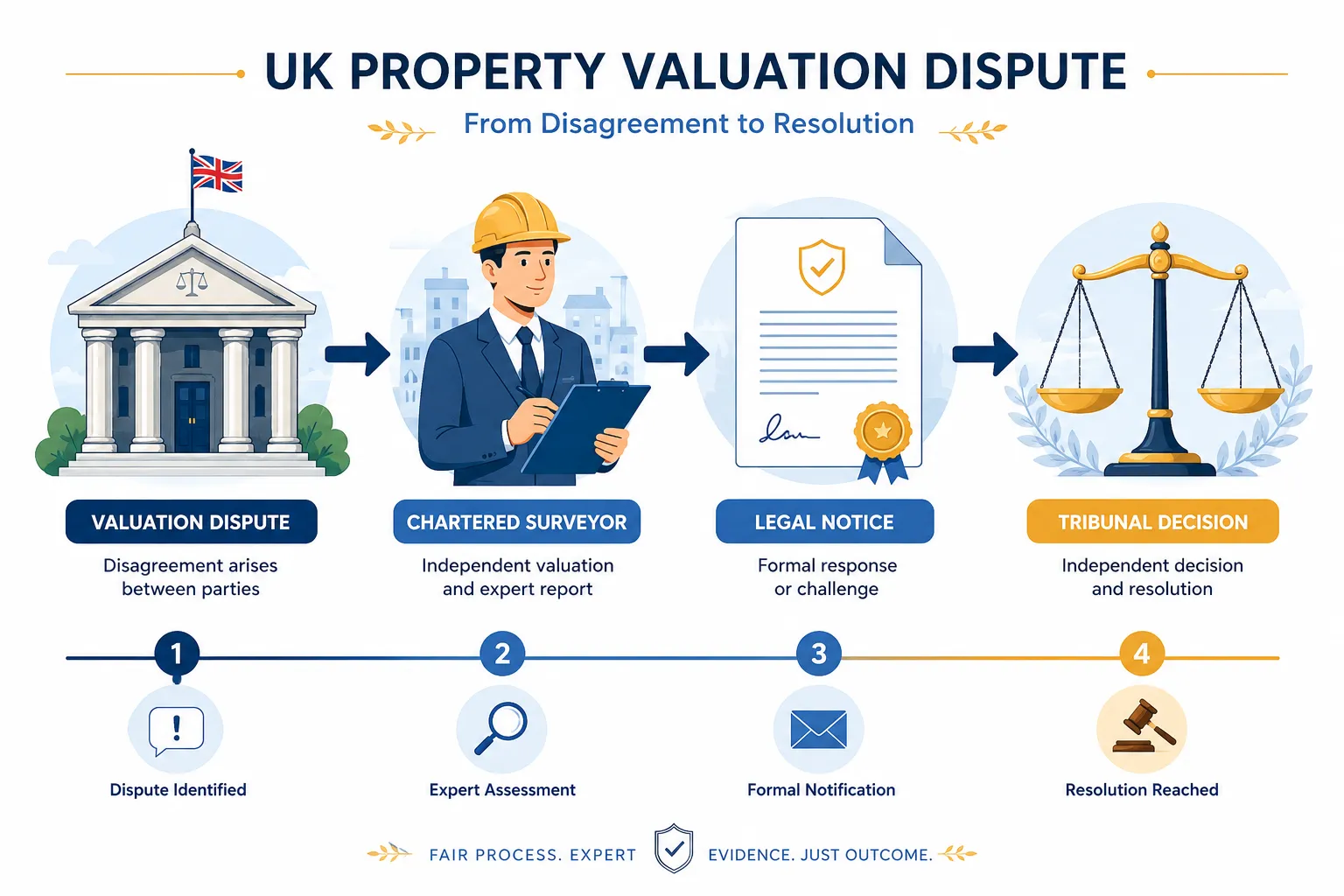
An expert witness in a valuation dispute is a qualified professional appointed to provide an independent, court-admissible opinion on the value of a property or asset. In the UK, this role is most commonly filled by a chartered surveyor holding RICS (Royal Institution of Chartered Surveyors) membership, who can give evidence in courts, tribunals, and arbitration proceedings.
Their duty is to the court or tribunal, not to the party that instructed them. This independence is non-negotiable. An expert witness differs from an advocate: they must present a balanced, evidence-based opinion even if it does not fully support the instructing party's position.
Expert witnesses in property cases typically cover:
- Residential valuations for disputed sales, probate, or matrimonial proceedings
- Commercial property valuations for lease renewals, rent reviews, or compulsory purchase
- Leasehold extension and enfranchisement valuations
- Inheritance tax and capital gains tax valuations
- Insurance reinstatement cost assessments
For cases involving residential and commercial property, a professional RICS-regulated valuation service provides the foundation for any expert witness instruction.
How Are Valuation Disputes Changing in 2026?
Valuation disputes in 2026 are more complex, more data-intensive, and more scrutinised than at any point in the past decade. Three forces are reshaping the landscape: post-pandemic economic recovery, legislative reform, and the growing use of technology in both property markets and courtrooms.
Post-recovery market volatility has created disagreement over "correct" values at key dates, particularly in commercial property, where rental values shifted sharply between 2020 and 2025. Parties to disputes often hold genuinely different, defensible positions, making independent expert evidence essential.
Reform and Recovery Impacts on Expert Witness Demand: 2026 Strategies for Valuation Disputes are also being shaped by:
- Increased leasehold reform activity following the Leasehold and Freehold Reform Act 2024, which has generated a wave of enfranchisement and lease extension disputes requiring specialist leasehold extension and enfranchisement valuations
- Greater scrutiny of AI-assisted report preparation, with courts beginning to require disclosure of any AI tools used in drafting expert opinions
- Rising demand for damages quantification in business interruption and diminished value cases, where forensic accountants and valuation professionals must work together
What Reforms Affect Expert Witness Demand?
Several legislative and procedural reforms directly affect how expert witnesses operate and how much demand exists for their services.
In the UK, the Civil Procedure Rules (CPR) Part 35 continues to govern expert evidence, emphasising the expert's overriding duty to the court. Recent case law has reinforced that courts will not hesitate to reject expert evidence that lacks methodological transparency or relies on unsupported assumptions.
Internationally, the amended Federal Rule of Evidence 702 in the United States (with commentary published in late 2025) has established a stricter gatekeeping standard: expert testimony must rest on sufficient facts or data, reliable principles and methods, and a reliable application to case facts, with no presumption of admissibility. While this is a US rule, it signals a global direction of travel that UK practitioners should note, particularly in cross-border commercial disputes.
Key reform impacts for UK valuation experts include:
| Reform Area | Impact on Expert Witnesses |
|---|---|
| Leasehold and Freehold Reform Act 2024 | Surge in enfranchisement valuation disputes |
| CPR Part 35 case law development | Higher transparency requirements for methodology |
| AI disclosure requirements (emerging) | Experts must document and potentially disclose AI tool use |
| RICS Red Book updates | Valuation methodology must align with current standards |
| ADR expansion (mediation, expert determination) | More pre-litigation expert appointments |
How Much Do Expert Witnesses Cost for Valuation Cases?
Expert witness fees for UK property valuation cases vary considerably depending on the complexity of the dispute, the seniority of the expert, and the type of proceedings involved.
As a general guide (these are estimates based on market norms, not guaranteed rates):
- Single joint expert (SJE) appointments for residential disputes: typically GBP 1,500 to GBP 4,000 for report preparation
- Party-appointed expert witnesses in commercial or leasehold cases: GBP 3,000 to GBP 15,000 or more, depending on hearing time required
- Expert determination in rent review or lease renewal disputes: fees vary by arbitrator/expert but often fall in the GBP 5,000 to GBP 20,000 range for the expert's total involvement
Costs increase significantly when cases proceed to hearing, as experts charge for preparation, attendance, and cross-examination time. Instructing a qualified expert early, before positions become entrenched, often reduces total dispute costs.
For context on what a professional valuation involves before litigation, see this guide to what is looked at during a property valuation.
What Is the Difference Between Business Valuation and Forensic Valuation Experts?
A business valuation expert assesses the value of a company or business interest, typically for transactions, shareholder disputes, or tax purposes. A forensic valuation expert applies valuation methodology within a legal dispute context, often quantifying damages, lost profits, or diminished value.
In property disputes, the relevant specialist is usually a chartered surveyor with valuation expertise, not a business valuation accountant. However, in complex commercial cases involving both property assets and trading businesses (such as hotels, care homes, or licensed premises), both types of expert may be needed.
The distinction matters when instructing an expert:
- Choose a chartered surveyor for disputes about land value, rental value, reinstatement costs, or property-specific diminution
- Choose a forensic accountant for disputes about lost rental income, business interruption losses, or profit-based valuations
- Consider both for mixed-asset disputes involving trading properties
Which Industries Need the Most Expert Witnesses for Valuations?
Property and real estate consistently generate the highest volume of valuation expert witness appointments in the UK. Within property, the highest-demand areas in 2026 are:
- Leasehold residential – enfranchisement, lease extensions, and service charge disputes
- Commercial property – rent reviews, lease renewals, and compulsory purchase
- Matrimonial and family law – property division requiring matrimonial valuations
- Inheritance and probate – inheritance tax valuations disputed by HMRC
- Boundary and party wall disputes – where property value is affected by encroachment or damage
Beyond property, financial services, insurance, and healthcare also generate significant expert witness demand, but these fall outside the scope of chartered surveyor expertise.
How Do I Find a Qualified Valuation Expert Witness?
A qualified valuation expert witness for UK property disputes should hold RICS membership (MRICS or FRICS), have demonstrable experience in the specific type of dispute, and be able to confirm their independence from both parties.
Practical steps to find the right expert:
- Check RICS Find a Surveyor – the official directory of regulated professionals
- Confirm relevant specialism – a residential valuer may not be appropriate for a complex commercial lease dispute
- Ask for prior expert witness experience – courts expect experts who understand CPR Part 35 obligations
- Request a conflicts check – the expert must have no prior relationship with either party
- Verify professional indemnity insurance – essential for any expert appointment
For property valuation disputes in London and the South East, Prince Chartered Surveyors' expert witness report service provides RICS-regulated opinions prepared to court-ready standards.
What Qualifications Should a Valuation Expert Witness Have?
A valuation expert witness in UK property disputes should hold, at minimum, MRICS status with the Royal Institution of Chartered Surveyors, alongside specialist experience in the relevant property type and dispute category.
Beyond the core credential, look for:
- Membership of relevant RICS faculties (Valuation, Commercial Property, or Residential)
- Familiarity with RICS Red Book (Global Standards) – the authoritative valuation methodology guide
- Experience as a Single Joint Expert or party-appointed expert in similar cases
- Continuing professional development in valuation and dispute resolution
- No history of expert evidence being rejected by a court or tribunal
The RICS Red Book sets out the basis of value, valuation approaches, and reporting requirements that courts expect experts to follow. An expert who cannot explain their methodology by reference to these standards will face challenges under cross-examination.
Are Virtual Expert Witnesses Accepted in Valuation Disputes?
Yes. Virtual expert witness appearances are now standard practice in UK courts and tribunals following procedural changes introduced during and after the pandemic. The First-tier Tribunal (Property Chamber), the Upper Tribunal (Lands Chamber), and most civil courts routinely accommodate remote hearings.
The key requirement is that the expert's methodology, independence, and credentials meet the same standard as an in-person appearance. The medium of delivery does not reduce the evidentiary bar.
Practical considerations for virtual expert witness appointments:
- Ensure the expert can access all relevant documents electronically
- Confirm the platform used by the tribunal (most use Cloud Video Platform or Microsoft Teams)
- Allow additional preparation time for remote cross-examination, which can be more demanding than in-person proceedings
How Has Litigation Reform Impacted Expert Witness Requirements?
Reform and Recovery Impacts on Expert Witness Demand: 2026 Strategies for Valuation Disputes are nowhere more visible than in the tightening of admissibility standards. Courts and tribunals are increasingly willing to exclude expert evidence that does not meet procedural and methodological requirements, even where the expert holds strong credentials.
The practical effect is that valuation experts must now:
- Document their data sources explicitly, citing comparable transactions, market reports, and valuation databases
- Explain their methodology step by step, not just state a conclusion
- Address alternative valuations put forward by the opposing expert, rather than ignoring them
- Disclose any AI tools used in report preparation, following emerging judicial scrutiny in 2026
- Comply strictly with CPR Part 35 declaration requirements
This raises the cost and time required to prepare a court-ready expert report, but it also increases the value of instructing a specialist who already works to these standards as a matter of routine practice.
What Is the Recovery Process After a Valuation Dispute?
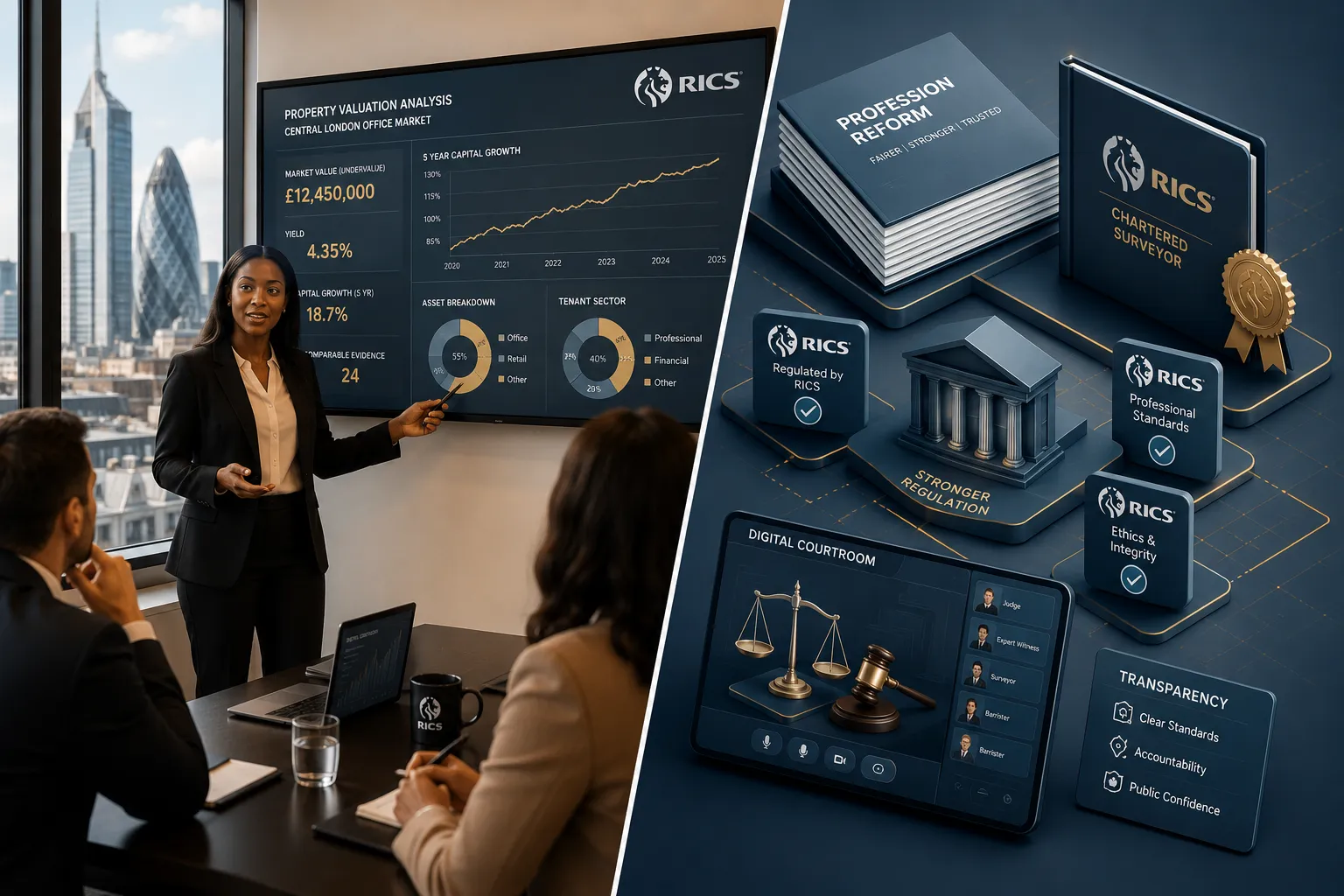
The recovery process after a valuation dispute depends on the outcome: settlement, tribunal award, or court judgment. Each route has different implications for the parties.
After settlement: The agreed valuation becomes binding. If the dispute involved a property transaction, the agreed figure is applied to the purchase price, lease premium, or compensation payment. Legal costs are typically shared or absorbed by each party.
After a tribunal or court award: The expert's valuation (or a figure derived from it) is imposed. The losing party may face an adverse costs order. In leasehold cases, the Upper Tribunal (Lands Chamber) award sets the premium or rent with immediate effect.
Practical recovery steps:
- Obtain a certified copy of the judgment or award
- Instruct solicitors to implement the financial terms
- Update Land Registry entries where title or lease terms have changed
- Review insurance valuations if the dispute revealed a discrepancy, using an insurance reinstatement cost valuation
- Consider whether the dispute reveals a need for ongoing professional valuation advice
How Do New Valuation Standards Affect Expert Witness Testimony?
The RICS Red Book (Global Standards), updated periodically, sets the methodology that UK valuation experts are expected to follow. When standards change, expert witnesses must update their practice accordingly, or risk having their evidence challenged on the basis that it does not reflect current professional norms.
In 2026, key standard developments affecting expert testimony include:
- Greater emphasis on transparency of assumptions, particularly for properties with limited comparable evidence
- Updated guidance on market value versus fair value distinctions, which matter in matrimonial and shareholder dispute contexts
- Increased expectation that experts will consider sustainability and energy efficiency factors in assessing market value, reflecting EPC requirements and buyer behaviour shifts
Experts who have not updated their practice to reflect current Red Book guidance face a real risk of cross-examination challenges. For an overview of how independent valuations are conducted in practice, see this guide to getting an independent property valuation.
What Alternative Dispute Resolution Methods Replace Expert Witnesses?
ADR methods do not entirely replace expert witnesses, but they can reduce the need for full litigation. The most common ADR routes in UK property valuation disputes are:
Expert Determination: An independent expert is appointed to decide the valuation, and their decision is binding on the parties. This is common in commercial lease rent reviews. The expert still needs strong credentials, but the process is faster and cheaper than litigation.
Mediation: A neutral mediator helps parties reach a negotiated settlement. Parties typically each instruct their own valuation expert to advise them during mediation. The mediator does not impose a decision.
RICS Dispute Resolution Service: RICS operates its own arbitration and expert determination service, widely used for property disputes. Experts appointed through this service must meet RICS standards.
Choose ADR if:
- Both parties want a faster, lower-cost resolution
- The dispute turns on a narrow valuation point rather than a complex factual matrix
- The relationship between the parties (e.g., landlord and tenant) needs to be preserved
Choose litigation if:
- One party is uncooperative or acting in bad faith
- The sum in dispute justifies the cost of full proceedings
- A precedent-setting decision is needed
For boundary and party wall disputes where ADR may be appropriate, see the party wall disputes guide.
Interactive Tool: Valuation Dispute Expert Witness Selector
.cg-ew-wrap{font-family:Arial,sans-serif;max-width:560px;margin:24px auto;background:#f7f9fc;border:1px solid #dce3ed;border-radius:8px;padding:20px}
.cg-ew-wrap h3{margin:0 0 14px;font-size:1.05rem;color:#1a2e4a}
.cg-ew-label{display:block;font-size:.88rem;color:#2d3e50;margin-bottom:6px;font-weight:600}
.cg-ew-select{width:100%;padding:8px 10px;border:1px solid #b0bec5;border-radius:5px;font-size:.9rem;margin-bottom:14px;background:#fff}
.cg-ew-btn{background:#1a2e4a;color:#fff;border:none;padding:9px 22px;border-radius:5px;font-size:.9rem;cursor:pointer;width:100%}
.cg-ew-btn:hover{background:#2a4a72}
.cg-ew-result{margin-top:14px;background:#e8f0fb;border-left:4px solid #1a2e4a;padding:12px 14px;border-radius:4px;font-size:.88rem;color:#1a2e4a;display:none}
.cg-ew-result strong{display:block;margin-bottom:4px;font-size:.95rem}
Which Valuation Expert Do You Need?
function cgShowResult(){
var d=document.getElementById(‘cg-dtype’).value;
var s=document.getElementById(‘cg-stage’).value;
var r=document.getElementById(‘cg-result’);
if(!d||!s){r.style.display=’block’;r.innerHTML=’Please select both options.‘;return;}
var map={
leasehold:’RICS-registered chartered surveyor specialising in leasehold reform. MRICS/FRICS essential. Upper Tribunal experience preferred.’,
matrimonial:’Chartered surveyor with matrimonial valuation experience. Must be independent of both parties. MRICS minimum.’,
commercial:’MRICS-qualified commercial valuer with rent review / lease renewal expertise. RICS DRS experience valuable.’,
inheritance:’Chartered surveyor experienced in HMRC-facing valuations. MRICS required; Red Book compliance critical.’,
boundary:’Chartered surveyor with boundary dispute and party wall experience. Expert determination or court experience preferred.’,
insurance:’Chartered surveyor with building cost expertise and BCIS data access. Reinstatement cost assessment specialism.’
};
var stage={early:’At this stage, an expert valuation report can support negotiation and may avoid litigation entirely.’,adr:’For ADR, instruct your expert early so their opinion informs your negotiation position.’,tribunal:’For tribunal/court, confirm your expert has CPR Part 35 experience and has prepared court-ready reports before.’};
r.style.display=’block’;
r.innerHTML=’Recommended Expert Type:‘+map[d]+’
‘+stage[s];
}
FAQ: Expert Witnesses and Valuation Disputes in 2026
What is the difference between a Single Joint Expert and a party-appointed expert?
A Single Joint Expert (SJE) is instructed by both parties jointly and owes a duty to the court alone. A party-appointed expert is instructed by one side but still owes an overriding duty to the court. SJEs are more common in lower-value residential disputes; party-appointed experts are standard in complex commercial cases.
Can a chartered surveyor act as both valuer and expert witness in the same case?
No. The roles are separate. A surveyor who has previously advised one party on the transaction in dispute cannot then act as an independent expert witness. Independence is a fundamental requirement under CPR Part 35.
How long does it take to prepare a valuation expert witness report?
For a straightforward residential case, a report typically takes two to four weeks from instruction. Complex commercial or leasehold cases may require six to twelve weeks, particularly where site inspections, comparable research, and responses to opposing evidence are needed.
Does the expert witness have to attend court in person?
Not always. Many UK tribunals and courts now accept remote attendance by video link. The expert must be available for cross-examination, but the format (in-person or virtual) is usually agreed between the parties or directed by the court.
What happens if the two parties' expert witnesses disagree significantly?
Courts expect experts to meet and produce a Joint Statement of Agreed and Disagreed Issues before the hearing. This narrows the dispute to the genuine points of difference. Where experts remain far apart, the tribunal or court will weigh the evidence and prefer the more methodologically sound opinion.
Is AI use in expert reports allowed?
AI tools may be used to assist with research or drafting, but the expert remains personally responsible for every opinion in the report. In 2026, courts are beginning to require disclosure of AI prompts used in report preparation. Experts should document any AI use and ensure the final report reflects their own independent professional judgment.
What is the RICS Red Book and why does it matter for expert witnesses?
The RICS Red Book (Valuation – Global Standards) sets out the mandatory requirements and best practice guidance for RICS-regulated valuations. Expert witnesses who follow Red Book methodology can demonstrate that their approach meets the recognised professional standard, which strengthens the admissibility and credibility of their evidence.
Conclusion
The reform and recovery impacts on expert witness demand in 2026 are reshaping how valuation disputes are prepared, argued, and resolved across the UK property market. Stricter evidentiary standards, leasehold reform legislation, and growing judicial scrutiny of methodology and AI use have raised the bar for what constitutes credible expert evidence.
Actionable next steps for property owners, landlords, and professionals:
- Instruct a qualified expert early. Early involvement of a RICS-regulated chartered surveyor can clarify your position before costs escalate.
- Match the expert to the dispute type. Leasehold, commercial, matrimonial, and inheritance cases each require different specialist experience.
- Consider ADR before litigation. Expert determination and mediation can resolve valuation disputes faster and at lower cost, particularly where the gap between parties is narrow.
- Verify credentials rigorously. Check RICS membership, confirm independence, and ask about prior expert witness experience in similar cases.
- Stay current with valuation standards. Ensure any expert you instruct is working to current RICS Red Book requirements and is aware of 2026 procedural developments.
For RICS-regulated valuation and expert witness services across London and the South East, Prince Chartered Surveyors provides court-ready reports prepared by qualified chartered surveyors with direct experience in disputed valuation proceedings.
Tags: expert witness valuation, valuation disputes, chartered surveyor expert witness, RICS expert witness, leasehold valuation disputes, litigation reform 2026, property valuation disputes, forensic valuation, alternative dispute resolution property, CPR Part 35, expert witness costs UK, valuation expert qualifications