

{"cover":"Professional landscape format (1536×1024) editorial hero image featuring bold text overlay 'Party Wall Surveys for 2026 UK Retrofit Projects: RICS Checklists and Cost Escalation Protections' in extra large 72pt white sans-serif font with dark shadow and semi-transparent navy overlay box, positioned in upper-third center. Background shows detailed split-screen composition: left side displays Victorian terraced houses mid-retrofit with scaffolding and insulation installation, right side shows RICS surveyor with clipboard inspecting shared wall boundary with thermal imaging camera. Color scheme: deep navy blue, white text, orange safety accents, professional teal highlights. High contrast, magazine cover quality, construction industry editorial style with depth and architectural detail.","content":["Landscape format (1536×1024) detailed infographic illustration showing RICS party wall survey checklist workflow for retrofit projects. Visual composition includes three vertical columns: left column shows pre-retrofit assessment with surveyor examining Victorian party wall structure with magnifying glass highlighting cracks and defects, middle column displays RICS compliance checklist with checkboxes and official logo, right column shows thermal imaging scan overlay on shared wall with heat loss indicators in red-orange gradient. Include clipboard with visible checklist items, measuring tools, safety helmet, and professional documentation. Color palette: professional navy, white, orange safety markers, thermal imaging red-yellow gradient. Clean technical illustration style with annotations and arrows showing process flow.","Landscape format (1536×1024) professional financial chart visualization showing cost escalation protection mechanisms for party wall surveys in 2026. Main visual features dual-axis graph with upward trending line chart in red showing construction cost inflation 2024-2026, overlaid with green protective barrier graphic representing fixed-price agreements and cost caps. Include visual elements: calculator, British pound sterling symbols, contract documents with highlighted clauses, price comparison table showing 2024 vs 2026 surveyor fees. Background shows faded blueprint pattern of terraced housing. Incorporate bar chart comparing costs with and without escalation protections. Color scheme: financial green for savings, red for inflation, navy for professional elements, gold accents for value protection.","Landscape format (1536×1024) detailed scene showing neighbor dispute prevention in retrofit party wall context. Split composition: left side displays two neighbors and RICS surveyor reviewing party wall agreement documents at dining table with architectural plans spread out, handshake gesture indicating cooperation, right side shows cutaway technical diagram of terraced house wall with retrofit insulation installation, cavity wall treatment, and structural support annotations. Include visual elements: signed party wall notice documents, schedule of condition photographs on tablet device, measuring tape on shared wall, professional surveyor badge. Warm, collaborative atmosphere with natural lighting. Color palette: warm neutrals, professional navy, trust-building blues, document white, highlighting yellow for key agreement points. Photorealistic editorial style emphasizing communication and professional mediation."]

The UK construction industry stands at a pivotal moment in 2026. As the sector rebounds with predicted 2% growth and retrofit programmes accelerate toward net zero targets, property owners and developers face an unprecedented challenge: navigating party wall surveys for increasingly complex retrofit projects while managing soaring costs and preventing neighbor disputes[3]. With the Retrofit Academy's Quality Summit highlighting critical gaps in home survey protocols, understanding updated RICS standards for party wall agreements has never been more essential.
Party Wall Surveys for 2026 UK Retrofit Projects: RICS Checklists and Cost Escalation Protections Amid Rising Demand represents a crucial intersection of regulatory compliance, cost management, and neighborly cooperation. As thousands of homeowners embark on energy efficiency upgrades to Victorian terraces and semi-detached properties, the potential for disputes and unexpected expenses has created urgent demand for professional guidance.
Key Takeaways
- 🏗️ Construction growth in 2026 is driving unprecedented demand for party wall surveys, particularly for retrofit projects targeting net zero compliance
- 📋 RICS protocols and checklists provide essential frameworks for conducting compliant party wall surveys during complex retrofit work
- 💷 Cost escalation protections including fixed-price agreements and labor clauses are critical for managing surveyor fees amid rising demand
- 🤝 Neighbor dispute prevention through proper party wall procedures can save thousands in legal costs and project delays
- 📊 Whole-dwelling assessments under PAS 2035 often require party wall considerations for structural and thermal interventions
Understanding the 2026 Retrofit Boom and Party Wall Implications
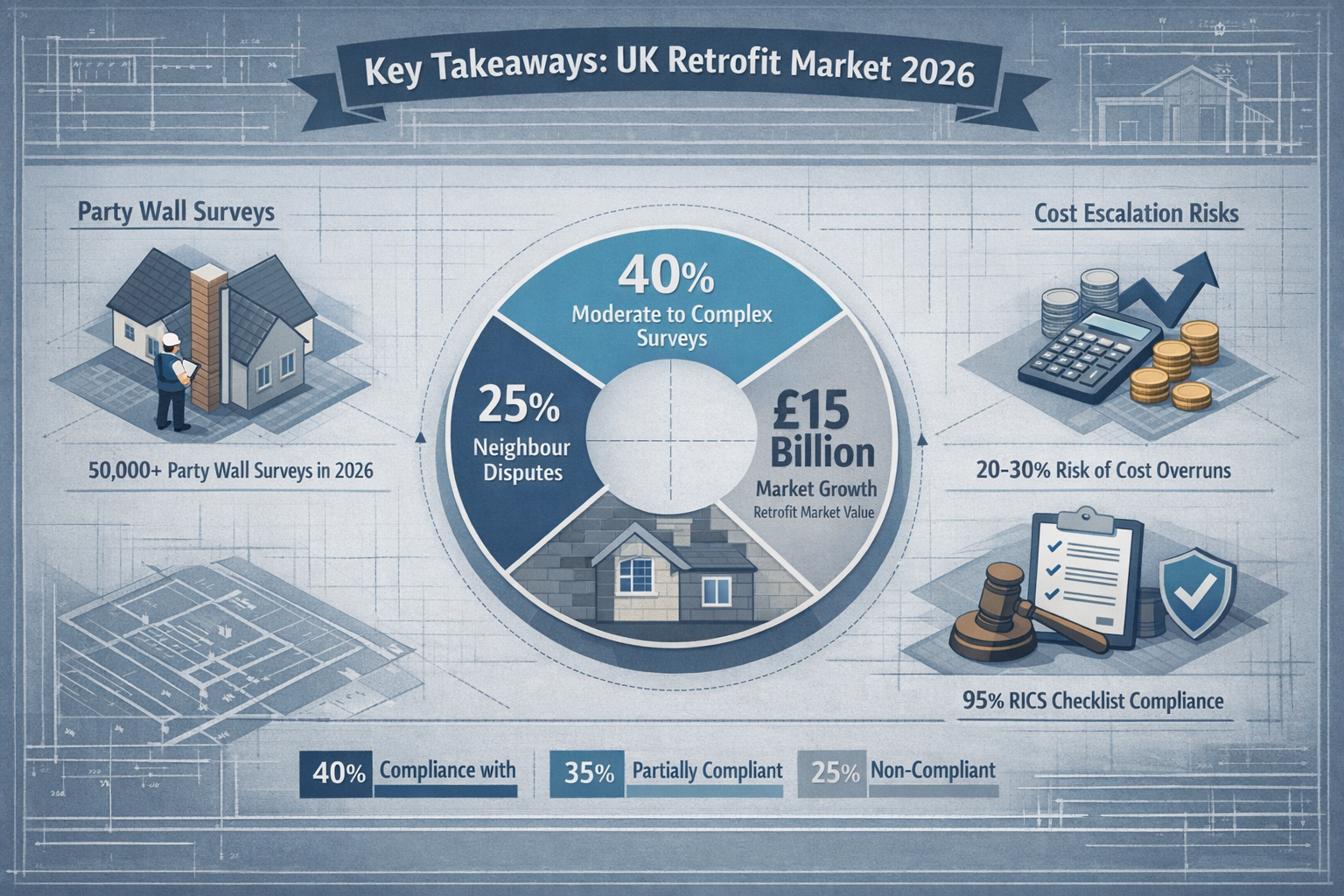
The UK construction industry's return to growth in 2026 marks a significant turnaround after challenging years. Residential construction has shifted back to positive figures, driven largely by retrofit investment and sustainability programmes[3]. This growth creates both opportunities and challenges for property owners undertaking energy efficiency improvements.
Why Retrofit Projects Trigger Party Wall Requirements
Retrofit work frequently involves modifications to shared walls, boundaries, and structures that fall squarely under the Party Wall etc. Act 1996. Common retrofit activities requiring party wall procedures include:
- External wall insulation (EWI) installation on semi-detached or terraced properties
- Cavity wall insulation affecting shared walls
- Loft conversions with structural modifications near party walls
- Foundation underpinning for basement insulation or damp-proofing
- Chimney removal or modification on shared stacks
- Solar panel installations requiring structural support modifications
The increasing complexity of retrofit specifications under Future Homes standards means that simple insulation upgrades now often involve structural interventions that trigger party wall agreement requirements.
The Rising Demand for Party Wall Surveys in 2026
Multiple factors are converging to drive unprecedented demand for party wall surveys in 2026:
1. Net Zero Deadlines Approaching 🌱
Government targets and rising energy costs are pushing homeowners to retrofit at scale. The urgency to improve energy performance before stricter regulations take effect means more simultaneous projects in terraced neighborhoods.
2. PAS 2035 Compliance Requirements
Professional retrofit projects now require whole-dwelling assessments that often identify party wall considerations[5]. Retrofit coordinators must ensure proper party wall procedures are followed before work commences.
3. Construction Industry Recovery
With 2% growth predicted for 2026, construction activity is intensifying across residential sectors[3]. More active building work means more potential for party wall disputes if proper procedures aren't followed.
4. Increased Awareness of Legal Obligations
Property owners are becoming more informed about their rights and the consequences of ignoring the Party Wall Act, leading to higher survey request rates.
"The convergence of retrofit urgency, regulatory compliance, and construction growth has created a perfect storm of party wall survey demand in 2026. Property owners who fail to plan for these requirements face significant delays and cost overruns." – Industry Analysis[1]
RICS Checklists for Party Wall Surveys in Retrofit Contexts
The Royal Institution of Chartered Surveyors (RICS) has established Home Survey Standards as best practice benchmarks for the residential sector[6]. While these standards provide overarching guidance, party wall surveys for retrofit projects require specialized checklists that address both structural and thermal performance considerations.
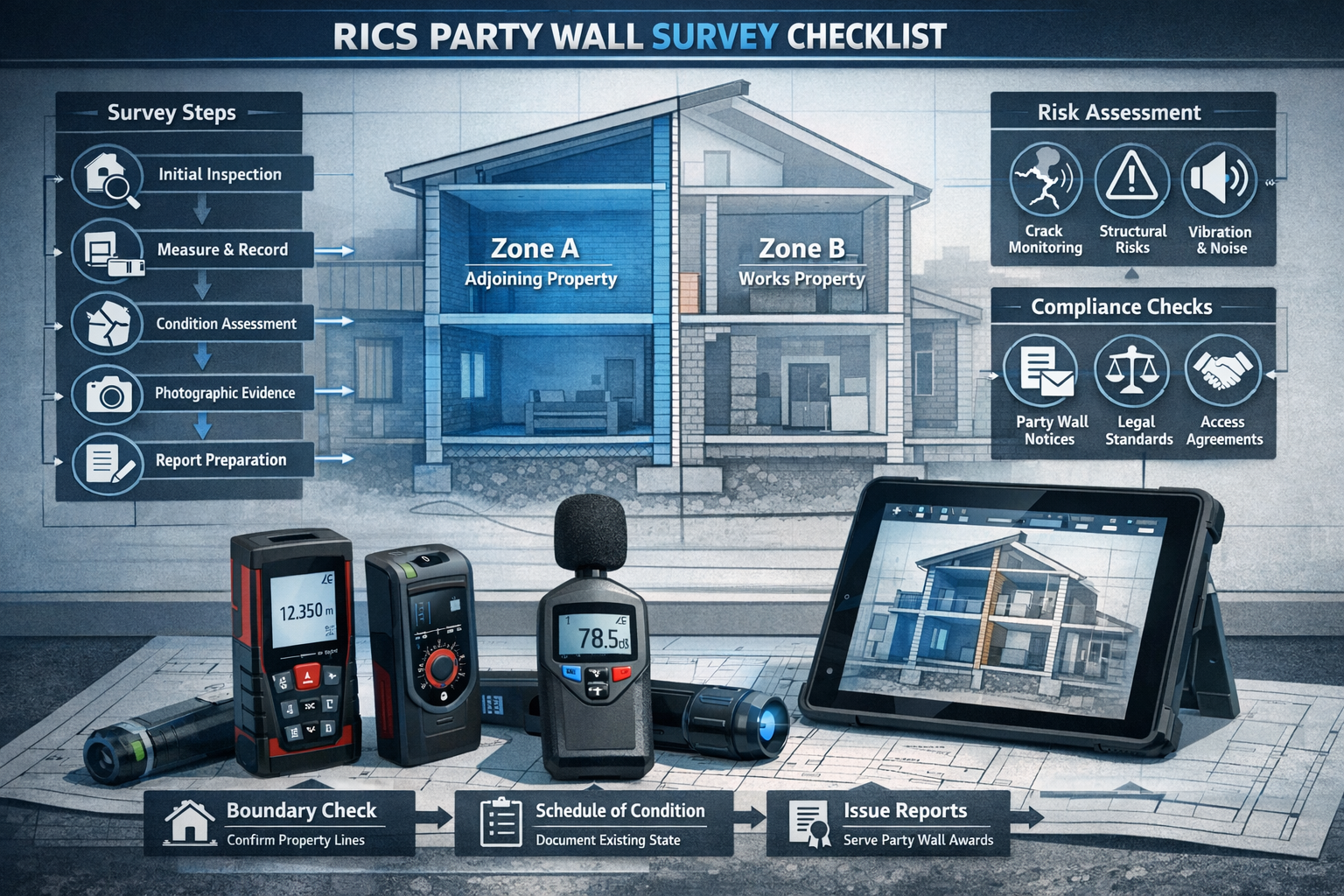
Pre-Retrofit Party Wall Assessment Checklist
Before any retrofit work begins, a comprehensive party wall assessment should include:
Structural Evaluation Components:
- ✅ Visual inspection of party wall condition and existing defects
- ✅ Identification of structural cracks, movement, or settlement
- ✅ Assessment of wall construction type (solid, cavity, timber-frame)
- ✅ Evaluation of foundation condition and load-bearing capacity
- ✅ Review of previous alterations or repairs to shared structures
- ✅ Documentation of existing dampness or water penetration issues
Retrofit-Specific Considerations:
- ✅ Thermal imaging survey to identify existing insulation and cold bridging
- ✅ Assessment of ventilation requirements post-retrofit
- ✅ Evaluation of structural capacity for additional insulation weight
- ✅ Review of fire safety implications for party wall modifications
- ✅ Identification of services (electrical, plumbing, gas) within party walls
- ✅ Assessment of condensation risk from proposed interventions
Documentation Requirements:
- ✅ Photographic schedule of condition (interior and exterior)
- ✅ Measured survey of party wall dimensions and positions
- ✅ Record of existing finishes and materials
- ✅ Video documentation of pre-work condition where appropriate
- ✅ Written descriptions of all observable defects
- ✅ Neighboring property access records and permissions
Creating a thorough party wall schedule of condition is essential for protecting both building owners and adjoining owners from disputes about damage attribution.
RICS-Compliant Party Wall Notice Procedures
The party wall notice process follows specific legal requirements, but RICS guidance emphasizes best practices for retrofit projects:
| Stage | Timeframe | Key Actions | Retrofit Considerations |
|---|---|---|---|
| Initial Assessment | 3-4 months before work | Identify notifiable works; engage surveyor | Include PAS 2035 assessment findings |
| Notice Service | 2 months before (structure) 1 month before (excavation) |
Serve formal notices to adjoining owners | Detail retrofit specifications clearly |
| Response Period | 14 days | Await consent or dissent | Be prepared to explain thermal/energy benefits |
| Surveyor Appointment | Within 10 days of dissent | Appoint agreed or separate surveyors | Ensure surveyors understand retrofit methods |
| Award Preparation | 2-4 weeks | Draft and agree party wall award | Include cost escalation protections |
| Work Commencement | After award issued | Begin notified works | Comply with award conditions and monitoring |
Understanding what happens when a neighbor refuses party wall works is crucial for planning realistic project timelines.
Retrofit-Specific Party Wall Award Clauses
Modern party wall awards for retrofit projects should include specialized clauses addressing:
Labor and Material Escalation Protections 💷
With construction costs fluctuating significantly, awards should specify:
- Fixed surveyor fee structures or maximum percentage increases
- Defined process for approving variations to original specifications
- Cost-sharing mechanisms for unforeseen structural discoveries
- Time limits for completing works to prevent indefinite cost exposure
Thermal Performance Monitoring
Retrofit awards increasingly include:
- Requirements for thermal imaging before and after works
- Protocols for addressing condensation or damp issues post-installation
- Responsibility allocation for remedying thermal bridging problems
- Performance guarantees for insulation effectiveness
Access and Working Arrangements
Detailed provisions covering:
- Scaffolding erection on neighboring property
- Working hours appropriate for residential areas
- Noise and dust minimization measures
- Emergency contact procedures during works
Damage Prevention and Remediation
Clear frameworks establishing:
- Baseline condition documentation requirements
- Regular monitoring inspection schedules
- Dispute resolution procedures for alleged damage
- Insurance requirements and indemnities
Engaging an agreed surveyor for party wall matters can streamline the process and reduce overall costs when both parties cooperate.
Cost Escalation Protections for Party Wall Surveys Amid Rising Demand
The surge in demand for party wall surveys in 2026 has created significant cost pressures. Understanding and implementing cost escalation protections is essential for budget management.
Current Party Wall Survey Cost Landscape in 2026
Party wall surveyor fees vary considerably based on project complexity, location, and current demand levels. Typical cost ranges include:
Standard Residential Projects:
- Single party wall notice (simple loft conversion): £700-£1,200
- Multiple party walls (terraced property retrofit): £1,500-£2,500
- Complex structural works with extensive insulation: £2,500-£5,000+
Factors Driving 2026 Cost Increases:
- 📈 High demand from simultaneous retrofit projects in urban areas
- 📈 Increased complexity of PAS 2035-compliant assessments
- 📈 Additional thermal imaging and specialist survey requirements
- 📈 Extended timelines due to construction industry capacity constraints
- 📈 Higher professional indemnity insurance costs for surveyors
For detailed breakdowns, consult resources on the cost of party wall surveyors to understand current market rates.
Fixed-Price Agreement Strategies
Protecting against cost escalation begins with the initial surveyor engagement. Effective strategies include:
1. Comprehensive Scope Definition
Clearly specify all anticipated works in writing, including:
- Exact retrofit measures planned (EWI, cavity insulation, etc.)
- Number of party walls affected
- Expected duration of works
- Any phased implementation plans
2. Fixed Fee Structures
Negotiate fixed fees covering:
- Initial consultation and site assessment
- Notice preparation and service
- Award drafting and agreement
- Standard monitoring visits (specify number)
- Final inspection and sign-off
3. Variation Control Mechanisms
Establish clear protocols for additional fees:
- Written approval required for any scope changes
- Maximum percentage increases for unforeseen complications
- Defined hourly rates for additional work (capped where possible)
- Dispute resolution procedures for fee disagreements
4. Payment Milestone Structuring
Align payments with deliverables:
- Deposit upon instruction (typically 25-30%)
- Progress payment upon notice service (30-40%)
- Balance upon award completion (30-40%)
- Retention for final sign-off (optional 5-10%)
Labor Clause Protections in Party Wall Awards
Labor clauses in party wall awards serve to protect both building owners and adjoining owners from cost uncertainties. Key protective provisions include:
Contractor Qualification Requirements:
- Specification of minimum insurance coverage levels
- Requirements for relevant retrofit certification (TrustMark, PAS 2030)
- Restrictions on subcontracting without approval
- Competency standards for specialized insulation work
Cost Certainty Mechanisms:
- Fixed-price contracts for defined scopes of work
- Price adjustment formulas tied to recognized indices (e.g., BCIS)
- Maximum time extensions before renegotiation required
- Liquidated damages clauses for delays
Quality Assurance Provisions:
- Mandatory inspection points during retrofit installation
- Materials specification and approval procedures
- Workmanship standards referencing British Standards
- Defects liability periods post-completion
Dispute Resolution Frameworks:
- Defined escalation procedures for cost disputes
- Third-party determination mechanisms
- Timelines for raising and resolving cost claims
- Limitation on retrospective cost recovery
"In the current high-demand environment, building owners who fail to secure cost escalation protections in their party wall awards risk budget overruns of 30-50% or more. Fixed-price agreements with clear variation controls are no longer optional—they're essential." – Market Analysis[1]
Managing Surveyor Fees Through Strategic Appointments
The choice between appointing an agreed surveyor versus separate surveyors significantly impacts costs:
Agreed Surveyor Approach:
- ✅ Single surveyor acts for both parties
- ✅ Typically 30-40% lower total fees
- ✅ Faster award preparation
- ✅ Reduced administrative complexity
- ❌ Requires cooperation and trust between parties
- ❌ May not suit contentious situations
Separate Surveyors Approach:
- ✅ Independent representation for each party
- ✅ Appropriate for complex or disputed matters
- ✅ Third surveyor available for disagreements
- ❌ Significantly higher combined fees
- ❌ Longer timelines for award agreement
- ❌ Potential for increased formality and friction
Understanding your party wall rights helps inform the most cost-effective appointment strategy for your circumstances.
Insurance and Indemnity Considerations
Proper insurance coverage provides another layer of cost protection:
Building Owner Insurance:
- Contractor all-risks insurance covering party wall damage
- Professional indemnity insurance for appointed surveyors
- Public liability coverage for works affecting neighbors
- Defects insurance for retrofit installations
Adjoining Owner Protections:
- Verification of building owner's insurance adequacy
- Independent structural warranty options
- Legal expense insurance for dispute scenarios
- Building survey coverage post-works completion
Ensuring adequate insurance is particularly important for retrofit projects where building defects may only become apparent months or years after completion.
Neighbor Dispute Prevention in High-Demand Retrofit Markets
The concentration of retrofit activity in 2026 has intensified the potential for party wall disputes. Proactive prevention strategies are essential for maintaining good neighbor relations and avoiding costly legal battles.
Common Dispute Triggers in Retrofit Projects
Understanding typical conflict sources helps prevent problems before they escalate:
1. Communication Failures 📢
- Inadequate explanation of planned retrofit works
- Failure to serve proper legal notices on time
- Lack of updates during project execution
- Unclear responsibility for damage or defects
2. Access and Disruption Issues
- Scaffolding encroachment on neighboring property
- Excessive noise during unsociable hours
- Dust and debris affecting adjoining premises
- Blocked access to shared facilities or services
3. Structural Concerns
- Visible cracking appearing during works
- Movement or settlement of party walls
- Water penetration following insulation installation
- Concerns about structural integrity post-retrofit
4. Cost Disputes
- Disagreement over surveyor fee allocation
- Unexpected additional costs during works
- Damage repair cost attribution
- Betterment claims and cost-sharing
5. Quality and Specification Issues
- Substandard workmanship affecting both properties
- Deviation from agreed specifications
- Fire safety or building regulation concerns
- Thermal performance not meeting expectations
Comprehensive guidance on managing party wall disputes can help resolve conflicts efficiently.
Proactive Communication Strategies
Effective neighbor communication significantly reduces dispute risk:
Pre-Project Engagement:
- Personal meeting to explain retrofit plans and benefits
- Sharing of architect's drawings and specifications
- Discussion of timeline and anticipated disruption
- Invitation to ask questions and raise concerns
Formal Notice Process:
- Clear, jargon-free explanatory letters accompanying legal notices
- Provision of surveyor contact information
- Offer of independent surveyor appointment assistance
- Reasonable timeframes for responses
During Construction:
- Regular progress updates (weekly or bi-weekly)
- Advance notice of particularly disruptive activities
- Responsive communication channel for concerns
- Photographic updates showing work progression
Post-Completion:
- Final walkthrough invitation for adjoining owners
- Provision of as-built documentation
- Discussion of any observed issues
- Contact information for warranty or defect reporting
Whole-Dwelling Assessment Integration
Under PAS 2035 certification requirements, retrofit projects must undergo whole-dwelling assessments[5]. These assessments should integrate party wall considerations:
Structural Survey Components:
- Evaluation by qualified structural engineers
- Assessment of party wall capacity for additional loads
- Foundation adequacy for proposed interventions
- Identification of structural repairs needed before retrofit
Asbestos Survey Requirements:
- Licensed specialist surveys for pre-2000 properties
- Particular attention to party wall cavities and voids
- Safe removal protocols before insulation installation
- Documentation for neighboring property awareness
Thermal Imaging Analysis:
- Baseline thermal performance of party walls
- Identification of existing insulation gaps
- Cold bridging assessment at party wall junctions
- Post-retrofit verification imaging
Ventilation Assessments:
- Impact of airtightness improvements on moisture risk
- Party wall cavity ventilation considerations
- Mechanical ventilation system requirements
- Condensation risk mitigation strategies
Occupancy Assessments:
- Understanding usage patterns affecting both properties
- Moisture generation and ventilation needs
- Heating system compatibility considerations
- Lifestyle factors affecting retrofit performance
These comprehensive assessments help identify party wall issues early, allowing for proper planning and dispute prevention.
Alternative Dispute Resolution Mechanisms
When conflicts do arise, structured resolution approaches prevent escalation:
Informal Negotiation:
- Direct discussion between property owners
- Surveyor-mediated conversations
- Contractor involvement in technical explanations
- Goodwill gestures to maintain relationships
Formal Mediation:
- Appointment of independent mediator
- Structured negotiation sessions
- Non-binding recommendations
- Cost-effective alternative to litigation
Expert Determination:
- Technical issues referred to specialist
- Binding decision on specific matters
- Faster than court proceedings
- Lower costs than full litigation
Third Surveyor Involvement:
- Statutory mechanism under Party Wall Act
- Resolution of surveyor disagreements
- Binding decisions on specific award matters
- Costs typically shared between parties
Court Proceedings (Last Resort):
- Injunction applications for urgent matters
- Damages claims for proven losses
- Enforcement of party wall awards
- Significant costs and time investment
Understanding what happens when checking engineers review party wall matters can help resolve technical disputes efficiently.
Integrating Party Wall Surveys with Broader Building Survey Requirements
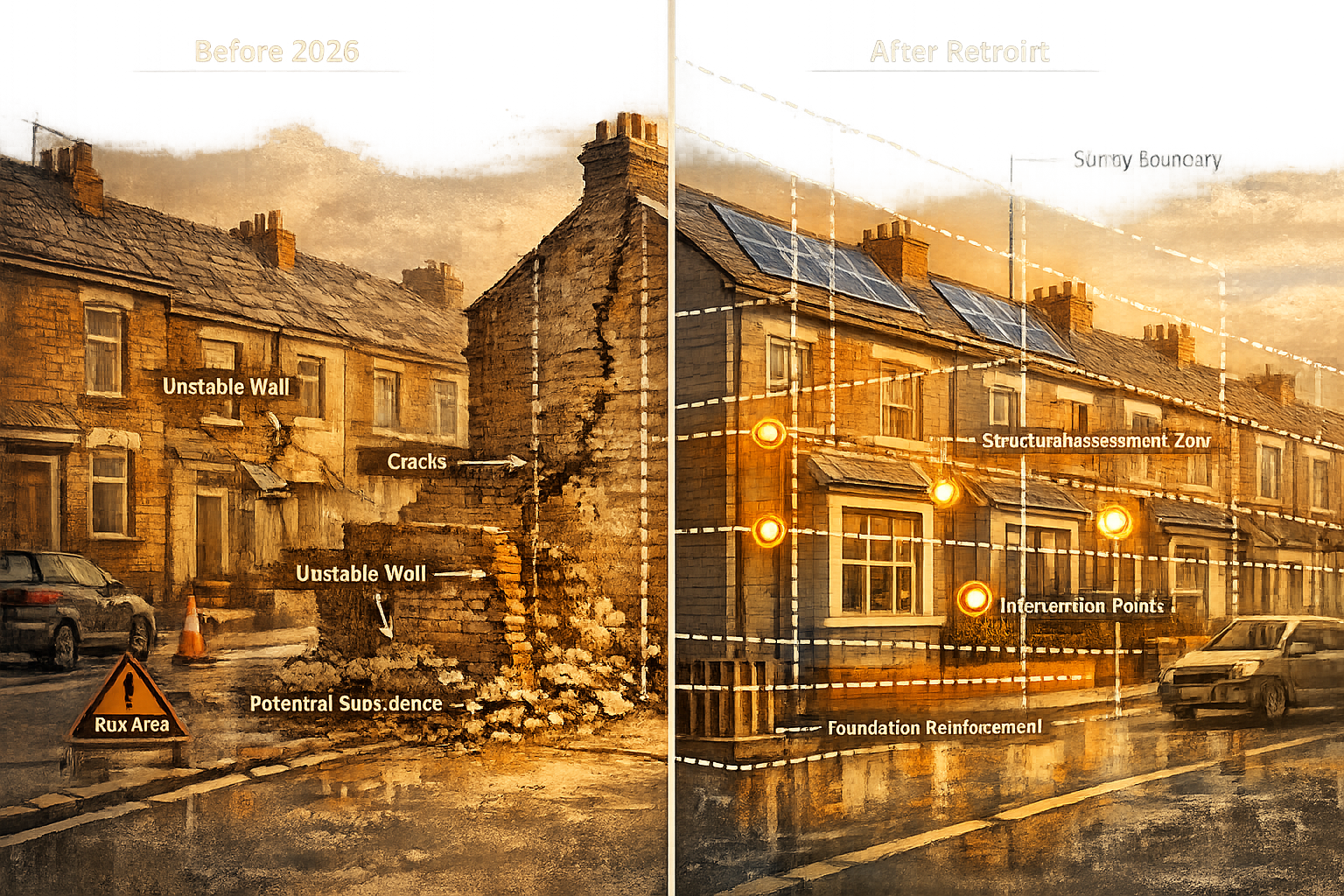
Retrofit projects often require multiple survey types beyond party wall assessments. Coordinating these efficiently manages costs and timelines.
Complementary Survey Types for Retrofit Projects
Level 3 Building Surveys:
Comprehensive structural assessments identifying:
- Existing defects requiring repair before retrofit
- Suitability of building fabric for proposed interventions
- Building pathology issues affecting retrofit design
- Areas requiring further investigation
Specialist Assessments:
- Damp and timber surveys before insulation installation
- Electrical condition reports for rewiring coordination
- Asbestos surveys for older properties
- Structural calculations for load-bearing modifications
Energy Performance Evaluations:
- EPC assessments for baseline and target performance
- Thermal imaging surveys
- Airtightness testing
- Renewable energy system feasibility studies
Planning and Compliance Surveys:
- Planning permission support for external alterations
- Building regulation compliance verification
- Conservation area or listed building assessments
- Fire safety evaluations for multi-occupancy buildings
Cost-Effective Survey Coordination
Strategic coordination of multiple surveys reduces overall expenditure:
Bundled Survey Packages:
- Negotiate combined fees for party wall and building surveys
- Single site visit for multiple assessment types
- Shared reporting and documentation
- Coordinated specialist sub-consultant appointments
Phased Survey Approach:
- Initial desktop review and preliminary assessment
- Targeted invasive investigations only where necessary
- Progressive disclosure based on findings
- Conditional survey scopes tied to project progression
Technology Utilization:
- Thermal imaging for both party wall and energy assessments
- Drone surveys for roof and external wall evaluation
- 3D laser scanning for accurate measurements
- Digital documentation for efficient record-keeping
Understanding how long building surveys take helps coordinate party wall procedures with other assessment requirements.
Budgeting for Comprehensive Retrofit Surveys
Realistic budget allocation for survey requirements typically includes:
| Survey Type | Typical Cost Range | Timing | Purpose |
|---|---|---|---|
| Party Wall Survey | £700-£5,000+ | 2-3 months pre-work | Legal compliance; neighbor protection |
| Level 3 Building Survey | £800-£1,500 | Pre-purchase or early planning | Structural condition; defect identification |
| PAS 2035 Assessment | £500-£1,200 | Retrofit design stage | Whole-dwelling evaluation; specification |
| Asbestos Survey | £250-£600 | Before invasive works | Health & safety compliance |
| Thermal Imaging | £300-£800 | Pre and post-retrofit | Performance verification |
| Structural Calculations | £500-£2,000 | Design stage | Engineering validation |
| Total Survey Budget | £3,050-£11,100+ | Various stages | Comprehensive project support |
Allocating 3-5% of total retrofit project costs to surveys and professional fees is prudent for complex works. Guidance on budgeting for repairs and restoration helps contextualize these costs within overall project planning.
Regulatory Landscape and Compliance Requirements for 2026
The regulatory environment for retrofit projects continues to evolve, with implications for party wall survey requirements.
Future Homes Standard Impact
The Future Homes Standard drives higher energy performance requirements, leading to:
- More extensive external wall insulation projects
- Increased structural modifications to accommodate heat pumps
- Greater need for airtightness measures affecting party walls
- Higher specification requirements triggering party wall procedures
PAS 2035 and TrustMark Certification
Professional retrofit projects must comply with PAS 2035 standards, which mandate:
- Qualified retrofit coordinators overseeing projects
- Whole-dwelling assessments before work specification[5]
- Integration of party wall considerations in design stage
- Quality assurance throughout installation and completion
Building Safety Act Implications
Post-Grenfell regulatory changes affect retrofit projects through:
- Enhanced fire safety requirements for external wall systems
- Greater scrutiny of materials used in party wall construction
- Competency requirements for retrofit designers and installers
- Documentation and warranty requirements for building owners
Local Authority Planning Requirements
Many retrofit interventions require planning permission or building regulation approval:
- External wall insulation altering building appearance
- Loft conversions increasing building height
- Window replacements in conservation areas
- Structural modifications affecting party walls
Coordination between planning processes and party wall procedures is essential for project success.
Case Studies: Party Wall Surveys in 2026 Retrofit Projects
Real-world examples illustrate best practices and common pitfalls.
Case Study 1: Victorian Terrace External Wall Insulation
Project Overview:
Three-bedroom Victorian terrace in North London requiring external wall insulation to meet EPC rating C target for rental property compliance.
Party Wall Challenges:
- Shared walls on both sides with active neighbors
- Previous minor settlement cracks raising structural concerns
- Scaffolding access required across neighboring gardens
- Timing pressure due to rental compliance deadline
Solutions Implemented:
- Early engagement with neighbors (4 months pre-work)
- Comprehensive structural survey identifying necessary repairs
- Agreed surveyor appointment reducing costs by 35%
- Fixed-price party wall award with clear labor clauses
- Weekly progress updates to adjoining owners
- Thermal imaging before and after to demonstrate benefits
Outcome:
Project completed on time and within budget. Party wall costs totaled £1,800 (agreed surveyor approach). No disputes arose. Neighboring properties subsequently initiated similar retrofit projects based on demonstrated success.
Case Study 2: Semi-Detached Loft Conversion with Insulation Upgrade
Project Overview:
1930s semi-detached property in Birmingham undergoing loft conversion with comprehensive insulation upgrade across all elevations.
Party Wall Challenges:
- Significant structural work to party wall for loft access
- Chimney removal on shared stack
- Cavity wall insulation affecting both properties
- Adjoining owner initially refused consent
Solutions Implemented:
- Detailed explanatory materials about benefits and safeguards
- Offer to extend cavity insulation to neighbor's property at cost
- Separate surveyors appointed due to initial refusal
- Comprehensive schedule of condition with video documentation
- Third surveyor appointed to resolve specification disagreement
- Cost escalation cap negotiated in final award
Outcome:
Higher survey costs (£4,200 total) due to separate surveyor approach, but comprehensive award prevented disputes during 8-month project. Relationship with neighbor improved through transparent communication. Neighbor subsequently accepted offer for cavity insulation extension.
Case Study 3: Terraced Property Whole-House Retrofit
Project Overview:
Mid-terrace property in Manchester undergoing comprehensive retrofit under PAS 2035 framework including EWI, loft insulation, window replacement, and heat pump installation.
Party Wall Challenges:
- Multiple party walls (two sides, rear extension)
- Complex PAS 2035 assessment identifying structural concerns
- Asbestos discovered in party wall cavity
- Neighboring properties at different stages of retrofit
Solutions Implemented:
- Integrated party wall assessment within PAS 2035 process
- Coordinated asbestos removal with licensed specialists
- Staggered notice service for different work phases
- Collaborative approach with neighbors' retrofit coordinators
- Shared thermal imaging survey reducing individual costs
- Comprehensive insurance package covering all parties
Outcome:
Complex project successfully navigated through careful coordination. Party wall survey costs (£3,500) represented good value given complexity. Neighborhood-wide retrofit coordination emerged, creating economies of scale for future projects.
Future Trends and Emerging Considerations
Looking beyond 2026, several trends will shape party wall survey requirements for retrofit projects.
Technology Integration
Digital Party Wall Processes:
- Electronic notice service and response systems
- Digital schedule of condition documentation
- Real-time monitoring of structural movement during works
- Blockchain-based award recording for permanent records
Advanced Survey Technologies:
- AI-assisted defect identification from thermal imaging
- Drone-based external wall assessment
- 3D modeling for precise party wall documentation
- Predictive analytics for dispute risk assessment
Regulatory Evolution
Enhanced Standards:
- More stringent energy performance requirements
- Greater integration of party wall procedures in retrofit frameworks
- Standardized RICS checklists specifically for retrofit contexts
- Mandatory competency requirements for party wall surveyors
Climate Adaptation:
- Flood resilience measures affecting party walls
- Overheating mitigation requiring structural modifications
- Renewable energy integration with party wall implications
- Circular economy principles influencing material choices
Market Developments
Increased Professionalization:
- Specialized retrofit party wall surveyors emerging
- Accreditation schemes for retrofit-competent professionals
- Insurance products tailored to retrofit party wall risks
- Technology platforms streamlining survey processes
Neighborhood-Scale Approaches:
- Coordinated retrofit programs across terraces or estates
- Shared party wall survey costs for simultaneous projects
- Community engagement models reducing dispute rates
- Bulk procurement reducing individual project costs
Actionable Recommendations for Property Owners
Property owners planning retrofit projects in 2026 should take these practical steps:
Immediate Actions (3-6 Months Before Work)
-
Engage a Qualified Surveyor Early
Research RICS-registered surveyors with retrofit experience. Request fixed-price quotations covering all anticipated services. -
Conduct Preliminary Neighbor Discussions
Informally discuss your plans before serving formal notices. Gauge receptiveness and identify potential concerns early. -
Commission Whole-Dwelling Assessment
Ensure PAS 2035 compliance and identify party wall implications during design stage rather than mid-construction. -
Review Insurance Coverage
Verify adequate protection for party wall works. Consider specialist retrofit insurance products. -
Establish Realistic Budget
Allocate 3-5% of project costs to surveys and professional fees. Include contingency for unforeseen complications.
Pre-Construction Phase (1-3 Months Before Work)
-
Serve Formal Party Wall Notices
Comply with statutory timeframes (2 months for structural works, 1 month for excavations). -
Negotiate Cost Protections
Secure fixed-price agreements with clear variation controls. Include labor clauses in party wall awards. -
Document Existing Conditions Thoroughly
Commission comprehensive schedule of condition. Use photography, video, and specialist surveys as appropriate. -
Coordinate Multiple Survey Requirements
Bundle party wall, building, and specialist surveys for efficiency and cost savings. -
Finalize Contractor Arrangements
Ensure contractors understand party wall award requirements. Verify insurance and competency credentials.
During Construction
-
Maintain Regular Communication
Update neighbors weekly on progress. Address concerns promptly and transparently. -
Monitor Compliance with Award
Ensure contractors follow agreed specifications and working arrangements. Document any variations immediately. -
Conduct Scheduled Inspections
Arrange surveyor monitoring visits as specified in award. Address any emerging issues proactively. -
Manage Access and Disruption
Respect agreed working hours and access arrangements. Minimize impact on adjoining owners.
Post-Completion
-
Arrange Final Inspections
Invite adjoining owners and surveyors for completion walkthrough. Address any concerns before formal sign-off. -
Obtain Necessary Certifications
Secure building regulation completion certificates, TrustMark warranties, and insurance-backed guarantees. -
Document Performance
Commission post-retrofit thermal imaging and EPC assessment. Demonstrate achieved improvements. -
Maintain Good Relationships
Continue positive neighbor engagement. Share lessons learned and retrofit benefits.
Conclusion
Party Wall Surveys for 2026 UK Retrofit Projects: RICS Checklists and Cost Escalation Protections Amid Rising Demand represents a critical challenge for property owners navigating the intersection of net zero ambitions, regulatory compliance, and neighborly cooperation. As the UK construction industry experiences its predicted 2% growth in 2026, with retrofit investment accelerating toward Future Homes standards, the demand for professional party wall surveys has reached unprecedented levels[3][4].
The convergence of PAS 2035 whole-dwelling assessment requirements, RICS professional standards, and the Party Wall etc. Act 1996 creates a complex landscape that requires expert navigation[5][6]. Property owners who invest in comprehensive party wall surveys, implement robust cost escalation protections, and prioritize proactive neighbor communication will successfully deliver their retrofit projects while avoiding costly disputes and delays.
Key Success Factors
✅ Early Professional Engagement – Appointing qualified RICS surveyors 3-6 months before work commences
✅ Comprehensive Documentation – Thorough schedules of condition protecting all parties
✅ Fixed-Price Protections – Clear agreements limiting cost escalation exposure
✅ Proactive Communication – Transparent neighbor engagement throughout the project
✅ Integrated Compliance – Coordinating party wall procedures with PAS 2035 and building regulations
Next Steps
Property owners should begin their party wall journey by:
- Requesting a Professional Consultation – Contact RICS-registered surveyors for project-specific advice
- Reviewing Available Resources – Study guidance on party wall agreements and your party wall rights
- Budgeting Realistically – Allocate appropriate funds for comprehensive survey requirements
- Engaging Neighbors Early – Begin informal discussions before formal notice service
- Planning Sufficient Time – Allow 3-6 months for complete party wall procedures
The retrofit boom of 2026 offers tremendous opportunities to improve energy efficiency, reduce carbon emissions, and enhance property values. By understanding and properly implementing party wall survey requirements with appropriate RICS checklists and cost escalation protections, property owners can successfully navigate this high-demand environment while maintaining positive neighbor relationships and achieving their sustainability goals.
The investment in professional party wall surveys represents not just legal compliance, but prudent risk management that protects property values, prevents costly disputes, and enables the UK's essential transition to net zero housing stock. As retrofit demand continues to rise throughout 2026 and beyond, those who master these processes will be best positioned for successful project delivery.
References
[1] Party Wall Surveys Amid 2026 Construction Boom Handling Disputes In High Demand Uk Housing Markets – https://nottinghillsurveyors.com/blog/party-wall-surveys-amid-2026-construction-boom-handling-disputes-in-high-demand-uk-housing-markets
[2] Valuation Surveys For Northern Powerhouse Properties Capturing 2026 Growth In Manchester And Birmingham – https://nottinghillsurveyors.com/blog/valuation-surveys-for-northern-powerhouse-properties-capturing-2026-growth-in-manchester-and-birmingham
[3] Uk Construction To Return To Growth In 2026 According To Glenigans Uk Construction Industry Autumn Forecast 2026 2027 – https://constructuk.com/uk-construction-to-return-to-growth-in-2026-according-to-glenigans-uk-construction-industry-autumn-forecast-2026-2027/
[4] The Outlook And Trends For The Uk Construction Industry In 2026 – https://infobric.com/uk/en/blogs/the-outlook-and-trends-for-the-uk-construction-industry-in-2026/
[5] Whole Building Assessment And Benchmarking – https://riseretrofit.org.uk/articles/whole-building-assessment-and-benchmarking
[6] Home Survey Standards – https://www.rics.org/profession-standards/rics-standards-and-guidance/sector-standards/building-surveying-standards/home-surveys/home-survey-standards