

Eleven days. That is all the time landlords have between today and a Budget that could reshape property taxation, followed six weeks later by the start of a new legal register that every private landlord in England will need to join. As of October 2026, the landlord database December 2026 registration process is no longer a distant policy promise, it is a near-term compliance task sitting right behind one of the most consequential fiscal events of the decade.
The National Residential Landlords Association (NRLA) confirmed on 11 October 2026 that the regional rollout of the new Private Rented Sector landlord database in England begins in December 2026. That timing matters enormously, because it follows the Autumn Budget on Wednesday 28 October 2026, delivered by Chancellor John Healey under Prime Minister Andy Burnham. Landlords are effectively being asked to absorb a major tax announcement and then, weeks later, start registering their properties on a new national system. For portfolio owners, the sequence is Budget first, registration second, and both demand preparation now.
Key Takeaways
- The landlord database December 2026 registration rollout begins regionally in December 2026, reported by the NRLA on 11 October 2026, and follows the Autumn Budget of 28 October 2026.
- Property income tax for individual landlords rises by 2 percentage points from April 2027; limited companies are unaffected.
- A council tax surcharge on homes above £2 million starts in England from April 2028; national rent controls have been ruled out; the 5% stamp duty surcharge on investment properties is expected to remain.
- Lendlord launched a registration-pack tool (Landlord Today, 15 October 2026) that uses existing portfolio data to flag missing details and regional deadlines.
- Ringley Group data (Landlord Today, 16 October 2026) shows asking rents up 6% since the Renters' Rights Act took effect, with around 35% of landlords selling or attempting to sell in the past year.
Why the Timing of Landlord Database December 2026 Registration Matters
The order of events here is deliberate and important to understand correctly. The Autumn Budget lands first, on 28 October 2026. The regional rollout of the landlord database then begins in December 2026, according to the NRLA's reporting on 11 October 2026. Landlords should not assume registration starts before the Budget, nor should they wait until December to start preparing, the two events are close enough together that portfolio decisions made around the Budget will directly affect what gets entered into the database weeks later.
The NRLA has also flagged capital gains tax reform as one of its main pre-Budget requests, putting CGT treatment of investment property squarely in the pre-Budget conversation. Whatever the Chancellor announces on 28 October, landlords who sell, restructure, or incorporate shortly afterwards will need accurate records to register correctly, making valuation and documentation work now, rather than later, the sensible approach.
What the Landlord Database Actually Requires
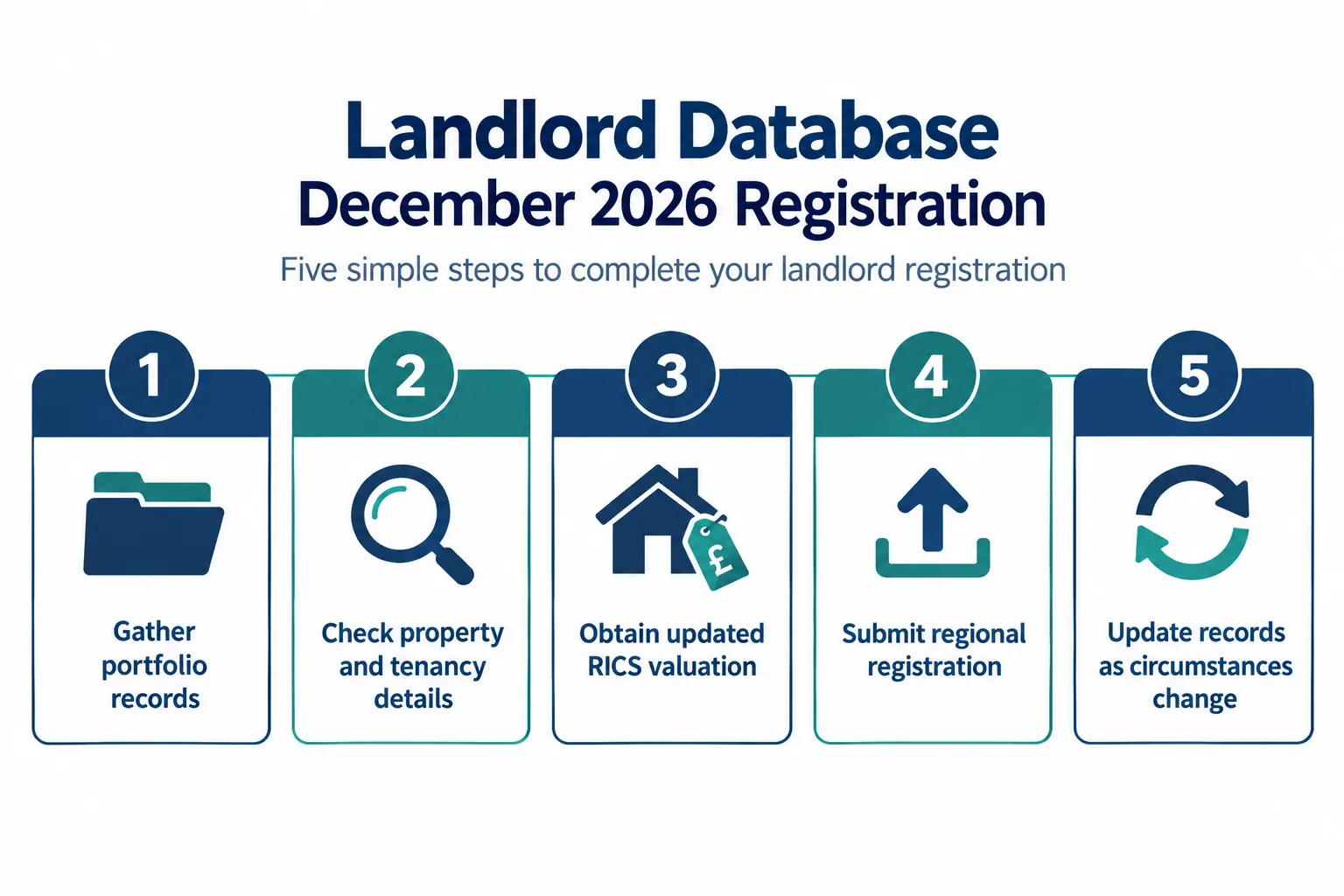
Government guidance and draft regulations, rather than the news reports reviewed here, set out the detailed fees and penalty structure for non-compliance, so landlords should check official sources directly for exact figures rather than relying on estimates. What is clear from current reporting is the shape of the obligation: landlords will need to register, and the register must be updated whenever property or tenancy information changes. This is not a one-off form.
That ongoing-update requirement is why the property management platform Lendlord built a dedicated tool, launched according to Landlord Today on 15 October 2026. The tool prepares a registration pack directly from a landlord's existing portfolio data, flags missing details, and identifies regional registration deadlines. Lendlord's own framing is instructive: "Preparing for the new database should not mean starting from scratch." The company also stresses that "Registration is only the first step," adding that "Landlords also need to keep their records up to date as circumstances change." For landlords managing several properties across different regions, that ongoing maintenance burden may prove more demanding than the initial sign-up.
A Practical Pre-Registration Checklist
Before the regional rollout reaches your area, consider working through the following:
| Task | Why it matters |
|---|---|
| Collate title, tenancy and EPC records for every property | Forms the base data the register will request |
| Identify gaps or outdated details | Lendlord's tool flags missing details automatically |
| Confirm your region's registration timing | Rollout is regional, not all at once, from December 2026 |
| Obtain an up-to-date RICS valuation | Needed for CGT base cost, incorporation or sale decisions |
| Check EPC and condition evidence is current | Supports both compliance and any future valuation query |
| Review ownership structure before April 2027 | Tax treatment differs for individuals versus companies |
Why Up-to-Date RICS Valuations Matter Before Registration
A current RICS valuation is not simply a nice-to-have alongside landlord database December 2026 registration, it underpins several decisions landlords are weighing at the same time.
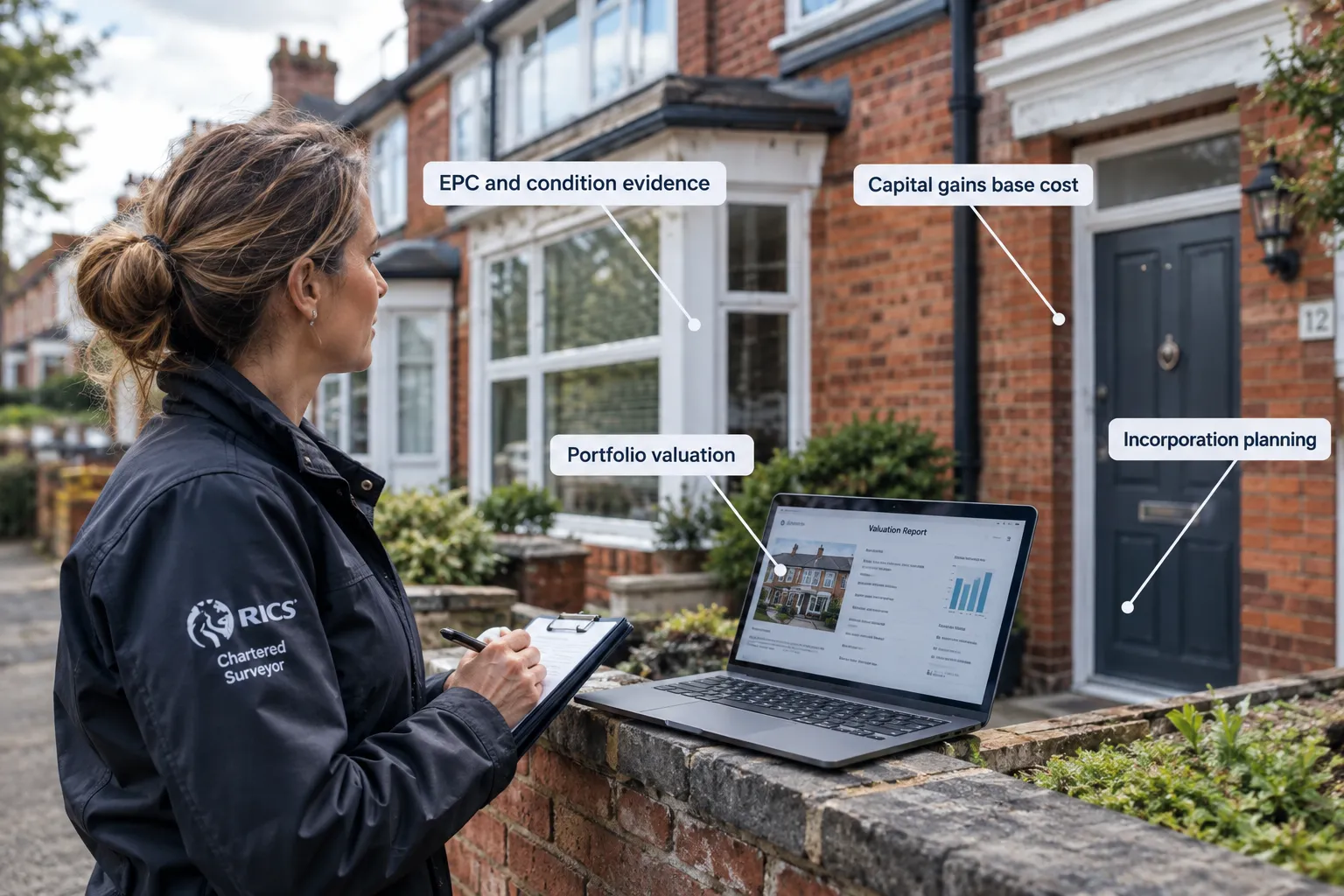
Capital gains tax base cost. With CGT reform among the NRLA's pre-Budget requests, landlords considering a disposal need a defensible, professionally supported valuation to establish base cost and acquisition value, particularly where a property has been held for many years or part-let.
Portfolio and incorporation decisions. Because the property income tax rate for individual landlords is set to rise by 2 percentage points from April 2027, while limited companies remain unaffected, many landlords are reassessing whether to hold property personally or through a company structure. That decision depends on an accurate, current valuation of the whole portfolio, not historic figures.
Probate and estate planning. Rental properties forming part of an estate require a RICS valuation at the relevant date regardless of the database rollout, and landlords dealing with succession planning alongside new registration duties benefit from aligning both pieces of work.
EPC and condition evidence. Keeping EPC certificates and condition reports current supports both the ongoing database update obligation and any future valuation or sale process, reducing duplicated effort.
"Preparing for the new database should not mean starting from scratch.", Lendlord, as reported by Landlord Today, 15 October 2026
The Wider Budget Picture Landlords Are Watching
Several tax and policy positions are already confirmed ahead of the 28 October Budget. Property income tax rates for individual landlords rise by 2 percentage points from April 2027, while limited companies are unaffected. A council tax surcharge on homes above £2 million is due in England from April 2028. National rent controls in England have been ruled out, and the 5% additional stamp duty surcharge on investment properties is expected to remain. Against this backdrop, the NRLA's call for capital gains tax reform stands out as the main unresolved item landlords are watching closely on Budget day itself.
Market Pressure Behind the Policy Debate
Data from Ringley Group, reported by Landlord Today on 16 October 2026, gives useful context for why registration and tax changes are landing in a tense market. Asking rents rose 6% across the UK's 21 largest towns and cities in the three months since the Renters' Rights Act took effect. An estimated 35% of private landlords sold or tried to sell in the past twelve months, and the English private rented sector shrank by roughly 354,000 homes in the three years to May 2025. Those figures suggest many landlords are already reassessing their positions before the database and tax changes even take effect, making professional valuation advice timely rather than premature.
How Landlords Should Plan for April 2027 and Beyond
With the property income tax rise arriving from April 2027, and the landlord database requiring ongoing updates from December 2026, landlords face two overlapping compliance calendars. A sensible approach is to treat registration preparation and tax planning as one project: use the data-gathering exercise for the database to also refresh valuations, EPC evidence and ownership structure reviews ahead of the April 2027 change. Landlords planning a sale, incorporation, or portfolio restructure should commission RICS valuation work well before their region's registration window opens, so that figures used for CGT, Stamp Duty or lending purposes are consistent with what ultimately goes into the register.
Conclusion
The sequence is now set: the Autumn Budget arrives on 28 October 2026, followed by the regional start of landlord database December 2026 registration weeks later. Landlords who wait until the rollout reaches their region risk scrambling for records, valuations and EPC evidence under time pressure. The more effective path is to gather portfolio data now, secure an up-to-date RICS valuation to support CGT, incorporation or sale decisions, and build a simple process for keeping records current once the register goes live, since, as Lendlord puts it, registration is only the first step. Landlords uncertain about valuation timing or portfolio strategy ahead of these changes should speak to a RICS-regulated surveyor before the Budget, not after.
Frequently Asked Questions
When does the landlord database December 2026 registration rollout begin?
According to the NRLA, as reported on 11 October 2026, the regional rollout of the new Private Rented Sector landlord database in England begins in December 2026, after the Autumn Budget on 28 October 2026.
Will all landlords register at the same time?
The rollout is described as regional, meaning different areas are expected to come online at different points from December 2026 rather than all at once.
What happens if I do not keep my registration updated?
The register must be updated when property or tenancy information changes. Specific fees and penalties are set out in government guidance and draft regulations, which landlords should consult directly.
Does the tax change from April 2027 affect limited companies?
No. The 2 percentage point rise in property income tax applies to individual landlords; limited companies are unaffected.
Why would I need a RICS valuation before registering?
An up-to-date valuation supports capital gains tax base cost calculations, incorporation or sale decisions, and probate requirements, all of which may be decided around the same time as registration.
Has national rent control been introduced alongside the database?
No. National rent controls in England have been ruled out, though the Renters' Rights Act has already influenced rents, with asking rents up 6% across the UK's 21 largest cities, per Ringley Group data reported on 16 October 2026.