

Last updated: July 24, 2026
Quick Answer: Expert witness valuations for commonhold conversions require chartered surveyors to apply RICS Red Book standards to a fundamentally new tenure framework introduced by the 2026 reforms. Surveyors must document assumptions about commonhold governance, value shared facilities independently, and produce reports that comply with Civil Procedure Rules Part 35. Any dispute over conversion value is likely to be tested in tribunal or court, making a structured checklist approach essential.
Key Takeaways
- The Commonhold and Leasehold Reform Bill, published in January 2026, makes commonhold the default tenure for new flats and effectively bans new leasehold flat creation.
- Expert witness surveyors must comply with Civil Procedure Rules Part 35 and RICS guidance, maintaining full independence from instructing parties.
- The RICS Valuation Global Standards (Red Book) applies to commonhold conversions, but surveyors must adapt methodology to account for governance structures and shared facility values.
- A structured pre- and post-conversion checklist reduces the risk of a valuation being challenged or rejected at tribunal.
- Shared facilities, including communal areas and amenity spaces, must be valued separately and documented with clear assumptions.
- The 5th edition of the RICS "Surveyors acting as expert witnesses" guidance requires disclosure of any AI tools used in valuation analysis.
- Costs for expert witness valuations in commonhold conversion disputes typically range from a few hundred pounds for straightforward cases to several thousand for complex multi-unit blocks, depending on scope.
- Properties with complex commercial ground floors, mixed-use elements, or non-consenting leaseholders present the highest valuation risk.
What Is Commonhold Conversion and Why Does It Need Expert Witness Valuation
Commonhold is a form of property ownership where flat owners hold the freehold of their individual unit and jointly own the common parts through a Commonhold Association. Converting an existing leasehold block to commonhold requires extinguishing leasehold titles, restructuring ownership, and establishing a new governance body, all of which create valuation events that can be disputed.
Expert witness valuation becomes necessary because:
- Freeholders and leaseholders frequently disagree on the value of the freehold interest being acquired.
- Mortgage lenders require independent evidence of post-conversion value before releasing security.
- Tribunal proceedings under the Leasehold Reform Act and its successors require expert evidence that meets court standards.
- The conversion itself can affect individual flat values, and those changes must be quantified for tax and financial reporting purposes.
For properties in London and the South East, where leasehold flat ownership is most concentrated, the financial stakes are particularly high. Surveyors providing expert witness reports must be prepared to defend every assumption under cross-examination.
How Did the 2026 Reforms Change Commonhold Conversion Valuations
The 2026 reforms represent the most significant shift in residential tenure law in decades. The Commonhold and Leasehold Reform Bill, introduced in January 2026, proposes making commonhold the default for new flats and abolishing the creation of new leasehold flats entirely.
Key changes affecting expert witness valuations:
- Ground rent abolition: Existing ground rent income streams, previously capitalised as part of freehold valuation, are being phased out, reducing the investment value of freehold reversions.
- Forfeiture abolition: Removing forfeiture rights changes the risk profile of the freehold, which must now be reflected in valuation methodology.
- Consent thresholds: The 2026 framework adjusts the proportion of leaseholders required to consent to conversion, which affects the likelihood of conversion proceeding and therefore the valuation basis.
- Building safety levies: New cost-sharing obligations under building safety legislation must be factored into the financial viability assessment of any conversion.
Surveyors working on leasehold extension and enfranchisement valuations will recognise some of these principles, but commonhold conversion introduces additional layers that require updated methodology.
"The 2026 reforms do not simply adjust the numbers, they change the underlying assumptions on which freehold valuation has been built for generations."
What Should Be on a Surveyor Checklist for Expert Witness Valuations for Commonhold Conversions
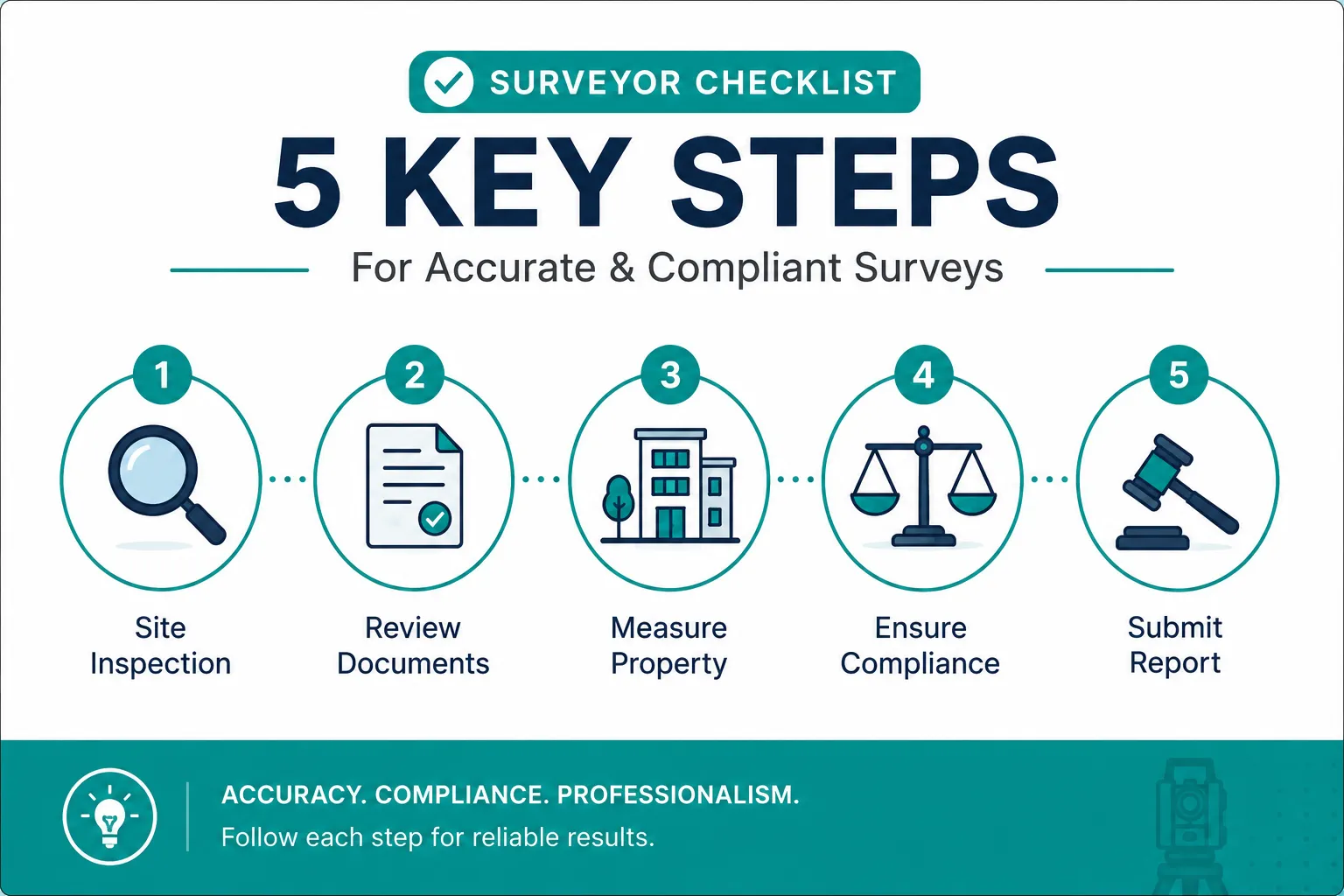
A structured checklist is the single most effective tool for producing a defensible expert witness valuation. The checklist below covers both pre-conversion assessment and the valuation report itself.
Pre-Conversion Assessment Checklist
- Confirm all leaseholders have been identified and consent status documented.
- Obtain and review the existing lease terms, including ground rent provisions and service charge history.
- Inspect the physical condition of the building, including common parts and any shared facilities.
- Check for outstanding building safety remediation obligations and quantify estimated costs.
- Confirm planning status, particularly for any mixed-use or commercial elements.
- Identify any third-party rights, charges, or restrictions affecting the freehold title.
Valuation Report Checklist
- State the basis of value clearly (Market Value, Fair Value, or other RICS-defined basis).
- Document all assumptions, including those about future commonhold governance costs.
- Provide comparable evidence specific to the post-reform market where available.
- Quantify valuation uncertainty and express it as a range where appropriate.
- Disclose any AI tools used in data analysis, as required by the 5th edition RICS expert witness guidance.
- Confirm compliance with Civil Procedure Rules Part 35 and RICS PS1/PS2 standards.
- Include a signed declaration of independence.
For complex multi-unit blocks, a property development valuation may also be required alongside the conversion valuation to assess residual land value.
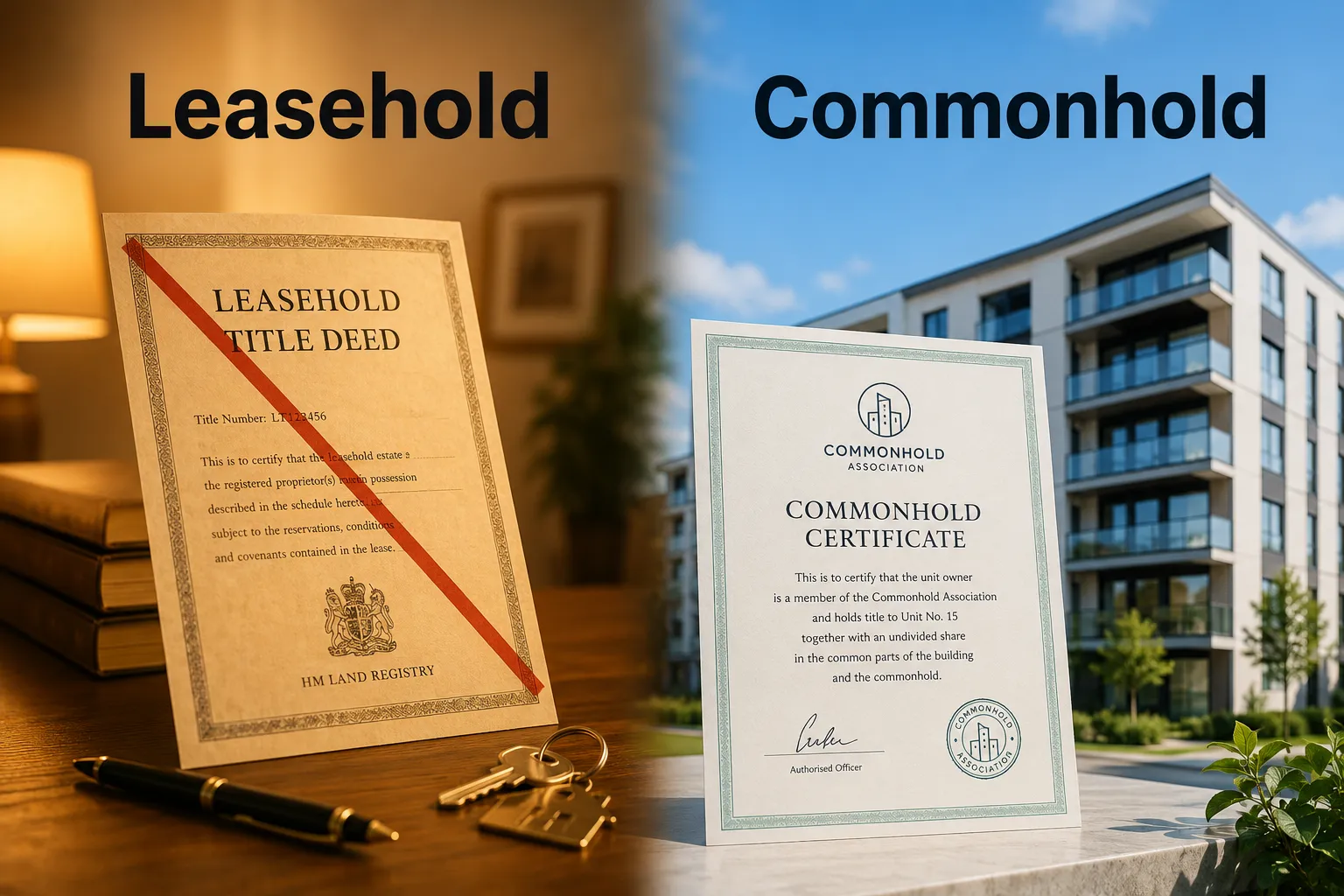
What Is the Difference Between Leasehold and Commonhold Valuation for Expert Witnesses
The core difference is what is being valued. In leasehold valuation, the expert values two distinct interests: the leasehold (the flat) and the freehold reversion (the landlord's interest). In commonhold valuation, there is only one freehold interest per unit, plus a share in the Commonhold Association.
| Aspect | Leasehold Valuation | Commonhold Valuation |
|---|---|---|
| Interests valued | Leasehold + freehold reversion | Freehold unit + association share |
| Ground rent income | Capitalised as investment value | Not applicable |
| Governance costs | Service charge history used | Projected association budget used |
| Comparable evidence | Established market data | Limited post-reform comparables |
| Dispute forum | First-tier Tribunal (Property) | Likely same, plus county court |
The scarcity of post-reform comparable evidence is the most significant practical challenge. Surveyors must build region-specific evidence bases and anchor opinions to RICS survey data where direct comparables are unavailable.
Who Needs an Expert Witness Valuation for Commonhold Conversion
Expert witness valuations for commonhold conversions are needed by several parties, not just the leaseholders initiating the conversion.
- Leaseholders seeking to convert need a valuation to establish the price payable to the freeholder.
- Freeholders need their own expert to counter or verify the leaseholders' valuation.
- Mortgage lenders require independent confirmation that post-conversion values support existing lending.
- HMRC may require a valuation for capital gains or inheritance tax purposes where ownership changes trigger a disposal event. Surveyors providing capital gains tax valuations should be aware of the interaction between conversion and CGT events.
- Courts and tribunals require expert evidence that meets the standards of Civil Procedure Rules Part 35.
Common mistake: Leaseholders sometimes instruct a single surveyor to act for the group, which can create conflicts of interest if individual flat values diverge. Each party with a distinct financial interest should consider separate representation.
What Qualifications Does an Expert Witness Need for Commonhold Valuations
An expert witness providing valuations for commonhold conversion disputes must hold specific qualifications and meet conduct standards.
Minimum requirements:
- Full membership of the Royal Institution of Chartered Surveyors (MRICS or FRICS).
- Relevant valuation experience, specifically in residential leasehold and enfranchisement work.
- RICS Expert Witness Accreditation (strongly recommended and increasingly expected by tribunals post-2026).
- Familiarity with Civil Procedure Rules Part 35 and the associated Practice Direction.
- Up-to-date knowledge of the 2026 legislative changes and their valuation implications.
The 5th edition of the RICS "Surveyors acting as expert witnesses" guidance, updated to reflect post-2026 practice, also requires surveyors to demonstrate that any AI-assisted analysis has been validated by professional judgment and that AI tool usage is disclosed in the report.
How Do You Value Shared Facilities in Commonhold Conversion
Shared facilities, including communal lobbies, gardens, lifts, car parks, and amenity rooms, must be valued as part of the Commonhold Association's assets rather than attributed to individual units.
The valuation approach depends on the nature of the facility:
- Income-generating facilities (such as a car park with lettable spaces): Use a capitalised income approach based on current and projected rental income.
- Amenity facilities (such as a gym or residents' lounge): Use a depreciated replacement cost approach or a comparison with similar managed developments.
- Essential common parts (such as stairwells and lifts): Quantify the cost of future maintenance and replacement as a liability, not an asset, and reflect this in the overall conversion price.
A common mistake is treating shared facilities as having no value in the conversion calculation. In practice, the condition and cost profile of shared facilities can materially affect both the conversion price and the post-conversion unit values. Surveyors should cross-reference findings with a full building survey to ensure that structural or maintenance issues are captured.
How Much Does an Expert Witness Valuation Cost for Commonhold Conversion
Costs vary considerably based on the size of the block, the complexity of the tenure, and whether the matter proceeds to tribunal.
Estimated cost ranges (2026):
- Small block (2-4 flats, straightforward conversion): approximately £1,500 to £3,500 for the valuation report.
- Medium block (5-20 flats, standard mixed tenure): approximately £3,500 to £8,000.
- Large or complex block (20+ flats, mixed use, disputed): £8,000 upwards, with tribunal attendance fees additional.
These are estimates based on typical market rates for RICS-accredited expert witness work in 2026 and will vary by region and surveyor seniority. London and the South East typically attract higher fees.
Additional costs to budget for include:
- Tribunal or court attendance (charged at a daily rate, often £1,500 to £3,000 per day).
- Joint expert meetings, if ordered by the tribunal.
- Supplementary reports responding to the opposing expert's evidence.
How Long Does a Commonhold Conversion Valuation Take
A standard expert witness valuation report for a commonhold conversion typically takes four to eight weeks from instruction to delivery, assuming full access to the property and documentation.
Factors that extend the timeline:
- Incomplete lease documentation or missing title deeds.
- Restricted access to individual flats or common parts.
- Disputes over the scope of the valuation that require pre-instruction clarification.
- Tribunal directions that specify a timetable for expert evidence exchange.
Post-2026 timeline for the conversion process itself:
The 2026 reforms introduce a structured conversion timetable. Once leaseholders serve notice of intention to convert, the freeholder has a defined period to respond. Valuation evidence must typically be exchanged before the tribunal hearing, which can be listed several months after the initial application. Surveyors should advise clients to instruct an expert witness at the earliest possible stage to avoid timetable pressure.
What Happens If the Expert Witness Valuation Is Challenged in Commonhold Conversion
A challenged valuation does not automatically mean the report is rejected. Tribunals assess expert evidence on its methodology, transparency, and compliance with Civil Procedure Rules Part 35.
Steps when a valuation is challenged:
- The opposing expert files a written response identifying specific points of disagreement.
- The tribunal may order a joint expert meeting to narrow the issues.
- A Scott Schedule (a structured document listing agreed and disputed points) is often required.
- Both experts give oral evidence at the hearing, subject to cross-examination.
- The tribunal issues a determination, which may accept one expert's view, split the difference, or reach an independent conclusion.
To withstand challenge, a valuation report must:
- Clearly separate fact from opinion.
- Acknowledge and explain any departures from standard methodology.
- Address the opposing expert's likely arguments proactively.
- Demonstrate that the surveyor's duty is to the tribunal, not the instructing party.
Surveyors who have previously prepared matrimonial valuations or commercial valuations for court proceedings will be familiar with this discipline, but commonhold conversion adds specific technical requirements.
Are There Properties That Should Not Convert to Commonhold
Not every leasehold block is suitable for commonhold conversion, and a surveyor's pre-conversion assessment should identify these cases early.
Properties where conversion is likely to be problematic:
- Blocks with significant building safety remediation outstanding, where cost allocation under commonhold governance is unclear.
- Mixed-use buildings where the commercial element is substantial and the commercial occupier has not consented.
- Buildings with complex third-party rights, such as shared access arrangements or overage agreements.
- Blocks where a significant minority of leaseholders are non-resident investors with no interest in conversion.
- Properties subject to ongoing insolvency proceedings affecting the freeholder.
In these cases, the expert witness valuation must reflect the additional risk and uncertainty, and the surveyor should advise clients on whether conversion is financially viable before proceedings are initiated.
What Is the Timeline for Commonhold Conversion After the 2026 Reforms
The 2026 reforms introduce a clearer procedural framework, though the detailed secondary legislation is still being finalised as of mid-2026.
Indicative conversion timeline:
- Months 1-2: Leaseholders obtain legal advice, commission pre-conversion survey and valuation, and agree on collective action.
- Months 2-3: Formal notice of intention to convert served on the freeholder.
- Months 3-5: Freeholder responds; valuation evidence exchanged between parties.
- Months 5-8: If disputed, application made to the First-tier Tribunal (Property Chamber).
- Months 8-14: Tribunal hearing listed; expert witnesses give evidence.
- Post-determination: Commonhold Association registered at Land Registry; leasehold titles extinguished.
This timeline assumes a contested conversion. Uncontested conversions where parties agree on value can proceed significantly faster. Surveyors providing chartered surveyor valuations should build this timetable into their client engagement letters.
FAQ
What is the primary duty of an expert witness surveyor in a commonhold conversion dispute?
The primary duty is to the tribunal or court, not to the instructing party. The surveyor must provide an independent, objective opinion that assists the decision-maker, even if that opinion is unfavourable to the client who commissioned the report.
Can the same surveyor act as both valuer and expert witness for a commonhold conversion?
Yes, in most cases. The surveyor who prepares the valuation report can also serve as the expert witness at tribunal. However, they must not have a financial interest in the outcome and must declare any prior involvement with the property or parties.
Does the RICS Red Book apply to commonhold conversion valuations?
Yes. The RICS Valuation Global Standards (Red Book) remains the applicable framework. Surveyors must apply its standards to the specific circumstances of commonhold conversion, adapting methodology where the standard guidance does not directly address the tenure change.
What happens to a leasehold flat's value after commonhold conversion?
In most cases, converting from leasehold to freehold ownership through commonhold increases the individual flat's market value, because the flat is no longer subject to ground rent obligations or lease length depreciation. The exact uplift depends on the remaining lease term, ground rent level, and local market conditions.
Is RICS Expert Witness Accreditation mandatory for commonhold conversion cases?
It is not currently mandatory by statute, but tribunals increasingly expect it, and its absence can be used to challenge the weight given to a surveyor's evidence. Obtaining accreditation before accepting instructions in contested cases is strongly advisable.
How are valuation disputes resolved if both experts disagree significantly?
The tribunal may order a joint expert meeting to produce a Scott Schedule of agreed and disputed points. If the gap remains wide, the tribunal will weigh the methodology and reasoning of each report and may reach its own conclusion. In some cases, the tribunal appoints its own independent expert.
Do mortgage lenders require a separate valuation after commonhold conversion?
Most lenders will require updated security valuations following conversion, particularly where the tenure change materially affects the property's value or marketability. Borrowers should check their mortgage terms and notify their lender before conversion proceedings begin.
Conclusion
Expert witness valuations for commonhold conversions represent one of the most technically demanding areas of surveying practice in 2026. The legislative changes introduced this year have fundamentally altered the assumptions underpinning freehold valuation, and surveyors who rely on pre-reform methodology risk producing reports that cannot withstand tribunal scrutiny.
Actionable next steps for property professionals and homeowners:
- Instruct a RICS-accredited expert witness surveyor at the earliest stage of any conversion process, before formal notices are served.
- Commission a full pre-conversion building survey to identify physical and legal issues that could affect valuation or conversion viability.
- Ensure the valuation report explicitly addresses the 2026 legislative changes, including ground rent abolition and forfeiture reform, and their effect on the freehold interest.
- Budget for tribunal attendance costs as well as the initial report fee.
- If the block contains mixed-use or commercial elements, obtain specialist advice before assuming conversion is straightforward.
For tailored advice on expert witness valuations, leasehold enfranchisement, or any aspect of property valuation under the 2026 reforms, contact a qualified chartered surveyor with direct experience in post-reform commonhold work.
.cg-checker{font-family:Arial,sans-serif;max-width:560px;margin:24px auto;background:#f8f9fc;border:1px solid #d0d7e3;border-radius:8px;padding:20px 24px}
.cg-checker h3{margin:0 0 4px;font-size:1.05rem;color:#1a2a4a}
.cg-checker p.cg-sub{margin:0 0 16px;font-size:.85rem;color:#555}
.cg-item{display:flex;align-items:flex-start;margin-bottom:10px;gap:10px}
.cg-item input[type=checkbox]{margin-top:3px;accent-color:#1a5fb4;width:16px;height:16px;flex-shrink:0}
.cg-item label{font-size:.9rem;color:#222;cursor:pointer}
.cg-bar-wrap{background:#dde3ee;border-radius:4px;height:10px;margin:16px 0 6px}
.cg-bar{background:#1a5fb4;height:10px;border-radius:4px;width:0%;transition:width .3s}
.cg-score{font-size:.88rem;color:#1a2a4a;font-weight:bold}
.cg-msg{margin-top:10px;font-size:.85rem;padding:8px 12px;border-radius:5px;display:none}
.cg-msg.low{background:#fdecea;color:#b71c1c}
.cg-msg.mid{background:#fff8e1;color:#7b5800}
.cg-msg.high{background:#e8f5e9;color:#1b5e20}
Commonhold Conversion Readiness Checker
Tick each item your surveyor has confirmed before proceeding.
function cg_update(){
var ids=[“c1″,”c2″,”c3″,”c4″,”c5″,”c6″,”c7”],n=0;
ids.forEach(function(id){if(document.getElementById(id).checked)n++;});
var pct=Math.round(n/ids.length*100);
document.getElementById(“cg-bar”).style.width=pct+”%”;
document.getElementById(“cg-score”).textContent=n+” of “+ids.length+” complete”;
var m=document.getElementById(“cg-msg”);
m.style.display=”block”;
if(n<=2){m.className="cg-msg low";m.textContent="Early stage, instruct your expert witness surveyor before serving any formal notices.";}
else if(n<=5){m.className="cg-msg mid";m.textContent="Good progress, complete remaining items before exchanging valuation evidence.";}
else{m.className="cg-msg high";m.textContent="Strong readiness, your checklist meets post-2026 expert witness standards.";}
}