


Last updated: July 24, 2026
Quick Answer: Expert witness valuations amid 2026 rental regulation tightening require RICS-accredited surveyors to formally account for compliance costs, regulatory risk, and reduced rental income potential when assessing a property's market value. The Renters' Rights Act 2025 and associated secondary legislation have materially altered how rental properties are valued in dispute and litigation contexts. Landlords, investors, and legal teams all need to understand how RICS guidance now frames compliance as a direct value driver.
Key Takeaways
- Expert witness valuations for rental properties must now explicitly address 2026 compliance obligations under the Renters' Rights Act 2025 and related regulations.
- RICS guidance (Red Book Global Standards) requires valuers to reflect all material factors affecting value, including regulatory compliance costs and legal risk.
- Non-compliant rental properties can suffer measurable value reductions, particularly where remediation costs are high or where prohibition orders are in force.
- The cost of a RICS-compliant expert witness valuation for a rental property typically ranges from approximately £1,500 to £5,000 depending on property type, complexity, and dispute context.
- Expert witness reports must meet Civil Procedure Rules (CPR) Part 35 standards to be admissible in UK courts and tribunals.
- Common valuer mistakes include ignoring pending compliance costs, failing to adjust comparable evidence for regulatory differences, and not disclosing conflicts of interest.
- Landlords facing disputes, rent repayment orders, or First-tier Tribunal hearings benefit most from commissioning a formal expert witness valuation.
- RICS-qualified surveyors are held to a higher standard of independence and methodology than non-RICS valuers, which matters significantly in contested proceedings.
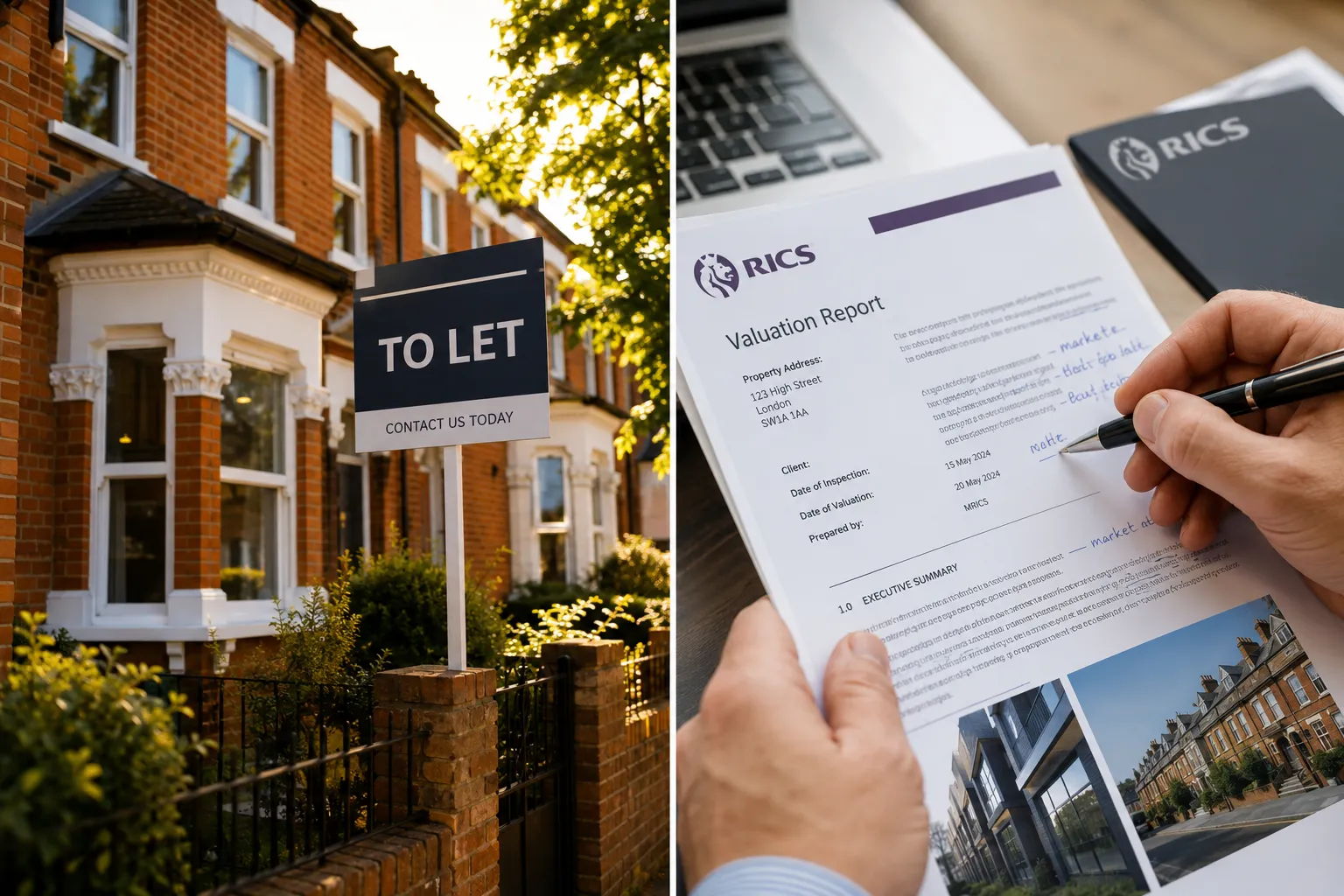
What Is an Expert Witness Valuation in Real Estate?
An expert witness valuation is a formal, court-admissible assessment of a property's market value, prepared by a suitably qualified professional who can give independent opinion evidence in legal or tribunal proceedings. In the UK rental sector, this typically means a RICS-accredited chartered surveyor providing a written report that meets Civil Procedure Rules Part 35 requirements.
Unlike a standard mortgage valuation or homebuyer report, an expert witness valuation carries specific legal obligations. The valuer's primary duty is to the court or tribunal, not to the instructing party. This independence is non-negotiable under CPR Part 35 and RICS Practice Statement PS1.
Key characteristics of a compliant expert witness valuation include:
- A signed declaration of independence and absence of conflict of interest
- Clear methodology referencing RICS Red Book Global Standards (2022 edition, as updated)
- Explicit reasoning for any adjustments to comparable evidence
- An opinion of value stated as at a specific date
- Compliance with the relevant court or tribunal's procedural rules
For a detailed overview of what these reports cover, see expert witness reports from Prince Surveyors.
How Will 2026 Rental Regulations Affect Property Values?
The 2026 regulatory environment has introduced compliance costs that directly reduce net rental income and, by extension, investment value for buy-to-let landlords. The Renters' Rights Act 2025 (which came into force in stages through late 2025 and 2026) abolished fixed-term assured shorthold tenancies, restricted rent increases to once per year, and strengthened tenants' rights to challenge above-market rents at the First-tier Tribunal.
These changes affect property values in three concrete ways:
-
Reduced income certainty: Landlords can no longer rely on fixed-term tenancies to manage void periods or exit underperforming tenancies quickly. Valuation models that previously capitalised rental income at a fixed term now require adjustments for increased void risk.
-
Compliance capital expenditure: Properties that do not meet the new Decent Homes Standard (extended to the private rented sector in 2026) require remediation. Estimated remediation costs reduce the property's investment value directly.
-
Regulatory risk premium: Investors in the rental sector now apply a higher risk premium to properties in areas with active local authority enforcement, reducing yields and therefore capital values.
Expert witness valuations amid 2026 rental regulation tightening must account for all three of these factors to produce a defensible opinion of value.
What Does RICS Guidance Say About Rental Property Compliance?
RICS guidance is clear: valuers must reflect all material factors affecting value, and regulatory compliance status is explicitly a material factor. The RICS Red Book Global Standards (2022, incorporating 2024 and 2025 updates) require valuers to investigate and disclose any known or reasonably discoverable legal or regulatory constraints on a property's use or income.
For rental properties specifically, RICS guidance requires valuers to:
- Identify whether the property holds a valid licence (where selective or additional licensing schemes apply)
- Note any outstanding improvement notices, prohibition orders, or hazard awareness notices under the Housing Health and Safety Rating System (HHSRS)
- Adjust the valuation to reflect the cost and time required to achieve compliance where deficiencies are identified
- Disclose where compliance status could not be verified and explain the assumptions made
RICS also publishes specific guidance notes on valuing properties subject to regulatory constraints. Valuers who ignore compliance issues in their reports risk professional censure and, in litigation contexts, having their evidence given little or no weight by the tribunal or court.
For landlords who want to understand how inspections and compliance interact, the guide on how often rental units should be inspected provides useful context.
How Do New Rental Regulations Impact Expert Witness Reports?
Expert witness valuations amid 2026 rental regulation tightening are more complex to prepare than they were three years ago, because the regulatory baseline has shifted substantially. Valuers must now address a wider set of compliance variables in every report.
The practical impacts on expert witness reports include:
| Regulatory Factor | Impact on Valuation Report |
|---|---|
| Decent Homes Standard extension | Remediation cost deduction from gross value |
| Abolition of Section 21 | Adjusted void risk and management cost assumptions |
| Annual rent increase cap | Lower income growth projections in investment valuations |
| Selective licensing schemes | Licence fee costs and compliance conditions noted |
| HHSRS hazard categories | Category 1 hazards require mandatory disclosure and value adjustment |
Valuers who prepare reports without addressing these factors risk producing opinions that are challenged as incomplete or methodologically unsound. In tribunal proceedings, opposing counsel will typically instruct their own RICS expert to identify any gaps.
What Is the Difference Between RICS and Other Valuation Standards?
RICS-accredited valuers operate under the Red Book Global Standards, which mandate specific methodology, independence requirements, and professional indemnity insurance. Non-RICS valuers are not bound by these standards and cannot provide expert witness evidence that carries the same weight in UK courts and tribunals.
The key distinctions matter in practice:
- Independence: RICS PS1 requires a formal conflicts check before accepting an instruction. Non-RICS valuers have no equivalent mandatory requirement.
- Methodology: Red Book valuations must use recognised bases of value (Market Value, Market Rent, etc.) with defined assumptions. Informal valuations often lack this rigour.
- Accountability: RICS members are subject to disciplinary proceedings and can lose their designation. This creates a strong professional incentive for accuracy and honesty.
- Court acceptance: UK courts and the First-tier Tribunal (Property Chamber) routinely give greater evidential weight to RICS-compliant expert witness reports.
For landlords considering an independent property valuation, choosing a RICS-accredited surveyor is not optional if the valuation may be used in dispute resolution.
How Much Does an Expert Witness Valuation Cost?
An expert witness valuation for a UK rental property typically costs between £1,500 and £5,000 in 2026, though fees can exceed this range for complex commercial or multi-unit properties. The variation reflects property type, the complexity of the compliance issues involved, and whether the valuer is required to attend a hearing and give oral evidence.
Indicative fee ranges:
- Standard residential rental property (single dwelling): £1,500 to £2,500 for the written report
- HMO or multi-unit residential: £2,500 to £4,000
- Attendance at First-tier Tribunal or County Court: Additional £800 to £2,000 per day
- Joint expert instruction (both parties share one valuer): Can reduce costs by 30 to 40 per cent compared to each party instructing separately
These are estimates based on market rates observed in 2026 and will vary by region and surveyor. London and the South East typically attract fees at the higher end of these ranges.
Costs should be weighed against the potential financial outcome of the dispute. In rent repayment order cases, where the maximum award can be 12 months' rent, the cost of a professional expert witness valuation is almost always justified.
What Mistakes Do Valuers Make With New Rental Regulations?
The most common errors in expert witness valuations amid 2026 rental regulation tightening fall into three categories: incomplete compliance investigation, flawed comparable selection, and inadequate disclosure.
Incomplete compliance investigation is the most frequent problem. Valuers sometimes rely on information provided by the instructing party rather than conducting independent checks with the local authority, the property licensing register, and the Valuation Office Agency.
Flawed comparable selection occurs when valuers use pre-2025 comparable transactions without adjusting for the changed regulatory environment. A sale that completed before the Renters' Rights Act came into force reflects a different risk profile and should be adjusted accordingly.
Inadequate disclosure includes failing to state the assumptions made where compliance status could not be verified, or not disclosing that the valuer has previously acted for the instructing party.
Additional mistakes to watch for:
- Ignoring pending enforcement action that has not yet resulted in a formal notice
- Failing to account for the cost of obtaining a selective licence where one is required
- Using a valuation date that predates the relevant regulatory change without explaining the adjustment
For context on what a thorough property survey should cover, the RICS building survey guide illustrates the level of investigation that professional standards require.
Do I Need an Expert Witness Valuation for My Rental Property Dispute?
A formal expert witness valuation is necessary in any rental property dispute where the market value or market rent of the property is a contested issue before a court or tribunal. This includes rent repayment order applications, First-tier Tribunal rent challenges, lease renewal disputes, and dilapidations claims.
You likely need an expert witness valuation if:
- A tenant has applied for a rent repayment order and the amount is disputed
- You are defending or bringing a claim at the First-tier Tribunal (Property Chamber)
- A dispute involves the value of a property at a specific historic date (for example, at the start of a tenancy)
- You are involved in litigation where the court has directed expert evidence on property value
You may not need a full expert witness valuation if the dispute is purely procedural or if the parties have agreed on the relevant figures. In those cases, a desktop valuation or a without-prejudice opinion may suffice.
For landlords navigating new property management laws, the article on new property management laws provides useful background on the regulatory context.

How Are Rental Properties Valued Under Stricter 2026 Rules?
Under 2026 rules, rental properties are valued using the same core methodology as before (capitalisation of net income or direct comparison with market sales) but with additional adjustments that reflect the changed regulatory environment. The key adjustment is to net income: valuers must now deduct estimated compliance costs, increased management costs, and any reduction in achievable rent caused by regulatory constraints.
A simplified example:
- Gross annual rent: £18,000
- Less: management costs (12%): £2,160
- Less: estimated compliance remediation (annualised over 5 years): £1,200
- Less: void risk adjustment (increased under new tenancy rules): £900
- Net income for capitalisation: £13,740
This net income figure is then capitalised at a yield that reflects the risk profile of the specific property and location. A higher-risk property (older stock, active enforcement area, pending HHSRS notices) will attract a higher yield, producing a lower capital value.
Valuers must document each adjustment and its basis. Unsupported adjustments are a common ground for challenge in tribunal proceedings.
What Happens If a Property Does Not Comply With 2026 Rental Regulations?
Non-compliance with 2026 rental regulations has direct financial consequences that a valuer must reflect in any expert witness report. The most serious outcome is a prohibition order under the Housing Act 2004, which prevents the property from being let until specified works are completed. A property subject to a prohibition order has a materially reduced market value because it cannot generate rental income.
Other consequences that affect value include:
- Civil penalties: Local authorities can issue fines of up to £30,000 for certain offences under the Housing and Planning Act 2016 (as amended). Outstanding penalty notices reduce net value.
- Rent repayment orders: Tenants can recover up to 12 months' rent where a landlord has committed a relevant offence. This creates a contingent liability that a prudent valuer should note.
- Reduced marketability: Properties with known compliance issues attract a smaller pool of buyers, which typically results in a price discount relative to comparable compliant properties.
For landlords concerned about specific compliance issues such as hazardous materials, the article on asbestos dangers and UK regulations covers one of the most common HHSRS risk areas.
Can an Expert Witness Valuation Help With Rental Regulation Disputes?
Yes. An expert witness valuation is one of the most effective tools available to both landlords and tenants in rental regulation disputes, because it provides an independent, evidence-based opinion that tribunals and courts can rely on. Where the dispute turns on the value of the property or the appropriate level of rent, a well-prepared RICS expert witness report can be decisive.
Specific situations where an expert witness valuation adds clear value:
- Rent repayment order hearings: A valuation that establishes the market rent at the relevant date can support or undermine the calculation of the repayment amount.
- First-tier Tribunal rent challenges: Under the Renters' Rights Act 2025, tenants can challenge rent increases at the tribunal. An expert witness valuation of market rent provides the evidential baseline.
- Dilapidations disputes: Where a landlord claims for end-of-tenancy repairs, an expert valuation of the property's condition and value supports the quantum of the claim. See also the dilapidation protocols guide for procedural context.
- Compulsory purchase and licensing disputes: Where a local authority takes enforcement action, an expert witness valuation establishes the property's value for compensation purposes.
How Long Does an Expert Witness Valuation Take for Rental Properties?
A standard expert witness valuation for a single residential rental property typically takes two to four weeks from instruction to delivery of the final report. More complex cases, particularly those involving HMOs, multi-unit blocks, or properties with significant compliance issues, can take four to eight weeks.
The timeline breaks down as follows:
- Instruction and conflicts check: 1 to 3 days
- Inspection of the property: Usually within 5 to 10 working days of instruction
- Comparable research and compliance investigation: 5 to 10 working days
- Drafting and peer review of the report: 5 to 7 working days
- Final report delivery: Within the agreed timeframe
Instructing parties should factor in court or tribunal deadlines when commissioning a report. CPR Part 35 directions typically set a fixed date for exchange of expert evidence, and late reports can result in the evidence being excluded.
Frequently Asked Questions
What qualifications should an expert witness valuer have for rental property disputes in 2026?
The valuer should be a Member or Fellow of RICS (MRICS or FRICS) with specific experience in residential investment property and familiarity with the Renters' Rights Act 2025 and associated 2026 secondary legislation. They must also have completed RICS CPD requirements relevant to the Red Book and expert witness practice.
Can a landlord instruct their own valuer as an expert witness?
Yes, but the valuer's duty is to the court or tribunal, not to the instructing landlord. If the valuer's independence is compromised, their evidence may be given little weight. In some cases, the tribunal will direct a single joint expert to be appointed by both parties.
Does the Renters' Rights Act 2025 affect how market rent is defined for valuation purposes?
Yes. The Act introduced a statutory definition of market rent for tribunal purposes that aligns with the open market rent concept in RICS guidance but specifies that the rent must be assessed on the assumption that the property complies with all applicable legal requirements. This means a non-compliant property cannot be valued at the same market rent as a compliant one.
What is the difference between a market valuation and an expert witness valuation?
A market valuation is prepared for commercial purposes (mortgage, sale, investment analysis) and the valuer's duty is to the client. An expert witness valuation is prepared for use in legal proceedings and the valuer's overriding duty is to the court or tribunal. The methodology may be similar, but the legal obligations and report format differ significantly.
Are there any exceptions to 2026 rental regulations that could affect a valuation?
Certain property types, including some student accommodation and properties managed under specific social housing arrangements, may be subject to different regulatory regimes. A valuer must identify the correct regulatory framework applicable to the specific property before forming an opinion of value. Assumptions about regulatory status must be clearly stated in the report.
How does selective licensing affect an expert witness valuation?
Where a property is in a selective licensing area and does not hold a valid licence, the valuer must note this as a material fact. The cost of obtaining the licence, any conditions attached to it, and the risk of enforcement action should all be reflected in the valuation. An unlicensed property in a licensing area carries a higher risk profile than a licensed one.
Conclusion
Expert witness valuations amid 2026 rental regulation tightening represent one of the most technically demanding areas of RICS practice. The combination of the Renters' Rights Act 2025, the Decent Homes Standard extension, and more active local authority enforcement has created a valuation environment where compliance status is a primary value driver, not a footnote.
Actionable next steps for landlords and property professionals:
- Audit your portfolio's compliance status before any dispute arises. Identify properties with outstanding HHSRS notices, missing licences, or remediation requirements and quantify the costs.
- Commission a RICS-compliant valuation that explicitly addresses 2026 regulatory factors if you are facing or anticipating a tribunal or court dispute.
- Instruct early. Expert witness reports take two to eight weeks to prepare. Waiting until close to a hearing date risks late delivery and potential exclusion of evidence.
- Choose a valuer with relevant specialism. General residential valuers may not have the specific knowledge of rental regulation required for a defensible expert witness report in 2026.
- Consider a joint expert where both parties can agree on one. It reduces costs and often produces a more credible outcome before a tribunal.
For landlords and property professionals seeking a RICS-accredited expert witness valuation that accounts for 2026 compliance impacts, Prince Surveyors' valuation services provide the professional expertise and independence that court and tribunal proceedings require.
.cg-wrap{font-family:Arial,sans-serif;max-width:520px;margin:2rem auto;background:#f8f9fc;border:1px solid #dde2ee;border-radius:8px;padding:1.5rem}
.cg-wrap h3{margin:0 0 1rem;font-size:1.1rem;color:#1a2a4a}
.cg-row{display:flex;flex-direction:column;margin-bottom:1rem}
.cg-row label{font-size:.85rem;color:#444;margin-bottom:.3rem}
.cg-row input{padding:.5rem;border:1px solid #ccc;border-radius:4px;font-size:.95rem}
.cg-btn{background:#1a2a4a;color:#fff;border:none;padding:.6rem 1.4rem;border-radius:4px;cursor:pointer;font-size:.95rem;width:100%}
.cg-btn:hover{background:#2c4270}
.cg-result{margin-top:1.2rem;background:#fff;border:1px solid #dde2ee;border-radius:6px;padding:1rem;font-size:.9rem;color:#222;display:none}
.cg-result strong{color:#1a2a4a}
.cg-note{font-size:.75rem;color:#888;margin-top:.8rem}
2026 Rental Compliance Value Impact Estimator
Estimate only. Assumes 12% management costs, 5% void uplift, remediation annualised over 5 years. Not a substitute for a RICS valuation.
function cgCalc(){
var r=parseFloat(document.getElementById(‘cg-rent’).value)||0;
var rem=parseFloat(document.getElementById(‘cg-remed’).value)||0;
var y=parseFloat(document.getElementById(‘cg-yield’).value)||0;
if(r<=0||y<=0){alert('Please enter valid rent and yield values.');return;}
var mgmt=r*0.12;
var void_adj=r*0.05;
var rem_ann=rem/5;
var net=r-mgmt-void_adj-rem_ann;
var val_before=(r-mgmt)/( y/100);
var val_after=net/(y/100);
var diff=val_before-val_after;
var res=document.getElementById('cg-result');
res.style.display='block';
res.innerHTML='Estimated value (pre-compliance costs): £’+Math.round(val_before).toLocaleString()+’
‘
+’Estimated value (post-compliance costs): £’+Math.round(val_after).toLocaleString()+’
‘
+’Estimated value reduction: £’+Math.round(diff).toLocaleString();
}
Tags: expert witness valuation, RICS guidance, rental regulation 2026, Renters Rights Act, property compliance, landlord disputes, First-tier Tribunal, rental property valuation, HHSRS, buy-to-let valuation, chartered surveyor, compliance costs