

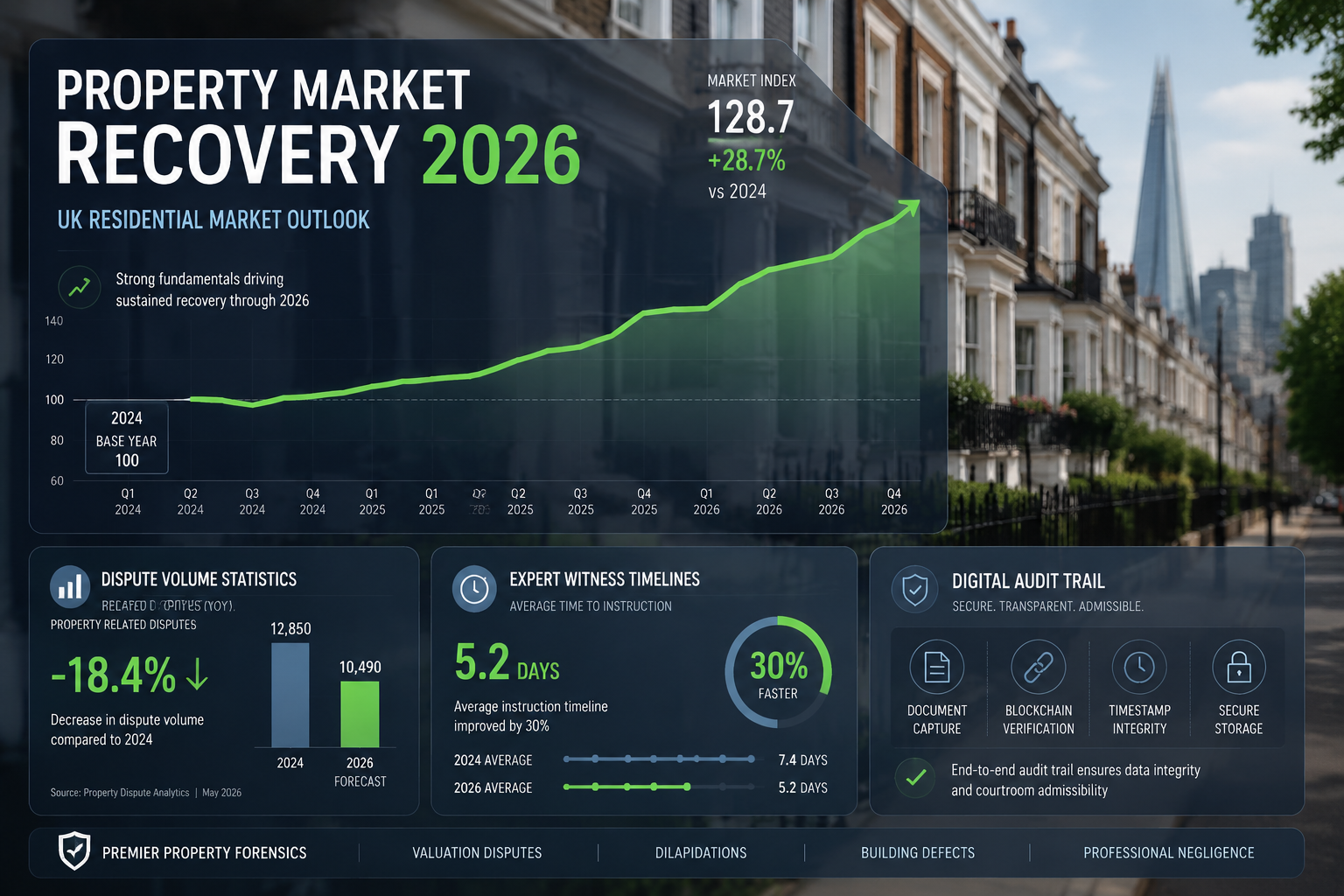
Property dispute volumes in England and Wales climbed sharply through late 2025 and into 2026, driven by a recovering sales market, rising lease extensions, and a surge in contested probate and dilapidation claims. Against that backdrop, the quality and credibility of expert witness valuations have never mattered more. Digital Tools for Expert Witness Valuations: RICS App and CPD Enhancements in 2026 Recovery Cases sit at the intersection of two converging forces: a profession under growing scrutiny from courts and tribunals, and a regulatory body that has fundamentally modernised how its members demonstrate competence.
This article examines how RICS' new member app, launched in February 2026, and the revised CPD framework, effective from January 2026, are reshaping the way chartered surveyors prepare, document, and defend expert valuations in litigation and dispute resolution contexts.
Key Takeaways
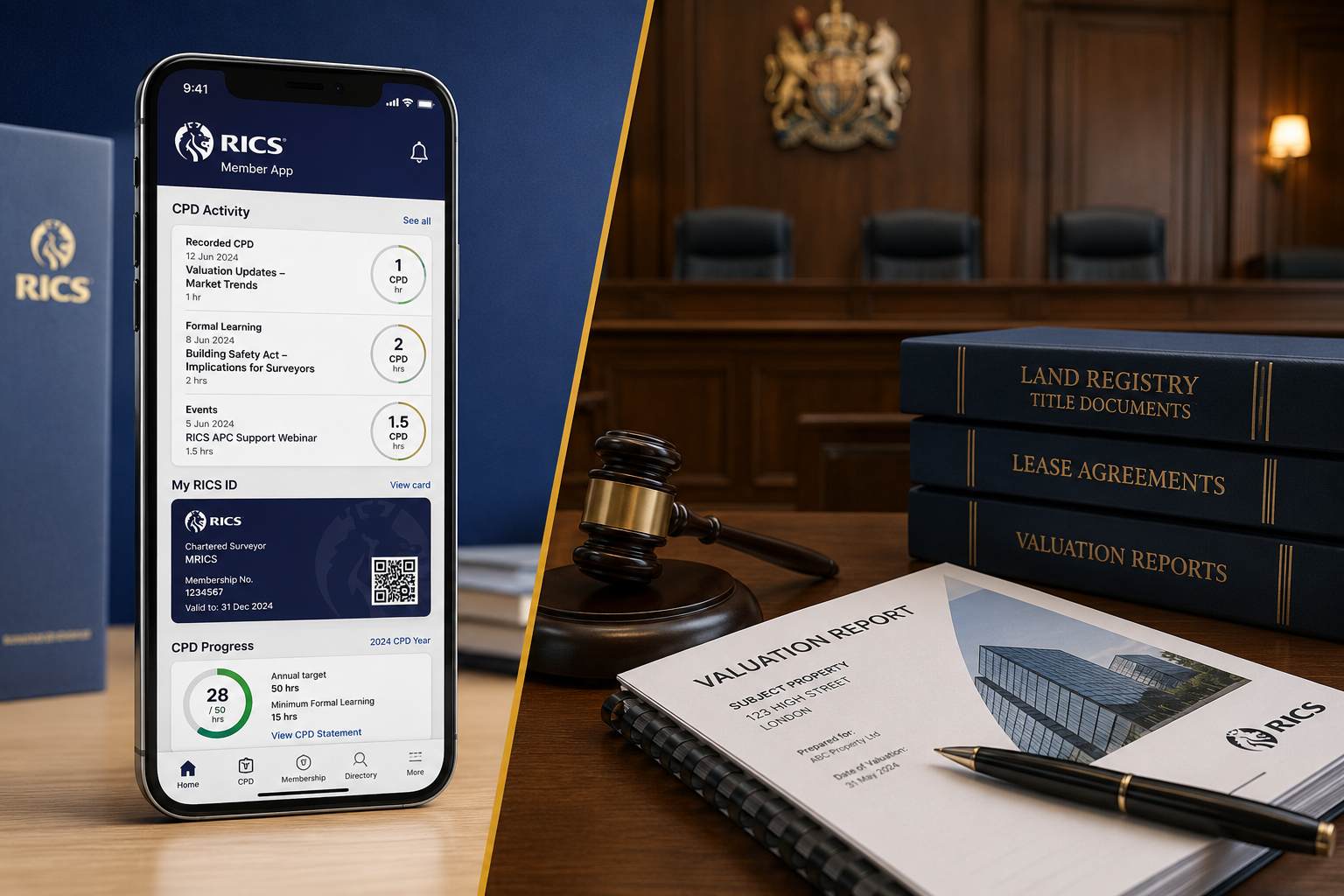
- RICS launched a new member app in February 2026, enabling surveyors to log CPD activities on-the-go and carry digital credentials directly into expert witness instructions.
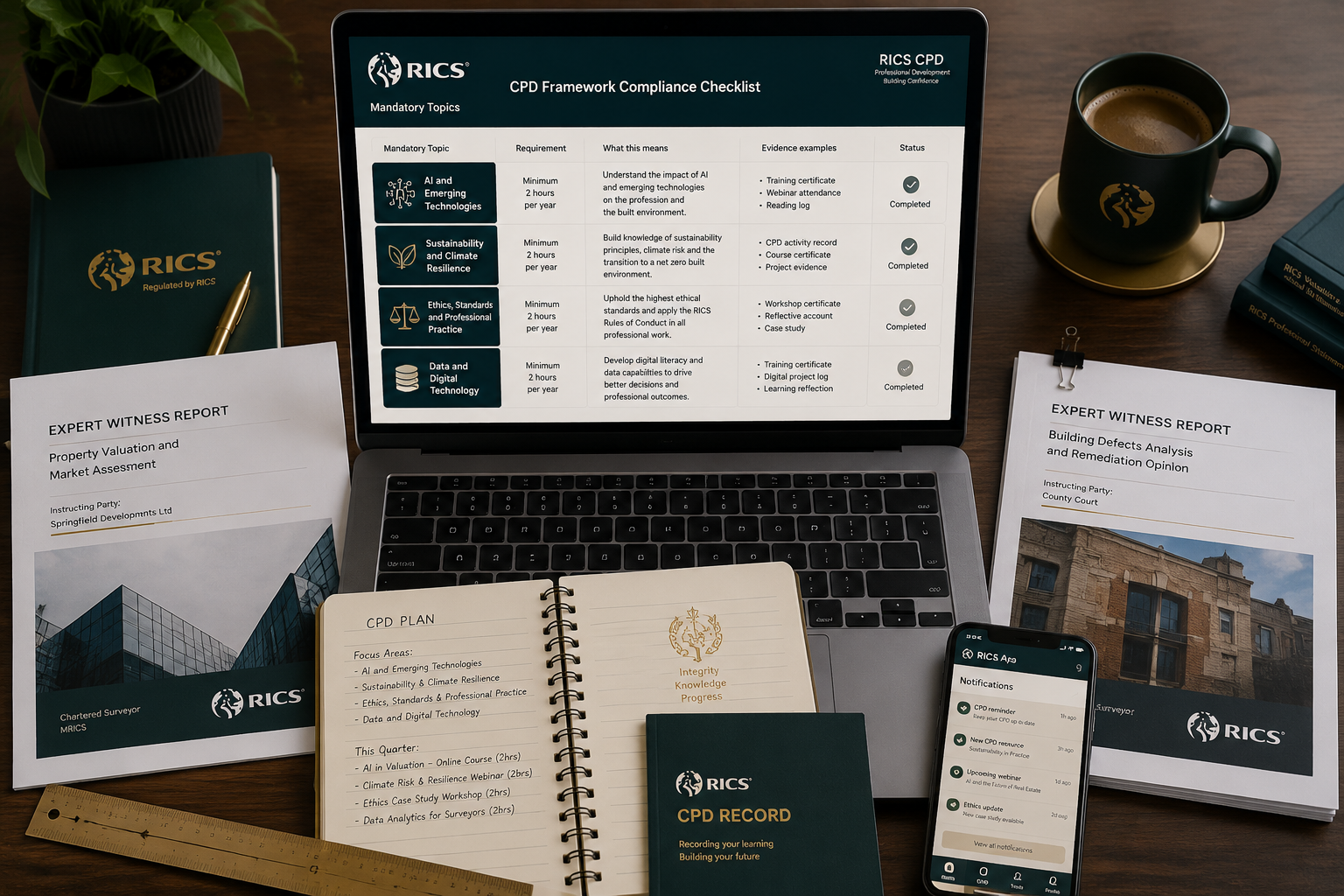
- The revised 2026 CPD framework is outcomes-based, requiring mandatory coverage of AI, sustainability, ethics, and data technology every three years.
- Higher audit rates of CPD records mean expert witnesses must now maintain verifiable, structured learning trails that can withstand tribunal scrutiny.
- Digital tools are not merely administrative conveniences; in recovery-era dispute cases, they directly support the credibility and defensibility of valuation evidence.
- Surveyors acting as expert witnesses should align their CPD activities with the specific valuation methodologies most challenged in current dispute types.
Why 2026 Recovery Cases Demand Higher Standards from Expert Witnesses
The property market recovery of 2025-2026 has generated a specific category of dispute that places unusual demands on expert witnesses. When values shift rapidly, parties on both sides of a claim frequently obtain conflicting valuations. Tribunals and courts must then assess not just the number produced, but the methodology, the data sources, and the professional standing of the expert who produced it.
Three dispute types are particularly prominent in the current environment:
- Dilapidation claims: Landlords and tenants are disputing reinstatement costs as leases expire on properties that changed hands or were repurposed during the downturn years.
- Probate and estate valuations: Rising asset values have increased the financial stakes in contested estate distributions, with HMRC scrutiny adding a further layer of complexity.
- Shared ownership and right-to-buy disputes: Staircasing valuations and right-to-buy prices are being challenged more frequently as affordable housing valuations diverge from open market comparables.
For surveyors involved in any of these areas, the expert witness services they provide must be underpinned by demonstrably current knowledge. That is precisely where the 2026 CPD and digital tool changes become operationally significant.
"The shift from tracking hours to demonstrating outcomes means that a surveyor's CPD record now tells a story about professional judgment, not just attendance."
The Credibility Gap in Expert Testimony
Courts have long recognised that an expert witness is only as credible as their knowledge is current. A valuer who cannot demonstrate familiarity with AI-assisted automated valuation models (AVMs), or who has not engaged with updated sustainability guidance affecting comparable evidence, faces cross-examination risks that did not exist five years ago. The 2026 RICS framework directly addresses this vulnerability.
The RICS Member App and Revised CPD Framework: What Has Changed
The New RICS Member App
Launched in February 2026, the RICS Member App represents the most significant digital infrastructure upgrade for practising members in over a decade [3]. Available to AssocRICS, MRICS, and FRICS members via the App Store and Google Play, the app consolidates several functions that were previously fragmented across desktop portals:
| Feature | Practical Benefit for Expert Witnesses |
|---|---|
| On-the-go CPD logging | Record learning immediately after webinars, site visits, or tribunal observations |
| Digital ID card | Present verified credentials to instructing solicitors without paper certificates |
| Personal information management | Keep contact and practice details current for court-compliant CV submissions |
| CPD activity history | Generate a structured learning record for audit or disclosure purposes |
The ability to log CPD activities immediately after they occur is more significant than it might first appear. In expert witness practice, the gap between undertaking learning and recording it has historically led to incomplete records. When RICS auditors or opposing counsel request evidence of competence, a fragmented log is a liability. The app closes that gap.
The Revised CPD Framework: Outcomes Over Hours
Effective from January 2026, RICS' updated CPD framework moves away from a purely quantitative hours-based model toward an outcomes-based approach [1]. The framework was developed following extensive global member consultations and is designed to help over 130,000 members enhance skills in areas directly relevant to modern practice.
Mandatory topics, required every three years, now include [2]:
- Ethics and professional standards
- Sustainability and environmental impact
- Artificial intelligence and its applications in surveying
- Data and technology literacy
For expert witnesses, the ethics and AI components are particularly consequential. Courts are increasingly encountering valuations that have been informed or cross-checked using algorithmic tools. An expert who cannot explain how they evaluated or discounted AVM outputs, or who has not completed relevant CPD on AI in valuation, is exposed to a line of cross-examination that could undermine otherwise sound evidence.
Flexibility for Deep Learning
The revised framework also introduces a practical provision for members undertaking substantial educational programmes. Those completing master's degrees or equivalent programmes can carry forward up to 10 CPD hours into the following year [1]. For expert witnesses pursuing advanced qualifications in valuation methodology or dispute resolution, this removes a previous disincentive to engage in deep, sustained learning.
Annual Declaration and Audit Exposure
Members are now required to declare annually, by 31 January following each CPD year, that their activities were relevant, adequate, and appropriate [4]. Alongside this, RICS has committed to auditing a higher proportion of member CPD records, with a focus on quality and relevance rather than volume [2].
For expert witnesses, this creates a direct operational requirement: CPD records must be structured, specific, and defensible. A log that records "general reading" without specifying topics, sources, or learning outcomes will not withstand an audit. The same standard applies if a court or tribunal requests evidence of the expert's ongoing competence in the relevant valuation specialism.
Applying Digital Tools for Expert Witness Valuations: RICS App and CPD Enhancements in 2026 Recovery Cases
Building a Court-Ready Competence Record
The practical application of Digital Tools for Expert Witness Valuations: RICS App and CPD Enhancements in 2026 Recovery Cases begins long before an expert witness report is drafted. It starts with how a surveyor structures their ongoing learning in relation to the dispute types they are likely to encounter.
Surveyors who regularly produce expert witness reports for litigation should consider organising their CPD activities around three pillars:
- Valuation methodology currency: Completing CPD that covers the Red Book updates, comparable evidence standards, and any RICS guidance notes relevant to the property type in dispute.
- Technology literacy: Engaging with AI and AVM-related content to ensure they can critically evaluate algorithmic outputs and explain their approach in court.
- Legal and procedural knowledge: Understanding the Civil Procedure Rules (CPR) Part 35 requirements for expert witnesses, updated tribunal procedures, and recent case law affecting valuation evidence.
Each of these activities, when logged promptly through the RICS Member App, creates a timestamped, structured record. That record serves a dual purpose: it satisfies RICS' audit requirements, and it provides the expert with a ready reference when preparing the professional background section of their report.
Digital Tools in the Valuation Process Itself
Beyond CPD management, digital tools are transforming the evidence base that expert witnesses draw upon. Surveyors instructed in RICS shared ownership valuations or right-to-buy valuation disputes now have access to richer datasets than were available even three years ago. Land Registry price paid data, EPC ratings, planning portal records, and commercial comparable databases can all be accessed and cross-referenced digitally.
The challenge for expert witnesses is not access to data; it is the structured, transparent presentation of how that data was selected, weighted, and applied. Courts expect experts to show their working. Digital audit trails, when properly maintained, support this transparency.
Party Wall and Dilapidation Disputes: A Specific Application
In party wall disputes and dilapidation claims, expert witnesses are frequently required to produce a schedule of condition or a reinstatement cost assessment. The accuracy of these assessments depends on both the surveyor's technical knowledge and their ability to reference current cost data.
Surveyors who have completed CPD on construction cost inflation, sustainability-compliant reinstatement standards, and digital measurement tools are better positioned to produce assessments that withstand challenge. The RICS CPD framework's mandatory sustainability component is directly relevant here: reinstatement specifications increasingly need to reflect energy efficiency requirements, and an expert who cannot address this in cross-examination is at a disadvantage.
Similarly, for probate valuations and charities act valuations, where the expert's independence and methodology are scrutinised by HMRC or the Charity Commission as well as opposing parties, a verifiable CPD record demonstrating current knowledge of the relevant valuation standards is a material professional asset.
Professional Standards, Accountability, and the Public Interest Dimension
Why RICS Has Raised the Bar
The revised CPD approach is explicitly designed to uphold professional standards and strengthen accountability by ensuring members can demonstrate how their ongoing learning translates into better service delivery, sound professional judgment, and protection of the public interest [5]. For expert witnesses, this framing is significant.
Expert witnesses in property disputes are not merely serving their instructing party. They owe an overriding duty to the court. RICS' emphasis on public interest protection through CPD directly mirrors the ethical obligation that CPR Part 35 places on experts. A surveyor whose CPD record demonstrates consistent engagement with ethics, current methodology, and technological developments is, in effect, providing documented evidence of their fitness to discharge that overriding duty.
The Audit Risk and How to Manage It
RICS' commitment to auditing a higher proportion of member CPD records [2] creates a compliance risk that expert witnesses should take seriously. The reputational consequences of a failed audit extend beyond the RICS disciplinary process. If an expert witness is found to have submitted inaccurate or inadequate CPD declarations, that finding could be disclosed in litigation and used to challenge their credibility.
Practical steps to manage audit risk:
- Log CPD activities within 48 hours of completion using the RICS Member App.
- Record specific learning outcomes, not just activity titles.
- Ensure mandatory topics (ethics, AI, sustainability, data) are covered within the three-year rolling cycle.
- Retain supporting evidence such as certificates, webinar recordings, or notes from CPD activities.
- Complete the annual declaration by 31 January each year without exception [4].
Aligning CPD with Instruction Profiles
Not all expert witnesses work across the same dispute types. A surveyor who primarily handles dilapidation surveys and lease-end disputes has different CPD priorities than one who focuses on residential valuation for probate or shared ownership. The outcomes-based framework explicitly supports this differentiation: CPD activities should be relevant to the member's practice and demonstrably connected to the improvement of their professional work [1].
This means expert witnesses should review their instruction profile annually and map their planned CPD activities against the dispute types they are most likely to encounter. The RICS Member App's logging functionality makes it straightforward to annotate each activity with its relevance to specific practice areas.
Conclusion
The convergence of a recovering property market, rising dispute volumes, and RICS' 2026 digital and CPD reforms has created both a challenge and an opportunity for surveyors acting as expert witnesses. Digital Tools for Expert Witness Valuations: RICS App and CPD Enhancements in 2026 Recovery Cases are not administrative add-ons; they are integral to the professional credibility that courts and tribunals expect from expert evidence.
Actionable next steps for practising expert witnesses:
- Download the RICS Member App and migrate CPD logging from manual records to the digital platform immediately.
- Audit your current CPD record against the mandatory topic requirements (ethics, AI, sustainability, data) and identify gaps before the next annual declaration deadline.
- Structure future CPD activities around the specific valuation methodologies most frequently challenged in your instruction profile.
- Review your expert witness report template to ensure the professional background section reflects your updated, digitally verified CPD record.
- Engage with RICS guidance on AI and AVM tools to ensure you can address algorithmic valuation evidence competently in cross-examination.
Surveyors who treat the 2026 CPD and app changes as a compliance exercise will meet the minimum standard. Those who treat them as a strategic tool for building court-ready competence will be better positioned to withstand challenge, protect their professional reputation, and serve the overriding duty to the court that expert witness practice demands.
References
[1] Revised Cpd Framework Effective 2026 New App – rics.org
[2] Whats New In Rics Cpd Framework Rics Announces Cpd Framework Updates – rics.org
[3] Update From Justin Young Rics Ceo February 2026 – rics.org
[4] Frequently Asked Questions – rics.org
[5] Rics Modernises Cpd Framework Launches New Member App – rics.org
How Prince Surveyors can help: explore our expert witness surveyors or learn about our RICS valuations.