

Last updated: July 24, 2026
Quick Answer: The Renters' Rights Act 2025 creates the legal framework for extending the Decent Homes Standard to all private rented sector (PRS) properties in England for the first time. Full implementation is expected between 2035 and 2037, following a reformed, unified standard confirmed by government consultation in January 2026. Landlords will need to demonstrate compliance through structured building assessments covering structural safety, damp, heating, and essential facilities.
Key Takeaways
- The Decent Homes Standard (DHS) has applied to social housing since 2006 but is now being extended to private rented properties under the Renters' Rights Act 2025.
- The government confirmed a reformed, unified DHS for all tenures following its January 2026 consultation outcome.
- Full PRS compliance deadlines are projected for 2035 (existing tenancies) and 2037 (all properties), though secondary legislation will confirm exact dates.
- Building surveys for DHS compliance cover four core criteria: structural condition, disrepair, modern facilities, and thermal comfort.
- Local authorities are the primary enforcement body, with powers to issue improvement notices and civil penalties for non-compliant landlords.
- Tenants can request inspections through their local authority's housing enforcement team.
- Survey costs fall primarily on landlords, though the cost structure varies by property type, age, and location.
- Properties failing DHS inspections face a remediation timeline, not immediate prohibition in most cases, unless Category 1 hazards are present.
What Is the Decent Homes Standard and How Does It Apply to Private Rental Properties
The Decent Homes Standard is a government benchmark that defines the minimum acceptable condition for residential properties. It was introduced in 2000 and applied to social housing from 2006, requiring councils and housing associations to bring their stock up to a defined standard. The Renters' Rights Act 2025 is the mechanism by which this standard is now being extended to private rented properties across England.
For a property to meet the DHS, it must satisfy four criteria:
- Statutory minimum standard: Free from Category 1 hazards as defined under the Housing Health and Safety Rating System (HHSRS).
- Reasonable state of repair: Structural elements (roof, walls, windows, plumbing) must not be in serious disrepair.
- Modern facilities and services: Kitchens should be no older than 20 years, bathrooms no older than 30 years, and the property must have adequate noise insulation.
- Thermal comfort: Effective insulation and an efficient heating system must be present.
For private landlords, this represents a significant shift. Previously, PRS enforcement relied on the HHSRS alone. The DHS extension adds a proactive compliance layer, meaning landlords cannot simply wait for tenants to complain about conditions.
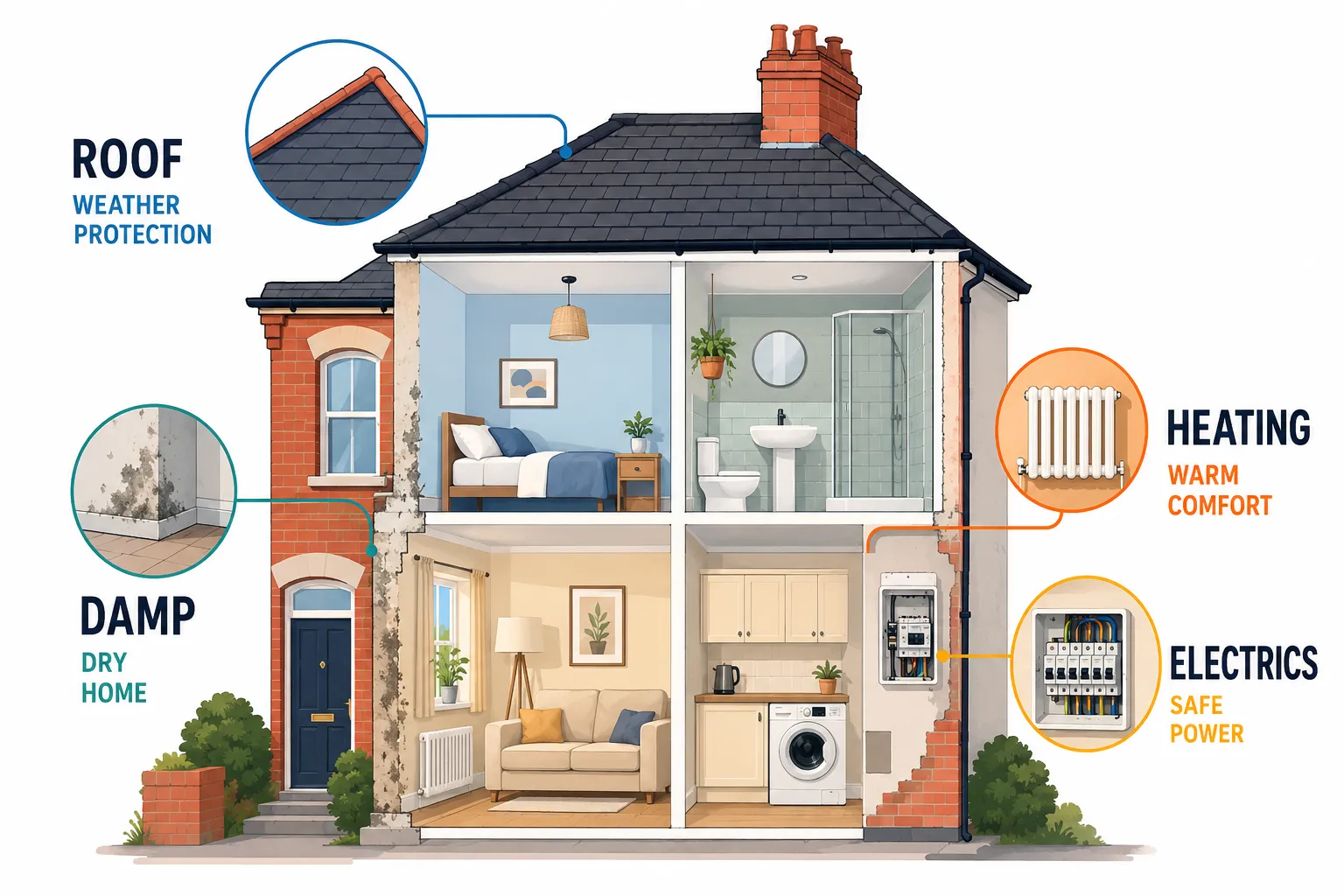
Decent Homes Standard Extensions PRS 2026: Requirements Explained
As of 2026, the DHS extension to the PRS is in its transitional phase. The government's January 2026 consultation outcome confirmed that a single, reformed DHS will apply across social and private rented sectors, replacing the older 2006 criteria with updated benchmarks that better reflect modern housing expectations.
Key requirements under the reformed standard include:
- No Category 1 HHSRS hazards (damp and mould, excess cold, falls, fire risk, structural collapse).
- Fabric condition: Roof coverings, external walls, windows, and doors must be in a reasonable state of repair, typically defined as having a remaining useful life of at least five years at the point of inspection.
- Heating: A fixed space heating system capable of maintaining 18°C in living rooms and 21°C in main bedrooms at an external temperature of -1°C.
- Kitchen and bathroom age thresholds: Broadly retained from the 2006 standard but subject to updated guidance expected in secondary legislation.
- Electrical safety: Properties must already comply with the Electrical Installation Condition Report (EICR) requirements introduced in 2020, and DHS compliance will incorporate this.
The reformed standard is expected to align more closely with EPC and energy efficiency requirements. Landlords who have already undertaken EPC and MEES compliance surveys will find some overlap in the technical assessment process.
Decent Homes Standard Extensions Timeline: Implementation 2026 and Beyond
The Renters' Rights Act 2025 received Royal Assent but the DHS extension requires secondary legislation to set the precise commencement dates. The current government roadmap, based on consultation documents and ministerial statements, projects:
| Milestone | Projected Date |
|---|---|
| Reformed DHS criteria published | Late 2026 / early 2027 |
| Guidance for landlords and surveyors | 2027 |
| DHS applies to new PRS tenancies | 2030 (estimate) |
| DHS applies to all existing PRS tenancies | 2035 |
| Full PRS compliance deadline | 2037 |
These dates are subject to change through secondary legislation. Landlords should treat 2035 as the firm planning horizon for remediation works, which means starting property assessments now is prudent, particularly for older stock.
"The window between now and 2035 sounds generous, but for properties requiring significant structural or heating upgrades, the lead time for planning, procurement, and works can easily exceed three to five years."
Building Survey Protocols Under the Renters' Rights Act 2026: What Landlords Need to Do
Building survey protocols for DHS compliance under the Renters' Rights Act 2026 framework are not yet formally codified in statute, but the inspection methodology is expected to follow a structured approach based on the HHSRS assessment model combined with the four DHS criteria.
Landlords should anticipate the following process:
- Commission a pre-compliance building survey from a qualified surveyor or HHSRS-trained assessor to identify any Category 1 or Category 2 hazards and assess the four DHS criteria.
- Receive a written report detailing deficiencies, their severity, and recommended remediation.
- Prioritise Category 1 hazards for immediate action, as these carry enforcement risk under existing legislation regardless of the DHS implementation timeline.
- Plan remediation works for Category 2 issues and DHS shortfalls within a documented schedule.
- Retain documentation of survey findings and completed works for potential local authority inspection.
A Level 3 Full Building Survey is the most appropriate survey type for older or complex rental properties, as it provides the depth of analysis needed to assess structural condition, damp, and building fabric against DHS criteria. For guidance on choosing the right survey type, the full building survey vs homebuyer survey comparison is a useful starting point.
What Does a Decent Homes Standard Survey Cover for Rental Properties
A DHS-focused building survey for a rental property covers the physical condition of the building against the four statutory criteria. It is not the same as a standard homebuyer's valuation survey.
Structural and fabric checks:
- Roof structure and coverings (tiles, felt, flashings)
- External walls, pointing, and render
- Windows and external doors (condition and draught-proofing)
- Internal floors and ceilings for signs of movement or decay
Health and safety hazard assessment:
- Damp and mould (the most commonly identified Category 1 hazard in PRS properties)
- Excess cold (linked to heating system adequacy and insulation)
- Electrical hazards
- Fall risks (stairs, balconies, windows)
- Fire safety provisions
Facilities and services:
- Kitchen age, condition, and layout adequacy
- Bathroom age and condition
- Hot and cold water supply
Thermal comfort:
- Heating system type, age, and output capacity
- Loft and wall insulation levels
Surveyors may also flag environmental issues such as asbestos-containing materials in pre-2000 properties, which are common in the PRS stock and require separate specialist assessment.
Decent Homes Standard Survey vs Traditional Building Survey: Key Differences
A DHS compliance survey and a traditional Level 3 building survey share significant overlap in methodology but differ in purpose and output.
| Feature | DHS Compliance Survey | Level 3 Building Survey |
|---|---|---|
| Primary purpose | Regulatory compliance | Buyer/owner due diligence |
| Legal trigger | Renters' Rights Act 2025 | Voluntary (pre-purchase) |
| Output format | Hazard ratings + DHS pass/fail | Condition ratings + repair advice |
| Enforcement link | Local authority action | No direct enforcement |
| Scope | Focused on DHS four criteria | Comprehensive fabric and structure |
In practice, a well-conducted Level 3 building survey will capture most of what a DHS compliance survey requires. Landlords commissioning a full building survey for a rental property should ensure the surveyor is familiar with HHSRS methodology and the DHS criteria, and that the report explicitly addresses these regulatory requirements.
For a broader overview of survey options, see the guide to which building survey you need.
How Much Does a Decent Homes Standard Survey Cost for Landlords
Survey costs vary by property size, age, location, and the scope of assessment required. No fixed statutory fee exists for DHS compliance surveys. Based on current market rates for building surveys in England:
- Small flat (1-2 bedrooms): Approximately £400 to £700 for a Level 2 or basic condition assessment.
- Mid-size house (3-4 bedrooms): Approximately £600 to £1,200 for a Level 3 full building survey with HHSRS assessment.
- Large or complex property: £1,000 to £2,000 or more, particularly for Victorian or Edwardian stock with suspected damp, structural movement, or asbestos.
These are estimates based on current chartered surveyor market rates and will vary by region. London and the South East typically attract higher fees. Landlords with large portfolios may negotiate reduced per-property rates with a surveying firm.
The survey cost is generally the landlord's responsibility and is a tax-deductible business expense for most residential landlords.
Who Is Responsible for Paying Decent Homes Standard Survey Costs: Landlord or Tenant
The landlord bears the cost of DHS compliance surveys. This is consistent with the broader legislative intent of the Renters' Rights Act 2025, which places the obligation to maintain properties at or above the DHS on the landlord, not the tenant.
Tenants cannot be charged for surveys, inspections, or remediation works required to achieve DHS compliance. Any attempt to pass these costs to tenants through rent increases or deductions from deposits would be subject to challenge under tenancy deposit protection rules and the Act's anti-avoidance provisions.
What Happens If a Rental Property Fails a Decent Homes Standard Inspection
A failed DHS inspection does not automatically result in a prohibition order or immediate tenancy termination. The enforcement model distinguishes between two levels of requirement:
- Category 1 hazards (Type 1 requirement): Local authorities have a duty to act. They must issue an improvement notice or take emergency remedial action. Failure to comply can result in civil penalties of up to £30,000 or prosecution.
- Category 2 hazards and other DHS shortfalls (Type 2 requirement): Local authorities have discretion to act. They may issue an improvement notice with a compliance deadline, typically 12 to 24 months for non-urgent works.
Landlords who receive an improvement notice should seek advice promptly. Understanding the consequences of failing to act on a surveyor's recommendations is critical, as delays can escalate a discretionary enforcement action into a mandatory one.
Properties subject to a valid improvement notice may also be entered onto the PRS database (the new landlord register introduced under the Renters' Rights Act), which can affect future tenancy arrangements and mortgage conditions.
Can Tenants Request a Decent Homes Standard Survey of Their Rental
Tenants cannot directly commission a DHS inspection at the landlord's expense, but they have a clear route to trigger one. Under the Renters' Rights Act 2025 framework, tenants can:
- Report concerns to their local authority's housing enforcement team, which has the power to inspect the property and assess it against HHSRS and DHS criteria.
- Use the new digital complaints portal (being rolled out through 2026 and 2027) to log housing condition concerns, which feeds into local authority inspection queues.
- Apply to the First-tier Tribunal (Property Chamber) if a landlord fails to address hazards after being notified.
Tenants are also protected from retaliatory eviction under the Act. A landlord cannot serve a notice to quit within six months of a tenant making a legitimate housing condition complaint to a local authority.
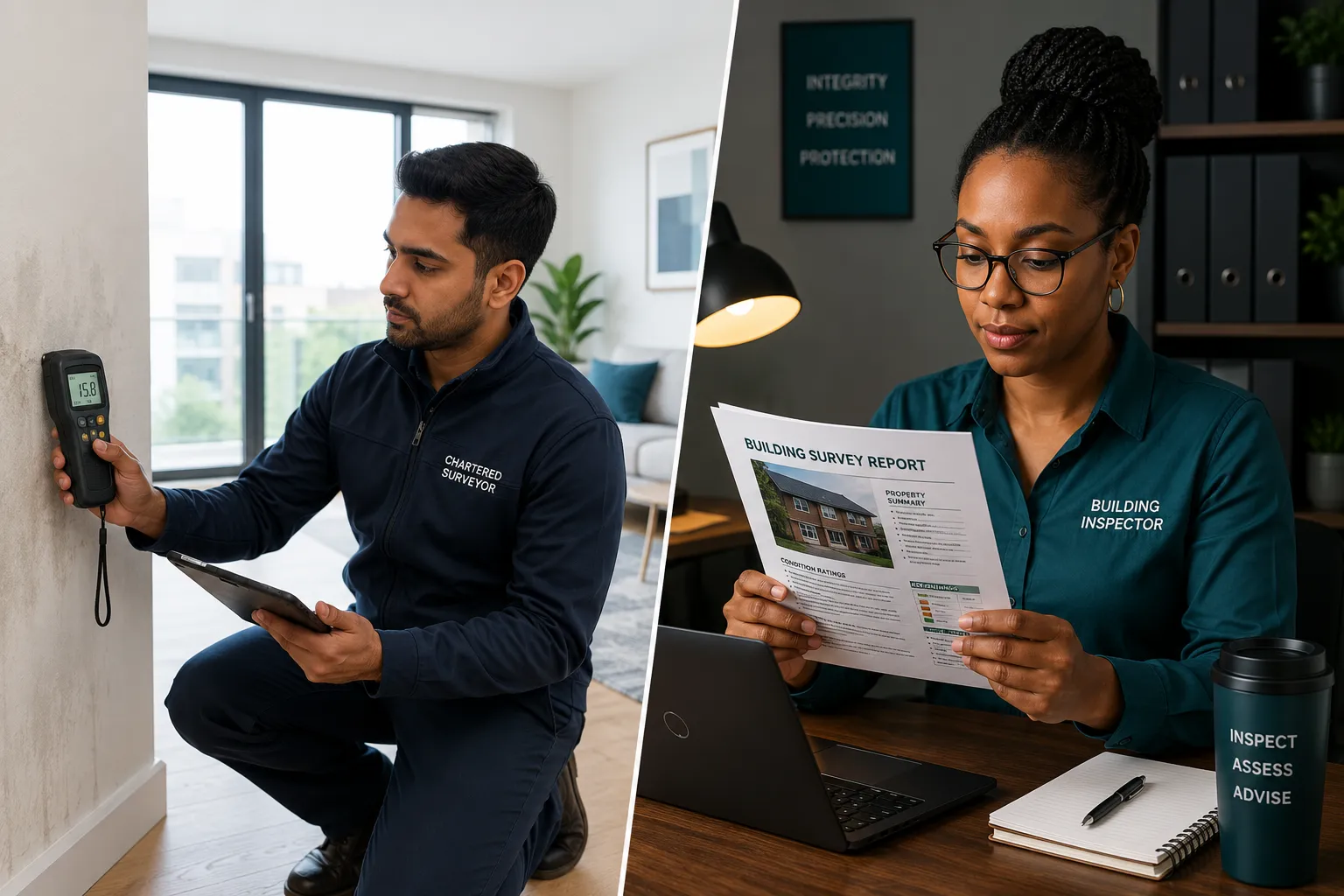
Common Reasons Rental Properties Fail Decent Homes Standard Inspections
The most frequently cited reasons for DHS failures in the social housing sector, which are expected to mirror PRS inspection outcomes, include:
- Damp and mould growth (the single most common Category 1 hazard, particularly in pre-1970 properties without cavity wall insulation)
- Inadequate or failed heating systems (boilers over 15 years old, no central heating, or heating that cannot achieve required temperatures)
- Poor thermal insulation (no loft insulation, uninsulated solid walls, single-glazed windows)
- Outdated kitchens or bathrooms exceeding the age thresholds
- Disrepair to roof coverings (missing tiles, failed flashings, deteriorated felt)
- Electrical installations not meeting current EICR standards
- Window and door failures (rotted frames, failed double-glazing units, inadequate security)
Older properties, particularly Victorian and Edwardian terraced houses, are most at risk. A building defects survey can identify latent issues before they become enforcement triggers.
Decent Homes Standard Survey Exemptions and Exceptions
The reformed DHS is expected to apply broadly across the PRS, but certain property categories may attract modified requirements or exemptions:
- Listed buildings: Where DHS works would conflict with listed building consent requirements (for example, installing double glazing or external wall insulation on a Grade II listed property), landlords may apply for an exemption or modified compliance route. This mirrors the approach already used in MEES energy efficiency regulations.
- Properties in conservation areas: Similar considerations apply where permitted development rights are restricted.
- Short-term holiday lets: Properties let on licences of fewer than 28 days are generally outside the PRS regulatory framework.
- Houses in multiple occupation (HMOs): These are subject to additional licensing and management regulations, but the DHS will apply alongside, not instead of, existing HMO standards.
- Newly built properties: A new-build property meeting current Building Regulations will almost certainly satisfy DHS criteria at completion, though landlords should retain documentation confirming this.
Exemptions are expected to be narrow and time-limited. Landlords relying on a listed building or conservation area exemption will likely need to demonstrate that they have taken all reasonable steps to improve conditions within the constraints of their planning obligations.
Decent Homes Standard Survey Requirements for Furnished vs Unfurnished Rentals
The DHS applies to the fabric and services of the building itself, not to the contents. Whether a property is let furnished or unfurnished does not change the landlord's obligations under the standard.
However, furnished properties introduce additional considerations:
- Furniture and furnishings must comply with the Furniture and Furnishings (Fire Safety) Regulations 1988 (as amended), which is a separate compliance obligation.
- White goods provided by the landlord are subject to the Electrical Equipment (Safety) Regulations 2016 and should be PAT tested periodically.
- Kitchen age assessment under the DHS looks at the fitted kitchen installation, not portable appliances.
In practical terms, a landlord letting a furnished property faces a slightly broader compliance landscape but the DHS survey itself focuses on the same structural and services criteria regardless of furnishing level.
FAQ
Q: When does the Decent Homes Standard officially apply to private rented properties?
A: The Renters' Rights Act 2025 creates the legal basis for the extension. Based on the current implementation roadmap, the DHS is projected to apply to all new PRS tenancies from approximately 2030 and to all existing tenancies by 2035, with full compliance required by 2037. Secondary legislation will confirm exact dates.
Q: Do landlords need a survey right now, or can they wait until closer to the deadline?
A: Waiting is a risk, not a strategy. Properties with significant structural defects, damp, or outdated heating systems may require multi-stage remediation that takes years to plan and complete. A pre-compliance survey now identifies the scope of work and allows landlords to budget and phase improvements cost-effectively.
Q: Is a DHS survey the same as an EICR or gas safety certificate?
A: No. An EICR (Electrical Installation Condition Report) and gas safety certificate are standalone legal requirements for all PRS properties. A DHS compliance survey is a broader assessment of the property's overall condition against the four DHS criteria. EICR compliance is one input into the DHS assessment, not a substitute for it.
Q: Can a landlord use an existing Level 3 building survey report for DHS compliance purposes?
A: A recent Level 3 full building survey will cover most of the ground required for DHS compliance, but only if the surveyor has explicitly assessed the property against HHSRS hazard categories and the four DHS criteria. A standard pre-purchase survey focused solely on buyer due diligence may not address all regulatory requirements. Landlords should confirm the scope with their surveyor.
Q: What is the penalty for a landlord who ignores a DHS improvement notice?
A: Local authorities can impose civil penalties of up to £30,000 per offence for failure to comply with an improvement notice. Serious or repeated breaches can result in prosecution, a banning order preventing the landlord from renting properties, and entry onto the Rogue Landlord Database.
Q: Does the Decent Homes Standard apply to properties in Wales and Scotland?
A: The Renters' Rights Act 2025 applies to England only. Wales has its own Renting Homes (Wales) Act 2016 framework, and Scotland operates under separate housing legislation. Landlords with properties in multiple nations should seek jurisdiction-specific advice.
Conclusion
The extension of the Decent Homes Standard to the private rented sector marks the most significant shift in PRS regulation since the introduction of the Housing Health and Safety Rating System. The Renters' Rights Act 2025, combined with the reformed unified DHS confirmed in early 2026, sets a clear direction: all private rented homes in England must meet a defined minimum standard of condition, safety, thermal comfort, and facilities.
For landlords, the practical steps are straightforward even if the legislative timeline still has moving parts:
- Commission a pre-compliance building survey on each rental property, prioritising older stock built before 1970.
- Identify Category 1 HHSRS hazards and address them immediately, as these carry current enforcement risk regardless of DHS timelines.
- Plan and budget for remediation works against the 2035 compliance horizon, phasing works to manage cash flow.
- Retain all survey documentation and completion certificates to demonstrate compliance to local authorities and future tenants.
- Review survey scope with your chartered surveyor to ensure HHSRS and DHS criteria are explicitly addressed in the report.
For property professionals advising landlord clients, understanding the intersection of DHS requirements, HHSRS enforcement, and the building survey process is now a core competency. The building survey services available from chartered surveyors provide the technical foundation landlords need to approach compliance with confidence rather than uncertainty.
Interactive DHS Compliance Self-Assessment Tool:
.cg-dhs-wrap{font-family:Arial,sans-serif;max-width:560px;margin:24px auto;border:2px solid #1a3a5c;border-radius:8px;overflow:hidden}
.cg-dhs-head{background:#1a3a5c;color:#fff;padding:14px 18px;font-size:15px;font-weight:700}
.cg-dhs-body{padding:16px 18px;background:#f7f9fc}
.cg-dhs-q{margin-bottom:12px}
.cg-dhs-q label{display:block;font-size:13px;font-weight:600;color:#1a3a5c;margin-bottom:6px}
.cg-dhs-q select{width:100%;padding:7px 10px;border:1px solid #b0bec5;border-radius:4px;font-size:13px;background:#fff}
.cg-dhs-btn{display:block;width:100%;padding:10px;background:#c8860a;color:#fff;font-size:14px;font-weight:700;border:none;border-radius:4px;cursor:pointer;margin-top:4px}
.cg-dhs-btn:hover{background:#a36d08}
.cg-dhs-result{margin-top:14px;padding:12px;border-radius:4px;font-size:13px;display:none}
.cg-dhs-pass{background:#e8f5e9;border-left:4px solid #2e7d32;color:#1b5e20}
.cg-dhs-warn{background:#fff8e1;border-left:4px solid #f9a825;color:#5d4037}
.cg-dhs-fail{background:#ffebee;border-left:4px solid #c62828;color:#b71c1c}
function cgDhsCheck(){
var age=document.getElementById(‘cg-age’).value,
damp=document.getElementById(‘cg-damp’).value,
heat=document.getElementById(‘cg-heat’).value,
eicr=document.getElementById(‘cg-eicr’).value,
el=document.getElementById(‘cg-dhs-result’);
if(!age||!damp||!heat||!eicr){el.style.display=’block’;el.className=’cg-dhs-result cg-dhs-warn’;el.innerHTML=’Please answer all four questions.’;return;}
var score=0;
if(age===’old’)score+=2;else if(age===’mid’)score+=1;
if(damp===’yes’)score+=3;else if(damp===’minor’)score+=1;
if(heat===’old’)score+=2;else if(heat===’mid’)score+=1;
if(eicr===’due’)score+=3;
el.style.display=’block’;
if(score<=1){el.className='cg-dhs-result cg-dhs-pass';el.innerHTML='Lower risk. Your property shows few obvious DHS risk factors. A pre-compliance survey is still recommended before 2030.’;}
else if(score<=4){el.className='cg-dhs-result cg-dhs-warn';el.innerHTML='Moderate risk. One or more DHS criteria may need attention. Commission a Level 3 building survey to identify remediation requirements.’;}
else{el.className=’cg-dhs-result cg-dhs-fail’;el.innerHTML=’Higher risk. Likely DHS shortfalls detected. Seek a chartered surveyor assessment promptly, Category 1 hazards may carry current enforcement risk.’;}
}