

The surveying profession stands at a pivotal crossroads in 2026. As home buying reforms reshape the property landscape and sector demand surges, the Chartered Surveyor Talent Pipeline 2026: RICS Reforms and CPD Digital Tools for Sector Growth has become the industry's most pressing strategic priority. With the Royal Institution of Chartered Surveyors (RICS) rolling out transformative digital learning platforms, clearer graduate pathways, and a coordinated national campaign to attract next-generation talent, the profession is preparing for unprecedented growth—but only if it can build the workforce capacity to match demand.
The challenge is clear: surveyors must be retrained and ready to meet new demands from property market reforms, while simultaneously attracting fresh talent into a profession facing growing skills and capacity challenges across the built and natural environment[3]. This comprehensive guide explores how RICS reforms, enhanced CPD digital tools, and strategic talent initiatives are converging to secure the sector's future.

Key Takeaways
- 📱 RICS is launching enhanced CPD platforms with a new member app and improved digital tools to support continuous professional development and upskilling for reform-driven demands[1]
- 🎓 Clearer graduate pathways are being established to streamline qualification routes, directly addressing talent pipeline bottlenecks and building sector capacity[1]
- 🚀 A coordinated national talent attraction campaign through the All Party Parliamentary Group is promoting surveying careers as "central to the profession's long-term future"[2]
- ⏱️ 24-month implementation window for major reforms provides essential time for industry capacity building, new standards development, and professional indemnity insurance adjustments[4]
- 🤖 AI and responsible technology standards position RICS as a global leader, with the world's first standard for responsible AI use in surveying published in September 2025[5]
Understanding the Chartered Surveyor Talent Pipeline Challenge in 2026
The surveying sector faces a perfect storm of opportunity and constraint. On one hand, the profession expects an uplift in activity volumes across both lending and surveys throughout 2026, driven by market recovery and regulatory reforms[1]. On the other, the industry confronts significant workforce gaps that threaten its ability to capitalize on this growth.
The Scale of the Skills Gap
The Chartered Surveyor Talent Pipeline 2026: RICS Reforms and CPD Digital Tools for Sector Growth initiative responds to documented capacity challenges across multiple surveying disciplines. The January 2026 RICS Advocacy Update explicitly identified "growing skills and capacity challenges across the built and natural environment" as a priority concern, particularly within the Scotland Manifesto but reflecting broader UK-wide pressures[3].
These challenges manifest in several ways:
- Insufficient graduate entry numbers to replace retiring professionals
- Limited awareness among young people about surveying career opportunities
- Regional capacity imbalances affecting service delivery across the UK
- Upskilling requirements for existing professionals adapting to digital-first practices
For firms seeking to expand their services, such as chartered surveyors in London and other major urban centers, recruitment and retention have become critical strategic concerns.
Reform-Driven Demand Pressures
The introduction of seller-instruction models and earlier-stage property condition assessments fundamentally changes when and how surveyors engage with property transactions. This shift requires not only more surveyors but professionals with different skill sets and digital competencies.
RICS has acknowledged that reforms involving upfront property condition information require a minimum 24-month implementation period to allow for "industry capacity building, the development of new standards, and professional indemnity insurance (PII) adjustments"[4]. This timeline recognizes that workforce development cannot happen overnight—it requires coordinated investment in training infrastructure, qualification pathways, and professional development resources.
RICS Graduate Pathways: Streamlining Routes to Qualification
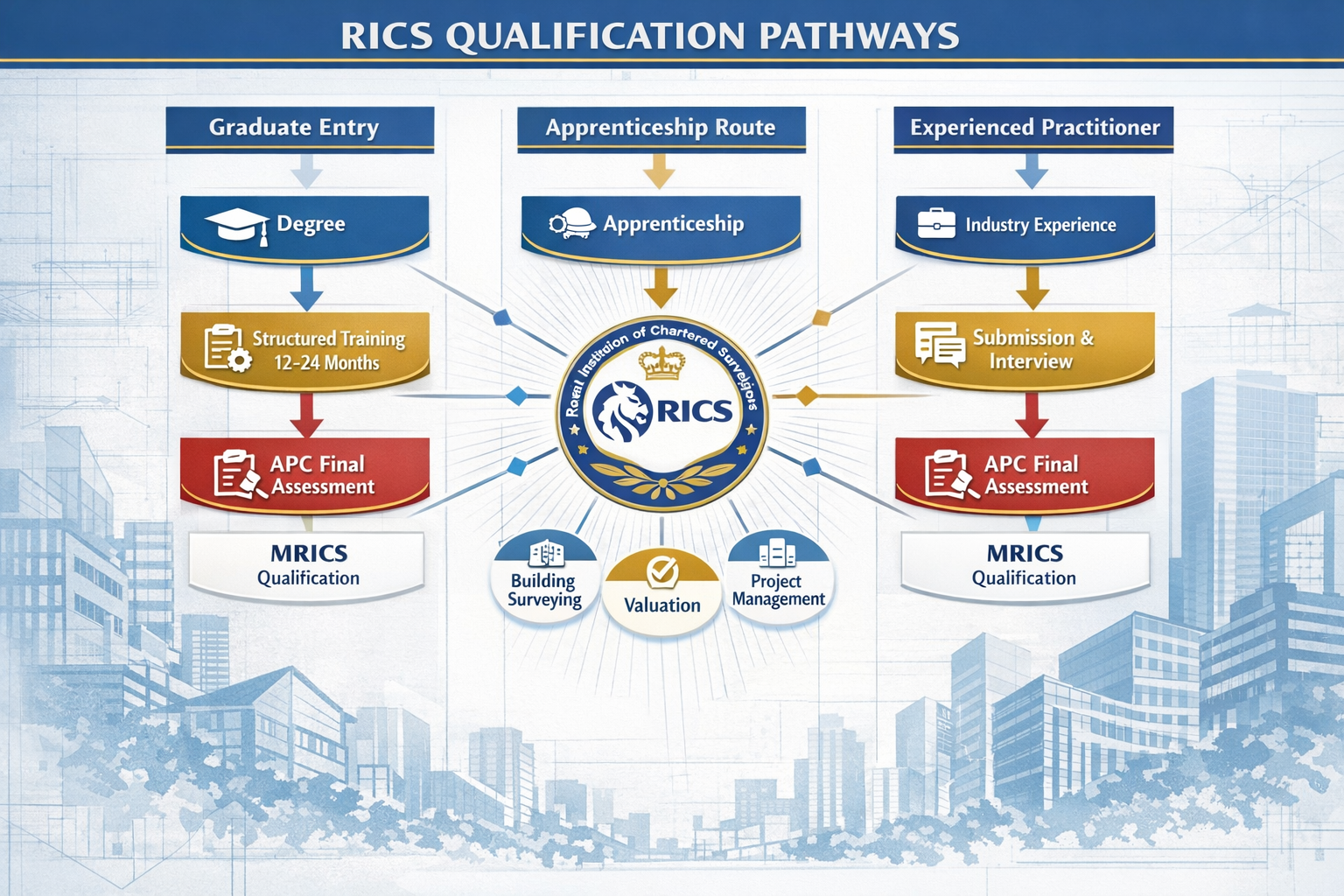
A cornerstone of the Chartered Surveyor Talent Pipeline 2026: RICS Reforms and CPD Digital Tools for Sector Growth strategy involves making qualification pathways clearer, more accessible, and better aligned with contemporary sector needs.
Establishing Clearer Entry Routes
RICS is actively working on establishing clearer pathways for graduates to gain professional qualifications, directly addressing one of the most significant barriers to talent pipeline growth[1]. Historically, prospective surveyors often found the route to chartership confusing, with multiple entry points, varying requirements across specialisms, and limited visibility of progression milestones.
The 2026 reforms focus on:
Standardized Assessment Frameworks
- Consistent competency requirements across surveying disciplines
- Clear milestone markers from graduate entry to final Assessment of Professional Competence (APC)
- Transparent documentation of required experience hours and technical knowledge
Multiple Entry Points
- University graduate route for those with RICS-accredited degrees
- Apprenticeship pathways combining work and study
- Experienced practitioner routes for career changers and international professionals
Enhanced Support Structures
- Dedicated counselor networks to guide candidates through qualification
- Structured training agreements with employer commitments
- Regular progress reviews and feedback mechanisms
The Role of University Partnerships
RICS-accredited degree programs form the foundation of the graduate pipeline. In 2026, the institution is strengthening partnerships with universities to ensure curriculum alignment with emerging sector needs, particularly around digital competencies, sustainability, and technology integration.
These partnerships also facilitate early career awareness, with RICS working alongside academic institutions to promote surveying careers to undergraduates across related disciplines—from construction management to geography and environmental science.
For professionals already in practice, understanding the qualification landscape helps firms like chartered surveyors in Oxfordshire and other regional practices develop structured training programs for their junior staff.
Addressing Diversity and Inclusion
The talent pipeline initiative explicitly recognizes that attracting diverse talent strengthens the profession. The national campaign promoted through the All Party Parliamentary Group emphasizes careers in surveying to underrepresented groups, including women, ethnic minorities, and individuals from non-traditional educational backgrounds[2].
This focus on diversity isn't merely aspirational—it's strategic. A more diverse profession brings varied perspectives essential for addressing complex built environment challenges, from climate adaptation to housing affordability.
Enhanced CPD Platforms and Digital Tools for Professional Development
The second pillar of the Chartered Surveyor Talent Pipeline 2026: RICS Reforms and CPD Digital Tools for Sector Growth involves modernizing how chartered surveyors maintain and develop their professional competencies throughout their careers.

The New RICS Member App and CPD Platform
RICS is upgrading existing CPD platforms with improved digital tools and a new RICS member app designed to better support professional development and continuous learning[1]. This technological investment represents a fundamental shift from traditional CPD tracking to an integrated, user-friendly ecosystem that makes ongoing learning accessible, engaging, and directly relevant to practice.
Key features of the enhanced platform include:
📊 Personalized Learning Dashboards
- Real-time tracking of CPD hours across formal and informal learning
- Customized recommendations based on specialism and career stage
- Integration with professional development plans and firm requirements
🎯 Curated Content Libraries
- On-demand webinars, technical guidance, and case studies
- Searchable resources organized by competency area and topic
- Mobile-optimized content for learning on-site or during commutes
🏆 Digital Credentialing and Badges
- Verified certificates for completed learning modules
- Shareable credentials for professional profiles and CVs
- Recognition of specialized expertise in emerging areas
🤝 Peer Learning Networks
- Discussion forums connecting professionals across specialisms
- Mentorship matching for career guidance
- Regional and sector-specific community groups
Digital-First Reporting and Practice Management
Beyond formal CPD, the reform landscape is driving adoption of robust, digital-first reporting platforms, which are no longer described as "a luxury" but as "a requirement for survival" for surveying firms[4]. This shift affects both established practitioners and those entering the profession.
For new graduates, digital competency is now a baseline expectation. Training programs increasingly incorporate:
- Data-compliant templating for standardized report formats
- Machine-readable report standards enabling interoperability with conveyancing and mortgage platforms
- Cloud-based collaboration tools for multi-disciplinary project delivery
- Digital measurement and inspection technologies including drone surveys and 3D scanning
Firms offering specialized services such as premium drone surveys exemplify how technology adoption creates competitive advantage while demanding continuous upskilling.
AI and Responsible Technology Standards
In September 2025, RICS published "the world's first standard for the responsible use of AI in surveying," positioning the profession as a global leader in technology adoption[5]. This groundbreaking standard provides a framework for professional development in emerging digital competencies while establishing ethical guardrails for AI deployment.
The standard addresses:
- Transparency requirements for AI-assisted valuations and assessments
- Data quality and bias mitigation in algorithmic decision-making
- Professional responsibility when using automated analysis tools
- Client communication about technology use in service delivery
For the talent pipeline, this standard signals that tomorrow's chartered surveyors must be technologically literate while maintaining the professional judgment and ethical standards that define the profession. CPD programs are being redesigned to incorporate AI literacy, data science fundamentals, and responsible technology use across all specialisms.
Supporting Retraining for Existing Professionals
The enhanced CPD infrastructure specifically addresses the urgent need for surveyor retraining to meet new demands from home buying and selling reforms[1]. Existing professionals must adapt to earlier-stage property condition assessments and seller-instruction models—a significant shift from traditional buyer-commissioned surveys.
Targeted retraining programs focus on:
- Pre-marketing survey methodologies and reporting standards
- Seller engagement and communication skills
- Liability and professional indemnity considerations in new transaction models
- Integration with conveyancing and estate agency workflows
This retraining imperative creates opportunities for mid-career professionals to specialize in emerging service areas while ensuring the profession can meet reform-driven demand without compromising quality or consumer protection.
Attracting Next-Generation Talent: Campaigns and Strategies
The third component of the Chartered Surveyor Talent Pipeline 2026: RICS Reforms and CPD Digital Tools for Sector Growth involves proactive talent attraction to ensure a steady flow of capable, motivated individuals entering the profession.

The National Careers Campaign
As of March 2026, RICS leadership is actively promoting a coordinated national campaign through the All Party Parliamentary Group (APPG) for Excellence in the Built Environment to promote careers in surveying, described as "central to the profession's long-term future"[2].
This campaign represents a significant investment in public awareness, targeting:
🎓 School and College Students
- Curriculum partnerships introducing surveying concepts in STEM education
- Work experience placements and site visits
- Scholarship programs for underrepresented groups
👨🎓 University Undergraduates
- Cross-promotion to students in related disciplines (architecture, engineering, construction management)
- Career fairs and campus recruitment events
- Graduate scheme visibility and employer showcases
🔄 Career Changers
- Marketing to professionals seeking purpose-driven careers in the built environment
- Highlighting transferable skills from finance, project management, and technology sectors
- Flexible qualification routes for experienced practitioners
Employer-Led Initiatives and Early Careers Programs
While RICS provides the framework and national visibility, individual firms and regional practices play a crucial role in talent attraction and development. Many surveying practices are expanding their early careers programs to create structured pathways from graduate entry through chartership.
Effective employer-led initiatives include:
Structured Graduate Schemes
- Rotational placements across service lines
- Dedicated training budgets and study leave
- Mentorship from senior chartered surveyors
- Clear progression timelines with regular reviews
Apprenticeship Programs
- Degree apprenticeships combining work and academic study
- Earn-while-you-learn models reducing financial barriers to entry
- Employer commitment to supporting qualification achievement
Student Engagement
- Sponsorship of university societies and events
- Guest lectures and technical workshops
- Summer internships providing real-world experience
For regional practices such as chartered surveyors in Berkshire or chartered surveyors in Bromley, these programs help build local talent pipelines while strengthening community connections.
Promoting the Value Proposition
A key challenge in talent attraction is communicating the compelling value proposition of a surveying career. The 2026 campaign emphasizes:
💰 Strong Earning Potential
- Competitive graduate salaries with clear progression
- Chartered status commanding premium fees
- Entrepreneurial opportunities for practice ownership
🌍 Meaningful Impact
- Contributing to housing quality and consumer protection
- Shaping sustainable built environments
- Influencing policy and industry standards
🔧 Diverse Career Paths
- Specialization options across building surveying, valuation, project management, and more
- Opportunities in private practice, public sector, and corporate roles
- International career mobility through RICS global recognition
⚖️ Work-Life Balance
- Flexible working arrangements increasingly common
- Regional practice opportunities avoiding long commutes
- Portfolio career options for experienced professionals
Leveraging Digital Channels
The talent attraction campaign embraces digital marketing and social media to reach younger audiences where they consume information. Strategies include:
- LinkedIn thought leadership from chartered surveyors sharing career insights
- Instagram and TikTok content showcasing day-in-the-life experiences
- YouTube case studies highlighting diverse career paths and specialisms
- Podcast appearances discussing built environment careers
- Virtual career fairs expanding reach beyond geographic constraints
This multi-channel approach ensures surveying careers remain visible and attractive to digitally native generations who may not have traditional exposure to the profession through family connections or school guidance.
Implementation Strategies for Firms and Practitioners
Understanding the Chartered Surveyor Talent Pipeline 2026: RICS Reforms and CPD Digital Tools for Sector Growth is only valuable if individual firms and practitioners can translate these initiatives into actionable strategies.
For Surveying Practices
Invest in Training Infrastructure
- Allocate budget for CPD subscriptions and digital learning tools
- Create structured training programs aligned with RICS pathways
- Designate senior staff as training coordinators and mentors
Develop Employer Brand
- Showcase firm culture and development opportunities on website and social media
- Participate in university careers fairs and industry events
- Collect and share testimonials from successful graduate hires
Adapt Service Delivery Models
- Embrace digital reporting platforms and data standards
- Invest in technology (drones, 3D scanning, AI-assisted analysis)
- Prepare for reform-driven service models with appropriate training
Build Regional Partnerships
- Connect with local universities and colleges
- Engage with RICS regional boards and special interest groups
- Collaborate with other firms on apprenticeship programs
Practices offering specialized services such as building defects surveys or structural engineering should consider how these niches can attract talent seeking specialized expertise.
For Individual Practitioners
Embrace Continuous Learning
- Actively use the new RICS member app and CPD platform
- Pursue learning in digital tools and emerging technologies
- Seek specialized credentials in growth areas (sustainability, AI, data analytics)
Become a Mentor
- Volunteer as an APC counselor for graduate candidates
- Share expertise through guest lectures or webinar presentations
- Participate in RICS mentorship matching programs
Advocate for the Profession
- Engage with local schools and colleges about surveying careers
- Share career journey on professional networks
- Support diversity and inclusion initiatives
Stay Reform-Ready
- Complete retraining for new transaction models
- Update professional indemnity insurance for emerging service lines
- Network with conveyancers and estate agents to understand integrated workflows
For Graduates and Career Changers
Research Qualification Routes
- Explore RICS-accredited degree programs and apprenticeships
- Understand competency requirements for chosen specialism
- Connect with current APC candidates for insights
Build Digital Competencies
- Develop proficiency in CAD, BIM, and digital reporting tools
- Learn data analysis and visualization fundamentals
- Understand AI applications in surveying practice
Seek Supportive Employers
- Prioritize firms with structured training programs
- Ask about CPD support and study leave policies
- Evaluate mentorship and progression opportunities
Engage with Professional Community
- Join RICS student membership for access to resources
- Attend regional events and technical seminars
- Participate in online forums and peer networks
Measuring Success: Key Performance Indicators for 2026 and Beyond
The effectiveness of the Chartered Surveyor Talent Pipeline 2026: RICS Reforms and CPD Digital Tools for Sector Growth initiative will be measured through several key performance indicators:
Quantitative Metrics
| Indicator | Baseline | 2026 Target | Long-term Goal |
|---|---|---|---|
| APC candidates enrolled | Current levels | +15% increase | +40% by 2028 |
| Graduate scheme participants | Current levels | +20% increase | +50% by 2028 |
| CPD platform active users | Legacy system | 80% member adoption | 95% by 2027 |
| Diversity in new entrants | Current demographics | +10% underrepresented groups | Sector-representative by 2030 |
| Digital competency certifications | New metric | 5,000 completions | 20,000 by 2028 |
Qualitative Indicators
Profession Perception
- Improved awareness of surveying careers among school and university students
- Enhanced reputation for technology leadership and innovation
- Stronger public trust in professional standards
Workforce Capability
- Demonstrated readiness to deliver reform-compliant services
- Increased specialization in emerging practice areas
- Higher confidence in digital tool adoption
Industry Collaboration
- Strengthened partnerships between RICS, employers, and educators
- Improved coordination across the property transaction ecosystem
- Greater alignment between qualification pathways and market needs
Overcoming Barriers and Challenges
While the Chartered Surveyor Talent Pipeline 2026: RICS Reforms and CPD Digital Tools for Sector Growth presents a comprehensive strategy, several challenges remain:
Financial Constraints
Challenge: Training infrastructure, digital platforms, and recruitment campaigns require significant investment during a period when many firms face margin pressures.
Solutions:
- Shared apprenticeship schemes spreading costs across multiple employers
- Government funding programs for skills development
- RICS subsidies for small and medium practices
- Return-on-investment analysis demonstrating long-term value
Regional Disparities
Challenge: Talent attraction and training resources concentrate in major urban centers, leaving regional practices underserved.
Solutions:
- Remote learning through enhanced digital platforms
- Regional RICS hubs providing local support
- Incentive programs for graduates joining practices in underserved areas
- Hybrid working models enabling access to broader talent pools
Practices in areas such as chartered surveyors in Hemel Harpstead or chartered surveyors in Leatherhead can leverage digital tools to overcome geographic constraints.
Cultural Resistance
Challenge: Some established practitioners may resist digital transformation and new service models, creating friction in training environments.
Solutions:
- Change management programs emphasizing benefits over threats
- Peer learning showcasing successful technology adoption
- Phased implementation allowing gradual adaptation
- Recognition programs celebrating innovation and continuous learning
Competition from Other Professions
Challenge: Surveying competes with architecture, engineering, and technology sectors for top graduates.
Solutions:
- Differentiated value proposition emphasizing surveying's unique impact
- Competitive compensation and benefits packages
- Career flexibility and entrepreneurial opportunities
- Technology integration positioning surveying as a forward-thinking profession
The Future Beyond 2026: Long-Term Vision
The Chartered Surveyor Talent Pipeline 2026: RICS Reforms and CPD Digital Tools for Sector Growth initiative represents not a destination but the beginning of ongoing transformation.
Emerging Specializations
As the built environment evolves, new surveying specializations will emerge:
- Climate Adaptation Surveyors assessing flood risk, thermal performance, and resilience
- Digital Twin Specialists creating and maintaining virtual building models
- Retrofit Coordinators managing energy efficiency upgrades across housing stock
- AI Ethics Officers ensuring responsible technology use in automated valuation and assessment
These specializations will require continuous curriculum development and CPD innovation to maintain professional relevance.
Global Leadership
RICS's position as a global institution provides opportunities for UK-trained surveyors to lead international best practice. The AI standard published in 2025 exemplifies how the profession can shape global norms[5].
Future leadership areas include:
- Sustainability and net-zero standards for building assessment
- Digital property information protocols enabling seamless transactions
- Professional ethics frameworks for emerging technologies
- Consumer protection models balancing innovation with safeguards
Continuous Evolution
The 24-month implementation window for current reforms acknowledges that workforce development is an ongoing process[4]. As technology advances and market needs shift, the talent pipeline and CPD infrastructure must remain agile and responsive.
RICS commitment to regular review and enhancement of qualification pathways, digital platforms, and professional standards ensures the surveying profession can adapt to future challenges while maintaining the rigorous standards that underpin public trust.
Conclusion
The Chartered Surveyor Talent Pipeline 2026: RICS Reforms and CPD Digital Tools for Sector Growth represents a comprehensive, coordinated response to the profession's most pressing strategic challenge: building workforce capacity to meet reform-driven demand while positioning surveying as an attractive, technologically advanced career for the next generation.
Through clearer graduate pathways, enhanced CPD digital platforms, and a national talent attraction campaign, RICS is creating the infrastructure necessary for sustainable sector growth. The new member app and upgraded learning ecosystem empower both new entrants and experienced practitioners to develop the competencies required for digital-first, reform-compliant practice.
However, success requires active participation from across the profession. Individual firms must invest in training infrastructure and employer branding. Practitioners must embrace continuous learning and mentorship. Educational institutions must align curricula with emerging sector needs. And policymakers must provide implementation timelines that allow capacity building to keep pace with regulatory change.
Actionable Next Steps
For Surveying Practices:
✅ Audit current training programs against RICS enhanced pathways
✅ Budget for CPD platform subscriptions and digital tool investments
✅ Develop graduate recruitment strategy and employer brand materials
✅ Establish mentorship programs pairing junior staff with chartered surveyors
For Individual Practitioners:
✅ Download and explore the new RICS member app
✅ Complete digital competency modules relevant to your specialism
✅ Volunteer as an APC counselor or career ambassador
✅ Engage with reform-readiness training for new service models
For Graduates and Career Changers:
✅ Research RICS-accredited programs and qualification routes
✅ Connect with practices offering structured graduate schemes
✅ Build digital skills through online courses and certifications
✅ Join RICS student membership to access resources and networks
The positive sector growth outlook for 2026 presents unprecedented opportunity[1]. By investing in talent development today, the surveying profession ensures it has the capacity, capability, and credibility to deliver excellent service to consumers while shaping the built environment for decades to come.
For more information about professional surveying services and career opportunities, explore resources on structural engineering, building survey services, and early careers programs.
References
[1] Surveying In 2026 Reform Recovery And Renewed Demand – https://www.lrg.co.uk/news-and-insights/surveying-in-2026-reform-recovery-and-renewed-demand/
[2] Update From Justin Young Rics Ceo March 2026 – https://www.rics.org/news-insights/update-from-justin-young-rics-ceo-march-2026
[3] Uk Influence And Advocacy Update January 2026 – https://www.rics.org/news-insights/uk-influence-and-advocacy-update-january-2026
[4] What The Rics Home Buying And Selling Reform Hub Means For Surveyors – https://www.surventrix.com/blog/what-the-rics-home-buying-and-selling-reform-hub-means-for-surveyors
[5] Rics Responds To Major Changes In Home Buying And Selling – https://www.rics.org/news-insights/rics-responds-to-major-changes-in-home-buying-and-selling