

Nearly 60% of real estate capital market participants surveyed in early 2026 cited pricing uncertainty as their single biggest barrier to completing transactions — a figure that underscores just how thick the Capital Markets Fog: How Surveyors Provide Clarity Amid 2026 Financing Uncertainty and Higher Costs has become for buyers, lenders, and investors alike [2]. With base rates remaining stubbornly elevated, debt service costs biting into returns, and lenders tightening due diligence requirements, the gap between what sellers expect and what buyers can afford has widened to its most challenging level in over a decade. In this environment, the professional chartered surveyor has moved from a supporting role to a central one — providing the verified, independent data that cuts through market noise and allows capital to move with confidence.

Key Takeaways
- Rate uncertainty and higher financing costs in 2026 have created a significant capital markets fog, stalling deal flow across commercial and residential property sectors.
- Chartered surveyors provide independent, RICS-compliant valuations and condition reports that lenders and investors rely on to make informed decisions.
- Precise survey data directly reduces risk premiums demanded by lenders, potentially lowering borrowing costs for well-evidenced assets.
- Stock condition surveys, building surveys, and Red Book valuations each serve distinct but complementary roles in de-risking property transactions.
- Engaging a qualified surveyor early in the acquisition or refinancing process is one of the most cost-effective risk management steps available in the current market.
Understanding the Capital Markets Fog in 2026
The phrase "capital markets in the fog" was popularised by the Urban Land Institute to describe periods when pricing signals become unreliable, transaction volumes fall, and market participants struggle to agree on asset values. That description fits 2026 with uncomfortable precision.
Global financial conditions remain tight. The International Monetary Fund's April 2026 Global Financial Stability Report flagged persistent uncertainty around monetary policy trajectories, noting that elevated rates have increased refinancing risk for leveraged real estate portfolios and compressed the availability of debt capital [4]. Meanwhile, FX volatility and geopolitical disruption have added further layers of complexity for cross-border investors [5].
In the UK specifically, the knock-on effects are visible across both commercial and residential markets:
- Lender caution: Loan-to-value ratios have tightened, with many mainstream lenders requiring more comprehensive due diligence before releasing funds.
- Valuation gaps: Bid-ask spreads between buyers and sellers remain wide as both parties apply different discount rates to uncertain cash flows.
- Refinancing pressure: Assets acquired or refinanced at 2020-2021 rates are now facing materially higher debt service costs, forcing owners to demonstrate asset quality to secure competitive terms.
- Equity hesitancy: Private equity and institutional investors are holding more dry powder than at any point in recent years, waiting for clarity before deploying [1].
Morgan Stanley's April 2026 market update described the current environment as one where "investors are not unwilling to act, but they are unwilling to act without evidence" [6]. That distinction is critical. Capital is available. What is scarce is the verified, independent information needed to justify its deployment.
"Capital activity stalls not because money disappears, but because the information needed to price risk accurately becomes unreliable." [7]
This is precisely where the professional surveyor's role becomes indispensable.
How Surveyors Cut Through the Capital Markets Fog: How Surveyors Provide Clarity Amid 2026 Financing Uncertainty and Higher Costs
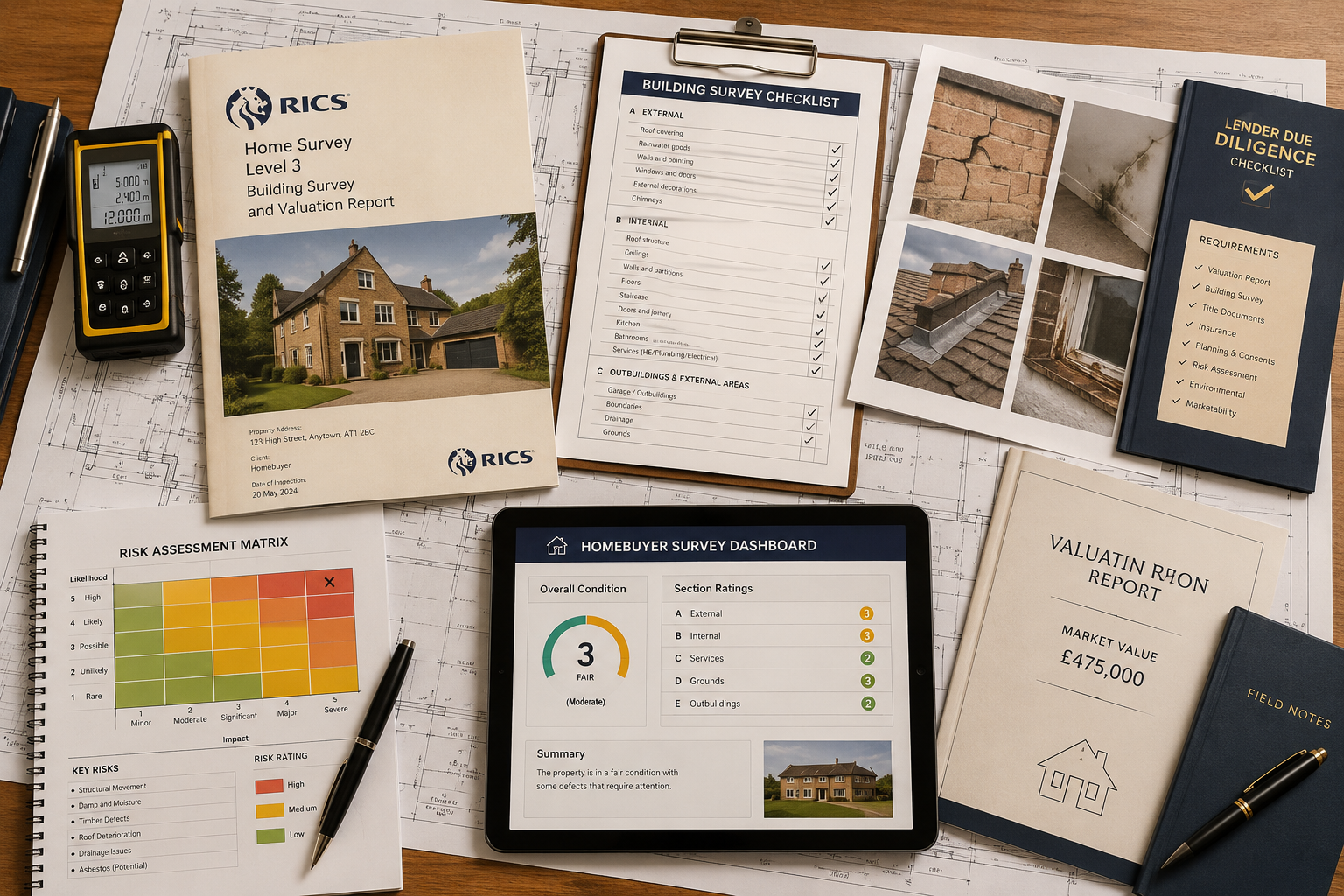
The chartered surveyor's core function — independent, evidence-based assessment of property condition and value — is structurally designed to address the information asymmetry that defines foggy capital markets. Several specific survey and valuation services are particularly relevant in the current environment.
RICS Red Book Valuations
A RICS Red Book valuation is the gold standard for lender and investor due diligence. Produced under the Royal Institution of Chartered Surveyors' mandatory valuation standards, these reports provide a defensible, methodology-transparent market value opinion that lenders can rely on when structuring debt.
In a market where comparable transaction evidence is thin — a direct consequence of reduced deal volumes — the surveyor's ability to apply professional judgment alongside limited data becomes even more valuable. Red Book valuations explicitly address uncertainty, requiring valuors to disclose material valuation uncertainty where it exists. Far from being a weakness, this transparency is exactly what sophisticated lenders need to calibrate their risk appetite.
Building Surveys and Structural Assessments
Higher financing costs mean that unexpected capital expenditure on a property can rapidly erode investment returns. A comprehensive building survey identifies structural defects, latent issues, and maintenance liabilities before they become post-acquisition surprises.
For lenders, a clean building survey reduces the probability of a forced sale scenario driven by deteriorating asset condition. For buyers, it provides a negotiating tool — documented defects can justify price reductions or seller remediation obligations that directly offset financing costs.
The homebuyer survey serves a similar function at the residential level, giving mortgage lenders and purchasers a standardised condition assessment that supports confident lending decisions even when market comparables are limited.
Stock Condition Surveys for Portfolio Lenders
Institutional lenders and housing associations managing large property portfolios face a specific challenge: how to assess aggregate risk across hundreds or thousands of assets simultaneously. A stock condition survey provides a systematic, data-driven snapshot of portfolio condition, identifying which assets require near-term capital expenditure and which represent stable, lower-risk collateral.
In a higher-cost financing environment, this granular data allows lenders to differentiate between assets within a portfolio rather than applying blanket risk premiums — a distinction that can translate directly into more competitive loan pricing for well-maintained stock.
Dilapidations and Lease-End Liabilities
For commercial property investors, dilapidation surveys quantify the liability associated with tenant lease-end obligations. In an environment where occupier covenant strength is under pressure, understanding the potential dilapidations exposure on a commercial asset is essential for accurate underwriting.
A schedule of dilapidations prepared by a qualified surveyor provides a legally defensible basis for negotiating lease-end settlements, protecting asset value at a time when every pound of net operating income matters for debt serviceability.
The Financial Case: How Survey Data Reduces Borrowing Costs
The relationship between survey quality and financing cost is more direct than many borrowers appreciate. Lenders price risk. When risk is poorly evidenced, they apply conservative assumptions — and conservative assumptions mean higher margins, lower LTVs, or both.
Consider the following comparison:
| Scenario | Lender Risk Assessment | Likely Outcome |
|---|---|---|
| Asset with no independent survey | High uncertainty; lender applies maximum risk premium | Higher margin, lower LTV, slower credit approval |
| Asset with RICS Red Book valuation only | Moderate certainty on value; condition risk remains | Standard terms, possible retention for defects |
| Asset with Red Book valuation + full building survey | High certainty on value and condition | Competitive terms, faster approval, potential for higher LTV |
| Portfolio with stock condition survey | Granular risk differentiation across assets | Tiered pricing reflecting actual asset quality |
This table illustrates a fundamental point: survey investment is not a cost centre. It is a tool for reducing the risk premium embedded in financing costs. In a market where base rates are already elevated [8], removing the additional margin associated with information uncertainty can meaningfully improve investment returns.
The Mirabaud analysis of capital activity stalls notes that when clarity is provided — through independent, credible data — transaction velocity increases and pricing gaps narrow [7]. Surveyors are the primary mechanism through which that clarity is generated in the property sector.
Specific Defect Reports and Targeted Due Diligence
Not every acquisition requires a full building survey. In some cases, a specific defect report focused on a known issue — a suspected roof problem, signs of subsidence, or concerns about a solid floor slab — provides the targeted evidence needed to resolve a lender's specific concern without the cost and time of a comprehensive survey.
This flexibility is important in a market where transaction timelines are already extended by cautious lender behaviour. Targeted survey evidence can unblock a deal that might otherwise stall indefinitely.
Navigating the Capital Markets Fog: How Surveyors Provide Clarity Amid 2026 Financing Uncertainty and Higher Costs in Practice
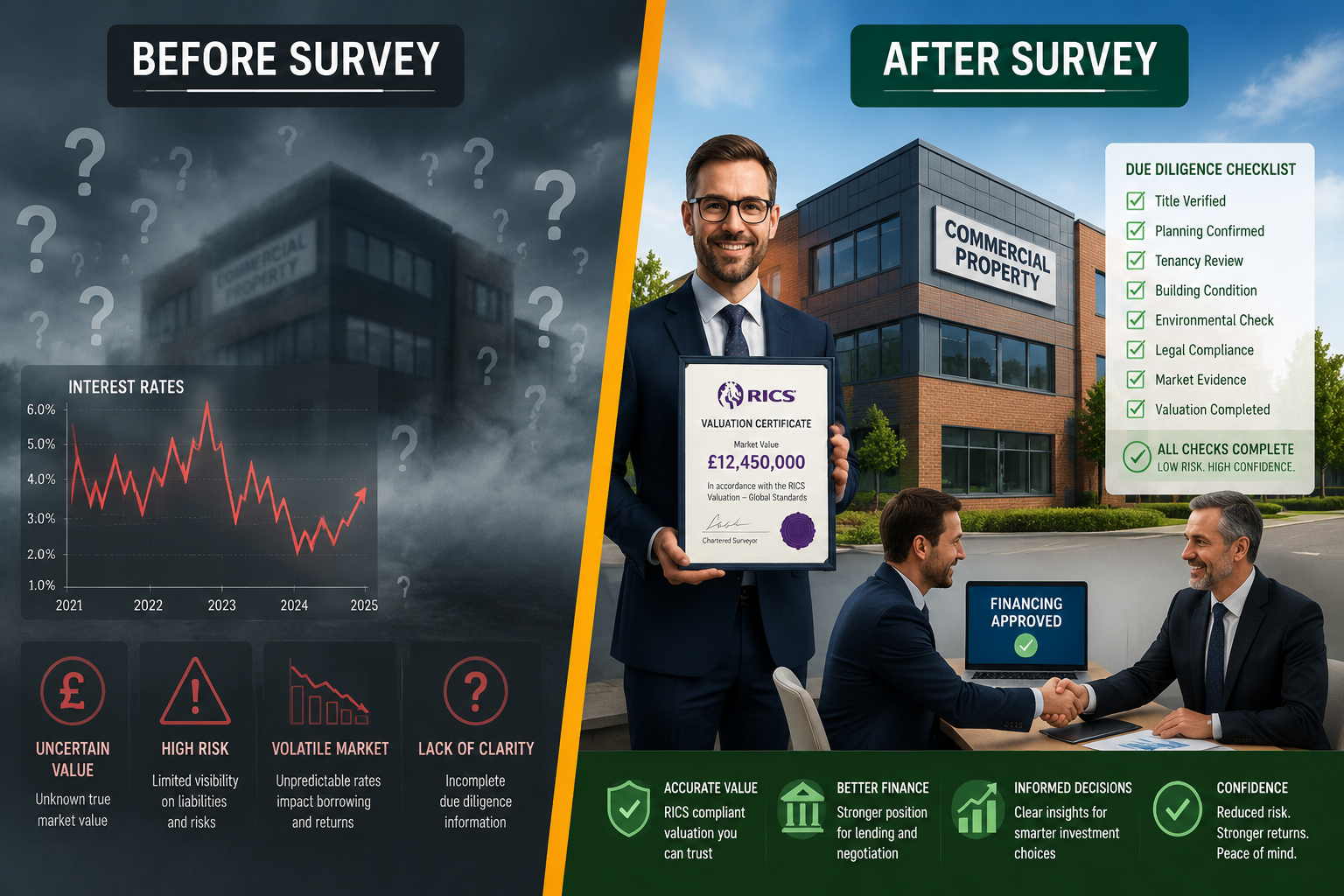
Understanding the theory is one thing. Applying it to real transactions requires a clear process. The following framework reflects best practice for buyers, investors, and their advisers operating in the current environment.
Step 1: Engage a Surveyor Before Lender Instruction
The most common mistake in a tight credit environment is treating the survey as a lender requirement to be satisfied rather than a risk management tool to be deployed proactively. Commissioning an independent survey before approaching lenders gives the borrower control of the narrative — presenting verified condition and value data rather than waiting for a lender's panel valuer to identify problems.
Buyers in West London, North London, and across Berkshire and Essex are increasingly following this approach, particularly on older stock where condition uncertainty is highest.
Step 2: Match Survey Type to Asset and Transaction Risk
Different assets and transaction types require different survey approaches. The decision tree is broadly as follows:
- Residential purchase (pre-1980 construction): Full building survey recommended
- Residential purchase (modern construction, standard condition): Homebuyer survey typically sufficient
- Commercial acquisition: Red Book valuation plus building survey as minimum; dilapidations assessment if tenanted
- Portfolio refinancing: Stock condition survey to support aggregate risk assessment
- Specific lender concern: Targeted specific defect report
For guidance on comparing different types of survey, a clear breakdown of options helps buyers and investors select the right level of due diligence for their specific circumstances.
Step 3: Use Survey Findings as a Negotiating Tool
Survey findings are not simply a pass/fail gate. They are a negotiating asset. Documented defects, quantified remediation costs, and identified liabilities all provide legitimate grounds for price renegotiation, seller remediation, or adjusted financing structures.
In a market where sellers are under pressure to transact but buyers face higher financing costs, the surveyor's report often provides the objective basis for bridging the remaining valuation gap — turning a stalled negotiation into a completed deal.
Step 4: Maintain Survey Currency for Refinancing
Assets approaching refinancing in 2026 should not rely on surveys commissioned at acquisition, particularly if that acquisition occurred more than two years ago. Market conditions, building condition, and regulatory requirements (including fire safety and energy performance standards) may have changed materially. An updated survey provides lenders with current evidence and demonstrates proactive asset management — both factors that support competitive refinancing terms.
The Broader Role of Surveyors in Market Recovery
The private markets data suggests that transaction volumes will recover as rate certainty improves [1][2]. But the recovery will not be uniform. Assets that can demonstrate clear, independently verified value and condition will transact first and at better prices. Assets shrouded in information uncertainty will remain stuck in the fog.
Liquidity concerns in 2026 are real and well-documented [9]. The response of sophisticated market participants has been to invest in information quality rather than simply waiting for macro conditions to improve. The chartered surveyor is the professional best positioned to deliver that information quality in the property sector.
This is not a new role for surveyors — it is the original one. What has changed is the stakes. In a low-rate, high-liquidity environment, poor due diligence could be absorbed by rising asset values. In the current environment, it cannot. The margin for error has narrowed, and the value of precision has increased proportionally.
Conclusion: Actionable Steps for Buyers, Investors, and Lenders
The Capital Markets Fog: How Surveyors Provide Clarity Amid 2026 Financing Uncertainty and Higher Costs is not a passive condition to be waited out. It is an information problem — and information problems have solutions.
For buyers and investors, the actionable steps are clear:
- Commission independent surveys early — before lender instruction, not after. Control the information flow.
- Match survey depth to transaction risk — do not under-survey complex or older assets, but do not over-survey where targeted reports will suffice.
- Use survey findings actively — as negotiating tools, lender communication assets, and risk management documentation.
- Update surveys for refinancing — do not present stale data to lenders in a market where conditions have shifted materially.
- Engage RICS-qualified professionals — the credibility of survey evidence depends entirely on the qualifications and independence of the surveyor producing it.
For lenders, the parallel imperative is to require — and properly weight — comprehensive survey evidence in credit decisions, recognising that the cost of a thorough survey is trivial relative to the cost of a mispriced loan in a declining market.
The fog will lift. When it does, the transactions that will have proceeded most smoothly, at the best terms, will be those supported by the clearest, most professionally prepared survey evidence. That is not a coincidence. It is the direct result of treating independent surveying not as a regulatory hurdle but as the strategic asset it has always been.
References
[1] Global Private Markets Report – mckinsey.com
[2] Capital Market Trends Outlook 2026 – dfinsolutions.com
[4] IMF Global Financial Stability Report April 2026 – imf.org
[5] FX Insights 2026 Outlook: Fog, Fire and FX – bbvamarketstrategy.com
[6] 399 Park Group Market Update April 2026 – advisor.morganstanley.com
[7] Why Capital Activity Stalls When Clarity Fades – mirabaud.com
[8] Markets in the Fog: Why Rate Uncertainty Still Rules the Narrative – capital.com
[9] Market Not Ready: 2026 Liquidity – finance.yahoo.com
How Prince Surveyors can help: explore our property valuations or learn about our which survey you need.