

In the 2024/25 financial year, 164 local authorities in England reported that higher-rate additional dwelling transactions accounted for at least 50% of their stamp duty income — up from just 62 authorities in 2016/17 [3]. That single statistic tells a striking story: second home ownership has become a defining force in the UK property market, and the tax landscape surrounding it has never been more consequential. For buyers targeting holiday lets and second homes in 2026's most sought-after locations, building surveys for second homes in 2026 hotspots: risk assessments amid stamp duty changes have shifted from a sensible precaution to an essential financial safeguard.
With the stamp duty surcharge on additional residential properties now sitting at 5% — raised from 3% in October 2024 — the cost of getting a purchase wrong has risen sharply [1]. A thorough risk assessment before exchange is no longer optional; it is the difference between a sound investment and a financially damaging mistake.
Key Takeaways
- The stamp duty surcharge on second homes rose to 5% in October 2024, adding up to £15,000 or more to the cost of a typical second home purchase compared to a primary residence.
- Building survey demand surged by 18-22% in spring 2026, making early appointment booking critical in hotspot regions.
- Level 3 building surveys are the recommended standard for older, coastal, or structurally complex second homes, typically costing between £700 and £1,200.
- Holiday homes carry unique risk categories — flood exposure, holiday let regulations, and seasonal wear — that standard valuations do not capture.
- Commissioning a survey within 3-5 days of offer acceptance can prevent costly abortive conveyancing fees if serious defects are discovered.
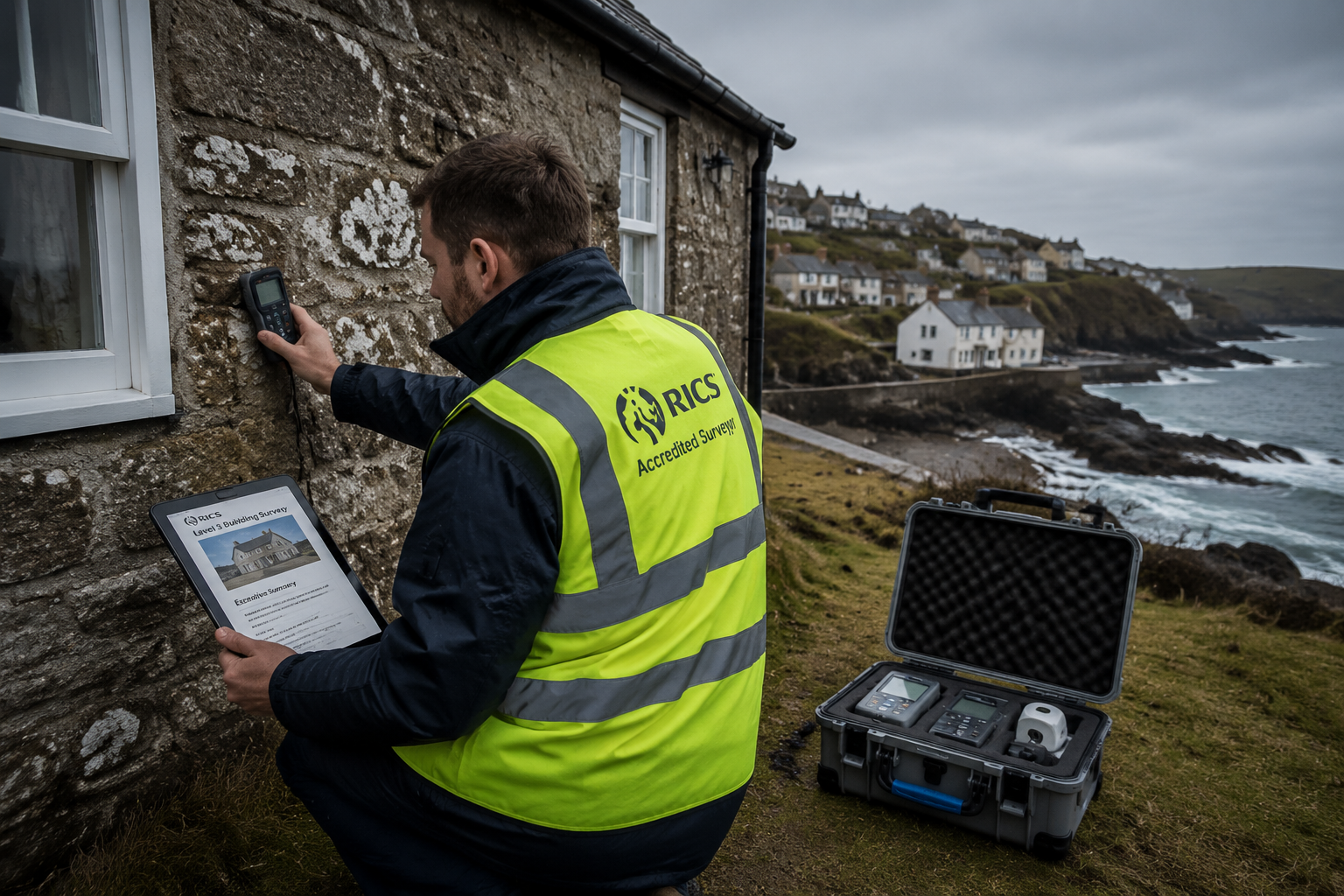
The 2026 Second Home Market: Why Hotspots Carry Elevated Risk
Renewed buyer interest in holiday lets and rural retreats has intensified competition in a concentrated set of UK locations. Cornwall, the Lake District, the Cotswolds, coastal Sussex, and parts of Wales continue to attract buyers seeking both lifestyle benefits and rental income potential. This concentration of demand in geographically specific areas creates a particular set of survey challenges that differ markedly from standard residential purchases.
Why hotspot properties carry higher structural risk:
- Many are older stone or timber-framed buildings that have been converted or extended over decades
- Coastal and upland locations expose properties to accelerated weathering, damp ingress, and wind damage
- Seasonal rental use creates patterns of heavy use followed by extended vacancy, both of which accelerate deterioration
- Historic planning constraints in Areas of Outstanding Natural Beauty (AONB) can limit remediation options
Survey demand in spring 2026 surged by 18-22% in Greater London and commuter belts, with similar patterns observed in popular second-home regions [4]. This surge reflects a broader market recovery driven by falling mortgage rates and improved lender activity [7]. The practical consequence for buyers is that RICS-qualified surveyors in hotspot areas are booking up quickly, making early engagement essential.
The financial stakes are amplified by the tax environment. On a £300,000 second home, the total stamp duty liability now reaches approximately £17,500, compared to just £2,500 for a primary residence — a £15,000 difference [1]. When buyers are committing that level of additional tax expenditure, the cost of a Level 3 building survey (typically £700 to £1,200) represents exceptional value as a risk mitigation tool [5].
Understanding the Stamp Duty Surcharge and Its Survey Implications
The October 2024 increase in the additional dwelling surcharge from 3% to 5% was not simply a revenue measure. It has reshaped buyer behaviour, transaction timelines, and the economics of second home ownership in ways that directly affect how surveys should be approached.
The Financial Arithmetic of the 5% Surcharge
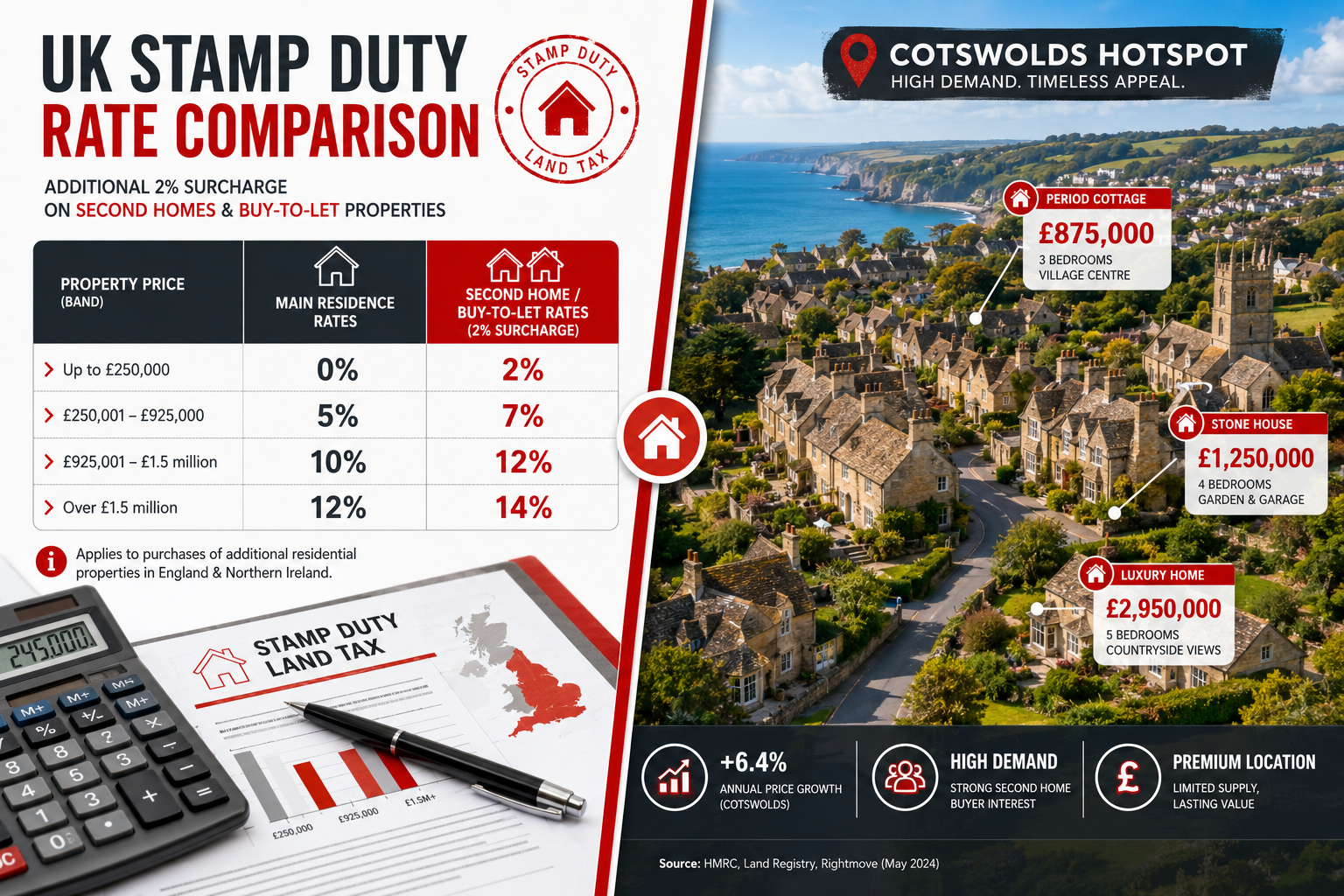
| Property Price | SDLT (Main Residence) | SDLT (Second Home, 5% Surcharge) | Additional Cost |
|---|---|---|---|
| £200,000 | £1,500 | £11,500 | £10,000 |
| £300,000 | £2,500 | £17,500 | £15,000 |
| £500,000 | £12,500 | £37,500 | £25,000 |
| £750,000 | £27,500 | £65,000 | £37,500 |
Figures are illustrative estimates based on published SDLT rates and the 5% surcharge applying to the full purchase price.
One important relief mechanism exists: buyers who pay the surcharge when purchasing a new main residence before selling their previous home can reclaim the surcharge if the previous property is sold within three years [8]. This provision is relevant for buyers who intend a second home to eventually become their primary residence, but it requires careful documentation and timely action.
The broader market impact of the surcharge has been significant. Research indicates that stamp duty policy on additional dwellings has contributed to a reduction of over 2 million rental homes in the UK market, with available rental properties falling by nearly 10% since 2016 [2]. This contraction has driven rental yields upward in many hotspot areas, which in turn sustains buyer appetite for holiday lets despite the higher upfront tax cost.
How Tax Exposure Changes Survey Priorities
When the total acquisition cost of a second home rises substantially due to the surcharge, buyers have less financial headroom to absorb post-purchase remediation costs. A roof replacement, drainage failure, or structural movement that might have been manageable on a primary residence purchase can become a serious financial problem when stamp duty has already consumed a significant portion of the available budget.
This reality shifts the survey from a formality into a core part of financial due diligence. Buyers should approach the survey briefing with specific questions about:
- Remaining serviceable life of major building elements (roof covering, windows, heating systems)
- Evidence of damp, flood history, or drainage deficiencies
- Structural movement, particularly in older properties on coastal or hillside sites
- Planning and building regulations compliance for any extensions or conversions
- Holiday let suitability, including fire safety, means of escape, and energy performance
For a detailed understanding of what a comprehensive assessment covers, the RICS Level 3 building survey provides the most thorough inspection available for residential properties.
Choosing the Right Survey Type for Second Home Purchases
Not all surveys are equal, and the choice of survey level has a direct bearing on the quality of risk information available before exchange. For second homes in 2026 hotspot locations, the decision is rarely straightforward.
Level 2 vs Level 3: The Critical Distinction
A Level 2 homebuyer survey provides a condition rating for visible elements of the property and is appropriate for newer, conventionally built homes in reasonable condition. However, the majority of second home hotspot properties — older cottages, converted barns, period terraces, and coastal bungalows — fall outside the profile for which a Level 2 survey is adequate.
A Level 3 building survey provides a far more detailed analysis of the property's construction, condition, and defects. It includes assessment of concealed areas where accessible, advice on repair options, and guidance on maintenance priorities. For properties built before 1990, those with non-standard construction, or any building showing visible signs of deterioration, a Level 3 survey is the recommended standard [5].
The key differences between Level 2 and Level 3 surveys are particularly relevant for second home buyers who may be less familiar with the property's history than an owner-occupier would be.
Specific Risk Categories for Holiday Home Surveys
Second homes present risk categories that are either absent or less prominent in standard residential purchases:
Flood and coastal erosion risk
Properties in coastal hotspots such as Cornwall, Norfolk, and Sussex face measurable flood and erosion exposure. A building survey should be supplemented with a formal flood risk assessment where the Environment Agency flood map indicates any Zone 2 or Zone 3 classification. Insurers are increasingly scrutinising flood history, and undisclosed flood damage can invalidate coverage.
Roof condition and weathering
Coastal and upland properties experience accelerated roof deterioration. Slate, tile, and lead flashings are all vulnerable to the combination of wind, salt spray, and freeze-thaw cycles. A dedicated roof survey alongside the main building survey is advisable for properties in exposed locations, particularly those with complex roof geometries or older coverings.
Damp and seasonal vacancy
Properties left unoccupied for extended periods during winter months are highly susceptible to damp penetration, condensation, and timber decay. Surveyors should be specifically instructed to assess sub-floor ventilation, roof space condition, and the integrity of external wall finishes.
Asbestos in pre-2000 properties
Many holiday cottages and rural properties that have been extended or modified contain asbestos-containing materials in textured coatings, insulation boards, or roof sheeting. An asbestos survey is essential before any planned renovation work and is a legal requirement if the property will be used for commercial holiday letting.
Drainage and septic systems
Rural second homes frequently rely on private drainage systems including septic tanks and package treatment plants. These require regular maintenance and must comply with the General Binding Rules for small sewage discharges. A drainage survey can identify non-compliant or failing systems before purchase.
Survey Timing in an Accelerated Market
Falling mortgage rates in 2026 have compressed transaction timelines as buyer competition intensifies [7]. In this environment, there is pressure on buyers to move quickly, which can lead to surveys being delayed or downgraded. This is a significant risk management error.
Commissioning a survey within 3-5 days of offer acceptance is the recommended protocol [4]. Early instruction allows the surveyor to be booked before the conveyancing process reaches the point where abortive costs become substantial. If the survey identifies serious defects — structural movement, failed drainage, or extensive damp — the buyer can renegotiate or withdraw before solicitor fees accumulate significantly.
Regional Hotspots and Survey Demand in 2026
Understanding where second home demand is concentrated in 2026 helps buyers anticipate both survey availability and the specific defect profiles most common in each region.
Key Regions and Their Survey Challenges
Cornwall and the South West
High volumes of granite and cob-built cottages with slate roofs. Primary risks include damp penetration through solid walls, roof spread in older structures, and radon gas exposure (Cornwall has the highest natural radon levels in England). Flood risk is also elevated in river valley and harbour-side locations.
The Cotswolds
Predominantly Cotswold stone construction with clay tile roofs. Risks include differential settlement in properties built on clay subsoils, chimney deterioration, and the complexity of planning constraints within conservation areas that can restrict repair methods.
Lake District and Cumbria
Exposed upland locations with high rainfall. Risks centre on roof and gutter condition, damp penetration through rubble-filled stone walls, and flood risk in valley-bottom locations. Many properties have been extended informally over decades, creating structural interfaces that require careful assessment.
Coastal Sussex and Kent
A mix of Victorian, Edwardian, and inter-war construction. Risks include timber decay in bay windows and sash frames, subsidence on chalk and clay geology, and proximity to coastal erosion zones. Survey demand in the South East commuter belt and coastal areas has been particularly elevated in spring 2026 [4].
Wales (particularly Pembrokeshire and Snowdonia)
Welsh government policy has introduced additional council tax premiums on second homes in many areas, adding a further layer of cost consideration. Structurally, many properties are older stone-built cottages with limited insulation and aging heating systems.
Buyers in any of these regions benefit from working with chartered surveyors who have specific local knowledge of construction types, geology, and planning constraints.

Navigating Building Surveys for Second Homes in 2026 Hotspots: Risk Assessments Amid Stamp Duty Changes
The intersection of elevated stamp duty costs, surging survey demand, and the specific structural risks of hotspot properties creates a demanding environment for second home buyers in 2026. Navigating it effectively requires a structured approach.
A Practical Framework for Second Home Survey Due Diligence
Step 1: Establish the survey level required
For any property over 20 years old, non-standard construction, or showing visible defects, a Level 3 building survey is the appropriate starting point. Use the survey selection guide to confirm the right level for the specific property.
Step 2: Identify supplementary surveys needed
Based on location and property type, determine whether additional specialist surveys are required: drainage, roof, asbestos, or flood risk. Budget for these at the outset rather than treating them as optional extras.
Step 3: Instruct the surveyor immediately after offer acceptance
In a market where survey appointment slots in hotspot areas are filling within days [4], early instruction is not just good practice — it is a competitive necessity.
Step 4: Brief the surveyor on holiday let intentions
If the property is intended for commercial holiday letting, the surveyor should be informed so that fire safety, means of escape, energy performance, and compliance with holiday let regulations are specifically addressed in the report.
Step 5: Use survey findings in price negotiation
A Level 3 survey that identifies significant defects provides a documented basis for renegotiation. The cost of identified repairs should be weighed against the stamp duty already committed and the remaining budget for refurbishment.
Step 6: Factor in ongoing maintenance costs
Holiday homes in exposed locations require higher annual maintenance expenditure than typical residential properties. Survey findings should inform a realistic five-year maintenance budget before the purchase is finalised.
The Value Retention Argument for Thorough Surveys
Beyond immediate risk mitigation, building surveys for second homes in 2026 hotspots serve a long-term value protection function. Properties with documented survey histories and evidence of proactive maintenance command stronger resale prices and are easier to insure. For buyers entering the market at elevated stamp duty cost levels, protecting the long-term capital value of the asset is a core financial objective.
An insurance reinstatement valuation conducted alongside the building survey ensures that the property is correctly insured from day one — a particular concern for holiday lets where underinsurance can have severe consequences in the event of fire, flood, or storm damage.
Conclusion
The combination of a 5% stamp duty surcharge, surging survey demand, and the inherent structural complexity of second home hotspot properties makes 2026 a pivotal year for buyers to approach due diligence with rigour. The financial exposure on a second home purchase is substantially higher than on a primary residence, and the margin for absorbing post-purchase surprises is correspondingly narrower.
Actionable next steps for second home buyers in 2026:
- Commission a Level 3 building survey for any property that is older, coastal, rural, or showing visible signs of wear — do not settle for a Level 2 survey to save cost at this stage.
- Book the surveyor within 3-5 days of offer acceptance to secure an appointment in a demand-constrained market.
- Request supplementary drainage, roof, and asbestos surveys where the property profile warrants them.
- Brief the surveyor explicitly on holiday let intentions so that regulatory compliance is assessed.
- Use survey findings as a structured negotiation tool — documented defects justify price reductions that can partially offset the stamp duty premium.
- Obtain an insurance reinstatement valuation to ensure adequate coverage from the point of completion.
- Consult a chartered surveyor with local expertise in the target region to benefit from knowledge of area-specific construction risks and planning constraints.
The cost of a thorough survey is modest relative to the total acquisition cost of a second home in 2026. The cost of proceeding without one, in a market shaped by elevated taxes and compressed timelines, is potentially far greater.
References
[1] Q A New 3 Stamp Duty Surcharges – zoopla.co.uk
[2] Second Home Stamp Duty Means 2m Houses Missing From Rental Market – cityam.com
[3] Landlords And Second Homes Drive Majority Of Stamp Duty Receipts Paragon Finds – theintermediary.co.uk
[4] Building Surveys For First Time Buyers In A Turning Market Prioritising Defects As Enquiries Improve – canterburysurveyors.com
[5] Level 3 Surveys For Bungalows In Recovering 2026 Markets Spotting Roof Spread And Damp Pre Purchase – manchestersurveyors.com
[6] Surveying For Build To Rent Communities Opportunities Amid The 2026 Housing Boom – manchestersurveyors.com
[7] Impact Of Falling Mortgage Rates On 2026 Building Survey Demand Protocols For Accelerated Transactions – canterburysurveyors.com
[8] Second Home – stampdutyrate.com
How Prince Surveyors can help: explore our Level 3 building surveys or learn about our Level 2 vs Level 3 guide.