

Vacancy rates in professionally managed rental apartments climbed to 5.2% in late 2025, yet affordable housing supply still falls critically short of demand for the lowest-income renters [1]. This contradiction sits at the heart of the 2026 rental landscape, and it has direct consequences for how building surveys must be planned, executed, and interpreted. Building Survey Protocols for 2026 Rental Market Shifts: Assessing Compliance Amid Tenant Demand and Landlord Constraints is no longer a niche technical concern — it is a strategic necessity for every landlord, property manager, and tenant navigating a market defined by regulatory tightening, affordability pressure, and shifting supply dynamics.
Key Takeaways
- Rental market stabilization in 2026 does not mean compliance pressure has eased; regulatory standards for rental properties are rising even as rent growth slows.
- Building surveys are the primary tool for identifying structural, safety, and energy-efficiency deficiencies that expose landlords to legal and financial risk.
- Tenant negotiating power is growing in oversupplied markets, making property condition a direct competitive differentiator.
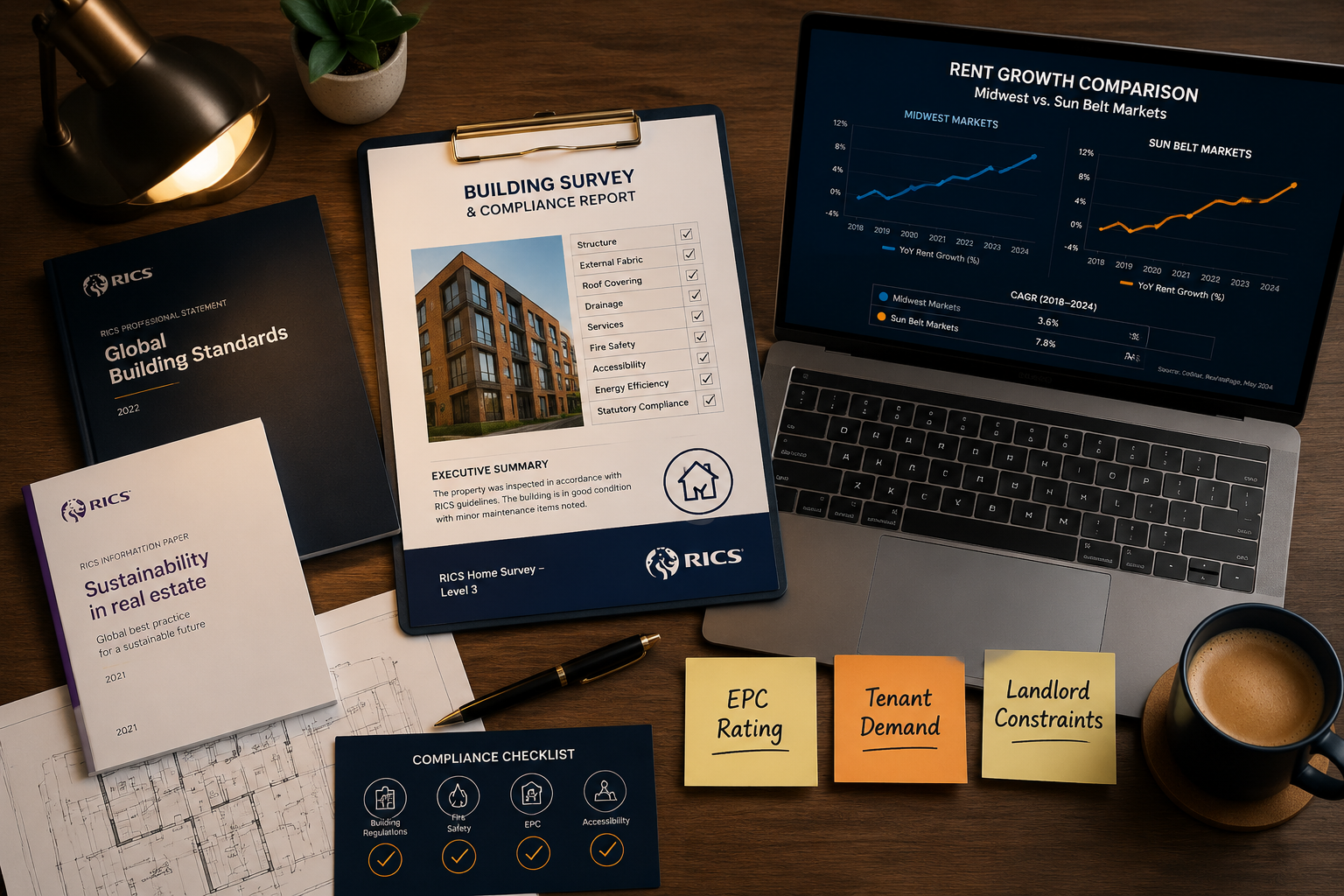
- Regional market divergence — Midwest outperformance versus Sun Belt oversupply — demands location-specific survey strategies.
- Landlords facing cost constraints must prioritise survey findings that carry the highest compliance and liability weight.
The 2026 Rental Market Context: Why Survey Protocols Must Evolve
The U.S. and UK rental markets are both undergoing structural recalibration in 2026. National asking rents recorded only slight year-over-year increases as of early 2026, reflecting a gradual absorption of new multifamily supply after years of rapid construction [2]. In January 2026, the typical asking rent stood at $1,895 — up 2% year-over-year — while households spent 26.4% of income on rent, the lowest share since August 2021 [3]. These figures suggest improved affordability at the headline level, but they mask deep regional and income-based disparities.
Multifamily construction is cooling sharply. In 2025, 416,000 multifamily units were started — down from the 2022 peak — and units under construction fell to 686,000 from a record 996,000 in 2023 [6]. This slowdown will reduce new supply over the next 18 to 24 months, placing renewed pressure on existing rental stock to meet both demand and compliance standards.
Regional divergence is stark. Midwest metros are outperforming Sun Belt markets, where oversupply and slow absorption have pushed vacancy rates higher and given tenants significant negotiating leverage [4]. In Sun Belt cities, concessions are common and year-on-year rents are flat or declining [7]. Meanwhile, four Florida metros scored a perfect 10/10 on a housing stress and crash-risk index, while Midwest cities like Rockford and Erie scored 0/10 [5].
For surveyors and landlords, this divergence means that a single, uniform survey approach is no longer adequate. Survey protocols must be calibrated to local market conditions, regulatory environments, and the specific vulnerabilities of each property type.
High mortgage rates — averaging near 7% in early 2025 — have kept potential homebuyers locked in the rental market longer, sustaining demand even as affordability improves incrementally [8]. This dynamic increases the stakes for rental property compliance: more tenants are staying longer, scrutinising conditions more carefully, and exercising greater legal awareness of their rights.
Core Building Survey Protocols for 2026 Rental Market Shifts: Assessing Compliance Amid Tenant Demand and Landlord Constraints
Effective survey protocols for rental properties in 2026 must address four interconnected compliance domains: structural integrity, energy performance, health and safety, and dilapidations liability. Each domain carries distinct regulatory weight and financial consequence.
Structural and Fabric Condition Assessments
A RICS Level 3 Building Survey remains the gold standard for assessing older or complex rental properties. It covers the full structural fabric — roofs, walls, floors, foundations, drainage, and services — and provides condition ratings that directly inform compliance decisions.
Key structural checks for rental properties in 2026 include:
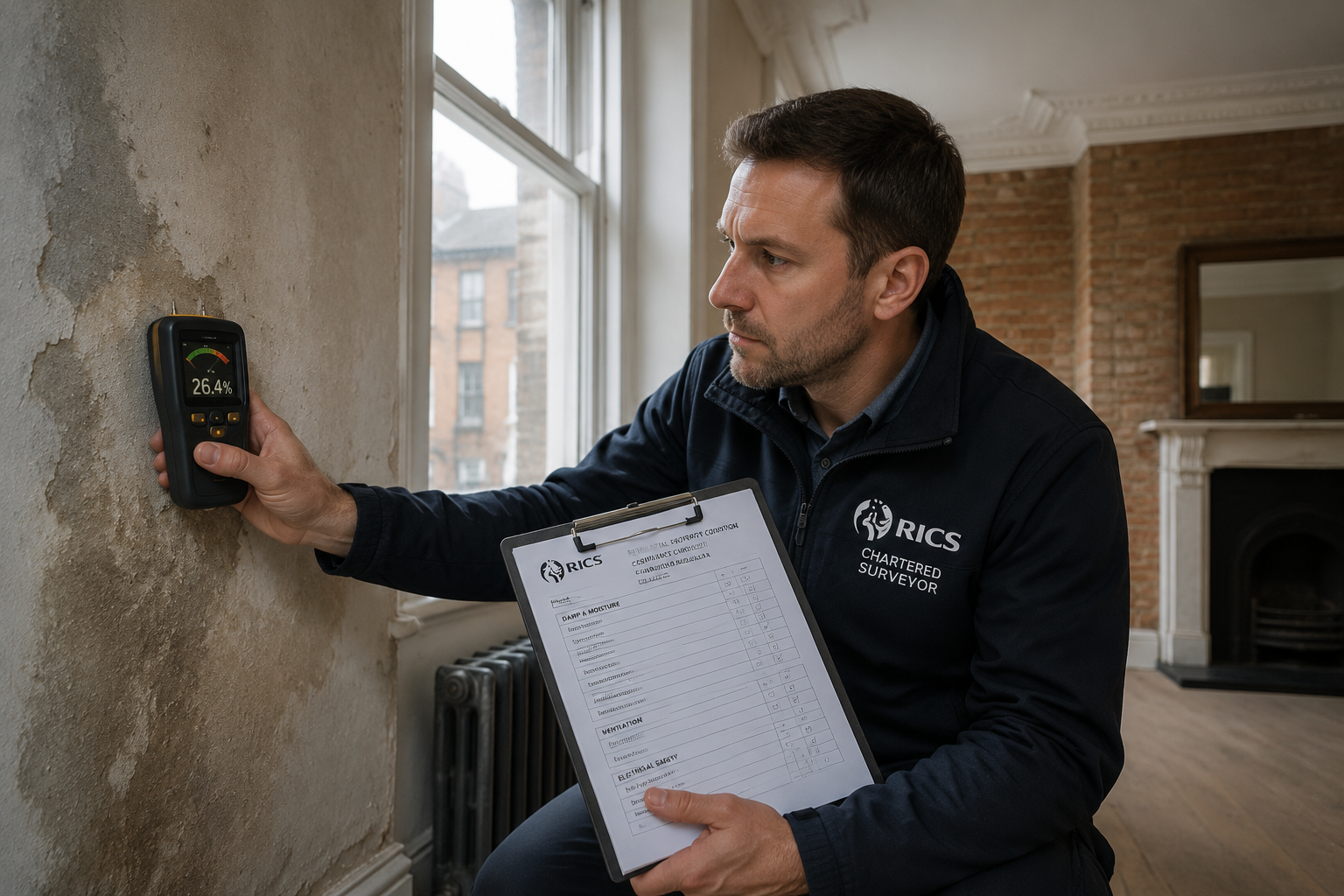
- Damp and moisture ingress: Rising damp, penetrating damp, and condensation are the most common causes of tenant complaints and enforcement notices. Surveyors should use calibrated moisture meters and thermal imaging where available.
- Roof condition: Flat roofs on converted or purpose-built rental blocks require particular attention given their shorter lifespan and higher failure rates.
- Foundation movement: Subsidence indicators — diagonal cracking at window corners, sloping floors, sticking doors — must be documented with reference to historical movement patterns.
- Services and utilities: Electrical installations, gas pipework, and water supply systems must be assessed for age, condition, and compliance with current standards.
For landlords managing multiple units, understanding what surveyors look for in a house survey helps prioritise pre-survey preparation and reduces the risk of unexpected enforcement costs.
Energy Performance and EPC Compliance
Energy efficiency is now a frontline compliance issue for rental properties. Minimum Energy Efficiency Standards (MEES) in England and Wales require rental properties to hold an EPC rating of at least E, with proposals to raise this threshold to C for new tenancies. Survey protocols must now routinely include:
- Assessment of wall, roof, and floor insulation levels
- Evaluation of glazing specifications (single versus double or triple glazing)
- Boiler age, efficiency rating, and controls
- Identification of renewable energy installations (solar panels, heat pumps)
Properties that fail to meet minimum EPC thresholds cannot legally be let, and landlords face fines of up to £30,000 per breach. Given that a significant proportion of UK rental stock was built before modern insulation standards, this is a high-priority survey element for 2026.
Health, Safety, and Habitation Standards
The Homes (Fitness for Human Habitation) Act 2018 and the Housing Health and Safety Rating System (HHSRS) create a broad statutory framework for rental property standards. Surveyors assessing rental properties must evaluate:
| Hazard Category | Common Examples | Survey Priority |
|---|---|---|
| Excess cold | Inadequate heating, poor insulation | High |
| Damp and mould | Rising damp, condensation | High |
| Falls | Unsafe stairs, broken handrails | High |
| Fire | Inadequate smoke alarms, blocked escape routes | Critical |
| Electrical hazards | Outdated wiring, exposed conductors | Critical |
| Asbestos | Textured coatings, pipe lagging in pre-2000 builds | High |
For properties built before 2000, asbestos surveys are a non-negotiable component of the compliance assessment. Asbestos-containing materials remain present in a large proportion of UK rental stock, and failure to identify and manage them correctly creates both health risks and significant legal liability.
Dilapidations and Lease-End Compliance
For commercial and longer-term residential tenancies, dilapidations surveys are essential tools for managing lease-end obligations. A dilapidations assessment documents the condition of a property relative to the repairing and decorating obligations set out in the lease, providing a defensible baseline for both landlords and tenants.
Understanding the full scope of dilapidations obligations is particularly important in 2026, as tenants in oversupplied markets are more likely to challenge inflated dilapidations claims and seek independent survey evidence to support their position.
Balancing Tenant Demand and Landlord Constraints in Survey Planning
The tension between tenant expectations and landlord financial capacity is one of the defining themes of 2026 rental market dynamics. Policy responses to affordability concerns — including proposed rent increase caps tied to inflation — could reduce landlord income while compliance costs continue to rise [9]. This creates a difficult equation: how do landlords maintain compliant, well-maintained properties when revenue growth is constrained?
"In a market where rent growth is measured in single-digit percentages and compliance costs are rising, the survey is not a cost — it is a risk management instrument."
Strategic survey planning offers a practical answer. Rather than treating surveys as reactive, one-off exercises triggered by tenant complaints or enforcement notices, landlords should adopt a rolling inspection programme that:
- Prioritises high-risk elements first — fire safety, electrical installations, and structural defects carry the greatest liability exposure and should be addressed before cosmetic improvements.
- Uses condition ratings to sequence investment — a Level 3 survey report assigns condition ratings (1, 2, or 3) to each element, allowing landlords to allocate capital to the most urgent defects.
- Documents compliance proactively — maintaining a survey-backed compliance file reduces exposure in disputes with tenants, local authorities, and insurers.
- Aligns survey cycles with tenancy renewals — commissioning a survey at the start of each new tenancy provides a clear condition baseline and supports fair deposit management.
For landlords operating in oversupplied Sun Belt-equivalent markets, where tenants have greater negotiating power [7], property condition is a direct competitive differentiator. A well-maintained, compliant property commands better occupancy rates and reduces void periods — a critical consideration when vacancy rates are already elevated.
For landlords in high-demand, low-supply markets, compliance failures carry a different risk: enforcement action, rent repayment orders, and reputational damage in a market where tenants may have fewer alternatives but are increasingly legally informed.
Commercial Rental Properties: Additional Survey Considerations
Commercial landlords face a distinct set of compliance obligations. RICS commercial building surveys assess the full range of structural, mechanical, and regulatory compliance issues specific to offices, retail units, and industrial properties. Key additional considerations include:
- Disability access compliance under the Equality Act 2010
- Fire compartmentation and suppression systems
- Mechanical and electrical plant condition and remaining useful life
- Environmental and sustainability certifications (BREEAM, EPC for commercial properties)
Commercial building surveys also inform rent review negotiations. A documented schedule of condition can be a powerful tool in rent review discussions, providing objective evidence of the property's state relative to comparable market evidence.

Implementing Building Survey Protocols for 2026 Rental Market Shifts: Assessing Compliance Amid Tenant Demand and Landlord Constraints
Translating survey findings into actionable compliance outcomes requires a structured implementation framework. The following protocol is designed for landlords and property managers operating in the 2026 market environment.
Step 1: Commission the Right Survey Type
Not all surveys are equal. The choice of survey type should reflect the property's age, construction type, and intended use:
- Level 2 Homebuyer Survey: Suitable for newer, standard-construction rental properties in reasonable condition.
- Level 3 Building Survey: Essential for older properties, unusual construction, or where significant defects are suspected.
- Specialist surveys: Asbestos, drainage, structural engineering, and electrical condition reports should be commissioned where the Level 3 survey identifies specific concerns.
Guidance on choosing the right survey is available from qualified chartered surveyors who can assess the specific risk profile of each property.
Step 2: Interpret Findings Against Current Regulatory Standards
Survey reports must be read against the current regulatory framework, not just general good practice. In 2026, this means cross-referencing findings against:
- MEES EPC thresholds (current and proposed)
- HHSRS hazard ratings
- Building Regulations Part L (energy efficiency), Part B (fire safety), and Part M (access)
- Landlord and Tenant Act obligations
- Local authority licensing conditions (HMO licences, selective licensing schemes)
Step 3: Prioritise Remediation by Risk and Cost
A structured remediation plan should categorise defects by urgency:
- Immediate action (Category 1 HHSRS hazards): Must be addressed before the property is let or re-let.
- Short-term action (within 12 months): Significant defects that do not pose immediate risk but will deteriorate if unaddressed.
- Planned maintenance (1-5 year horizon): Elements approaching end of useful life that require budgeted replacement.
Step 4: Document and Communicate
All survey findings, remediation actions, and compliance sign-offs should be recorded in a property compliance file. This documentation serves multiple purposes: it demonstrates due diligence to local authorities, supports insurance claims, provides evidence in dilapidations disputes, and builds tenant confidence in the property's management.
Conclusion
The 2026 rental market presents a complex compliance landscape shaped by stabilising rents, rising regulatory standards, constrained landlord revenues, and tenants with growing legal awareness and, in many markets, greater negotiating power. Building Survey Protocols for 2026 Rental Market Shifts: Assessing Compliance Amid Tenant Demand and Landlord Constraints are not a bureaucratic formality — they are the foundation of defensible, sustainable rental property management.
Actionable next steps for landlords and property managers in 2026:
- Commission a Level 3 building survey on any rental property over 20 years old or with known defects before the next tenancy begins.
- Audit the EPC ratings across your portfolio and identify properties at risk of failing proposed minimum standards.
- Establish a rolling inspection programme aligned with tenancy renewals rather than waiting for complaints or enforcement action.
- Engage a qualified chartered surveyor to interpret survey findings against the current regulatory framework and produce a prioritised remediation plan.
- For commercial properties, ensure rent review negotiations are supported by a current schedule of condition and a professional building survey.
The rental market will continue to evolve through 2026 and beyond. Landlords who treat building surveys as strategic assets rather than compliance burdens will be better positioned to maintain occupancy, manage costs, and protect long-term asset value in a market defined by uncertainty and change.
References
[1] New Report Finds Cooling Rental Markets Affordability Crisis Deepens Renters – jchs.harvard.edu
[2] U S Rental Market Shows Signs Of Stabilization As 2026 Gains Momentum – rentmagazine.com
[3] Default – investors.zillowgroup.com
[4] Midwest Leads 2026 Us Multifamily Rent Growth As Sun Belt Lags – credaily.com
[5] 2026 Landlord Exodus Housing Stress Index Reveals Extreme Divergence In Us Housing Markets 302670866 – prnewswire.com
[6] Six Takeaways Americas Rental Housing 2026 – jchs.harvard.edu
[7] Rental Market 2026 – rent-calc.io
[8] Looking Ahead Market Forces Risks And Tools Shaping The U S Rental Housing Market – experian.com
[9] U S Rental Market In 2026 Softening Rents Shifting Dynamics And Emerging Challenges – rentmagazine.com
How Prince Surveyors can help: explore our independent damp surveys or learn about our Level 3 building survey.