

Last updated: July 24, 2026
Quick Answer: Probate valuations with building survey integration combine an HMRC-compliant property valuation with a structural assessment of the inherited home, including its party walls. For UK properties with shared walls, this integrated approach is the most reliable way to identify defects that could reduce the estate's value, trigger legal disputes, or create unexpected repair costs for beneficiaries. A RICS-registered chartered surveyor can deliver both services together, saving time and cost during estate administration.
Key Takeaways
- A probate valuation establishes the market value of an inherited property at the date of death, which HMRC uses to calculate inheritance tax liability.
- For estates with a gross value above £250,000, HMRC recommends a professional valuation by a RICS Registered Valuer.
- Integrating a building survey with the probate valuation catches structural defects, including party wall problems, that can materially reduce the property's assessed value.
- Party wall defects in inherited UK properties range from minor cracking to serious structural movement, and each can affect the final probate figure.
- Executors who overlook party wall issues risk undervaluing or overvaluing the estate, which can lead to HMRC challenges or disputes between beneficiaries.
- A combined probate valuation and building survey typically costs more than a standalone valuation but saves money by avoiding duplicate inspection fees.
- The Party Wall etc. Act 1996 creates ongoing legal obligations that transfer with property ownership, so unresolved party wall matters become the estate's liability.
- Turnaround for a combined report is generally two to four weeks, depending on property complexity and surveyor availability.
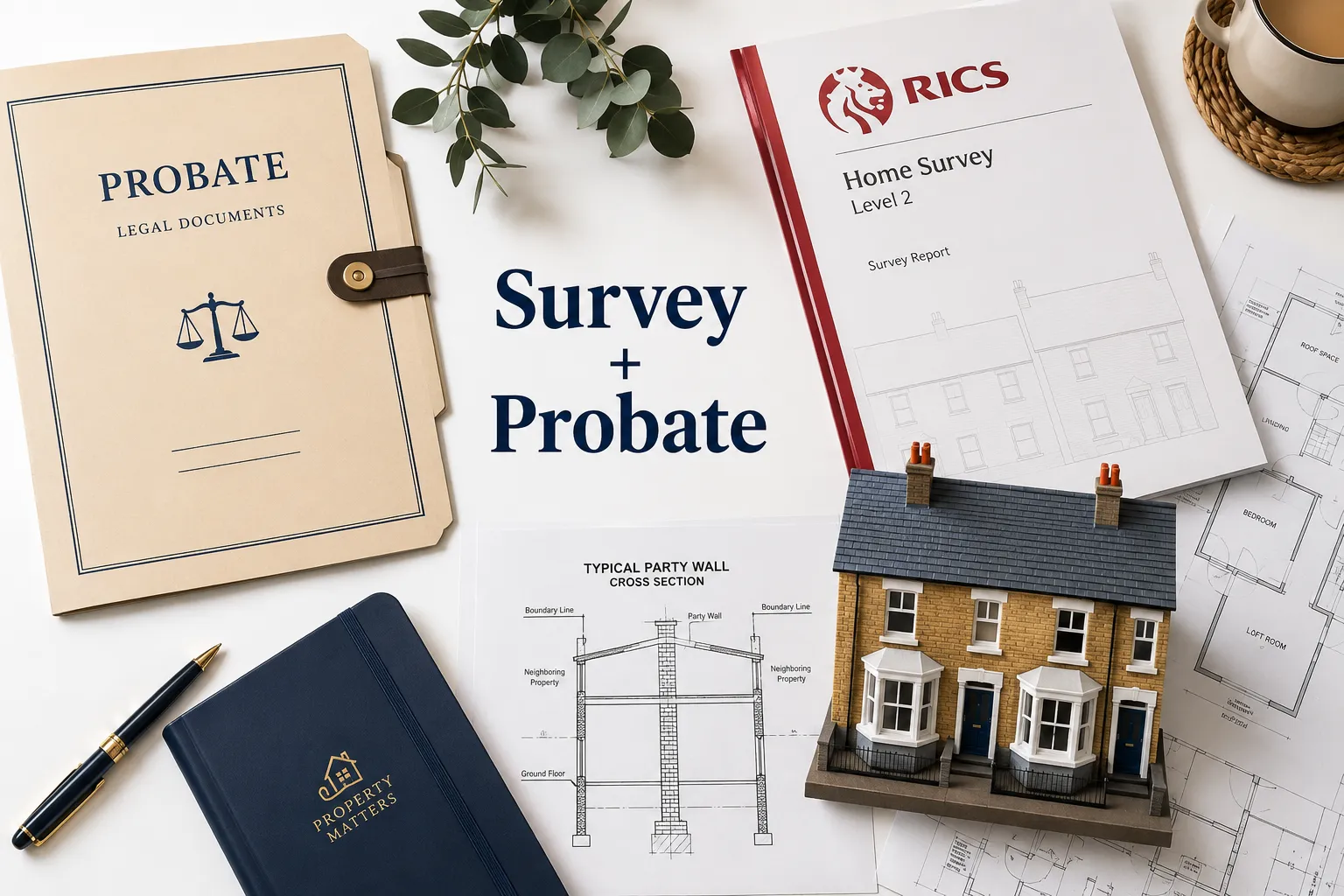
What Is a Probate Valuation and Why Do You Need One for an Inherited Property?
A probate valuation is a formal assessment of a property's open-market value at the precise date the owner died. Executors and administrators of an estate need this figure to complete the HMRC inheritance tax return accurately before applying for a grant of probate.
HMRC requires professional valuations for properties valued above £1,500, and particularly where the estate's gross value exceeds £250,000. Using a RICS Registered Valuer ensures the figure is defensible, meaning HMRC is far less likely to challenge it. An estate agent's informal estimate does not carry the same weight.
Why the valuation date matters: The figure must reflect market conditions on the date of death, not the date the property is eventually sold. If a property is sold months later at a higher price, HMRC may query whether the original valuation was too low, potentially triggering a review and additional tax liability.
Key points for executors:
- The probate valuation is a legal document, not a marketing exercise.
- It must be based on comparable sales evidence from around the date of death.
- Structural defects known at the date of death should be reflected in the valuation.
- A RICS Registered Valuer's report is accepted by HMRC and courts.
For more on the range of professional valuation services available, see Prince Chartered Surveyors' valuations services and their dedicated inheritance tax valuation service.
What Is the Difference Between a Probate Valuation and a Standard Property Survey?
A probate valuation and a standard building survey serve different purposes, though they can be combined effectively. The probate valuation answers "what was this property worth on a specific date?" while a building survey answers "what is the physical condition of this property right now?"
| Feature | Probate Valuation | Building Survey (Level 3) |
|---|---|---|
| Primary purpose | Establish market value for HMRC | Assess structural condition |
| Date sensitivity | Fixed to date of death | Current condition |
| Output | Valuation report | Condition/defect report |
| HMRC acceptance | Yes | Supports valuation |
| Party wall coverage | Limited | Detailed |
| Who needs it | Executors, HMRC | Buyers, executors, beneficiaries |
The two are complementary. A standalone probate valuation may note obvious defects but will not investigate them in depth. A Level 3 Full Building Survey goes further, assessing the fabric of the building, including party walls, foundations, roofs, and drainage.
Common mistake: Executors sometimes commission only a probate valuation and assume the property is structurally sound. If party wall defects are later discovered during a buyer's survey, the sale can fall through or the price must be renegotiated, causing delays and potential HMRC complications.
How Does a Building Survey Help with Probate Valuations?
Incorporating a building survey into the probate process gives executors a complete picture of the property's condition, which directly informs an accurate and defensible valuation. Structural defects, including party wall problems, can significantly reduce market value and must be reflected in the probate figure.
A building survey carried out alongside the probate valuation achieves several things at once:
- It identifies defects that should be disclosed to potential buyers.
- It provides evidence to justify a lower valuation if serious issues are found.
- It flags any ongoing legal obligations under the Party Wall etc. Act 1996.
- It helps beneficiaries budget for repairs before deciding whether to sell or retain the property.
For inherited properties, particularly older Victorian and Edwardian terraced homes common across London and the South East, a building defects survey is especially valuable because these properties often have shared walls that have not been professionally inspected for decades.
"Structural defects known at the date of death should be reflected in the probate valuation, an integrated building survey is the most reliable way to surface those defects before the HMRC return is submitted."
What Are Party Wall Defects and Why Do They Matter for Inherited Homes?
Party wall defects are structural or material failures in the shared wall between two adjoining properties. They matter for inherited homes because they can reduce market value, create legal liability under the Party Wall etc. Act 1996, and cause disputes with neighbouring owners.
Common party wall defects found in inherited UK properties:
- Cracking and movement: Diagonal or stepped cracking in brickwork, often indicating differential settlement or subsidence.
- Damp penetration: Water ingress through the party wall, particularly in older solid-brick construction without a cavity.
- Mortar erosion: Deteriorated pointing that allows water and cold air to pass through.
- Fire-stopping failures: Missing or degraded fire-stopping material within the wall, a building regulations compliance issue.
- Structural overloading: Where a previous owner added a loft extension or removed internal supports without proper party wall consent.
- Inadequate sound insulation: Not a structural defect per se, but a material factor in value for flats and terraced homes.
The Party Wall etc. Act 1996 imposes obligations on property owners when carrying out works that affect shared walls. If a deceased owner had works carried out without serving proper notice, the estate may inherit an unresolved dispute or a liability for remediation. For a thorough overview of these obligations, the Party Wall Act category resource covers the key legal requirements in plain terms.
Can Party Wall Defects Affect the Probate Value of an Inherited Property?
Yes, directly and sometimes substantially. Party wall defects that require significant remediation reduce the property's open-market value because a buyer would factor in the cost and disruption of repairs when making an offer.
A chartered surveyor integrating both services will:
- Identify the defect type and severity.
- Estimate the likely repair cost.
- Apply an appropriate deduction to the market valuation.
- Document the reasoning in a way that satisfies HMRC scrutiny.
For example, a mid-terrace Victorian house in South East London valued at £550,000 in good condition might be valued at £510,000 to £530,000 if a building survey reveals significant damp penetration through the party wall requiring full remediation. That difference has a direct impact on the inheritance tax calculation.
Edge case: If the defect is the result of a neighbouring owner's works, the estate may have a claim against that neighbour. A surveyor experienced in party wall matters can identify this scenario and advise the executor accordingly. See understanding party wall disputes for more on how these claims work.
How Much Does a Probate Valuation with Building Survey Cost?
A standalone residential probate valuation typically starts from around £250 for a straightforward property. A full Level 3 building survey for a mid-sized terraced house generally ranges from £500 to £1,000 or more, depending on property size, age, and location. Commissioning both services together from the same firm usually costs less than booking them separately.
Cost factors that increase the fee:
- Large or complex properties (detached, multi-storey, or extended)
- Properties with known structural issues requiring specialist investigation
- Older construction types (pre-1900 solid brick, timber frame)
- Properties in areas with known subsidence or mining history
- Urgent turnaround requirements
Who pays? The cost of the probate valuation and any associated building survey is an estate expense, meaning it is paid from the estate's assets before distribution to beneficiaries. Executors do not pay personally. For a detailed breakdown of party wall surveyor costs specifically, see the cost of a party wall surveyor.
How Do You Get a Building Survey Done for Probate Purposes?
The process is straightforward but requires careful coordination, particularly around access to the property and timing relative to the probate application.
Step-by-step process:
- Appoint a RICS Registered Valuer with experience in both probate valuations and building surveys. Confirm they can deliver both in a single inspection.
- Arrange access to the property. The executor has authority to grant access before probate is granted.
- Provide relevant documents to the surveyor: title deeds, any existing survey reports, details of known defects, and information about recent works.
- The surveyor inspects the property, assessing both market value evidence and physical condition, including party walls.
- Receive the combined report, typically within three to five working days of inspection for a standard property.
- Use the report to complete the HMRC inheritance tax return (IHT400 and IHT405 forms) accurately.
For guidance on what a Level 3 survey covers and how long the process takes, see building survey timeframes.
What Happens If a Building Survey Finds Major Party Wall Issues During Probate?
If serious party wall defects are found, the executor has several options and obligations. The key point is that these issues must be reflected in the probate valuation and disclosed to any prospective buyer.
Practical steps when major defects are found:
- Adjust the valuation: The surveyor should revise the market value figure to reflect the cost and risk associated with the defects.
- Obtain repair estimates: Get at least two contractor quotes for remediation. These support the adjusted valuation and help beneficiaries make informed decisions.
- Check for party wall liability: Determine whether the defect originated from the deceased's property or the neighbour's. If the neighbour caused the damage, the estate may be entitled to compensation.
- Notify HMRC accurately: Submit the adjusted figure on the inheritance tax return. Do not use an inflated figure and hope the issue goes unnoticed, HMRC Shares and Assets Valuation (SAV) can and does challenge probate valuations.
- Consider urgent repairs: If the defect poses a risk to the structure or to the neighbouring property, the executor may need to arrange emergency repairs. See urgent or dangerous building issues for guidance on priorities.
Do You Need a Party Wall Surveyor or a General Surveyor for Probate Valuations with Building Survey Integration?
For most probate cases, a chartered building surveyor who is also a RICS Registered Valuer can handle both the valuation and the building survey, including an assessment of party wall condition. A dedicated party wall surveyor is only necessary if there is an active dispute or if works are being planned.
Choose a general chartered surveyor if:
- The probate valuation and condition assessment are the primary goals.
- No active party wall dispute exists.
- No works are planned that would trigger the Party Wall etc. Act 1996.
Bring in a party wall surveyor if:
- A neighbour has served a party wall notice on the estate.
- The executor plans to carry out works affecting the shared wall before selling.
- A dispute exists about the origin or extent of damage to the party wall.
For more on when a party wall surveyor is specifically required, do you need a party wall surveyor? provides a clear decision framework.
How Long Does a Probate Valuation with Building Survey Take?
A combined probate valuation and building survey typically takes two to four weeks from instruction to final report, though straightforward properties can be completed faster.
Typical timeline:
- Instruction to inspection: Three to seven days (subject to access arrangements)
- Inspection to draft report: Three to five working days
- Any follow-up investigations: Add five to ten days if specialist reports are needed (e.g., structural engineer, damp specialist)
- Final report delivery: Total of two to four weeks in most cases
Prompt instruction is important. Probate applications require the IHT400 to be submitted before the grant of probate is issued, and delays in obtaining the valuation can hold up the entire estate administration process.
Can You Use an Old Building Survey for Probate, or Do You Need a New One?
An existing building survey cannot substitute for a probate valuation, and a survey more than six to twelve months old is unlikely to be accepted as an accurate reflection of current condition. HMRC requires the valuation to reflect the property's condition and market value at the date of death.
When an old survey might still be useful:
- As background information for the new surveyor.
- To identify known defects that the new inspection should focus on.
- To demonstrate a history of issues when justifying a reduced valuation.
A new inspection is always required for the probate valuation itself. The surveyor must be able to confirm that the condition assessed reflects the property as it stood at the date of death.
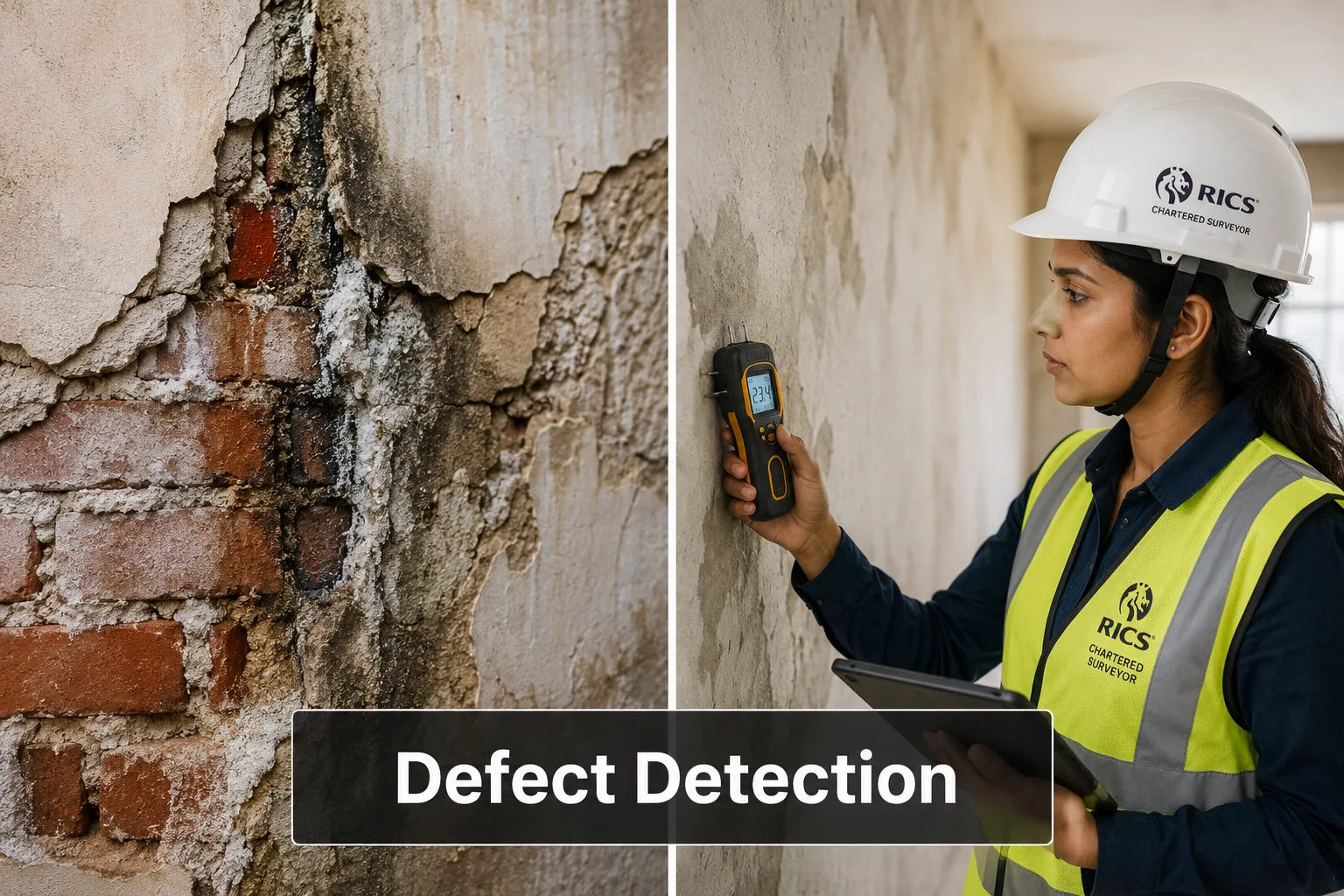
What Are the Most Common Party Wall Defects That Reduce Property Value?
The defects most likely to affect the probate value of an inherited UK property are those that are costly to repair, difficult to access, or that create ongoing legal risk.
High-impact defects by frequency in UK inherited properties:
- Rising and penetrating damp through solid party walls (very common in pre-1920 terraced housing)
- Structural cracking from differential settlement between adjoining properties
- Inadequate or missing fire-stopping within the party wall cavity (a building regulations issue)
- Overloaded party walls where loft conversions or extensions were added without structural assessment
- Spalled and eroded brickwork on the party wall face, particularly in exposed flank walls
- Underpinning failures where previous subsidence repairs have not been maintained
Each of these defects has a quantifiable cost of repair, and a competent surveyor will translate that cost into a clear adjustment to the market valuation. For a broader look at how building materials affect condition assessments, see building materials assessments.
FAQ: Probate Valuations with Building Survey Integration
Q: Does every inherited property need a building survey as part of the probate process?
A: No. A building survey is not a legal requirement for probate. However, for older properties, terraced or semi-detached homes with party walls, or any property where defects are suspected, integrating a building survey with the probate valuation produces a more accurate and defensible result.
Q: Can the executor commission the building survey before probate is granted?
A: Yes. Executors have authority to manage the estate's assets from the date of death, which includes arranging access for surveys and valuations. Probate does not need to be granted before the inspection takes place.
Q: What if the deceased had an ongoing party wall dispute at the time of death?
A: The dispute becomes part of the estate. The executor inherits the obligation to resolve it. A party wall surveyor should be consulted immediately, as unresolved disputes can delay the sale of the property and affect its value.
Q: Will HMRC accept a probate valuation that has been reduced due to party wall defects?
A: Yes, provided the reduction is supported by evidence, typically a building survey report and contractor repair estimates. A RICS Registered Valuer's report with clear reasoning is the strongest form of documentation.
Q: Can beneficiaries challenge the probate valuation if they think it is too low?
A: Yes. Beneficiaries can raise concerns with the executor or seek an independent second opinion. If the dispute cannot be resolved, it may need to be referred to the Valuation Office Agency or the courts. Accurate, well-documented valuations reduce this risk considerably.
Q: Is a probate valuation the same as an inheritance tax valuation?
A: They serve the same purpose and are often the same document. The probate valuation establishes the open-market value at the date of death, which is the figure used to calculate inheritance tax. Some firms market these as separate products, but the underlying methodology is identical.
Conclusion: Practical Next Steps for Executors and Beneficiaries in 2026
Probate valuations with building survey integration represent the most thorough and legally sound approach to valuing an inherited UK property, particularly where party wall defects are a realistic concern. For executors managing an estate in 2026, the risk of submitting an inaccurate HMRC return, whether too high or too low, is real and carries financial consequences.
Actionable steps to take now:
- Appoint a RICS Registered Valuer with building survey experience as early as possible after the date of death. Do not wait until the probate application is imminent.
- Request a combined service covering both the HMRC-compliant probate valuation and a Level 3 building survey. Confirm that party wall condition will be specifically assessed.
- Gather existing documents, title deeds, any previous survey reports, planning permissions for extensions, and correspondence with neighbours about party wall matters.
- Act on any defects found by obtaining repair estimates and ensuring the valuation reflects the adjusted market value.
- Consult a party wall specialist if the survey reveals an active dispute, unresolved works, or significant damage that may have originated from the neighbouring property.
- Submit the HMRC return accurately, using the surveyor's report as supporting evidence. Keep copies of all documentation for at least six years.
The cost of getting this right is modest relative to the potential cost of an HMRC challenge, a beneficiary dispute, or an aborted sale. Commissioning integrated probate valuations with building survey expertise is not an optional extra, for most inherited UK properties with party walls, it is simply the responsible approach.
Tags: probate valuations, building survey, party wall defects, inherited property UK, RICS valuation, inheritance tax valuation, party wall act, estate administration, chartered surveyor, probate property survey, building defects, UK property inheritance