

Fewer than 40% of landlords subject to formal ombudsman complaints in recent years held complete, up-to-date registration records at the point a dispute was escalated — and that compliance gap is now central to how expert witness valuations are prepared, challenged, and decided. As Expert Witness Valuations in Private Rented Sector Ombudsman Disputes: Navigating 2026 Landlord Database Requirements become an increasingly specialised discipline, chartered surveyors, legal representatives, and landlords alike must understand the intersection of CPR-compliant reporting, ombudsman adjudication, and the mandatory landlord database that came into full effect in 2026.
This article sets out exactly how expert witnesses should structure their valuation reports, how unregistered landlord status affects dispute outcomes, and what case study evidence from Section 8 grounds and Decent Homes Standard breaches reveals about best practice.
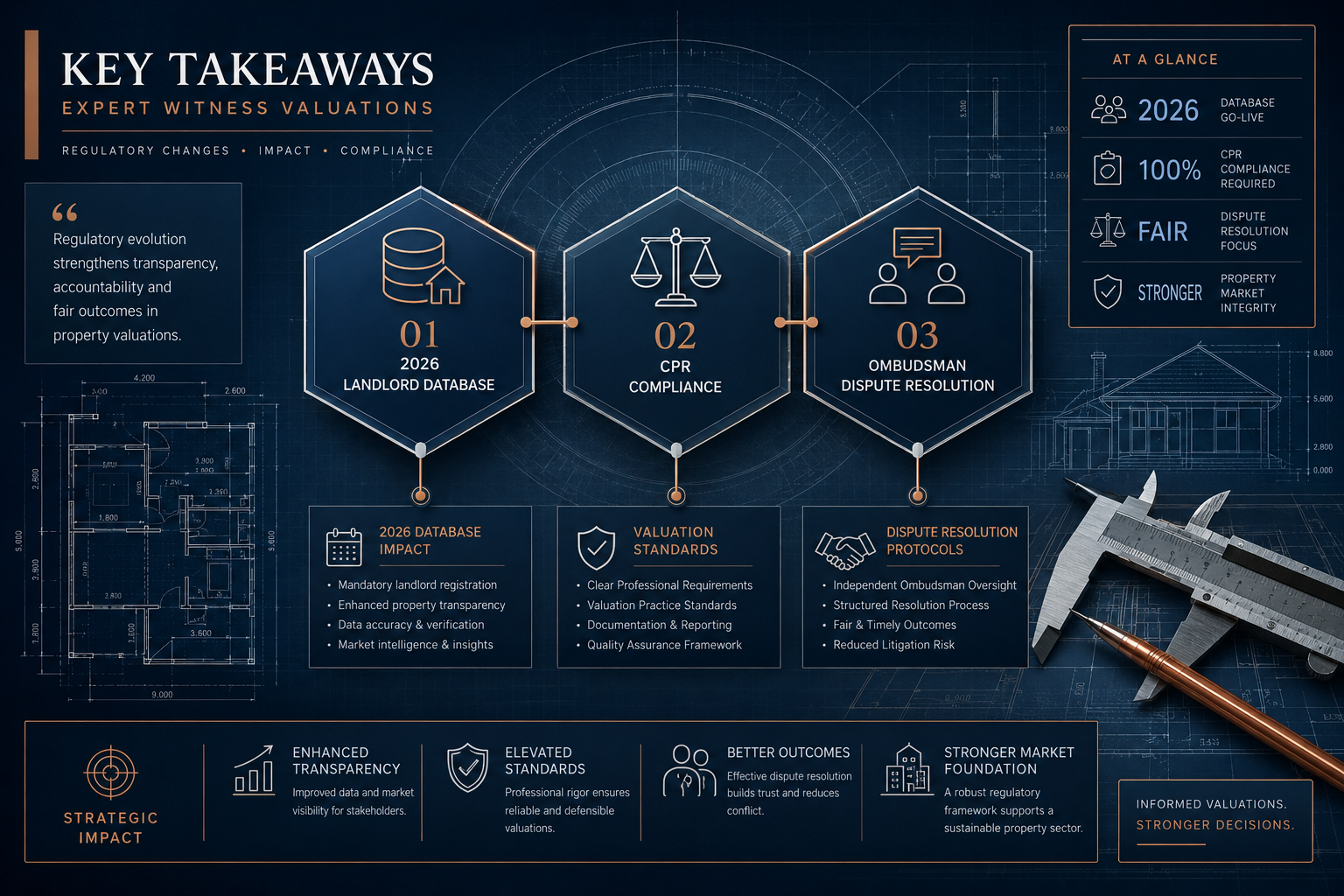
Key Takeaways 📋
- CPR Part 35 compliance is non-negotiable for expert witness valuation reports submitted to the Private Rented Sector (PRS) Ombudsman — any deviation weakens evidential weight.
- Unregistered landlord status in the 2026 database can directly affect the admissibility and credibility of a landlord's own evidence in disputes.
- Section 8 grounds and Decent Homes Standard breaches are the two most common triggers for valuation-related ombudsman disputes in 2026.
- Expert witnesses must address rental market comparables, property condition, and compliance status within a single, structured report.
- Proactive registration and professional property management significantly reduce dispute exposure for landlords.
Why the 2026 Landlord Database Changes Everything for Valuation Disputes
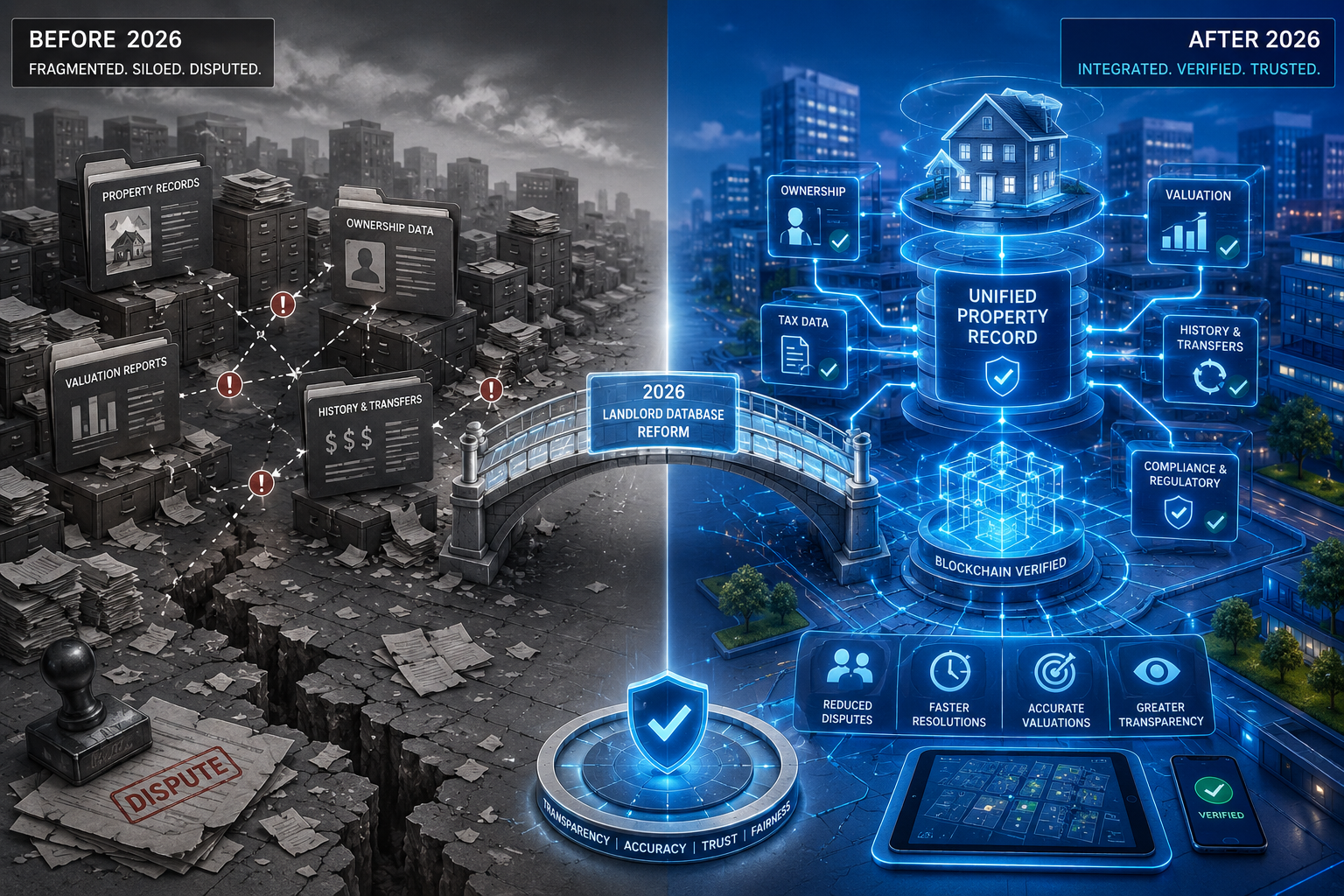
The Renters (Reform) Act framework, fully implemented in 2026, introduced a mandatory national landlord database as a condition of lawful letting. Every private landlord in England must now be registered, with their properties linked to a unique identifier accessible to the PRS Ombudsman, local authorities, and tenants. This is not merely an administrative step — it has direct legal and evidential consequences in ombudsman disputes.
How Unregistered Landlord Status Affects Expert Witness Valuations
When a landlord is unregistered at the point of a dispute, several complications arise for the expert witness:
- Credibility of landlord-submitted evidence is immediately questioned by adjudicators.
- The expert witness may be instructed to comment on whether the property's rental value reflects its lawful letting status — an unregistered landlord cannot lawfully let, which affects market value opinion.
- Rent repayment orders (RROs) become a live risk, and the expert must factor potential RRO exposure into any financial loss calculation.
- Comparable evidence must be drawn exclusively from registered, compliant lettings to avoid distorting the valuation.
💡 Pull Quote: "An expert witness who fails to address landlord database compliance status in a 2026 PRS dispute is producing a report with a significant evidential blind spot."
For landlords managing multiple properties, understanding what landlords should provide in an unfurnished apartment is a starting point — but compliance now extends far beyond furnishings into formal registration obligations.
The Database's Role in Setting Rental Market Comparables
The landlord database also functions as a verified market data source. Expert witnesses preparing rental valuation reports for ombudsman disputes should:
| Data Source | Reliability for Comparables | Notes |
|---|---|---|
| Landlord Database (registered lettings) | ✅ High | Verified, compliant lettings only |
| Rightmove/Zoopla asking rents | ⚠️ Medium | Not verified for compliance status |
| Land Registry (sales) | ✅ High | For capital value cross-checks |
| Unverified landlord records | ❌ Low | Inadmissible in most ombudsman cases |
This means the expert witness's comparable selection methodology must be explicitly documented in the report, with clear reasoning for why each comparable was included or excluded.
CPR-Compliant Report Structures for Expert Witness Valuations in Private Rented Sector Ombudsman Disputes
The Civil Procedure Rules (CPR) Part 35 govern the duties and format of expert witness reports in England and Wales. While the PRS Ombudsman operates outside the court system, its adjudication process increasingly mirrors CPR standards, and reports that do not meet these benchmarks are routinely given reduced weight.
The Seven Core Sections of a CPR-Compliant Valuation Report
A properly structured expert witness valuation report for a PRS ombudsman dispute should contain the following sections:
1. Expert's Declaration of Independence
The report must open with a signed statement confirming the expert's duty to the tribunal/ombudsman, not to the instructing party. This is a CPR Part 35 requirement and signals professional credibility immediately.
2. Scope of Instruction
Clearly define what the expert was asked to assess. In PRS disputes, this typically includes:
- Current open market rental value (OMRV)
- Historic rental value at the tenancy commencement date
- Diminution in value caused by property condition issues
- Financial loss arising from alleged landlord failures
3. Property Description and Condition Assessment
A physical description of the property, including any defects relevant to the dispute. For Decent Homes Standard cases, this section must cross-reference the four criteria: thermal comfort, modern facilities, disrepair, and hazards under HHSRS.
4. Landlord Database Compliance Status
In 2026, this is a new but essential section. The expert should confirm:
- Whether the landlord was registered at the relevant date
- Whether the property had a valid landlord database identifier
- The impact of any non-compliance on rental value opinion
5. Comparable Market Evidence
A minimum of three to five verified rental comparables, drawn from registered lettings where possible. Each comparable should include address (or anonymised reference), letting date, size, condition, and adjusted rental figure.
6. Valuation Opinion
The expert's concluded opinion on rental value, expressed as a range and a point estimate. The reasoning must be transparent and reproducible.
7. Statement of Truth
The report must conclude with a CPR-compliant statement of truth, confirming the expert understands their overriding duty to the court/ombudsman.
Case Study 1: Section 8 Grounds — Rent Arrears Dispute 🏠
Background: A landlord in South London served a Section 8 notice on grounds of rent arrears (Ground 8, 10, and 11). The tenant disputed the arrears figure, claiming the property had significant disrepair that justified withholding rent. The dispute was escalated to the PRS Ombudsman.
Expert Witness Role: A RICS-accredited expert was instructed to provide an independent rental valuation and to assess whether the property's condition affected the tenant's rent obligations.
Key Findings in the CPR-Compliant Report:
- The open market rental value at the tenancy start date was £1,450 pcm.
- Damp penetration affecting two bedrooms (documented via a Level 3 full building survey) reduced the effective rental value by approximately 12–15%.
- The landlord was registered on the 2026 database, which preserved the admissibility of their evidence.
- The expert concluded that a rent reduction of £190 pcm was supportable for the period during which the disrepair existed.
Outcome: The ombudsman awarded the tenant a partial rent reduction for the disrepair period, reducing the arrears figure. The Section 8 notice remained valid but for a lower sum.
Lesson: Expert witnesses must be prepared to provide dual opinions — on rental value and on the impact of condition — in Section 8 disputes. A report that addresses only one dimension will be incomplete.
Case Study 2: Decent Homes Standard Breach 🏚️
Background: A tenant in the East Midlands complained to the PRS Ombudsman that their property failed the Decent Homes Standard due to inadequate heating and Category 1 HHSRS hazards (excess cold). The landlord disputed the severity of the issues and the financial remedy sought.
Expert Witness Role: The expert was asked to value the property in its actual condition versus its notional condition if compliant with the Decent Homes Standard.
Key Findings:
- The property in its actual (non-compliant) condition had an OMRV of £750 pcm.
- A compliant property of equivalent size and location would achieve £950 pcm.
- The diminution in value of £200 pcm represented the financial loss to the tenant for the period of non-compliance (18 months = £3,600 total).
- The landlord's registration record showed the property had been flagged for an EPC rating below the MEES threshold — a fact the expert referenced in the comparable selection section.
For landlords seeking to understand how EPC ratings and MEES compliance interact with property surveys, the EPC, MEES, and building survey guidance provides essential background.
Outcome: The ombudsman awarded £3,600 in compensation, closely aligned with the expert's diminution calculation. The structured CPR report was cited as the primary basis for the financial award.
Lesson: The diminution in value methodology is the most defensible approach in Decent Homes Standard cases. It anchors the financial remedy to objective market evidence rather than subjective tenant claims.
Navigating 2026 Landlord Database Requirements: Practical Guidance for Expert Witnesses
Expert Witness Valuations in Private Rented Sector Ombudsman Disputes require a working knowledge of the 2026 landlord database framework that goes beyond simply checking a registration number. Here is what expert witnesses and their instructing parties need to know in practice.
Pre-Instruction Checklist for Expert Witnesses ✅
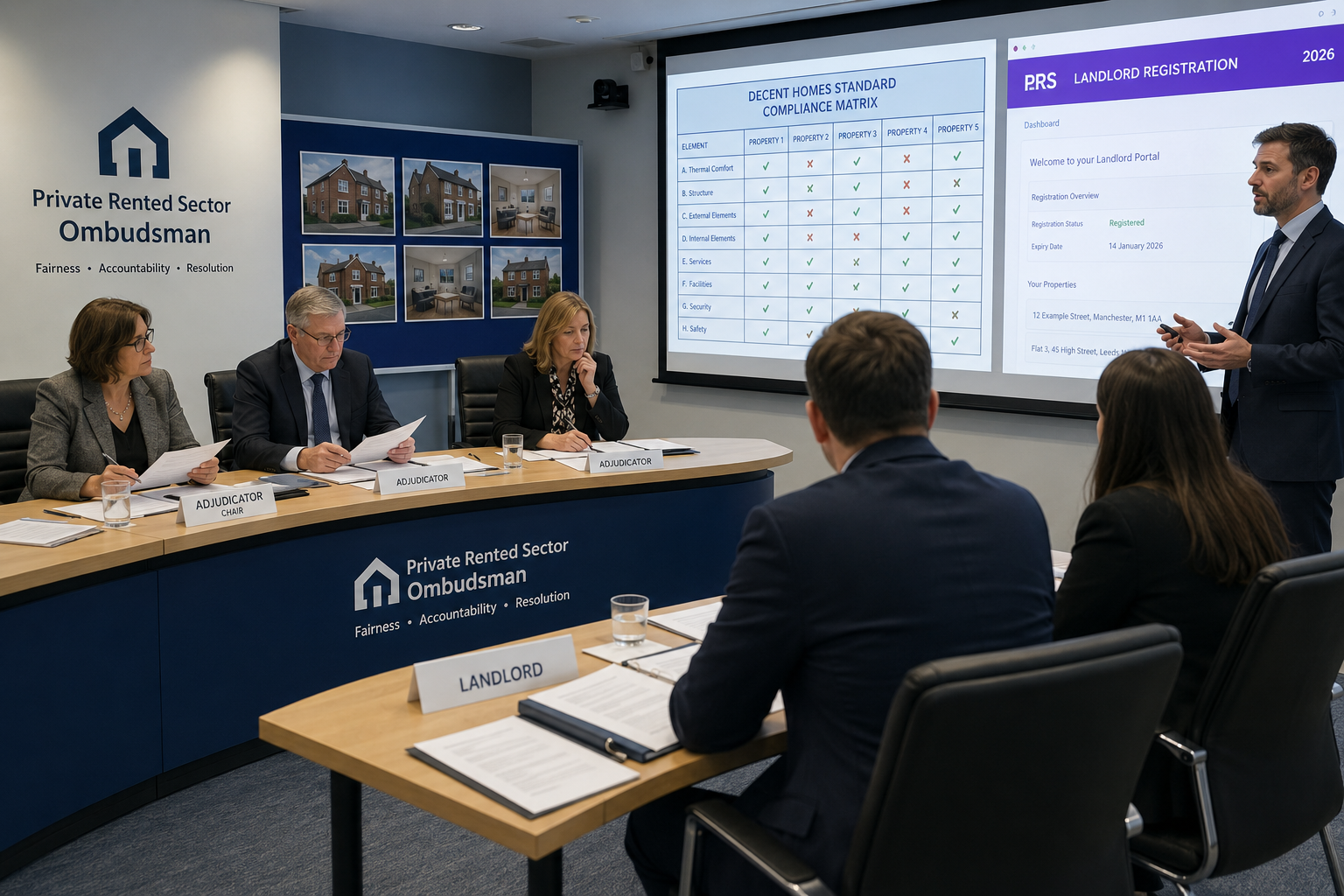
Before accepting an instruction in a PRS ombudsman dispute, the expert should confirm:
- The landlord's database registration number and status at the relevant date
- Whether any enforcement notices or compliance flags are recorded against the property
- The property's EPC rating and MEES compliance status
- Whether a valid tenancy agreement was in place (see tenancy contracts guidance)
- Whether any previous ombudsman complaints are on record for the property or landlord
Common Errors That Undermine Expert Witness Reports
The following errors are frequently identified in PRS ombudsman cases and significantly weaken the expert's evidence:
- Using unverified comparables — drawing on asking rents rather than achieved, registered letting rents.
- Ignoring compliance status — failing to note that the landlord was unregistered, which affects the lawfulness of the letting and therefore the rental value opinion.
- Conflating market value and compensation — the expert's role is to provide a market-based opinion; quantification of compensation is for the ombudsman, not the expert.
- Insufficient condition evidence — relying on photographs alone rather than a formal survey. A dilapidations assessment or building survey provides far stronger evidential support.
- Failure to declare conflicts of interest — any prior relationship with the landlord or tenant must be disclosed upfront.
How Property Location Affects Comparable Selection
Rental market conditions vary significantly across England, and expert witnesses must demonstrate local market knowledge. A surveyor instructed on a dispute in West London will draw on a very different comparable pool than one working in Hampshire or Berkshire. Chartered surveyors with local expertise in West London or Hampshire will have direct access to verified local letting data that strengthens the evidential weight of their reports.
Capital Gains and Inheritance Tax Implications in Complex Disputes
Some PRS ombudsman disputes involve properties where ownership is contested or where the dispute outcome affects the property's capital value — for example, where a rent repayment order reduces the property's investment yield. In these cases, the expert witness report may need to cross-reference capital gains valuations or inheritance tax valuations to provide a complete picture of financial impact.
Conclusion: Actionable Next Steps for Landlords, Tenants, and Expert Witnesses
The convergence of mandatory landlord registration, PRS ombudsman adjudication, and CPR-compliant expert reporting has created a more rigorous — and more consequential — dispute resolution environment in 2026. The stakes are higher, the evidence standards are tighter, and the financial remedies available to tenants are more substantial than at any previous point in the private rented sector's history.
For landlords:
- Register on the 2026 landlord database immediately if not already done. Non-registration undermines your evidential position in any dispute, regardless of the merits.
- Commission a professional condition survey before any tenancy begins to create a defensible baseline record.
- Address Decent Homes Standard compliance proactively — remediation before a complaint is always cheaper than compensation after one.
For tenants:
- Check your landlord's registration status on the national database before escalating a complaint. Unregistered status strengthens your position significantly.
- Document all disrepair with dated photographs, written communications, and formal repair requests.
- Request an independent expert valuation if financial loss is central to your complaint.
For expert witnesses and chartered surveyors:
- Ensure every PRS ombudsman report follows the seven-section CPR Part 35 structure outlined in this article.
- Address landlord database compliance status explicitly — omitting this in 2026 is a material gap.
- Use the diminution in value methodology for condition-related disputes; it is the most defensible and the most readily accepted by ombudsman adjudicators.
The discipline of Expert Witness Valuations in Private Rented Sector Ombudsman Disputes: Navigating 2026 Landlord Database Requirements rewards preparation, rigour, and local market knowledge in equal measure. Surveyors who invest in understanding the full regulatory framework — from CPR compliance to database requirements to Decent Homes criteria — will produce reports that genuinely serve the interests of justice in an increasingly complex sector.