

The chartered surveying profession faces an unprecedented challenge in 2026. With reform-driven demand surging across the UK property and construction sectors, firms are scrambling to fill critical roles while nearly a quarter of the current workforce approaches retirement. Chartered Surveyor Talent Pipeline Strategies: Addressing Recruitment Gaps in 2026's Volume Surge have become essential for firms looking to maintain service quality and capture growth opportunities in this competitive landscape.
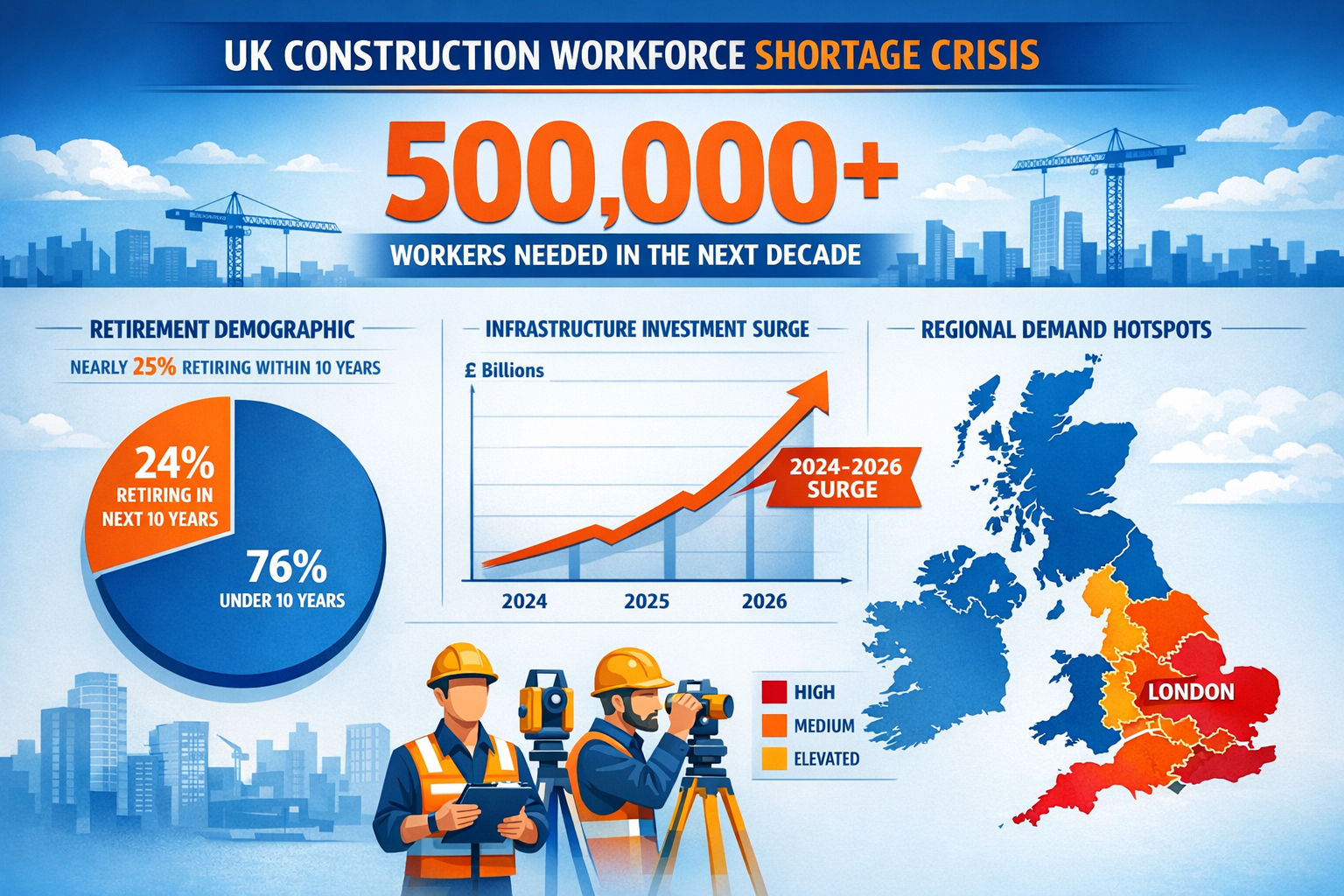
The construction sector alone requires approximately 500,000 new workers to meet current demand [2], creating intense competition for specialized professionals including building surveyors, valuation experts, and quantity surveyors. Firms that develop robust talent pipelines today will secure competitive advantages tomorrow.
Key Takeaways
- Workforce shortage crisis: The construction and surveying sectors need 500,000+ new professionals in 2026, with nearly 25% of current surveyors retiring within the next decade
- RICS pathway optimization: Structured APC training programs and enhanced CPD initiatives are critical for scaling qualified surveyor teams quickly
- Modern recruitment tactics: Skill-based hiring, AI-powered matching, and 48-hour response times have become essential for attracting top talent
- Wage premium reality: Specialized surveying roles command 25-30% salary premiums, with firms offering 10-15% above posted ranges for immediate starts
- Gen Z expectations: Younger professionals demand transparent career progression, digital training modules, and rapid feedback throughout the hiring process
Understanding the 2026 Surveyor Shortage: Scale and Drivers
The Numbers Behind the Crisis
The talent shortage affecting chartered surveyors in 2026 represents more than a temporary hiring challenge—it signals a fundamental capacity constraint threatening industry growth. Construction industry leaders consistently identify workforce skills, hiring, and retention as their primary concern when surveyed about 2026 challenges [2].
Key shortage drivers include:
- 📉 Demographic cliff: Nearly 25% of current chartered surveyors will reach retirement age within the next decade
- 📈 Infrastructure investment boom: Government reform initiatives and private sector development are creating unprecedented demand
- 🎓 Qualification pipeline gaps: The time required to achieve chartered status (typically 3-5 years post-degree) creates natural bottlenecks
- 🌍 Geographic imbalances: Chartered surveyors in Central London face different market pressures than those in Surrey or Oxfordshire
Reform-Driven Demand Uplift
The UK property sector is experiencing simultaneous demand pressures from multiple reform initiatives. Building safety legislation following the Grenfell tragedy has increased demand for qualified building surveyors who can assess fire safety compliance. Leasehold reform proposals are driving demand for valuation specialists who understand complex enfranchisement calculations.
Meanwhile, planning system reforms aimed at accelerating housing delivery are creating opportunities—and capacity challenges—for development surveyors and land specialists.
"The chartered surveying profession must adapt rapidly to meet unprecedented demand while maintaining the rigorous professional standards that define our industry." – RICS Future of Surveying Report [4]
Chartered Surveyor Talent Pipeline Strategies: RICS Graduate Pathways and APC Enhancement
Optimizing the Assessment of Professional Competence (APC) Journey
The RICS Assessment of Professional Competence remains the gold standard pathway to chartered status, but firms can no longer afford to treat APC training as a passive background process. Strategic APC program design has become a competitive differentiator for firms seeking to build talent pipelines.
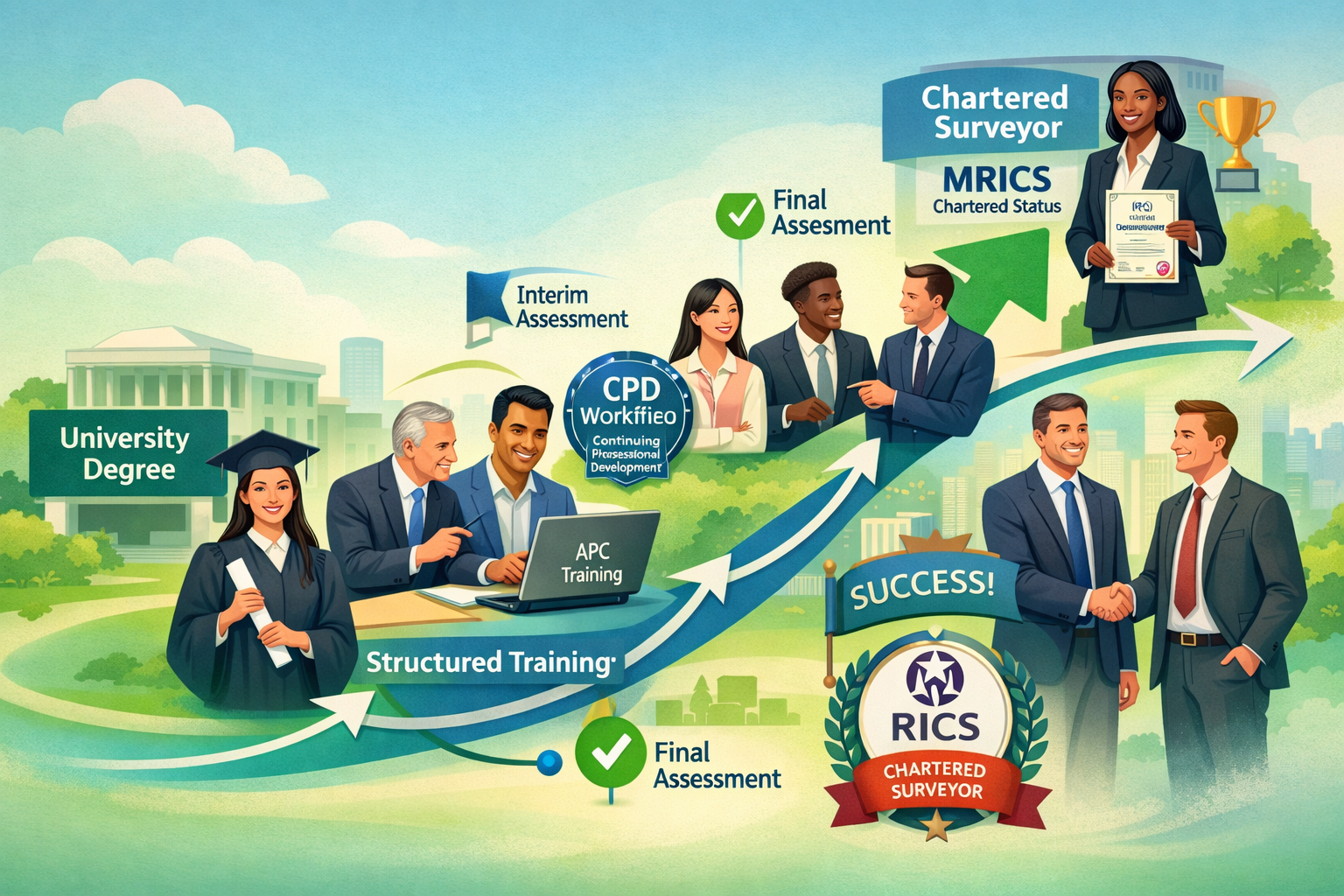
Effective APC acceleration strategies include:
- Structured mentorship programs: Pairing graduates with experienced chartered surveyors who have protected time for mentoring activities
- Competency tracking systems: Digital platforms that map progress against mandatory and optional competencies in real-time
- Mock assessment preparation: Regular practice sessions simulating the final assessment environment
- Cross-discipline exposure: Rotating graduates through different service lines to build broader competency bases
- External training investment: Funding specialized courses in building pathology, valuation methodology, or party wall procedures
Firms like Prince Chartered Surveyors have developed comprehensive training frameworks that reduce average time-to-charter while improving first-time assessment pass rates.
University Partnership Development
Forward-thinking surveying firms are establishing deeper relationships with university real estate and surveying programs to create earlier talent identification and engagement opportunities.
Successful partnership models include:
- Sponsored project work: Real-world case studies that give students exposure to firm methodologies
- Guest lecture series: Senior surveyors sharing practical insights that complement academic theory
- Summer internship programs: Structured 8-12 week placements that serve as extended interviews
- Scholarship funding: Financial support that builds loyalty and brand recognition among high-potential students
- Graduate recruitment events: On-campus presence that positions firms as employers of choice
These partnerships create talent pipelines that begin before graduation, reducing recruitment costs and improving cultural fit.
Apprenticeship Route Expansion
The degree apprenticeship route to chartered surveyor status offers an alternative pathway that addresses both talent shortage and diversity challenges. Apprentices earn while learning, making the profession accessible to candidates who might not pursue traditional university routes.
Apprenticeship program benefits:
- ✅ Reduced student debt burden: Apprentices graduate debt-free with professional qualifications
- ✅ Practical skill development: Learning integrated with real project work from day one
- ✅ Loyalty and retention: Apprentices often demonstrate higher retention rates than graduate hires
- ✅ Diversity enhancement: Opening pathways for candidates from varied socioeconomic backgrounds
Firms should work with approved training providers to design apprenticeship programs that align with business needs while meeting RICS standards.
Continuing Professional Development (CPD) as Retention and Upskilling Tool
Strategic CPD Program Design
While CPD is mandatory for maintaining chartered status, strategic firms view it as a retention tool and capacity-building investment rather than compliance obligation. In 2026's competitive talent market, robust professional development offerings influence career decisions.
High-impact CPD initiatives include:
- 🎯 Specialized technical training: Advanced courses in building pathology, statutory considerations, or complex valuation scenarios
- 🎯 Technology adoption programs: Training in building information modeling (BIM), drone surveying, or AI-assisted valuation tools
- 🎯 Leadership development: Management skills training for surveyors transitioning to team leadership roles
- 🎯 Business development skills: Commercial awareness and client relationship training
- 🎯 Cross-discipline knowledge: Understanding adjacent specialisms to provide holistic client service
Contractors investing in latest technology gain competitive advantages in attracting tech-savvy younger generations [2], and the same principle applies to surveying firms.
Digital Learning Platforms
Gen Z professionals expect digital training modules and on-demand learning resources [1]. Firms should invest in learning management systems that provide:
- Microlearning modules: 10-15 minute focused lessons on specific technical topics
- Video content libraries: Recorded sessions from expert practitioners
- Interactive assessments: Knowledge checks that reinforce learning
- Mobile accessibility: Learning opportunities during commutes or between site visits
- Progress tracking: Transparent visibility into development achievements
These platforms support both formal CPD requirements and informal continuous learning.
Hiring Tactics for Building and Valuation Specialists in 2026
Skill-Based Hiring Over Credential Screening
Traditional recruitment focusing on degree classifications and years of experience is giving way to competency-based assessment. Recruiters increasingly focus on what candidates can do rather than credentials alone [3].

For building survey specialists, assess:
- Ability to identify structural defects and building pathology issues
- Understanding of construction and condition survey methodologies
- Knowledge of building regulation compliance requirements
- Report writing clarity and client communication skills
- Practical experience with Level 3 full building surveys
For valuation specialists, evaluate:
- Technical valuation methodology across different property types
- Understanding of market analysis and comparable evidence interpretation
- Experience with specialized valuations (matrimonial, leasehold extension, insurance reinstatement)
- Red Book compliance knowledge
- Client advisory and negotiation capabilities
Practical assessments—such as reviewing sample survey reports or discussing valuation approaches for specific properties—provide better hiring signals than interview questions alone.
Competitive Compensation Strategies
Specialized surveying roles command significant wage premiums in 2026's market. Firms offering 10-15% above posted salary ranges for skilled professionals who can begin immediately [1] are winning talent competitions.
Compensation strategy elements:
| Component | Market Practice | Strategic Approach |
|---|---|---|
| Base salary | Market median | 75th-90th percentile for critical roles |
| Sign-on bonuses | Rare | £5,000-£15,000 for experienced surveyors |
| Performance bonuses | 10-15% of base | 15-25% with clear metrics |
| APC support | Basic study leave | Full exam fees + paid study time + mentoring |
| CPD investment | Minimum compliance | £2,000-£5,000 annual training budget |
| Flexible working | 2 days remote | Outcome-focused flexibility |
Transparency about compensation ranges during initial recruitment conversations has become essential, as over 42% of candidates expect responses within 48 hours [3], and salary ambiguity causes qualified candidates to withdraw from processes.
Geographic Strategy and Remote Work Balance
While some surveying work requires physical presence—site inspections and property assessments cannot be conducted remotely—firms can expand talent pools through strategic location flexibility.
Geographic talent strategies:
- Regional office networks: Establishing presence in North West London, Harrow, Hammersmith, and other areas reduces commute burdens
- Hybrid work models: Report writing, research, and client consultations can occur remotely
- Satellite surveyors: Hiring qualified professionals in lower-cost regions who can service local markets
- Flexible assignment models: Allowing surveyors to work from home bases while traveling to inspection sites
Mid-sized metros are experiencing massive infrastructure investment with 30-40% less recruitment competition than major hubs [1], suggesting opportunities for firms willing to establish regional presences.
Rapid Response Recruitment Processes
Speed has become a competitive differentiator in 2026 recruitment. With 42% of candidates expecting responses within 48 hours [3], firms with lengthy approval processes lose top talent to more agile competitors.
Accelerated hiring process elements:
- Initial screening call: Within 24 hours of application for qualified candidates
- Technical assessment: Scheduled within 3-5 days of screening
- Final interview: Conducted within one week of technical assessment
- Offer decision: Made within 48 hours of final interview
- Total timeline: Target 14-21 days from application to offer
This requires pre-approved hiring authority, standardized assessment frameworks, and commitment from senior surveyors to prioritize recruitment activities.
AI-Powered Candidate Matching
Technology adoption extends beyond project delivery into recruitment operations. AI matching tools help identify candidates beyond simple keyword matching [3], uncovering qualified professionals whose experience may not perfectly match traditional search criteria.
AI recruitment applications:
- Resume screening: Identifying transferable skills from adjacent industries
- Predictive analytics: Assessing likelihood of candidate success and retention
- Interview scheduling: Automating coordination to reduce time-to-interview
- Candidate engagement: Chatbots providing immediate responses to applicant questions
- Diversity enhancement: Reducing unconscious bias in initial screening stages
Firms should evaluate recruitment technology platforms that integrate with existing applicant tracking systems while maintaining human judgment in final hiring decisions.
Building Inclusive Talent Pipelines: Diversity and Social Mobility
Addressing Profession Demographics
The chartered surveying profession has historically struggled with diversity across gender, ethnicity, and socioeconomic background. Building sustainable talent pipelines requires intentional strategies to broaden the profession's demographic base.
Diversity enhancement initiatives:
- School engagement programs: Introducing surveying careers to students from state schools and underrepresented communities
- Contextual recruitment: Considering educational and social context when assessing candidate potential
- Returner programs: Supporting professionals re-entering the workforce after career breaks
- Inclusive job descriptions: Removing unnecessary requirements that discourage diverse applicants
- Mentorship networks: Connecting diverse junior professionals with senior role models
RICS has emphasized that the future of surveying depends on attracting talent from all backgrounds [4], making diversity both an ethical imperative and business necessity.
Social Mobility Pathways
The apprenticeship route discussed earlier represents one social mobility pathway, but firms can implement additional strategies:
- Paid work experience: Compensating students for summer placements rather than offering unpaid internships
- Equipment provision: Supplying necessary technology and tools to remove financial barriers
- Travel cost support: Reimbursing commuting expenses for junior staff and trainees
- Accommodation assistance: Helping relocating graduates with housing deposits or temporary accommodation
- Financial literacy programs: Supporting young professionals in managing student debt and building financial stability
These investments expand talent pools while contributing to broader social good.
Technology Integration: Attracting Tech-Savvy Talent
Modern Surveying Technology Stack
Younger professionals expect employers to invest in modern technology that enhances productivity and career development. Firms demonstrating technological sophistication attract talent more effectively than those perceived as traditional or outdated.
Essential technology investments include:
- Digital survey tools: Laser measuring devices, thermal imaging cameras, moisture meters with digital data capture
- BIM integration: Building Information Modeling capabilities for new construction projects
- Drone surveying: Aerial inspection capabilities for roofs and large commercial properties
- Cloud collaboration platforms: Real-time document sharing and project management systems
- Mobile reporting apps: Field data capture that eliminates double-handling
- Data analytics tools: Market analysis and valuation modeling software
Showcasing these technologies during recruitment processes signals commitment to innovation and professional development.
Digital Transformation as Recruitment Message
Firms should communicate technology adoption not just as operational efficiency but as career development opportunity. Marketing messages emphasizing "learn cutting-edge surveying technology" resonate with candidates seeking future-proof skills.
Recruitment messaging examples:
- "Join a firm investing £X annually in surveying technology and training"
- "Gain experience with drone surveying, thermal imaging, and BIM integration"
- "Work with digital tools that enhance your professional capabilities"
- "Develop technology skills that position you as an industry leader"
This positioning differentiates firms from competitors still emphasizing traditional methodologies alone.
Retention Strategies: Keeping Talent Once Recruited
Career Progression Transparency
Gen Z professionals expect clear advancement timelines and regular feedback [1]. Firms must articulate transparent career pathways from graduate to associate to partner levels.
Effective career framework elements:
- Competency matrices: Clear definition of skills and experience required for each level
- Promotion criteria: Transparent assessment standards and decision processes
- Timeline expectations: Realistic guidance on typical progression timeframes
- Multiple pathways: Technical specialist and management leadership routes
- Regular reviews: Quarterly or bi-annual formal development discussions
Publishing internal career frameworks demonstrates commitment to professional growth and reduces uncertainty that drives talent to competitors.
Work-Life Balance and Flexibility
The surveying profession's traditional long hours and inflexible schedules conflict with younger professionals' expectations. Firms offering genuine flexibility—not just token policies—gain retention advantages.
Flexibility strategies:
- Outcome-focused management: Measuring results rather than hours in office
- Core hours flexibility: Allowing start/finish time variation around essential meetings
- Compressed workweeks: Four-day weeks during quieter periods
- Generous leave policies: Exceeding statutory minimums for vacation and sick leave
- Family-friendly practices: Supporting parents and caregivers with flexible arrangements
These policies require cultural change beyond written policy, with senior leaders modeling flexible working themselves.
Recognition and Engagement Programs
Regular recognition reinforces value and builds emotional connection to firms. Recognition programs should acknowledge both major achievements and everyday contributions.
Recognition initiatives:
- Peer nomination awards: Allowing colleagues to recognize each other's contributions
- Project completion celebrations: Marking successful delivery of complex assignments
- Professional milestone recognition: Celebrating APC passes, CPD achievements, and promotions
- Client feedback sharing: Communicating positive client comments to teams
- Public acknowledgment: Highlighting individual and team successes in firm communications
These programs cost little but significantly impact engagement and retention.
Measuring Talent Pipeline Success: Key Metrics for 2026
Recruitment Effectiveness Indicators
Firms serious about addressing recruitment gaps must track performance metrics that reveal pipeline health and identify improvement opportunities.
Essential recruitment metrics:
| Metric | Target Benchmark | Monitoring Frequency |
|---|---|---|
| Time-to-hire | 14-21 days | Weekly |
| Offer acceptance rate | >80% | Monthly |
| Cost-per-hire | £5,000-£8,000 | Quarterly |
| Source effectiveness | Varies by channel | Monthly |
| Candidate satisfaction | >4.0/5.0 | Per candidate |
| Diversity of applicant pool | Reflects community demographics | Quarterly |
Tracking these metrics enables data-driven refinement of recruitment strategies.
Development and Retention Metrics
Beyond recruitment, firms must monitor development program effectiveness and retention outcomes.
Key development and retention indicators:
- APC first-time pass rate: Target >85%
- Average time to chartered status: Target <4 years
- Voluntary turnover rate: Target <15% annually
- Internal promotion rate: Target >60% of senior positions filled internally
- CPD hours per surveyor: Target >30 hours annually
- Employee engagement scores: Target >75% favorable
- Training ROI: Revenue per surveyor growth post-training
Regular review of these metrics signals whether talent pipeline strategies are delivering desired outcomes.
Conclusion: Building Sustainable Chartered Surveyor Talent Pipelines
Chartered Surveyor Talent Pipeline Strategies: Addressing Recruitment Gaps in 2026's Volume Surge require comprehensive approaches spanning recruitment, development, retention, and culture. The firms that will thrive amid current talent shortages are those treating talent pipeline development as strategic priority rather than HR administrative function.
The 500,000+ worker shortage affecting the broader construction sector [2] creates intense competition for specialized professionals. Firms cannot rely on traditional recruitment approaches when candidates expect 48-hour responses [3], transparent compensation, and modern technology environments.
Success requires:
✅ Optimized RICS pathways: Structured APC programs and apprenticeship routes that accelerate qualification timelines
✅ Strategic CPD investment: Professional development offerings that enhance capabilities while driving retention
✅ Modern recruitment tactics: Skill-based hiring, competitive compensation, rapid processes, and AI-enabled matching
✅ Inclusive approaches: Diversity initiatives and social mobility pathways that broaden talent pools
✅ Technology integration: Modern surveying tools and digital platforms that attract tech-savvy professionals
✅ Retention focus: Career transparency, work-life flexibility, and recognition programs that keep talent engaged
Actionable Next Steps
Firms should immediately:
- Audit current talent pipeline: Assess recruitment effectiveness, development program quality, and retention rates against industry benchmarks
- Establish APC acceleration program: Design structured mentorship and competency tracking systems
- Review compensation positioning: Ensure salary ranges and benefits packages compete effectively for critical roles
- Implement rapid response recruitment: Streamline approval processes to achieve 48-hour initial response times
- Invest in technology showcase: Acquire and promote modern surveying tools that attract innovative professionals
- Develop university partnerships: Build relationships with surveying programs to create early talent identification
- Create transparent career frameworks: Document and communicate clear progression pathways
- Track pipeline metrics: Establish measurement systems for recruitment, development, and retention effectiveness
The talent challenges facing chartered surveying in 2026 are significant but not insurmountable. Firms implementing comprehensive talent pipeline strategies today will build competitive advantages that compound over years, positioning them to capture growth opportunities while competitors struggle with capacity constraints.
The future belongs to firms that recognize talent development as their most important strategic investment. Whether serving clients in East London, Chelsea, South West London, or Hemel Hempstead, the principles remain constant: attract strategically, develop intentionally, and retain through genuine investment in professional growth and career satisfaction.
References
[1] 2026 Outlook Construction Engineering Hiring Trends Recruiters Should Watch – https://k2staffinginc.com/2026-outlook-construction-engineering-hiring-trends-recruiters-should-watch/
[2] Future Construction Technology Trends Contractor Survey – https://www.trimble.com/blog/trimble/en-US/article/future-construction-technology-trends-contractor-survey
[3] Recruitment Trends – https://recruiterflow.com/blog/recruitment-trends/
[4] Future Of Surveying – https://www.rics.org/news-insights/future-of-surveying