

Picture this: a potential buyer pulls up to view a property, takes one look at the damaged roof tiles and overgrown garden, and immediately reduces their mental offer by thousands of pounds—before they've even stepped through the front door. In 2026, this scenario plays out across the UK property market with startling frequency, as 66% of buyers reduce their offers due to damaged roofs or poor exteriors. For surveyors and property professionals, understanding the tangible impact of kerb appeal on valuations has never been more critical.
The Kerb Appeal Impacts on UK Property Valuations in 2026: Surveyor Checklists for Maximising Buyer Offers represents a fundamental shift in how properties are assessed and valued. With over half of buyers (58%) rejecting properties at least partly based on exterior condition alone, the financial implications of first impressions have become quantifiable, measurable, and impossible to ignore. This comprehensive guide provides surveyors with evidence-based checklists and practical strategies to assess, advise, and maximise property valuations through strategic kerb appeal improvements.

Key Takeaways
- Damaged roofs and gutters cause 66% of buyers to reduce offers, making structural exterior elements the single most critical factor in kerb appeal valuations[1]
- 58% of buyers reject properties based on exterior condition, with 27% making this decision instantly before viewing the interior[1]
- Strategic investment of £1,000-£5,000 delivers optimal ROI on kerb appeal improvements without overcapitalising[1]
- Neighbouring property condition affects 36% of buyer decisions, introducing external valuation factors beyond seller control[1]
- The 2026 UK market shows recovery signs with agreed sales reaching -9% (the least negative since June 2025), creating opportunities for well-presented properties[2]
Understanding Kerb Appeal Impacts on UK Property Valuations in 2026
The Financial Reality of First Impressions
The 2026 UK property market operates in an environment where buyer scrutiny has intensified dramatically. Recent data reveals that 27% of potential buyers make rejection decisions instantly upon seeing a property's exterior, never progressing to an interior viewing[1]. This immediate judgment translates directly into reduced offers, extended marketing periods, and ultimately lower achieved valuations.
For chartered surveyors conducting independent property valuations, these statistics underscore the importance of incorporating comprehensive exterior assessments into valuation methodologies. The traditional focus on internal condition, structural integrity, and comparable sales must now be balanced with quantifiable kerb appeal factors that demonstrably influence buyer behaviour and final sale prices.
The Hierarchy of Exterior Deterrents 🏚️
Understanding which exterior factors most significantly impact valuations allows surveyors to prioritise recommendations effectively:
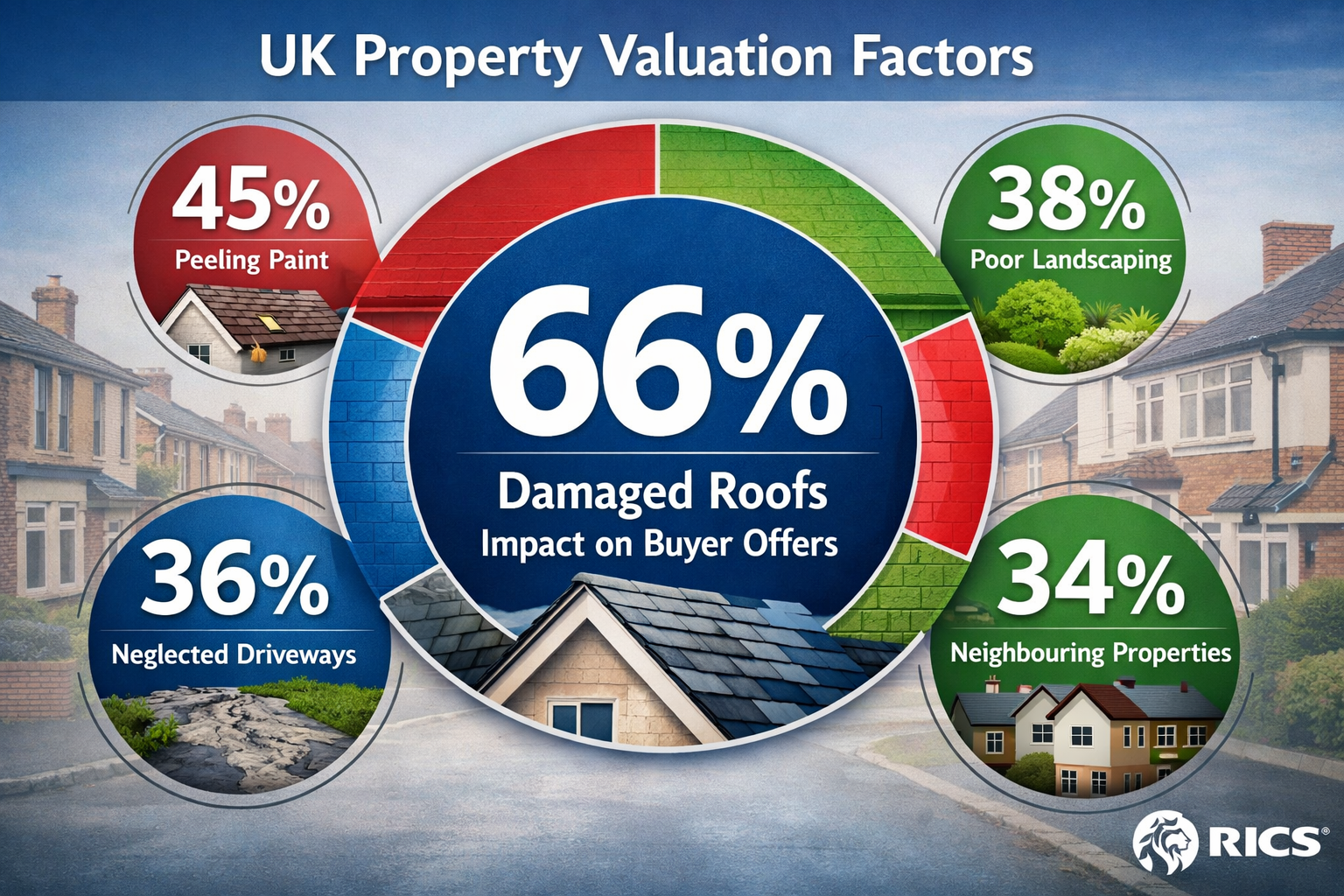
| Exterior Factor | Percentage of Buyers Reducing Offers | Estimated Impact on Valuation |
|---|---|---|
| Damaged roofs or gutters | 66% | 5-15% reduction |
| Peeling paint | 45% | 3-8% reduction |
| Poor landscaping | 38% | 2-6% reduction |
| Neglected driveways | 36% | 2-5% reduction |
| Scruffy neighbouring properties | 34% | 1-4% reduction |
Source: UK Home Kerb Appeal Trends Report 2026[1]
These percentages represent not merely aesthetic preferences but concrete financial impacts. When conducting Level 2 or Level 3 property surveys, surveyors must now explicitly address these exterior factors in their reports, providing clients with actionable intelligence on how improvements could affect achievable sale prices.
Market Context: 2026 Recovery and Opportunity
The broader UK residential market context in 2026 provides important backdrop for understanding kerb appeal's heightened significance. Agreed sales reached a net balance of -9% in January 2026, the least negative reading since June 2025, indicating renewed buyer activity[2]. Simultaneously, new buyer enquiries improved to -15% from -21% in December and -29% in November[2].
This tentative recovery creates a competitive environment where well-presented properties capture disproportionate buyer attention. With 35% of respondents optimistic about sales activity over the next 12 months and 43% expecting higher prices[2], properties with strong kerb appeal are positioned to outperform market averages significantly.
Regional variations add further complexity. Scotland and Northern Ireland show strongest price growth, while London, the South East, South West, and East Anglia continue to lag[2]. In these competitive southern markets where affordability concerns are highest, kerb appeal may carry particular weight as buyers scrutinise every aspect of value for money.
Surveyor Checklists for Assessing Kerb Appeal Impacts on UK Property Valuations in 2026
Comprehensive Exterior Assessment Framework
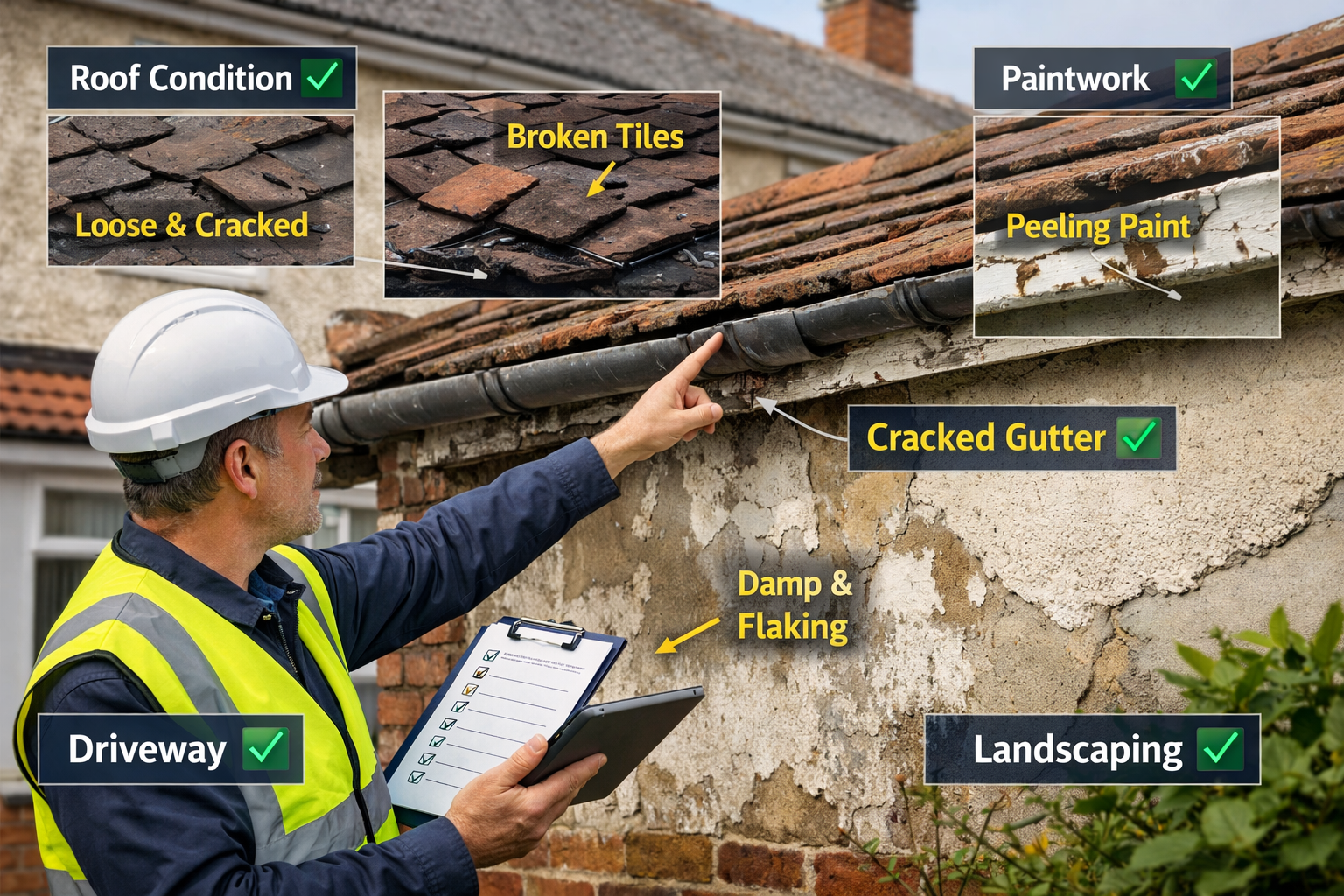
Professional surveyors require systematic approaches to evaluate kerb appeal factors that influence valuations. The following framework provides structured assessment criteria aligned with buyer priorities identified in 2026 market research.
Roof and Guttering Assessment (Primary Impact Factor) 🏠
Given that 66% of buyers reduce offers due to damaged roofs or gutters[1], this represents the highest-priority assessment area:
Critical Evaluation Points:
- Roof tile condition: Missing, slipped, or damaged tiles visible from street level
- Ridge and hip tiles: Cracked or displaced capping
- Guttering integrity: Sagging, leaking, or detached sections
- Downpipe condition: Rust, damage, or inadequate drainage
- Fascia and soffit boards: Rot, damage, or poor paintwork
- Moss and vegetation growth: Excessive accumulation indicating maintenance neglect
Valuation Impact Guidance:
- Minor issues (isolated damaged tiles): 2-5% offer reduction
- Moderate issues (multiple defects, visible sagging): 5-10% offer reduction
- Severe issues (structural concerns, extensive damage): 10-15%+ offer reduction
Surveyor Recommendations:
When conducting a Level 3 Full Building Survey, explicitly quantify roof condition impact on marketability and provide cost estimates for remediation works. Cross-reference with maintenance requirements to help clients understand long-term implications.
Paintwork and External Finishes Assessment
With 45% of buyers deterred by peeling paint[1], external decorative condition significantly influences perceived property care:
Assessment Checklist:
- ✅ Front door condition and finish quality
- ✅ Window frame paintwork (wood, UPVC condition)
- ✅ External wall render or brickwork pointing
- ✅ Garage door appearance and functionality
- ✅ Decorative woodwork (bargeboards, cladding)
- ✅ Colour scheme appropriateness and consistency
Professional Insight:
Properties with fresh, well-maintained paintwork typically achieve 3-8% higher offers than comparable properties with visible exterior deterioration. The investment-to-return ratio on external painting ranks among the highest of all pre-sale improvements.
Landscaping and Garden Presentation
58% of sellers prioritise garden improvements before sale[1], recognising their substantial impact on buyer perception:
Garden Assessment Framework:
- Lawn condition: Overgrown, patchy, or well-maintained
- Boundary treatments: Fencing, hedging, or wall condition
- Planting maturity and maintenance: Professional landscaping vs. neglect
- Hard landscaping: Patios, paths, garden structures
- Garden size appropriateness: Adequate for property type
- Privacy and aspect: Overlooking issues, orientation
Valuation Considerations:
Well-maintained gardens contribute 2-6% to property valuations, with particularly strong impact in family homes and suburban properties. Conversely, severely neglected gardens can reduce offers by similar margins.
Driveway and Hard Standing Assessment
36% of buyers are deterred by neglected driveways[1], making this a critical assessment area:
Evaluation Criteria:
- Surface condition (cracks, potholes, subsidence)
- Material appropriateness (gravel, tarmac, block paving, resin)
- Drainage adequacy
- Parking capacity relative to property size
- Weed growth and maintenance level
- Boundary definition and edging
Investment Guidance:
Driveway improvements typically cost £1,000-£5,000 depending on size and material, with potential to increase property value by 2-5% in areas where off-street parking is valued.
The Neighbourhood Factor: Assessing External Influences
A unique challenge for surveyors in 2026 is the significant impact of neighbouring property condition, with 36% of buyers deterred by poorly maintained adjacent properties[1]. This introduces valuation factors beyond seller control.
Neighbourhood Assessment Protocol:
- Photograph and document immediate neighbouring properties
- Note visible maintenance issues affecting street scene
- Assess overall street presentation and community standards
- Consider impact on marketability and buyer pool
- Provide realistic valuation adjustments for location context
Professional Advice:
When preparing properties for market, surveyors should counsel clients on realistic expectations when neighbourhood factors negatively impact kerb appeal, potentially recommending pricing adjustments or enhanced marketing strategies to compensate.
Maximising Buyer Offers Through Strategic Kerb Appeal Improvements
Evidence-Based Investment Strategies
The 2026 market data provides clear guidance on optimal investment levels for kerb appeal improvements. 47% of sellers kept pre-sale investment under £1,000, while 25% spent between £1,000 and £5,000[1]. Only 11% invested more than £10,000, suggesting the optimal range for maximising impact without overcapitalising is £1,000-£5,000[1].
High-Impact, Cost-Effective Improvements
Priority 1: Roof and Guttering Repairs (£500-£2,500) 🔧
Given the 66% buyer deterrence rate[1], roof repairs deliver exceptional ROI:
- Replace missing or damaged tiles: £200-£800
- Clean and repair guttering: £150-£500
- Treat moss and vegetation: £100-£300
- Repaint fascias and soffits: £400-£1,200
Expected Valuation Impact: 3-8% increase on properties with visible roof issues
Priority 2: External Paintwork Refresh (£800-£3,000)
Addressing the 45% buyer concern[1]:
- Front door replacement or repainting: £150-£800
- Window frame painting: £400-£1,500
- Render refresh or brickwork repointing: £500-£2,000
Expected Valuation Impact: 2-5% increase, particularly in period properties
Priority 3: Garden and Landscaping Enhancement (£300-£2,000)
Targeting the 58% seller priority[1]:
- Professional lawn treatment and maintenance: £100-£400
- Hedge trimming and border clearance: £150-£500
- Seasonal planting and colour additions: £100-£300
- Pressure washing patios and paths: £150-£400
Expected Valuation Impact: 2-4% increase in suburban and family homes
Surveyor Recommendations for Optimal ROI
When advising clients on property development or pre-sale improvements, surveyors should apply a systematic prioritisation framework:
The Kerb Appeal Investment Matrix:
| Improvement Type | Cost Range | Buyer Impact % | ROI Ratio | Priority Ranking |
|---|---|---|---|---|
| Roof repairs | £500-£2,500 | 66% | 3:1 to 6:1 | ⭐⭐⭐⭐⭐ |
| External painting | £800-£3,000 | 45% | 2:1 to 4:1 | ⭐⭐⭐⭐ |
| Garden maintenance | £300-£2,000 | 38% | 2:1 to 3:1 | ⭐⭐⭐⭐ |
| Driveway improvements | £1,000-£5,000 | 36% | 1.5:1 to 3:1 | ⭐⭐⭐ |
| Front door upgrade | £150-£1,500 | 25% | 2:1 to 4:1 | ⭐⭐⭐ |
Property-Type Specific Strategies
Different property types require tailored kerb appeal approaches:
Period Properties (Victorian, Edwardian, Georgian):
- Emphasis on authentic materials and sympathetic restoration
- Original features preservation (sash windows, period doors)
- Appropriate colour schemes for era
- Professional building pathology assessment for heritage considerations
Modern Developments (Post-1980):
- Contemporary landscaping and clean lines
- UPVC maintenance and replacement where necessary
- Modern colour palettes and minimalist presentation
- Focus on low-maintenance solutions
Flats and Apartments:
- Communal area presentation (often requiring block management coordination)
- Individual entrance presentation
- Window boxes and balcony presentation
- Building exterior condition (often beyond individual control)
Addressing Valuation Discrepancies
When kerb appeal issues result in lower valuations than expected, surveyors should reference guidance on what to do if your home valuation is less than an offer. This includes:
- Obtaining multiple professional valuations
- Documenting improvement costs and potential value additions
- Negotiating based on comparable properties with similar kerb appeal
- Considering strategic improvements before relisting
The Psychology of Property Numbers and Signage
An often-overlooked aspect of kerb appeal is property identification. Research shows 46% of buyers say a property's address could influence their decision[1], with 21% actively avoiding "unlucky" house numbers.
Surveyor Considerations:
- Property number visibility and presentation
- House name appropriateness and appeal
- Signage quality and positioning
- Street number superstitions (particularly number 13)
While seemingly superficial, these factors can influence buyer psychology and should be addressed in comprehensive pre-sale advice, particularly in regions where superstition is strongest (Belfast shows highest sensitivity to property numbers[1]).
Regional Variations in Kerb Appeal Impacts on UK Property Valuations in 2026
Geographic Differences in Buyer Priorities
The UK property market demonstrates significant regional variation in kerb appeal priorities and impacts:
London and South East:
- Highest sensitivity to neighbouring property condition (space constraints)
- Premium on off-street parking and driveways
- Contemporary presentation often preferred
- Highest absolute value impacts (percentage increases on higher base values)
Scotland and Northern Ireland:
- Strongest price growth regions in 2026[2]
- Traditional presentation highly valued
- Weather-related maintenance (roof condition) particularly scrutinised
- Community standards and neighbourhood pride emphasised (especially Sheffield[1])
Midlands and Northern England:
- Value-for-money scrutiny intensified
- Practical improvements (roof, guttering) prioritised over aesthetic
- Garden size and outdoor space highly valued
- Lower absolute investment required for significant impact
South West and East Anglia:
- Lagging price performance[2] increases buyer negotiating power
- Coastal properties require specific maintenance attention
- Rural properties emphasise land and boundaries
- Period property authenticity premium
Local Market Dynamics
Surveyors operating across multiple regions must calibrate advice to local market conditions. Properties in competitive southern markets may require higher investment to stand out, while properties in recovering northern markets may achieve strong results with modest, well-targeted improvements.
When conducting valuations, regional comparables should specifically account for kerb appeal factors, recognising that identical properties with different exterior presentations can achieve 5-15% valuation differences.
Future-Proofing Properties: Long-Term Kerb Appeal Considerations
Sustainability and Environmental Factors ♻️
The 2026 market increasingly values environmental credentials, influencing kerb appeal beyond traditional aesthetics:
Emerging Factors:
- Solar panel installation (visual impact vs. energy efficiency)
- Electric vehicle charging point visibility
- Sustainable landscaping (native plants, water conservation)
- Energy Performance Certificate (EPC) display and ratings
- Green roof or wall installations
Surveyors should reference EPC and MEES considerations when assessing how environmental features impact kerb appeal and valuations.
Maintenance Planning and Lifecycle Costs
Professional surveyors should advise clients on long-term maintenance strategies that preserve kerb appeal value:
5-Year Maintenance Cycle:
- Annual: Garden maintenance, gutter cleaning, minor repairs
- 2-3 years: External paintwork touch-ups, driveway cleaning
- 5 years: Comprehensive external decoration, roof inspection
- 10 years: Major refurbishment consideration
Reference budgeting for repairs and restoration to help property owners plan financially for ongoing kerb appeal maintenance.
Technology Integration in Kerb Appeal Assessment
Modern surveying increasingly incorporates technology for comprehensive kerb appeal evaluation:
- Drone photography: Roof condition assessment without scaffolding
- 3D modelling: Visualising improvement impacts before investment
- Thermal imaging: Identifying hidden issues affecting external appearance
- Digital comparison tools: Before/after valuation modelling
Professional property photography and videography services can demonstrate improvement potential, helping clients visualise ROI before committing to investments.
Conclusion: Implementing Kerb Appeal Strategies for Maximum Valuation Impact
The evidence is unequivocal: Kerb Appeal Impacts on UK Property Valuations in 2026: Surveyor Checklists for Maximising Buyer Offers represents not merely aesthetic consideration but fundamental financial strategy. With 66% of buyers reducing offers due to damaged roofs or poor exteriors[1], and 58% rejecting properties based on exterior condition alone[1], the financial implications of first impressions have become impossible to ignore.
For chartered surveyors and property professionals, this reality demands systematic integration of kerb appeal assessment into valuation methodologies. The checklists and frameworks provided in this guide enable evidence-based evaluation of exterior factors that demonstrably influence buyer behaviour and achieved sale prices.
Key Implementation Steps for Surveyors:
- Incorporate comprehensive exterior assessment into all property surveys and valuations
- Quantify kerb appeal impacts using the evidence-based percentages and valuation adjustments outlined
- Prioritise recommendations using the investment matrix to guide client spending decisions
- Account for regional variations in buyer priorities and market dynamics
- Document neighbourhood factors that influence valuations beyond seller control
- Provide realistic ROI projections for proposed improvements, typically in the £1,000-£5,000 optimal range[1]
Actionable Next Steps for Property Owners:
✅ Commission a professional survey that explicitly addresses kerb appeal factors and valuation impacts
✅ Prioritise roof and guttering repairs as the highest-impact improvement (66% buyer concern[1])
✅ Invest strategically within the £1,000-£5,000 optimal range for maximum ROI without overcapitalisation
✅ Address the "big five" deterrents: damaged roofs (66%), peeling paint (45%), poor landscaping (38%), neglected driveways (36%), and consider neighbouring property impacts (34%)[1]
✅ Time improvements strategically to capitalise on the 2026 market recovery, with buyer enquiries improving to -15%[2]
The tentative recovery signs in the UK property market—with agreed sales reaching -9% (the least negative since June 2025)[2] and 35% of respondents optimistic about future sales activity[2]—create particular opportunity for well-presented properties to capture disproportionate buyer attention and achieve premium valuations.
In a competitive market where first impressions translate directly into thousands of pounds of valuation difference, professional kerb appeal assessment and strategic improvement implementation represent not optional extras but essential components of maximising property value. Surveyors who integrate these evidence-based checklists into their practice provide clients with actionable intelligence that directly impacts their financial outcomes in the 2026 property market.
References
[1] UK Home Kerb Appeal Trends Report 2026 – https://thebespokesignhouse.com/blogs/news/uk-home-kerb-appeal-trends-report-2026
[2] UK Resi Survey Jan 2026 Report Shows Early Signs Market Recovery Despite Caution – https://www.rics.org/news-insights/uk-resi-survey-jan-2026-report-shows-early-signs-market-recovery-despite-caution