

{"cover":"Professional landscape format (1536x1024) hero image with bold text overlay: 'Kerb Appeal and Building Surveys: Integrating Exterior Trends into 2026 Level 3 Property Assessments' in extra large 72pt white sans-serif font with dark shadow and semi-transparent navy overlay box, positioned in upper third. Background shows stunning modern UK residential property exterior with native landscaping, contemporary house numbers, warm pathway lighting, and well-maintained facade. Chartered surveyor in professional attire inspecting exterior with tablet and clipboard visible in foreground. Color scheme: deep navy, white, sage green accents. Magazine cover quality, editorial style, high contrast, visually balanced composition with rule of thirds.","content":["Landscape format (1536x1024) detailed infographic showing 2026 exterior design trends impact on property values. Split-screen comparison: left side shows traditional overgrown landscaping, peeling paint, dated fixtures with red X marks; right side shows native plant gardens, clean lines, modern LED pathway lighting, contemporary brushed metal house numbers with green checkmarks. Center overlay displays '50% of buyers decide at the curb' statistic in bold typography. Include visual elements: energy efficiency icons, maintenance cost arrows pointing down, ROI percentages in circular badges. Color palette: sage green, charcoal grey, white, gold accents. Clean infographic style with data visualization elements and property assessment context.","Landscape format (1536x1024) close-up detailed scene of chartered surveyor conducting Level 3 building survey exterior inspection. Surveyor wearing hard hat and hi-vis vest examining property facade with moisture meter, thermal imaging camera, and detailed checklist on professional tablet. Visual focus on specific defects: cracked render with annotation arrows, deteriorating window frames with measurement callouts, blocked guttering with water damage indicators, compromised damp proof course with diagnostic markings. Include clipboard with 'Level 3 Survey Report' header visible. Background shows traditional UK brick property. Professional documentary photography style with technical assessment equipment prominently featured. Lighting: natural daylight, sharp focus on inspection details.","Landscape format (1536x1024) comprehensive visual guide showing integration of aesthetic improvements with structural assessment priorities. Overhead architect-style layout featuring UK property exterior blueprint with overlay annotations. Visual elements include: native landscaping plan with plant species labels, lighting fixture placement diagram with lumens specifications, house number positioning with visibility measurements, pathway materials with slip-resistance ratings, drainage system cross-section, facade maintenance schedule timeline. Include color-coded priority zones: green for aesthetic enhancements, amber for moderate maintenance concerns, red for urgent structural issues. Professional technical drawing style with clean lines, measurement callouts, material specifications, and surveyor's assessment notes. Color scheme: blueprint blue, white, safety orange, forest green accents."]}
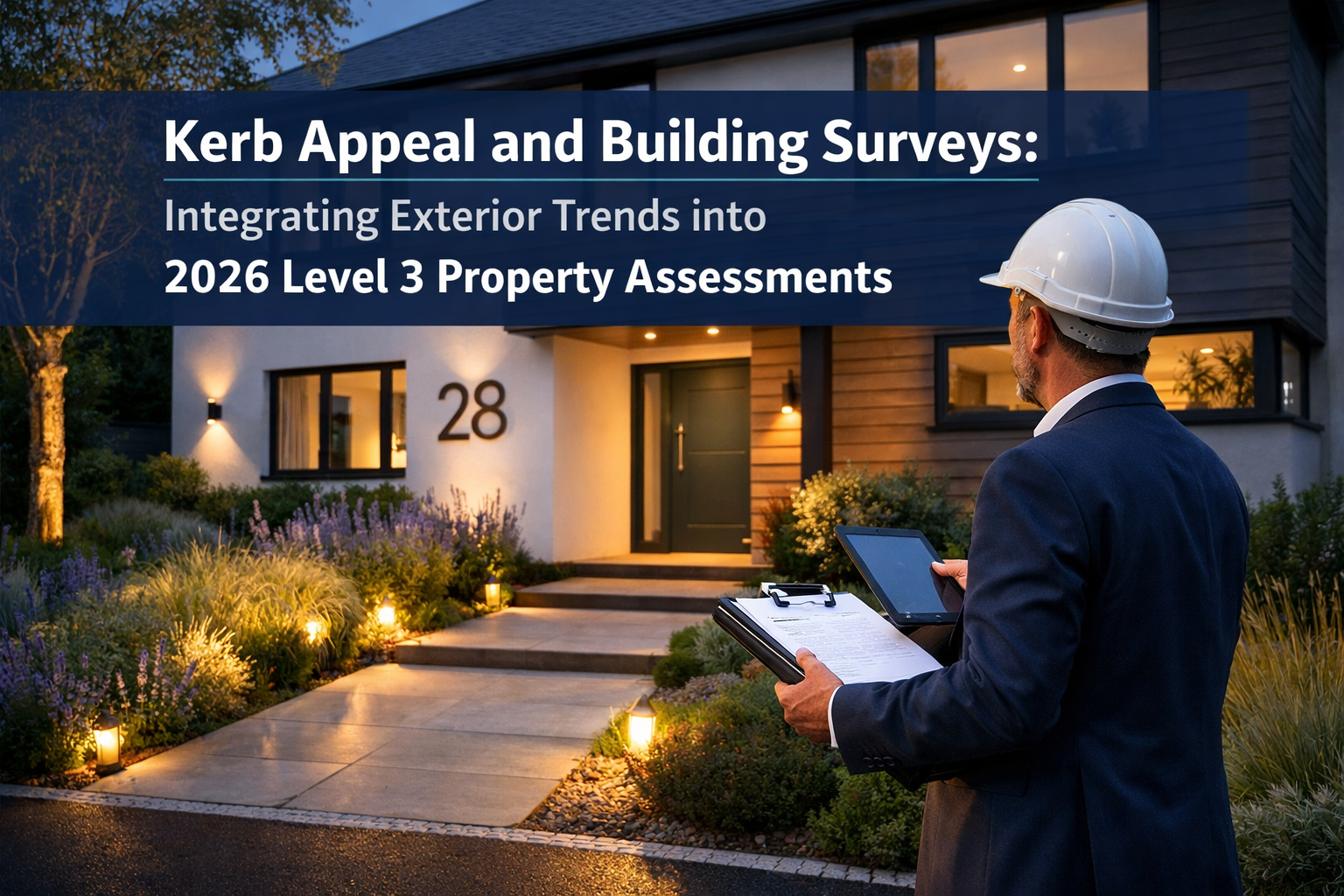
In 2026, the property market has reached a critical turning point where aesthetic presentation and structural integrity must work hand-in-hand. Nearly half of all buyers make their purchase decision the moment they arrive at a property's kerb[2], yet many fail to look beyond the surface appeal to identify the maintenance liabilities lurking beneath. This convergence of visual trends and technical assessment creates a unique opportunity for property professionals conducting Level 3 building surveys to deliver exceptional value by integrating Kerb Appeal and Building Surveys: Integrating Exterior Trends into 2026 Level 3 Property Assessments into comprehensive property evaluations.
The modern property landscape demands more than traditional defect identification. Today's surveyors must understand how contemporary exterior trends—from native landscaping to energy-efficient lighting—impact both market value and long-term maintenance costs. This integrated approach ensures buyers receive the complete picture: a property that looks stunning today but won't become a financial burden tomorrow.
Key Takeaways
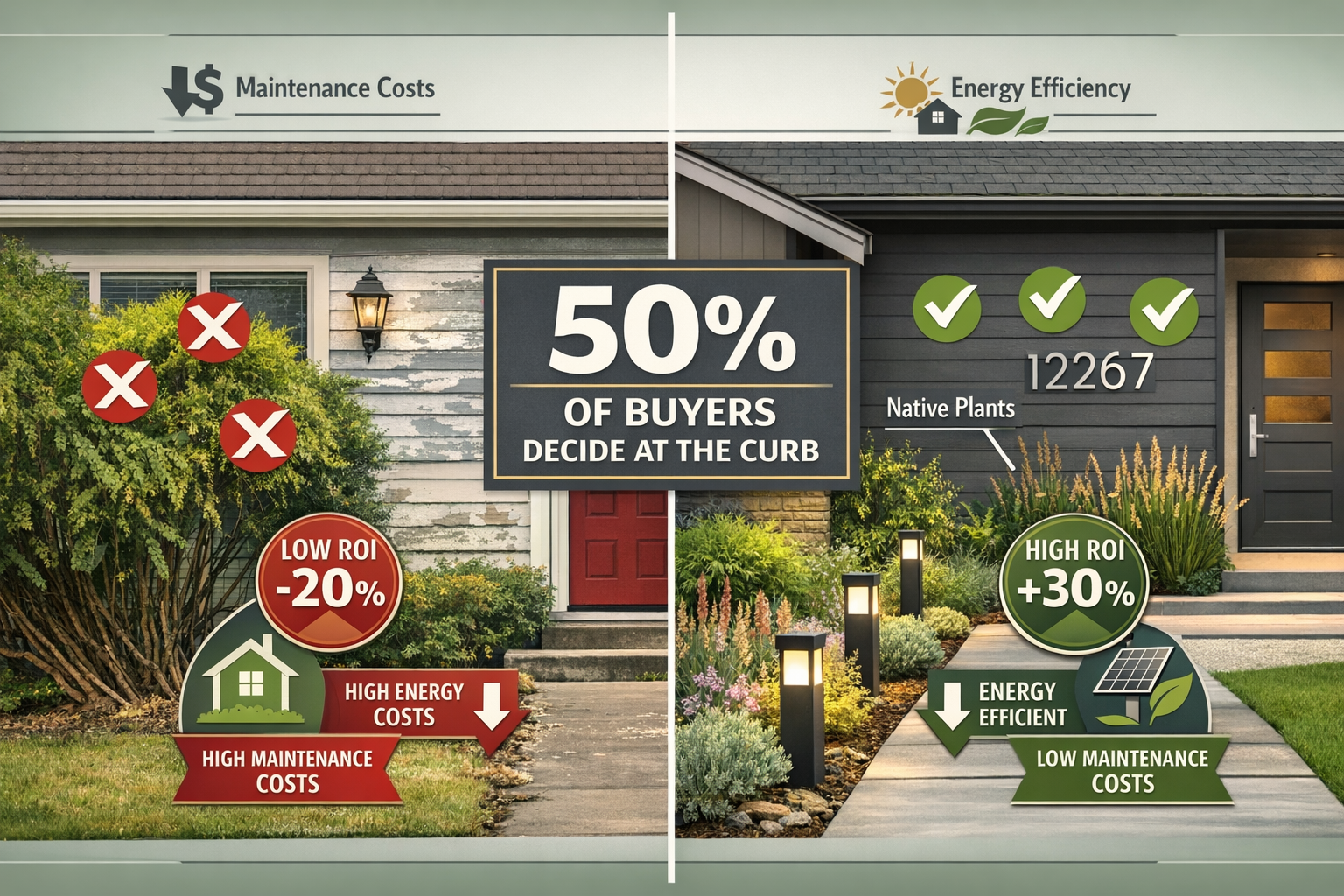
- Nearly 50% of buyers decide against purchasing based solely on exterior appearance, making kerb appeal assessment crucial for property valuations[2]
- 2026 exterior trends emphasize "quiet confidence"—balanced, well-maintained properties with native landscaping and organic finishes that signal low maintenance liability[1]
- Deferred maintenance is an automatic dealbreaker: Properties showing exterior neglect lose buyer interest immediately, regardless of interior quality[1]
- Energy-efficient exterior upgrades deliver the strongest ROI, particularly LED lighting systems, high-performance windows, and improved insulation[4]
- Level 3 building surveys must now assess both aesthetic compliance with 2026 trends AND underlying structural integrity to provide comprehensive buyer guidance
Understanding 2026 Exterior Trends and Their Impact on Property Values
The "Quiet Confidence" Movement
The property market has shifted dramatically away from ostentatious displays toward what industry experts call "quiet confidence"—homes that appear balanced, clean, and meticulously cared for[1]. This aesthetic philosophy prioritizes simplicity over complexity, creating exteriors that feel inviting rather than overwhelming.
Real estate agents consistently report that buyers in 2026 will overlook properties that fail to meet specific exterior criteria, regardless of competitive pricing or desirable locations[1]. This trend represents a fundamental change in how properties are evaluated, placing exterior presentation on equal footing with traditional factors like square footage and location.
Key elements of quiet confidence include:
- 🌿 Native landscaping that requires minimal maintenance while supporting local ecosystems
- 🏠 Organic finishes such as natural wood, stone, and weathered metals
- 💡 Subtle, strategic lighting that enhances safety without creating visual clutter
- 🔢 Contemporary house numbers in brushed metals or matte finishes
- 🚪 Inviting entryways with clean lines and balanced proportions
Native Landscaping and Sustainability
The shift toward native plant species represents both an aesthetic choice and a practical maintenance decision[3]. Properties featuring indigenous plants demonstrate lower water consumption, reduced chemical fertilizer requirements, and decreased ongoing maintenance costs—all factors that sophisticated buyers evaluate when considering long-term ownership expenses.
For surveyors conducting Level 3 full building surveys, this trend creates an opportunity to assess landscaping not merely as decoration but as a maintenance liability indicator. Overgrown exotic species, invasive plants near foundations, or poorly planned drainage around plantings can signal deferred maintenance that extends beyond the garden.
Craftsmanship and Natural Materials
Buyers in 2026 increasingly prioritize quality craftsmanship and natural materials that promise longevity[5]. Custom millwork, hand-laid tile, travertine, limestone, and artisanal finishes have gained prominence as buyers seek properties with character that will age gracefully rather than appear dated within a few years.
This preference directly impacts building survey assessments. Properties featuring quality materials typically demonstrate better long-term performance, while those with synthetic alternatives or budget finishes often reveal accelerated deterioration during detailed inspections.
Kerb Appeal and Building Surveys: Critical Assessment Points for 2026 Level 3 Property Assessments
Integrating Visual Appeal with Structural Integrity
The challenge for chartered surveyors lies in balancing aesthetic evaluation with technical assessment. A property may present beautifully at the kerb while concealing significant structural defects, or conversely, suffer from cosmetic neglect while remaining structurally sound.
When conducting what is a Level 3 building survey, professionals must now evaluate:
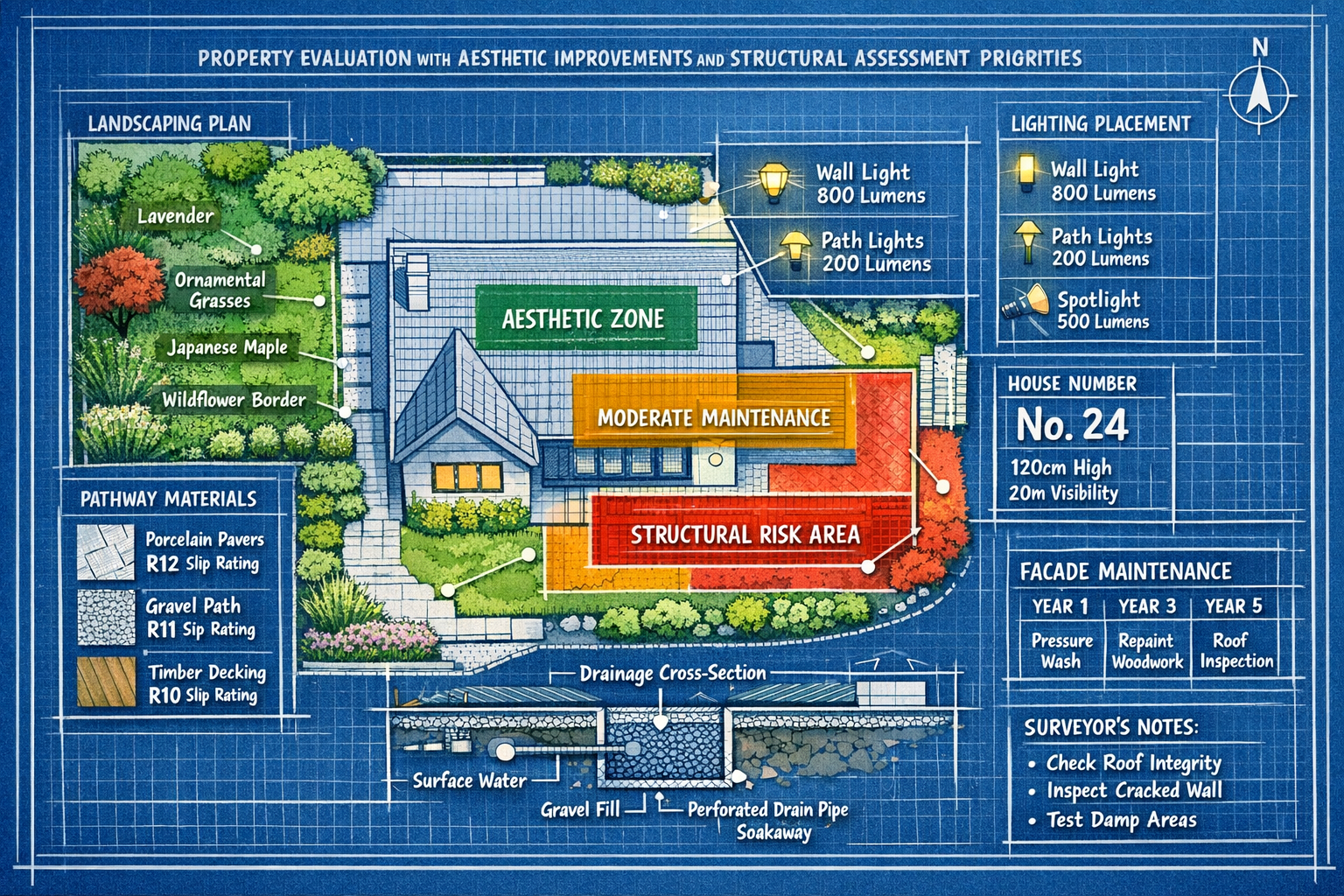
Exterior Lighting Systems:
- ✅ LED pathway lighting installation quality and electrical safety
- ✅ Energy efficiency ratings and operating costs
- ✅ Potential water ingress points at fixture installations
- ✅ Compliance with current electrical regulations
Contemporary House Numbers and Signage:
- ✅ Mounting methods and potential facade damage
- ✅ Visibility from street level (safety and emergency access)
- ✅ Material durability and weather resistance
- ✅ Fixing points and underlying substrate condition
Garden and Landscaping Features:
- ✅ Drainage patterns and water management
- ✅ Root systems proximity to foundations
- ✅ Soil levels relative to damp proof course
- ✅ Retaining wall stability and drainage
- ✅ Pathway surfaces and slip hazards
The Deferred Maintenance Dealbreaker
Research confirms that deferred maintenance visible from the exterior causes buyers to immediately move on to other properties[1]. This behavioral pattern makes exterior condition assessment critical for accurate property valuations and buyer advice.
Surveyors must identify and clearly communicate:
| Exterior Element | Deferred Maintenance Indicators | Buyer Impact |
|---|---|---|
| Paintwork | Peeling, cracking, fading | Immediate negative impression |
| Guttering | Sagging, blockages, overflow stains | Water damage concerns |
| Windows | Deteriorating seals, condensation | Energy efficiency doubts |
| Paving | Cracked surfaces, weed growth | Maintenance liability perception |
| Fencing | Rot, leaning posts, missing panels | Boundary dispute concerns |
For properties showing multiple deferred maintenance indicators, surveyors should recommend areas of further investigation to determine the full extent of underlying issues.
Energy-Efficient Upgrades and ROI
Energy-efficient exterior improvements deliver some of the strongest returns on investment in 2026[4]. Surveyors should assess and document:
High-Performance Windows:
- Double or triple glazing specifications
- Thermal efficiency ratings (U-values)
- Seal integrity and condensation issues
- Frame material condition and lifespan
Exterior Insulation:
- Wall insulation type and installation quality
- Thermal bridging points
- Breathability and moisture management
- Render or cladding condition
LED Exterior Lighting:
- Energy consumption compared to traditional systems
- Estimated annual operating costs
- Smart control integration
- Maintenance requirements
These assessments provide buyers with concrete data about ongoing operating costs, supporting informed purchase decisions. Properties demonstrating superior energy performance command premium prices while offering lower lifetime ownership costs.
Practical Integration: Kerb Appeal and Building Surveys in 2026 Level 3 Property Assessments
Structured Assessment Methodology
To effectively integrate Kerb Appeal and Building Surveys: Integrating Exterior Trends into 2026 Level 3 Property Assessments, surveyors should adopt a systematic approach:
Phase 1: Initial Kerb Assessment (5-10 minutes)
- Document first impression from street level
- Photograph exterior from multiple angles
- Note immediate maintenance concerns
- Assess compliance with 2026 aesthetic trends
Phase 2: Detailed Exterior Inspection (45-90 minutes)
- Systematic evaluation of all exterior elements
- Moisture meter readings at key points
- Drainage pattern assessment
- Lighting and electrical exterior systems review
- Environmental issues identification
Phase 3: Trend-Specific Evaluation (20-30 minutes)
- Native landscaping appropriateness
- Material quality and longevity assessment
- Energy efficiency features documentation
- Maintenance liability quantification
Phase 4: Integration and Reporting (office-based)
- Synthesize aesthetic and structural findings
- Prioritize recommendations by urgency and ROI
- Provide cost estimates for identified issues
- Highlight opportunities for value enhancement
Technology-Enhanced Assessments
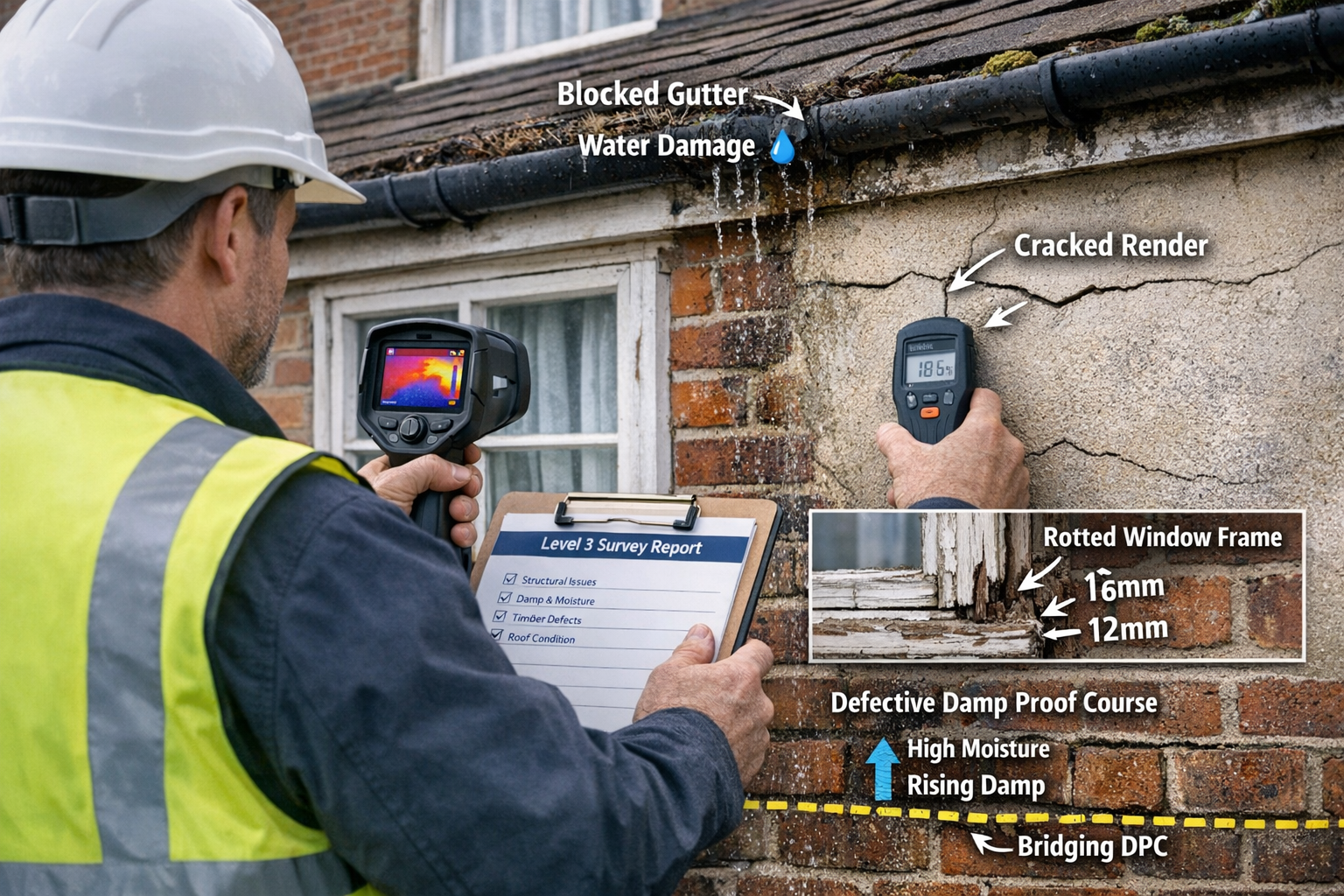
Modern surveying technology significantly improves exterior assessment accuracy. Premium drone surveys enable detailed roof and chimney inspection without scaffolding, while thermal imaging reveals insulation deficiencies and moisture ingress invisible to conventional inspection methods.
Advanced assessment tools include:
- 📸 Drone photography for inaccessible areas
- 🌡️ Thermal imaging cameras for insulation and moisture detection
- 💧 Moisture meters for concealed dampness
- 📱 Digital reporting platforms for real-time documentation
- 📊 Energy modeling software for efficiency calculations
Addressing Urgent Exterior Issues
Some exterior defects require immediate attention to prevent accelerated deterioration or safety hazards. Surveyors must clearly identify urgent or dangerous building issues in their reports.
Priority exterior concerns include:
🚨 Immediate Action Required:
- Structural movement affecting facade stability
- Compromised roof coverings allowing water ingress
- Dangerous electrical installations on exteriors
- Unstable chimneys or parapets
- Blocked or collapsed drainage systems
⚠️ Short-Term Attention Needed:
- Deteriorating window seals and frames
- Cracked or spalling render
- Damaged guttering and downpipes
- Vegetation affecting building fabric
- Failed exterior lighting systems
Compliance and Regulatory Considerations
2026 brings heightened focus on building regulation compliance, particularly regarding energy performance and safety standards. Surveyors must assess:
- EPC ratings and potential improvement pathways
- Fire safety compliance for external cladding
- Electrical safety for exterior installations
- Accessibility requirements for pathways and entrances
- Planning permission compliance for exterior alterations
Properties showing non-compliance require clear documentation and recommendations for sourcing extra advice from specialists.
Case Study: Integrating Trends with Technical Assessment
Consider a Victorian terrace property presenting with contemporary kerb appeal improvements:
Aesthetic Enhancements Observed:
- New LED pathway lighting (✅ trend-compliant)
- Contemporary brushed steel house numbers (✅ trend-compliant)
- Native lavender and ornamental grasses (✅ trend-compliant)
- Freshly painted facade in muted sage green (✅ trend-compliant)
Technical Assessment Reveals:
- LED lighting installed without proper IP65-rated fittings (⚠️ water ingress risk)
- House number fixings penetrated damp proof course (⚠️ moisture pathway)
- Landscaping raised soil level above DPC (⚠️ bridging damp proof course)
- Paint applied over failing render without repair (⚠️ cosmetic concealment)
This scenario demonstrates why integrated assessment is essential. The property presents beautifully at the kerb, likely passing the critical first impression test with 2026 buyers[2], yet conceals maintenance liabilities that will manifest within months of purchase.
A comprehensive survey report would acknowledge the positive aesthetic improvements while clearly documenting the technical deficiencies, providing the buyer with realistic cost estimates for proper remediation.
Strategic Recommendations for Property Professionals
For Chartered Surveyors
Enhance your service delivery by explicitly addressing 2026 exterior trends within Level 3 survey reports:
- Include a dedicated "Kerb Appeal and Market Positioning" section that evaluates exterior presentation against current buyer expectations
- Quantify maintenance liabilities associated with exterior features, providing annual cost estimates
- Identify value enhancement opportunities where strategic improvements could significantly boost market appeal
- Benchmark energy performance against comparable properties and regulatory requirements
- Provide prioritized action plans separating cosmetic improvements from essential repairs
For Property Buyers
When commissioning a building survey, specifically request:
- ✅ Exterior trend compliance assessment relative to 2026 market expectations
- ✅ Maintenance liability quantification for all exterior elements
- ✅ Energy efficiency evaluation with improvement recommendations
- ✅ Photographic documentation of all exterior conditions
- ✅ Cost estimates for identified defects and recommended improvements
Understanding the difference between Level 2 and Level 3 surveys helps buyers select the appropriate assessment depth for their property type and condition.
For Property Sellers
Maximize sale price and minimize time on market by addressing exterior presentation before listing:
- Commission a pre-sale survey to identify hidden defects before buyers discover them
- Prioritize deferred maintenance that creates negative first impressions
- Invest in high-ROI improvements such as LED lighting and native landscaping
- Document energy efficiency features to justify premium pricing
- Ensure compliance with current building regulations and safety standards
Properties demonstrating both aesthetic appeal and structural integrity command significantly higher prices and attract more serious buyers in 2026's competitive market.
Future-Proofing Exterior Assessments
Emerging Trends for 2027 and Beyond
Forward-thinking surveyors should monitor emerging exterior trends that will influence future assessments:
Climate Resilience:
- Drought-resistant landscaping
- Enhanced drainage systems for extreme weather
- Heat-reflective exterior finishes
- Storm-resistant fixtures and fittings
Smart Technology Integration:
- Automated irrigation systems
- Smart exterior lighting with occupancy sensors
- Security camera integration
- Weather monitoring systems
Biodiversity Enhancement:
- Wildlife-friendly landscaping
- Green walls and living roofs
- Pollinator gardens
- Sustainable drainage systems (SuDS)
Material Innovation:
- Self-cleaning exterior finishes
- Recycled and reclaimed materials
- Carbon-negative building products
- Ultra-durable composite materials
Continuous Professional Development
The integration of Kerb Appeal and Building Surveys: Integrating Exterior Trends into 2026 Level 3 Property Assessments requires ongoing education. Surveyors should:
- 📚 Attend industry conferences focused on property trends and buyer behavior
- 🎓 Complete specialized training in energy assessment and sustainability
- 🤝 Network with landscape architects and exterior design professionals
- 📊 Study market data regarding exterior feature impact on sale prices
- 🔧 Maintain technical knowledge of emerging materials and installation methods
Conclusion
The convergence of aesthetic trends and technical assessment represents a fundamental evolution in property surveying. Kerb Appeal and Building Surveys: Integrating Exterior Trends into 2026 Level 3 Property Assessments is no longer optional—it's essential for delivering comprehensive, market-relevant property evaluations.
With nearly 50% of buyers making purchase decisions at the kerb[2], and deferred maintenance serving as an automatic dealbreaker[1], surveyors must provide integrated assessments that evaluate both visual appeal and underlying structural integrity. Properties presenting with 2026's "quiet confidence" aesthetic—featuring native landscaping, organic finishes, and energy-efficient lighting—command premium prices, but only when supported by sound structural condition and proper installation.
Actionable Next Steps
For Property Professionals:
- Review and update your survey report templates to include dedicated kerb appeal assessment sections
- Invest in technology tools (thermal imaging, moisture meters, drone equipment) that enhance exterior evaluation accuracy
- Develop relationships with specialists for areas requiring further investigation
- Create standardized checklists for 2026 exterior trend compliance
- Establish pricing for enhanced exterior assessment services
For Property Buyers:
- Commission a comprehensive Level 3 building survey that explicitly addresses exterior trends and maintenance liabilities
- Request specific evaluation of energy-efficient features and associated operating cost savings
- Obtain detailed cost estimates for any identified defects before finalizing purchase negotiations
- Consider properties with strong structural condition over those with purely cosmetic appeal
- Factor long-term maintenance costs into your purchase budget
For Property Sellers:
- Address visible deferred maintenance before listing to avoid immediate buyer rejection
- Invest strategically in high-ROI improvements such as LED lighting and native landscaping
- Document all energy efficiency features and recent exterior improvements
- Ensure all exterior installations comply with current building regulations
- Consider a pre-sale survey to identify and address issues proactively
The property market rewards those who understand that true value lies in the intersection of aesthetic appeal and structural integrity. By integrating 2026 exterior trends into comprehensive Level 3 assessments, surveyors provide the critical intelligence that empowers informed property decisions—protecting buyers from costly mistakes while helping sellers maximize their property's market potential.
References
[1] Improve Curb Appeal 2026 Buyer Expectations – https://www.realtor.com/advice/sell/improve-curb-appeal-2026-buyer-expectations/
[2] Bhgre Report Unveils 2026 Design Trends Driving Decisions For Home Buyers – https://www.bhgremedia.com/news-and-events/press-release/BHGRE-report-unveils-2026-design-trends-driving-decisions-for-home-buyers.html
[3] Design Trends Driving Buying Decisions 2026 – https://www.floridarealtors.org/news-media/news-articles/2025/12/design-trends-driving-buying-decisions-2026
[4] Top 7 High Roi Property Improvements Sellers Should Focus On In 2026 – https://www.burrowes.com/blog/top-7-high-roi-property-improvements-sellers-should-focus-on-in-2026/
[5] 6 Home Design Trends To Watch In 2026 – https://www.ohiorealtors.org/blog/2272/6-home-design-trends-to-watch-in-2026/