

{"cover":"Professional landscape format (1536×1024) hero image featuring bold text overlay 'Building Surveys for UK Bungalow Demand Surge in 2026: Identifying Retrofit Needs and Valuation Uplifts' in extra large 70pt white sans-serif font with dark shadow effect, positioned in upper third with perfect alignment. Background shows modern UK bungalow exterior with surveyor conducting inspection using tablet and thermal imaging camera, scaffolding visible, architectural plans overlay, split-screen showing before/after retrofit improvements. Color scheme: deep navy blue, white, warm amber accents suggesting energy efficiency. High contrast, magazine cover quality, editorial style with professional property assessment aesthetic. Includes subtle graphical elements showing upward valuation arrows and energy rating improvements from E to B grade.","content":["Detailed landscape format (1536×1024) editorial image showing comprehensive building survey process for UK bungalow with chartered surveyor in high-visibility vest examining roof structure, holding clipboard and moisture meter. Split composition showing thermal imaging camera display revealing heat loss areas in red/orange gradient, damp patches highlighted in blue, structural cracks marked with measurement annotations. Background features typical 1960s-1980s UK bungalow with pitched roof, brick construction, and PVC windows. Include overlay graphics showing survey checklist items, defect severity ratings, and professional assessment tools. Warm natural lighting, documentary photography style, professional property inspection aesthetic with technical precision.","Detailed landscape format (1536×1024) infographic-style image illustrating bungalow retrofit improvements with cutaway cross-section view of UK single-story dwelling. Visual elements include: loft insulation installation (300mm depth annotation), external wall insulation system layers, triple-glazed window replacement, heat pump unit installation, solar panels on roof, improved ventilation systems. Color-coded sections showing energy efficiency upgrades with before/after EPC ratings (E to B grade) prominently displayed. Include cost estimate callouts, energy savings percentages, and carbon reduction metrics. Modern technical illustration style with clean lines, professional architectural rendering quality, warm color palette suggesting comfort and sustainability.","Detailed landscape format (1536×1024) professional image showing property valuation uplift concept with UK bungalow transformation. Split-screen composition: left side shows dated 1970s bungalow with original features, right side shows same property post-retrofit with modern improvements. Center overlay features upward trending graph showing valuation increase from £280,000 to £340,000 with percentage gain highlighted. Include visual elements: estate agent 'Sold' sign, EPC certificate upgrade, ROI calculation callout boxes, market demand indicators, and comparative sales data visualization. Professional property marketing aesthetic with clean typography, financial growth imagery, aspirational yet realistic presentation style, incorporating green energy symbols and modern UK housing market branding."]"}
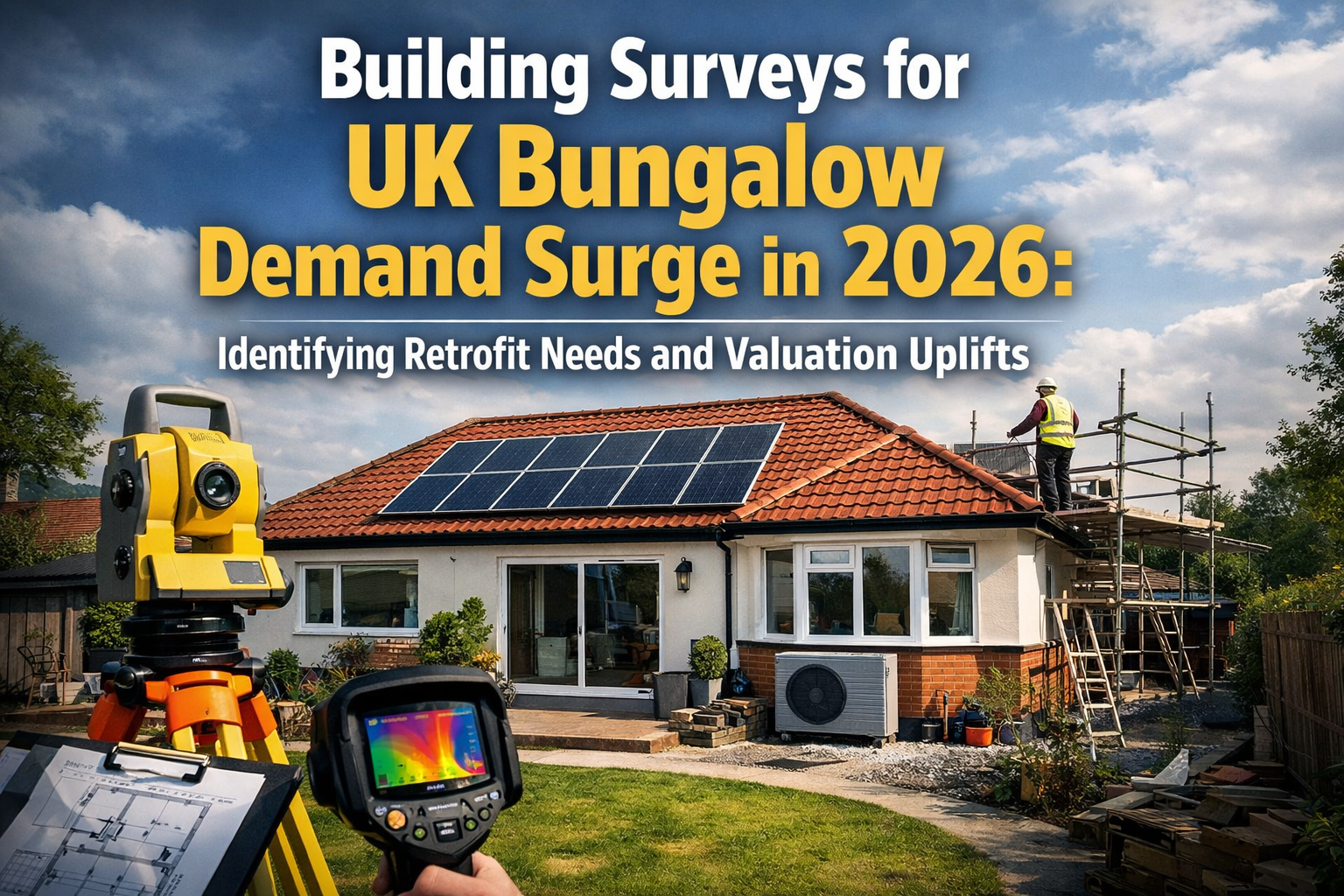
The UK property market is experiencing a remarkable transformation in 2026, with bungalow demand reaching unprecedented heights. As buyer interest rebounds 57% post-Christmas and new listings surge by 81%[1], single-story dwellings have emerged as the hottest segment in the housing market. Understanding Building Surveys for UK Bungalow Demand Surge in 2026: Identifying Retrofit Needs and Valuation Uplifts has become essential for buyers, sellers, and investors looking to capitalize on this growing trend. This comprehensive guide examines the structural considerations, energy efficiency improvements, and valuation opportunities that make bungalows the property type to watch in 2026.
Key Takeaways
- 🏠 Bungalow demand has surged dramatically in 2026, driven by aging demographics, accessibility needs, and lifestyle preferences for single-story living
- 🔍 Comprehensive building surveys are critical for identifying structural issues, retrofit opportunities, and hidden defects in older bungalow stock
- ⚡ Energy retrofit investments can deliver 15-25% valuation uplifts while improving EPC ratings from E to B or higher
- 📈 House price growth projections of 2-4% nationally[3] are being exceeded in the bungalow segment, with regional variations showing stronger performance
- 💰 Strategic survey-informed improvements enable sellers to command premium prices while buyers make informed investment decisions
Understanding the 2026 Bungalow Market Boom
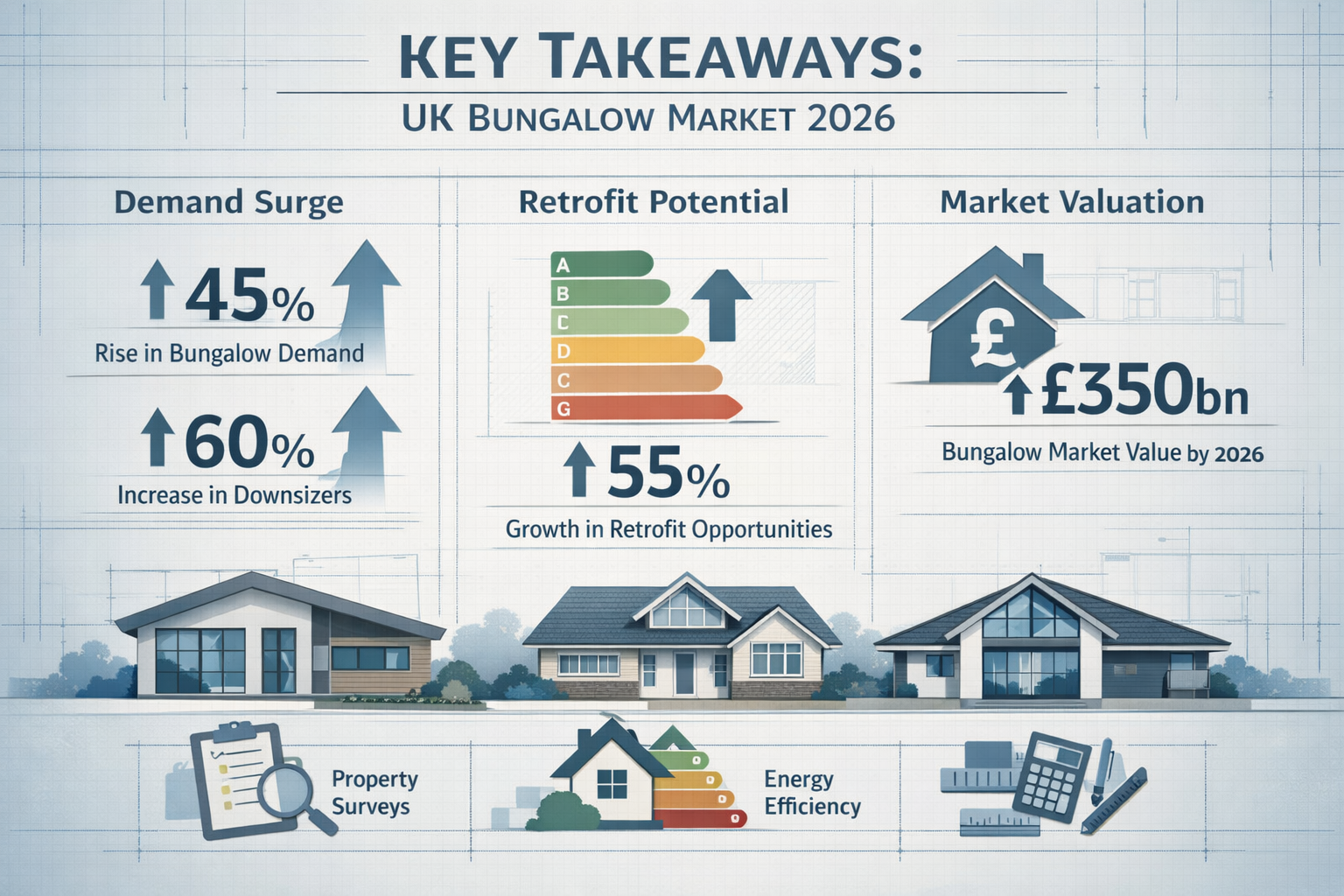
The UK housing market has entered 2026 with renewed momentum, and bungalows are leading the charge. This single-story property type, once considered niche, now represents one of the most sought-after segments across England, Wales, and Scotland.
Market Dynamics Driving Bungalow Demand
Several converging factors have created the perfect storm for bungalow popularity:
Demographic Shifts 🧓
- Aging population seeking accessible, single-level living
- Downsizers from larger family homes prioritizing convenience
- Younger buyers with mobility considerations or future-proofing mindset
Lifestyle Preferences
- Post-pandemic desire for manageable property maintenance
- Garden access without stair navigation
- Easier adaptation for home working spaces
Supply Constraints
- Limited new bungalow construction over past three decades
- Existing stock primarily built in 1960s-1980s requiring updates
- High demand meeting restricted supply creates price pressure
According to recent market data, house prices have grown 1.7% in England, 5.0% in Wales, and 4.9% in Scotland over the 12 months to January 2026[5]. However, bungalow-specific segments are outperforming these averages in many regions, particularly where retirement demographics are strongest.
Regional Variations and Growth Hotspots
Scotland has emerged as a particularly strong market, with projections suggesting continued robust growth[4]. Coastal areas, market towns, and regions with established retirement communities are experiencing the most intense bungalow competition.
| Region | Average Price Growth | Bungalow Premium |
|---|---|---|
| Scotland | 4.9%[5] | +8-12% above average |
| Wales | 5.0%[5] | +6-10% above average |
| England | 1.7%[5] | +4-8% above average |
| South East | 2.1% | +5-9% above average |
Note: Bungalow premium estimates based on market feedback and regional demand patterns
Building Surveys for UK Bungalow Demand Surge in 2026: Essential Survey Types
With bungalows commanding premium prices and attracting intense buyer interest, comprehensive building surveys have never been more important. Understanding what survey type suits bungalow purchases helps buyers make informed decisions and negotiate effectively.
Why Bungalows Require Specialized Survey Attention
Most UK bungalows were constructed between 1960-1985, meaning they're approaching or exceeding 40 years old. This age profile presents specific challenges:
- Roof structures experiencing wear after decades of weather exposure
- Flat roof sections common in 1970s designs prone to water ingress
- Original heating systems requiring replacement or upgrade
- Cavity wall insulation often absent or deteriorated
- Electrical systems not meeting modern safety standards
- Asbestos materials potentially present in pre-2000 construction
A full building survey (Level 3) provides the most comprehensive assessment for bungalow purchases, particularly for properties over 30 years old.
Choosing the Right Survey Level
Understanding what types of building surveys are available helps match the inspection depth to property characteristics:
Level 2 Survey (RICS Home Survey) ✅
- Suitable for: Modern bungalows in good condition (post-2000)
- Coverage: Visual inspection of accessible areas
- Best for: Standard construction with no obvious defects
Level 3 Survey (Full Building Survey) ⭐
- Suitable for: Bungalows over 30 years old, unusual construction, or visible defects
- Coverage: Comprehensive inspection including roof spaces, floor voids, and detailed analysis
- Best for: Most bungalow purchases in 2026 given typical age profile
Specialist Surveys
- Asbestos surveys for pre-2000 properties
- Drone surveys for difficult-to-access roof areas
- Environmental assessments for flood risk or contamination concerns
Common Bungalow Defects Identified in Surveys
Professional surveyors consistently identify specific issues in older bungalow stock:
Structural Concerns 🏗️
- Roof spread and sagging – particularly in properties with original timber structures
- Cavity wall tie corrosion – common in 1960s-1970s construction
- Foundation movement – especially in clay soil areas
- Flat roof deterioration – requiring complete replacement in many cases
Building Services Issues ⚙️
- Outdated electrical installations – often original 1960s-1980s wiring
- Inefficient heating systems – single-glazing and poor insulation
- Inadequate ventilation – leading to condensation and mold
- Drainage problems – blocked or damaged underground systems
A comprehensive building defects survey provides detailed analysis of these issues, enabling accurate cost estimates for remediation.
Survey Timeframes and Urgency Considerations
In the competitive 2026 bungalow market, understanding building survey timeframes helps buyers move quickly. Typical timelines include:
- Survey booking to completion: 5-10 working days
- Report delivery: 3-5 working days post-inspection
- Total process: 8-15 working days
For properties with urgent or dangerous building issues, surveyors provide immediate notification, enabling swift decision-making.
Identifying Retrofit Needs: Energy Efficiency and Modernization
The Building Surveys for UK Bungalow Demand Surge in 2026: Identifying Retrofit Needs and Valuation Uplifts equation hinges significantly on energy efficiency improvements. With rising energy costs and environmental consciousness, retrofit potential has become a major valuation factor.
Current Energy Performance of UK Bungalows
Most bungalows built before 1990 have poor energy efficiency ratings:
- Typical EPC rating: D or E (without improvements)
- Average annual heating costs: £1,800-£2,400
- Heat loss characteristics: High due to large roof area and single-story design
- Improvement potential: Significant, often achieving B or C ratings post-retrofit
Priority Retrofit Interventions
Building surveys should specifically assess retrofit opportunities in these areas:
1. Loft Insulation ❄️
- Current standard: 270-300mm depth
- Typical existing: 50-100mm or absent
- Cost: £400-£900 for average bungalow
- Annual savings: £200-£300
- Payback period: 2-3 years
2. Wall Insulation
- External wall insulation: £8,000-£14,000 (most effective)
- Cavity wall insulation: £1,500-£3,500 (if suitable)
- Annual savings: £300-£500
- EPC improvement: Typically 1-2 grades
3. Window and Door Replacement 🪟
- Triple glazing upgrade: £5,000-£12,000
- Annual savings: £150-£250
- Additional benefits: Noise reduction, security, aesthetics
4. Heating System Modernization
- Air source heat pump: £8,000-£14,000 (after grants)
- Modern gas boiler: £2,500-£4,000
- Underfloor heating: £4,000-£8,000 (ideal for bungalows)
- Annual savings: £300-£600 (heat pump vs. old boiler)
5. Solar PV Installation ☀️
- 4kW system cost: £5,000-£7,000
- Annual generation: £400-£600 value
- Payback period: 8-12 years
- Valuation uplift: £3,000-£5,000
Government Grants and Funding Opportunities
Retrofit investments become more attractive with available funding:
- Boiler Upgrade Scheme: £7,500 grant for heat pumps
- ECO4 Scheme: Free insulation for eligible households
- Local authority grants: Varying by region
- Green mortgages: Preferential rates for energy-efficient properties
Identifying Retrofit Opportunities in Building Surveys
Professional surveyors should provide specific retrofit recommendations including:
✅ Current EPC rating and predicted post-improvement rating
✅ Prioritized list of interventions with cost estimates
✅ Payback periods for each improvement
✅ Compatibility assessment (e.g., suitable wall construction for cavity insulation)
✅ Structural implications of proposed works
✅ Building regulation compliance requirements
Understanding building problems and solutions helps property owners prioritize investments that deliver both comfort and value.
Valuation Uplifts from Survey-Informed Improvements
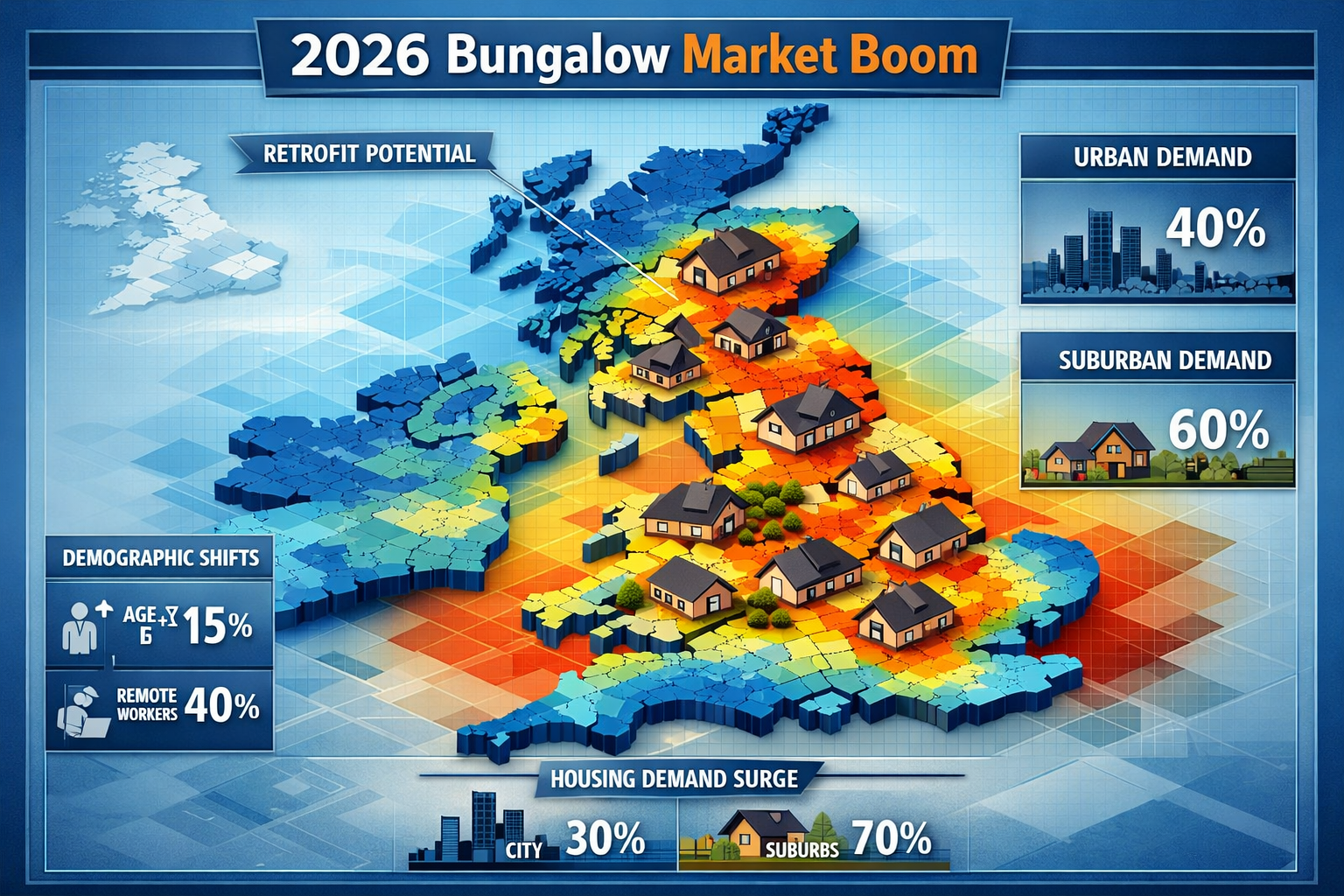
The final component of Building Surveys for UK Bungalow Demand Surge in 2026: Identifying Retrofit Needs and Valuation Uplifts focuses on quantifying the financial benefits of strategic improvements.
How Building Surveys Drive Valuation Increases
Comprehensive building surveys enable valuation uplifts through three mechanisms:
1. Defect Remediation 🔧
- Addressing structural issues removes valuation discounts
- Typical impact: 5-10% value recovery
- Example: £280,000 bungalow with £15,000 roof repairs might sell for £265,000 unrepaired but £285,000 when fixed
2. Energy Efficiency Improvements ⚡
- EPC rating upgrades directly impact marketability and value
- Typical impact: 3-8% per rating grade improvement
- Example: Upgrading from E to B rating adds £8,400-£22,400 to a £280,000 bungalow
3. Modernization and Aesthetic Updates ✨
- Kitchen and bathroom renovations: 5-15% uplift
- Landscaping and curb appeal: 3-7% uplift
- Smart home technology: 2-4% uplift
Quantifying Retrofit ROI
Not all improvements deliver equal returns. Strategic prioritization matters:
| Improvement Type | Average Cost | Typical Valuation Uplift | ROI % |
|---|---|---|---|
| Loft insulation (300mm) | £700 | £2,000-£3,000 | 185-330% |
| Cavity wall insulation | £2,500 | £4,000-£6,000 | 60-140% |
| External wall insulation | £11,000 | £12,000-£18,000 | 9-64% |
| Heat pump installation | £10,000 | £8,000-£14,000 | -20-40% |
| Solar PV (4kW) | £6,000 | £4,000-£6,000 | -33-0% |
| New kitchen | £12,000 | £10,000-£18,000 | -17-50% |
| Bathroom renovation | £6,000 | £5,000-£9,000 | -17-50% |
Important note: ROI calculations consider immediate valuation impact only. Energy savings and quality-of-life improvements provide additional long-term value.
Case Study: Typical 1970s Bungalow Transformation
Property Profile:
- 2-bedroom detached bungalow, 1974 construction
- Original condition, EPC rating E
- Purchase price: £275,000
- Location: Market town, East of England
Survey Findings:
- Roof requiring replacement within 5 years (£12,000)
- Original single glazing throughout (£8,000 to replace)
- No loft insulation (£700 to install)
- Old gas boiler, inefficient (£3,500 for modern replacement)
- Outdated kitchen and bathroom (£18,000 combined renovation)
Investment Strategy:
- Immediate priorities (pre-sale): Roof, loft insulation, boiler = £16,200
- Cosmetic updates: Kitchen and bathroom = £18,000
- Energy improvements: Triple glazing = £8,000
- Total investment: £42,200
Valuation Impact:
- Pre-improvement value: £275,000
- Post-improvement value: £340,000-£355,000
- Net gain: £22,800-£37,800 (after £42,200 investment)
- Alternative scenario: Selling as-is at £260,000 (£15,000 discount for deferred maintenance)
This example demonstrates how survey-informed improvements can deliver substantial returns, particularly in the competitive 2026 bungalow market.
Negotiation Strategies Based on Survey Findings
Building surveys provide powerful negotiation leverage:
For Buyers 💼
- Request price reductions equivalent to 100-120% of repair costs
- Negotiate retention clauses for major defects
- Request seller completion of critical repairs pre-exchange
- Use survey findings to justify mortgage valuation appeals
For Sellers 🏠
- Complete strategic improvements before listing
- Obtain pre-sale surveys to demonstrate condition
- Price confidently based on documented improvements
- Provide retrofit cost estimates to buyers showing value potential
Understanding the difference between Level 2 and Level 3 surveys helps both parties select appropriate inspection depth for negotiation purposes.
Long-term Value Protection Through Maintenance
Building surveys also inform ongoing maintenance strategies that protect and enhance value:
5-Year Maintenance Planning 📅
- Roof inspections and minor repairs: £200-£400 annually
- Gutter cleaning and maintenance: £100-£200 annually
- Heating system servicing: £80-£120 annually
- External decoration cycle: £3,000-£5,000 every 5-7 years
- Window and door maintenance: £200-£400 every 2-3 years
Total annual maintenance budget: £1,000-£1,500 for typical bungalow
Regular maintenance prevents minor issues becoming major defects, protecting the valuation uplifts achieved through retrofit investments.
Strategic Considerations for 2026 Bungalow Buyers
The Building Surveys for UK Bungalow Demand Surge in 2026: Identifying Retrofit Needs and Valuation Uplifts landscape requires strategic thinking from prospective buyers.
Timing Your Purchase in a Competitive Market
With buyer demand surging and new listings increasing[1], timing matters:
Market Dynamics 📊
- Spring market (March-May) typically most competitive
- Autumn market (September-November) offers more negotiation room
- Off-peak winter months may present opportunities despite lower inventory
Survey Timing Strategies
- Book surveys immediately upon offer acceptance
- Consider pre-offer surveys for highly competitive properties
- Use expedited survey services when necessary
Evaluating Retrofit Potential vs. Move-in Ready
Buyers face a strategic choice:
Option A: Dated Bungalow with Retrofit Potential 🔨
- Advantages: Lower purchase price, customization control, potential value creation
- Disadvantages: Disruption, temporary living elsewhere, project management burden
- Best for: DIY-capable buyers, investors, those with renovation experience
Option B: Recently Renovated Bungalow ✨
- Advantages: Immediate occupancy, no project stress, known condition
- Disadvantages: Higher purchase price, limited customization, potential over-improvement
- Best for: Older buyers, time-poor professionals, those prioritizing convenience
Regional Investment Opportunities
Market projections suggest varying regional performance[4][6]:
Strong Growth Regions 📈
- Scottish market towns and coastal areas
- Welsh valleys and retirement hotspots
- South West England coastal communities
- East Anglia market towns
Moderate Growth Regions
- Midlands suburban areas
- Northern England commuter zones
- Home Counties secondary locations
Investment Strategy: Target regions where bungalow supply constraints meet demographic demand for maximum appreciation potential.
Professional Support for Bungalow Purchases
Navigating the Building Surveys for UK Bungalow Demand Surge in 2026: Identifying Retrofit Needs and Valuation Uplifts landscape requires professional expertise.
Selecting the Right Chartered Surveyor
Choose surveyors with specific bungalow experience:
✅ RICS qualified (Royal Institution of Chartered Surveyors)
✅ Local market knowledge of regional bungalow characteristics
✅ Experience with 1960s-1980s construction methods
✅ Retrofit assessment capabilities
✅ Clear, actionable reporting style
Professional building survey services provide comprehensive assessments tailored to bungalow-specific concerns.
Additional Professional Services
Complete bungalow assessment may require:
- Energy assessors for detailed EPC improvement planning
- Structural engineers for foundation or roof concerns
- Asbestos specialists for pre-2000 properties
- Retrofit coordinators for complex improvement projects
- Quantity surveyors for accurate cost estimation
Mortgage Valuation vs. Building Survey
Understanding the distinction prevents costly mistakes:
Mortgage Valuation 🏦
- Purpose: Protect lender's security
- Scope: Basic assessment of market value
- Detail: Minimal inspection, no defect analysis
- Cost: £250-£500 (often included in mortgage fees)
Building Survey 🔍
- Purpose: Inform buyer's decision
- Scope: Comprehensive condition assessment
- Detail: Extensive defect identification and cost estimates
- Cost: £600-£1,200 for typical bungalow
Critical point: Mortgage valuations do NOT replace building surveys. Both serve different purposes, and buyers should commission independent surveys regardless of mortgage valuation outcomes.
Future-Proofing Your Bungalow Investment
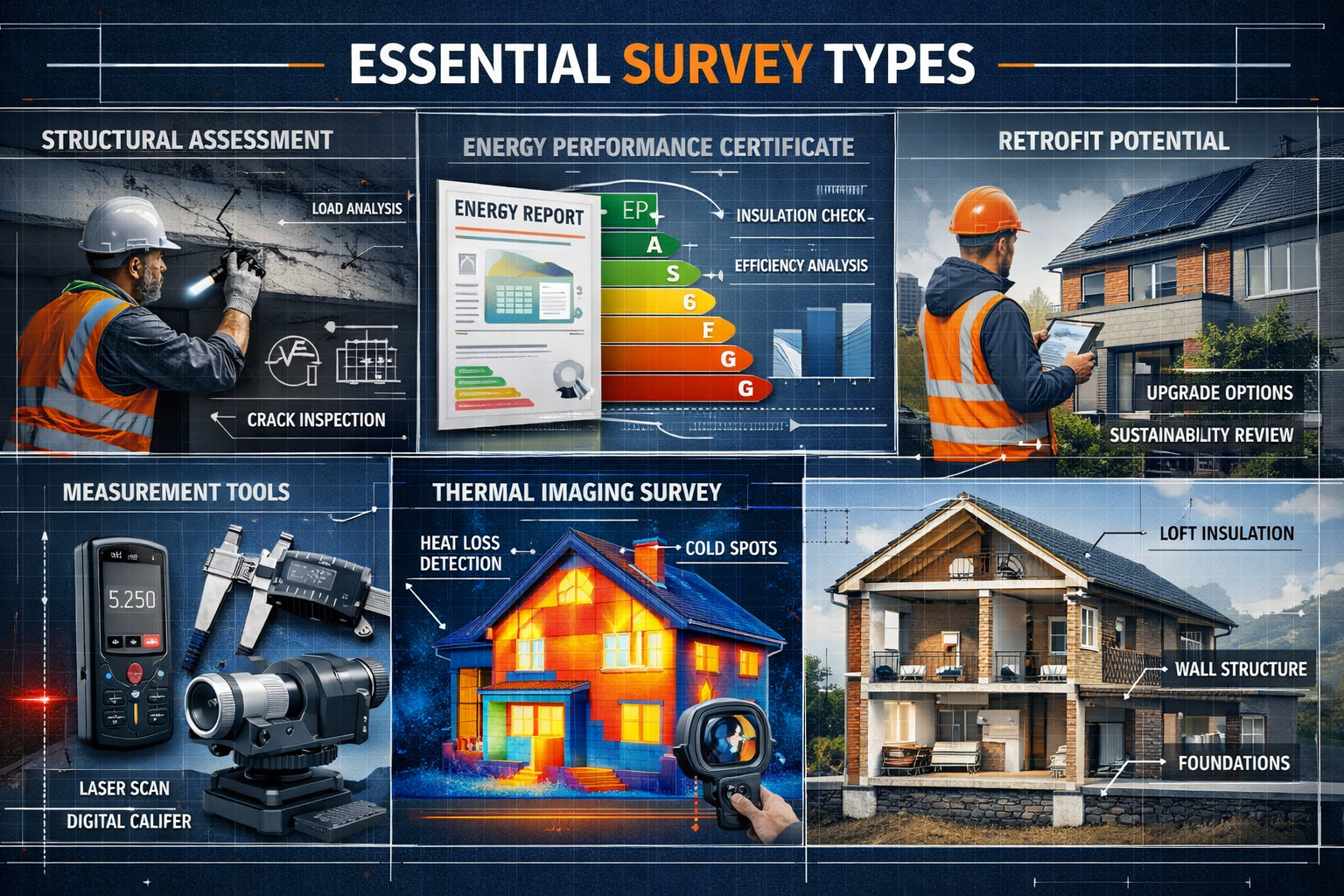
Looking beyond 2026, strategic bungalow ownership requires forward thinking:
Climate Adaptation Considerations
Building surveys should assess climate resilience:
- Flood risk and drainage adequacy
- Overheating potential in single-story design
- Storm resistance of roof structures
- Water efficiency measures
- Sustainable materials for future renovations
Accessibility and Aging-in-Place Features
Bungalows' primary advantage lies in accessibility. Surveys should evaluate:
- Level access entrances and thresholds
- Doorway widths for wheelchair accessibility (minimum 800mm)
- Bathroom adaptation potential for wet rooms
- Kitchen accessibility for seated use
- Circulation space for mobility aids
These features increasingly drive valuation premiums as demographic trends continue.
Technology Integration
Modern bungalow buyers expect smart home capabilities:
- Heating controls (smart thermostats, zoned systems)
- Security systems (cameras, smart locks, alarms)
- Energy monitoring (solar generation, consumption tracking)
- Accessibility technology (voice control, automated systems)
Survey assessments should consider electrical capacity for technology integration.
Conclusion
The Building Surveys for UK Bungalow Demand Surge in 2026: Identifying Retrofit Needs and Valuation Uplifts phenomenon represents a significant opportunity for informed buyers, sellers, and investors. As the UK housing market demonstrates renewed momentum with buyer demand rebounding 57% and new listings surging 81%[1], bungalows have emerged as the property type commanding premium attention.
Comprehensive building surveys form the foundation of successful bungalow transactions, revealing structural conditions, retrofit opportunities, and valuation potential that casual inspections miss. With most UK bungalows approaching or exceeding 40 years old, professional assessment identifies the £15,000-£40,000 of improvements that can transform dated properties into energy-efficient, modern homes commanding 15-25% valuation premiums.
Energy retrofit investments deliver dual benefits: immediate quality-of-life improvements and substantial long-term value appreciation. As EPC ratings increasingly influence buyer decisions and regulatory requirements tighten, properties upgraded from E to B ratings gain significant competitive advantages in the marketplace.
Strategic action steps for 2026 bungalow market participants:
- Commission comprehensive Level 3 building surveys for properties over 30 years old
- Prioritize retrofit investments with highest ROI: loft insulation, wall insulation, modern heating
- Leverage government grants to reduce improvement costs and accelerate payback
- Engage qualified professionals with bungalow-specific experience and local market knowledge
- Plan long-term maintenance to protect and enhance valuation gains
- Consider regional variations when selecting investment locations
The 2026 bungalow boom shows no signs of slowing, with demographic trends, lifestyle preferences, and supply constraints creating sustained demand pressure. House price growth projections of 2-4% nationally[3] are being exceeded in bungalow segments, particularly in Scotland, Wales, and retirement-focused regions where growth rates of 5-12% are emerging.
Take action today: Whether buying, selling, or holding bungalow property, professional building surveys provide the intelligence needed to maximize value in this dynamic market. The combination of structural assessment, retrofit planning, and valuation optimization creates a powerful framework for success in the competitive 2026 bungalow landscape.
For expert guidance on your bungalow survey needs, consult qualified chartered surveyors who understand the unique characteristics and opportunities this property type presents in today's market.
References
[1] Uk Housing Market 2026 Renewed Momentum Strengthening Demand And Signs Of Lasting Stability – https://bhwconveyancing.com/advice/uk-housing-market-2026-renewed-momentum-strengthening-demand-and-signs-of-lasting-stability/
[3] Uk House Prices In 2026 Where The Market Is Headed What It Means For Buyers Sellers And Landlor – https://www.approvedbusinessfinance.co.uk/post/uk-house-prices-in-2026-where-the-market-is-headed-what-it-means-for-buyers-sellers-and-landlor
[4] Revealed The 10 Uk Locations Which Could See The Biggest House Price Growth In 2026 – https://moneyweek.com/investments/house-prices/revealed-the-10-uk-locations-which-could-see-the-biggest-house-price-growth-in-2026
[5] February2026 – https://www.ons.gov.uk/economy/inflationandpriceindices/bulletins/privaterentandhousepricesuk/february2026
[6] Property Market Predictions 2026 – https://www.cityrise.co.uk/property-market-predictions-2026/