

The surveying profession stands at a critical crossroads in 2026. With homebuying reforms driving unprecedented demand for property assessments and the construction sector embracing sustainability targets, surveying firms face an urgent challenge: attracting qualified talent to meet this surge in workload. The Royal Institution of Chartered Surveyors (RICS) has responded with innovative qualification pathways, digital CPD platforms, and modernized assessment routes designed to build workforce capacity precisely when the industry needs it most.
Attracting Talent to Surveying Firms in 2026: RICS Pathways and CPD Tools for Reform-Driven Growth represents more than just a recruitment strategy—it's a comprehensive transformation of how the profession develops, certifies, and retains skilled professionals. From new sustainability-focused pathways to flexible digital learning tools, RICS is reshaping the landscape to welcome diverse talent into a profession that offers global opportunities and meaningful career progression.
Key Takeaways
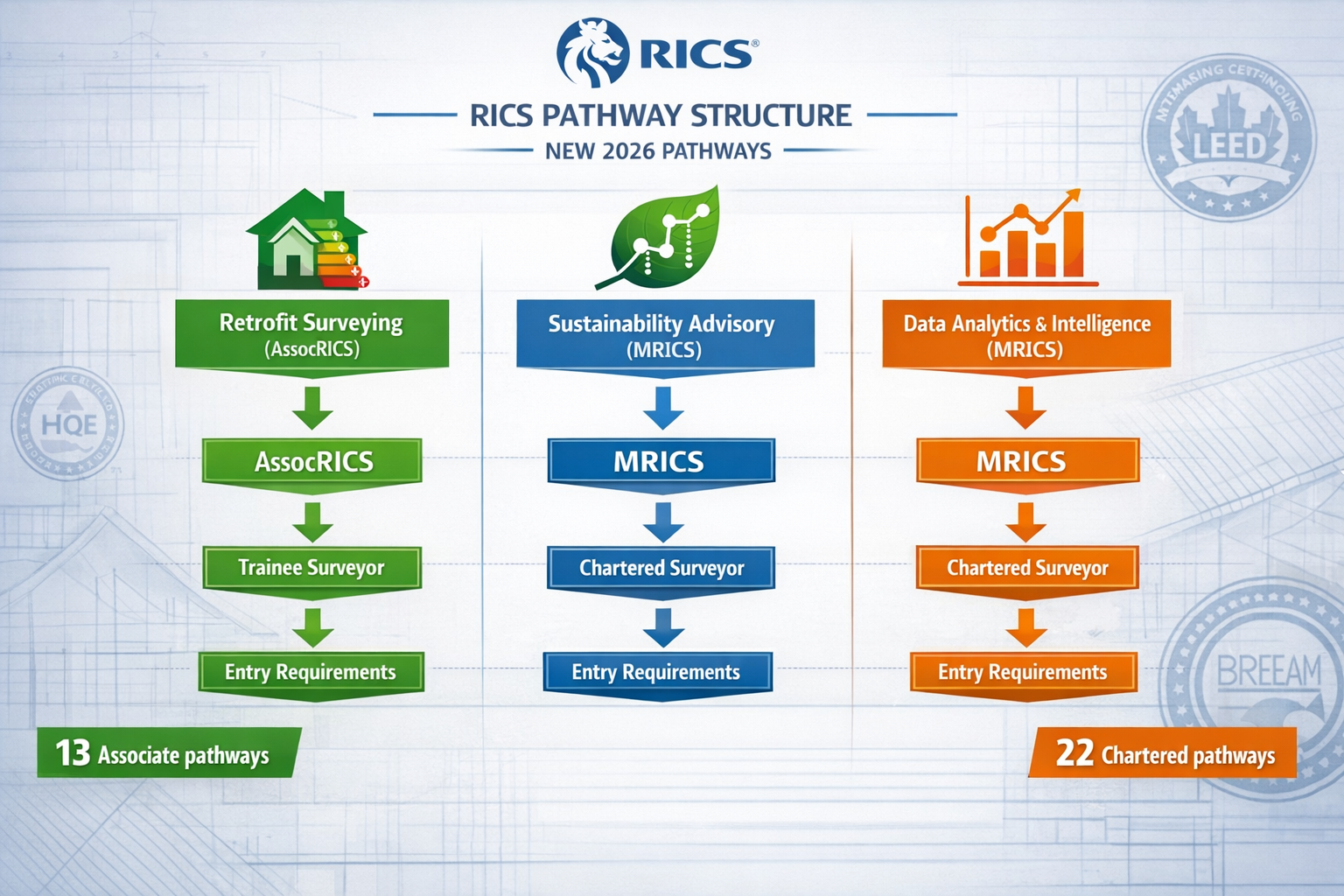
✅ Three new RICS pathways launching in 2026—Retrofit Surveying (AssocRICS), Sustainability Advisory (MRICS), and Data Analytics and Intelligence (MRICS)—directly address evolving industry demands and create entry points for professionals with diverse backgrounds [1]
✅ Enhanced assessment flexibility now allows candidates up to five attempts to pass RICS qualifications, with earlier attempts not counting toward the total, reducing barriers to entry for aspiring surveyors [5]
✅ Digital CPD platforms and streamlined processes launched mid-2025 provide clearer guidance, improved navigation, and accessible learning tools that support continuous professional development throughout surveyors' careers [5][6]
✅ Apprenticeship routes remain open to anyone 16 or older, offering industry-recognized qualifications while earning, with minimum 30-hour weekly work requirements making surveying accessible to school leavers and career changers [4]
✅ Chartered surveyor status continues as the global "gold standard," providing networking opportunities, international employment prospects, and recognition that attracts ambitious professionals to the field [4]
Understanding the Talent Challenge Facing Surveying Firms in 2026
The surveying sector in 2026 faces a perfect storm of opportunity and constraint. Homebuying reforms have increased transaction volumes, sustainability regulations demand specialized expertise, and infrastructure projects require skilled professionals. Yet many firms struggle to fill vacancies with qualified surveyors.
The Skills Gap Reality 📊
Recent industry analysis reveals significant workforce pressures across the surveying profession [8]. Firms report difficulty recruiting professionals with expertise in:
- Environmental assessment and sustainability compliance
- Building pathology for aging property stock
- Data analytics for property valuation and market analysis
- Retrofit solutions for energy efficiency improvements
These specialized areas require both traditional surveying knowledge and emerging technical skills—a combination that challenges conventional recruitment approaches.
Why Traditional Recruitment Falls Short
Many surveying firms continue using outdated talent attraction methods that fail to resonate with 2026's workforce expectations:
| Traditional Approach | 2026 Reality |
|---|---|
| Emphasis on years of experience | Candidates value skills-based progression |
| Limited pathway transparency | Professionals demand clear career roadmaps |
| Rigid qualification routes | Diverse backgrounds seek flexible entry points |
| Generic professional development | Targeted CPD aligned with career goals |
The disconnect between firm recruitment practices and candidate expectations creates a talent acquisition bottleneck precisely when demand peaks.
RICS Pathways: Creating Multiple Entry Points for Diverse Talent
RICS has fundamentally reimagined professional pathways to address the talent challenge. Rather than maintaining a one-size-fits-all approach, the institution now offers 13 sector pathways for Associate qualification (AssocRICS) and 22 sector pathways for Chartered qualification (MRICS) as of December 2025 [2].
The Three New Pathways Transforming Talent Attraction
RICS's innovation programme has developed three groundbreaking pathways specifically designed for 2026's market demands [1]:
1️⃣ Retrofit Surveying (AssocRICS)
This pathway addresses the massive demand for energy efficiency assessments as property owners respond to environmental regulations and rising energy costs. Retrofit surveyors evaluate existing buildings and recommend improvements—skills that firms desperately need as environmental issues become central to property transactions.
Who this attracts: Energy assessors, building services engineers, and sustainability consultants seeking professional recognition.
2️⃣ Sustainability Advisory (MRICS)
With corporate ESG targets and government net-zero commitments driving property sector transformation, sustainability advisors provide strategic guidance on environmental performance. This pathway creates opportunities for environmental scientists and sustainability professionals to join the surveying profession with recognized credentials.
Who this attracts: Environmental graduates, sustainability managers, and climate consultants wanting chartered status.
3️⃣ Data Analytics and Intelligence (MRICS)
Property technology (PropTech) has revolutionized how firms analyze markets, value properties, and advise clients. This pathway recognizes that data literacy is now essential to surveying excellence, creating entry points for analytics professionals.
Who this attracts: Data scientists, GIS specialists, and market analysts seeking property sector careers.
"These pathways aim to create opportunities for professionals with diverse backgrounds to join the profession, work to RICS standards, and become regulated professionals." [1]
How Pathway Diversity Solves Recruitment Challenges
By offering specialized routes aligned with market-driven skills gaps, RICS enables firms to recruit from previously untapped talent pools. A sustainability consultant with five years' experience can now pursue MRICS status through the Sustainability Advisory pathway rather than starting from scratch through traditional routes.
This flexibility matters enormously for firms competing for talent. Instead of requiring candidates to abandon their expertise and start over, firms can now offer career progression that values existing skills while building surveying competencies.
Attracting Talent to Surveying Firms in 2026: Leveraging CPD Tools for Professional Development
Continuous Professional Development (CPD) represents a critical differentiator in talent attraction and retention. Professionals in 2026 expect employers to invest in their growth through accessible, relevant learning opportunities. RICS has responded with significant platform improvements and policy changes that make CPD more achievable.
Platform Improvements Launched Mid-2025
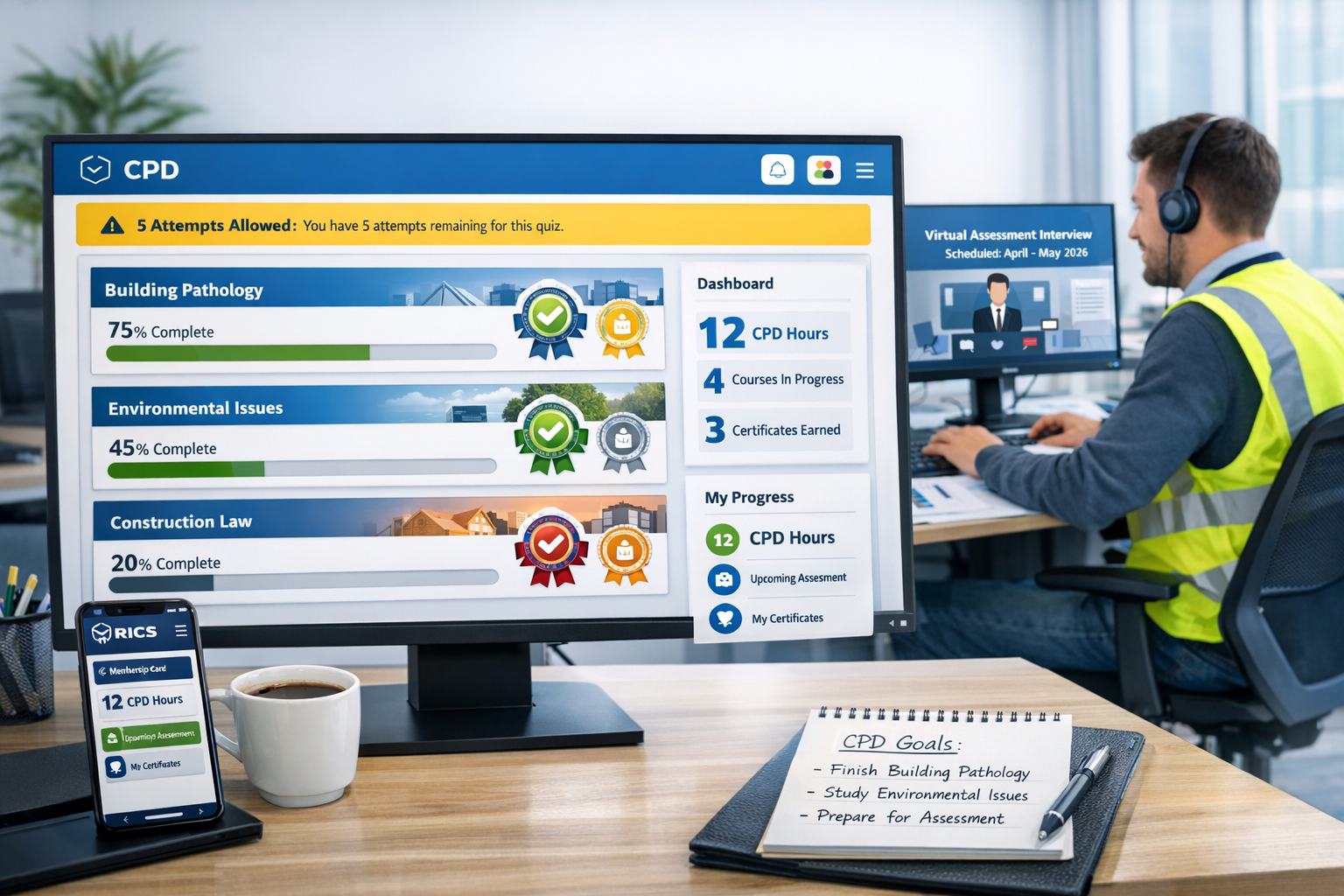
RICS introduced substantial enhancements to its digital platforms in July 2025, directly addressing candidate frustrations with earlier systems [5][6]:
🔧 Clearer Employment History Guidance
Candidates now receive step-by-step instructions for documenting their professional experience, reducing confusion and application errors.
📋 Improved Case Study Clarification
Enhanced templates and examples help candidates understand exactly what assessors expect, increasing first-time pass rates.
📊 Streamlined Status Banners
Real-time progress tracking shows candidates exactly where they stand in the qualification process, reducing anxiety and improving completion rates.
🎯 Enhanced Final Assessment Navigation
Simplified booking and preparation tools make the final assessment less intimidating, particularly for candidates without traditional surveying backgrounds.
These improvements directly address barriers that previously discouraged potential applicants, making surveying careers more accessible to diverse talent.
The Five-Attempt Rule: Reducing Qualification Anxiety
Perhaps the most significant reform for attracting talent is the updated assessment rule effective January 2026 [5]. Candidates can now make up to five attempts to pass RICS assessments, with earlier attempts not counting toward the total.
This policy change transforms the risk calculation for career changers and early-career professionals. Previously, the fear of "using up" limited attempts deterred many qualified individuals from pursuing RICS credentials. The five-attempt allowance signals that RICS values persistence and learning over perfection.
For surveying firms, this means a larger pool of candidates willing to commit to qualification pathways, knowing they have reasonable opportunities to succeed even if initial attempts fall short.
Final Assessment Schedule for 2026
RICS has published clear assessment dates for 2026, enabling candidates and employers to plan effectively [6]:
- Land and Property interviews: Begin Monday, 13 April 2026
- Built Environment interviews: Begin Monday, 11 May 2026
This transparency helps firms coordinate study leave, mentoring support, and workload management around assessment periods—demonstrating commitment to employee development that attracts ambitious professionals.
Attracting Talent to Surveying Firms in 2026: Apprenticeships and Alternative Entry Routes
While RICS pathways provide structure for experienced professionals, apprenticeships remain the primary entry route for school leavers and young adults entering the surveying profession [4].
The Apprenticeship Advantage
RICS apprenticeships offer compelling benefits that resonate with 2026's cost-conscious workforce:
✅ Earn while learning: Apprentices receive salaries while gaining qualifications, avoiding student debt
✅ Industry-recognized credentials: Qualifications carry RICS endorsement, ensuring employer recognition
✅ Practical experience: Hands-on work from day one builds real-world competencies
✅ Clear progression: Structured pathways lead to AssocRICS or MRICS status
Eligibility and Requirements
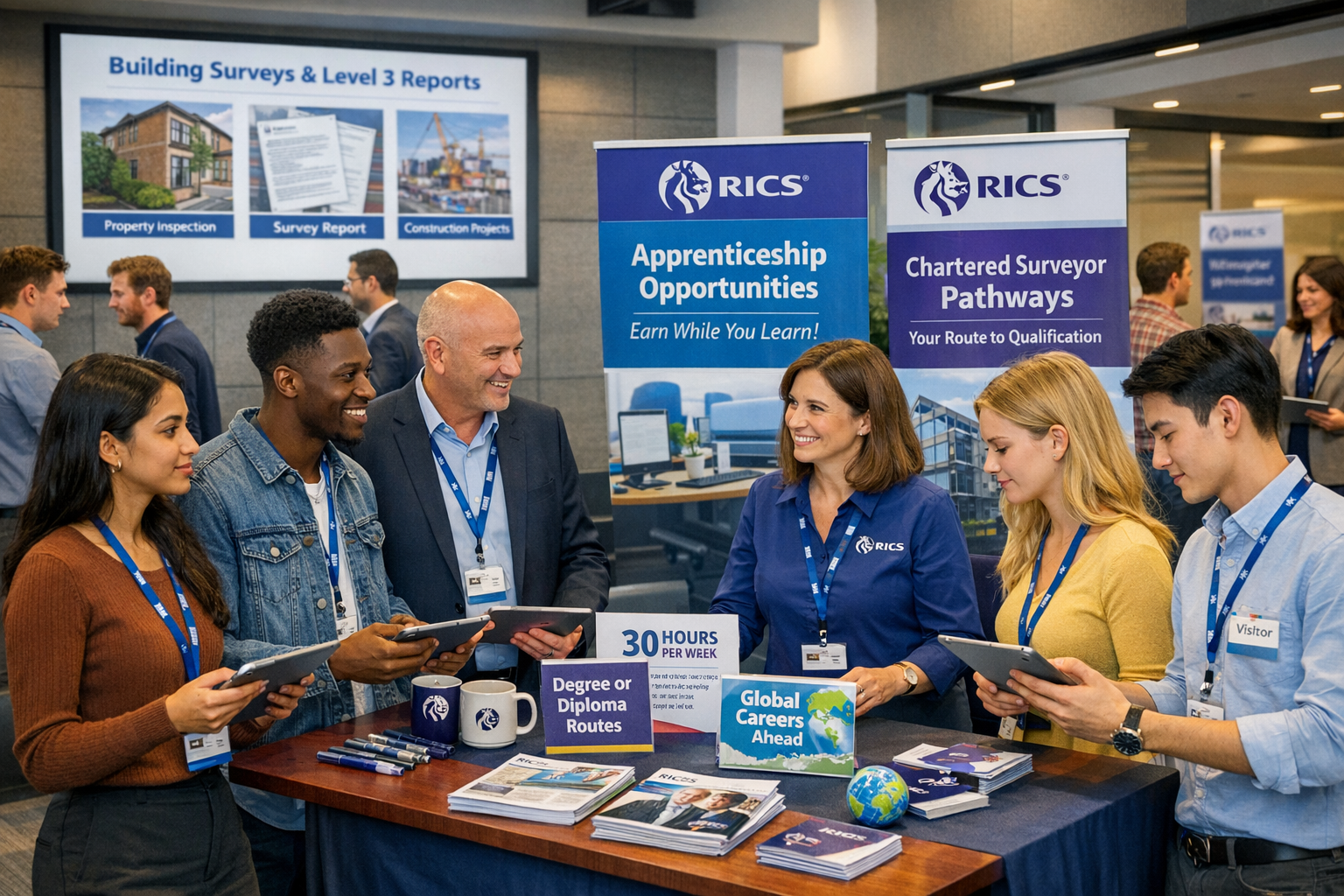
Apprenticeships are open to anyone 16 or older who can commit to minimum 30 hours weekly work [4]. This accessibility makes surveying careers available to:
- School leavers seeking alternatives to university
- Career changers from other industries
- Adults returning to work after career breaks
- International professionals establishing UK credentials
Firms that actively promote apprenticeship opportunities tap into motivated talent pools often overlooked by competitors focused solely on graduate recruitment.
Virtual Work Experience: Testing the Waters
RICS offers virtual work experience programmes that allow prospective candidates to explore surveying careers before committing [3]. These programmes provide:
- Insight into daily surveying work across different specializations
- Exposure to professional standards and ethical frameworks
- Networking opportunities with practicing surveyors
- Clarity on qualification pathways and career progression
For firms, supporting virtual work experience creates a talent pipeline of informed, enthusiastic candidates who understand what surveying careers entail and have realistic expectations about the profession.
Building Workforce Capacity Through Strategic Talent Development
Attracting talent represents only the first step. Retaining and developing professionals ensures firms build sustainable workforce capacity that meets long-term demand.
Mentoring and Structured Support
Successful firms in 2026 recognize that qualification support extends beyond study leave and exam fees. Effective talent development includes:
👥 Formal Mentoring Programmes
Pairing candidates with experienced chartered surveyors who provide guidance on case studies, technical questions, and professional judgment development.
📚 Structured Learning Plans
Coordinating CPD activities with qualification requirements, ensuring candidates gain relevant experience while progressing toward credentials.
🎓 Study Groups and Peer Learning
Facilitating connections among candidates pursuing similar pathways, creating supportive communities that improve pass rates and reduce isolation.
💼 Real-World Project Exposure
Assigning candidates to diverse projects that build competencies across building pathology, construction law, and statutory considerations—areas frequently tested in assessments.
Leveraging Technology for Learning
Digital CPD platforms enable firms to provide flexible, accessible learning that accommodates diverse work schedules and learning preferences. Effective approaches include:
- Microlearning modules covering specific technical topics in 15-20 minute segments
- Video demonstrations of survey techniques and report writing
- Interactive case studies that simulate real-world decision-making
- Mobile-friendly content accessible during site visits or commutes
Firms that invest in quality digital learning resources differentiate themselves as employers of choice for ambitious professionals.
Recognizing Diverse Career Paths
Not every surveyor aspires to chartered status, and firms that recognize this reality build more inclusive cultures. Career frameworks should accommodate:
Specialist Technical Roles
Professionals who excel at specific surveying disciplines (e.g., Level 3 building surveys) without pursuing management responsibilities.
Project Management Pathways
Surveyors who transition toward coordinating complex projects rather than conducting assessments.
Client Advisory Positions
Professionals who leverage surveying expertise in consultative roles focused on strategic property decisions.
This flexibility attracts talent with varied career aspirations, expanding the recruitment pool beyond those seeking traditional partnership tracks.
Attracting Talent to Surveying Firms in 2026: Practical Recruitment Strategies
Understanding RICS pathways and CPD tools provides the foundation, but firms must actively implement recruitment strategies that leverage these resources.
Crafting Compelling Value Propositions
Effective talent attraction requires clear communication of what makes surveying careers attractive:
🌍 Global Opportunities
Chartered surveyor status provides international recognition, enabling professionals to work across borders—a compelling benefit for ambitious candidates [4].
📈 Continuous Learning Culture
Emphasizing ongoing CPD, exposure to emerging technologies, and professional development opportunities appeals to growth-oriented professionals.
💡 Meaningful Impact
Highlighting how surveyors contribute to sustainable development, housing accessibility, and community infrastructure resonates with purpose-driven candidates.
🤝 Professional Network Access
RICS membership provides connections to thousands of professionals globally, creating networking opportunities that accelerate career development [4].
Targeting Diverse Talent Pools
Firms that expand recruitment beyond traditional channels access underutilized talent:
Career Changers
Marketing new RICS pathways to sustainability professionals, data analysts, and construction managers seeking career evolution.
Returners to Work
Offering flexible arrangements and supportive qualification pathways to professionals returning after career breaks.
International Professionals
Promoting RICS pathways as routes to UK professional recognition for qualified surveyors from other countries.
Underrepresented Groups
Actively recruiting from demographics historically underrepresented in surveying, building more diverse teams that better serve varied client needs.
Showcasing Real Career Progression
Prospective candidates want evidence that qualification pathways lead to genuine career advancement. Effective recruitment materials include:
- Case studies of professionals who progressed from apprentice to chartered surveyor
- Timeline examples showing typical progression rates through different pathways
- Salary progression data demonstrating financial returns on qualification investment
- Testimonials from recent qualifiers about their experience with firm support
This transparency builds trust and helps candidates visualize their potential futures within the profession.
Meeting Demand Uplift: Aligning Talent Strategy with Market Growth
Homebuying reforms and sustainability regulations have created sustained demand increases for surveying services. Firms that align talent strategies with these market drivers position themselves for growth.
Understanding Demand Drivers
Several factors contribute to 2026's surveying demand surge:
🏠 Increased Transaction Volumes
Regulatory changes have streamlined homebuying processes, increasing the number of transactions requiring professional surveys like Level 2 and Level 3 assessments.
♻️ Retrofit and Sustainability Mandates
Energy performance requirements drive demand for retrofit assessments and environmental compliance evaluations.
🏗️ Infrastructure Investment
Government infrastructure programmes require surveying expertise across planning, valuation, and project management.
⚖️ Regulatory Compliance
Evolving building standards and safety regulations increase demand for specialized surveying services.
Capacity Planning and Workforce Modeling
Forward-thinking firms use workforce modeling to anticipate talent needs:
- Demand Forecasting: Analyzing market trends to project service volume growth
- Capacity Assessment: Evaluating current workforce capabilities against projected demand
- Gap Analysis: Identifying specific skill shortages and qualification needs
- Recruitment Planning: Developing targeted hiring strategies aligned with gap analysis
- Development Investment: Allocating resources to upskill existing staff and support qualifications
This systematic approach ensures firms build capacity proactively rather than reactively scrambling to fill urgent vacancies.
Balancing Growth and Quality
Rapid expansion can compromise service quality if firms prioritize volume over professional standards. Sustainable growth strategies include:
Phased Recruitment
Hiring cohorts of trainees at regular intervals, ensuring adequate mentoring capacity for each group.
Quality Assurance Systems
Implementing review processes that maintain standards even as team size increases.
Client Communication
Managing expectations about service timelines during growth periods, preserving reputation while building capacity.
Selective Service Expansion
Adding service lines strategically based on qualified staff availability rather than chasing every opportunity.
Technology Integration: Enhancing Surveyor Productivity and Appeal
Modern surveying increasingly relies on technology that enhances accuracy, efficiency, and service quality. Firms that embrace these tools attract tech-savvy professionals while improving productivity.
PropTech Tools Transforming Surveying
📱 Mobile Survey Applications
Digital platforms enable on-site data capture, photo documentation, and real-time report drafting, reducing administrative burden and improving accuracy.
🎯 Laser Measurement Technology
Advanced measuring tools provide precise dimensions quickly, allowing surveyors to complete building surveys more efficiently.
🤖 AI-Assisted Analysis
Machine learning tools identify potential defects in property images, helping surveyors focus attention on areas requiring detailed investigation.
☁️ Cloud-Based Collaboration
Platforms enabling team members to collaborate on reports, share findings, and maintain consistent quality standards across projects.
Attracting Digital Natives
Professionals entering the workforce in 2026 expect modern technology in their work environments. Firms that invest in digital tools signal:
- Commitment to innovation and continuous improvement
- Respect for professionals' time through efficiency-enhancing technology
- Competitive positioning in an evolving market
- Career development opportunities in emerging PropTech areas
This technological sophistication becomes a recruitment differentiator when competing for top talent.
Building an Employer Brand That Attracts Surveying Talent
In competitive talent markets, firms with strong employer brands attract more and better candidates. Building this reputation requires consistent effort across multiple channels.
Content Marketing for Recruitment
Firms can demonstrate expertise and culture through:
📝 Educational Blog Content
Publishing articles about building surveys, survey types, and industry developments positions the firm as a knowledge leader.
🎥 Video Case Studies
Showcasing real projects and team members builds authentic connections with prospective candidates.
💬 Social Media Engagement
Sharing professional achievements, team activities, and industry insights creates visibility and demonstrates culture.
📊 Thought Leadership
Contributing to industry publications and speaking at professional events enhances reputation and attracts ambitious professionals.
Employee Advocacy
Current employees serve as powerful recruitment ambassadors when they:
- Share positive experiences on professional networks
- Participate in industry events representing the firm
- Mentor students and early-career professionals
- Contribute to firm content marketing initiatives
Authentic employee voices carry more credibility than corporate messaging alone.
Workplace Culture and Values
Beyond technical opportunities, professionals seek workplaces that align with their values:
🌱 Sustainability Commitment
Firms demonstrating genuine environmental responsibility attract purpose-driven professionals.
🤝 Diversity and Inclusion
Welcoming cultures that value diverse perspectives appeal to broader talent pools.
⚖️ Work-Life Balance
Flexible arrangements and reasonable workload expectations attract professionals prioritizing wellbeing.
📚 Learning Culture
Environments that celebrate curiosity and continuous development retain ambitious talent.
Measuring Talent Attraction Success
Effective talent strategies require measurement to assess impact and guide refinement.
Key Recruitment Metrics
Firms should track:
| Metric | What It Measures | Target Benchmark |
|---|---|---|
| Time to Hire | Days from posting to acceptance | < 45 days |
| Application Quality | Percentage meeting minimum qualifications | > 60% |
| Offer Acceptance Rate | Accepted offers vs. total offers | > 80% |
| New Hire Retention | Percentage remaining after 12 months | > 85% |
| Qualification Progression | Candidates advancing toward RICS credentials | > 70% on track |
| Diversity Metrics | Representation across demographics | Industry benchmarks |
Continuous Improvement
Regular analysis of recruitment data enables firms to:
- Identify which channels produce best candidates
- Understand why candidates accept or decline offers
- Recognize barriers in the qualification support process
- Adjust value propositions based on candidate feedback
- Benchmark performance against industry standards
This data-driven approach ensures talent strategies evolve with changing market conditions and candidate expectations.
Conclusion
Attracting Talent to Surveying Firms in 2026: RICS Pathways and CPD Tools for Reform-Driven Growth represents both a challenge and an extraordinary opportunity for the surveying profession. The convergence of homebuying reforms, sustainability mandates, and infrastructure investment has created unprecedented demand for qualified surveyors precisely when many firms struggle to fill vacancies.
RICS has responded with transformative initiatives designed to build workforce capacity. The three new pathways—Retrofit Surveying, Sustainability Advisory, and Data Analytics and Intelligence—create entry points for professionals with diverse backgrounds, expanding the talent pool beyond traditional routes [1]. Enhanced CPD platforms, the five-attempt assessment policy, and clearer qualification guidance reduce barriers that previously discouraged capable candidates [5][6].
For surveying firms, success in 2026 requires moving beyond traditional recruitment approaches. Effective strategies include:
✅ Promoting diverse pathways that value existing expertise while building surveying competencies
✅ Investing in digital CPD tools and structured mentoring that support qualification progression
✅ Leveraging apprenticeships to develop talent from school-leaver and career-changer populations
✅ Building employer brands that communicate career opportunities, professional development, and meaningful impact
✅ Embracing technology that enhances productivity and appeals to digitally-native professionals
✅ Measuring recruitment effectiveness through data-driven metrics that guide continuous improvement
The firms that thrive in this environment will be those that recognize talent attraction as a strategic priority rather than an administrative function. By aligning recruitment strategies with RICS pathways, supporting continuous professional development, and creating cultures where diverse professionals can flourish, surveying firms position themselves to meet surging demand while building sustainable competitive advantages.
The pathway forward is clear: embrace the tools RICS provides, invest genuinely in professional development, and communicate compellingly about the meaningful careers surveying offers. The talent exists—firms simply need to make surveying's opportunities visible, accessible, and attractive to the diverse professionals who can meet 2026's challenges.
References
[1] Exploring New Professional Pathways Rics Membership – https://www.rics.org/join-rics/sector-pathways/exploring-new-professional-pathways-rics-membership
[2] Sector Pathways – https://www.rics.org/join-rics/sector-pathways
[3] Wexp 00361 – https://www.springpod.com/virtual-work-experience/becoming-a-chartered-surveyor-surveying-work-experience-with-rics/WEXP-00361
[4] How To Become A Surveyor – https://www.rics.org/surveyor-careers/how-to-become-a-surveyor
[5] Americas – https://www.rics.org/candidates/assessment-information/assessment-applications/americas
[6] rics – https://www.rics.org/candidates/assessment-information/assessment-applications/uk
[8] Rics Surveying Skills Report – https://www.atkinssearch.co.uk/insights/rics-surveying-skills-report/