

The UK property market is experiencing a remarkable resurgence in 2026. With buyer demand surging by 57% and market confidence returning after several challenging years, homeowners across the country are preparing for ambitious renovation projects. This renewed enthusiasm brings with it a critical legal requirement that many property owners overlook until it's too late: party wall agreements. As surveyors navigate this unprecedented construction boom, understanding how to manage party wall notices efficiently has never been more important. 🏗️
The construction sector's recovery in 2026 has created unprecedented demand for party wall services across the UK, reflecting a significant uptick in home improvement projects.[3][5] For professionals guiding clients through property purchases and renovations, mastering the Party Wall Agreements for 2026 Renovation Surge: Managing Notices as Buyer Confidence Returns requires both technical knowledge and strategic planning.
Key Takeaways
- 95% of London extension projects require party wall agreements, including loft conversions, basements, and side returns, making compliance essential for virtually all renovation work.[2]
- Timeline planning is critical: Allow 2-3 months minimum for straightforward cases, but budget 3-9 months for complex scenarios involving disputes or third surveyor appointments.[2]
- Budget £1,500-£3,600 per affected neighbour for the complete party wall process in 2026, with surveyor fees ranging from £750-£1,800 per neighbour.[2]
- The Party Wall Act 1996 remains unchanged in 2026, but increased construction activity means higher regulatory scrutiny and faster-moving timelines for those who plan ahead.[2]
- Neighbours cannot veto your project: While they can appoint surveyors and dissent, the Act grants legal rights to proceed even with neighbour refusal.[2]
Understanding Party Wall Agreements for 2026 Renovation Surge: Managing Notices as Buyer Confidence Returns
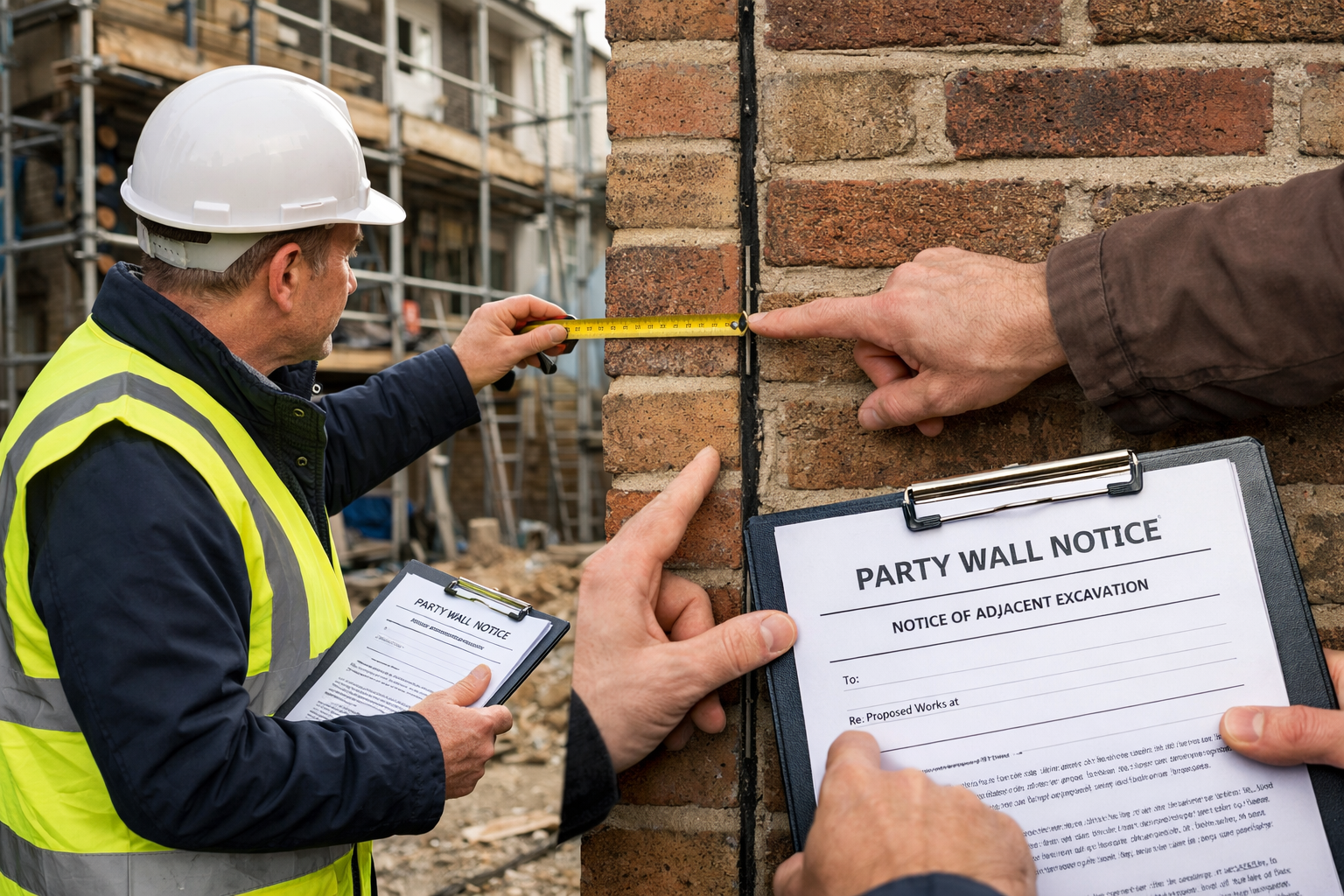
What Makes 2026 Different for Party Wall Requirements
The 2026 property market presents unique challenges and opportunities for party wall management. Planning authorities and building control departments are processing significantly higher volumes of applications, increasing regulatory oversight of party wall matters.[5] This heightened scrutiny means that proper documentation and timely notice have become more critical than ever.
The Party Wall Act 1996, which governs these agreements, hasn't changed since its implementation in 1997.[2] However, the volume of work and the speed of project execution have transformed dramatically. Surveyors must now manage multiple concurrent cases while maintaining the rigorous standards required by RICS compliance frameworks.[3]
For homeowners purchasing properties with renovation plans, understanding party wall agreements and the essential things you must know becomes a crucial part of the buying process. The separation between planning permission and party wall compliance often confuses buyers—even permitted development extensions that don't require planning approval still require party wall compliance if they involve work on a boundary, within a shared wall, or near a neighbour's foundation.[2]
Types of Work Requiring Party Wall Agreements
Building works that trigger party wall requirements include:
- Loft conversions affecting shared walls or rooflines
- Basement excavations within three or six metres of neighbouring foundations
- Side return extensions along boundary lines
- Rear extensions connecting to party walls
- Structural alterations to shared walls
- New walls built on or astride boundary lines
Excavation works have different notice requirements:
- 1-month notice period for excavation work or new boundary walls[1]
- 2-month notice period for building works affecting party walls or boundaries[1]
Approximately 95% of London extension projects fall under these requirements,[2] making party wall agreements virtually unavoidable for urban renovation work. Understanding your party wall rights helps navigate these complex requirements with confidence.
The Financial Reality of Party Wall Compliance in 2026
Cost transparency is essential for client management. The financial commitment for party wall agreements in 2026 breaks down as follows:
| Cost Component | Range (Per Neighbour) | Notes |
|---|---|---|
| Party Wall Surveyor Fees | £750 – £1,800 | Depends on project complexity[2] |
| Neighbour's Surveyor Fees | £750 – £1,800 | Building owner typically pays[2] |
| Total Budget Required | £1,500 – £3,600 | Per affected neighbour[2] |
| Third Surveyor (if needed) | Additional £1,000+ | Only in dispute scenarios |
These costs represent a significant portion of renovation budgets, particularly for projects affecting multiple neighbouring properties. Surveyors must help clients understand that these fees are non-negotiable legal requirements, not optional expenses that can be eliminated to save money.
The building owner typically bears responsibility for both surveyors' fees—their own appointed surveyor and the neighbour's chosen surveyor. This dual-fee structure surprises many first-time renovators and should be communicated clearly during initial consultations.
Managing the Party Wall Notice Process During the 2026 Construction Boom
Timeline Management and Critical Deadlines
Proper timeline planning separates successful projects from delayed disasters. The Party Wall Agreements for 2026 Renovation Surge: Managing Notices as Buyer Confidence Returns demands realistic scheduling:
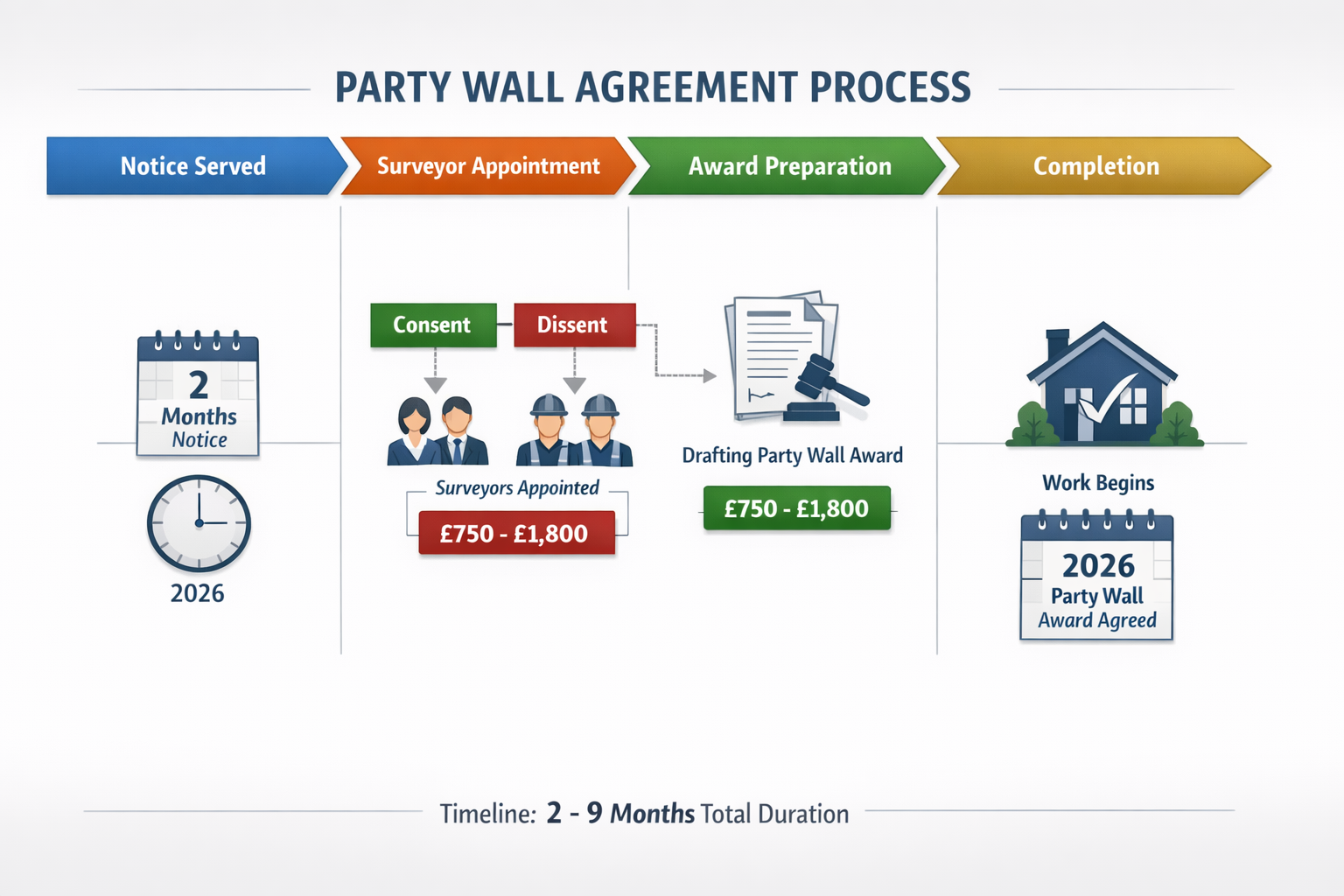
Best-case scenario (neighbour consent):
- Serve notice: Day 0
- 2-month notice period: Days 1-60[1]
- Surveyor appointments and schedule of condition: Days 30-75
- Party Wall Award preparation: Days 60-90
- Total minimum timeline: 2-3 months[2]
Standard scenario (neighbour dissent):
- Notice served and dissent received: Days 0-14
- Surveyor appointments: Days 14-30
- Site inspections and assessments: Days 30-60
- Award negotiations and preparation: Days 60-120
- Total timeline: 3-4 months[2]
Complex scenario (disputes or third surveyor):
- Initial process: Days 0-60
- Dispute identification: Days 60-90
- Third surveyor appointment: Days 90-120
- Resolution and award: Days 120-270
- Total timeline: 5-9 months[2]
These extended timelines in complex cases can derail entire renovation schedules. Surveyors must advise clients to serve notices as early as possible—ideally before exchange of contracts on property purchases where renovation is planned.
Best Practices for Serving Party Wall Notices
Professional notice service requires attention to detail and proper documentation:
✅ Include complete information:
- Full legal names and addresses of all parties
- Detailed description of proposed works
- Anticipated start date (at least 2 months ahead)[1]
- Technical drawings and specifications
- Contact information for appointed surveyor
✅ Use proper delivery methods:
- Recorded delivery or hand delivery with receipt
- Email confirmation (follow up with hard copy)
- Photographic evidence of delivery
- Maintain delivery records for potential disputes
✅ Communicate proactively:
- Informal neighbour conversation before formal notice
- Explanation of process and timelines
- Reassurance about property protection measures
- Clear contact information for questions
Understanding common misconceptions about party wall agreements helps surveyors address client concerns and neighbour objections effectively.
Handling Neighbour Responses and Disputes
Neighbour reactions fall into three categories:
1. Consent (Best Outcome) 💚
- Neighbour signs and returns notice within 14 days
- No surveyor appointment needed (though recommended)
- Proceed with schedule of condition documentation
- Maintain good communication throughout works
2. Dissent (Standard Process) 🟡
- Neighbour refuses consent or doesn't respond within 14 days
- Both parties appoint surveyors (or share an "Agreed Surveyor")
- Surveyors prepare Party Wall Award
- Legal framework ensures project proceeds
3. Active Dispute (Complex Scenario) 🔴
- Disagreement over Award terms or access rights
- Third surveyor appointment may be required
- Extended timelines and additional costs
- Professional mediation and documentation critical
When facing the situation where a neighbour refuses party wall works, surveyors must reassure clients that neighbours cannot ultimately prevent lawful works. The Party Wall Act grants legal rights to proceed even with neighbour refusal,[2] though the process becomes more formal and time-consuming.
Strategic Approaches for Party Wall Agreements for 2026 Renovation Surge
Integrating Party Wall Planning with Property Purchases
The 2026 buyer confidence surge means many property purchases are being made specifically for renovation potential. Smart surveyors integrate party wall considerations into the buying process:
Pre-purchase assessment:
- Identify potential party wall implications during property viewings
- Review neighbouring properties for renovation history
- Assess boundary conditions and shared structures
- Estimate party wall costs in renovation budgets
Due diligence phase:
- Commission schedule of condition surveys for neighbouring properties
- Research previous party wall awards affecting the property
- Identify potential difficult neighbours through local knowledge
- Build party wall timelines into project planning
Exchange and completion:
- Serve party wall notices immediately after exchange
- Begin surveyor appointments before completion
- Coordinate with builders for realistic start dates
- Maintain communication with all parties
This proactive approach prevents renovation delays and ensures buyers understand total project costs before committing to purchases.
Managing Multiple Neighbouring Properties
Urban renovation projects often affect several neighbouring properties simultaneously. Managing multiple party wall agreements requires systematic organization:
Documentation systems:
- Separate files for each affected neighbour
- Tracking spreadsheets for notices, responses, and deadlines
- Centralized communication logs
- Digital document management for easy access
Cost management:
- Individual budget allocations per neighbour
- Contingency funds for unexpected disputes (15-20% recommended)
- Clear client communication about cumulative costs
- Payment tracking for all surveyor fees
Timeline coordination:
- Staggered notice service if neighbours share surveyors
- Parallel processing where possible
- Critical path identification for project dependencies
- Buffer periods for unexpected delays
For complex projects like basement excavations requiring party wall surveyors, coordination becomes even more critical as multiple technical assessments run concurrently.
Leveraging Technology for Efficient Party Wall Management
Digital tools streamline the Party Wall Agreements for 2026 Renovation Surge: Managing Notices as Buyer Confidence Returns process:
📱 Communication platforms:
- Email tracking systems for notice delivery confirmation
- Client portals for document sharing
- Video conferencing for remote inspections
- Instant messaging for quick neighbour queries
📊 Project management software:
- Automated deadline tracking and reminders
- Template libraries for notices and awards
- Progress dashboards for clients
- Integration with building control submissions
📸 Documentation technology:
- Photographic schedule of condition apps
- Drone surveys for roof and elevation assessments
- 3D scanning for precise measurements
- Cloud storage for permanent records
These technological approaches reduce administrative burden while improving accuracy and client satisfaction during the busy 2026 construction surge.
Addressing the Top Questions About Party Wall Procedures
Surveyors repeatedly encounter the same client questions. Having clear, confident answers builds trust and demonstrates expertise. Review the top 9 questions about party wall surveys to prepare comprehensive client responses.
Common client concerns:
"Can't we just skip the party wall process?" ❌
Absolutely not. Understanding the consequences of ignoring the Party Wall Act reveals serious legal and financial risks, including injunctions, project delays, and liability for damages without legal protection.
"Will this delay our renovation?" ⏰
Only if not planned properly. Early notice service and proactive surveyor engagement actually prevent delays by resolving issues before construction begins.
"Why do we pay for the neighbour's surveyor?" 💷
The Act places this responsibility on the building owner to ensure neighbours receive independent professional advice without financial barrier, creating a fair process for all parties.
"What if our neighbour is unreasonable?" 🤝
The legal framework provides mechanisms for resolution, including third surveyor appointments and formal award processes that ensure projects can proceed regardless of neighbour cooperation levels.
Preparing for Long-Term Success in Party Wall Management
Building Strong Neighbour Relationships
Relationship management often determines whether party wall processes run smoothly or become contentious:
Pre-notice engagement:
- Informal conversations about renovation plans
- Sharing vision boards or architect drawings
- Discussing timelines and potential disruption
- Offering reassurance about property protection
During the process:
- Regular updates on progress and timelines
- Prompt responses to concerns or questions
- Flexibility on access arrangements where reasonable
- Professional courtesy in all communications
Post-completion:
- Final condition inspections with neighbour present
- Addressing any legitimate concerns promptly
- Maintaining good relations for future projects
- Positive closure of the formal process
Good neighbour relations can reduce costs by enabling shared surveyor appointments and accelerate timelines through cooperative scheduling.
Professional Development for the 2026 Market
The construction boom demands enhanced professional capabilities:
Technical knowledge:
- Updated understanding of building regulations
- Structural engineering principles for complex works
- Foundation assessment for excavation projects
- Modern construction methods and materials
Legal expertise:
- Current Party Wall Act case law
- RICS guidance updates and best practices
- Dispute resolution procedures
- Professional indemnity considerations
Client management:
- Clear communication of complex legal requirements
- Expectation management for timelines and costs
- Conflict resolution and mediation skills
- Technology adoption for efficient service delivery
Continuous professional development ensures surveyors remain competitive and capable during the Party Wall Agreements for 2026 Renovation Surge: Managing Notices as Buyer Confidence Returns.
Risk Management and Professional Protection
Professional surveyors must protect themselves and their clients:
Documentation standards:
- Comprehensive photographic records
- Detailed written reports with measurements
- Clear award language avoiding ambiguity
- Permanent archival of all correspondence
Insurance considerations:
- Adequate professional indemnity coverage
- Clear engagement letters defining scope
- Limitation of liability clauses where appropriate
- Regular policy reviews for increased activity levels
Quality assurance:
- Peer review of complex awards
- Standardized processes and checklists
- Client feedback systems
- Continuous improvement protocols
These risk management practices protect professional reputations while ensuring clients receive the highest quality service during the demanding 2026 market conditions.
Coordinating with Other Construction Professionals
Party wall agreements don't exist in isolation. Effective coordination with other professionals ensures seamless project delivery:
Architects and designers:
- Early consultation on party wall implications
- Design modifications to minimize neighbour impact
- Technical drawing preparation for notices
- Timeline integration with planning applications
Builders and contractors:
- Clear communication of award conditions
- Access arrangements and working hours
- Protection measures for neighbouring properties
- Compliance monitoring during construction
Building control officers:
- Coordination of inspection schedules
- Regulatory compliance verification
- Documentation sharing where appropriate
- Resolution of technical queries
This collaborative approach prevents conflicts between different regulatory requirements and ensures renovation projects proceed smoothly from conception through completion.
Conclusion

The Party Wall Agreements for 2026 Renovation Surge: Managing Notices as Buyer Confidence Returns represents both a significant challenge and an exceptional opportunity for property professionals. With buyer demand up 57% and construction activity reaching unprecedented levels, the ability to navigate party wall requirements efficiently separates successful projects from delayed disasters.
Key success factors for managing this surge include:
✅ Early planning: Serve notices immediately upon property purchase or project conception, allowing 2-9 months depending on complexity[2]
✅ Realistic budgeting: Allocate £1,500-£3,600 per affected neighbour for complete party wall compliance[2]
✅ Professional expertise: Engage qualified party wall surveyors who understand both technical requirements and relationship management
✅ Proactive communication: Build positive neighbour relationships through transparency, courtesy, and regular updates
✅ Technology adoption: Leverage digital tools for documentation, tracking, and communication efficiency
✅ Risk management: Maintain comprehensive records and appropriate insurance coverage
The Party Wall Act 1996 remains unchanged in 2026,[2] but the market context has transformed dramatically. Surveyors who master these requirements while maintaining high professional standards will thrive during this construction boom, delivering exceptional value to clients navigating complex renovation projects.
Next Steps for Property Professionals
Immediate actions:
- Audit current processes against 2026 best practices and identify improvement opportunities
- Update client communication materials with current timelines, costs, and regulatory requirements
- Strengthen professional networks with other surveyors, architects, and builders for collaborative project delivery
- Invest in technology for efficient documentation and client service
- Review insurance coverage to ensure adequate protection for increased activity levels
Long-term strategies:
- Develop specialization in complex party wall scenarios (basements, commercial conversions, heritage properties)
- Build reputation through consistent delivery and positive client outcomes
- Create educational content helping clients understand party wall requirements
- Establish referral networks with estate agents, architects, and property developers
- Maintain continuous professional development in evolving construction methods and regulations
The 2026 renovation surge offers unprecedented opportunities for surveyors who approach party wall agreements with professionalism, expertise, and strategic thinking. By managing notices effectively and guiding clients through this essential legal requirement, property professionals position themselves as indispensable partners in successful renovation projects. 🏡
References
[1] Party Wall Agreement – hoa.org.uk
[2] Party Wall Agreement London 2026 – mayfairstudio.co.uk
[3] Party Wall Surveys And Neighbour Disputes During 2026s Construction Uptick Rics Compliance Framework – nottinghillsurveyors.com
[5] Party Wall Surveys Amid 2026 Construction Boom Handling Disputes In High Demand Uk Housing Markets – nottinghillsurveyors.com
How Prince Surveyors can help: explore our party wall surveyors or learn about our party wall surveyor costs.