

The property surveying industry stands at a transformative crossroads in 2026. Traditional methods that once required weeks of manual analysis, countless site visits, and extensive documentation are giving way to intelligent systems that can process thousands of data points in minutes. AI and Machine Learning Revolutionizing Property Survey Data Analysis: Predictions and Tools for 2026 represents more than just technological advancement—it signals a fundamental shift in how professionals assess, evaluate, and understand properties across the United Kingdom and beyond.
Consider this: when chartered surveyors once spent days examining a building's structural integrity, modern AI systems can now analyze 136 million properties using simple conversational queries[3]. What previously demanded specialized database skills and extensive manual research now happens through plain English questions answered in seconds. This isn't science fiction—it's the reality reshaping property surveying today.
Key Takeaways
✅ AI tools achieve sub-3% error rates in property valuations, approaching human appraiser accuracy while processing data 98% faster than traditional methods[3]
✅ Real estate professionals report ROI ranging from several hundred percent to millions in recovered revenue, with 70-90% time reductions across survey workflows[3]
✅ Predictive AI models now forecast geological risks including soil erosion, landslides, and ground subsidence by analyzing historical survey data combined with environmental factors[4]
✅ The real estate AI market is projected to reach $1.3 trillion by 2034, representing a 36% compound annual growth rate that signals massive industry transformation[3]
✅ Approximately 95% of real estate firms are still developing AI competency, creating significant competitive advantages for early adopters who implement these technologies effectively[3]
Understanding How AI Automates Pattern Detection in Property Surveys
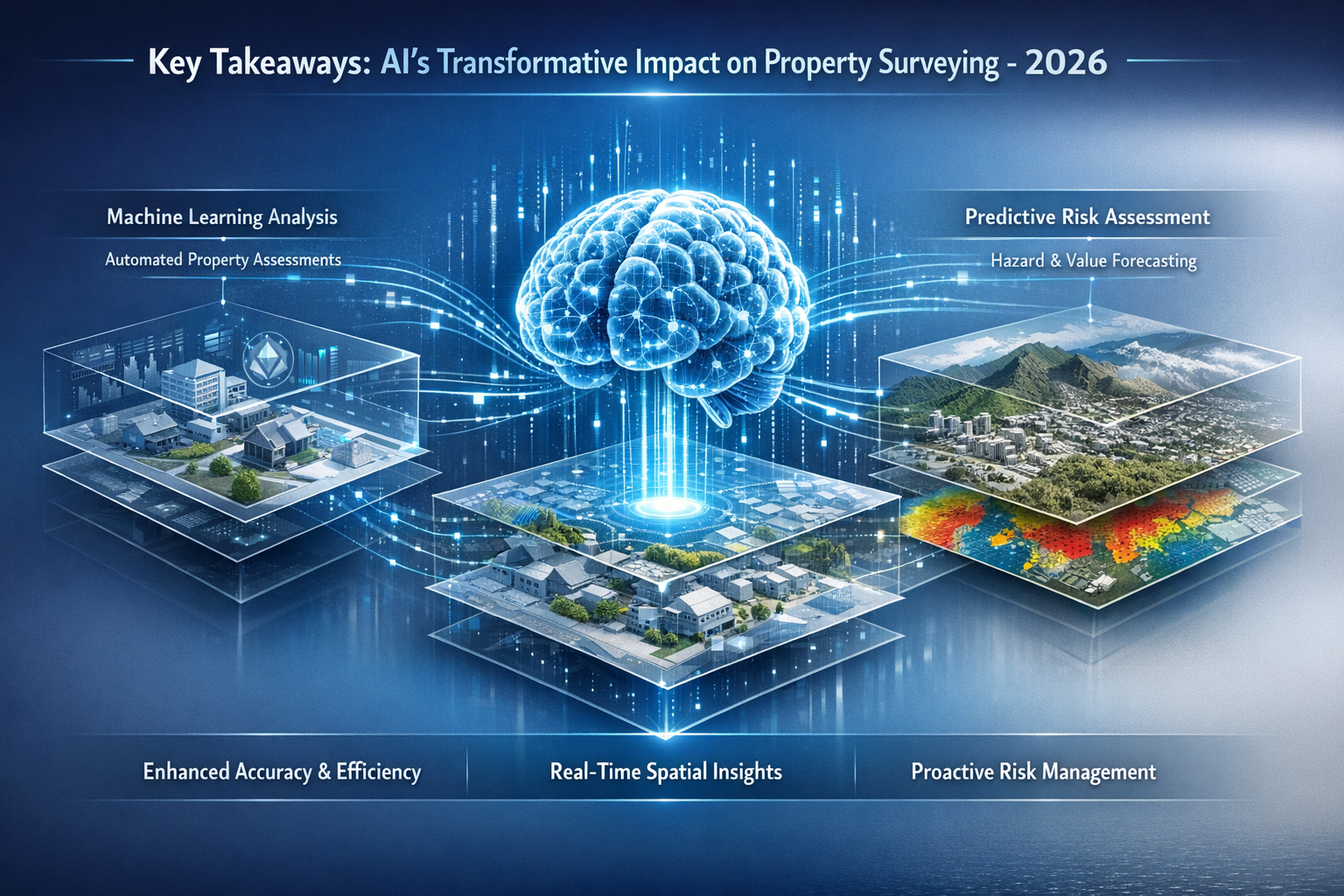
Pattern detection represents one of the most powerful applications of AI and Machine Learning Revolutionizing Property Survey Data Analysis: Predictions and Tools for 2026. Traditional surveyors rely on visual inspection, experience, and manual measurements to identify structural issues, defects, and potential problems. While human expertise remains invaluable, AI systems bring unprecedented speed, consistency, and analytical depth to pattern recognition tasks.
The Mechanics of AI Pattern Recognition
Machine learning algorithms excel at identifying patterns that might escape even experienced professionals. These systems analyze thousands of property images, thermal scans, and sensor readings to detect:
- Structural anomalies including cracks, settlement patterns, and load-bearing concerns
- Moisture infiltration patterns that indicate potential damp problems
- Thermal inefficiencies revealing insulation gaps and energy loss areas
- Material degradation across roofing, masonry, and building facades
- Historical deterioration trends predicting future maintenance requirements
The technology works by training neural networks on vast datasets of building conditions. When a surveyor conducting a Level 3 full building survey uploads property images, the AI compares visual patterns against millions of reference images, instantly flagging potential concerns that warrant closer inspection.
Computer Vision and Defect Identification
Computer vision technology has advanced dramatically, enabling AI systems to process visual data with remarkable accuracy. Modern systems can:
Analyze drone imagery 📸 to assess roof conditions, chimney integrity, and external structural elements without requiring scaffolding or dangerous access
Process thermal imaging 🌡️ to identify heat loss patterns, moisture accumulation, and insulation deficiencies across entire building envelopes
Examine historical photographs to track deterioration rates and predict future maintenance needs based on documented changes
One particularly impressive application involves automated crack detection and classification. AI algorithms can measure crack width, length, and orientation, then categorize severity levels according to structural engineering standards. This capability proves especially valuable when evaluating older properties, as detailed in guides about common defects in older homes.
Real-Time Data Processing Capabilities
The shift from batch processing to real-time analysis represents a game-changing development. Surveyors equipped with AI-enabled tablets can now:
- Receive instant defect alerts during property inspections
- Access comparable property data while still on-site
- Generate preliminary reports before leaving the premises
- Identify areas requiring specialist investigation immediately
This real-time capability reduces the need for return visits and accelerates the entire survey process. What once required multiple site visits can often be completed in a single comprehensive inspection, as discussed in articles about how long a building survey takes.
Accuracy Improvements and Error Reduction
The numbers speak for themselves. AI-powered property analysis systems now achieve error rates below 3% in valuation accuracy[3], while broader automated valuation models (AVMs) consistently perform below 5% error rates[2][3]. These figures represent substantial improvements over previous systems and approach the accuracy levels of experienced human appraisers.
More importantly, AI systems demonstrate consistency that human surveyors cannot match. Fatigue, distraction, and subjective interpretation don't affect algorithmic analysis. Every property receives the same thorough, systematic evaluation regardless of the time of day or the surveyor's workload.
Predictive Risk Analysis: Landslides, Subsidence, and Environmental Hazards
Beyond identifying current conditions, AI and Machine Learning Revolutionizing Property Survey Data Analysis: Predictions and Tools for 2026 enables forward-looking risk assessment that was previously impossible. Predictive modeling combines historical survey data, geological information, environmental factors, and climate patterns to forecast potential hazards before they manifest.
Geological Risk Prediction Models
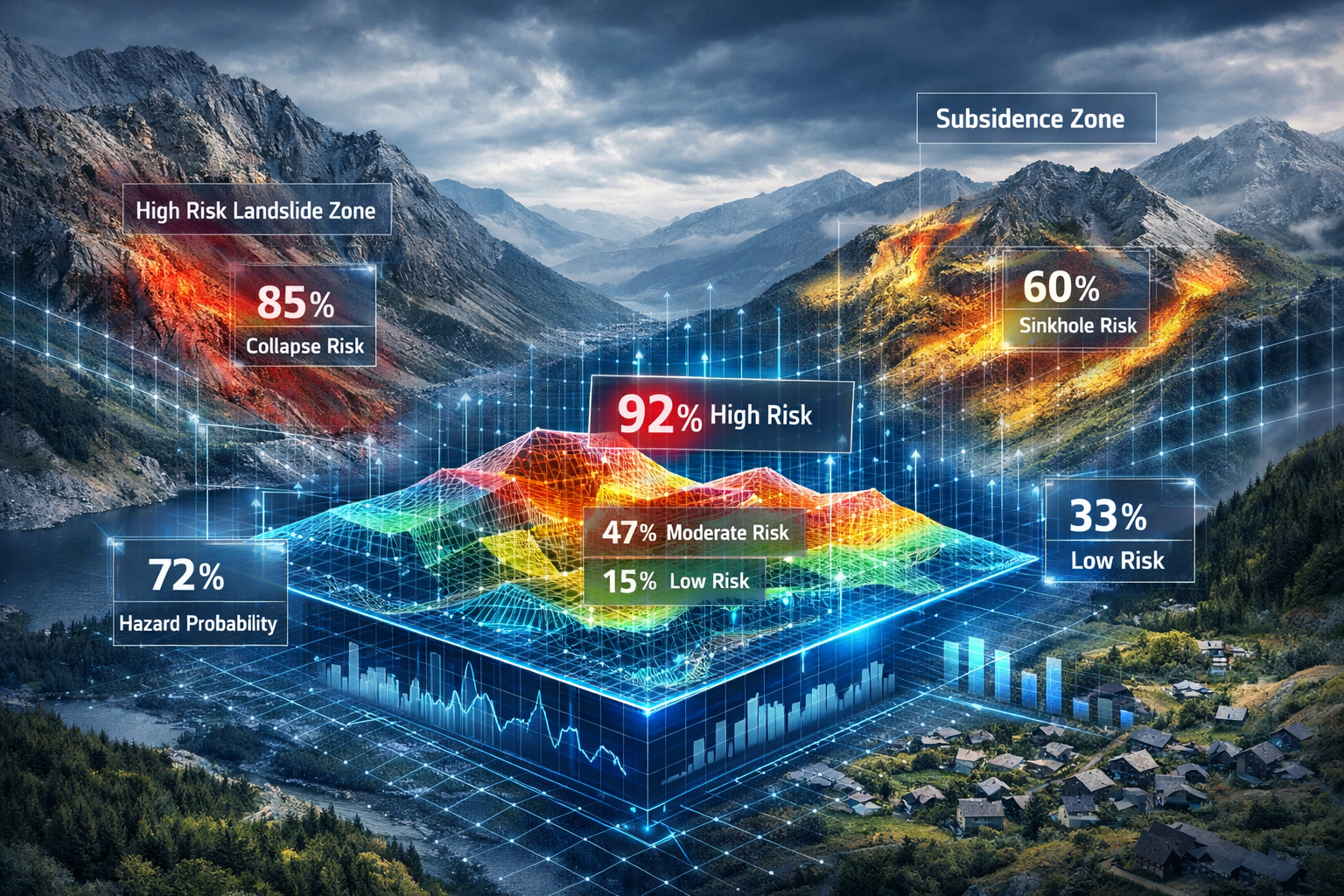
AI models can analyze historical survey data combined with environmental factors to predict soil erosion, landslides, ground subsidence, and other geological risks[4]. This capability proves particularly valuable in areas with:
- Clay soil conditions prone to shrinkage and expansion
- Historical mining activity that may cause future subsidence
- Coastal locations facing erosion and sea-level changes
- Hillside properties vulnerable to slope instability
- Areas with changing water tables affecting foundation stability
The predictive models work by correlating thousands of environmental variables with documented property damage incidents. Machine learning algorithms identify which combinations of factors most reliably predict future problems, enabling surveyors to flag high-risk properties proactively.
Environmental Impact Simulation
One of the most sophisticated applications involves simulating how proposed developments will affect existing properties and landscapes. AI systems can model the impact of:
🏗️ New road networks on traffic patterns, noise levels, and air quality
🏘️ Housing developments on drainage systems, local infrastructure, and property values
💧 Drainage modifications on flood risk and water management
🌳 Landscape changes on soil stability and environmental sustainability
These simulations support sustainable planning decisions by revealing potential consequences before construction begins[4]. When evaluating properties near proposed developments, surveyors can now provide clients with data-driven predictions about future environmental changes.
Climate Change and Long-Term Risk Assessment
Climate-related risks increasingly influence property valuations and survey recommendations. AI models incorporate climate projections to assess:
- Flood risk evolution based on rainfall pattern changes
- Heat stress affecting building materials and energy efficiency
- Extreme weather vulnerability including wind damage and storm exposure
- Coastal erosion acceleration impacting properties near water
This long-term perspective helps property buyers make informed decisions about climate resilience, particularly important for properties in vulnerable locations across Surrey, Sussex, and coastal regions.
Integration with Environmental Surveys
Modern AI tools seamlessly integrate with environmental issue assessments to provide comprehensive risk profiles. The systems can:
- Cross-reference contaminated land registers with property locations
- Analyze historical land use for potential contamination risks
- Assess radon exposure based on geological data and building characteristics
- Evaluate air quality using local monitoring data and traffic patterns
This integrated approach ensures that surveyors consider all environmental factors when making recommendations, supporting more thorough due diligence processes.
Predictive Maintenance Scheduling
Beyond hazard prediction, AI systems forecast when building components will require maintenance or replacement. By analyzing:
- Material specifications and expected lifespans
- Environmental exposure levels
- Historical maintenance records
- Current condition assessments
The algorithms generate predictive maintenance schedules that help property owners budget for future repairs. This capability proves especially valuable for budgeting repairs and restoration work on older or heritage properties.
Top AI Tools and Platforms Transforming Property Survey Analysis in 2026
The marketplace for AI-powered property survey tools has matured significantly, offering chartered surveyors a diverse range of specialized solutions. Understanding which tools deliver the best performance for specific applications helps professionals maximize the benefits of AI and Machine Learning Revolutionizing Property Survey Data Analysis: Predictions and Tools for 2026.
Comprehensive AI Property Analysis Platforms
| Platform | Primary Function | Key Strengths | Accuracy Metrics |
|---|---|---|---|
| CanaryAI | Valuation & Analysis | Natural language queries, 136M property database | <3% error rate[3] |
| RealtyOmega | Market Analysis | Predictive pricing, trend forecasting | 98% time reduction[3] |
| PropTech Vision | Visual Inspection | Defect detection, thermal analysis | 95%+ accuracy[3] |
| GeoRisk AI | Environmental Assessment | Geological risk prediction, climate modeling | 60%+ faster due diligence[2] |
| SurveyBot Pro | Report Generation | Automated documentation, compliance checking | 80%+ time savings[3] |
CanaryAI: Generative AI for Property Valuation
HouseCanary's CanaryAI represents a breakthrough in automated property valuation. The platform achieves error rates below 3%[3], significantly exceeding industry standards and approaching human appraiser accuracy. What sets CanaryAI apart is its conversational interface—users can query 136 million properties using plain English questions, eliminating the need for complex database skills[3].
For chartered surveyors conducting valuations for leasehold extensions or inheritance tax purposes, this tool provides instant comparable data and market analysis that would traditionally require hours of research.
Automated Valuation Models (AVMs)
Broader AVM platforms now achieve error rates below 5%, with some demonstrating approximately 8% accuracy improvements over previous systems[2][3]. These tools excel at:
- Rapid property valuations for mortgage purposes
- Portfolio analysis across multiple properties
- Market trend identification for investment decisions
- Comparative market analysis supporting pricing strategies
The speed advantage proves remarkable—tasks that once required weeks of manual analysis now complete in minutes, with AI reducing due diligence timelines by over 60%[2].
Specialized Survey Analysis Tools
Beyond valuation, specialized AI tools address specific surveying challenges:
Drone Survey Analysis Software 🚁
Modern drone technology combined with AI image processing revolutionizes roof and external inspections. Premium drone surveys capture high-resolution imagery that AI algorithms analyze for:
- Roof tile damage and deterioration
- Chimney structural integrity
- Gutter condition and drainage issues
- External wall defects and weathering
Thermal Imaging AI 🌡️
AI-enhanced thermal imaging identifies insulation deficiencies, moisture infiltration, and energy efficiency issues with unprecedented precision. The systems generate detailed heat loss maps and prioritized improvement recommendations.
Structural Analysis Platforms
These tools process laser scanning data and photogrammetry to create detailed 3D models, then apply structural engineering principles to identify:
- Load-bearing concerns
- Settlement patterns
- Structural movement
- Foundation issues
Rent Comparison and Market Analysis Tools
For surveyors working with rental properties or conducting market valuations, specialized rent analysis platforms maintain accuracy typically within 3-4% of actual leased rents with daily updates covering over 35 million units nationwide[3]. These tools reduce rent survey time by over 80%, generating comprehensive rent comparables in under one minute[3].
Integration Capabilities and API Access
The most valuable AI tools offer robust integration capabilities, allowing surveyors to:
- Connect with existing CRM systems for seamless workflow management
- Export data to report templates for consistent documentation
- Share findings with clients through interactive dashboards
- Archive survey data for future reference and trend analysis
API access enables custom integrations tailored to specific practice requirements, particularly valuable for larger surveying firms operating across multiple locations like Hertfordshire, Berkshire, and Central London.
Cost-Benefit Analysis of AI Tool Adoption
While AI platforms require investment, the returns prove substantial. Real estate professionals using AI tools report ROI ranging from several hundred percent to millions in recovered revenue[3]. The benefits include:
💰 Direct cost savings through reduced labor hours and faster turnaround times
📈 Revenue increases from handling more surveys with existing staff
⭐ Quality improvements reducing professional liability exposure
🎯 Competitive advantages attracting clients seeking modern, efficient service
For practices evaluating which tools to adopt, starting with platforms addressing the most time-consuming aspects of current workflows typically delivers the fastest ROI.
Integration Workflows: How Chartered Surveyors Implement AI Tools
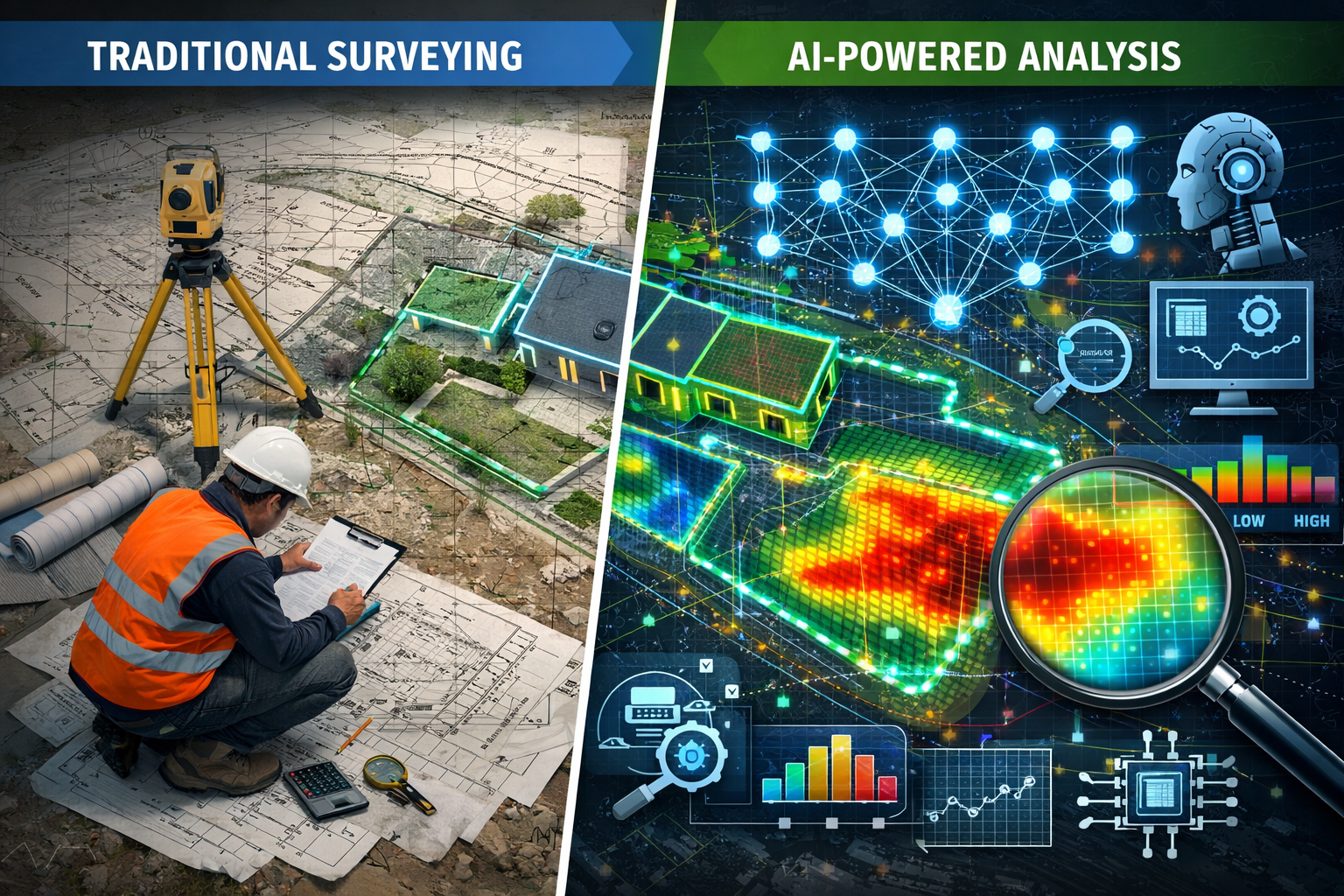
Successfully implementing AI and Machine Learning Revolutionizing Property Survey Data Analysis: Predictions and Tools for 2026 requires more than purchasing software—it demands thoughtful integration into existing surveying workflows. The most successful adopters follow structured implementation strategies that balance technological capabilities with professional expertise.
The Hybrid Approach: Combining AI with Human Expertise
The optimal workflow combines AI's analytical power with surveyors' professional judgment and contextual understanding. This hybrid approach typically follows these stages:
Stage 1: Pre-Survey Data Collection 📊
Before site visits, AI tools gather and analyze:
- Historical property records and previous survey reports
- Planning permission history and building regulations compliance
- Environmental data and geological surveys
- Comparable property information and market data
This preparation enables surveyors to arrive on-site with comprehensive background knowledge, focusing inspection time on areas requiring professional assessment.
Stage 2: On-Site AI-Assisted Inspection 🏠
During property inspections, mobile AI tools provide:
- Real-time defect detection alerts from photographs
- Instant access to comparable defect examples
- Automated measurement and documentation
- Preliminary risk assessments for identified issues
Surveyors retain full control, using AI suggestions to ensure nothing escapes attention while applying professional judgment to evaluate significance.
Stage 3: Post-Inspection Analysis and Verification ✅
After site visits, AI systems:
- Process collected data against extensive databases
- Generate preliminary findings and risk assessments
- Identify areas requiring specialist investigation
- Produce draft report sections for surveyor review
The surveyor reviews AI-generated content, verifying accuracy, adding contextual insights, and making final recommendations based on professional expertise.
Stage 4: Report Generation and Client Communication 📝
AI tools accelerate report production through:
- Automated formatting and compliance checking
- Consistent terminology and structure
- Integration of photographs with annotations
- Generation of executive summaries and key findings
This automation reduces report writing time by 70-90%[3], allowing surveyors to focus on client consultation and advisory services.
Workflow Optimization for Different Survey Types
Different survey types benefit from tailored AI integration approaches:
Level 2 Surveys (HomeBuyer Reports)
For standard Level 2 surveys, AI tools excel at:
- Rapid condition assessments
- Automated comparable valuations
- Standard defect identification
- Template-based report generation
Level 3 Building Surveys
More comprehensive Level 3 surveys leverage AI for:
- Detailed defect analysis and classification
- Historical deterioration tracking
- Predictive maintenance scheduling
- Specialist investigation recommendations
Specialist Surveys
For specialized assessments like asbestos surveys or building defect surveys, AI provides:
- Hazardous material identification support
- Regulatory compliance verification
- Risk prioritization matrices
- Remediation cost estimation
Training and Competency Development
Successful AI adoption requires investment in team training. The most effective programs include:
Technical Skills Development 💻
- Platform navigation and feature utilization
- Data input best practices
- Quality control procedures
- Troubleshooting common issues
Professional Judgment Enhancement 🎓
- Evaluating AI recommendations critically
- Recognizing algorithm limitations
- Knowing when to override AI suggestions
- Maintaining professional standards
Client Communication 🗣️
- Explaining AI's role in survey process
- Building confidence in hybrid methodologies
- Addressing concerns about automation
- Demonstrating value-added services
Data Management and Quality Control
Effective AI integration requires robust data management protocols:
Input Data Quality
- Standardized photography procedures
- Consistent measurement techniques
- Complete documentation practices
- Regular equipment calibration
Output Verification
- Systematic review of AI-generated findings
- Cross-referencing against professional observations
- Validation of comparable data selections
- Accuracy checking of automated calculations
Continuous Improvement
- Tracking AI recommendation accuracy
- Identifying recurring errors or limitations
- Providing feedback to platform developers
- Updating internal protocols based on experience
Regulatory Compliance and Professional Standards
When implementing AI tools, surveyors must ensure compliance with:
RICS Standards 📋
- Maintaining professional competence requirements
- Ensuring appropriate skill levels for AI tool usage
- Documenting methodology and decision-making processes
- Retaining professional responsibility for all outputs
Data Protection
- GDPR compliance for property and client data
- Secure data transmission and storage
- Client consent for AI processing
- Data retention and deletion policies
Professional Indemnity Insurance
- Verifying coverage extends to AI-assisted work
- Disclosing AI tool usage to insurers
- Maintaining adequate documentation
- Understanding liability allocation
Geographic Considerations for AI Implementation
Surveyors operating across diverse locations must consider regional variations. Practices serving areas from Hampstead to Guildford, or from East London to Watford, encounter different:
- Property types requiring specialized AI training data
- Market conditions affecting valuation algorithms
- Environmental risks necessitating region-specific models
- Building regulations influencing compliance assessments
Successful implementation accounts for these variations, ensuring AI tools receive appropriate local data to generate accurate recommendations.
Measuring Success: ROI and Performance Metrics
Quantifying the impact of AI and Machine Learning Revolutionizing Property Survey Data Analysis: Predictions and Tools for 2026 helps justify investment and guide optimization efforts. Leading surveying practices track multiple performance indicators:
Time Efficiency Metrics
Survey Completion Speed ⏱️
- Average time per survey type (before vs. after AI)
- Time spent on data collection vs. analysis
- Report generation duration
- Client turnaround times
Typical improvements: 70-90% time reductions across workflows[3]
Market Analysis Efficiency
- Time required for comparable property research
- Rent survey completion time
- Due diligence timeline duration
Documented results: 98% reduction in market analysis time, rent comparables generated in under one minute[3]
Accuracy and Quality Improvements
Valuation Precision
- Error rates compared to actual transaction prices
- Consistency across different surveyors
- Client dispute frequency
- Revision requirements
Industry benchmarks: Sub-3% error rates for advanced AI platforms[3]
Defect Detection Completeness
- Percentage of issues identified during initial survey
- Callback frequency for missed items
- Client satisfaction scores
- Professional liability claims
Financial Performance Indicators
Revenue Impact 💷
- Survey volume capacity increases
- Premium pricing for AI-enhanced services
- New service offerings enabled by AI
- Market share growth
Real-world results: ROI ranging from several hundred percent to millions in recovered revenue[3]
Cost Reductions
- Labor cost per survey
- Overhead allocation efficiency
- Technology investment payback period
- Professional indemnity insurance premiums
Competitive Positioning
Market Differentiation
- Client acquisition rates
- Retention percentages
- Referral frequency
- Brand perception metrics
Industry Leadership
- Speaking opportunities and thought leadership
- Media coverage and professional recognition
- Recruitment advantages
- Partnership opportunities
Given that 95% of real estate firms are still developing AI competency[3], early adopters enjoy substantial competitive advantages.
Future Developments: What's Next for AI in Property Surveying
The trajectory of AI and Machine Learning Revolutionizing Property Survey Data Analysis: Predictions and Tools for 2026 suggests several emerging developments that will further transform the industry:
Advanced Predictive Analytics
Next-generation AI systems will move beyond current condition assessment to predictive property lifecycle management, forecasting:
- Maintenance requirements years in advance with precise timing and cost estimates
- Property value trajectories based on neighborhood development patterns
- Energy efficiency evolution as building systems age
- Regulatory compliance risks from changing building standards
Autonomous Inspection Technologies
Robotics and autonomous systems will increasingly supplement human surveyors:
🤖 Autonomous drones conducting routine external inspections without operator intervention
🔍 Robotic crawlers accessing confined spaces and hazardous areas
📡 IoT sensor networks providing continuous property condition monitoring
🎥 360-degree automated imaging capturing comprehensive property documentation
Augmented Reality Integration
AR technology will transform how surveyors interact with properties and communicate findings:
- On-site overlay systems displaying historical data and defect locations during inspections
- Virtual defect visualization helping clients understand issues without technical knowledge
- Remote expert consultation enabling specialists to guide on-site surveyors in real-time
- Interactive report presentations allowing clients to explore properties virtually
Blockchain and Data Verification
Distributed ledger technology will enhance survey data integrity:
- Immutable survey records preventing tampering and ensuring authenticity
- Automated compliance verification against building regulations and standards
- Transparent property history accessible to all stakeholders
- Smart contract integration automating survey-dependent transactions
Industry-Wide Data Sharing
Collaborative data platforms will emerge, enabling:
- Collective learning from industry-wide defect databases
- Standardized benchmarking across property types and regions
- Predictive model refinement through aggregated survey data
- Best practice dissemination accelerating professional development
Challenges and Limitations of AI in Property Surveying
Despite tremendous benefits, AI and Machine Learning Revolutionizing Property Survey Data Analysis: Predictions and Tools for 2026 faces several challenges that surveyors must navigate:
Data Quality and Availability
AI systems require extensive, high-quality training data. Challenges include:
- Historical data gaps for older properties with limited documentation
- Regional data scarcity in areas with fewer transactions
- Inconsistent data formats across different sources and time periods
- Privacy restrictions limiting access to comprehensive datasets
Algorithm Bias and Limitations
AI models can perpetuate or amplify biases present in training data:
- Geographic bias favoring well-documented urban areas over rural properties
- Property type bias performing better on common residential properties than specialized buildings
- Temporal bias struggling with rapidly changing market conditions
- Cultural bias in valuation models reflecting historical discrimination patterns
Professional Responsibility and Liability
Legal and professional questions remain regarding:
- Liability allocation when AI recommendations prove incorrect
- Professional standards for AI-assisted work
- Client disclosure requirements about AI usage
- Insurance coverage for AI-related errors
Technology Dependence Risks
Over-reliance on AI systems creates vulnerabilities:
- System failures disrupting survey operations
- Cybersecurity threats compromising sensitive data
- Vendor dependency limiting flexibility and control
- Skill degradation as professionals rely increasingly on automation
Regulatory Uncertainty
The regulatory framework for AI in property surveying continues evolving:
- Standards development for AI-assisted surveys
- Qualification requirements for AI tool usage
- Quality assurance protocols and audit procedures
- Consumer protection regulations governing AI-generated valuations
Practical Implementation Roadmap for Surveying Practices
For chartered surveyors ready to embrace AI and Machine Learning Revolutionizing Property Survey Data Analysis: Predictions and Tools for 2026, this structured roadmap provides a practical implementation path:
Phase 1: Assessment and Planning (Months 1-2)
Current State Analysis
- Document existing workflows and time allocations
- Identify bottlenecks and inefficiencies
- Survey team capabilities and training needs
- Assess technology infrastructure readiness
Goal Setting
- Define specific objectives (time savings, accuracy improvements, capacity increases)
- Establish measurable success metrics
- Set realistic timelines for implementation phases
- Allocate budget for technology and training
Tool Selection
- Research available platforms matching practice needs
- Request demonstrations and trial periods
- Evaluate integration capabilities with existing systems
- Compare pricing models and contract terms
Phase 2: Pilot Implementation (Months 3-4)
Limited Deployment
- Select 1-2 AI tools for initial implementation
- Choose pilot team members with appropriate skills
- Start with specific survey types or geographic areas
- Maintain parallel traditional processes during testing
Training and Support
- Conduct comprehensive platform training
- Establish internal support resources
- Create documentation and best practice guides
- Schedule regular check-ins and troubleshooting sessions
Performance Monitoring
- Track defined success metrics
- Gather team feedback on usability and effectiveness
- Document challenges and solutions
- Compare AI-assisted vs. traditional survey outcomes
Phase 3: Refinement and Expansion (Months 5-6)
Process Optimization
- Adjust workflows based on pilot experience
- Refine quality control procedures
- Update training materials
- Standardize best practices across team
Broader Rollout
- Expand AI usage to additional survey types
- Onboard remaining team members
- Increase percentage of surveys using AI assistance
- Develop client communication strategies
Integration Enhancement
- Improve connections with existing systems
- Customize platforms for practice-specific needs
- Automate routine processes
- Streamline data management workflows
Phase 4: Full Implementation and Continuous Improvement (Months 7+)
Complete Integration
- AI tools become standard practice across all appropriate surveys
- Traditional methods reserved for exceptional cases
- Client communications routinely explain AI benefits
- Marketing materials highlight technological capabilities
Ongoing Development
- Regular team training on new features and capabilities
- Continuous monitoring of performance metrics
- Participation in user communities and feedback programs
- Exploration of additional AI tools and capabilities
Competitive Positioning
- Leverage AI capabilities in business development
- Develop thought leadership content
- Share success stories and case studies
- Build reputation as innovative, technology-forward practice
Conclusion: Embracing the AI Revolution in Property Surveying
AI and Machine Learning Revolutionizing Property Survey Data Analysis: Predictions and Tools for 2026 represents far more than incremental technological improvement—it fundamentally transforms how chartered surveyors work, the value they deliver, and the competitive landscape they navigate. The evidence is compelling: sub-3% error rates, 70-90% time reductions, ROI in the millions, and 98% faster market analysis[2][3]. These aren't aspirational goals—they're documented results from early adopters already reaping the benefits.
The window of competitive advantage remains open but narrowing. With 95% of real estate firms still developing AI competency[3], surveyors who act decisively today position themselves as industry leaders tomorrow. The question isn't whether AI will transform property surveying—it's whether your practice will lead that transformation or struggle to catch up.
Actionable Next Steps
For Individual Surveyors:
- Educate yourself about available AI tools through demonstrations, webinars, and industry publications
- Experiment with free trials to understand capabilities and limitations firsthand
- Join professional communities discussing AI implementation experiences and best practices
- Advocate for adoption within your practice, presenting business cases based on documented ROI
For Surveying Practices:
- Conduct a technology audit identifying current gaps and opportunities for AI integration
- Allocate budget for AI tools, training, and implementation support in 2026 planning
- Designate AI champions within your team to lead adoption efforts and knowledge sharing
- Start small but start now with pilot projects demonstrating value before full-scale deployment
- Develop client communication strategies explaining how AI enhances service quality and value
For Industry Stakeholders:
- Support standards development ensuring AI-assisted surveys meet professional requirements
- Invest in training programs building industry-wide AI competency
- Facilitate data sharing to improve AI model accuracy and reliability
- Address regulatory questions providing clarity for responsible AI adoption
The future of property surveying is intelligent, efficient, and data-driven. The tools exist today to transform how surveys are conducted, analyzed, and delivered. The real estate AI market's projected growth to $1.3 trillion by 2034[3] signals massive investment and rapid advancement ahead. Surveyors who embrace these technologies now will define industry standards, attract forward-thinking clients, and build sustainable competitive advantages.
The revolution isn't coming—it's here. The only question is whether you'll lead it or watch from the sidelines. For those ready to take action, explore how modern surveying practices integrate AI capabilities across comprehensive building surveys, environmental assessments, and specialized investigations. The transformation of property surveying through AI and machine learning offers unprecedented opportunities for those prepared to seize them.
References
[1] Building The Future Of Property Intelligence – landlogic.ai
[2] Ai Property Analysis – growthfactor.ai
[3] Best Ai Tools For Real Estate – v7labs.com
[4] Ai Impact Analysis On Land Survey Equipment Industry – marketsandmarkets.com
[5] The Future Of Land Surveying Technology And Upcoming Trends In 2026 – metricop.com
[6] Ai And Arcgis Help Automate Design For Large Scale Developments – esri.com
[7] 2026 Real Estate Construction Industry Predictions – bdo.com
[8] Ces 2026 How Ai Will Power The Next Wave Of Smart Home Tech – nar.realtor
[9] How Ai Is Changing The Role Of The Surveyor In Aec – gim-international.com