

Surveyor Council Housing: Your Complete Guide to Property Inspections in 2026
When council housing tenants discover cracks in their walls, persistent damp, or structural concerns, they often wonder: who can help assess these issues professionally? The answer lies in understanding the critical role of a surveyor council housing specialist—a professional who bridges the gap between tenants, local authorities, and property standards. With over 4 million council and social housing properties across the UK, the demand for qualified surveyors who understand the unique challenges of public housing has never been greater.
Key Takeaways
- Surveyor council housing professionals provide essential inspection services for local authority properties, identifying defects, safety hazards, and maintenance requirements
- Council tenants have the right to request independent surveys when concerns arise about property condition, particularly for disrepair claims or Right to Buy purchases
- Qualified surveyors must hold RICS or RPSA accreditation and understand specific regulations governing social housing, including the Decent Homes Standard
- Survey costs for council properties typically range from £300-£800 depending on property size and survey type, with some circumstances allowing council funding
- Professional surveys protect both tenants and local authorities by documenting property conditions, preventing disputes, and ensuring compliance with housing standards
What Is a Surveyor Council Housing Specialist?
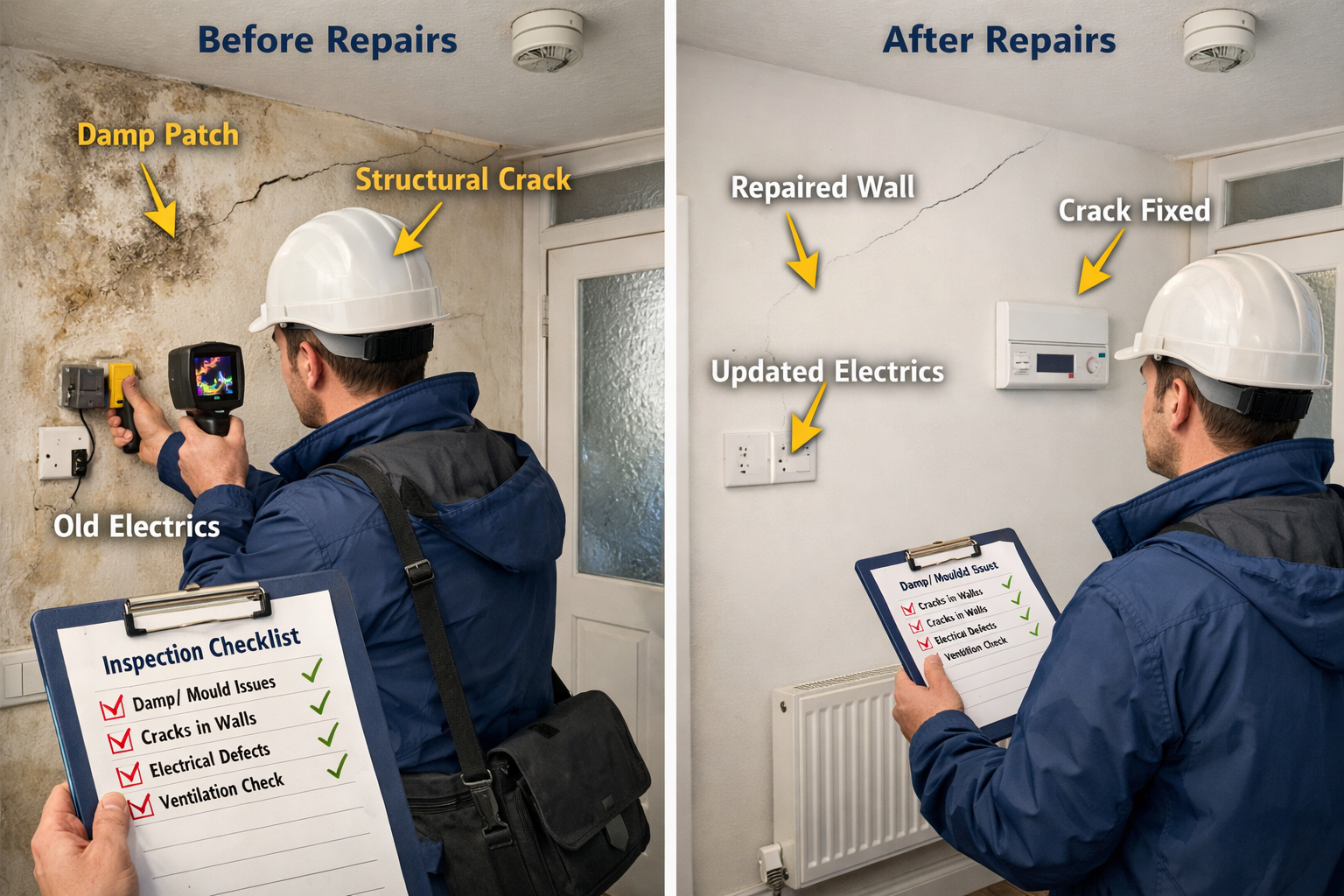
A surveyor council housing professional is a qualified property expert who specializes in assessing, inspecting, and reporting on local authority and social housing properties. Unlike surveyors who primarily work with private residential sales, these specialists understand the unique regulatory framework, construction methods, and maintenance challenges specific to council-owned housing stock.
Core Responsibilities
Council housing surveyors perform several critical functions:
- Condition assessments for properties requiring maintenance or repair
- Pre-purchase surveys for tenants exercising their Right to Buy
- Disrepair investigations when tenants raise concerns about property standards
- Stock condition surveys helping councils plan maintenance programs
- Structural assessments for older properties or those with visible defects
- Compliance inspections ensuring properties meet the Decent Homes Standard
These professionals must navigate complex relationships between tenants, housing associations, and local authorities while maintaining impartiality and professional standards. Understanding common defects in older homes is particularly valuable, as much of the UK’s council housing stock dates from the mid-20th century.
Qualifications and Accreditation
Professional surveyors working with council housing typically hold:
- RICS certification (Royal Institution of Chartered Surveyors)
- RPSA membership (Residential Property Surveyors Association)
- Specialized knowledge of Housing Health and Safety Rating System (HHSRS)
- Understanding of local authority procurement processes
- Experience with social housing construction types and materials
The rigorous training ensures these professionals can identify issues ranging from minor maintenance needs to serious structural defects that could impact tenant safety and wellbeing.
Why Council Housing Needs Professional Surveyors 🏘️
The unique nature of council housing creates specific challenges that require specialized surveying expertise. Understanding these factors helps explain why professional surveys are essential for maintaining housing standards.
Age and Construction Methods
Much of Britain’s council housing was constructed during specific building booms:
| Era | Construction Type | Common Issues |
|---|---|---|
| 1920s-1930s | Traditional brick | Damp, outdated services |
| 1950s-1960s | System-built | Concrete deterioration, insulation |
| 1970s-1980s | High-rise towers | Cladding, structural concerns |
| 1990s-2000s | Mixed developments | Defects liability, modern standards |
Each construction period brought different materials, methods, and potential problems. A qualified surveyor council housing expert recognizes these patterns and knows where to look for era-specific defects.
Tenant Rights and Legal Obligations
Council tenants have specific rights regarding property condition:
- Right to repairs for urgent and qualifying issues
- Right to request inspections when disrepair is suspected
- Right to compensation if the council fails to maintain standards
- Right to Buy with proper valuation and condition assessment
Councils face legal obligations under the Landlord and Tenant Act 1985 and the Homes (Fitness for Human Habitation) Act 2018. Professional surveys provide the documentation needed to enforce these rights and obligations. For property owners and managers, understanding why property owners hire surveyors offers valuable perspective on the broader benefits of professional assessments.
Budget Constraints and Maintenance Planning
Local authorities manage thousands of properties with limited budgets. Professional surveys help councils:
✅ Prioritize repairs based on urgency and safety
✅ Plan maintenance programs efficiently
✅ Allocate resources where they’re most needed
✅ Prevent costly emergency repairs through early detection
✅ Demonstrate compliance with regulatory standards
This strategic approach to property management relies heavily on accurate, professional surveying data.
Types of Surveys for Council Housing Properties
Different situations require different survey approaches. Understanding the options helps tenants and councils choose the most appropriate assessment method.
Condition Survey (Level 2)
The most common survey type for council properties, a Level 2 Condition Survey provides:
- Visual inspection of accessible areas
- Identification of urgent defects
- Assessment of property condition
- Recommendations for repairs
- Estimated costs for remedial work
This survey type suits most council housing situations, from routine inspections to disrepair claims. Tenants considering purchasing their council home often start with this level of assessment to understand what they’re buying.
Building Survey (Level 3)
For older properties, those with visible problems, or Right to Buy purchases of non-standard construction, a Level 3 Building Survey offers:
- Comprehensive detailed inspection
- In-depth analysis of construction and materials
- Extensive defect identification
- Detailed repair specifications
- Long-term maintenance advice
This thorough approach is particularly valuable for system-built properties or those with suspected structural issues. The difference between Level 2 and Level 3 surveys becomes crucial when deciding which assessment level provides the necessary detail.
Specific Defect Inspection
When tenants report particular problems—damp, cracks, roof leaks—a targeted inspection focuses solely on:
- The reported defect and its causes
- Extent of damage
- Required remedial action
- Potential related issues
- Estimated repair costs
This focused approach provides quick answers without the expense of a full survey, making it ideal for resolving specific disputes or concerns.
Stock Condition Survey
Councils commission these large-scale assessments to:
- Evaluate entire housing portfolios
- Plan maintenance budgets
- Identify patterns across estates
- Ensure regulatory compliance
- Develop improvement strategies
While individual tenants don’t typically request these surveys, they benefit from the improved maintenance planning that results.
The Council Housing Survey Process 📋
Understanding how the survey process works helps both tenants and councils navigate inspections smoothly and efficiently.
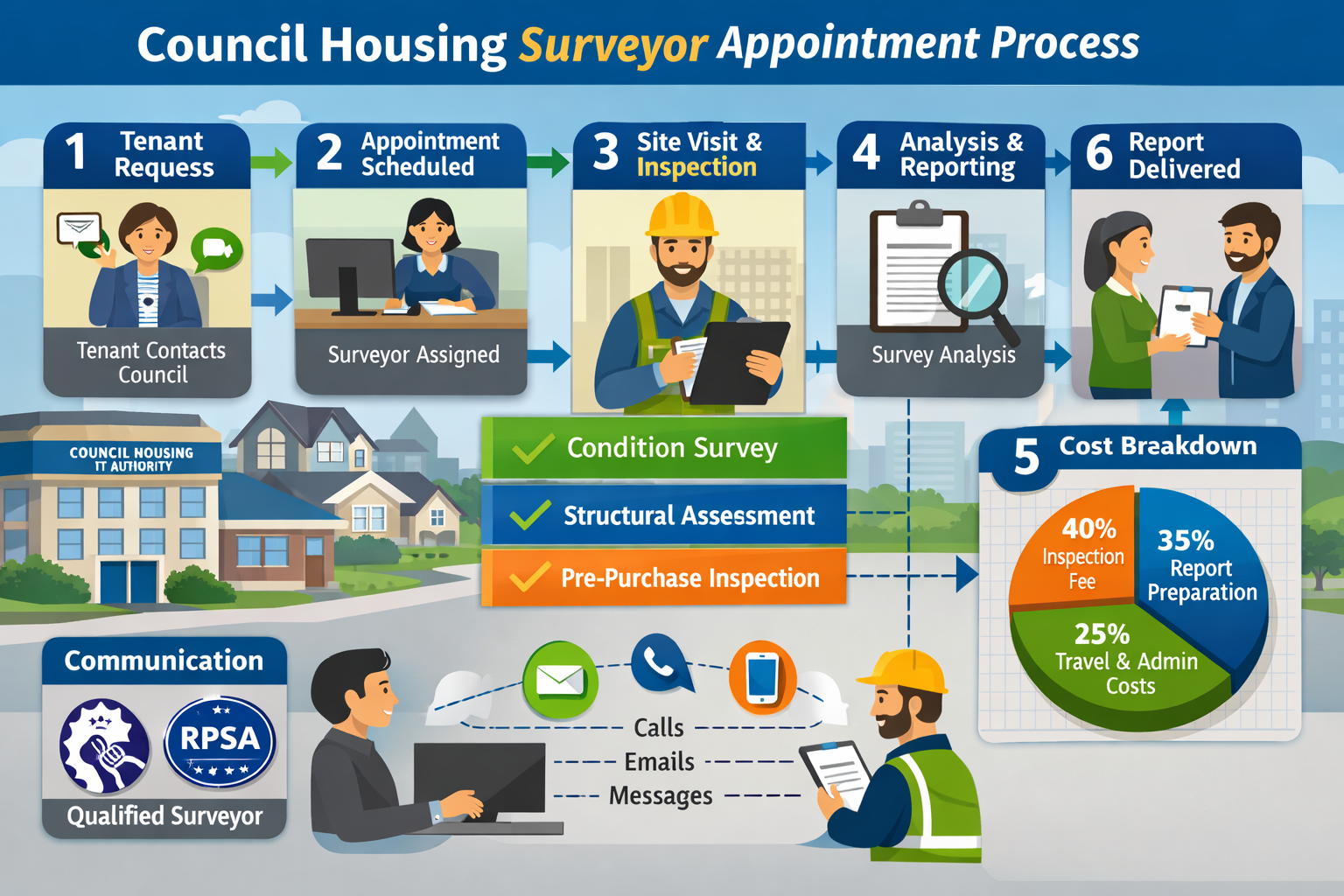
Step 1: Identifying the Need
Surveys may be triggered by:
- Tenant complaints about disrepair or defects
- Right to Buy applications requiring property valuation
- Routine inspections as part of maintenance schedules
- Insurance claims following damage
- Pre-planned works requiring condition assessment
Clear communication about the survey’s purpose ensures the surveyor focuses on relevant issues.
Step 2: Appointing a Surveyor
Depending on circumstances, the surveyor may be:
- Council-employed surveyors for routine inspections
- Independent professionals for Right to Buy or dispute situations
- Tenant-appointed surveyors for disrepair claims
- Insurance-appointed assessors for damage claims
Independent appointment often provides greater confidence in impartiality, particularly in contentious situations. Finding qualified professionals through resources like Prince Surveyors ensures proper credentials and experience.
Step 3: Pre-Inspection Preparation
Before the survey visit:
- Schedule appointment at a convenient time
- Provide access to all areas including lofts and outbuildings
- Compile documentation of previous repairs and known issues
- List concerns to ensure nothing is overlooked
- Arrange utilities access if needed for testing
Proper preparation maximizes the survey’s effectiveness and ensures comprehensive assessment.
Step 4: The Inspection
During the site visit, the surveyor will:
- Examine the property systematically, room by room
- Use specialist equipment (moisture meters, thermal cameras, etc.)
- Take photographs documenting conditions
- Make detailed notes about defects and concerns
- Discuss findings preliminarily with occupants
- Measure and assess structural elements
A typical council property inspection takes 2-4 hours depending on size and complexity. Understanding how long a building survey takes helps with planning and expectations.
Step 5: Report Preparation
The surveyor produces a detailed report including:
- Executive summary of key findings
- Property description and construction details
- Defect identification with severity ratings
- Photographic evidence of issues
- Repair recommendations with priority levels
- Cost estimates for remedial works
- Legal implications if relevant
Reports typically arrive within 5-10 working days of the inspection.
Step 6: Action and Follow-Up
After receiving the report:
- Tenants can use findings to request repairs or support Right to Buy decisions
- Councils can prioritize and schedule necessary works
- Disputes may be resolved through clear documentation
- Negotiations on property value or repair responsibility become evidence-based
Professional surveys transform subjective complaints into objective, actionable information.
Common Issues Found in Council Housing Surveys
Surveyor council housing professionals regularly encounter specific problems across the social housing sector. Recognizing these patterns helps tenants identify when professional assessment is needed.
Damp and Condensation 💧
The most frequently reported issue in council properties:
- Penetrating damp from roof or wall defects
- Rising damp in older properties without damp-proof courses
- Condensation from inadequate ventilation and heating
- Mould growth affecting health and decoration
Surveyors use moisture meters and thermal imaging to distinguish between damp types, as each requires different remedial approaches. This technical expertise prevents misdiagnosis and inappropriate repairs.
Structural Movement
Visible cracks may indicate:
- Settlement in older properties (often historic and stable)
- Subsidence requiring foundation work
- Heave from tree removal or clay soil expansion
- Thermal movement in concrete structures
Professional assessment determines whether cracks are cosmetic or represent serious structural concerns requiring urgent attention.
Roof Problems
Council housing roofs commonly suffer from:
- Missing or slipped tiles allowing water ingress
- Flat roof deterioration in system-built properties
- Gutter and downpipe failures causing damp
- Inadequate insulation creating heat loss
Early detection through professional surveys prevents minor roof issues from becoming major structural problems.
Electrical and Heating Systems
Many council properties have:
- Outdated wiring not meeting current standards
- Inefficient heating systems causing fuel poverty
- Inadequate insulation failing energy efficiency requirements
- Ventilation deficiencies contributing to condensation
Surveyors identify these issues and recommend upgrades that improve comfort, safety, and running costs.
External Works
Common external problems include:
- Pathway and boundary deterioration
- Drainage issues causing flooding or damp
- Window and door failures affecting security and insulation
- External wall defects compromising weatherproofing
Comprehensive surveys assess the entire property envelope, not just internal spaces.
Right to Buy: The Surveyor’s Critical Role
For council tenants considering purchasing their home under the Right to Buy scheme, professional surveys provide essential protection and information.
Pre-Purchase Assessment
Before committing to purchase, tenants should commission an independent survey to:
- Identify hidden defects not visible during casual viewing
- Assess repair costs that become the buyer’s responsibility
- Evaluate value against the discounted purchase price
- Inform negotiations if significant issues are found
- Plan future expenses for maintenance and improvements
The survey investment (typically £400-£800) protects against purchasing a property with expensive hidden problems. Many buyers find that understanding things every homeowner should know about their property helps them make informed decisions.
Valuation vs. Survey
It’s crucial to understand that:
Council valuations determine purchase price but don’t assess condition in detail
Independent surveys identify defects and repair needs comprehensively
Both serve different purposes, and savvy buyers obtain both to make fully informed decisions.
Negotiation Leverage
Survey findings can support:
- Price reductions reflecting required repairs
- Delayed completion until the council completes certain works
- Contractual protections regarding known defects
- Informed decisions about whether to proceed
Professional documentation provides objective evidence supporting negotiation positions.
Post-Purchase Planning
Survey reports help new owners:
- Budget for repairs with realistic cost estimates
- Prioritize work based on urgency and safety
- Plan improvements understanding the property’s condition
- Maintain value through appropriate upkeep
This forward planning prevents financial surprises and ensures the property remains a sound investment.
Disrepair Claims and Survey Evidence
When councils fail to maintain properties to acceptable standards, professional surveys provide crucial evidence supporting tenant disrepair claims.
Legal Framework
Tenants have rights under:
- Landlord and Tenant Act 1985 (repair obligations)
- Homes (Fitness for Human Habitation) Act 2018 (habitability standards)
- Housing Health and Safety Rating System (hazard assessment)
- Tenancy agreements (specific repair responsibilities)
Professional surveys document whether councils are meeting these legal obligations.
Building a Case
Effective disrepair claims require:
✅ Documented evidence of defects and their impact
✅ Timeline showing when issues were reported
✅ Correspondence with the council about repairs
✅ Professional assessment from a qualified surveyor
✅ Photographic evidence supporting claims
Independent surveyor council housing reports provide the objective, technical evidence that strengthens claims and often leads to resolution without court proceedings.
Health and Safety Implications
Surveyors assess whether defects create:
- Category 1 hazards (serious and immediate risks)
- Category 2 hazards (less serious but still significant)
- Health impacts from damp, mould, or inadequate facilities
- Safety concerns from structural or electrical issues
This hazard rating system provides a standardized framework for evaluating property conditions and prioritizing repairs.
Compensation and Remedies
Successful disrepair claims may result in:
- Repair orders requiring the council to complete works
- Compensation for inconvenience and health impacts
- Rent reductions during periods of disrepair
- Temporary rehousing if properties are uninhabitable
Professional survey evidence significantly increases the likelihood of achieving these outcomes.
Costs and Funding for Council Housing Surveys 💷
Understanding survey costs and potential funding sources helps tenants access professional assessments when needed.
Typical Survey Costs
Council housing survey fees vary based on several factors:
| Survey Type | Typical Cost Range | Timeframe |
|---|---|---|
| Specific defect inspection | £200-£400 | 1-2 weeks |
| Level 2 Condition Survey | £400-£600 | 1-2 weeks |
| Level 3 Building Survey | £600-£1,000 | 2-3 weeks |
| Right to Buy valuation | £300-£500 | 1-2 weeks |
Property size, location, age, and complexity all influence final costs. Obtaining quotes from multiple qualified surveyors ensures competitive pricing.
Who Pays?
Survey costs typically fall to:
- Tenants for Right to Buy purchases or independent assessments
- Councils for routine inspections and stock condition surveys
- Legal aid in some disrepair claim situations
- Insurance when surveys relate to damage claims
Understanding payment responsibility before commissioning surveys prevents disputes and ensures appropriate funding.
Accessing Support
Tenants with limited means may access survey funding through:
- Legal aid for housing disrepair cases (subject to eligibility)
- Citizens Advice guidance on free or low-cost options
- Tenant associations sometimes providing subsidized surveys
- Conditional fee arrangements where solicitors fund surveys as part of disrepair claims
Exploring these options ensures financial constraints don’t prevent tenants from obtaining necessary professional assessments.
Value for Money
While surveys represent an upfront cost, they provide value by:
- Preventing expensive mistakes in Right to Buy purchases
- Supporting successful disrepair claims leading to repairs and compensation
- Identifying safety hazards before they cause injury
- Providing negotiation leverage in property transactions
The investment in professional surveying typically pays for itself through avoided problems or achieved outcomes.
Selecting the Right Surveyor for Council Housing
Choosing a qualified, experienced surveyor council housing professional ensures accurate assessments and reliable reports.
Essential Qualifications
Look for surveyors with:
- RICS or RPSA membership (verifiable through professional bodies)
- Professional indemnity insurance protecting against errors
- Specific council housing experience understanding social housing issues
- Local knowledge of area-specific construction types
- Relevant specializations (structural, damp, etc.) if needed
Professional credentials provide confidence in the surveyor’s competence and accountability.
Questions to Ask
Before appointing a surveyor, inquire about:
- Experience with council housing and similar properties
- Turnaround time for report delivery
- Report format and level of detail provided
- Follow-up support for questions about findings
- Fee structure and what’s included
- Complaints procedure if issues arise
Thorough vetting ensures the surveyor meets specific needs and expectations.
Red Flags to Avoid
Be cautious of surveyors who:
- ❌ Lack proper professional accreditation
- ❌ Offer suspiciously low fees suggesting rushed work
- ❌ Cannot provide references or examples of previous work
- ❌ Seem unfamiliar with council housing issues
- ❌ Pressure immediate decisions without proper consideration
Professional surveying requires expertise, time, and thorough assessment—qualities reflected in appropriate fees and credentials.
Finding Qualified Professionals
Reliable sources for finding surveyors include:
- RICS Find a Surveyor directory
- RPSA member listings
- Local solicitor recommendations (for disrepair claims)
- Reputable surveying firms like Prince Surveyors
- Tenant advocacy organizations with approved lists
Starting with accredited professionals ensures baseline competence and professional standards. For those needing to add a listing or find local surveyors, professional directories provide verified options.
The Future of Council Housing Surveying in 2026
The surveying profession continues evolving to meet changing needs in the social housing sector, with several trends shaping practice in 2026.
Technology Integration
Modern surveyors increasingly use:
- Thermal imaging cameras detecting insulation defects and moisture
- Drone surveys for roof and high-level inspections
- 3D scanning creating detailed property models
- Digital reporting platforms providing interactive, accessible reports
- Moisture mapping technology precisely locating damp sources
These tools enhance accuracy, safety, and report quality while often reducing inspection time.
Regulatory Changes
Recent and upcoming regulations affecting council housing surveys include:
- Building Safety Act 2022 implications for high-rise properties
- Enhanced energy efficiency standards requiring thermal assessments
- Updated Decent Homes Standard raising minimum requirements
- Social Housing White Paper commitments to tenant safety and quality
Surveyors must stay current with evolving requirements to provide compliant, relevant assessments.
Sustainability Focus
Environmental considerations increasingly feature in surveys:
- Energy Performance Certificate integration and recommendations
- Retrofit potential assessment for net-zero goals
- Sustainable materials evaluation in repair specifications
- Climate resilience considerations for future-proofing properties
This sustainability focus aligns council housing with broader environmental objectives while reducing tenant energy costs.
Tenant Empowerment
The sector is moving toward:
- Greater transparency in survey processes and findings
- Accessible reporting in plain language with visual aids
- Tenant involvement in survey scoping and follow-up
- Digital access to survey records and property histories
These changes recognize tenants as key stakeholders in maintaining housing quality and standards.
Conclusion: The Essential Role of Professional Surveying
Surveyor council housing professionals provide indispensable services that protect tenants, support local authorities, and maintain the quality of Britain’s social housing stock. From identifying dangerous defects to enabling informed Right to Buy decisions, these specialists bridge the gap between technical expertise and practical housing needs.
For council tenants experiencing property problems, professional surveys offer objective evidence supporting repair requests and disrepair claims. For those considering purchasing their council home, independent assessments provide essential protection against expensive hidden defects. For local authorities, systematic surveying enables strategic maintenance planning and regulatory compliance.
The investment in professional surveying—whether funded by tenants, councils, or legal support—consistently delivers value through improved housing standards, resolved disputes, and informed decision-making.
Next Steps 🎯
If you’re a council tenant or housing professional needing surveying services:
- Identify your specific needs: disrepair assessment, Right to Buy survey, or general condition report
- Research qualified surveyors through professional bodies like RICS or established firms
- Request quotes from multiple surveyors, comparing experience and services
- Prepare for the inspection by documenting concerns and ensuring property access
- Review reports carefully and seek clarification on any unclear findings
- Take appropriate action based on survey recommendations
For additional guidance on property surveys and related topics, explore the Prince Surveyors blog for expert insights and practical advice. Whether you’re navigating Right to Buy, addressing disrepair, or simply ensuring your council home meets appropriate standards, professional surveying provides the foundation for informed decisions and effective action.
The condition of council housing directly impacts the wellbeing of millions of UK residents. Professional surveyors play a vital role in maintaining and improving these essential homes, ensuring they remain safe, comfortable, and fit for purpose well into the future.
How Prince Surveyors can help: explore our Level 3 building surveys or learn about our Level 2 vs Level 3 guide.