

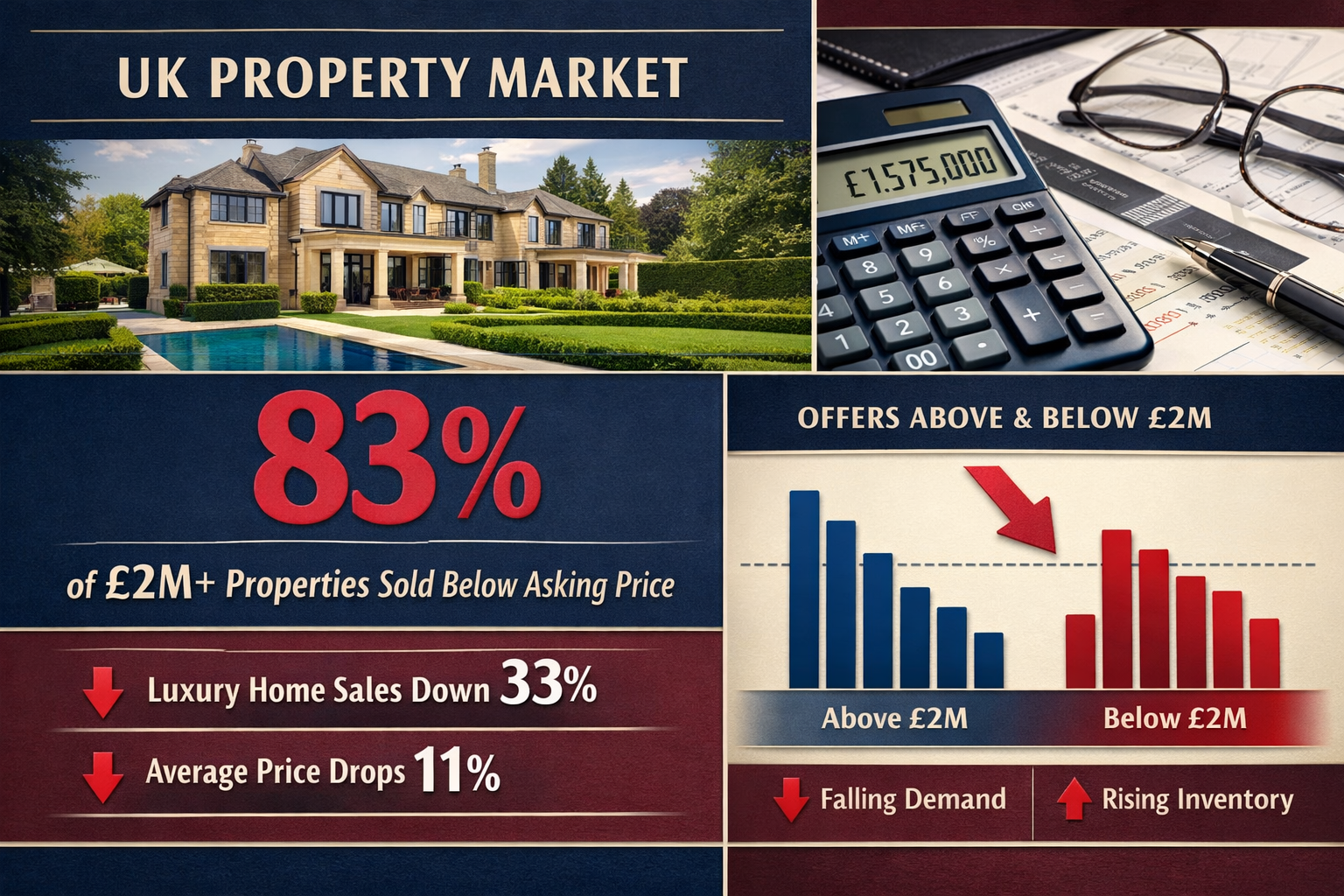
The UK luxury property market faces unprecedented challenges in 2026. Recent data reveals a striking trend: 83% of properties approaching the £2 million threshold received offers below that critical valuation mark in February 2026. This phenomenon isn't coincidental—it's a calculated response to significant tax changes introduced in the latest Budget. Understanding valuation strategies for high-value UK properties post-2026 Budget: navigating 83% sub-threshold offers has become essential for property owners, investors, and professionals operating in the premium segment.
The convergence of new Council Tax surcharges, business rates revaluation, and shifting market dynamics has created a complex landscape where accurate property appraisal requires sophisticated approaches aligned with RICS (Royal Institution of Chartered Surveyors) standards. Property owners must now balance realistic market expectations with strategic positioning to maximize value while acknowledging buyer behavior patterns driven by tax avoidance strategies.
Key Takeaways
✅ 83% of near-£2 million properties received sub-threshold offers in February 2026, driven by buyers avoiding the new Council Tax surcharge on properties valued above £2 million
💰 New Council Tax surcharge ranging from £2,500 to £7,500 annually will apply to properties over £2 million from 2028, fundamentally reshaping valuation dynamics
📊 RICS-aligned valuation methodologies are critical for accurate appraisals that account for both market realities and regulatory changes affecting high-value properties
🏛️ Over 1,500 additional properties now fall within the highest rateable value bracket (£500,000+), facing substantial business rates increases despite transitional protections [1]
🎯 Strategic pricing approaches must balance seller objectives with buyer psychology around the £2 million threshold to achieve optimal transaction outcomes
Understanding the 2026 Budget Impact on High-Value Properties
The 2026 Budget introduced sweeping changes that fundamentally altered the economics of owning premium UK properties. These reforms represent the most significant shift in property taxation for high-value assets in recent history.
The New Council Tax Surcharge Framework
From 2028 onwards, properties valued above £2 million will face a new annual Council Tax surcharge that scales with property value [1]:
| Property Value | Annual Surcharge |
|---|---|
| £2m – £3m | £2,500 |
| £3m – £5m | £5,000 |
| £5m+ | £7,500 |
This wealth tax on high-value properties creates a clear financial incentive for buyers to negotiate valuations below the £2 million threshold. The annual nature of this charge means that over a typical 10-year ownership period, a property valued at £2.1 million could incur an additional £25,000 in surcharges compared to one valued at £1.95 million—a substantial difference that directly impacts buyer behavior.
Business Rates Revaluation Effects
The April 1, 2026 revaluation effective date brought significant changes to non-domestic properties across England and Wales [2]. The Valuation Office Agency (VOA) implemented new rateable values based on market conditions, with more than 1,500 additional properties now falling within the highest rateable value bracket above £500,000 [1].
A new higher multiplier tier specifically targets properties with rateable values of £500,000 or more, with the multiplier capped at a maximum 10p increase from the standard rate [3]. While the government announced a £3.2 billion Transitional Relief scheme to cushion the impact, large properties above £100,000 RV still face upward caps of 30% (2026/27), 25% (2027/28), and 25% (2028/29) [2].
For commercial valuations and mixed-use high-value properties, these changes necessitate comprehensive reassessment of holding costs and investment returns.
Market Response and Buyer Psychology
The property market has responded predictably to these regulatory changes. Experts forecast 4-5% national property growth in 2026, with average prices potentially exceeding £300,000 [4]. However, this optimistic overall picture masks significant segmentation.
Prime markets are expected to slow, with London facing the most substantial impact due to additional cost pressures [4]. The £2 million threshold has become a psychological barrier, with buyers strategically positioning offers to avoid triggering the surcharge liability.
This creates a valuation paradox: properties genuinely worth £2.1-2.3 million face downward pressure as buyers anchor negotiations around £1.95 million. Understanding how to navigate this dynamic while maintaining professional valuation standards requires sophisticated approaches grounded in RICS methodology.
RICS-Aligned Valuation Methodologies for Premium Properties
Accurate property appraisal in the current environment demands adherence to established professional standards while accounting for unprecedented market conditions. RICS provides the framework for maintaining integrity in valuations despite external pressures.

The Red Book Framework in Practice
The RICS Valuation – Global Standards (the "Red Book") establishes mandatory requirements for professional valuers. In the context of high-value properties approaching the £2 million threshold, several principles become particularly relevant:
Market Value Definition: RICS defines market value as "the estimated amount for which an asset should exchange on the valuation date between a willing buyer and a willing seller in an arm's length transaction, after proper marketing and where the parties had each acted knowledgeably, prudently and without compulsion."
This definition becomes critical when 83% of offers fall below threshold. The question becomes: does systematic buyer behavior constitute genuine market value, or does it represent distorted pricing driven by tax avoidance?
Professional Judgment: RICS standards require valuers to exercise professional judgment based on comprehensive market analysis, comparable evidence, and property-specific factors—not simply accepting the highest or most recent offer as definitive value.
Comparable Evidence Analysis
Effective property valuations require robust comparable evidence. However, the current market presents challenges:
Pre-2026 comparables may overstate current values as they don't reflect the surcharge impact on buyer willingness to pay. Properties that sold for £2.2 million in 2024 might struggle to achieve £2 million in 2026.
Post-announcement comparables (from late 2025 onwards) better reflect current market realities but may be limited in number, particularly for unique or high-specification properties.
Stratification around threshold: Evidence shows clear clustering of transaction prices just below £2 million, with a notable gap between £2 million and £2.2 million. This suggests that properties genuinely worth £2.1-2.15 million are being negotiated down to £1.95 million.
Valuers must analyze:
- Transaction volumes at different price points
- Time on market for above-threshold versus below-threshold listings
- Price reductions and negotiation patterns
- Buyer demographic shifts (e.g., institutional versus private buyers)
Adjustments for Unique Property Characteristics
High-value properties often possess distinctive features that complicate direct comparison. RICS methodology requires systematic adjustment for:
🏛️ Architectural significance: Period features, listed status, or architectural pedigree may command premiums that transcend threshold concerns for certain buyer segments
🌳 Location premiums: Prime postcodes in areas like Kensington, Chelsea, or Hampstead may demonstrate different threshold sensitivity than suburban locations
📐 Property size and configuration: Larger properties with development potential may justify valuations above threshold despite market headwinds
🎨 Specification and condition: Recently renovated properties with high-end finishes may maintain value better than those requiring investment
Income Approach for Investment Properties
For properties held as investments, the income capitalization approach provides an alternative valuation methodology less susceptible to threshold psychology. This approach calculates value based on:
Net Operating Income (NOI) = Gross rental income – Operating expenses
Capitalized Value = NOI / Capitalization rate
For landlords facing increased tax pressure that's squeezing smaller operators from the market [4], accurate income-based valuations become essential for portfolio decisions. Properties generating strong rental yields may justify above-threshold valuations for investors focused on income rather than capital appreciation.
However, valuers must account for:
- Reduced tenant demand at premium price points
- Increased holding costs from higher business rates
- Potential rental income compression in oversupplied segments
Strategic Approaches to Valuation Near the £2 Million Threshold
Navigating valuation strategies for high-value UK properties post-2026 Budget: navigating 83% sub-threshold offers requires balancing professional standards with practical market realities. Several strategic approaches can optimize outcomes for different stakeholder objectives.
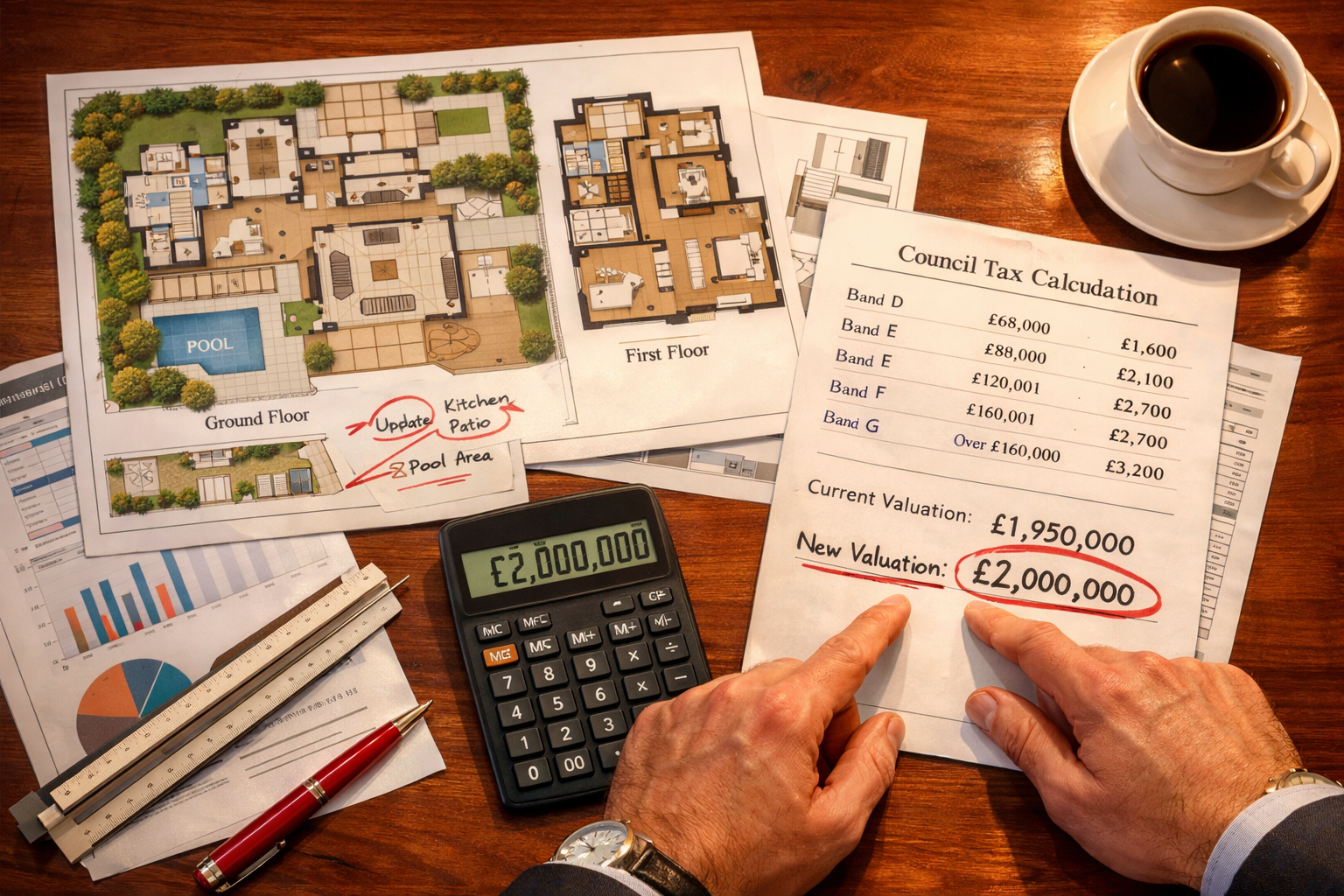
Scenario-Based Valuation Modeling
Rather than providing a single-point valuation, sophisticated approaches employ scenario modeling that acknowledges market uncertainty:
Scenario 1: Market Value (Current Conditions)
- Reflects actual transaction evidence including sub-threshold clustering
- Accounts for buyer tax avoidance behavior
- Typically positions properties at £1.85-1.95 million for those genuinely worth £2.1-2.2 million
Scenario 2: Market Value (Normalized Conditions)
- Estimates value absent the surcharge distortion
- Based on pre-announcement comparables with appropriate adjustments
- Useful for inheritance tax valuations or divorce settlements
Scenario 3: Investment Value
- Reflects value to a specific buyer with particular circumstances
- May exceed market value for buyers prioritizing location or features over tax efficiency
- Relevant for owner-occupiers versus investors
This multi-scenario approach provides stakeholders with comprehensive information for decision-making while maintaining RICS compliance.
Timing Considerations and Market Cycles
The timing of valuation significantly impacts outcomes in the current volatile environment:
Pre-2028 Window: Properties sold before the surcharge takes effect in 2028 may achieve higher values as buyers face less immediate cost pressure. However, sophisticated buyers already factor future liabilities into current offers.
Post-Implementation Period: Once the surcharge becomes operational in 2028, market psychology may shift. If the £2 million threshold becomes normalized, clustering effects might diminish as buyers accept the surcharge as unavoidable for desired properties.
Long-Term Outlook: Market forecasts suggest solid momentum with long-term gains expected until 2029 [4]. Properties positioned strategically now may benefit from subsequent appreciation that lifts values above threshold with less resistance.
For capital gains tax purposes, timing of valuation and disposal can significantly impact tax liability, making professional advice essential.
Segmentation by Buyer Profile
Different buyer segments respond differently to threshold dynamics:
International Buyers: May be less sensitive to UK-specific tax changes, particularly if they face similar or higher property taxes in their home jurisdictions. Properties with international appeal may maintain above-threshold values more readily.
Downsizers: Older buyers selling larger properties may prioritize location and lifestyle over tax efficiency, potentially accepting above-threshold prices for the right property.
Investors and Landlords: Highly tax-sensitive and typically drive the sub-threshold offer pattern. Properties marketed to this segment must acknowledge pricing realities.
Corporate Buyers: Institutional purchasers may have different valuation criteria based on portfolio strategy rather than individual tax liability.
Effective valuation strategies identify the most likely buyer profile and calibrate assumptions accordingly.
Enhancement and Positioning Strategies
Property owners can influence valuation outcomes through strategic interventions:
Pre-Valuation Improvements: Targeted enhancements can increase property appeal and justify higher valuations. Increasing property value through landscaping and other improvements may help properties achieve threshold prices.
Flexible Chattels Treatment: Separating high-value chattels (furnishings, artwork, etc.) from the property valuation can position the real estate component just below threshold while achieving overall transaction value above £2 million.
Leasehold Structuring: For appropriate properties, leasehold extension and enfranchisement considerations can impact valuation and potentially provide flexibility around threshold positioning.
Marketing Narrative: How a property is positioned in marketing materials influences buyer perceptions and offer levels. Emphasizing unique features that justify premium pricing can counteract threshold psychology.
Practical Implementation for Property Professionals
Implementing effective valuation strategies for high-value UK properties post-2026 Budget requires systematic approaches and professional collaboration.
Engaging Qualified Valuation Professionals
The complexity of the current market makes professional valuation expertise essential. When selecting a valuer:
✅ Verify RICS membership: Ensure the valuer holds appropriate RICS qualifications (MRICS or FRICS) and maintains professional indemnity insurance
✅ Confirm local market expertise: High-value property markets are highly localized; select valuers with demonstrated experience in the specific area
✅ Review comparable experience: Ask for examples of recent valuations for similar properties, particularly those near the £2 million threshold
✅ Understand methodology: Discuss how the valuer will account for current market distortions while maintaining professional standards
✅ Clarify purpose: Different valuation purposes (sale, annual tax, insurance, etc.) may require different approaches
Documentation and Evidence Requirements
Robust valuations require comprehensive documentation:
📋 Property Information:
- Full property details including size, configuration, age, and condition
- Planning permissions and building regulation compliance
- Energy performance certificates
- Title information and any restrictions
📊 Market Evidence:
- Recent comparable sales with detailed analysis
- Current listings and time-on-market data
- Historical price trends for the area
- Rental evidence for investment properties
💼 Financial Documentation:
- For investment properties: rental agreements, expense records, vacancy rates
- For SIPP pension valuations: pension scheme documentation
- Tax-related documentation as relevant to valuation purpose
Challenging and Defending Valuations
In the current environment, valuations frequently face challenge from parties with opposing interests:
Sellers may contest valuations below £2 million for properties they believe are worth more, arguing that the valuer has succumbed to market distortion rather than assessing true value.
Buyers may challenge valuations at or above £2 million, citing the 83% sub-threshold offer pattern as evidence of overvaluation.
HMRC may scrutinize valuations for tax purposes, particularly those conveniently positioned just below threshold for inheritance tax or capital gains purposes.
Defending a valuation requires:
- Clear documentation of methodology and assumptions
- Comprehensive comparable evidence with detailed adjustments
- Professional judgment supported by market analysis
- Adherence to RICS standards throughout the process
Technology and Data Analytics
Modern valuation increasingly incorporates sophisticated data analytics:
Automated Valuation Models (AVMs) provide initial estimates but require professional oversight, particularly for unique high-value properties where algorithm limitations become apparent.
Market Intelligence Platforms aggregate transaction data, listing information, and market trends to support evidence-based valuation.
Geographic Information Systems (GIS) enable spatial analysis of comparable properties and location-specific factors affecting value.
However, technology complements rather than replaces professional judgment, particularly in the nuanced high-value segment where property uniqueness and buyer psychology play outsized roles.
Future Outlook and Adaptation Strategies
The valuation landscape for high-value UK properties will continue evolving as market participants adapt to the 2026 Budget changes and subsequent developments.
Anticipated Market Adjustments
Several trends are likely to emerge:
Threshold Normalization: As the 2028 implementation date approaches and passes, the £2 million threshold may become less psychologically significant. Buyers who genuinely want properties worth £2.1-2.2 million may increasingly accept valuations above threshold, recognizing the surcharge as an unavoidable cost of ownership.
Price Band Migration: Some properties currently valued near £2 million may experience value compression below threshold, while others with strong differentiating features may break through resistance and establish a new pricing tier above £2.2 million.
Segmentation Intensification: The market may bifurcate more clearly between properties positioned for tax-sensitive buyers (priced below threshold) and premium properties targeting less price-sensitive segments (priced according to intrinsic value).
Supply Adjustments: Property owners may respond to valuation challenges by withdrawing from the market, reducing supply and potentially supporting prices over time.
Regulatory and Policy Developments
Future government actions could significantly impact valuation dynamics:
Threshold Indexation: The government may index the £2 million threshold to inflation, gradually raising it over time and reducing the number of affected properties.
Surcharge Modifications: Political pressure could lead to adjustments in surcharge levels or structure, particularly if the policy proves unpopular or economically distortive.
Additional Property Taxes: Further tax changes affecting high-value properties could compound current challenges or create new valuation considerations.
Planning and Development Incentives: Policies encouraging property development or renovation could influence values, particularly for properties with development potential.
Professional Development and Expertise
Valuation professionals must continuously adapt their expertise:
📚 Ongoing Education: Regular CPD (Continuing Professional Development) focused on tax implications, market dynamics, and regulatory changes
🤝 Collaborative Approaches: Working with tax advisors, solicitors, and financial planners to provide comprehensive advice
📊 Enhanced Analytics: Developing sophisticated analytical capabilities to identify and quantify market trends
🎯 Specialization: Focusing expertise on specific property types or geographic areas to develop deep market knowledge
Conclusion
The emergence of 83% sub-threshold offers for high-value UK properties represents a fundamental shift in the premium property market driven by the 2026 Budget's introduction of Council Tax surcharges on properties valued above £2 million. This phenomenon, combined with business rates revaluation and broader market pressures, has created unprecedented complexity for property valuation.
Valuation strategies for high-value UK properties post-2026 Budget: navigating 83% sub-threshold offers must balance professional standards with market realities. RICS-aligned methodologies provide the framework for maintaining valuation integrity while acknowledging genuine market dynamics. Scenario-based modeling, comprehensive comparable analysis, and strategic positioning enable property owners and professionals to optimize outcomes despite challenging conditions.
The current environment demands sophisticated approaches that go beyond simple comparable analysis to incorporate buyer psychology, tax implications, property-specific features, and timing considerations. Professional valuation expertise has never been more critical, as the stakes for both over- and under-valuation have increased substantially.
Actionable Next Steps
For property owners with high-value assets:
1️⃣ Engage qualified RICS valuers with demonstrated expertise in your property type and location to obtain professional valuation opinions
2️⃣ Request scenario-based valuations that provide context around the £2 million threshold and explain market dynamics affecting your property
3️⃣ Consider strategic timing for transactions, balancing current market conditions against future outlook and personal circumstances
4️⃣ Explore enhancement opportunities that could strengthen your property's position and justify premium valuations
5️⃣ Consult tax advisors to understand the full implications of different valuation outcomes for your specific situation
For property professionals:
1️⃣ Invest in continuing education focused on tax implications and market dynamics affecting high-value properties
2️⃣ Develop robust methodologies that address threshold psychology while maintaining professional standards
3️⃣ Build comprehensive market databases tracking transaction patterns around the £2 million threshold
4️⃣ Establish collaborative relationships with tax advisors and other professionals serving high-value property clients
5️⃣ Document thoroughly to support valuations that may face challenge from parties with opposing interests
The high-value UK property market will continue evolving as participants adapt to the new regulatory environment. Those who combine professional expertise with strategic thinking will be best positioned to navigate this complexity and achieve optimal outcomes. The 83% sub-threshold offer pattern may represent current reality, but it doesn't define the intrinsic value of quality properties—and skilled professionals can bridge that gap through sophisticated valuation strategies grounded in RICS principles.
References
[1] Are You Ready For The 2026 Revaluation – https://bcconsultancy.co.uk/are-you-ready-for-the-2026-revaluation/
[2] Business Rates Revaluation 2026 – https://www.gov.uk/government/news/business-rates-revaluation-2026
[3] Business Rates Budget 2025 And 2026 Revaluation – https://www.nmrk.com/en-gb/insights/thought-leadership/business-rates-budget-2025-and-2026-revaluation
[4] The 2026 Property Reset Market Forecasts Budget Impacts Investor Focus – https://surveyingcorp.com/2025/12/the-2026-property-reset-market-forecasts-budget-impacts-investor-focus/