

Lenders now reject nearly 23% more financing applications for properties with poor energy performance ratings compared to just two years ago. This dramatic shift reflects how Valuation Resilience Factors: Assessing Energy Standards and Maintenance for Lender Decisions in 2026 have fundamentally transformed property financing. Energy efficiency is no longer a "nice-to-have" feature—it directly determines whether properties qualify for favorable loan terms, secure institutional investment, or face higher borrowing costs and valuation penalties.
The integration of energy performance data into lending decisions represents one of the most significant changes in property valuation methodology in decades. As regulatory pressures intensify and operating costs become increasingly volatile, lenders demand comprehensive surveyor insights on energy infrastructure and long-term maintenance planning before committing capital. Properties that demonstrate strong energy standards and proactive maintenance protocols now command premium valuations, while inefficient buildings face mounting financial obstacles.
Key Takeaways
- Energy performance directly impacts financing terms: Buildings with poor efficiency face higher interest rates and stricter conditions, while energy-efficient properties receive preferential lending terms and reduced borrowing costs in 2026
- Maintenance records signal investment quality: Proactive asset management and documented energy infrastructure upgrades reduce perceived risk and support stronger valuations during lender due diligence
- Regulatory compliance risk is now quantified: Lenders factor emissions penalties, mandatory retrofit costs, and future capital expenses directly into pricing models, with inefficient buildings carrying measurable valuation discounts
- Technology enables rapid risk assessment: Digital tools allow surveyors to evaluate non-standard properties quickly, providing lenders with real-time energy performance data that streamlines approval processes
- Operating cost stability strengthens underwriting: Predictable energy expenses and lower maintenance costs create stable cash flows that improve capitalization rates and justify higher property valuations
Understanding Valuation Resilience in the 2026 Lending Environment

The concept of valuation resilience has evolved dramatically as lenders recognize that property values depend increasingly on future-proofing against energy costs and regulatory changes. Traditional valuation methods focused primarily on location, size, and comparable sales. Today's lenders demand comprehensive analysis of energy infrastructure, maintenance history, and compliance trajectories.
The Shift in Lender Risk Assessment Models
By 2026, many financial institutions have incorporated energy performance directly into their core risk assessment frameworks [1]. This transformation stems from documented evidence that inefficient buildings face:
- Higher default rates due to escalating operating costs
- Faster value depreciation as regulatory standards tighten
- Reduced tenant demand from occupiers prioritizing sustainability
- Increased capital expenditure requirements for mandatory retrofits
Banks and institutional lenders now treat energy efficiency as a fundamental component of creditworthiness. Properties demonstrating poor efficiency profiles face interest rate premiums of 0.5% to 1.5% compared to high-performing buildings [1]. This differential translates into substantial cost increases over typical loan terms, making energy standards a critical financial consideration rather than merely an environmental concern.
How Surveyor Insights Drive Lending Decisions
Professional surveyors play an increasingly vital role in bridging the gap between property characteristics and lender requirements. Modern building surveys now incorporate detailed energy performance assessments that evaluate:
✅ Current energy infrastructure condition
✅ Projected maintenance and replacement timelines
✅ Compliance status with current and anticipated regulations
✅ Estimated costs for necessary efficiency improvements
✅ Comparative performance against market benchmarks
This comprehensive approach allows lenders to make informed decisions about loan amounts, terms, and conditions. Properties with documented energy efficiency advantages and clear maintenance protocols receive faster approvals and more favorable financing packages.
The Technology Advantage in Property Assessment
Advanced technology has revolutionized how surveyors evaluate properties for lending purposes. Digital tools including thermal imaging, IoT sensors, and predictive analytics platforms enable rapid assessment of non-standard properties that previously required extensive manual evaluation [5].
These technologies provide:
- Real-time energy consumption data from smart meters and building management systems
- Thermal performance mapping identifying insulation deficiencies and heat loss patterns
- Predictive maintenance alerts forecasting system failures before they occur
- Automated compliance checking against current energy standards and building codes
Lenders increasingly rely on these technology-enabled insights to streamline approval processes while maintaining rigorous risk assessment standards. Properties equipped with modern monitoring systems demonstrate transparency that reduces lender uncertainty and supports stronger valuations.
Energy Standards as Core Valuation Resilience Factors
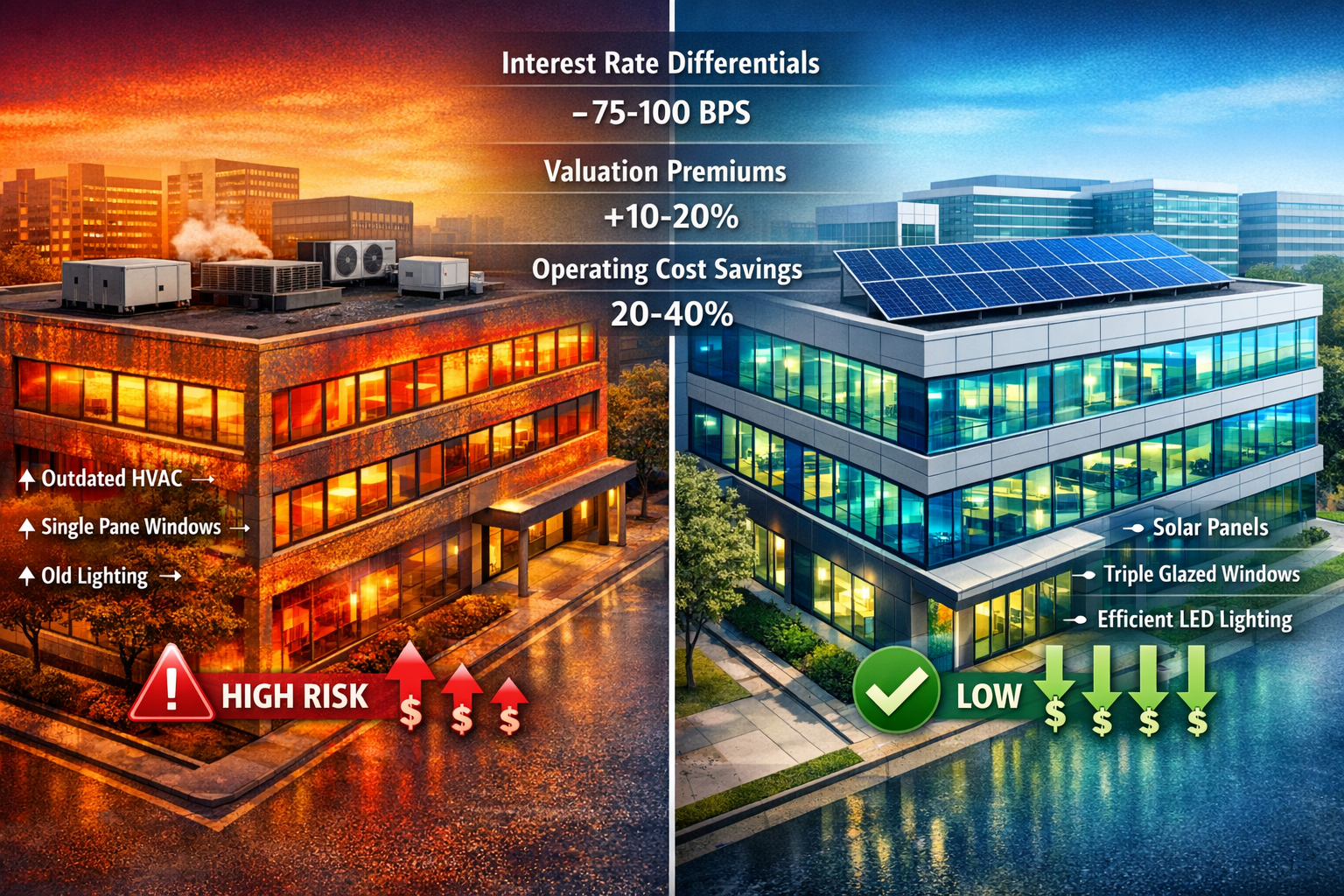
Energy standards have transitioned from optional upgrades to mandatory valuation components that directly influence lending decisions. The relationship between energy performance and property value has become quantifiable, with measurable impacts on both commercial and residential real estate markets.
Regulatory Compliance and Valuation Impact
Inefficient buildings face documented higher risks from emissions penalties, mandatory retrofits, and future capital expenses [1]. Lenders now factor this compliance exposure directly into pricing models, creating measurable valuation differentials between efficient and inefficient properties.
The regulatory landscape in 2026 includes:
🏛️ Stricter minimum energy performance standards for rental and commercial properties
🏛️ Carbon pricing mechanisms that penalize high-emission buildings
🏛️ Mandatory disclosure requirements for energy performance in all property transactions
🏛️ Phase-out timelines for fossil fuel heating systems in certain jurisdictions
Properties that proactively address these requirements avoid future compliance costs and maintain stable valuations. Conversely, buildings requiring significant retrofits face valuation discounts reflecting the anticipated capital expenditure. Lenders typically reduce loan-to-value ratios by 5-15% for properties with substantial compliance gaps [1].
Operating Cost Stability and Cash Flow Predictability
Buildings with consistent, efficient energy performance are now easier to underwrite and justify at higher valuations [1]. Lower electricity and fuel expenses, combined with reduced maintenance costs, create more stable long-term operating budgets that improve cash flow capitalization in valuation models.
The financial advantages of energy efficiency include:
| Performance Factor | Efficient Building | Inefficient Building |
|---|---|---|
| Annual Energy Costs | 30-50% lower | Baseline |
| Maintenance Frequency | Reduced by 25-40% | Standard intervals |
| System Replacement Timing | Predictable, planned | Emergency, reactive |
| Tenant Turnover | Lower (stable costs) | Higher (rising costs) |
| Valuation Premium | 10-20% higher | Baseline or discount |
This stability directly influences lender confidence. Properties demonstrating predictable operating expenses receive more favorable debt service coverage ratio (DSCR) assessments, enabling higher leverage and better loan terms. For commercial properties, stable operating costs support more accurate income projections that justify premium valuations during capital gains assessments.
Tenant Retention and Income Stream Security
Commercial and residential tenants increasingly prioritize energy costs, comfort, and sustainability when selecting properties [1]. Energy-efficient buildings offer:
- Lower utility bills that reduce total occupancy costs
- Better indoor air quality from modern HVAC systems
- Improved thermal comfort with consistent temperatures
- Reduced service disruptions from reliable, well-maintained systems
These advantages translate into stable occupancy rates and predictable income streams that significantly increase asset attractiveness to institutional investors. Properties with documented high tenant retention rates and minimal vacancy periods command premium valuations, as lenders view consistent rental income as reducing default risk.
The connection between energy performance and tenant satisfaction has become so pronounced that many commercial leases now include energy performance guarantees. Buildings unable to meet these commitments face tenant departures and income volatility that directly impact valuations and lending terms.
Maintenance Records as Indicators of Valuation Resilience
Energy efficiency upgrades tied to overall building condition indicate proactive asset management, reduced likelihood of major system failures, and better long-term planning [1]. During due diligence, buyers and lenders closely examine mechanical systems and energy infrastructure, with efficient buildings requiring fewer immediate capital investments and supporting stronger valuations.
The Due Diligence Evolution
Modern lending due diligence extends far beyond traditional property inspections. Lenders now request comprehensive documentation including:
📋 Complete maintenance logs for all building systems
📋 Energy audit reports with performance benchmarking
📋 Capital expenditure forecasts for major system replacements
📋 Compliance certificates for energy standards and building codes
📋 Warranty documentation for recent upgrades and installations
Properties with organized, accessible maintenance records demonstrate professional management that reduces lender risk perception. Conversely, buildings lacking documentation face increased scrutiny, longer approval timelines, and potentially unfavorable terms as lenders account for unknown maintenance liabilities.
Professional maintenance assessments provide lenders with confidence that properties have been properly cared for and that future capital requirements are well-understood and budgeted.
Proactive vs. Reactive Maintenance Impact
The distinction between proactive and reactive maintenance approaches has become a critical valuation factor. Properties demonstrating proactive maintenance strategies show:
Proactive Maintenance Benefits:
- Scheduled system servicing prevents emergency failures
- Predictable capital expenditure timing
- Extended equipment lifespan and performance
- Documented condition tracking over time
- Lower total lifecycle costs
Reactive Maintenance Penalties:
- Emergency repairs at premium costs
- Unexpected capital requirements
- Shorter equipment lifespans
- Service disruptions affecting tenants
- Higher insurance premiums
Lenders increasingly view maintenance philosophy as a proxy for overall property management quality. Buildings with proactive maintenance programs receive better financing terms because they present lower risk of unexpected capital calls that could jeopardize loan repayment.
Technology-Enabled Maintenance Tracking
Modern building management systems provide unprecedented visibility into property maintenance needs. Smart sensors monitor:
- HVAC system performance and efficiency
- Water usage patterns indicating potential leaks
- Electrical system loads and anomalies
- Indoor air quality metrics
- Equipment runtime hours and maintenance intervals
This data enables predictive maintenance that addresses issues before they escalate into costly failures. Properties equipped with these systems provide lenders with real-time performance data that supports more accurate risk assessment and stronger valuations.
The integration of maintenance data with energy performance metrics creates a comprehensive picture of property resilience that directly influences lending decisions. Buildings demonstrating both efficient energy use and proactive maintenance command the strongest market positions in 2026.
Market Dynamics Shaping Valuation Resilience in 2026

The broader market context significantly influences how Valuation Resilience Factors: Assessing Energy Standards and Maintenance for Lender Decisions in 2026 play out in practice. Understanding current lending conditions, regional variations, and buyer behavior helps property owners and investors position assets for optimal financing outcomes.
Improved Lending Conditions Create Opportunities
As of mid-2025, only 9% of banks are tightening lending standards, down dramatically from 30.3% in April 2024 and 67.4% in April 2023 [3]. This reduced tightening serves as a reliable precursor to capital value improvements in commercial real estate markets.
Bank portfolio health is improving across CRE markets, with loan loss provisions coming in under previous estimates and lower-than-expected net charge-offs signaling improving health of banks' commercial real estate loan portfolios [3]. These positive trends enable more favorable lending conditions for energy-efficient properties that demonstrate strong maintenance records.
The loosening credit environment creates particular advantages for properties that meet or exceed energy standards:
💰 Lower down payment requirements for qualifying properties
💰 Extended amortization periods improving cash flow
💰 Reduced interest rate spreads compared to baseline rates
💰 Streamlined approval processes for well-documented assets
Property owners who have invested in energy efficiency and maintained comprehensive maintenance records are well-positioned to capitalize on these improved lending conditions through refinancing or acquisition financing.
Regional Market Variations
Markets in the South and Midwest are outperforming coastal and high-cost markets, supported by relative affordability, job growth, and new construction [6]. However, even high-cost areas are stabilizing as price growth slows, with homes that are priced appropriately and well-maintained commanding higher valuations.
Regional factors affecting valuation resilience include:
High-Performing Markets:
- Strong population and job growth
- Favorable business climates
- New construction incorporating modern energy standards
- Competitive lending environments
Stabilizing Markets:
- Price corrections creating affordability
- Emphasis on property quality over location premium
- Increased buyer focus on operating costs
- Stricter lender scrutiny of property condition
Regardless of regional dynamics, properties demonstrating strong energy performance and maintenance records consistently outperform comparable assets lacking these attributes. The valuation premium for energy efficiency remains consistent across markets, though absolute values vary by location.
Buyer Negotiating Power and Property Standards
Market negotiating power has shifted toward disciplined buyers who are less willing to overlook property flaws or overpay [6]. Negotiations have become more common and days on market have extended modestly compared to peak periods.
In this environment, properties demonstrating strong maintenance records and energy efficiency command better negotiating positions because they:
- Reduce buyer uncertainty about future costs
- Minimize required immediate capital investments
- Provide documented performance history
- Meet lender requirements without complications
Buyers increasingly conduct detailed due diligence on energy performance and maintenance history before making offers. Properties lacking documentation or showing deferred maintenance face significant price reductions or fail to attract financing altogether.
Professional building condition assessments provide sellers with credible documentation that supports asking prices and facilitates smoother transactions.
Implementing Valuation Resilience Strategies
Property owners, investors, and developers can take concrete steps to enhance valuation resilience through strategic energy improvements and maintenance practices that align with lender expectations in 2026.
Priority Energy Upgrades for Maximum Impact
Not all energy improvements deliver equal valuation benefits. Lenders and buyers prioritize upgrades that provide:
High-Impact Energy Improvements:
- HVAC System Modernization: Efficient heating and cooling systems with smart controls deliver immediate operating cost reductions and improved tenant comfort
- Building Envelope Improvements: Enhanced insulation, air sealing, and high-performance windows reduce energy consumption across all systems
- LED Lighting Conversion: Low-cost upgrade with rapid payback and measurable consumption reduction
- Smart Building Controls: Automated systems optimize energy use and provide performance data valued by lenders
- Renewable Energy Integration: Solar panels or other renewable systems reduce operating costs and demonstrate sustainability commitment
These improvements should be documented with professional energy audits, performance data, and compliance certifications that provide lenders with verifiable evidence of enhanced property performance.
Establishing Comprehensive Maintenance Documentation
Creating and maintaining detailed records significantly enhances property attractiveness to lenders. Essential documentation includes:
✅ Maintenance Schedule Logs: Documented routine servicing for all major systems
✅ Energy Performance Tracking: Monthly or quarterly consumption data showing trends
✅ Upgrade and Replacement Records: Receipts, warranties, and specifications for all improvements
✅ Compliance Certificates: Current energy performance certificates and building code compliance documentation
✅ Capital Planning Forecasts: Projected timelines and budgets for future system replacements
Property managers should implement digital maintenance management systems that centralize this information and make it readily accessible during lender due diligence. The investment in documentation systems typically pays for itself through improved financing terms on a single transaction.
Leveraging Professional Surveyor Expertise
Engaging qualified chartered surveyors provides independent validation of property condition and energy performance that lenders trust. Professional surveys offer:
- Objective condition assessments free from seller bias
- Compliance verification against current standards
- Maintenance priority recommendations with cost estimates
- Valuation support documentation justifying asking prices
- Risk identification allowing proactive issue resolution
For complex or non-standard properties, surveyor expertise becomes particularly valuable in helping lenders understand unique characteristics and appropriate valuation methodologies. Properties with professional survey documentation typically move through underwriting faster and with fewer contingencies.
Consider engaging surveyors for comprehensive building assessments well before listing properties or seeking refinancing, allowing time to address any identified issues that could impact valuation or lending terms.
Future-Proofing Investment Decisions
Looking beyond immediate financing needs, property investors should consider how energy standards and maintenance requirements will continue evolving. Future-proofing strategies include:
🔮 Anticipating stricter regulations: Design improvements to exceed current standards, providing buffer against future requirements
🔮 Investing in adaptable systems: Choose infrastructure that can be upgraded incrementally rather than requiring complete replacement
🔮 Monitoring regulatory trends: Stay informed about proposed energy standards and compliance timelines
🔮 Building performance data history: Establish tracking systems now to demonstrate long-term efficiency trends
Properties positioned ahead of regulatory curves avoid rushed, expensive compliance retrofits and maintain stable valuations through regulatory transitions. This forward-thinking approach increasingly differentiates premium assets from average performers in lending evaluations.
Data Transparency and Valuation Credibility
Valuation in 2026 is increasingly data-driven, with buyers and lenders expecting clear, verifiable information on energy use and performance [1]. Buildings that delay efficiency improvements face valuation erosion as future compliance costs become unavoidable.
The Role of Energy Performance Certificates
Energy Performance Certificates (EPCs) have evolved from simple compliance documents to critical valuation tools. Modern EPCs provide:
- Standardized performance ratings enabling property comparisons
- Specific improvement recommendations with cost-benefit analysis
- Regulatory compliance verification
- Historical performance tracking when updated regularly
Lenders now routinely request current EPCs during initial underwriting, with outdated or poor ratings triggering additional scrutiny. Properties with strong EPC ratings (A or B bands) receive preferential treatment, while those in lower bands (D, E, or F) face valuation penalties and potentially reduced loan-to-value ratios.
Maintaining current EPCs and implementing recommended improvements demonstrates commitment to property performance that lenders value highly.
Integrating Smart Building Data
Properties equipped with smart building systems provide unprecedented transparency into energy performance and maintenance needs. This data integration offers lenders:
- Real-time consumption monitoring verifying efficiency claims
- Automated anomaly detection identifying issues before they escalate
- Tenant usage analytics supporting income stability assessments
- Predictive maintenance alerts reducing unexpected capital expenditure risk
Buildings with comprehensive data systems increasingly command valuation premiums because they reduce lender uncertainty. The ability to provide detailed performance histories and real-time monitoring access streamlines due diligence and supports stronger financing terms.
Property owners should view smart building investments not merely as operational tools but as valuation enhancement strategies that directly impact lending outcomes.
Third-Party Verification and Certification
Independent verification of energy performance and maintenance standards provides additional credibility valued by lenders. Recognized certifications include:
BREEAM (Building Research Establishment Environmental Assessment Method)
LEED (Leadership in Energy and Environmental Design)
NABERS (National Australian Built Environment Rating System)
Energy Star Certification
These third-party assessments provide standardized benchmarking that enables lenders to compare properties across portfolios and markets. Certified buildings typically receive:
- Faster underwriting approval
- Lower interest rate spreads
- Higher loan-to-value ratios
- Reduced documentation requirements
The investment in certification processes typically generates positive returns through improved financing terms and enhanced property marketability.
Conclusion: Building Valuation Resilience Through Strategic Energy and Maintenance Focus
The transformation of Valuation Resilience Factors: Assessing Energy Standards and Maintenance for Lender Decisions in 2026 represents a fundamental shift in property finance that rewards forward-thinking property owners and penalizes those who delay necessary improvements. Energy efficiency and proactive maintenance have evolved from optional enhancements to essential valuation components that directly determine financing access, terms, and costs.
Properties demonstrating strong energy performance, comprehensive maintenance documentation, and proactive management consistently command premium valuations and preferential lending terms. The measurable financial advantages—including lower interest rates, higher loan-to-value ratios, and faster approvals—far exceed the costs of necessary improvements and documentation systems.
Actionable Next Steps
Property owners and investors should take immediate action to enhance valuation resilience:
- Commission professional energy audits to establish baseline performance and identify priority improvements
- Implement comprehensive maintenance tracking systems that document all servicing, upgrades, and capital investments
- Engage qualified chartered surveyors for independent condition assessments that provide lender-credible documentation
- Prioritize high-impact energy upgrades that deliver measurable consumption reductions and compliance with current standards
- Establish data transparency systems that provide real-time performance monitoring and historical trend analysis
- Maintain current compliance certifications including EPCs and relevant building standards documentation
- Develop capital planning forecasts that demonstrate proactive management of future system replacement needs
The lending environment in 2026 clearly favors properties that demonstrate measurable energy efficiency, documented maintenance excellence, and transparent performance data. As regulatory standards continue tightening and operating costs remain volatile, the valuation premium for well-managed, efficient properties will only increase.
Property owners who act now to enhance energy performance and establish comprehensive maintenance documentation will find themselves well-positioned to capitalize on favorable lending conditions while avoiding the valuation penalties increasingly applied to inefficient, poorly-documented assets. The question is no longer whether to invest in energy efficiency and maintenance excellence, but how quickly these improvements can be implemented to maximize valuation resilience and financing advantages.
For expert guidance on property assessments, energy performance evaluations, and comprehensive maintenance planning that meets lender requirements, consider consulting with qualified chartered surveyors who understand the evolving relationship between property condition, energy standards, and valuation outcomes in 2026.
References
[1] Energy Efficiency Property Valuation 2026 – thecotocongroup.com
[3] Commercial Real Estate Outlook – deloitte.com
[5] Solar In 2026 – lovelandinnovations.com
[6] Early 2026 Shows Signs Of Renewed Energy In A Rebalancing Housing Market – mortgageprocessor.org