

Fewer than one in three private rental properties in England currently holds a documented structural risk assessment that meets the hazard-scoring thresholds introduced by the Housing Health and Safety Rating System (HHSRS) — yet from October 2026, failure to hold one could expose landlords to statutory enforcement action under Awaab's Law Phase 2. For building surveyors, this gap represents both a professional obligation and a commercial reality: valuations that ignore structural collapse and explosion hazards are no longer defensible under RICS standards.
This article explains how Valuation Adjustments for Structural Collapse and Explosion Risks Under Awaab's Law 2026: Building Surveyor Checklists integrate into the survey and valuation workflow, what the checklists must contain, and how risk pricing translates hazard findings into defensible market value adjustments for private rented sector (PRS) compliance.
Key Takeaways
- Awaab's Law Phase 2, effective October 2026, extends statutory hazard investigation requirements to structural collapse, explosion risks, excess cold, fire, and health and hygiene issues in the PRS.
- RICS mandates Level 3 building surveys for properties identified as high-risk, providing the depth of analysis needed for defensible valuation adjustments.
- Building surveyor checklists must now cover crack mapping, load-bearing wall integrity, gas installation checks, boiler flue integrity, and thermal imaging as standard.
- Valuation adjustments must be evidence-based, linking specific HHSRS hazard scores to quantified remediation costs and market value reductions.
- Landlords who commission proactive condition surveys and maintain formal repair logs are best placed to demonstrate compliance and protect asset value.
What Awaab's Law Phase 2 Means for Structural and Explosion Hazard Assessments
Awaab's Law was originally enacted as Section 42 of the Social Housing (Regulation) Act 2023, compelling social landlords to investigate and remediate damp and mould within strict statutory timeframes. The October 2026 Phase 2 extension brings the private rented sector firmly within scope, and — critically — expands the prescribed hazard categories well beyond damp [3].
The new hazard categories now include:
- Structural collapse (Category 1 HHSRS hazard)
- Explosion risks from gas, vapour, or dust
- Excess cold and excess heat
- Fire risks, including means of escape deficiencies
- Health and hygiene hazards
For surveyors, this expansion means that a standard Level 2 homebuyer report is no longer sufficient for PRS properties where any of these hazards are suspected. RICS now mandates Level 3 building surveys for properties identified as high-risk under the new framework [1]. A Level 3 full building survey provides the granular structural analysis that HHSRS hazard scoring demands.
The HHSRS Scoring Framework and Valuation Linkage
The HHSRS assigns each identified hazard a numerical score based on the likelihood of harm and the spread of outcomes. For structural collapse, a Category 1 hazard score (above 1,000) triggers an immediate duty to act. For explosion risks, scores are calculated against the probability of ignition, the potential severity of injury, and the number of occupants at risk.
Valuation adjustments are derived from this scoring in two ways:
- Direct remediation cost deduction — the estimated cost to bring the property to a compliant standard is deducted from the open market value.
- Risk premium reduction — where remediation timelines are uncertain or where enforcement action is likely, an additional percentage reduction reflects the increased investment risk to a prospective buyer or lender.
This dual-adjustment methodology aligns with RICS Red Book guidance on special assumptions and reflects how urgent or dangerous building issues are treated in formal valuation reports.
Building Surveyor Checklists for Structural Collapse Risk Under Awaab's Law 2026
Effective Valuation Adjustments for Structural Collapse and Explosion Risks Under Awaab's Law 2026: Building Surveyor Checklists begin with a structured inspection protocol. The checklist below reflects current best practice under RICS Level 3 standards and HHSRS methodology [1][5].
External Structural Inspection Checklist
| Item | Method | Risk Indicator |
|---|---|---|
| Foundation movement and settlement | Visual, crack mapping | Diagonal cracking at corners |
| Retaining wall stability | Visual, probe testing | Outward lean, cracking, drainage failure |
| Roof structure integrity | Visual, binoculars, drone where permitted | Sagging ridge, spread rafters |
| Chimney stack condition | Visual, close inspection | Leaning, mortar loss, flaunching failure |
| External wall cracking | Crack mapping, width gauges | Cracks wider than 5mm, stepped cracking |
| Cavity wall tie failure | Borescope, horizontal cracking pattern | Horizontal cracking at regular intervals |
Internal Structural Inspection Checklist
- Crack mapping of all load-bearing walls, including measurement of crack width, length, and direction
- Assessment of floor levelness using a spirit level across multiple planes
- Inspection of lintels over openings for deflection or cracking
- Examination of ceiling and floor junctions for differential movement
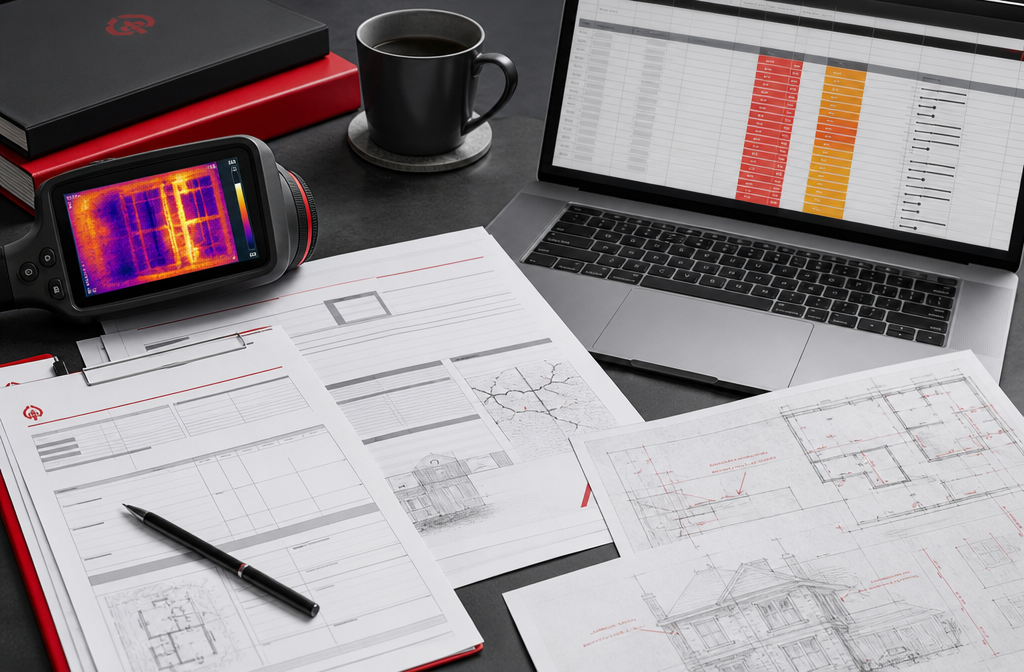
- Thermal imaging camera survey to detect hidden voids, moisture ingress, or compromised insulation within structural elements [1]
- Review of any previous structural engineer reports or building control records
For older properties — particularly Edwardian and Victorian stock — the risk profile is substantially higher. A building surveyor's assessment of an Edwardian cottage illustrates how original lime mortar, rubble-fill foundations, and single-skin sections demand heightened scrutiny under the new hazard categories.
"Surveyors must go beyond surface readings. Root-cause analysis — not just symptom identification — is the standard that Awaab's Law demands." [6]
Explosion Risk Assessments: What the Checklist Must Cover
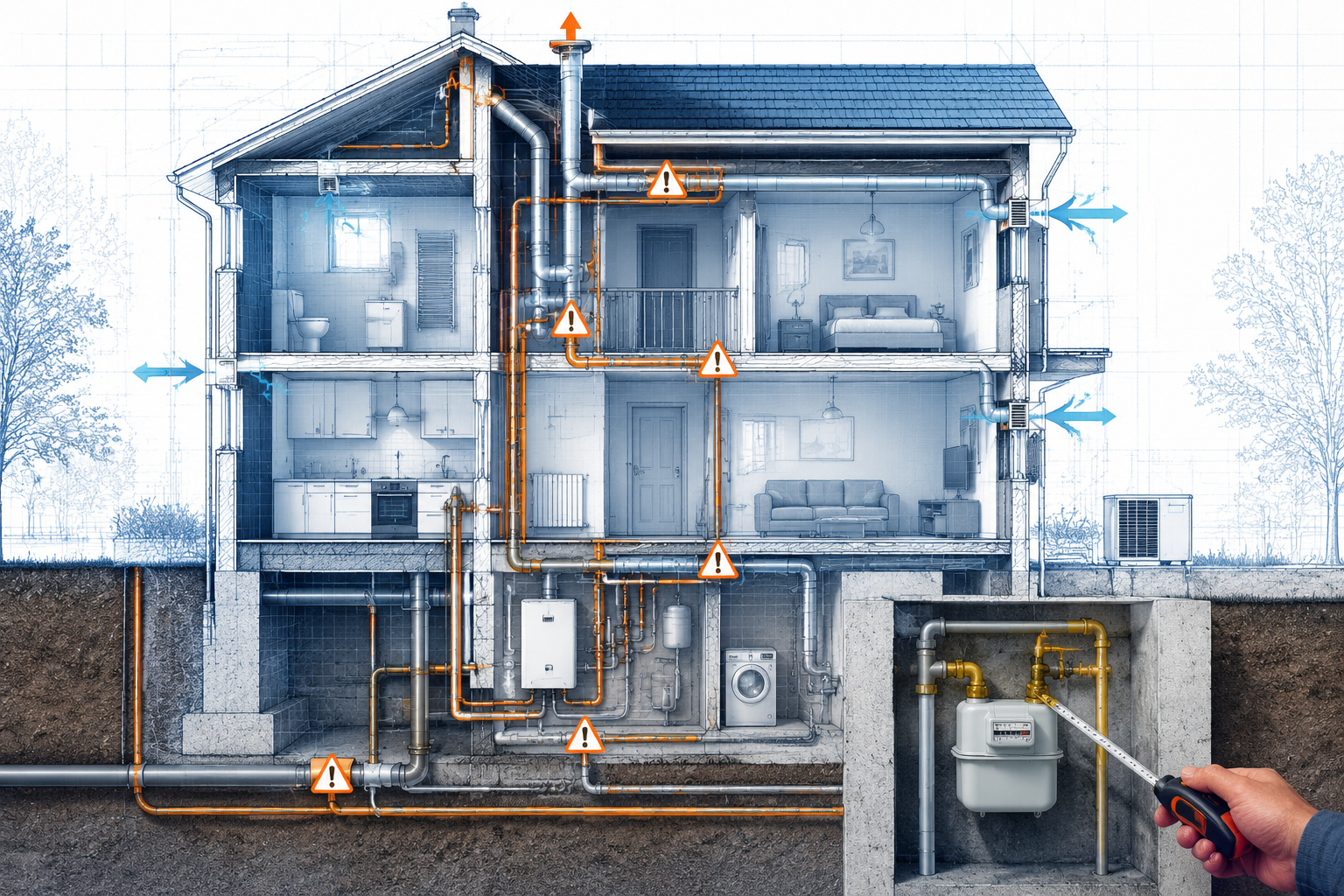
Explosion hazards under HHSRS encompass gas leaks, vapour accumulation, and dust explosions. In domestic PRS settings, gas and vapour risks dominate. The October 2026 extension requires surveyors to formally document explosion risk findings within their reports and link those findings to valuation adjustments [3][4].
Gas Installation and Ventilation Checklist
Gas Supply and Pipework
- Age and material of gas supply pipework (steel, copper, or flexible corrugated stainless steel tubing)
- Evidence of corrosion, mechanical damage, or unauthorised modifications
- Proximity of pipework to heat sources or structural movement zones
- Presence and condition of emergency control valve (ECV) and accessibility
Boiler and Combustion Appliances
- Boiler flue integrity: visual inspection for cracks, blockages, or inadequate termination points
- Adequate combustion air supply to boiler cupboard or plant room
- Carbon monoxide alarm presence and positioning
- Date of last Gas Safe registered service and certificate
Ventilation Adequacy
- Presence of trickle vents or background ventilation in all habitable rooms
- Condition of extract fans in kitchens and bathrooms (key vapour dispersal points)
- Evidence of blocked or sealed air bricks at sub-floor level
Electrical Installation (Explosion Context)
- Age of consumer unit and whether it contains RCD protection
- Evidence of DIY wiring in proximity to gas appliances
- Condition of electrical fittings in zones classified as potentially explosive atmospheres (garages, utility rooms)
A fire risk assessment for blocks of flats must now be read alongside explosion risk findings, since shared gas risers and communal plant rooms create cumulative hazard profiles that affect the valuation of individual units within the block.
Translating Explosion Risk Findings into Valuation Adjustments
| Hazard Finding | HHSRS Category | Estimated Remediation Cost Range | Valuation Adjustment Approach |
|---|---|---|---|
| Defective boiler flue | Category 1 | £500 – £2,500 | Direct cost deduction plus enforcement risk premium |
| Inadequate ventilation to gas appliance | Category 1 | £300 – £1,500 | Direct cost deduction |
| Corroded gas pipework requiring replacement | Category 1 | £1,500 – £8,000 | Direct cost deduction plus lender risk flag |
| Missing carbon monoxide alarms | Category 2 | £50 – £200 | Minor deduction, compliance note |
| Aged consumer unit without RCD | Category 2 | £800 – £2,500 | Direct cost deduction |
These figures feed directly into the budgeting for repairs and restoration section of a Level 3 survey, where surveyors are required to provide cost ranges for all identified defects.
Integrating Awaab's Law Compliance into the Valuation Report
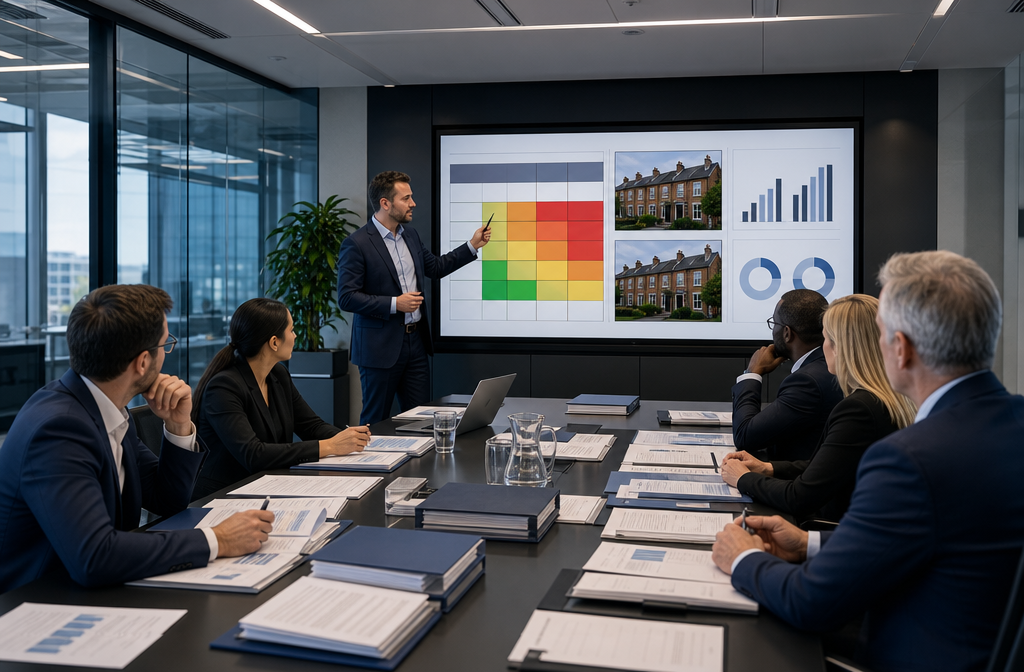
The practical challenge for surveyors in 2026 is not simply identifying hazards — it is translating those findings into a valuation adjustment methodology that is transparent, reproducible, and defensible under RICS standards and, where necessary, in legal proceedings.
Evidence Standards and Documentation Requirements
Expert witnesses in structural collapse disputes must adhere to rigorous evidence protocols [2]. For valuers, this means the survey report must contain:
- Systematic photographic documentation of every identified hazard, with date stamps and location references
- Crack mapping diagrams cross-referenced to floor plans
- Thermal imaging outputs with baseline and anomaly readings noted
- HHSRS hazard scores calculated and recorded for each Category 1 and Category 2 finding
- Remediation cost schedules prepared or reviewed by a suitably qualified cost consultant
- Compliance timeline assessment — estimating how long remediation will take and whether statutory deadlines under Awaab's Law can be met
Surveyors should also maintain an investigation record and a remediation plan as separate documents within the file, to demonstrate compliance with the record-keeping requirements of the new framework [5].
The Risk Pricing Model for PRS Valuations
Valuation Adjustments for Structural Collapse and Explosion Risks Under Awaab's Law 2026: Building Surveyor Checklists are most effective when they feed into a structured risk pricing model. The following framework is consistent with RICS Red Book principles:
Step 1 — Establish Gross Development Value (GDV) or Open Market Value (OMV)
Value the property on the assumption that all hazards are remediated and the property is fully compliant.
Step 2 — Identify and Score All Hazards
Using the HHSRS methodology, score each identified hazard. Aggregate Category 1 scores indicate the severity of the compliance gap.
Step 3 — Calculate Total Remediation Cost
Prepare or commission a schedule of works with cost ranges for each hazard. Use P10 (optimistic) and P90 (pessimistic) cost estimates to bracket uncertainty.
Step 4 — Apply Enforcement Risk Premium
Where Category 1 hazards are present and remediation timelines are uncertain, apply an additional risk premium of 3% to 8% of OMV to reflect the probability of enforcement action, rent repayment orders, or civil liability.
Step 5 — Derive Adjusted Value
Adjusted Value = OMV – Total Remediation Cost (P50 estimate) – Enforcement Risk Premium
This model is directly applicable to capital gains valuations where a landlord is disposing of a PRS property with known compliance deficiencies, and to insurance reinstatement cost valuations where structural collapse risk affects the rebuild cost assessment.
Practical Steps for Landlords and Surveyors Before October 2026
The October 2026 implementation date for Phase 2 is not a distant horizon — it is a current compliance deadline. Landlords who have not yet commissioned formal assessments are advised to act immediately [7].
Landlord Action Checklist
- Commission a condition survey or HHSRS-style inspection for all PRS properties, prioritising those built before 1970 or with known structural issues
- Establish a formal complaint and repair log, documenting all tenant reports and the landlord's response timelines
- Obtain a Gas Safe certificate and an Electrical Installation Condition Report (EICR) dated within the last five years
- Review lease terms and tenancy agreements to ensure repair obligations are clearly defined — tenancy contracts should be updated to reflect the new hazard categories
- Engage a RICS-accredited surveyor to prepare a Level 3 survey where any structural or explosion hazard is suspected
Surveyor Compliance Checklist
- Upgrade standard inspection protocols to include thermal imaging, crack mapping, and gas installation checks as default items for all PRS instructions
- Ensure all reports include HHSRS hazard scores and link findings to valuation adjustments
- Maintain a separate compliance file for each instruction, containing initial inspection documentation, investigation records, and remediation plans [5]
- Where structural collapse risk is identified, refer to a structural engineer for specialist input before finalising the valuation adjustment
- Stay current with property market legislation changes to ensure survey protocols reflect the latest statutory requirements
Conclusion
The expansion of Awaab's Law into the private rented sector in October 2026 fundamentally changes the standard of care required from building surveyors and valuers. Structural collapse and explosion hazards are no longer peripheral concerns — they are prescribed hazard categories that carry statutory investigation timelines, enforcement consequences, and direct valuation implications.
Actionable next steps:
- Commission a Level 3 building survey for any PRS property where structural or explosion hazards are suspected — do not wait for a tenant complaint to trigger the obligation.
- Adopt the HHSRS risk pricing model described above to produce valuation adjustments that are transparent, evidence-based, and defensible under RICS standards.
- Update internal survey checklists to include thermal imaging, crack mapping, gas installation assessment, and ventilation checks as standard items for all PRS instructions.
- Maintain comprehensive compliance documentation — initial inspection records, investigation logs, and remediation plans — to protect against enforcement action and legal challenge.
- Engage specialist structural engineers and Gas Safe engineers where Category 1 hazards are identified, ensuring that valuation adjustments are supported by specialist professional opinion.
The surveyors who invest in robust Valuation Adjustments for Structural Collapse and Explosion Risks Under Awaab's Law 2026: Building Surveyor Checklists now will be the ones whose reports withstand scrutiny — from lenders, enforcement authorities, and courts alike.
References
[1] Building Survey Protocols For Structural Collapse Risks Awaabs Law 2026 Extensions And High Risk Property Assessments – nottinghillsurveyors.com
[2] Expert Witness Roles In Structural Collapse Disputes Under Awaabs Law 2026 Evidence Standards For Party Wall Awards – wimbledonsurveyors.com
[3] Expert Witness Challenges In Awaabs Law 2026 Hazard Extensions Evidence Standards For Excess Cold Falls And Fire Risks – wimbledonsurveyors.com
[4] Awaabs Law Extensions To Prs In 2026 Party Wall And Building Survey Protocols For New Hazard Categories – nottinghillsurveyors.com
[5] Building Survey Checklists For Domestic Hygiene Hazards Under Awaabs Law 2026 Level 3 Protocols For Rentals – wimbledonsurveyors.com
[6] Building Surveys For Damp And Mould Post Awaabs Law Expansion Protocols For Identifying Prescribed Hazards In 2026 – nottinghillsurveyors.com
[7] Awaabs Law Phase 2 October 2026 Hhsrs Hazards What Private Landlords And Surveyors Must Do Now – canterburysurveyors.com