

{"cover":"Professional landscape format (1536×1024) hero image featuring bold text overlay 'Sustainability Standards in 2026 Valuations: RICS Guidance for Energy Performance and Retrofit Assessments' in extra large 70pt white sans-serif font with dark gradient shadow, positioned in upper third center. Background shows split composition: left side displays modern UK residential property with thermal imaging overlay showing heat loss patterns in blue and red gradients, right side shows professional surveyor with tablet reviewing EPC certificate and retrofit plans. Foreground includes floating translucent data panels with energy performance ratings (A-G scale), sustainability metrics, and RICS logo watermark. Color scheme: deep navy blue, vibrant green accents, white text, professional teal highlights. Magazine cover aesthetic, editorial quality, high contrast, sharp focus on sustainability assessment theme, architectural photography style with technical overlay elements.","content":["Detailed landscape format (1536×1024) image showing close-up of RICS professional surveyor conducting energy performance assessment inside residential property. Main focus on surveyor using thermal imaging camera pointed at exterior wall, with split-screen effect showing normal view and thermal heat map overlay revealing insulation gaps in purple and orange gradients. Background includes exposed brick wall section, double-glazed window, and radiator. Foreground displays floating semi-transparent digital interface panels showing EPC rating progression from D to B, retrofit cost estimates in pounds sterling, and energy savings projections graph. Include clipboard with RICS Residential Retrofit Standard checklist visible. Color palette: warm interior lighting, cool blue thermal tones, professional grey and green RICS branding. Technical documentary photography style, sharp detail, professional assessment atmosphere.","Wide-angle landscape format (1536×1024) image depicting comprehensive retrofit planning scene in modern architectural office. Central focus shows large desk with multiple documents spread out including building plans, energy performance certificates, retrofit design specifications, and material samples (insulation boards, window glazing samples). Professional team of three diverse surveyors collaborating around desk, one pointing at thermal performance calculations on laptop screen showing U-value improvements. Background wall features large monitor displaying before/after 3D building model with color-coded energy efficiency zones. Side table shows physical samples of sustainable retrofit materials: hemp insulation, triple-glazed window cross-section, heat pump component model. Include visible RICS standard documentation and sustainability assessment frameworks. Color scheme: natural wood tones, white walls, green plant accents, professional blue document folders. Bright natural office lighting, collaborative professional atmosphere, architectural precision.","Landscape format (1536×1024) image showing UK residential street scene demonstrating retrofit transformation impact. Foreground features row of traditional Victorian terraced houses with visible retrofit improvements: external wall insulation with modern render finish, new triple-glazed windows, solar panels on roofs, heat pump units visible at ground level. Central house displays large semi-transparent overlay panel showing detailed valuation comparison: 'Pre-Retrofit Value: £425,000' versus 'Post-Retrofit Value: £485,000' with green upward arrow indicating 14% increase. Side panels show EPC rating improvement from E to B, annual energy cost savings (£1,840), and carbon emission reduction metrics with leaf icons. Background shows surveyor with measuring equipment and tablet. Include subtle RICS branding and '2026 Valuation Standards' text banner. Color palette: warm brick tones, fresh white render, green sustainability indicators, professional blue data overlays. Clear sky, professional real estate photography style, documentary quality showing tangible retrofit benefits and market value impact."]"}
The National Audit Office recently uncovered a startling reality: 92% of energy efficiency installations under government schemes contain major defects requiring immediate remediation, with an additional 6% presenting direct health and safety risks[4]. This quality crisis has catalyzed a fundamental transformation in how property professionals approach sustainability assessments. As Sustainability Standards in 2026 Valuations: RICS Guidance for Energy Performance and Retrofit Assessments takes center stage, valuers, surveyors, and investors now face mandatory requirements that integrate environmental, social, and governance (ESG) factors directly into property valuations—marking a watershed moment for the UK real estate sector.
From April 26, 2026, RICS members must systematically incorporate ESG considerations into every valuation, fundamentally changing how properties are assessed and priced[6]. This shift arrives alongside the full implementation of the RICS Residential Retrofit Standard and the UK government's £15 billion Warm Homes Plan, creating an unprecedented alignment between professional standards, regulatory requirements, and market forces.
Key Takeaways
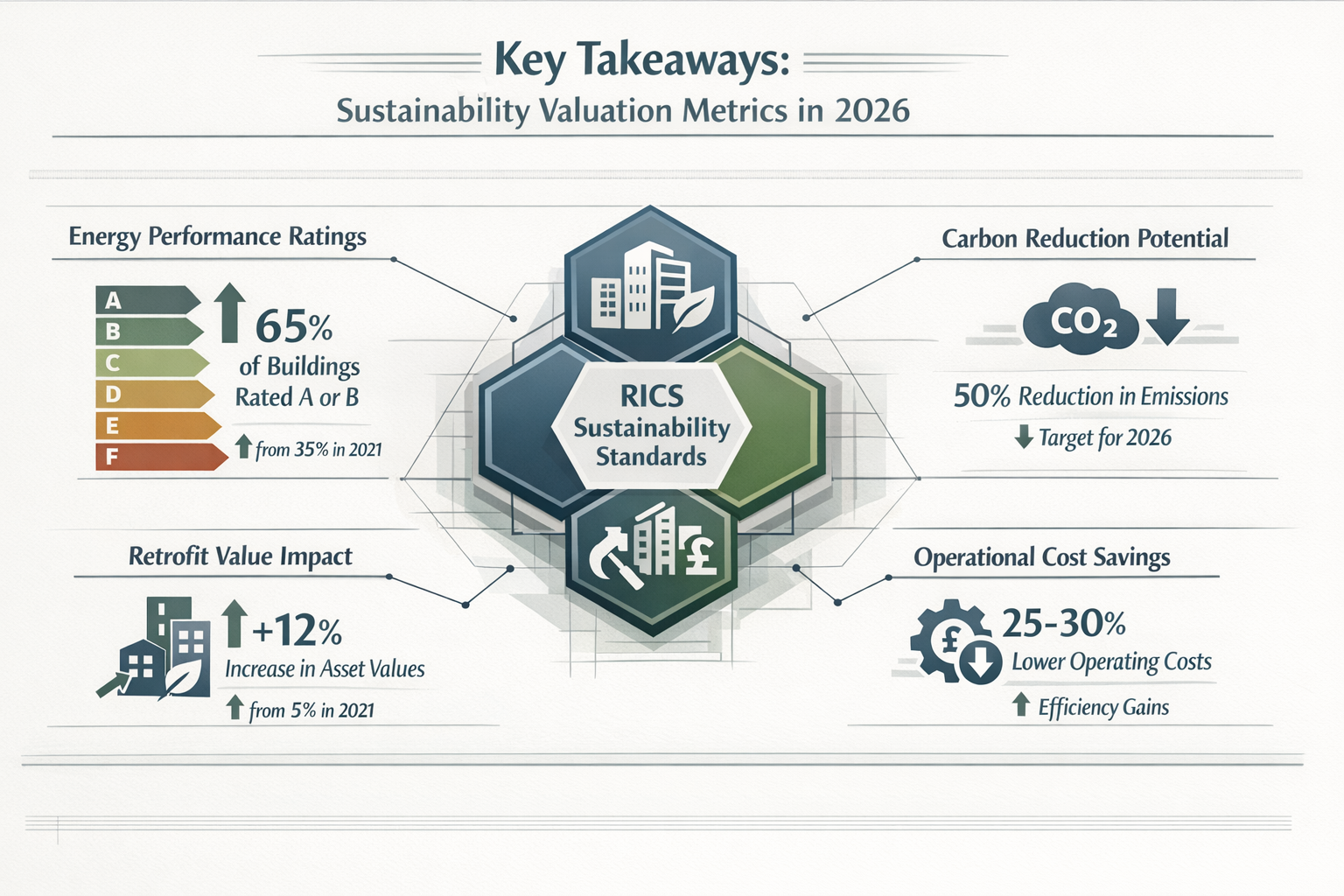
- Mandatory ESG integration from April 2026 requires all RICS valuations to systematically incorporate sustainability factors, directly impacting property values and investment decisions
- 25 million UK homes require energy improvements, creating massive demand for qualified professionals who understand both retrofit standards and valuation methodologies
- Quality standards are critical—with 92% of current installations failing basic requirements, professional RICS guidance ensures projects deliver measurable outcomes without harming properties
- Financial impact is substantial—the £15 billion Warm Homes Plan and improved EPC ratings directly influence property valuations, lending decisions, and long-term asset resilience
- Professional competence requirements now mandate that RICS members provide expert retrofit guidance, ensuring consistency and consumer confidence across all assessments
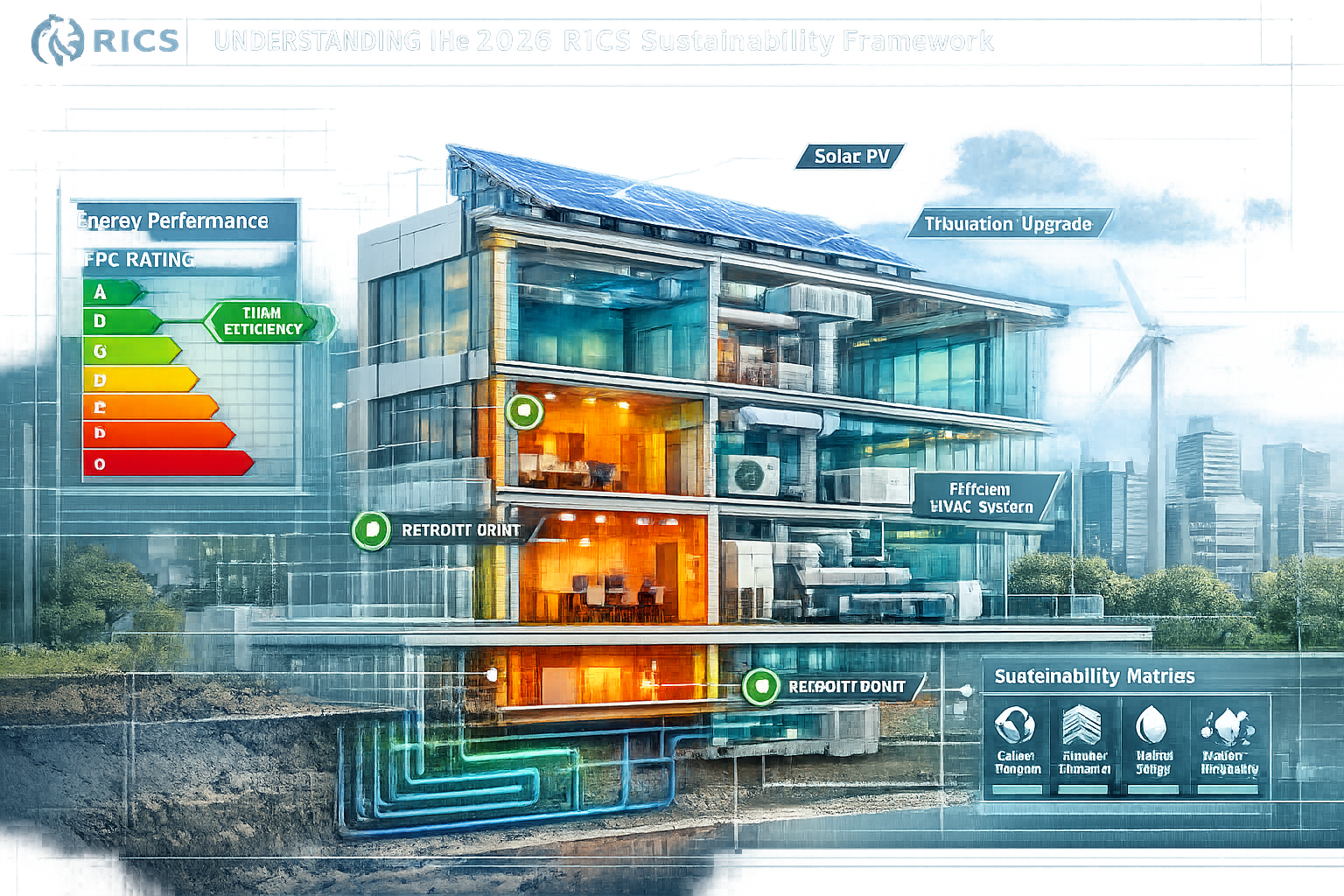
Understanding the 2026 RICS Sustainability Framework
The Mandatory ESG Integration Requirement
Beginning April 26, 2026, the Royal Institution of Chartered Surveyors implemented a transformative requirement: all property valuations must systematically incorporate ESG factors[6]. This isn't merely a recommendation or best practice guideline—it's a mandatory professional standard that fundamentally reshapes how chartered surveyors approach property assessment.
The integration requirement means valuers must now:
✅ Assess energy performance as a core component of property value
✅ Evaluate retrofit potential and associated costs
✅ Consider climate risk factors affecting long-term asset resilience
✅ Quantify the financial impact of sustainability improvements
✅ Document ESG considerations in all valuation reports
This systematic approach ensures that sustainability is no longer an afterthought but a central pillar of property valuation methodology. For lenders, investors, and property owners seeking professional property valuations, this means receiving comprehensive assessments that reflect both current market conditions and future sustainability requirements.
The RICS Residential Retrofit Standard: Full Implementation
The RICS Residential Retrofit Standard achieved full implementation on October 31, 2024, establishing comprehensive requirements for retrofit assessments, planning, and execution[2]. By 2026, this standard has become the cornerstone of professional practice for the estimated 25 million homes requiring energy improvements across the UK[1].
The standard encompasses several critical areas:
Energy Performance Assessment 🏠
Detailed evaluation of current energy efficiency, identifying specific areas of heat loss, insulation deficiencies, and opportunities for improvement.
Retrofit Design and Planning 📋
Tailored solutions that consider building characteristics, occupant needs, budget constraints, and compatibility with existing structures—particularly important for building materials assessments in older properties.
Material Selection and Compatibility 🔧
Professional guidance on appropriate materials, technologies, and installation methods that deliver performance without causing unintended consequences like moisture problems or structural issues.
Installation Procedures and Quality Control ✓
Rigorous standards ensuring work is completed to professional specifications, with proper oversight and verification—addressing the quality crisis revealed in government scheme installations.
Three Core Principles Driving Quality Outcomes
The RICS approach to Sustainability Standards in 2026 Valuations: RICS Guidance for Energy Performance and Retrofit Assessments rests on three fundamental principles established at the Quality in Retrofit Summit 2026[4]:
-
Deliver Quality: Every retrofit project must meet rigorous performance standards, ensuring improvements actually achieve their intended energy savings and comfort improvements.
-
Competent Professionals: Work must be performed by skilled, regulated professionals with proper training and certification—not by unqualified installers who contribute to the 92% failure rate.
-
Measurable Outcomes: Projects must deliver verifiable results while avoiding harm to buildings and occupants, with clear documentation of performance improvements and energy savings.
These principles directly address the systemic failures identified in current retrofit programs and establish a professional framework that protects consumers while advancing the UK's sustainability objectives.
Energy Performance Certificates and Valuation Impact
How EPC Ratings Directly Affect Property Values
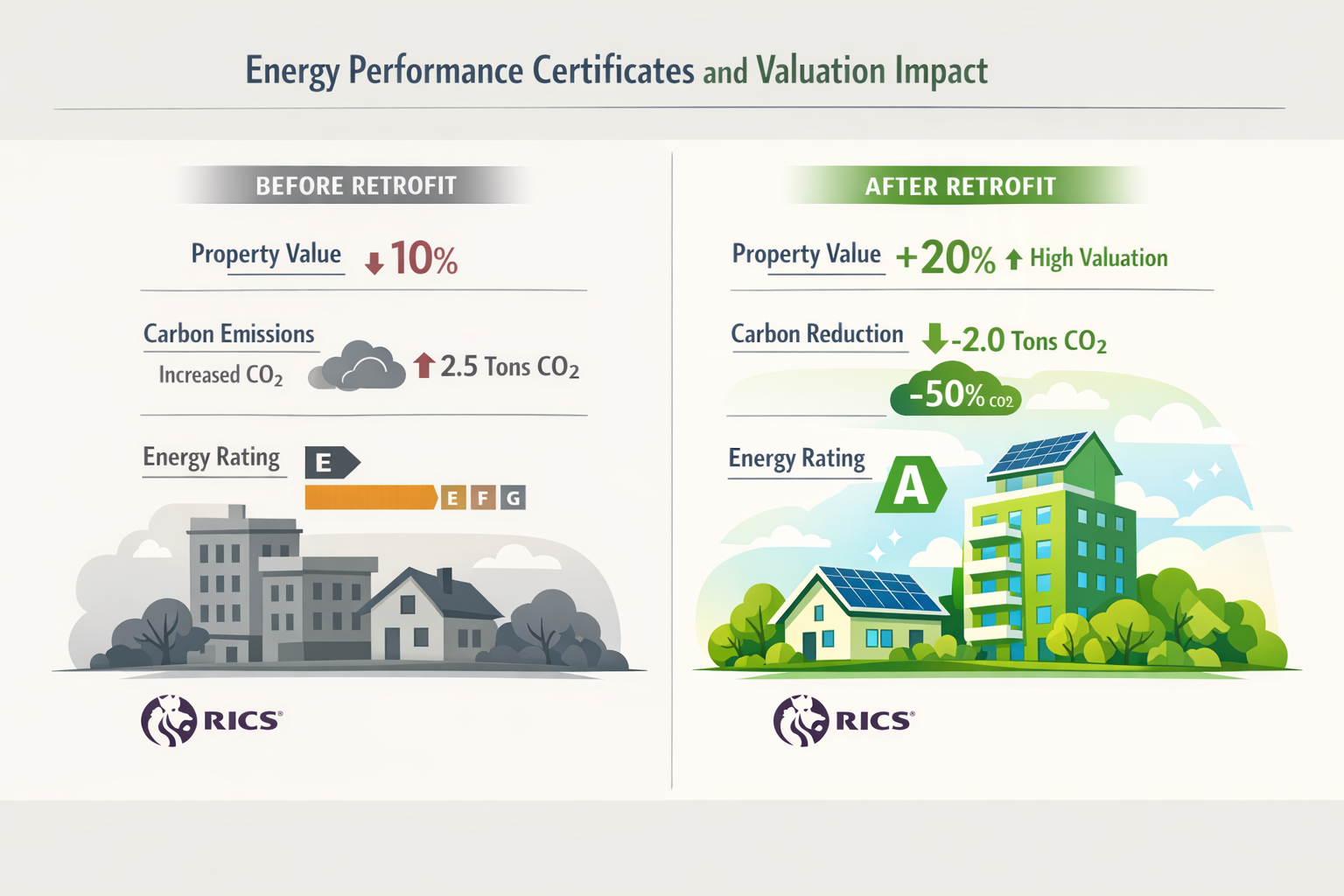
Energy Performance Certificates (EPCs) have evolved from administrative requirements to significant value determinants in 2026 property markets. Research consistently demonstrates that properties with superior EPC ratings command premium prices, while those with poor ratings face valuation penalties and restricted financing options.
The valuation impact manifests in several ways:
| EPC Rating | Typical Value Impact | Lending Considerations |
|---|---|---|
| A-B | +5% to +15% premium | Preferential rates, green mortgages available |
| C | Market baseline | Standard lending terms |
| D-E | -5% to -10% discount | Increasing scrutiny, potential rate premiums |
| F-G | -10% to -20% discount | Limited lending options, retrofit requirements |
For property owners considering independent property valuations, understanding this relationship is essential. A property rated EPC D might receive a valuation significantly below a comparable EPC B property—even when physical characteristics are nearly identical.
The Retrofit Premium: Quantifying Long-Term Resilience
Professional valuers in 2026 now assess retrofit potential as a distinct value component. Properties with straightforward retrofit pathways to higher EPC ratings receive more favorable valuations than those facing complex, expensive upgrade challenges.
This "retrofit premium" reflects several factors:
💰 Reduced Future Capital Expenditure: Properties already upgraded require less investment to meet evolving efficiency standards
📈 Enhanced Marketability: Higher EPC ratings attract broader buyer pools and faster sales
🔒 Regulatory Compliance: Properties meeting current and anticipated standards avoid forced upgrades
⚡ Operating Cost Savings: Lower energy bills improve affordability and tenant appeal
🌍 Climate Resilience: Modern insulation and ventilation systems better handle extreme weather events
When surveyors conduct valuations incorporating Sustainability Standards in 2026 Valuations: RICS Guidance for Energy Performance and Retrofit Assessments, they now routinely include retrofit cost estimates and projected post-improvement values. This forward-looking approach helps lenders and investors understand both current value and potential future worth.
Implementing RICS Retrofit Standards in Practice
The Professional Assessment Process
RICS members conducting retrofit assessments in 2026 follow a structured methodology that ensures comprehensive evaluation and appropriate recommendations. This process has become standardized across the profession, providing consistency and reliability for property owners and investors.
Stage 1: Initial Property Assessment 🔍
Chartered surveyors begin with thorough property inspection, documenting current conditions, identifying existing energy efficiency measures, and noting any structural or moisture issues that could affect retrofit options. This stage often overlaps with comprehensive building surveys that assess overall property condition.
Stage 2: Energy Performance Analysis 📊
Using thermal imaging, air tightness testing, and detailed measurements, professionals quantify current energy performance. This technical assessment identifies specific areas of heat loss and calculates potential improvements from various retrofit measures.
Stage 3: Retrofit Design and Specification 📐
Based on assessment findings, surveyors develop tailored retrofit plans that consider building type, construction methods, occupant requirements, and budget constraints. Recommendations prioritize measures delivering the best cost-benefit ratio while ensuring compatibility with existing structures.
Stage 4: Cost Estimation and Value Impact 💷
Professional quantity surveyors provide detailed cost estimates for recommended measures, while valuers calculate expected property value increases and payback periods. This financial analysis helps property owners make informed investment decisions.
Stage 5: Implementation Oversight 👷
RICS members can provide project management and quality assurance during retrofit work, ensuring installations meet specifications and professional standards—critical given the high failure rates in unsupervised installations.
Government Support: The £15 Billion Warm Homes Plan
The UK government's Warm Homes Plan represents the largest residential energy efficiency investment in British history, committing £15 billion over five years to upgrade 5 million homes[4]. This substantial funding creates unprecedented opportunities for property owners to improve energy performance while enhancing property values.
The plan provides:
- Direct grants for qualifying households to fund major retrofit measures
- Low-interest loans for comprehensive whole-house retrofits
- Technical assistance connecting homeowners with qualified RICS professionals
- Quality assurance frameworks ensuring installations meet professional standards
- Skills development funding to train the next generation of retrofit specialists
For property owners seeking to improve valuations or prepare properties for market, these funding mechanisms significantly reduce the financial barriers to achieving higher EPC ratings. However, accessing government support requires working with qualified professionals who understand both the technical requirements and the administrative processes.
Addressing the Quality Crisis: Why Professional Standards Matter
The revelation that 92% of government-funded installations contain major defects sent shockwaves through the industry and accelerated the adoption of professional standards[4]. These failures include:
❌ Incorrectly installed insulation causing moisture problems
❌ Improperly sized heat pumps delivering inadequate heating
❌ Ventilation systems creating condensation and mold issues
❌ Window installations compromising structural integrity
❌ Solar panel installations damaging roof structures
The RICS Residential Retrofit Standard directly addresses these failures by requiring:
✅ Proper assessment before work begins, identifying potential complications
✅ Appropriate design tailored to specific building characteristics
✅ Qualified installers with verified competence and insurance
✅ Quality oversight during installation to catch problems early
✅ Post-installation verification confirming performance meets specifications
For property owners, the choice between unregulated installers and RICS-qualified professionals has never been clearer. While professional services carry higher upfront costs, they deliver reliable outcomes that actually improve property performance and value—rather than creating expensive problems requiring remediation.
Strategic Implications for Property Stakeholders
For Property Owners and Investors
The integration of Sustainability Standards in 2026 Valuations: RICS Guidance for Energy Performance and Retrofit Assessments creates both challenges and opportunities for property owners and investors. Understanding these implications enables strategic decision-making that protects and enhances asset values.
Immediate Actions Property Owners Should Consider:
-
Obtain Professional EPC Assessment 📋
Commission a detailed energy performance evaluation from a qualified RICS surveyor who can identify cost-effective improvement opportunities and quantify potential value increases. -
Prioritize High-Impact Measures 🎯
Focus on retrofit measures delivering the best return on investment—typically insulation improvements, glazing upgrades, and heating system replacements that move properties up at least one EPC band. -
Document All Improvements 📄
Maintain comprehensive records of retrofit work, including specifications, installer certifications, and performance verification. This documentation directly supports higher valuations and facilitates property sales. -
Consider Timing Strategically ⏰
With government funding available and professional standards now established, 2026 represents an optimal window for undertaking major retrofit projects before anticipated regulatory tightening. -
Engage RICS Professionals Early 🤝
Working with chartered surveyors from project inception ensures retrofit plans align with valuation requirements and avoid costly mistakes that compromise property value.
For Lenders and Financial Institutions
Financial institutions have rapidly adapted lending criteria to reflect the new sustainability paradigm. In 2026, mortgage underwriting now routinely incorporates energy performance as a risk factor affecting loan terms, interest rates, and maximum loan-to-value ratios.
Key Lending Considerations:
Risk Assessment ⚠️
Properties with poor EPC ratings present higher risks due to potential forced upgrades, reduced marketability, and declining values as efficiency standards tighten. Lenders increasingly require retrofit plans or value adjustments for low-rated properties.
Green Mortgage Products 🌱
Financial institutions offer preferential rates for properties meeting high efficiency standards or borrowers committing to verified retrofit improvements. These products align lending practices with sustainability objectives while managing portfolio risk.
Valuation Requirements 📊
Lenders now require valuations explicitly addressing energy performance and retrofit considerations, ensuring loan amounts reflect both current conditions and future compliance requirements. This makes working with RICS-qualified valuers essential for accurate risk assessment.
Portfolio Management 💼
Investment portfolios increasingly differentiate between "green" and "brown" assets, with sustainability performance directly affecting asset values and investor demand. Professional valuations incorporating ESG factors enable informed portfolio decisions.
For Surveyors and Valuation Professionals
The mandatory integration of sustainability factors represents the most significant evolution in valuation practice in decades. RICS members must now demonstrate competence in areas that were peripheral to traditional practice.
Professional Development Priorities:
🎓 Technical Knowledge: Understanding building physics, energy systems, and retrofit technologies
📚 Regulatory Expertise: Staying current with evolving EPC requirements and government schemes
🔧 Assessment Skills: Competence in thermal imaging, air tightness testing, and energy modeling
💰 Financial Analysis: Quantifying retrofit costs, value impacts, and investment returns
📝 Documentation Standards: Producing comprehensive reports that satisfy lender and investor requirements
RICS has developed new membership pathways and continuing professional development programs specifically addressing retrofit and sustainability competencies[7]. These training initiatives ensure professionals can confidently deliver the expert guidance that property owners, lenders, and investors now require.
Future Outlook: Evolving Standards and Market Dynamics
The Future Homes and Buildings Standards
The UK government's publication of Future Homes and Buildings Standards signals continued regulatory tightening around property energy performance[7]. RICS CEO Justin Young confirmed that chartered surveyors will play a central role in delivering this transition, with the profession positioned as the critical link between policy objectives and practical implementation.
These emerging standards will likely:
- Raise minimum EPC requirements for property transactions and rentals
- Mandate retrofit timelines for properties below specified efficiency thresholds
- Expand disclosure requirements around energy performance and climate risks
- Strengthen enforcement mechanisms for non-compliance
- Accelerate the value divergence between efficient and inefficient properties
For property stakeholders, these anticipated changes reinforce the strategic importance of proactive retrofit investment. Properties meeting or exceeding emerging standards will maintain stable values and marketability, while those falling behind face increasing penalties.
Building Professional Capacity for Mass Retrofit
The scale of the retrofit challenge—25 million homes requiring improvements—demands substantial expansion of professional capacity[1]. The Warm Homes Plan's five-year funding commitment provides the market certainty necessary for significant investment in skills and training[4].
RICS and partner organizations are actively developing:
- Specialized certification programs for retrofit assessment and design
- Quality assurance frameworks ensuring consistent professional standards
- Technology platforms streamlining assessment and documentation processes
- Collaborative networks connecting surveyors, installers, and material suppliers
- Research initiatives advancing retrofit methodologies and best practices
This capacity building ensures the profession can meet surging demand while maintaining the quality standards essential for consumer protection and market confidence.
Simplifying the Regulatory Framework
Recognition that the current system of overlapping standards, schemes, and oversight mechanisms creates unnecessary complexity has prompted a comprehensive review[4]. The objective is creating a simpler, more streamlined framework that better protects consumers while supporting installers and professionals.
Expected improvements include:
✓ Unified quality standards replacing fragmented scheme-specific requirements
✓ Streamlined certification processes reducing administrative burdens
✓ Enhanced consumer protections with clear recourse mechanisms
✓ Integrated digital platforms simplifying application and documentation
✓ Coordinated oversight eliminating gaps and duplications in quality assurance
For RICS members, this regulatory simplification will reduce compliance complexity while strengthening the professional framework supporting high-quality retrofit delivery.
Practical Implementation: A Case Study Approach
Scenario: Victorian Terrace Retrofit Valuation
Consider a typical Victorian terrace property in London currently rated EPC D, valued at £425,000. The property owner engages a RICS-qualified surveyor to assess retrofit options and potential value impact under the new Sustainability Standards in 2026 Valuations: RICS Guidance for Energy Performance and Retrofit Assessments.
Initial Assessment Findings:
- Solid wall construction with no insulation
- Single-glazed sash windows with high heat loss
- Old gas boiler with 70% efficiency
- No loft insulation
- Poor air tightness with significant drafts
Recommended Retrofit Package:
- Internal wall insulation: £12,000
- Secondary glazing (heritage-appropriate): £8,000
- Heat pump installation: £14,000
- Loft insulation upgrade: £2,000
- Draft proofing and ventilation: £3,000
- Total investment: £39,000
Projected Outcomes:
- EPC rating improvement: D to B
- Annual energy cost savings: £1,840
- Carbon emission reduction: 3.2 tonnes CO2/year
- Post-retrofit valuation: £485,000
- Net value increase: £60,000
- Return on investment: 154%
This scenario demonstrates how professional RICS guidance enables property owners to make informed decisions, accessing government funding where available and achieving substantial value improvements that exceed retrofit costs. The comprehensive assessment approach ensures compatibility with the Victorian construction, avoiding the moisture and structural problems that plague poorly planned retrofits.
Integrating Retrofit Considerations in Matrimonial and Specialized Valuations
The new sustainability standards affect all valuation contexts, including specialized applications like matrimonial valuations and SIPP pension valuations. In these contexts, energy performance and retrofit considerations can significantly impact property division or pension asset values.
For matrimonial cases, surveyors now routinely address:
- Whether retrofit investments constitute value-adding improvements or maintenance
- How energy performance affects marketability and realistic sale timelines
- Whether one party should receive credit for funding efficiency improvements
- The impact of poor EPC ratings on mortgage availability for buyout scenarios
For pension valuations, trustees require clear documentation of:
- Current energy performance and compliance with rental minimum standards
- Anticipated retrofit requirements and associated costs
- Impact of efficiency improvements on rental income and capital values
- Long-term sustainability risks affecting asset performance
Conclusion: Embracing the Sustainability Imperative
The integration of Sustainability Standards in 2026 Valuations: RICS Guidance for Energy Performance and Retrofit Assessments represents far more than regulatory compliance—it reflects a fundamental market transformation where environmental performance directly determines property value. The convergence of mandatory ESG integration from April 2026, the fully implemented RICS Residential Retrofit Standard, and the £15 billion Warm Homes Plan creates an unprecedented alignment of professional standards, government support, and market forces.
For property stakeholders, the message is clear: sustainability is now inseparable from value. Properties meeting high energy performance standards command premiums, access preferential financing, and demonstrate long-term resilience. Those falling behind face valuation penalties, restricted lending options, and increasing regulatory pressure.
The quality crisis affecting 92% of current installations underscores why professional RICS guidance matters. Qualified chartered surveyors provide the technical expertise, quality oversight, and comprehensive assessment that ensures retrofit projects deliver genuine improvements rather than creating expensive problems. With 25 million homes requiring energy improvements, the demand for this professional expertise will only intensify.
Actionable Next Steps
For Property Owners:
- Commission a professional energy assessment from a RICS-qualified surveyor
- Investigate government funding opportunities under the Warm Homes Plan
- Prioritize retrofit measures delivering the highest value impact
- Document all improvements comprehensively to support future valuations
- Consider timing strategically to maximize available support and minimize disruption
For Investors and Lenders:
- Integrate energy performance systematically into acquisition and underwriting criteria
- Engage RICS professionals for valuations explicitly addressing sustainability factors
- Develop green financing products aligned with retrofit investment needs
- Monitor regulatory developments affecting minimum efficiency standards
- Assess portfolio exposure to properties requiring significant retrofit investment
For Surveyors and Professionals:
- Pursue specialized training in retrofit assessment and energy performance evaluation
- Stay current with evolving RICS standards and government scheme requirements
- Develop relationships with qualified installers and material suppliers
- Invest in assessment technology like thermal imaging and energy modeling software
- Position sustainability expertise as a core professional competency
The transformation of property valuation to incorporate sustainability standards represents both challenge and opportunity. Those who embrace this evolution—understanding that energy performance is now fundamental to property value—will thrive in the emerging market landscape. Those who resist will find themselves increasingly marginalized as sustainability becomes the defining characteristic of valuable, resilient real estate assets.
The future of property valuation has arrived, and it is inextricably linked to environmental performance, professional expertise, and long-term resilience. The question is no longer whether to integrate sustainability into property assessment, but how quickly and effectively stakeholders can adapt to this new reality.
References
[1] Retrofit – rics.org
[2] Rics Residential Retrofit Standard Takes Full Effect On 31 October 2024 – rics.org
[3] Retrofit Leaders Meet Rics Hq Discuss Importance Transformative Projects – rics.org
[4] Quality In Retrofit Summit 2026 – retrofitacademy.org
[5] Hope Over Horror With The New Rics Residential Retrofit Standard This Halloween – harrisassociatesuk.com
[6] Rics Verschaerft Immobilienbewertung Esg Wird Ab 2026 Wertrelevant – purpose-green.com
[7] Rics Ceo Comments On The Publication Of The Future Homes And Building Standards – rics.org