

The UK property market in 2026 presents a unique challenge: modest growth forecasts of 2-5% combined with a surge in new build developments. For surveyors, this environment demands precision, efficiency, and strategic focus. When price appreciation is measured rather than explosive, every defect identified becomes crucial leverage for buyers negotiating fair value. The stakes have never been higher for thorough new build assessments.
As the surveying sector experiences anticipated uplift in volumes and renewed demand[1], professionals must adapt their operational strategies to meet the specific challenges of assessing new build properties in a moderately growing market. Understanding Surveyor Operational Strategies for 2-5% House Price Growth: Handling New Build Assessments in 2026 is essential for maintaining competitive advantage and delivering exceptional client value.
Key Takeaways
✅ Modest growth environments (2-5%) require meticulous defect identification in new builds to support buyer negotiations and ensure fair valuations
✅ Government reforms in 2026 may mandate upfront property condition assessments, creating increased demand for comprehensive surveying services[1]
✅ Workforce capacity planning and enhanced CPD training are critical to meeting anticipated volume increases while maintaining quality standards
✅ Technology integration including thermal imaging, drone surveys, and digital reporting systems streamlines new build assessments and improves defect detection accuracy
✅ Strategic documentation of even minor defects provides buyers with negotiating power in markets where price reductions significantly impact investment returns
Understanding the 2026 Market Context for New Build Assessments
The 2-5% Growth Environment 📊
The property market in 2026 operates within a constrained growth framework that fundamentally changes surveying priorities. Unlike boom periods where rapid appreciation masks construction defects, modest 2-5% annual growth means every identified issue carries proportionally greater weight in valuation discussions.
This market reality creates three operational imperatives for surveyors:
- Enhanced scrutiny standards – Minor defects that might be overlooked during rapid market growth now warrant detailed documentation
- Valuation precision – Accurate assessments become critical when margins are tight and average price reductions after survey directly impact buyer affordability
- Risk mitigation focus – Buyers in slower-growth markets prioritize long-term property condition over speculative gains
The buy-to-let sector exemplifies these dynamics, with institutional investors demonstrating increased understanding of proper survey value[1] despite experiencing challenges with down valuations on refinances[2]. This professional approach to property assessment sets the standard for residential buyers navigating new build purchases.
Regulatory Changes Shaping 2026 Operations
The UK government's proposed reforms to the homebuying process represent potentially transformative changes for surveying operations. Consultations exploring whether property condition assessments should become standard upfront requirements[1] could fundamentally reshape when and how surveys occur in the transaction timeline.
For new build assessments specifically, these reforms may:
- Shift survey timing from post-offer to pre-marketing stages
- Increase developer accountability through mandatory condition reporting
- Standardize assessment protocols across the industry
- Create new revenue streams for surveying practices prepared to scale operations
Surveyors implementing Surveyor Operational Strategies for 2-5% House Price Growth: Handling New Build Assessments in 2026 must anticipate these regulatory shifts while maintaining current operational excellence.
Operational Framework for New Build Assessments in Modest Growth Markets
Strategic Defect Identification Protocols
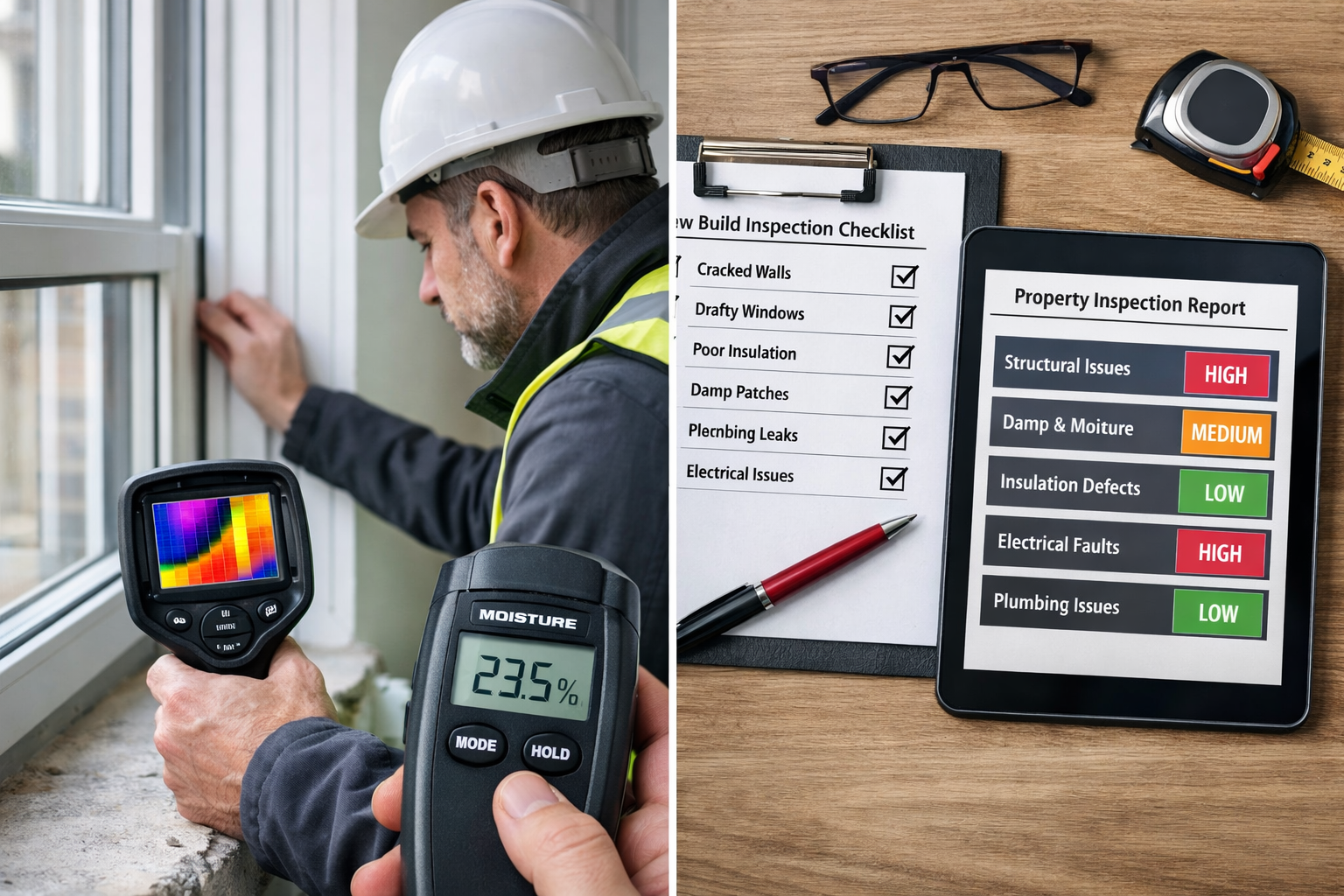
New build properties present unique assessment challenges that require specialized inspection protocols distinct from older property surveys. While RICS building surveys provide comprehensive frameworks, new build assessments demand particular attention to:
Common New Build Defect Categories:
| Defect Type | Frequency | Impact on Value | Detection Method |
|---|---|---|---|
| Plumbing joints & connections | High | Moderate | Pressure testing, visual inspection |
| Electrical installation quality | Medium | High | Certification review, socket testing |
| Window & door sealing | High | Low-Moderate | Thermal imaging, visual inspection |
| Cavity wall insulation gaps | Medium | Moderate | Thermal imaging, moisture readings |
| Roof membrane installation | Low | High | Drone surveys, attic inspection |
| Foundation settlement indicators | Low | Very High | Level measurements, crack monitoring |
The modest growth environment of 2026 makes thorough documentation of these defects essential. A £5,000 repair cost represents a significant portion of annual appreciation in a 2-5% growth market, providing substantial negotiating leverage for buyers.
Technology-Enhanced Assessment Capabilities
Modern surveying practices must leverage advanced technology to maintain competitive advantage and operational efficiency. Key technological integrations for new build assessments include:
Thermal Imaging Systems 🌡️
Infrared cameras identify insulation defects, moisture ingress, and thermal bridging invisible to visual inspection. In new builds, these tools detect installation errors before they manifest as visible damage—critical for preventing damp and mould growth that could significantly impact property value.
Drone Survey Technology 🚁
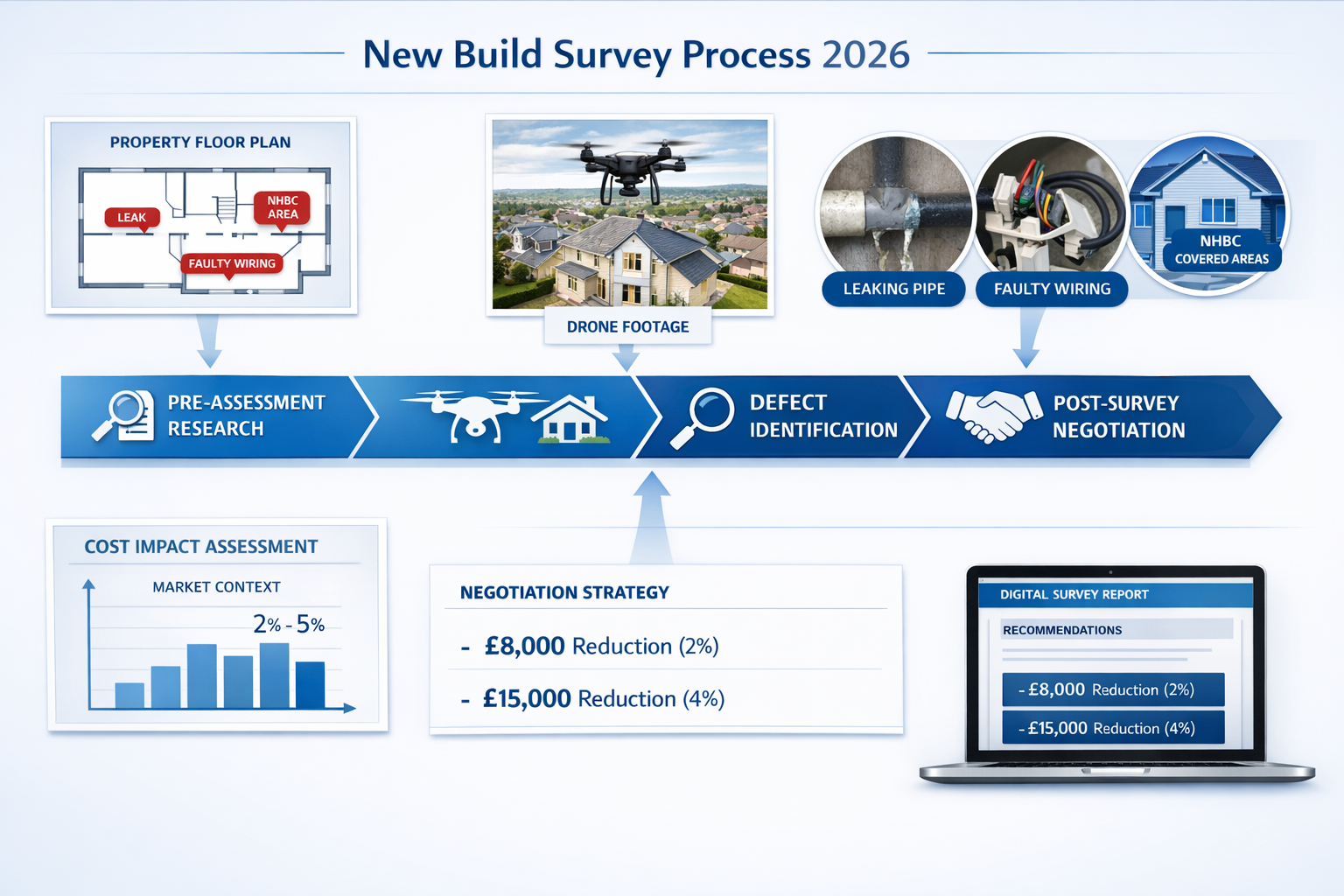
Premium drone surveys provide comprehensive roof and upper-level assessments without scaffolding costs or access delays. For new build estates with multiple similar properties, drone technology enables efficient comparative analysis of construction quality across developments.
Digital Reporting Platforms 💻
Cloud-based reporting systems with photographic evidence, annotated floor plans, and severity ratings streamline client communication and support negotiation processes. Digital platforms also facilitate rapid turnaround times—a competitive advantage when building survey duration affects transaction timelines.
NHBC Warranty Integration and Developer Relationships
Understanding NHBC warranty coverage and maintaining professional developer relationships represents a nuanced aspect of new build surveying strategy. While surveyors must identify all defects regardless of warranty coverage, recognizing which issues fall within NHBC protocols helps clients understand their protection and recourse options.
Effective operational strategies include:
- Pre-assessment warranty review to understand coverage scope and claim procedures
- Defect categorization distinguishing warranty-covered issues from those requiring immediate developer rectification
- Professional communication protocols with developers that maintain surveyor independence while facilitating defect resolution
- Follow-up inspection scheduling to verify remedial work quality before warranty periods expire
This balanced approach supports client interests while preserving professional relationships essential for efficient defect resolution. When buyers understand that surveys on new builds provide protection beyond warranty coverage, they appreciate the investment in professional assessment.
Implementing Surveyor Operational Strategies for 2-5% House Price Growth: Handling New Build Assessments in 2026
Workforce Capacity and Skills Development
The anticipated volume increases in 2026[1] create immediate workforce challenges for surveying practices. Meeting demand while maintaining quality standards requires strategic capacity planning and skills enhancement across three dimensions:
1. Existing Surveyor Retraining 🎓
RICS initiatives focusing on enhanced CPD platforms with improved digital tools[1] provide frameworks for upskilling current professionals. Priority training areas for new build assessment include:
- Advanced thermal imaging interpretation
- New construction materials and methods
- Digital reporting system proficiency
- Client communication in modest growth markets
- Regulatory compliance with emerging standards
2. Graduate Pathway Optimization
RICS efforts to create clearer qualification pathways for graduates[1] address medium-term capacity needs. Practices investing in graduate development programs position themselves advantageously for sustained growth beyond 2026.
3. Operational Efficiency Improvements
Technology adoption and process standardization enable existing teams to handle increased volumes without proportional headcount expansion. Implementing Level 3 building survey protocols adapted for new build contexts streamlines assessment while maintaining comprehensiveness.
Client Communication Strategies for Value Demonstration
In a 2-5% growth environment, clients require clear articulation of survey value and ROI. Effective communication strategies include:
Quantified Risk Assessment 💷
Translating identified defects into financial impact helps clients understand survey value. For example: "The inadequate cavity wall insulation identified will cost approximately £3,500 to rectify and increases annual heating costs by £400—representing 70% of anticipated annual property appreciation in current market conditions."
Negotiation Support Documentation
Providing clients with professionally formatted defect summaries, cost estimates, and photographic evidence empowers effective price negotiations. This documentation proves particularly valuable when average price reductions after survey directly determine transaction viability.
Long-term Value Perspective
Helping clients understand that thorough new build assessment protects against future costs and supports property performance over ownership duration. This perspective aligns with buy-to-let investors' focus on long-term returns despite short-term valuation pressures[2].
Quality Assurance and Professional Standards
Maintaining rigorous quality standards while scaling operations requires systematic QA protocols:
- Peer review systems for complex or high-value new build assessments
- Standardized inspection checklists ensuring consistent coverage across all properties
- Photographic documentation standards providing clear evidence of identified defects
- Client feedback mechanisms supporting continuous service improvement
- Professional indemnity insurance adequate for increased volumes and potential claim scenarios
These quality frameworks protect both client interests and professional reputation—essential foundations for sustainable practice growth in competitive markets.
Strategic Positioning for Future Market Evolution
Adapting to Regulatory Reform Timelines
The potential implementation of mandatory upfront assessments[1] requires proactive operational preparation rather than reactive adjustment. Strategic positioning includes:
Infrastructure Investment 🏗️
Developing systems and capacity to handle front-loaded survey demand before reforms mandate changes. Early adopters gain competitive advantage through established processes and market reputation.
Developer Partnership Models
Exploring collaborative frameworks where surveying practices provide volume assessment services to developers seeking to differentiate properties through transparent condition reporting. These partnerships must maintain surveyor independence and professional standards.
Marketing Repositioning
Communicating surveying value in the context of regulatory changes and market conditions. Practices that effectively articulate how comprehensive building surveys protect buyers in modest growth markets capture increased market share.
Diversification and Service Expansion
While new build residential assessment represents significant opportunity, strategic diversification provides operational resilience:
- Commercial property services including commercial valuations for institutional clients
- Specialized valuation services such as leasehold extension valuations and inheritance tax valuations
- Project management services supporting clients through remediation of identified defects
- Expert witness services for construction disputes and warranty claims
This service breadth provides revenue stability while supporting core surveying operations with complementary expertise.
Long-term Market Outlook and Strategic Planning
Industry forecasts predicting 22.2% property value increases over five years[3] suggest that 2026's modest growth represents a transitional phase rather than permanent market condition. Surveying practices implementing robust operational strategies for current conditions position themselves advantageously for acceleration when growth rates increase.
Strategic planning considerations include:
Scalable Systems 📈
Implementing technology platforms and processes that accommodate volume fluctuations without quality compromise. Cloud-based reporting, automated scheduling, and digital measurement tools provide scalability foundations.
Market Intelligence Integration
Maintaining awareness of regional variations, development pipeline data, and regulatory timeline updates. Practices that anticipate market shifts rather than react to them maintain competitive advantage.
Professional Network Development
Building relationships with mortgage lenders, estate agents, solicitors, and developers creates referral networks supporting sustained business development. The buy-to-let sector's continued institutional investment[1] demonstrates the value of professional relationship networks.
Practical Implementation Checklist for Surveying Practices
To effectively implement Surveyor Operational Strategies for 2-5% House Price Growth: Handling New Build Assessments in 2026, practices should systematically address:
Immediate Actions (Q1-Q2 2026) ✅
- Audit current new build assessment protocols identifying gaps in defect detection capability
- Invest in thermal imaging and drone technology if not currently deployed
- Develop standardized new build inspection checklists covering all common defect categories
- Implement digital reporting systems with client portal access and mobile field capture
- Review professional indemnity insurance ensuring adequate coverage for increased volumes
- Establish CPD training schedule focusing on new construction methods and materials
Medium-term Development (Q3-Q4 2026) 📅
- Pilot upfront assessment services anticipating regulatory reforms
- Develop developer relationship protocols balancing independence with efficient defect resolution
- Create client education materials explaining survey value in modest growth contexts
- Implement peer review QA systems for complex assessments
- Expand service offerings into complementary valuation and advisory services
- Build referral networks with mortgage lenders and estate agents
Strategic Positioning (2027 and Beyond) 🎯
- Scale operations to meet sustained demand increases as reforms implement
- Develop specialist expertise in emerging construction methods and sustainability features
- Invest in AI-assisted defect detection and analysis tools
- Expand geographic coverage or specialist service depth based on market analysis
- Establish thought leadership through industry publication and professional association involvement
Conclusion: Excellence Through Strategic Focus
The convergence of modest market growth, regulatory reform, and increased demand creates a defining moment for the surveying profession in 2026. Practices that recognize new build assessment as a strategic priority—rather than routine service delivery—position themselves for sustained success regardless of market evolution.
Implementing effective Surveyor Operational Strategies for 2-5% House Price Growth: Handling New Build Assessments in 2026 requires balancing multiple operational dimensions: technology investment, workforce development, quality assurance, and strategic positioning. The practices that excel in this environment share common characteristics:
🔍 Meticulous attention to detail recognizing that every defect carries proportionally greater significance in modest growth markets
⚙️ Technology-enabled efficiency allowing comprehensive assessments without timeline or cost penalties
👥 Client-focused communication clearly articulating survey value and supporting negotiation processes
📚 Continuous professional development maintaining expertise in evolving construction methods and regulatory requirements
🤝 Strategic relationship building creating referral networks and collaborative frameworks supporting business growth
The anticipated positive outlook for 2026[1], combined with potential regulatory reforms mandating upfront assessments[1], suggests that surveying practices investing in operational excellence today will reap sustained competitive advantages throughout the coming years.
Next Steps for Surveying Professionals
Immediate actions to implement these strategies include:
- Conduct operational audit – Assess current new build assessment capabilities against best practice standards outlined in this article
- Prioritize technology investment – Identify highest-impact tools (thermal imaging, drones, digital reporting) for your practice context
- Develop training plan – Schedule CPD activities addressing new construction methods and assessment technologies
- Review service positioning – Update marketing materials and client communications emphasizing new build expertise and value in current market conditions
- Build strategic relationships – Initiate conversations with developers, lenders, and referral partners about collaborative opportunities
The surveying profession stands at a pivotal moment. Those who recognize the strategic importance of Surveyor Operational Strategies for 2-5% House Price Growth: Handling New Build Assessments in 2026 and implement comprehensive operational responses will define industry standards for years to come.
For practices seeking to understand which building survey they need to offer clients or exploring what questions should be asked during building surveys, the foundational principles remain constant: thorough assessment, clear communication, and unwavering professional standards deliver exceptional client value regardless of market conditions.
References
[1] Surveying In 2026 Reform Recovery And Renewed Demand – https://www.lrg.co.uk/news-and-insights/surveying-in-2026-reform-recovery-and-renewed-demand/
[2] Watch – https://www.youtube.com/watch?v=diZcMBfdG9U
[3] Buy To Let Valuation Surge 2026 Survey Strategies For Insti – https://nottinghillsurveyors.com/blog/buy-to-let-valuation-surge-2026-survey-strategies-for-insti