

Surveyor Marina: The Complete Guide to Professional Marine Property Surveys in 2026
Picture this: You’ve found the perfect yacht at a pristine marina, ready to make your dream of boat ownership a reality. But beneath that gleaming exterior could lurk thousands of pounds worth of hidden damage, structural defects, or safety hazards. This is where a surveyor marina professional becomes your most valuable ally. Whether you’re purchasing a vessel, managing marina property, or investing in waterfront real estate, understanding the critical role of marine surveyors can save you from costly mistakes and ensure your maritime investment is sound.
Key Takeaways
- Marine surveyors provide essential inspection services for vessels, marina facilities, and waterfront properties, protecting buyers and owners from hidden defects and safety issues
- Pre-purchase surveys are crucial before buying any boat or marina property, typically costing 1-2% of the vessel’s value but potentially saving tens of thousands in repairs
- Different survey types serve specific purposes, including condition surveys, insurance surveys, damage assessments, and compliance inspections
- Professional qualifications matter significantly—look for surveyors with RICS, IIMS, or SAMS certifications and relevant marine experience
- Regular surveys help maintain property value, ensure safety compliance, and provide documentation for insurance and legal purposes
Understanding Surveyor Marina Services
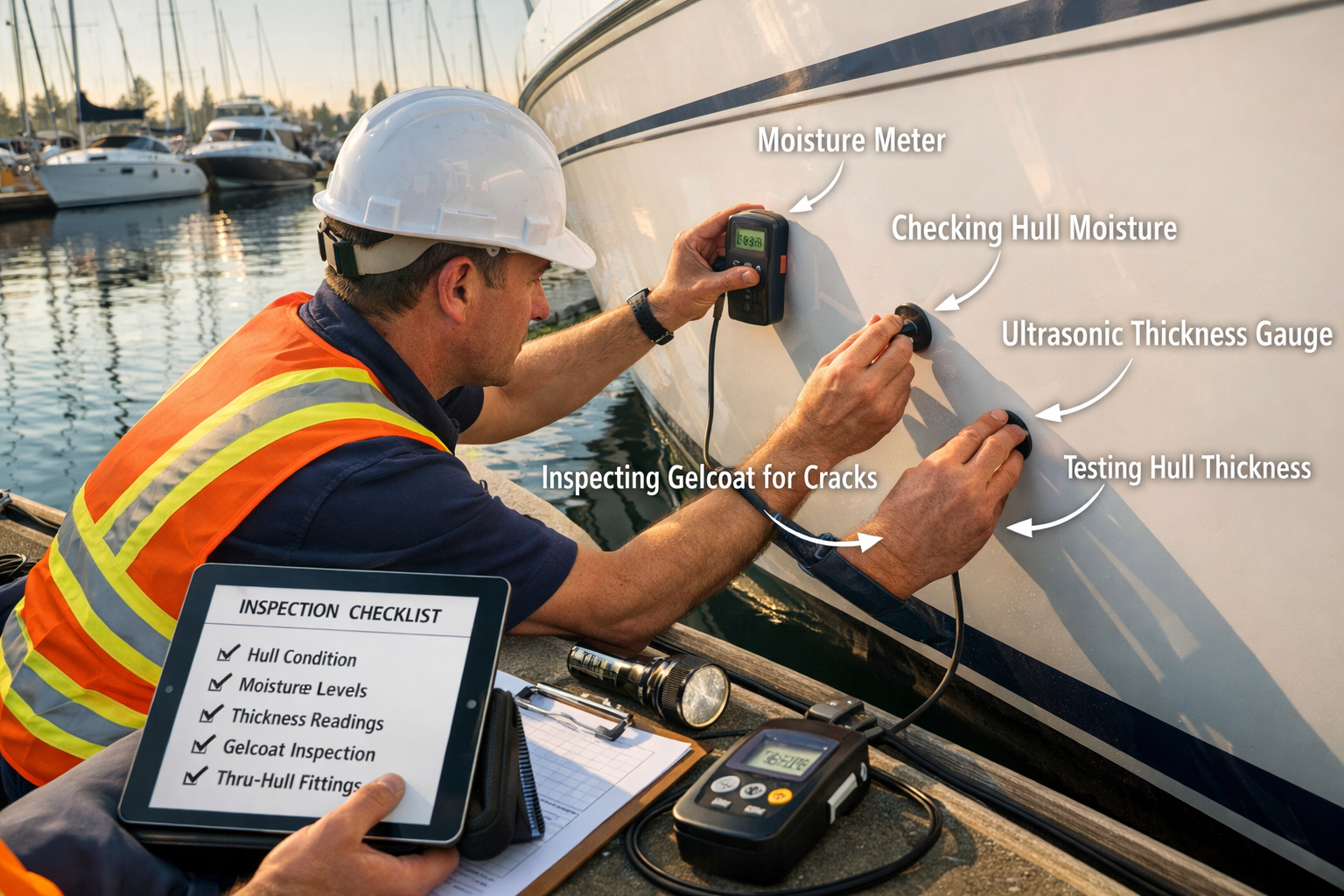
The term surveyor marina encompasses a specialized field where professional surveyors focus on marine vessels, marina infrastructure, and waterfront properties. These experts combine traditional surveying skills with specialized knowledge of maritime construction, vessel mechanics, and marine environmental factors.
What Does a Marine Surveyor Do?
Marine surveyors conduct detailed inspections and assessments of boats, yachts, marina facilities, and associated structures. Their work involves:
- 🔍 Hull inspections to identify structural damage, osmosis, or deterioration
- ⚓ Mechanical systems evaluation including engines, electrical, and plumbing
- 📋 Safety equipment verification ensuring compliance with maritime regulations
- 🏗️ Marina infrastructure assessment of docks, moorings, and facilities
- 📄 Documentation and reporting for insurance, purchase, or legal purposes
Similar to how property owners hire surveyors for land-based properties, boat owners and marina operators require specialized expertise to assess their marine assets properly.
Types of Marine Surveys
Different situations require different survey approaches:
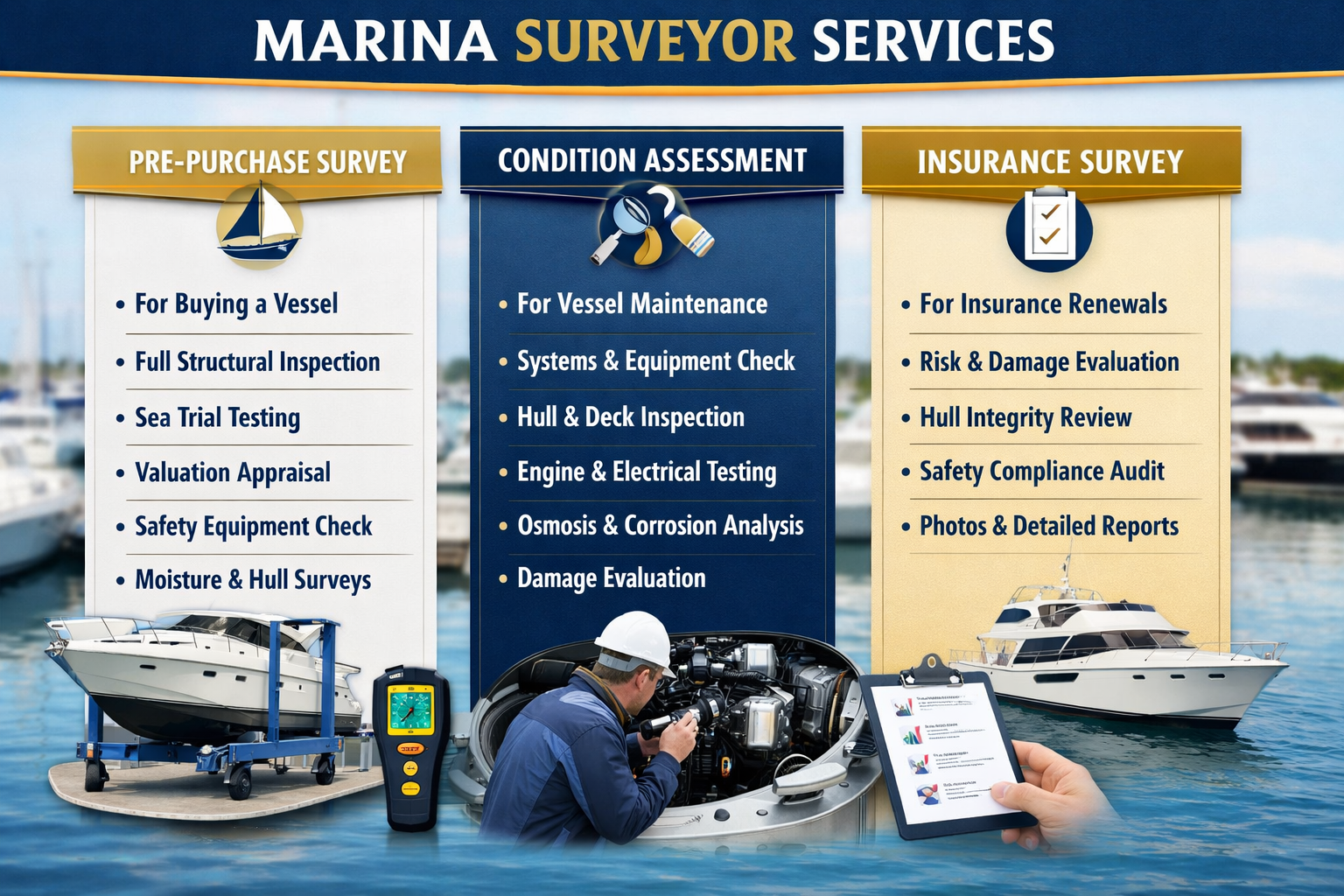
| Survey Type | Purpose | Typical Cost Range |
|---|---|---|
| Pre-Purchase Survey | Comprehensive inspection before buying | £500-£2,000+ |
| Condition Survey | Current state assessment | £400-£1,500 |
| Insurance Survey | Required for coverage | £300-£1,200 |
| Damage Survey | Post-accident assessment | £500-£3,000+ |
| Valuation Survey | Market value determination | £400-£1,500 |
Why You Need a Surveyor Marina Professional
Investing in marine property or vessels without professional inspection is like buying a house without a building survey—a risky gamble that rarely pays off. Here’s why engaging a qualified surveyor marina specialist is essential:
Protecting Your Investment
A thorough marine survey typically costs between 1-2% of a vessel’s purchase price, but it can uncover issues worth 10-20 times that amount. Hidden problems commonly discovered include:
- Structural defects in hull integrity or deck construction
- Osmosis and blistering in fiberglass vessels
- Engine problems requiring expensive overhauls
- Electrical system failures posing fire risks
- Rigging issues compromising safety
Just as homeowners should know about their property, boat owners need comprehensive understanding of their vessel’s condition.
Insurance and Legal Requirements
Most marine insurance companies require a recent survey before providing coverage, especially for vessels over a certain age or value. Without proper documentation from a qualified surveyor marina professional:
- ❌ Insurance claims may be denied
- ❌ Coverage may be limited or expensive
- ❌ Legal disputes become harder to resolve
- ❌ Resale value documentation is lacking
Safety Considerations
Maritime safety isn’t optional—it’s a legal and moral obligation. A professional survey identifies:
- Life-saving equipment deficiencies
- Fire suppression system problems
- Navigation equipment failures
- Structural weaknesses that could lead to sinking
- Gas and fuel system leaks
“A comprehensive marine survey isn’t just about protecting your wallet—it’s about protecting lives. The sea is unforgiving, and equipment failure at sea can have catastrophic consequences.” — Marine Safety Council, 2026
Choosing the Right Surveyor Marina Expert
Not all marine surveyors offer the same level of expertise or service quality. Selecting the right professional requires careful consideration of several factors.
Professional Qualifications and Certifications
Look for surveyors with recognized credentials from reputable organizations:
- RICS (Royal Institution of Chartered Surveyors) – The gold standard for UK surveyors
- IIMS (International Institute of Marine Surveying) – Specialized marine certification
- SAMS (Society of Accredited Marine Surveyors) – North American standard
- YDSA (Yacht Designers and Surveyors Association) – Specialist yacht expertise
These qualifications ensure the surveyor has undergone rigorous training and maintains professional standards. Similar to how you’d verify credentials when you hire a structural engineer, checking marine surveyor qualifications is crucial.
Experience and Specialization
Marine surveying covers diverse areas, and specialists often focus on particular vessel types or services:
- Sailing yachts vs. motor yachts
- Commercial vessels vs. pleasure craft
- Small boats vs. superyachts
- Wooden boats vs. fiberglass or steel construction
Choose a surveyor with specific experience relevant to your needs. A surveyor specializing in small fishing boats may not be the best choice for a 50-foot luxury yacht.
Questions to Ask Potential Surveyors
Before hiring a surveyor marina professional, ask these important questions:
- 📝 What are your professional qualifications and certifications?
- 🚤 How many years of experience do you have with this type of vessel?
- 📊 Can you provide sample reports and references?
- ⏱️ How long will the survey take and when will I receive the report?
- 💰 What is your fee structure and what does it include?
- 🔧 Do you use specialized equipment like ultrasonic testing or moisture meters?
- 📞 Will you be available to discuss findings and answer questions?
The Marina Survey Process Explained
Understanding what happens during a surveyor marina inspection helps you prepare and know what to expect. The process typically follows a structured approach ensuring nothing is overlooked.
Pre-Survey Preparation
Before the surveyor arrives, proper preparation ensures an efficient and thorough inspection:
Vessel Preparation:
- Clean the boat thoroughly, inside and out
- Remove personal items to allow access to all areas
- Ensure all systems are operational for testing
- Provide documentation (previous surveys, maintenance records, registration)
- Arrange for haul-out if required for hull inspection
Marina Facility Preparation:
- Clear access to all structures requiring inspection
- Provide safety equipment and access permits
- Make available construction drawings and maintenance records
- Ensure adequate lighting for detailed inspection
The Inspection Day
A comprehensive surveyor marina inspection typically takes 4-8 hours for an average-sized yacht, though larger vessels or complex facilities require more time.
Hull and Structure Inspection:
The surveyor examines the hull both in and out of water (when possible), checking for:
- Structural integrity and stress cracks
- Blistering, osmosis, or delamination
- Impact damage or repairs
- Through-hull fittings and seacocks
- Keel and rudder attachment
Systems Evaluation:
All onboard systems undergo testing:
- ⚡ Electrical systems and wiring
- 🔧 Mechanical systems and engines
- 💧 Plumbing and sanitation
- 🔥 Fuel systems and safety
- 🧭 Navigation and electronics
Safety Equipment Check:
The surveyor verifies all required safety equipment is present, functional, and up-to-date:
- Life jackets and life rafts
- Fire extinguishers and suppression systems
- Flares and distress signals
- Emergency position-indicating radio beacons (EPIRBs)
- First aid equipment
The Survey Report
Within 7-10 days, you’ll receive a detailed written report documenting all findings. A quality survey report includes:
Essential Components:
- Executive summary of overall condition
- Detailed findings organized by system
- Photographs documenting issues
- Recommendations for repairs or improvements
- Estimated repair costs (where appropriate)
- Fair market value assessment
The report serves multiple purposes: negotiating purchase price, planning maintenance, securing insurance, and providing legal documentation. Much like how building survey reports inform property decisions, marine survey reports guide maritime investments.
Marina Property and Infrastructure Surveys
Beyond individual vessels, surveyor marina professionals also assess marina facilities, waterfront properties, and associated infrastructure. This specialized work requires understanding both marine and land-based construction principles.
Marina Facility Assessments
Marina operators and investors require regular assessments of their facilities to:
- Ensure structural integrity of docks, piers, and walkways
- Identify maintenance needs before minor issues become major problems
- Comply with regulations and safety standards
- Plan capital improvements and budgeting
- Support insurance requirements and liability protection
Waterfront Property Surveys
Properties with water access or marina facilities require specialized surveying that addresses unique challenges:
Key Considerations:
- 🌊 Tidal effects and water level variations
- 🏖️ Erosion and sediment movement
- ⚓ Mooring rights and access agreements
- 🏗️ Marine construction standards and materials
- 📜 Regulatory compliance with maritime authorities
These surveys often overlap with traditional building surveys, requiring surveyors with expertise in both disciplines.
Environmental and Compliance Surveys
Modern marina operations must address environmental concerns and regulatory compliance:
- Water quality monitoring and pollution prevention
- Waste management systems for vessels and facilities
- Fuel storage and handling compliance
- Protected species habitat considerations
- Planning permission for modifications or expansions
Cost Considerations for Surveyor Marina Services
Understanding the investment required for professional marine surveying helps with budgeting and decision-making. While costs vary significantly based on vessel size, complexity, and location, certain guidelines apply.
Factors Affecting Survey Costs
Several variables influence the final price of a surveyor marina inspection:
Vessel-Related Factors:
- Size and length – Larger vessels require more time
- Age and condition – Older boats need more detailed inspection
- Complexity – Multiple systems and engines increase costs
- Construction type – Wooden boats require specialized expertise
- Accessibility – Remote locations add travel expenses
Survey-Related Factors:
- Survey type – Pre-purchase surveys are more comprehensive than condition surveys
- Haul-out requirements – Out-of-water inspection adds significant cost
- Testing requirements – Specialized testing (ultrasonic, moisture meters) increases fees
- Report detail – Comprehensive reports with extensive photography cost more
- Urgency – Rush services typically command premium rates
Typical Cost Ranges in 2026
Here’s what you can expect to pay for various surveyor marina services:
Vessel Surveys:
- Small boats (under 30 feet): £400-£800
- Mid-size vessels (30-45 feet): £800-£1,500
- Large yachts (45-65 feet): £1,500-£3,000
- Superyachts (over 65 feet): £3,000-£10,000+
Marina Facility Surveys:
- Small private docks: £500-£1,500
- Medium marina facilities: £2,000-£5,000
- Large commercial marinas: £5,000-£20,000+
Is the Investment Worth It?
Absolutely. Consider these real-world scenarios where survey costs paid for themselves many times over:
Case Study 1: A buyer paid £1,200 for a pre-purchase survey on a £45,000 yacht. The survey revealed engine problems requiring £8,000 in repairs. The buyer negotiated a £10,000 price reduction, saving £8,800 net.
Case Study 2: A marina operator invested £3,500 in a facility survey that identified structural issues in dock pilings. Early intervention cost £15,000, preventing catastrophic failure that would have cost over £100,000 and resulted in liability claims.
Case Study 3: An insurance survey costing £800 discovered electrical system deficiencies that posed fire risk. Repairs cost £2,500 but prevented potential total loss of a £60,000 vessel.
Common Issues Discovered During Marina Surveys
Experienced surveyor marina professionals encounter recurring problems across vessels and facilities. Understanding these common issues helps owners maintain their assets proactively.
Vessel-Specific Problems
Osmosis and Blistering (Fiberglass Boats):
This chemical process occurs when water penetrates the gelcoat, causing blisters and delamination. Treatment is expensive (£5,000-£20,000+) and time-consuming. Early detection through regular surveys allows for preventive measures.
Deck and Hull Delamination:
The separation of fiberglass layers compromises structural integrity. Often invisible from the surface, surveyors use tapping and moisture detection to identify problem areas.
Engine and Mechanical Issues:
- Cooling system corrosion and blockages
- Oil leaks indicating seal failures
- Exhaust system deterioration
- Transmission problems
- Fuel system contamination
Electrical System Deficiencies:
Marine electrical systems face harsh conditions. Common problems include:
- ⚡ Corroded connections and terminals
- ⚡ Inadequate wire sizing for loads
- ⚡ Missing or incorrect circuit protection
- ⚡ Improper grounding systems
- ⚡ Water intrusion in electrical panels
Similar to how common defects in older homes require attention, vessels develop age-related issues requiring professional assessment.
Marina Infrastructure Problems
Dock and Pier Deterioration:
- Rotting or damaged decking
- Corroded or failing pilings
- Loose or missing hardware
- Inadequate flotation
- Structural movement or settling
Utility System Failures:
- Aging electrical pedestals
- Water line leaks and freezing damage
- Sewage pump-out system problems
- Fire suppression system deficiencies
Environmental Concerns:
- Fuel or oil contamination
- Inadequate waste collection facilities
- Stormwater management issues
- Erosion and sediment problems
Maintaining Value Through Regular Surveys
Smart boat owners and marina operators don’t wait for problems to appear—they implement proactive survey schedules that maintain value and prevent costly surprises.
Recommended Survey Frequency
For Vessels:
- Annual condition surveys for vessels over 15 years old
- Every 2-3 years for newer vessels in active use
- Pre-season surveys for seasonal boats
- Insurance surveys as required (typically every 5 years)
- Post-damage surveys after any incident or grounding
For Marina Facilities:
- Annual safety inspections of all public areas
- Comprehensive structural surveys every 3-5 years
- Environmental compliance surveys as required by regulations
- Post-storm assessments after significant weather events
Documentation and Record Keeping
Maintaining comprehensive survey records provides multiple benefits:
📁 Value Documentation:
Regular surveys create a documented history of maintenance and care, supporting higher resale values.
📁 Maintenance Planning:
Survey recommendations guide systematic maintenance programs, preventing emergency repairs.
📁 Insurance Support:
Documented condition and maintenance history can reduce insurance premiums and support claims.
📁 Legal Protection:
Survey records provide evidence of due diligence in case of disputes or liability claims.
Working with Your Surveyor Long-Term
Establishing an ongoing relationship with a trusted surveyor marina professional offers advantages:
- Familiarity with your specific vessel or facility
- Tracking changes over time
- Prioritizing recommendations based on actual condition trends
- Responsive service when urgent issues arise
- Cost efficiency through regular maintenance rather than emergency repairs
Regulatory Compliance and Legal Considerations
The maritime industry operates under extensive regulations affecting vessel operation, marina management, and waterfront development. Professional surveyor marina services help navigate this complex landscape.
UK Maritime Regulations
Several regulatory bodies govern different aspects of marine operations:
Maritime and Coastguard Agency (MCA):
Oversees safety standards for commercial vessels and recreational craft. Compliance surveys verify adherence to:
- Safety equipment requirements
- Construction standards
- Operational procedures
- Crew certification (commercial vessels)
Environment Agency:
Regulates environmental aspects including:
- Waste disposal and sewage treatment
- Fuel storage and handling
- Water quality and pollution prevention
- Protected habitat considerations
Local Planning Authorities:
Control development and modifications:
- Marina expansion or modification
- New dock or mooring installation
- Waterfront property development
- Change of use applications
Insurance Requirements
Marine insurance underwriters rely heavily on professional surveys to assess risk and determine coverage terms. Understanding these requirements helps avoid coverage gaps:
Typical Insurance Survey Requirements:
- Initial survey before coverage begins
- Renewal surveys every 5 years (sometimes more frequently for older vessels)
- Post-repair surveys after significant work
- Damage surveys following incidents
- Compliance with surveyor recommendations (may be condition of coverage)
Legal Disputes and Expert Testimony
Surveyor marina professionals often provide expert testimony in legal matters:
- Purchase disputes and misrepresentation claims
- Insurance claim disputes
- Collision and damage liability
- Marina operator liability cases
- Property boundary and access disputes
Having a comprehensive survey conducted by a qualified professional provides crucial evidence in such situations, similar to how building surveyors provide access to expert opinions in property disputes.
Future Trends in Marine Surveying
The surveyor marina profession continues evolving with technology and changing industry needs. Understanding emerging trends helps owners and operators prepare for the future.
Technology Integration
Drone Surveys:
Unmanned aerial vehicles enable detailed inspection of areas difficult or dangerous to access:
- Mast and rigging inspection
- Roof and superstructure assessment
- Large marina facility overview
- Documentation photography
Ultrasonic and Thermal Imaging:
Advanced diagnostic tools provide non-destructive testing:
- Hull thickness measurement
- Moisture detection in composite structures
- Electrical system thermal imaging
- Hidden void detection
Digital Reporting and 3D Modeling:
Modern survey reports incorporate interactive elements:
- 360-degree photography
- 3D facility models
- Interactive defect mapping
- Cloud-based document access
Environmental and Sustainability Focus
Growing environmental awareness drives changes in marina operations and vessel design:
- Green marina certifications requiring environmental compliance surveys
- Alternative propulsion systems (electric, hybrid) requiring specialized surveying expertise
- Sustainable materials in construction and repair
- Climate change adaptation in facility planning and design
Changing Ownership Patterns
The marine industry sees evolving ownership models affecting survey needs:
- Fractional ownership requiring regular condition documentation
- Charter operations needing frequent safety inspections
- Corporate ownership demanding detailed asset management
- Marina investment funds requiring comprehensive due diligence
Conclusion: Making Informed Maritime Decisions
Engaging a qualified surveyor marina professional represents one of the smartest investments in maritime property ownership or management. Whether you’re purchasing your first boat, managing a commercial marina, or investing in waterfront property, professional surveys provide the knowledge and documentation necessary for informed decision-making.
The relatively modest cost of professional surveying services pales in comparison to the potential losses from undiscovered defects, safety hazards, or regulatory non-compliance. Beyond financial protection, surveys provide peace of mind—knowing your vessel is seaworthy and your facilities are safe for users.
Next Steps for Boat Owners and Marina Operators
If you’re purchasing a vessel:
- ✅ Engage a qualified surveyor before finalizing any purchase
- ✅ Attend the survey if possible to ask questions and learn about your vessel
- ✅ Review the report carefully and discuss findings with the surveyor
- ✅ Use survey findings to negotiate price or request repairs
- ✅ Keep the survey report for insurance and future reference
If you own a vessel:
- ✅ Schedule regular condition surveys based on vessel age and use
- ✅ Address surveyor recommendations promptly
- ✅ Maintain comprehensive records of surveys and maintenance
- ✅ Plan for identified future maintenance needs
- ✅ Update insurance providers with current survey information
If you operate a marina:
- ✅ Implement a regular facility inspection schedule
- ✅ Address safety issues immediately
- ✅ Plan capital improvements based on survey recommendations
- ✅ Maintain comprehensive documentation for liability protection
- ✅ Ensure environmental compliance through regular assessments
For professional surveying services and expert guidance on property matters, visit Prince Surveyors to connect with qualified professionals. Whether you need marine surveying or land-based property assessment, working with experienced professionals protects your investment and ensures compliance with all relevant standards and regulations.
The maritime environment presents unique challenges requiring specialized expertise. Don’t navigate these waters alone—partner with qualified surveyor marina professionals who understand the complexities of marine property and can guide you toward safe, sound investment decisions. Your vessel, your facility, and your peace of mind deserve nothing less than professional, comprehensive surveying services.